IPO

BSEC opens way for IPO, direct listing to boost capital market participation
Bangladesh Securities and Exchange Commission (BSEC) has said companies interested in raising capital from the country’s capital market can proceed with initial public offerings (IPOs) under the existing Bangladesh Securities and Exchange Commission (Public Offer of Equity Securities) Rules, 2025.
In a press release issued Wednesday, the securities regulator said companies currently interested in raising capital through IPOs do not need to suspend or delay their applications in anticipation of any future amendments or changes to the relevant rules.
The BSEC said if any amendment, change or relaxation is subsequently introduced to the IPO-related regulations, necessary facilities will be provided to applicant companies, where applicable, in light of those changes.
Meanwhile, established companies that do not require fresh capital for business expansion or operations but whose existing shareholders are interested in offloading shares through the capital market may get an alternative route through direct listing.
Under the proposed direct listing mechanism, a company would be able to get listed on a stock exchange by offloading shares held by its existing shareholders, without issuing new shares itself.
The BSEC has already drafted the Bangladesh Securities and Exchange Commission (Direct Listing of Securities on the Stock Exchange) Rules, 2026 and published the draft for public opinion.
According to the proposed rules, eligible companies will be able to apply for direct listing.
The commission said the proposed framework would help increase the participation of new and capable companies in the capital market, create opportunities for existing shareholders to offload shares, and contribute to expanding the market’s depth and breadth.
Once the proposed rules come into effect, the direct-listing framework will provide an additional avenue for eligible companies to enter the capital market.
The BSEC has therefore encouraged interested companies to make the necessary preparations.
The regulator said companies requiring fresh capital may enter the capital market through IPOs, while those that do not need new capital but want their existing shareholders to offload shares may consider direct listing as an alternative.
The BSEC said it will continue its policy and regulatory reform initiatives to increase the participation of sound and successful companies in the country’s capital market and build a deeper, more diversified, transparent and efficient market.
1 month ago

What investors should know as SpaceX prepares for a retail-heavy IPO
SpaceX is preparing for what could become one of the largest initial public offerings in market history, and the company is inviting everyday investors to take part alongside big financial institutions.
The firm, officially known as Space Exploration Technologies Corp., is planning to direct a larger-than-usual portion of its IPO shares to “retail” investors — people who buy and sell stocks through mobile apps or brokerage accounts, rather than large funds like pension or investment firms.
Typically, only a small share of IPO stock goes to retail buyers, but in SpaceX’s case it could be as high as 30%. Investors may be able to participate through platforms such as Charles Schwab, Fidelity, Robinhood, SoFi and E-Trade. At Fidelity, some investors with as little as $2,000 in their accounts could qualify, far lower than the usual entry thresholds for similar offerings. However, demand is expected to be so strong that many applicants may not receive shares.
Experts also warn that short-term trading could carry risks. Some brokerages may restrict access to future IPOs if investors quickly sell newly acquired shares, especially within days or weeks of listing.
Volatility is another concern. With heavy interest from retail traders, analysts expect sharp price swings, similar to so-called “meme stock” rallies seen in recent years, where sudden enthusiasm drove extreme market movements.
Historically, IPOs often rise on their first trading day — by an average of about 7% — but long-term performance tends to lag comparable companies over time, according to IPO researcher Jay Ritter.
SpaceX also enters the market with significant financial exposure. The company carries about $29.1 billion in debt and reported losses of $4.9 billion last year and another $4.3 billion in early 2026. It has also cautioned investors that it may not achieve profitability in the future, noting the high cost of rocket launches and advanced infrastructure development.
Ownership structure is another key issue. The IPO will offer Class A shares with one vote each, while founder Elon Musk will retain control through high-vote Class B shares. After the listing, Musk is expected to hold more than 82% of total voting power, giving him dominant influence over company decisions.
Some major institutional investors, including public pension funds in the US, have raised concerns about this structure, warning that it gives Musk excessive control and limits accountability to shareholders.
There is also a chance that even people who do not directly invest in the IPO could still end up owning shares indirectly. Large index funds such as those tracking the Nasdaq 100 could add SpaceX soon after listing, depending on eligibility rules, meaning millions of investors may gain exposure automatically.
Finally, investors should be careful not to confuse SpaceX with similar tickers. The company is expected to trade under the symbol “SPCX,” which is close to other existing listings in the market.
4 months ago

OpenAI files confidential paperwork for potential IPO, eyes future Wall Street debut
OpenAI, the company behind ChatGPT, has filed confidential preliminary paperwork with the U.S. Securities and Exchange Commission (SEC), taking a significant step toward a potential initial public offering (IPO).
The San Francisco-based artificial intelligence firm announced Monday that it had submitted confidential registration documents to the SEC, though it has not yet determined a timeline for going public.
“We have not decided on timing yet,” the company said in a statement, adding that remaining private still offers advantages for some of its planned initiatives. However, the filing provides flexibility to pursue a public listing sooner if deemed beneficial.
The move follows a similar announcement by rival AI company Anthropic earlier this month and comes as Elon Musk’s SpaceX also advances plans for a stock market debut, highlighting growing investor interest in the rapidly expanding AI sector.
OpenAI Chief Executive Officer Sam Altman first suggested the possibility of an IPO last year, describing it as the most likely path forward given the company's scale and substantial capital requirements.
Founded in 2015 as a nonprofit organization focused on developing artificial intelligence for public benefit, OpenAI has evolved into one of the world's most valuable technology companies, with an estimated valuation of $852 billion.
Industry analysts say the filing comes at a critical time as OpenAI faces increasing competition from rivals including Anthropic’s Claude chatbot and Google’s Gemini AI assistant.
“OpenAI doesn’t have many alternatives for raising the enormous capital required to support its operations,” said Emarketer analyst Nate Elliott.
The company paved the way for a potential public offering by restructuring its operations last year and converting into a public benefit corporation while remaining under nonprofit oversight.
OpenAI also overcame a major legal challenge last month when it secured a courtroom victory against co-founder Elon Musk, who had sought to block the company's transition to a for-profit structure.
The company has yet to publicly disclose its revenue figures or a timeline for profitability. Like many AI firms, it continues to spend heavily on infrastructure, research and development.
In an interview earlier this year, OpenAI Chief Financial Officer Sarah Friar said the company was already operating with the financial discipline expected of a publicly traded firm.
She noted that OpenAI’s current valuation would place it among the 15 largest companies in the S&P 500 index if it were publicly listed.
Separately, Altman outlined OpenAI’s long-term goals, including developing an automated AI researcher, accelerating global economic growth and eventually providing every person with access to advanced artificial intelligence capabilities.
He said the company is entering a new phase focused on broad distribution of AI benefits and ensuring that the economic gains generated by the technology are shared widely.
The announcement comes amid growing debate over the future ownership and regulation of AI companies, with some policymakers advocating broader public participation in the sector’s growth.
4 months ago
IPO rulebook overhauled as BSEC hopes to attract ‘good companies’ in 2026
The Bangladesh Securities and Exchange Commission (BSEC) has announced the publication of the new Initial Public Offering (IPO) rules in a gazette, voicing optimism that the reform will pave the way for quality companies to enter the capital market this year.
According to the regulator, the Bangladesh Securities and Exchange Commission (Public Offer of Equity Securities) Rules, 2025 were gazetted on December 30 and have come into effect immediately upon publication.
Under the new rules, the role of stock exchanges in the listing of new companies has been strengthened. Stock exchanges will now grant preliminary approval to IPOs, while the BSEC will provide final approval based on the exchanges’ recommendations.
The revised rules also stipulate that companies seeking listing through IPOs must have a minimum paid-up capital of Tk 30 crore, and at least 10 percent of post-IPO shares must be offered to the capital market.
Read more: Bangladesh Capital Market: Stocks edge up in first hour of trading
Besides, issuers will be required to complete the utilisation of funds raised through IPOs within five years of completing the offering.
Commenting on the implementation of the new IPO rules, BSEC Director and spokesperson Abul Kalam told UNB, “After reforming the mutual fund and margin rules, the most challenging task was revising the IPO regulations. The commission finalised the rules and sent them to the relevant ministry within December. The new IPO rules will benefit the stock market in the long run.”
Even before the rules were finalised, the commission had been trying for over a year to bring quality companies to the market, but those efforts failed to materialise.
Despite multiple meetings aimed at listing state-owned enterprises and multinational companies, no major company entered the capital market, leading to growing frustration among investors.
Investor Sajjadul Islam said, “A single good company can turn the market around. But the commission has failed to bring even one. When companies like Square Pharma, Grameenphone or Robi entered the market, it helped revive investor confidence. Yet even after a year, this commission has not been able to bring any quality company.”
Another investor, Abul Hossain, said investors are eagerly waiting for good companies to be listed, but continued delays are pushing many to turn away from the market in disappointment.
Read more: Bangladesh stock market opens New Year with index gains
Explaining why no quality company could be listed in the past year, a senior BSEC official, speaking on condition of anonymity, said bureaucratic complexities have stalled progress.
“If these bureaucratic hurdles did not exist, it would have been possible to bring good state-owned companies to the market, even if multinational private companies remained reluctant,” the official said.
He said the commission made year-long efforts to directly list 18 state-owned companies. “Even with direct instructions from the Chief Adviser, these companies could not be listed due to delays and non-cooperation from the concerned ministry secretaries. Despite repeated meetings and requests, the issue was not taken seriously.”
Asked when new companies might enter the market under the revised rules, BSEC spokesperson Abul Kalam said the commission remains hopeful that quality companies will be listed within the current year.
Investors, however, have complained that after the commission assumed office, it cancelled a number of IPO applications that were already under process. As a result, merchant banks acting as issue managers have reportedly lost interest in submitting new IPO proposals.
“We did not rush to list bad companies,” Abul Kalam said, adding, “most of the IPOs approved by the previous commission were of poor-quality companies, which destabilised the market and increased manipulation. Our focus is on eliminating manipulation and ensuring that only good companies are listed.”
Meanwhile, DSE Brokers Association of Bangladesh (DBA) President Saiful Islam said that the likelihood of IPOs before the national election is low. Good companies will not be interested in listing unless good governance is restored in the capital market, he added.
“Let alone comparing Bangladesh with India, even compared to Pakistan and Sri Lanka, Bangladesh lags far behind in terms of market governance scores. Without addressing these issues, the capital market cannot return to normal,” he said.
Saiful said stability may return after the 13th national election and the formation of a new government, creating an opportunity to change the market scenario if quality companies are listed at that time.
Commission sources said that responsibility for managing IPOs of major companies as an issue manager was given solely to the state-owned Investment Corporation of Bangladesh (ICB), but the initiative did not yield results.
An inquiry found that ICB, once a profitable institution, is now struggling with heavy losses. In the 2024–25 fiscal year, ICB’s losses exceeded Tk 1200 crore. The institution is surviving on loans and has repeatedly sold shares to pay interest obligations.
ICB Chairman Professor Abu Ahmed, however, expressed optimism about a turnaround. “Despite many ups and downs, ICB has survived. In the past, its funds were invested in poor-quality IPOs linked to market manipulation, which caused significant losses.”
Read more: BSEC takes action against ACME, Genex, auditors over irregularities
“We are hopeful that good companies will be listed in the market soon. Alongside state-owned enterprises, multinational companies will also come to the market, which will change the overall scenario,” he added.
Market analysts say that while the new IPO rules have strengthened safeguards against manipulation, they have also made listing more challenging in some cases. Nevertheless, they believe the reforms will benefit the capital market in the long term.
9 months ago

India's biggest IPO to open next week
India's biggest initial public offering of the state-run insurance behemoth -- the Life Insurance Corporation of India (LIC) -- is all set to open next week, with the government deciding to sell 3.5% of its stake in the company.
For anchor investors, the initial public offering will open on May 2. For retail investors, it will open on May 4 and close on May 9. The price band for the offering has been set at Indian rupees 902 to 949, UNB has learnt.
The Securities and Exchange Board of India (SEBI), the country's stock markets regulator, approved the red herring prospectus on April 25. LIC has time and again bailed out the government by acting as its internal financier.
READ: E-payments unicorn Paytm launches India's biggest-ever IPO
Experts predict a stellar debut for LIC on the country's bourses just like that of private food delivery giant Zomato last year. The food aggregator was, in fact, India's first new-age technology unicorn to go public in 2021.
Zomato, in fact, rode on the Covid outbreak that has prompted a trend of people moving to order food items online the world over. Such was the fantabulous listing that Zomato's market capitalization breached 12 billion US dollar mark in the first hour itself.
4 years ago
.jpg)
Robi set to make capital market debut Dec 24
Robi Axiata Limited, the country’s leading digital service provider, is going to hit the trading floors in Dhaka and Chittagong stock exchanges on December 24.
5 years ago
.jpg)
Robi coming to stock market with ‘biggest IPO’
Robi Axiata Limited, the second largest mobile phone operator in Bangladesh, has been given greenlight for stock market launch with the biggest initial public offerings (IPO) in the country’s history.
6 years ago

Walton IPO subscription gets huge investors’ response
Centering a recent Initial Public Offering (IPO) subscription of Walton, large number of small and general investors invested in the capital market.
6 years ago
.jpg)
Walton IPO with high EPS in capital market
Walton Hi-Tech Industries (WHIL) is going to be listed in the capital market with a very high Earnings Per Share (EPS) recorded during the Initial Public Offering (IPO).
6 years ago
Aramco's 'greenshoe option' pushes IPO to record $29.4B
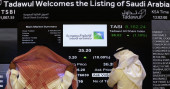
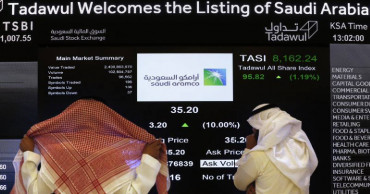
Saudi Arabian oil giant Aramco announced Sunday that its initial public offering raised a record $29.4 billion, a figure higher than previously announced, after the company used a so-called "greenshoe option" to sell millions more shares to meet investor demand.
6 years ago