Asian stock

Asian stocks mostly fall after Wall Street losses, oil prices rise
Asian stocks mostly declined Tuesday after major U.S. indexes ended lower in the previous session, while U.S. Treasury yields paused after reaching their highest levels in about two decades.
U.S. stock futures edged down, while oil prices increased amid uncertainty over talks between the United States and Iran and the possibility of reopening the Strait of Hormuz, a key route for global oil shipments.
On Monday, the S&P 500 fell 0.8%, the Dow Jones Industrial Average dropped 0.7% and the Nasdaq composite declined 0.9%.
Rising U.S. Treasury yields have put pressure on stocks as investors seek better returns amid concerns about inflation and growing U.S. government debt.
The yield on the 10-year U.S. Treasury note reached 5.27% Monday, its highest level since 2007. It stood at about 5.25% early Tuesday, compared with 5.17% last Friday.
Oil prices, already elevated and contributing to inflation, rose further Tuesday as mediators continued efforts to reach an agreement between Washington and Tehran. U.S. President Donald Trump rejected an Iranian offer over the weekend to reopen the Strait of Hormuz.
Brent crude, the international benchmark, rose 1.8% to $99.63 a barrel, well above about $72 a barrel in late February before the Iran war.
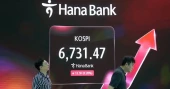
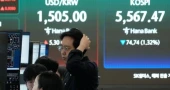
Japan’s Nikkei 225 fell 1.2% to 65,114.64, while South Korea’s Kospi declined 0.6% to 6,847.56. Hong Kong’s Hang Seng Index dropped 0.5% to 24,516.46.
Shares of online fast-fashion retailer Shein traded in Hong Kong fell 11.7% after the company reported a 67% year-on-year decline in adjusted net profit for its latest quarter.
China’s Shanghai Composite edged up 0.1% to 3,826.51 after state-run Xinhua News Agency reported Monday that the State Council discussed ways to improve the effectiveness of macroeconomic policies and support economic growth.
Australia’s S&P/ASX 200 rose 0.1% to 8,686.20.
Taiwan’s Taiex fell 0.6%, while India’s Sensex declined 0.7%.
The U.S. dollar rose slightly to 157.42 Japanese yen from 157.39 yen. The euro fell to $1.1362 from $1.1371.
11 days ago

Asian stocks mixed after Wall Street slips following Fed rate hike
Asian markets were mixed Thursday after Wall Street ended lower following the US Federal Reserve's decision to raise interest rates for the first time in three years.
US stock futures were higher in early trading.
The Fed raised its key interest rate by a quarter percentage point to a target range of 3.75%-4.00% as it seeks to bring US inflation, which has remained above its target, under control.
Japan's Nikkei 225 rose 0.2% to 64,067.53, while South Korea's Kospi gained 0.9% to 6,778.49. Hong Kong's Hang Seng Index fell 0.7% to 24,533.46, and the Shanghai Composite declined 0.4% to 3,877.46.
Australia's S&P/ASX 200 advanced 0.3% to 8,718.20.
Taiwan's Taiex climbed 1.3%, while India's Sensex edged up 0.3%.
On Wednesday, the S&P 500 fell 0.5%, while the Dow Jones Industrial Average dropped 1.2%. The technology-heavy Nasdaq Composite was little changed.
The market reaction was largely in line with expectations because the Fed's rate increase had been widely anticipated, said Lorraine Tan, director of equity research for Asia at Morningstar.
However, she said the ongoing war in Iran could continue to put pressure on inflation.
After the Fed's announcement, the yield on the two-year US Treasury note rose to 4.72%, compared with about 4.67% late Tuesday. The yield on the 10-year Treasury remained elevated at around 5.00%.
US government bond yields have stayed higher since the war began, as an energy shock linked to the conflict has increased inflationary pressure. Investors are also concerned about rising US government debt.
The US dollar weakened early Thursday to 156.04 Japanese yen from 156.26 yen. The euro rose slightly to $1.1467 from $1.1465.
Oil prices edged higher as oil flows through the Strait of Hormuz remained limited. The narrow waterway is a key route for global oil shipments.
Oil supply pressures have also increased after Saudi Arabia shut down a major oil pipeline while repairs are carried out.
Brent crude, the international benchmark, was up 0.1% at $105.89 early Thursday.
23 days ago
Asian stocks mostly rise ahead of Fed rate decision
Asian stocks were mostly higher Wednesday despite declines on Wall Street, as investors awaited the US Federal Reserve's decision on interest rates, with expectations high that it will raise rates.
US stock futures also edged higher. Markets widely expect the Fed to raise interest rates Wednesday for the first time in three years as US inflation remains elevated and above the central bank's target.
Japan's Nikkei 225 rose 0.7% to 63,923.00, despite official data showing the country recorded its fourth straight monthly trade deficit in August.
South Korea's Kospi gained 1.4% to 6,717.97, while Hong Kong's Hang Seng edged up 0.2% to 24,715.18. The Shanghai Composite Index advanced 0.7% to 3,891.60.
AI-related stocks remained volatile after US technology leaders called for slower development of artificial intelligence to improve safety.
SoftBank Group, a major investor in OpenAI, fell 1.5% after gaining 7.5% the previous day. Tokyo Electron, which makes chip manufacturing equipment, rose 2.1%, while Japanese memory chipmaker Kioxia Holdings declined 1.9%.
South Korea's SK Hynix gained 4.1%, while Samsung Electronics rose 2%.
Taiwan's Taiex advanced 0.7%, while TSMC, Taiwan's leading AI chipmaker, slipped 0.2%.
Australia's S&P/ASX 200 rose 0.3% to 8,696.50, while India's Sensex gained 0.5%.
Oil prices declined early Wednesday after rising the previous day, as tensions between the US and Iran continued and the closure of a key Saudi oil pipeline added to concerns over global supplies.
Brent crude, the international benchmark, fell 0.9% to $107.76 a barrel, although it remained well above the roughly $72 level recorded before the war began in late February.
US benchmark crude dropped 1.5% to $104.24 a barrel.
On Tuesday, Wall Street's S&P 500 fell 0.5%, while the Dow Jones Industrial Average declined 0.6%. The technology-heavy Nasdaq Composite lost 0.8%.
US AI stocks showed signs of stabilizing. Nvidia gained 0.6%, while Advanced Micro Devices rose 2.2%.
Rising US Treasury yields have also weighed on stocks. Bond yields have increased as the energy crisis caused by the Iran war has added to inflationary pressure, while the US national debt has continued to grow.
The yield on the 10-year Treasury note was close to 5% early Wednesday after briefly reaching 5.04% this week, its highest level in years.
In currency trading, the US dollar fell to 154.93 Japanese yen from 155.10 yen. The euro rose to $1.1554 from $1.1544.
24 days ago
Asian stocks mixed as treasury move fails to calm markets
Asian shares were mixed Friday after Wall Street suffered losses, as a US Treasury Department plan to increase purchases of government debt offered only limited relief to financial markets.
US stock futures edged higher in early trading.
Japan’s Nikkei 225 fell 0.2% to 66,080.25, while South Korea’s Kospi rose 0.9% to 6,914.09. Hong Kong’s Hang Seng gained 0.7% to 25,888.36, while the Shanghai Composite was little changed at 3,903.81.
Australia’s S&P/ASX 200 dropped 0.3% to 9,053.90. Taiwan’s Taiex gained 0.4%, while India’s Sensex slipped 0.1%.
The Treasury Department said Wednesday it would at least double planned purchases of longer-term government bonds. Treasury Secretary Scott Bessent said Thursday that the buyback programme could be expanded further.
The announcement briefly pushed bond yields lower. Yields had risen amid concerns over high inflation, partly linked to the war in Iran, and growing US government debt. Higher yields can increase borrowing costs and put pressure on economic growth and stock prices.
However, analysts said the impact was likely to be short-lived. The yield on the 10-year US Treasury note stood at around 4.71% early Friday, up from nearly 4.64% Thursday and back near its level before the Treasury announcement.
The 30-year Treasury yield also rose to about 5.26%, from 5.18% Thursday.
Bond yields in Asia also moved higher. Japan’s 10-year government bond yield rose to 2.88% from around 2.83% Thursday, after recently reaching levels not seen in about 30 years.
Rising bond yields have put pressure on stocks. On Thursday, the S&P 500 fell 0.9%, the Dow Jones Industrial Average dropped 1.3% and the tech-heavy Nasdaq Composite lost 1%.
Oil prices edged lower early Friday despite increased US economic pressure on Iran and limited progress in reducing tensions between Washington and Tehran.
Brent crude, the international benchmark, fell 0.2% to $93.64 a barrel. It was trading at around $72 before the war began. US benchmark crude fell 0.3% to $86.59 a barrel.
The US dollar slipped to 159.01 Japanese yen from 159.05 yen. The euro rose to $1.1694 from $1.1678.
1 month ago

Asian stocks rise as tech shares gain, oil prices fall amid Iran war concerns
Most Asian stock markets closed higher on Friday, supported by gains in technology shares, while oil prices declined as investors kept a close watch on the latest developments in the Iran war.
U.S. stock futures were mixed.
Market sentiment remained cautious after tensions between Iran and the United States intensified this week. President Donald Trump declared that the Iran war ceasefire agreement was "over," while both countries continued exchanging attacks.
South Korea's Kospi index climbed 2.5% to 7,475.94, recovering part of the losses recorded earlier this week. However, shares of memory chipmaker SK Hynix slipped 0.3% in Seoul ahead of its Nasdaq debut in New York later on Friday.
Japan's Nikkei 225 gained 1.2% to close at 68,557.73. SoftBank Group, a major investor in OpenAI, surged 10.7%, while chip equipment manufacturer Tokyo Electron rose 2.7%.
Hong Kong's Hang Seng Index added 0.5% to 24,156.29. In mainland China, the Shanghai Composite Index erased early gains and ended 1% lower at 3,996.16.
Australia's S&P/ASX 200 advanced 0.5% to 8,806.00, while India's Sensex rose 1%.
Oil prices moved lower after fluctuating sharply, as concerns persisted over global oil supplies due to the limited number of vessels able to pass through the Strait of Hormuz, one of the world's most important energy shipping routes.
Brent crude, the international benchmark, fell 0.8% to $75.66 a barrel, compared with around $72 before the war began in late February. U.S. benchmark crude dropped 0.9% to $71.47 a barrel.
On Wall Street, the S&P 500 gained 0.8% on Thursday, while the Dow Jones Industrial Average rose 0.3%. The tech-heavy Nasdaq Composite climbed 1.3% to 26,206.89.
Technology stocks, especially semiconductor companies, led the gains. Micron Technology jumped 4.5% after announcing plans to expand its U.S. investments, citing strong demand for memory chips driven by artificial intelligence.
Advanced Micro Devices (AMD) rose 5.7%, while Marvell Technology gained 5% and ON Semiconductor added 4.4%.
In currency trading early Friday, the U.S. dollar fell to 161.70 Japanese yen from 162.37 yen, while the euro edged up to $1.1439 from $1.1430.
The Japanese yen strengthened after Finance Minister Satsuki Katayama said the government would encourage major pension funds to invest more in domestic assets denominated in yen.
3 months ago
Asian stocks mixed, oil prices fall as Iran-US tensions intensify
Asian stock markets showed mixed performance on Thursday, while oil prices fell as tensions in the Middle East deepened following fresh military strikes by Iran and the United States.
US stock futures moved higher.
The US carried out additional airstrikes on Iran, while Iran responded by launching attacks targeting Bahrain, Kuwait and Qatar. The latest escalation came a day after US President Donald Trump declared that the temporary ceasefire between the two sides was "over."
Despite the renewed fighting, efforts to revive an interim agreement aimed at ending the conflict were continuing through high-level diplomatic talks, according to a regional intelligence official involved in the mediation process who spoke anonymously because of the sensitive nature of the negotiations.
Japan's Nikkei 225 index rebounded, rising 1.4 percent to 67,743.85 after earlier losses this week, supported mainly by technology stocks. Chip equipment maker Tokyo Electron jumped 5.5 percent, while AI-focused investment firm SoftBank Group slipped 0.1 percent.
South Korea's Kospi index gained 0.6 percent to 7,291.91 after fluctuating during the session. The index had dropped 5.4 percent on Wednesday. Samsung Electronics added 0.2 percent, while memory chip manufacturer SK Hynix surged 5.3 percent.
In China, the Shanghai Composite Index climbed 1.7 percent to 4,036.59, even after data showed producer prices rose 4.1 percent in June from a year earlier, compared with a 3.9 percent increase in May. Some economists linked the faster inflation to higher costs resulting from the Iran conflict.
Hong Kong's Hang Seng Index fell 0.7 percent to 24,027.97. Apple supplier Luxshare lost 2.5 percent during its Hong Kong market debut, while Chinese artificial intelligence company Zhipu, also known as Z.ai, jumped 9.3 percent after announcing plans to raise about $4 billion through a share sale.
Australia's S&P/ASX 200 slipped 0.3 percent to 8,762.50. Taiwan's Taiex fell 0.8 percent, while India's Sensex advanced 0.7 percent.
Oil prices eased after rising sharply the previous day. Brent crude, the international benchmark, fell $1 to $77 a barrel after briefly climbing above $80 on Wednesday. Before the Iran conflict began, Brent crude had been trading near $72 a barrel. Earlier hopes for an interim peace deal had briefly pushed prices back to pre-war levels.
US benchmark crude oil also declined, falling 83 cents to $72.69 a barrel.
On Wall Street, the S&P 500 closed 0.3 percent lower at 7,482.71 on Wednesday after dropping as much as 1.1 percent following Trump's remarks on the ceasefire.
The Dow Jones Industrial Average fell 1.1 percent to 52,348.39, while the technology-heavy Nasdaq Composite edged up 0.2 percent to 25,870.65 after recovering from earlier losses.
Broadcom shares rose 4.8 percent after Apple announced a multi-year partnership with the US chipmaker.
In currency trading, the US dollar slipped to 162.37 Japanese yen from 162.59 yen, while the euro strengthened to $1.1438 from $1.1417.
3 months ago
Asian stocks rise, oil prices fall as UAE plans exit from OPEC
Asian stock markets mostly moved higher on Wednesday, even as Wall Street slipped, while oil prices dropped after the United Arab Emirates announced it will leave OPEC, dealing a blow to the influential oil group.
U.S. futures showed slight gains, while markets in Japan remained closed for a public holiday.
In Asia, South Korea’s Kospi rose 0.3% to 6,657.40. Hong Kong’s Hang Seng index climbed 1.4% to 26,029.02, and China’s Shanghai Composite index gained 0.3% to 4,091.01.
Australia’s S&P/ASX 200 edged down 0.3% to 8,689.50. Taiwan’s Taiex fell 0.6%, while India’s Sensex added 0.4%.
Oil prices declined in early trading. Brent crude for June delivery fell 0.5% to $110.71 per barrel, while July contracts dropped 0.6% to $103.74. Before the war began in late February, Brent was trading near $70 per barrel. U.S. benchmark crude also slipped 0.6% to $99.32 per barrel.
The UAE is set to leave OPEC on Friday, a move closely watched by global oil markets. The group produces about 40% of the world’s oil, and the UAE is one of its biggest producers. In recent years, the country has pushed back against OPEC’s output limits, seeking to increase its oil exports.
Analysts at ING said the UAE’s exit could boost oil supply, noting the country has long been frustrated by production caps that limit its full capacity.
However, analysts say short-term oil price movements will depend more on whether the Strait of Hormuz reopens. The key shipping route, which previously handled about one-fifth of global oil supply, remains largely closed amid stalled U.S.-Iran talks.
Before the Iran war, the UAE was the third-largest producer in OPEC. ING said its departure could weaken the group’s ability to control global oil supply.
Investors are also watching for progress in U.S.-Iran negotiations. Iran has offered to reopen the Strait of Hormuz if the U.S. lifts its blockade on Iranian ports, but Washington appears unwilling to reach a deal that excludes Tehran’s nuclear programme.
The U.S. Federal Reserve is expected to announce its latest interest rate decision later on Wednesday.
On Wall Street, stocks pulled back from recent record highs on Tuesday. The S&P 500 fell 0.5% to 7,138.80, while the Dow Jones Industrial Average slipped 0.1% to 49,141.93. The Nasdaq composite dropped 0.9% to 24,663.80, led by losses in technology and artificial intelligence-related stocks.
Chipmaker Broadcom fell 4.4%, Nvidia lost 1.6% and Micron Technology dropped 3.9%. Major tech companies including Alphabet, Amazon, Microsoft and Meta Platforms are set to release their earnings later Wednesday.
In currency trading, the U.S. dollar edged up to 159.63 Japanese yen from 159.62 yen. The euro weakened slightly to $1.1708.
The yield on the U.S. 10-year Treasury remained steady at 4.35%.
5 months ago
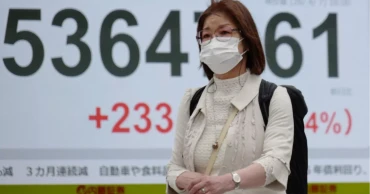
Asian shares mostly rise as oil spikes ahead of Trump’s Iran deadline
Asian stock markets mostly rose Tuesday amid cautious trading, as oil prices surged ahead of a U.S. deadline for Iran to reopen the Strait of Hormuz or face possible attacks on its infrastructure.
Japan’s Nikkei 225 edged up 0.1% to close at 53,429.56. Australia’s S&P/ASX 200 jumped 1.7% to 8,728.80, while South Korea’s Kospi gained 0.8% to 5,494.78. China’s Shanghai Composite rose 0.3% to 3,890.16. Trading was closed in Hong Kong for a holiday.
On Wall Street, stock indexes also moved higher. The S&P 500 added 0.4%, coming off its first weekly gain in six weeks. The Dow Jones Industrial Average rose 165 points, or 0.4%, and the Nasdaq composite climbed 0.5%.
In energy markets, U.S. crude jumped $2.41 to $114.82 a barrel, while Brent crude rose $1.46 to $111.23 a barrel well above pre-war levels of around $70. Oil prices have been volatile amid uncertainty over the war with Iran and its impact on global oil and gas supplies.
Iran rejected the latest ceasefire proposal Monday, calling instead for a permanent end to the conflict. Analysts at Mizuho Bank in Singapore said President Trump’s repeated ultimatums are part of a growing cycle of escalation. “Hopes for a complete resolution remain slim as countries seek bilateral solutions,” they said.
Meanwhile, Iranian and Omani officials continued working on a plan to manage the strait, through which nearly a fifth of the world’s oil passes.
In bonds, the 10-year U.S. Treasury yield held at 4.33%, above its pre-war level of 3.97%. In currency markets, the dollar edged up to 159.86 yen from 159.62, while the euro fell slightly to $1.1541 from $1.1543.
6 months ago
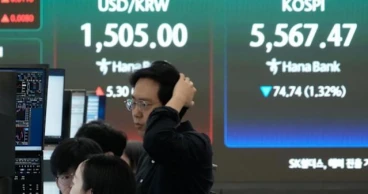
Asian stocks decline, oil prices rise amid uncertainty over Iran conflict
Asian share markets slipped on Thursday, while oil prices climbed back near $100 per barrel as hopes for easing tensions in the Iran conflict remained unclear.
U.S. futures dropped by 0.5%.
Japan’s Nikkei 225 fell 0.3% to 53,603.65, while South Korea’s Kospi saw a sharper decline of 3.2% to 5,460.46.
In Hong Kong, the Hang Seng index dropped 1.9% to 24,856.43, and China’s Shanghai Composite lost 1.1% to 3,889.08.
Australia’s S&P/ASX 200 slipped slightly by 0.1%, and Taiwan’s Taiex was down 0.3%.
Oil prices increased again on Thursday. Brent crude, the global benchmark, rose 3.3% to $100.41 per barrel after falling below $95 the previous day. U.S. crude also climbed 3.8% to $93.74 per barrel.
The rise in oil prices followed Iran’s rejection of a U.S.-proposed ceasefire plan on Wednesday. The proposal, put forward by the administration of President Donald Trump, included 15 points aimed at easing tensions. Trump also delayed his earlier deadline to take strong action against Iran’s power facilities in an effort to push Tehran to reopen the Strait of Hormuz.
Meanwhile, Iran carried out further attacks on Israel and Gulf Arab nations, while Israel launched airstrikes on Tehran. The U.S. is also preparing to send additional troops to the region.
The Strait of Hormuz — a key route between Iran and Oman through which about one-fifth of the world’s oil supply passes — has remained mostly closed since the conflict began. As a result, oil prices have been volatile, rising roughly 40% over the past four weeks.
On Wednesday, U.S. stock markets ended higher. The S&P 500 rose 0.5% to 6,591.90, the Dow Jones Industrial Average gained 0.7% to 46,429.49, and the Nasdaq composite increased 0.8% to 21,929.83.
Shares of Arm Holdings surged 16.4% in the U.S. after the British company announced plans to produce and sell its own chips, a move expected to boost future earnings.
Meanwhile, shares of Swiss sportswear brand On Holding dropped 11.2% after its CEO Martin Hoffmann announced he would step down. The company has appointed its two co-founders as co-CEOs.
In early Thursday trading, gold and silver prices declined. Gold fell 2.7% to $4,428.80 per ounce, while silver dropped 5.2% to $68.88 per ounce.
The U.S. dollar edged up slightly to 159.49 Japanese yen from 159.47 yen, while the euro remained unchanged at $1.1559.
6 months ago

Stocks gain ground and put S&P 500 and Nasdaq on a path for all-time highs
Stocks rose in morning trading Friday and put Wall Street on track to close a strong week at an all-time high.
The S&P 500 rose 0.5% early Friday and is on track to surpass its record set in February. The Nasdaq composite rose 0.5% and is also on track for a record. The Dow Jones Industrial Average rose 0.6%, or 273 points, to 43,657 as of 9:58 am Eastern.
A record for the S&P 500 would mark a sharp turnaround from just three months ago, when the key measure of Wall Street's health fell nearly 20% from the February high on fears that President Donald Trump's trade policy could harm the economy.
The gains on Friday were broad, with nearly every sector within the S&P 500 rising. Nike soared 15.3% for the biggest gain on the market, despite warning of a steep hit from tariffs.
The broader market has seemingly shaken off fears about the Israel-Iran war disrupting the global supply of crude oil and sending oil prices higher. A ceasefire between the two nations is still in place.
The price of crude oil in the US rose 1%, but has broadly fallen back since last week to levels in place before the conflict began.
US, China sign trade deal; Trump hopeful of deal with India
Investors are also monitoring potential progress on trade conflicts between the US and the world, specifically with China. Trump said the US and China have signed a trade deal without providing details.
China’s Commerce Ministry also said that the two sides had “further confirmed the details of the framework” for their trade talks. But its statement did not explicitly mention an agreement to ensure US access to rare earths, materials used in high-tech applications that have been at the center of negotiations.
An update on inflation Friday showed prices ticked higher in May, though the rate mostly matched economists' projections.
Bond yields rose. The yield on the 10-year Treasury rose to 4.28% from 4.24% late Thursday. The two-year Treasury yield, which more closely tracks expectations for what the Federal Reserve will do, rose to 3.75% from 3.72% late Thursday.
Stocks in Europe were mostly higher, while stocks in Asia finished mixed.
1 year ago