US-India
Modi praised for US trade deal as opposition raises agriculture concerns
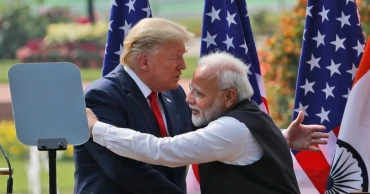
Indian lawmakers from Prime Minister Narendra Modi’s ruling coalition lauded him Tuesday for reaching a trade deal with the United States aimed at reducing tariffs on Indian goods, while opposition parties questioned its impact on sensitive sectors such as agriculture.
The deal follows U.S. President Donald Trump’s announcement Monday that he would cut import tariffs on India from 25% to 18%, six months after imposing steep duties to penalize New Delhi for continuing purchases of Russian oil, which Washington said fueled Moscow’s war against Ukraine. In exchange, Trump said Modi had agreed to halt Russian crude imports, although the Indian government has not publicly confirmed this.
Trump also said India would reduce import taxes on U.S. products to zero and commit to purchasing $500 billion worth of American goods. “This will help end the war in Ukraine, which is taking place right now, with thousands of people dying each and every week,” Trump wrote on social media. Modi responded on X, expressing that he was “delighted” with the tariff reduction and calling Trump’s “leadership vital for global peace, stability, and prosperity.”
The announcement effectively removes the penal tariff imposed on Indian exports, providing relief for exporters who had been facing combined duties as high as 50%. India had emerged as a major buyer of discounted Russian Urals, raising tensions with Washington.
In Parliament, opposition parties disrupted proceedings Tuesday, demanding clarity on the deal’s implications for agriculture, a key sector employing millions of Indians. While the U.S. seeks greater market access and zero tariffs on most of its exports, India has historically protected sectors such as agriculture and dairy from full liberalization.
U.S. Secretary of Agriculture Brooker Rollings said the deal would help American farmers export more products to India, boosting rural incomes. In 2024, the U.S. faced a $1.3 billion agricultural trade deficit with India. Indian Trade Minister Piyush Goyal assured that sensitive sectors, including agriculture and dairy, have been protected. “India has got the best deal in comparison to the countries in the neighborhood. This will strengthen U.S.-India relations while protecting the interests of all 1.4 billion Indians,” he said.
Analysts urged caution, noting that details such as timelines, tariff reductions, and coverage of sensitive sectors remain unclear. Achieving $500 billion in U.S. imports would take decades, given current imports of around $50 billion, said trade analyst Ajay Srivastava. A senior Finance Ministry official, Arvind Shrivastava, said the deal could expand trade, create opportunities for India’s labor-intensive and manufacturing sectors in the U.S., and boost collaboration in advanced technology.
8 months ago
US, India strike trade deal after Trump–Modi call
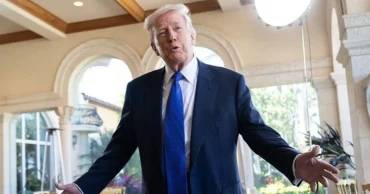
The United States and India have reached a trade agreement under which Washington will lower tariffs on Indian goods to 18% from 25%, while New Delhi has agreed to sharply reduce trade barriers and boost purchases of American products, US President Donald Trump said.
Announcing the deal on his Truth Social platform after a phone call with Indian Prime Minister Narendra Modi, Trump said India would bring both tariff and non-tariff barriers down to zero and stop buying Russian oil. As part of the agreement, an additional 25% tariff penalty imposed earlier over India’s continued purchase of Russian oil will also be withdrawn.
Trump said Modi requested an immediate trade agreement during the call, which also covered the Russia-Ukraine war, and committed to buying more than $500 billion worth of US goods. These include energy, technology, agricultural products and coal.
“He agreed to stop buying Russian oil and to buy much more oil from the United States and, potentially, Venezuela,” Trump wrote, adding that the agreement would significantly expand US exports to India.
A White House official later confirmed that tariffs linked to Russian oil purchases would be dropped and that the overall tariff rate on Indian goods would be reduced to 18%.
Modi welcomed the announcement, saying on X that he was “delighted” by the agreement. He thanked Trump on behalf of India’s 1.4 billion people and said cooperation between the two countries would unlock major opportunities for mutual benefit.
“When two large economies and the world’s largest democracies work together, it benefits our people,” Modi said.
The deal comes at a sensitive moment for India’s trade policy. Indian exports to the United States fell sharply after Washington imposed tariffs of up to 50% on Indian goods last August, the highest applied to any Asian country. In response, New Delhi had been seeking alternative trade partnerships.
Less than a week ago, India and the European Union announced a long-awaited free trade agreement aimed at cutting duties on most goods traded between India and the 27-nation bloc. European Commission President Ursula von der Leyen described it as the “mother of all deals,” with EU officials saying it could double European exports to India by 2032.
Analysts said the US-India deal signals Washington’s intent to reassert its position in global trade. Terry Haines, founder of Pangaea Policy, described the agreement as a response to perceptions that the EU was gaining ground on the United States in trade relations.
US markets edged higher following Trump’s announcement.
However, the agreement has drawn criticism from some US business groups. We Pay the Tariffs, a coalition representing about 800 small American companies, said the deal still leaves tariffs far higher than before Trump’s trade measures. Its director, Dan Anthony, said US importers previously paid an average tariff of 2.5% on Indian goods, calling the new rate a long-term tax increase rather than relief.
With inputs from BBC
8 months ago
.jpg)
Blinken assures Jaishankar of US-India ties' importance
US Secretary of State Antony J. Blinken has underscored India’s role as a preeminent U.S. partner in the Indo-Pacific and the importance of working together to expand regional cooperation, including through the Quad group of countries (USA, India, Japan and Australia).
5 years ago

Will Harris' victory bolster India-US ties? Indians divided
The vice-presidential debate is over in the US. Though early polls indicate that Kamala Harris has won the debate, Joe Biden's pick of the India-origin Democrat senator as his running mate for the November 3 presidential election has elicited a variety of emotional responses in this country — from joy to disappointment to skepticism.
5 years ago