Citizen’s Platform
42% revenue growth target ‘historically impossible’: Citizen’s Platform
Bangladesh’s proposed FY2026-27 budget faces a ‘near-impossible revenue challenge’ that could force the government to choose between paying civil servants more and protecting the poor, the Citizen’s Platform warned Monday.
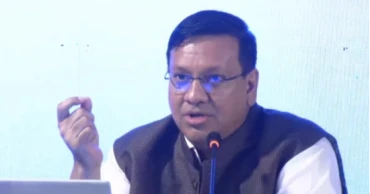
The government has set a revenue target of Tk 6.95 lakh crore for FY27, implying a growth rate of at least 42 percent over the revised FY26 target ,CPD Additional Research Director Towfiqul Islam Khan said presenting a keynote at a pre-budget dialogue at a hotel in Gulshan, organised by the Citizen’s Platform for SDGs, Bangladesh.
“No historical benchmark supports this,” he cautioned, noting that even the most optimistic compound annual growth rate from FY01 to FY19 stood at just 15.6 percent, and would still result in a shortfall of Tk 1.3 lakh crore.
The National Board of Revenue (NBR) collected only Tk 2.89 lakh crore in the first nine months of FY26 against a revised target of Tk 5.03 lakh crore, meaning revenue must grow 96 percent in the final quarter alone to meet the annual goal, a scenario CPD described as virtually impossible.
Towfiq said the proposed Ninth Pay Commission recommendations, which would raise minimum government salaries from Tk 8,250 to Tk 20,000 and maximum salaries from Tk 78,000 to Tk 1,60,000, would require an additional Tk 1.06 lakh crore beyond the government's current annual salary, allowance and pension bill of Tk 1.31 lakh crore.
While the government is reportedly considering implementing only 50 percent of the recommended basic salary increase in FY27, at a cost of Tk 30,000 to 35,000 crore, Towfiq cautioned that once rolled out, the pay scale cannot be reversed, and will squeeze allocations for subsidies, development projects and electoral commitments.
A central theme of the presentation was what Citizen’s Platform called “the tax expenditure paradox.” Bangladesh's NBR tax-to-GDP ratio has fallen to 6.6 percent in FY25, among the lowest in the world, while the country simultaneously forgoes roughly 6.9 percent of GDP through tax exemptions, based on FY22 data.
“Bangladesh forgoes nearly as much as it collects,” Towfiq said, noting that direct tax expenditure alone was 148 percent of direct tax collection in FY21.
The IMF, in its April 2025 review, suggested Bangladesh to begin phasing out tax exemptions from FY27.
CPD recommended a calibrated approach, retaining exemptions on remittance income and standard salary deductions while phasing out concessions to power and energy firms, microcredit institutions, large garments conglomerates and autonomous bodies.
Citizen’s Platform also flagged concerns over news reports suggesting the government may reintroduce tax amnesty for undisclosed income in FY27, calling it a move that would “directly contradict” the rationalisation agenda and breach a political consensus reached by all parliamentary parties.
On the debt front, the IMF has downgraded Bangladesh to “moderate risk” of both external and overall debt distress. Debt service liability, interest plus principal repayments, accounted for 26 percent of total expenditure in FY24, exceeding the entire Annual Development Programme outlay by 15 percent.
Bangladesh's debt service-to-revenue ratio stood at 33.4 percent in FY24, nearly double the 18 percent threshold set by the IMF for countries with medium debt-carrying capacity.
Platform’s field assessment, conducted across 18 districts between May 2 and 11, found that flagship welfare programmes, the Family Card, Farmers Card, mid-day meals and free school uniforms, were showing early implementation cracks.
Beneficiary selection remained unclear, grievance mechanisms were barely functional, and food quality complaints were surfacing in the school meals programme.
The Family Card scheme, which aims to reach 50 lakh beneficiaries at Tk 2,500 per month, is estimated to cost Tk 14,500 crore. The Farmers Card targeting 42.5 lakh beneficiaries at Tk 2,500 annually would cost approximately Tk 1,062 crore.
Summing up the budget outlook, Towfiq framed the FY27 challenge as a collision between economic compulsion and political necessity. Revenue must grow 42 percent, debt servicing is approaching a peak, and IMF conditionalities demand reform, while the government simultaneously faces pressure to raise salaries, expand subsidies and deliver on 51 manifesto commitments.
“Budget FY2026-27 faces dual pressures, balancing economic stability and reforms while meeting political demands to deliver quickly, all within the tightest fiscal space in recent memory,” he said.
Towfiq also urged the government to make the Ninth Pay Commission report public, publish FY25 tax expenditure estimates, and bring transparency to ADP project documents, including feasibility studies and impact assessments. “History may ultimately remember this administration for its concluding budget, rather than its beginning.”
Citizen's Platform for SDGs, Bangladesh, a network of civil society organisations, is working to advance the Sustainable Development Goals at the national level.
The event brought together policymakers, economists, development practitioners and civil society representatives ahead of the national budget expected to be placed before parliament next month.
4 months ago
1971, 1990 and 2024 share same spirit of dignity, not conflict: Debapriya
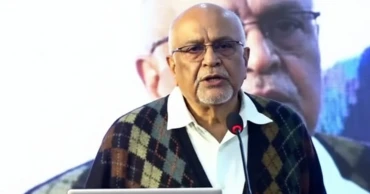
The Liberation War of 1971, the mass uprising against autocracy in 1990 and the student–people’s uprising of 2024 are all rooted in the same aspiration and are not contradictory to one another, said Debapriya Bhattacharya, Convener of the Citizen’s Platform, on Tuesday (January 13, 2026).
“According to the Proclamation of Independence of April 10, 1971, the goal was to establish a sovereign state ensuring equality, human dignity and social justice. The Liberation War was the principal means to build that state. The subsequent movements emerged from the same aspiration to realise those ideals,” Debapriya said.
He was speaking at a programme, titled ‘National Election 2026 and Citizens’ Expectations’, organised by the Citizen’s Platform in the city.
“The struggle for independence in 1971, the anti-autocracy movement in 1990 and the 2024 uprising were all driven by people’s quest for equality, dignity, justice and rights,” Debapriya said.
Read more: Politicians also face growing security concerns alongside citizens: Debapriya
After the Liberation War, he said people had hoped for dismantling the old structures and building a new Bangladesh, but that aspiration remained unfulfilled. “As a result, people united against autocracy in 1990.”
Referring to recent history, Debapriya said that over the past one and a half decades, freedom of expression has shrunk, power has become increasingly centralised, and corruption and misgovernance have intensified. “In protest against these developments and to establish a state based on equality and justice, students and ordinary people once again took to the streets, leading to the mass uprising of 2024.”
Emphasising that there is no conflict among the three historic moments, Debapriya said, “We believe there is no contradiction between 1971, 1990 and 2024. In all three periods, people stood up for their rights and dignity.”
He underscored that a credible national election is now the country’s most pressing need. “There are many questions, fears and uncertainties among people regarding the election and the post-election governance system.”
“The biggest question remains whether the election will be free and fair. Beyond that, another concern has now emerged— even if the election is fair, will it be meaningful at all, or will Bangladesh once again drift back to the old trajectory?” he added.
Debapriya said the Citizen’s Platform has reached out to people across all eight divisional cities, engaging them in dialogues to capture their hopes and aspirations. The platform has also conducted workshops at 15 universities to reflect young people’s perspectives on Bangladesh.
“Incorporating the views of marginalised and deprived communities along with collective national aspirations, we have prepared a citizens’ manifesto,” he said.
Calling it a non-flexible manifesto, Debapriya said the platform will not stop at drafting the document alone. “We have already launched a Reform Tracker. Through this, citizens will be able to monitor how much reform any government undertakes and to what extent citizens’ expectations are fulfilled.”
He said the manifesto was prepared through coordination with 150 national institutions and reflects the state vision of ordinary citizens and the younger generation.
Read more: Debapriya urges stronger govt, EC role to rebuild trust
“The manifesto is framed on the ethical foundation of the Proclamation of Independence of April 10, 1971. Our core objective is to amplify the voices of marginalised people, women and the disadvantaged—those whose voices do not usually reach the upper tiers of the state, namely the government and bureaucracy,” Debapriya said.
The Citizen’s Platform will prioritise programmes over rhetoric and work towards building an inclusive state to ensure the implementation of the manifesto, he said.
9 months ago

Gap between local realities and national development narrative widening: Citizen’s Platform
Citizen’s Platform for SDGs, Bangladesh on Thursday said the local-level development is affected by poor institutional effectiveness as the efficacy of public institutions has gradually eroded in the country.
“Capacity of public institutions to service the disadvantaged groups, profile and prestige of local leadership have diminished overtime. Citizens’ voice has weakened too.” said Citizen's Platform Convenor Dr Debapriya Bhattacharya.
Read more: Economic mismanagement creating instability in market: Debapriya
He was addressing a media briefing in the city’s BRAC Centre Inn to share local opinions received from a series of sub-regional consultation meetings.
The Citizen’s Platform arranged the seven consultation meetings between June and October this year to understand how much the local realities reflect the national development narrative. More than 500 engaged citizens from 25 districts of Bangladesh participated in the meetings and expressed their views and opinions.
Dr Debapriya said that citizen’s voices, role of CSOs and NGOs and civic activism of students suppressed by a “culture of fear” that has intensified in the recent past.
Middle class on the retreat
He said that local situations reveal that the leadership role of the middle class is retreating in setting social norms and inclusive cultural approach in society. “Their socio-cultural role has been squeezed. The middle class is also under pressure due to lack of employment, high inflation and decline of income,” he added.
He said that the disjunction has widened between national development narrative and local experience as there is uneven distribution of the development gains due to discriminatory design, weak delivery and limited access to resources and public services.
Dr Debapriya said that, according to the consultation participants, the impact of ongoing inflationary pressure has fallen disproportionately on the marginalised groups and people with low income. “Traditionally ‘left behind’ groups are not being able to reach national averages,” he said.
Read more: Economy needs transitional policy to overcome the crisis: Debapriya
The gap between national development narrative and local realities, and asymmetries were aggravated further by lack of democratic accountability, he added.
Focusing further on local realities, he said the rich tradition of cultural activities gradually receding; social fabric weakened as values of tolerance, trust and compassion withering away; and political space for pluralistic views, conversation and engagement narrowing.
“There is rising concern among the district-level citizens that the smooth developmental progression of Bangladesh may get jeopardised due to adverse national and global economic outlook, as well as because of the apprehended political violence during the upcoming democratic transition,” said Dr Debapriya.
3 years ago
.jpg)
Almost one-third youths left studies to support family amid Covid-19: Survey
Some 28 percent youths aged above 18 left studies to support their families amid the Covid-19 pandemic in the country, according to an online survey conducted by Citizen’s Platform for SDGs, Bangladesh.
5 years ago