rice price
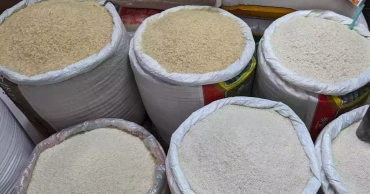
Rice shortage unlikely this year due to steady supply, strong stocks
Bangladesh is unlikely to face any rice shortage during the 2025–26 fiscal year as projected demand and supply will remain well balanced, according to an official document.
Government stock levels, boosted by strong procurement during the Boro season and a proactive import strategy, are set to meet the year's total requirement of 41.73 lakh metric tonnes including safety reserves and subsidised distribution.
Of the total demand, 31.23 lakh MT is earmarked for distribution while 10.50 lakh MT is kept as safety stock.
Currently, government stocks stand at 15.21 lakh MT leaving a net requirement of 26.52 lakh MT for the fiscal year.
The document shows that a record volume of procurement has been made in the current Boro season. Between April and June 2025, the government procured 10.84 lakh MT of rice.
An estimated 13.78 lakh MT of rice will be distributed from July to November 2025, bringing the projected stock down to 8.54 lakh MT by November.
The Aman season typically faces challenges such as floods and lower yields compared to Boro, with a smaller marketable surplus.
Over the past five Aman seasons, the government procured an average of 28,000 MT of paddy and 4.59 lakh MT of rice annually.
In the 2024–25 Aman season, the government procured 26,700 MT of paddy and 5.19 lakh MT of rice, including 5.37 lakh MT in rice form.
Between December 2025 and March 2026, another 8.83 lakh MT of rice is projected to be distributed. Under the government’s subsidised food programme, this fiscal year some 55 lakh families—up from 50 lakh last year—will receive 30 kilograms of rice per month at Tk 15 per kg for six months: August, September, October, November, February, and March.
The 2025–26 food budget includes a provision to import 9 lakh MT of rice and procure 22.29 lakh MT from domestic sources. Out of the total net requirement of 26.52 lakh MT, 22.29 lakh MT will be sourced locally.
To cover the remaining 4.23 lakh MT gap, the government has already decided to import 4 lakh MT of rice as a precautionary measure ahead of the flood-prone Aman season.
The decision was taken on July 15 at a meeting of the Food Planning and Monitoring Committee, chaired by Finance Adviser Dr. Salehuddin Ahmed at the Bangladesh Secretariat.
Briefing reporters after the meeting, Food Adviser Ali Imam Majumder said the move aims to mitigate any potential risks due to seasonal floods.
He also noted that the government has already procured 3.76 lakh MT of Boro paddy against a target of 3.50 lakh MT and collected 9.50 lakh MT of rice out of a 14 lakh MT target.
Bangladesh has maintained a cautious and adaptive approach to rice stocking over the past five years, driven by changing weather patterns, domestic production, and global market conditions.
Government data shows that rice stocks have generally remained within a stable range, fluctuating between 10 to 15 lakh metric tonnes (MT) in recent years.
The stock levels are largely influenced by the outcomes of the Boro and Aman harvests, as well as emergency imports during years of crop shortfall or natural disasters.
Govt to import 4 lakh tonnes of rice to avert food risk in flood season
During 2020–21 and 2021–22, stocks saw temporary declines due to floods and COVID-19 disruptions. However, the government responded by stepping up imports and expanding procurement from local farmers.
In 2022–23 and 2023–24, stocks rebounded as domestic production improved, aided by better weather and higher procurement targets.
In the ongoing 2025–26 fiscal year, the government started with a stock of 15.21 lakh MT, one of the highest in recent memory.
High price of rice in Bangladesh bucks the trend of easing inflation
To ensure food security and price stability, the government has consistently procured 20–22 lakh MT annually from local sources, with strategic imports planned during lean seasons.
The stocking strategy also supports vulnerable families through subsidized food programmes during key months.
1 year ago
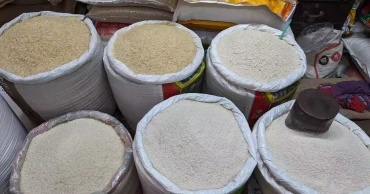
Human chain in Ctg demands urgent action to curb rice price hike
Speakers at a human chain in Chattogram city on Thursday expressed deep concern over the abnormal rise in rice prices and demanded immediate government measures to control the rice market.
They alleged that unscrupulous traders are manipulating prices at will amid lax market monitoring.
The human chain was arranged by Bangladesh Food Security Network (KHANI), Consumers Association of Bangladesh (CAB) Chattogram, ISDE Bangladesh, and Pran on Jamal Khan Press Club premises. Youth CAB Chattogram Metropolitan President Abu Hanif Noman moderated the event.
No immediate power price hike, assures Finance Adviser
Citing official data, speakers said rice prices alone contributed nearly 40% to the country’s food inflation in May 2025 despite sufficient Boro season production, said a press release.
They blamed weak market monitoring, increased milling costs, price instability at the paddy level, and hoarding by corporate groups and millers for the soaring prices.
They said lower- and middle-income people, struggling with stagnant incomes, are being forced to rely solely on rice while cutting out essential nutrition such as fish, meat, pulses, and vegetables.
“This is creating long-term malnutrition and health risks especially for children and the elderly,” said KHANI General Secretary Nurul Alam Masud.
Quoting the UN Food Agency data, they said around 20% of Bangladesh’s population faces food insecurity with 3 out of 10 people unable to meet daily nutritional needs.
The World Food Programme 2024 data shows that the monthly cost for minimum calorie-based meals stands at Tk 3,051 per person—69.5% higher than the food poverty line.
BERC reduces LPG, auto gas prices for July
They placed five key demands at the human chain. These are:
1. Expand direct rice procurement from farmers by the government.
2. Introduce a rationing system for the poor and vulnerable groups.
3. Protect small farmers by strengthening production, pricing, and consumption capacities.
4. Increase OMS (Open Market Sale) and TCB food programmes to support at-risk communities.
5. Monitor rice markets, prevent hoarding, and break syndicate control to stabilise prices.
CAB Vice President S M Nazer Hossain, senior journalist and former president of Chattogram Journalists Union M Nasirul Haque, women's rights activist Jesmin Sultana Paru, Bangladesh Human Rights Foundation Secretary General Advocate Zia Habib Ahsan, Bangladesh Fruits and Vegetables Exporters Association leader Mohammad Selim Jahangir, and several other civic and political representatives voiced their concern at the event.
1 year ago

Import duty cut to stabilise rice market
The government on Sunday withdrew the total import duty on rice and reduced the regulatory excise duty from 25 percent to 5 percent.
The government finally issued a gazette (Customs) notification on Sunday after growing the price of most consumed the main staple. This duty will be applicable to imports of boiled and non-boiled atap rice - not to aromatic rice.
Read: Bangladesh's RMG one of the front-runners in sustainability marathon: BGMEA
The HS code of rice is-1006.30.99. The traders have to take permission before importing the staple from the Ministry of Food for each consignment, to avail the tax reduction facility.
An official of the ministry told UNB that the duty has been cut to give relief to the fixed and marginal income segment.
The government survey saw that coarse rice prices jumped recently, linked to additional transport costs due to a hike in fuel price.
4 years ago

Rice price hike adds to plight of low-income people in Bagerhat
The prices of all varieties of rice have gone up in the wholesale and retail markets of Bagerhat, creating a suffocating condition for the low-income group people who are already plagued by price hikes of daily essentials.
Wholesale and retail rice markets in the district are witnessing an increase in rice prices by Tk 10 per kilogram and Tk 150 per 25kg sack.
Both the buyers and rice traders are finding it hard to procure rice as per their demands. Traders alleged that rice prices have soared due to syndication by rice mill owners.
While visiting Chaupatti and Nagerbazar wholesale rice markets, the UNB correspondent found that both the buyers and sellers were engaging in altercations over rice price hike.
The rice traders were blaming rise in fuel prices for increases in rice prices. On the contrary, consumers were returning home with rice less than the amount bought by them previously.
In wholesale markets, the staple is being sold at rates between Tk 50 to Tk 85 per kg. Even price of coarse rice has also seen an increase by Tk 5 per kg. Rice traders are asking for prices according to their wish, while rice are being sold in the village markets at higher prices due to multiple handovers.
Read: OMS: Rice to be available at Tk 15 per kg from Sep 1
Pradeep Kumar Saha, a wholesaler of Nagerbazar area, said that they are receiving less rice than they’ve ordered.
“If we order 100 sacks of rice, we only get 20 of them which is creating a crisis. So rice prices have gone up by Tk 6 to Tk 10 per kg. Fuel price hike and syndication by the rice millers are behind this situation,” Pradeep said.
Prabir Saha, a retailer from Falpatti area, also blamed syndication by the rice millers behind rice price hike.
“Prices of rice have increased by Tk 150 to Tk 200 per sack (25 kg) within just one week. We’re regularly facing customers’ wrath for selling rice at a high prices. The situation is such that we may have to stop doing business altogether,” Prabir said.
Gopal Saha, a wholesaler of Nagerbazar, said that people from the lower income bracket is feeling the real punch as the rice variant that they buy is out of stock most of the time.
Taposh Saha, a rice trader from Chaulpatti, said that they can’t even buy rice in the evening at the rate at which they had bought rice in the morning.
“We’ve nothing to do except selling rice at the rate of purchase,” said Taposh.
Md Belal Sheikh, a consumer, said that he had bought a 25 kg sack of rice at Tk 1,300 15 days ago, which he now has to buy at Tk 1,450.
Nasima Begum, another buyer, said that she came to buy a 25kg sack of rice but instead bought only 10kg due to exorbitant prices.
“Rice prices are varying from shop to shop. Traders are asking for prices as they wish. I’m confused about what to do but as prices of almost every essential item is on the rise,” said Nasima.
Deputy Commissioner (DC) of Bagerhat Mohammad Azizur Rahman said that he is aware of the rice price hike in local markets.
“We’re monitoring the market regularly. We’ll conduct drives by mobile court so that no one can sell rice at exorbitant prices,” said the DC.
4 years ago

Rice price coming down after anti-hoarding drive: Food Minister
The government’s drive against illegal hoarding of rice has been successful in lowering the price of the essential item in the market, Food Minister Sadhan Chandra Majumder said Sunday.
The minister said this while talking to journalists at the logo unveiling of the ‘International Nutrition Olympiad 2022’ at his ministry.
“On Tuesday evening, the drive against hoarding of paddy and rice began a day after it was discussed at a cabinet meeting. In the drive conducted across the country till Saturday, a huge amount of illegally stockpiled rice was found and actions were taken,” said the minister.
Also read: AL profiteers’ foul play behind rice price hike: BNP
While replying to a question he said, “The price is lowering but when it will come down exactly is hard to say. We are conducting drives in mills after receiving specific complaints.”
The minister said that a meeting of the Food Planning and Containment Committee, the highest committee of the government on food, would be held on Monday where other measures to control the market prices will be discussed.
Also read: Rice cannot be packaged for sale after buying those from open market: Minister
4 years ago
.jpg)
Cabinet orders prompt action against rice hoarders
The Cabinet on Monday directed the relevant authorities to find out why the rice price is so high during the peak harvest season.
The directive came from the Cabinet meeting held with Prime Minister Sheikh Hasina in the chair at her office.
The meeting decided to conduct drives against illegal rice hoarders like the recent drives carried out against the edible oil hoarders in the country, said Cabinet Secretary Khandker Anwarul Islam.
Also read: Strict action if anyone tries to destabilise rice market: Food Minister
“Today a directive was given to take quick action, if anyone is engaged in the unauthorized business and hoarding of rice,” he said, adding that prices of rice and oil were elaborately discussed at the meeting.
Anwarul said the Cabinet instructed to go on action after conducting a market survey to know why the prices of rice went up in the full season and whether the rice is being hoarded and whether anyone is engaged in rice business illegally.
He said there is information that some (businessmen or companies) might get engaged in rice business breaking the memorandum of association. So, the meeting asked to monitor and supervise the rice market strongly, he added.
Also read: PM urges fixing war-disrupted global supply chains to tame rising prices
An instruction was given to the commerce minister, the food minister, the commerce secretary, the food secretary and the agriculture secretary to sit in a meeting for conducting the market survey soon in order to find out the reason behind soaring rice price.
4 years ago

Strict action if anyone tries to destabilise rice market: Food Minister
Food Minister Sadhan Chandra Majumder on Sunday warned that stern action will be taken against those who will try to destabilise the rice market in the country.
The condition in the rice market must be monitored as well as make the Boro paddy procurement drive a success, he said in a virtual view-exchange meeting on ‘Boro 2022 season’s internal procurement and market monitoring’ at the secretariat.
“If any attempt is made to destablise the rice market action will be taken against those involved in it irrespective of their party affiliation,” he warned.
There is an unhealthy competition among traders to buy and hoard paddy thinking that it to be profitable but it will not bring good results, said the minister.
Also read: Budget 2022-23: Govt to increase fertilizer subsidy to ensure food security
Thinking that Russia-Ukraine war may trigger food crisis in Bangladesh, many are hoarding paddy illegally, said Nirod Baran Saha Chandan, president of the Naogaon Paddy and Rice Wholesale Traders’ Association, at the meeting.
Noting that new rice is not coming to the market yet, Sadhan Chandra said the rice that is available in the market now is last year’s old rice.
“So where is the new rice going?” he asked the mill owners.
He also directed the mill owners to report to the officials concerned of the food department on how much paddy is bought by whom and who is marketing how much rice after crushing.
Various corporate houses have started rice business, he said adding they are buying and packaging rice and selling those in the market at higher prices.
The minister also directed the officials of the food department to hold a meeting as soon as possible with the corporate houses involved in rice business.
Meanwhile, many countries of the world including India have sent letters expressing interest to export wheat to Bangladesh, he said.
Also read: No food shortage in country: Agriculture Minister
The food minister also said nor’westers have damaged paddy in the northern parts of the country and it is important to ascertain the exact amount of losses in each district.
4 years ago

Rice price rising due to wrong policy despite new crop: BNP
BNP Secretary General Mirza Fakhrul Islam Alamgir on Tuesday alleged that the rice price is going up even during the full Boro harvesting season due to the government’s wrong policy and a foul play of the ruling party.
Speaking at a press conference, he also said the current government has not taken any initiative to develop the country’s agriculture sector and improve the lot of farmers.
Jatiyatabadi Krishak Dal arranged the press conference at BNP’s Nayapaltan central office following a visit of its leaders to the flood-affected areas.
Also read:Bangladesh heading towards acute crisis: BNP warns
“The rice price is not supposed to rise during this full harvesting season. It’s the time when the price should come down as the Boro harvesting has begun. But the price of every variety of rice has gone up. That means there are some problems in total planning,” Fakhrul said.
He also said the government has given the charge of different ministries to such people who are directly involved in that business. “The person who is involved in the food trade has been given the charge of the Food Ministry. As a result, business is becoming more important than serving people.”
The BNP leader said the big farmers and rice traders are stockpiling paddy to sell it after some days at higher prices. “Because the price of paddy will increase and their profit will also rise in the days to come. This is their (ruling party’s trick."
Fakhrul, who served as BNP government’s state minister for agriculture, said the AL government does not have a well-thought-out plan for the development of agriculture and farmers.
“Marginal farmers now pull rickshaws and vans while many middle farmers are giving up farming as agriculture is now an unprofitable job, decreasing the cultivation of food grains,” he observed.
The BNP leader said the present government undertakes only those works where they have their own profit and commission of crores of taka. “That is why they do not build permanent dams in the haor areas.”
Referring to the recent flood in the haor regions, he said flooding is a very old problem there due to the onrush of water from upstream. “If protection can be given ……by constructing dams or building reservoirs this problem will be resolved. It will also help farmers grow two-three crops in a year. It’s unfortunate that no such programme or plan has been taken up so far."
Also read: Publish the list of Money launderers, BNP asks govt
The BNP leader also alleged that the ruling party men indulged in massive corruption in the name of dam construction in the haor region.
“Some dams have been constructed in the haor area but those are so fragile and weak that they can't hold the pressure of water for twenty-four hours,” he observed.
Citing the reports of various research institutes and the observations of local public representatives, Fakhrul said crops worth about Tk1,000 crore have been destroyed this year as huge areas in Sunamganj went under water due to the embankment collapse.
On behalf of the Krishak Dal, he placed an eight-point demand, including constructing permanent dams with cement blocks in haor, providing affected farmers with the interest-free loans, wavering interest on loans, and suspending loan installments until normalcy returns, introducing crop insurance in haor area and bringing those involved in dam construction corruption to justice.
4 years ago
.jpg)
Govt preparing roadmap to increase rice production to control price
The government is preparing a roadmap to boost rice production within two years to meet the increasing demand, said Agriculture Minister Muhammad Abdur Razzaque on Thursday.
“This year aus, aman and boro paddy production reached record and government stock is at its highest yet price of rice has remained out of control,” he told journalists at the Secretariat after attending a meeting on increasing cultivation of inbred and super hybrid varieties of paddy to enhance production.
He said production has to be accelerated by cultivating very high-yielding inbred and super hybrid varieties to make the grain affordable to low-income people.
Also read: Rice price is increasing beyond control despite having highest stock: Razzaque
The minister said agricultural land is on decline and to increase production the newly invented high-yielding varieties will need to be taken to the field immediately.
The government has taken time-bound specific plans to increase aus, aman and boro rice production in the next season and expand their production in hill, haor and adverse areas, said Razzaque.
Newly innovated BRRI 89 and BRRI 92 boro varieties can yield around one maund of rice cultivated in a decimal.
To take it to fields immediately, a list will be prepared of the farmers who will produce these two varieties and their rice will be purchased as seed at higher prices than the market, he said.
To encourage the farmers, seeds of these varieties will be provided free of cost and fertiliser at subsidised rates, he added.
The minister urged Bangladesh Bureau of Statistics (BBS) and the Department of Agricultural Extension to create a more reliable statistic on rice demand, production and productivity to remove discrepancy for taking the right decision.
The minister said rice prices in the country are currently rising and unstable as in the global market the prices of food grains have increased.
Also read: OMS: Rice to be available at Tk 30 per kg from Thursday
Wheat prices which were between $230 to $280 per tonne has now increased to around $450, he said.
“Around 48 lakh tonnes of wheat were imported in the 2020-21 fiscal year but only 16 lakh tonnes were imported until January this fiscal year for its high prices”, he said.
“There are currently 10 lakh Rohingya citizens in the country and every year 22 to 24 lakh new population get added so demand and consumption is on rise hence the rice price is a bit high but there is no food crisis in the country”, said Razzaque.
4 years ago

Rice price is increasing beyond control despite having highest stock: Razzaque
The price of rice is increasing being control despite a record production and the highest stock in silos, Agriculture Minister Muhammad Abdur Razzaque said on Sunday.
Since rice is the staple food the country will have to further boost the grain production at any cost, the minister said at a meeting to review the progress of his ministry’s Annual Development Programme at Bangladesh Secretariat.
“We are unable to control the price hike,” he told the meeting.
He urged scientists, agriculture extension officials and all others concerned to work sincerely for increasing food production.
Also read: Edible oil price may go up further: Tipu Munshi
He asked officials not to waste time in lobbying to become projects directors in the hope of earning extra money through corruption and irregularities.
“The project directors are recruited after considering professional skill, eligibility and leadership quality,” he said.
“Please do not go for lobbying to become a project director for taking illegal facilities through irregularities and corruption,” he said.
He said those who are in charge projects have to maintain transparency in spending funds.
Also read: Textile millers oppose plan for gas price hike
Razzaque also asked the officers concerned of the ministry to monitor the project work strictly.
According to the ministry, it has 71 projects in FY2021-2022 with a total allocation of Tk 2,928 crores. So far, 32 percent work has been implemented till December 2021, higher than the national ADP implementation of 24 per cent.
4 years ago