President
President stresses ethical, responsible AI use to drive Bangladesh’s growth
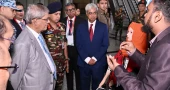
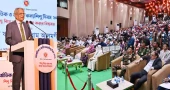
President Mirza Fakhrul Islam Alamgir on Thursday stressed the need for responsible use of artificial intelligence (AI) to boost productivity, modernise industries, attract new investment and create decent employment opportunities for young people.
“Technology should be for people, not people for technology,” he said after inaugurating the Bangladesh AI Business Summit 2026 in Dhaka.
The president said Bangladesh is standing at the threshold of a major transformation, with AI as one of its principal drivers, which would determine the future of the country’s agriculture, education, healthcare, industries, trade, employment and overall economy.
“So, today’s conference is not merely an event; it is a platform for charting our future course,” he said.
President Fakhrul said AI could become one of the major driving forces of Bangladesh’s future development, urging businesses to view the technology not merely as a tool for cutting costs but also as a means of creating new products and services, entering new markets and generating employment.
He stressed the need for safe use and effective regulation of AI, warning that unchecked use of the technology could pose serious risks to humanity.
“AI must not assume control over everything around us. We have to remain vigilant at every step,” he said.
The president also cautioned that AI should not aggravate Bangladesh’s unemployment problem.
“It is our collective responsibility to ensure that technological advancement enhances human capabilities, upholds human values and contributes to the greater welfare of people,” he said.
Referring to the country’s large youth population as its biggest strength, Mirza Fakhrul said young people are technology-friendly and capable of dreaming big.
“They are the principal soldiers of our Fourth Industrial Revolution. But to reap the benefits, we must equip them with technological skills and quality education,” he said.
The president expressed hope that Bangladesh’s AI industry would give the country a new identity globally, just as the readymade garment sector had done.
He said the government has started work on a human-centred national AI policy, with emphasis on ethics, human rights, risk-based regulation and responsible innovation.
He also said efforts were underway to build national AI capacity based on the Bengali language.
Referring to international research presented at the summit, the president said AI is expected to add trillions of dollars to the global economy in the coming years.
“We have to seize this opportunity. Bangladesh must also be developed as a country that innovates in and applies AI,” he said.
The president said the government, private sector, researchers, universities and young people would have to work together to meet the challenges of graduation from the least developed country (LDC) category.
He expressed optimism that Bangladesh could achieve its vision of becoming a trillion-dollar economy by 2034 through such collective efforts.
“Let our goal be to build an AI-enabled, innovation-rich and human-centred Bangladesh, rather than one that is dependent on AI,” he said.
The president congratulated the organisers and participants, including scientists, researchers, technologists, entrepreneurs and investors, and wished the summit every success.
The summit was organised by the Ministry of Science and Technology and the Dhaka Chamber of Commerce and Industry (DCCI).
3 days ago
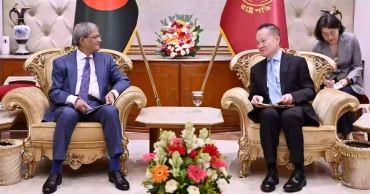
President calls for stronger Bangladesh-China ties
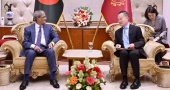
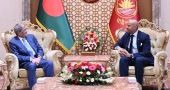
President Mirza Fakhrul Islam Alamgir on Wednesday called for further strengthening bilateral relations between Bangladesh and China, describing the country as a trusted friend and an important strategic partner.
He made the remarks when Minister of the International Department of the Communist Party of China (CPC) Central Committee Liu Haixing paid a courtesy call on him at Bangabhaban, President's Press Secretary Md Sarwar Alam told UNB.
During the meeting, the President referred to the signing of a framework agreement for the modernisation and expansion of Mongla Port and the groundbreaking of the Chinese Economic and Industrial Zone (CEIZ), saying these initiatives would make significant contributions to Bangladesh's connectivity, industrialisation and economic development.
He also welcomed Chinese President Xi Jinping's proposals for expanding multidimensional connectivity, including the proposed Kunming-Chattogram corridor and the China-Myanmar-Bangladesh Economic Corridor.
Mirza Fakhrul thanked and congratulated Xi Jinping and invited him to visit Bangladesh at a convenient time.
Emphasising greater Chinese investment in Bangladesh, he highlighted sectors that could contribute to technology transfer, employment generation and export diversification.
Liu Haixing assured continued Chinese cooperation in areas such as green energy, education and cultural exchanges.
4 days ago
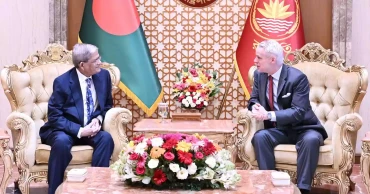
President calls for stronger Bangladesh-Switzerland trade, investment ties
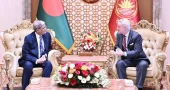
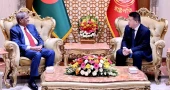
President Mirza Fakhrul Islam Alamgir on Wednesday called on Switzerland to increase investment in Bangladesh and expand bilateral trade to accelerate the country’s economic growth.
He made the call when Swiss Ambassador to Bangladesh Reto Siegfried Renggli paid a courtesy call on him at Bangabhaban.
During the meeting, the president praised the contributions of reputed Swiss companies operating in Bangladesh and emphasised the need to increase Swiss investment in various promising sectors.
“Bangladesh now wants substantial investment rather than aid,” he said, highlighting the country’s vast potential.
He said increased investment would create employment opportunities and help Bangladesh progress faster.
The president also praised Switzerland’s local government system and expressed interest in drawing on the country’s experience to make Bangladesh’s local government institutions more effective and stronger.
He sought Switzerland’s cooperation in this regard and the Ambassador assured him of his country’s support.
Mirza Fakhrul also appreciated Switzerland’s cooperation in strengthening the capacity of Bangladesh’s democratic institutions and parliamentary processes.
The meeting also discussed cooperation in addressing climate change, skills development, cultural exchanges, technical education, and research.
The president’s Military Secretary, Secretary, Press Secretary, Director General of the Ministry of Foreign Affairs, and Swiss Embassy Deputy Head of Mission Diepak Elmer were present at the meeting.
They discussed various aspects of the longstanding bilateral relations between the two countries and other important issues, including reforms and good governance, said the Swiss Embassy in Dhaka.
The Ambassador congratulated the President on assuming office and conveyed Switzerland’s intention to focus more on bilateral trade, investment and knowledge cooperation, as well as to cooperate closely on shared priorities such as democracy and multilateralism.
11 days ago
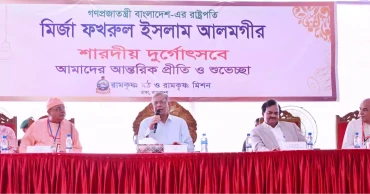
President urges all to stand up against citizens’ rights violations
President Mirza Fakhrul Islam Alamgir on Sunday called on people from all communities to work together to protect constitutional rights and stand up against any violation of citizens’ rights, regardless of their religious identity.
“The rights guaranteed by the Constitution to people of every religion must be protected. If anyone’s rights are violated, we must stand up against it,” he said.
The President made the remarks at a view-exchange meeting after visiting Ramakrishna Mission in the capital on the occasion of Durga Puja.
He said the bonds of friendship, brotherhood and communal harmony among people of different faiths in Bangladesh have developed over thousands of years through mutual respect and peaceful coexistence. ““We will preserve at all costs the bonds of unity, brotherhood and goodwill built over thousands of years,” he said.
“We want to see a Bangladesh where we can live in peace and happiness, where there is no division on the basis of religion and everyone can practise their faith without fear or anxiety,” Mirza Fakhrul said.
21 days ago
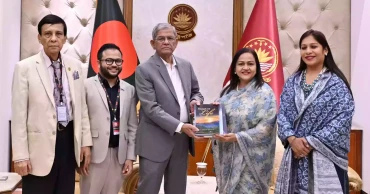
President calls for zero-tolerance policy on drugs at educational institutions
President Mirza Fakhrul Islam Alamgir on Wednesday called for a zero-tolerance policy on drugs to make educational institutions, including universities, and their surrounding areas drug-free and protect students and young people from substance abuse.
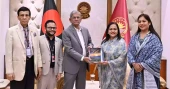
He made the remarks when a delegation of Uttara University, led by its founder and Vice-Chancellor Prof Dr Yasmeen Ara Lekha, paid a courtesy call on him at Bangabhaban in the morning.
President's Press Secretary Md Sarwar Alam briefed reporters after the meeting.
During the meeting, the VC briefed the President on the university’s academic activities, education and research initiatives.
The delegation also highlighted various facilities, challenges and problems faced by the university.
The President assured the delegation that the issues raised will be addressed.
During the meeting, the VC also formally invited the President to attend the university’s upcoming convocation as chancellor.
Mirza Fakhrul accepted the invitation and assured the delegation of his presence at the convocation.
The President’s military secretary, secretary and press secretary, along with the university’s advisers, assistant professors and members of its Board of Trustees, were present at the meeting.
25 days ago
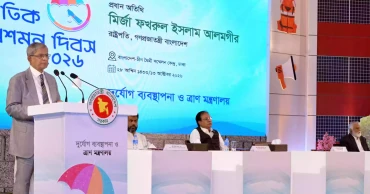
President stresses public awareness, preparedness to tackle disasters
President Mirza Fakhrul Islam Alamgir on Tuesday stressed the need for preparedness, greater public awareness, disaster-resilient infrastructure and stronger early warning systems to mitigate the impact of natural disasters.
Tthe government, relevant institutions and the public must work together to reduce disaster risks, said the President while addressing a programme marking the International Day for Disaster Risk Reduction 2026 at the Bangladesh-China Friendship Conference Centre in Dhaka.
Bangladesh is a disaster-prone country where floods, cyclones, tidal surges, river erosion, landslides, droughts, lightning strikes and earthquakes posed persistent threats to people's lives and livelihoods, he said.
The adverse effects of climate change had further aggravated the situation, he said, adding that although Bangladesh contributed little to global warming, it had to bear a disproportionate share of its harmful consequences.
Referring to the devastating cyclone and tidal surge of 1970, the President said Bangladesh's history demonstrated the catastrophic consequences of natural disasters. “Such events not only claimed lives but also severely damaged livelihoods, the economy, infrastructure and overall development.”
He said disaster risks are increasing worldwide due to climate change, making the situation particularly concerning for vulnerable countries like Bangladesh.
Therefore, instead of focusing solely on disaster-related losses and damage, the country needed to strengthen preparedness and preventive measures well in advance, he added.
The President said Bangladesh has already made significant progress in disaster management.
Improved early warning systems, the establishment of shelters, volunteer networks and increased public awareness help reduce disaster-related deaths but these initiatives needed to be made more effective, he said.
He also drew the attention of the minister concerned to the need for law to ensure the protection of disaster management volunteers and recognise their contributions.
Expressing concern over the risks arising from unplanned urbanisation and weak infrastructure, the President said the potential consequences of an earthquake in Dhaka require particular attention.
Unplanned construction and inadequate urban planning could increase casualties during a major disaster, he said, stressing that the relevant authorities must ensure compliance with building safety regulations and implement proper urban planning.
He also highlighted the importance of maintaining the natural flow of rivers, preventing river pollution, improving drainage systems and protecting the environment to reduce disaster risks.
The ministries and institutions concerned must work in a coordinated manner to address these issues, he said.
Emphasising the role of local communities in disaster preparedness, the President said people in the haor areas of Sylhet demonstrated growing awareness by taking advance precautions and responding to early warnings.
Such initiatives needed to be expanded, he said, urging every family to keep essential documents and emergency supplies in safe places, respond promptly to early warnings and actively participate in disaster management activities.
The President said the government has undertaken various programmes to minimise disaster-related losses, adding that these initiatives must be implemented with sincerity and effective planning to reduce risks before disasters and ensure swift recovery afterwards.
To build a disaster-resilient Bangladesh, every home must be made safe, every family prepared and every community empowered, he said.
He also stressed the need to ensure transparency in development planning and policymaking, protect the environment and incorporate disaster risks into infrastructure development.
Calling for collective efforts to tackle disasters, the President said a resilient Bangladesh could be built through united initiatives, ensuring that people were protected from the impacts of disasters and could recover quickly in their aftermath.
Minister for Disaster Management and Relief Asadul Habib Dulu, State Minister for Disaster Management and Relief M Iqbal Hossain and chairman of the Parliamentary Standing Committee on the Ministry of Disaster Management and Relief Munshi Rafiqul Alam were also present at the event.
26 days ago
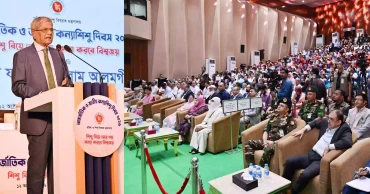
Girls’ safety, education collective responsibility, says President
President Mirza Fakhrul Islam Alamgir on Monday called for concerted efforts by the government, families and society to end ensure girls’ safety and education, end child marriage, and create opportunities for them to achieve their full potential.
“Child marriage is not just a marriage. It is the end of a childhood, a disruption of education and a waste of potential,” he said while addressing a programme marking International and National Girl Child Day 2026 at Bangladesh Shishu Academy.
This year’s theme is “No More Child Marriage, Girls Will Conquer the World.”
President Fakhrul stressed the need to ensure girls’ safety on their way to school, in educational institutions and in the online world, including on social media platforms.
He called for prompt investigations, effective trials and strict enforcement of the law in cases of violence against women and children, rape and sexual harassment.
“There is no alternative to strictly implementing a zero-tolerance policy in this regard,” he said.
He urged families and children to become aware of the national helplines 109, 1098 and 999 so that they can seek assistance quickly in emergencies.
A single phone call at the right moment can play an important role in protecting a child’s life and childhood, he said.
The president stressed that girls’ education is a fundamental right, while ensuring their safety is a collective responsibility.
“Birth of a girl child is not a burden; it marks the beginning of unlimited possibilities,” he said, urging people to recognise girls as assets and future leaders rather than liabilities.
Addressing the programme, Mirza Fakhrul said child marriage could lead to early motherhood, health risks, economic dependence and an increased risk of violence, while depriving girls of opportunities to develop their abilities.
He called for positive changes in attitudes at the family, social and state levels, alongside sustained and well-planned investment in girls’ welfare.
The president said boys and girls should be given equal importance when discussing their aspirations and future careers.
“Alongside asking boys about their ambitions, we must also ask girls, ‘What do you want to become when you grow up?” he said, adding that society must help them turn their dreams into reality.
The president also called for making adolescent-friendly healthcare and mental health services more accessible in every upazila.
Highlighting poverty as one of the major causes of child marriage, Fakhrul said strengthening the economic capacity of families was essential to protecting girls’ futures.
He called for effective delivery of free education, stipends, nutritious food at schools and social protection benefits to help girls from poor families continue their education.
Strengthening birth registration verification, expanding opportunities for girls to pursue higher education and extending social protection coverage to vulnerable families were also important, he said.
The president highlighted Bangladesh’s longstanding initiatives to promote women’s development and empowerment.
He said the institutional journey began with the establishment of the Department of Women’s Affairs in 1976 and the Ministry of Women’s Affairs in 1978 under the initiatives of late President Ziaur Rahman. The ministry was later transformed into the Ministry of Women and Children Affairs.
He also credited initiatives introduced during the government of former prime minister Khaleda Zia, including compulsory primary education, food-for-education programmes and free education and stipends for girls up to the higher secondary level, with playing an important role in expanding girls’ education.
Fakhrul said the present government is also undertaking various programmes to promote girls’ education, safety and economic empowerment.
He stressed that the benefits of state initiatives must reach every girl, including those living in remote villages, so that gender identity, safety concerns and family financial constraints do not limit their aspirations.
Referring to the achievements of Bangladeshi women, the president mentioned mountaineer Nishat Mazumder’s ascent of Mount Everest and the success of the national women’s football team on the international stage.
He also said women and girls have demonstrated courage and played leading roles in the Liberation War, the country’s long democratic movements and, in particular, the July uprising.
Women in Bangladesh are continuing to establish their capabilities in education, healthcare, technology, the media, business and public administration, he said.
“If books had been replaced with wedding sarees in these girls’ hands during their childhood, would we have witnessed their achievements today?” he asked.=
The president said the slogan “Girls Will Conquer the World” was not merely poetic but reflected Bangladesh’s real potential.
Quoting National Poet Kazi Nazrul Islam, he said women and men have made complementary contributions to human civilisation and its progress.
The president also called on parents to treat daughters as possibilities rather than burdens and ensure equal dignity and opportunities for sons and daughters.
He urged parents to teach boys from an early age to respect girls and value their opinions.
“Before saving for marriage, invest in your daughter’s education and welfare,” he said, urging families to help girls develop skills, become self-reliant and build their own futures.
Addressing girls directly, Fakhrul urged them to remain aware of their rights, pursue education, acquire skills and prepare to stand on their own feet.
He encouraged them not to be afraid of dreaming big and to remain determined in pursuing their goals.
He also urged girls not to remain silent if they faced injustice, abuse or harassment, advising them to inform trusted parents, teachers or relevant authorities and seek help through the appropriate helplines when necessary.
The president called for political commitment, administrative efficiency, social participation and, above all, a change in public attitudes to ensure that girls could achieve their full potential.
He said religious leaders, teachers, marriage registrars, elected representatives and media professionals have important roles to play in bringing about the necessary changes.
The president called for building a Bangladesh where every girl could be born safely, grow up without fear, pursue education, acquire skills, become self-reliant and proudly claim ownership of her country and future.
“No more child marriage. No more discrimination. A girl’s dreams will not be stopped. Girls will move forward. Girls will conquer the world,” he said.
He called on everyone to work together to ensure a healthy, safe, dignified and bright future for all girls in Bangladesh and wished children in Bangladesh and around the world safe, successful and fulfilling lives.
27 days ago
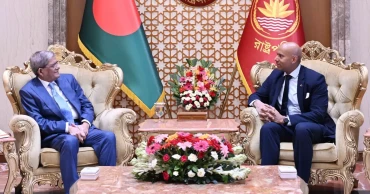
President seeks more Canadian investment
President Mirza Fakhrul Islam Alamgir on Tuesday urged Canada to boost its investment in Bangladesh and expand cooperation in various sectors.
He made the call when Canadian High Commissioner to Bangladesh Ajit Singh paid a courtesy call on him at Bangabhaban.
During the meeting, the Canadian envoy handed over a congratulatory message from Governor General of Canada Louise Arbour to the President.
In reply, Mirza Fakhrul thanked her for the message.
The President praised Canada's long tradition of democratic practices and sought its cooperation in institutionalising democracy in Bangladesh.
He said the current government is facing challenges due to the prolonged absence of democratic practices and parliamentary traditions and has initiated necessary reforms to institutionalise democracy.
Ajit said bilateral trade between Bangladesh and Canada has exceeded 4 billion Canadian dollars annually, noting that there is further scope to expand trade between the two countries.
He also informed the President of the upcoming visit of a Canadian minister dealing with foreign affairs to Bangladesh.
The President called for greater Canadian cooperation in agriculture, food security, fertiliser, IT, outsourcing and other sectors.
He also sought increased Canadian cooperation in education, particularly in technical education, technology, nursing and medical fields.
On the Rohingya issue, High Commissioner Ajit highlighted Canada's support, saying the Canadian government has so far provided around 600 million Canadian dollars in assistance.
Mirza Fakhrul thanked the Canadian government for its continued support and urged Canada to play an effective role in mounting international pressure for the voluntary and safe return of the Rohingyas to Myanmar.
He further said more than 100,000 Bangladeshis are contributing to the development of Canada.
The President's secretaries and senior officials of the Ministry of Foreign Affairs were present at the meeting.
Political Counsellor of the Canadian High Commission Marcus Devies was also present.
1 month ago
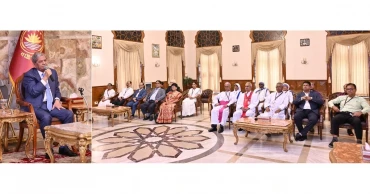
President urges collective efforts to ensure rights, dignity of Christian community
President Mirza Fakhrul Islam Alamgir on Tuesday called for collective efforts to ensure the rights and dignity of the Christian community and build an inclusive Bangladesh.
“We do not want division and communalism in the name of religion. We never want authoritarianism and fascism to return,” he said, calling for a social movement to this end.
The President made the remarks when a 25-member delegation, led by Auxiliary Bishop of the Archdiocese of Dhaka Subrata B Gomes, paid a courtesy call on him at Bangabhaban in the afternoon.
He said Bangladesh belongs to all its citizens and everyone is equal here. “It is very important to ensure that no citizen is deprived or discriminated against because of their religious identity,” he said.
During the meeting, the delegation briefed the President on various issues concerning the Christian community and sought his cooperation in addressing them.
1 month ago
President seeks greater Chinese investment, stronger support for Rohingya repatriation
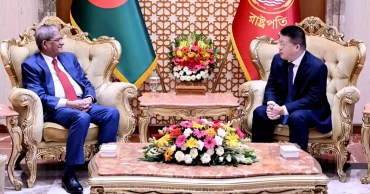
President Mirza Fakhrul Islam Alamgir on Wednesday called on China to increase investment in Bangladesh and step up cooperation to create conditions for the safe, dignified and sustainable repatriation of Rohingyas to Myanmar.
The President made the call when outgoing Chinese Ambassador to Bangladesh Yao Wen paid a farewell courtesy call on him at Bangabhaban.
President's Press Secretary Md Sarwar Alam briefed reporters after the meeting.
Appreciating China's constructive role in addressing the Rohingya crisis, the President said China's initiatives would contribute to resolving the crisis and facilitating sustainable repatriation.
He also urged China to enhance cooperation and investment in various sectors, including readymade garments, electric vehicles, light engineering, high-tech electronics, semiconductors and solar power.
Welcoming initiatives for enhanced regional connectivity including the Kunming-Chattogram corridor and China-Myanmar-Bangladesh Economic Corridor, the President said Bangladesh is ready to work with China and other partners in areas of mutual interest.
He described the modernisation and expansion of Mongla Port and the establishment of the China Economic and Industrial Zone as important initiatives for improving connectivity, promoting industrialisation and accelerating economic development.
The President also urged China to continue its technical and financial assistance for the Teesta River Comprehensive Management and Restoration Project and requested that discussions on implementation of the project be taken forward.
Praising Ambassador Yao's contribution to strengthening Bangladesh-China relations, Mirza Fakhrul described China as a trusted friend and strategic partner of Bangladesh.
Recalling the 1977 and 1980 visits to China by late President Ziaur Rahman, as well as his own visit to China in April, 2026 along with senior and young leaders and students from Bangladesh, the President said such visits and exchanges have further deepened and strengthened bilateral ties.
He expressed hope that Bangladesh-China relations would become stronger and more consolidated in the days ahead.
The President expressed gratitude to China for financing and constructing the 1,000-bed Bangladesh-China Friendship General Hospital.
He also sought Chinese expertise and technological assistance for treating complex blood cancer patients at the Combined Military Hospital (CMH), which is open to the public.
The Chinese Ambassador assured him of cooperation in this regard.
The President wished Ambassador Yao continued success in his future endeavours, saying Bangladesh would remember with gratitude his contribution to strengthening Bangladesh-China relations.
The Ambassador thanked President Alamgir for his longstanding care and support for Bangladesh-China relations and for the support extended to him in performing his duties.
He said under the guidance of the leaders of the two countries, Bangladesh-China relations have advanced rapidly and have been elevated to the China-Bangladesh community with a shared future in the new era, said the Chinese Embassy in Dhaka.
The outgoing Ambassador said China will always be a trustworthy good friend, good neighbor, and good partner of Bangladesh, and stands ready to work hand in hand with Bangladesh to bring greater benefit to the two countries and the two peoples.
President Alamgir spoke highly of Ambassador Yao’s work during his tenure and his contributions to Bangladesh-China friendship.
He stated that Bangladesh attaches great importance to developing relations with China, firmly adheres to the one-China principle, and looks forward to conducting more practical cooperation with China so as to bring Bangladesh-China friendly relations to a new level.
The President's Military Secretary, Secretary, Press Secretary and an Additional Secretary of the Ministry of Foreign Affairs were present at the meeting.
Deputy Chief of Mission Dr Li Yuyin accompanied Ambassador Yao Wen.
1 month ago