Parliament bill
Parliament scraps duty-free car import privilege for MPs
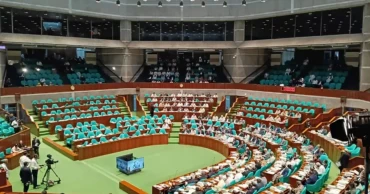
Parliament on Sunday passed a bill abolishing the long-standing provision that allowed Members of Parliament to import vehicles duty-free during their term, in a bid to align it with the electoral manifesto and remove disparity.
Law, Justice and Parliamentary Affairs Minister Md Asaduzzaman moved the bill, which was passed by a voice vote.
Speaker Hafiz Uddin Ahmad, Bir Bikram, was chairing the House.
Placing the Members of Parliament (Remuneration and Allowances) (Amendment) Bill, 2026, the minister said the existing provision was inconsistent with the commitment of Members of Parliament to serve the people and created a visible disparity between lawmakers and people who are required to pay taxes.
“In the current economic realities, continuation of such privileges is not appropriate. The amendment seeks to ensure austerity in public expenditure, enhance transparency and accountability, and establish fairness between elected representatives and citizens,” he told the House.
He said the initiative reflects the vision and policy direction of Leader of the House Prime Minister Tarique Rahman to align parliamentary privileges with broader principles of equity and fiscal responsibility.
Fuel rationing not applicable to police, emergency services: PM
According to the statement of the reasons attached to the bill, although MPs are elected with a pledge to serve people, the provision allowing duty-free import of vehicles in their own names contradicts that commitment. It also creates an imbalance between people, the rightful owners of the state and their representatives.
Under the proposed law, Article 3C of the Members of Parliament (Remuneration and Allowances) Order, 1973 has been omitted. The law will come into force immediately.
Article 3C of the existing Order states, “A Member shall be entitled to import free of customs duty, 13[value added tax], development surcharge and import permit fee during the whole of his term of office, one 14[car, jeep or microbus] of such specification, and on such conditions, as the Government may specify in this behalf.”
In this Article, “Member” shall include the Prime Minister, the Speaker, the Ministers, the Leader of the Opposition, the Deputy Leader of the House, the Deputy Speaker, the Chief Whip, the Deputy Leader of the Opposition, Ministers of State, the Whips and Deputy Ministers who are Members of Parliament.
The article also states a member shall be entitled to import another new car, jeep or microbus after expiration of a period of five years from the date of his last import at the same terms and conditions.
5 months ago
Age limit removed for Bangladesh Bank governor's post
The parliament on Friday passed a bill to remove the maximum age limit of 67 years for the post of Governor of Bangladesh Bank, clearing the legal path for experienced individuals to lead the central bank regardless of their age.
The Bangladesh Bank (Amendment) Bill, 2026 was passed by voice vote as Finance Minister Amir Khosru Mahmud Chowdhury moved the bill, which seeks to amend the Bangladesh Bank Order, 1972.
As there were no further amendments proposed for the specific clauses, the bill was passed in its original form.
Parliament ratifies 10 more ordinances
The new legislation retains the provision for a four-year term for the Governor and the possibility of reappointment.
However, it explicitly strikes out the condition from Clause 5 of Article 10 of the Bangladesh Bank Order, 1972, which stated that no person could remain in the post after reaching the age of 67.
Under the previous law, the Governor was appointed for a four-year term and was eligible for reappointment, but mandatory retirement was fixed at 67 years.
The new amendment eliminates this final restriction, allowing the government to appoint or retain a Governor based on merit and necessity rather than age.
In the object of the Bill, Finance Minister Amir Khosru Mahmud Chowdhury emphasized that the Governor's role is critical for formulating and implementing monetary policy, maintaining financial stability, bank supervision, managing foreign exchange reserves, and coordinating with international financial institutions.
The Minister argued that the existing age limit often acted as a barrier to appointing experienced, skilled, and wise individuals to this high-stakes position.
The statement said that except for Nepal and Pakistan, many countries do not have a maximum age limit for central bank governors, making this change consistent with global practices.
This is the third time in recent years the age limit has been addressed. In 2020, the limit was raised from 65 to 67 years to accommodate former Governor Fazle Kabir.
The current move follows the interim government's appointment of Ahsan H. Mansur, 73, as Governor in 2024.
At that time, an ordinance was issued to bypass the 67-year limit. Today’s passage of the bill in the Parliament provides the permanent legal framework for that decision and future appointments.
6 months ago
Parliament passes bill to revamp public procurement law
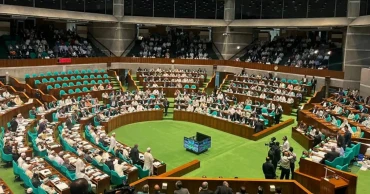
The Public Procurement (Amendment) Bill, 2026 was passed in Parliament on Thursday as the government moves to modernise the nation's public purchasing framework.
Finance Minister Amir Khosru Mahmud Chowdhury placed and moved the bill in the House, which was passed by voice vote.
The proposed legislation aims to overhaul the nearly two-decade-old law to align Bangladesh with international best practices, focusing on sustainability, transparency, and "Value for Money."
The bill seeks to formalise the Public Procurement (Amendment) Ordinance, 2025, which was previously promulgated by the President during the Prof Muhammad Yunus-led interim government.
One of the most significant changes lies in the fundamental objective of the law. The amendment replaces the singular focus on "transparency and accountability" with a comprehensive mandate.
The new preamble will emphasise best value for money, efficiency, ethics, quality, and sustainable procurement.
For the first time, the law introduces the concept of Sustainable Public Procurement (SPP).
This mandates that the government must consider environmental protection, social progress, and economic development when purchasing goods or services.
Under the new Section 16, the government is prohibited from including any terms in tender documents that negatively impact the environment or violate workers' rights, including wages, social benefits, and the prohibition of child labour.
The bill also introduces technological advancements such as reverse auctioning, a real-time electronic bidding process where suppliers compete by gradually lowering their prices to win a contract.
This is expected to drive down costs for standardised goods. Furthermore, the bill makes the Electronic Government Procurement (e-GP) portal mandatory for all public procurement processing.
Any exception to this rule will now require prior approval from the Bangladesh Public Procurement Authority (BPPA).
Key structural reforms include the formal recognition of the BPPA as the primary regulatory body and the categorisation of "physical services" as a distinct type of procurement.
The law also expands the use of Framework Agreements, allowing multiple government agencies to purchase commonly used goods from pre-selected suppliers over a set period.
Addressing practical challenges for international operations, the bill allows Bangladeshi embassies and missions abroad to follow the local procurement laws of their host countries or international standards, provided they receive prior approval from the Cabinet Committee on Economic Affairs.
To protect the domestic industry, the bill stipulates that for IT services funded by the government's own resources, international tenders must include a local consultancy firm as a joint venture partner.
About the object of the bill, Khosru said to ensure the legal framework for ensuring fairness, accountability, timeliness and free competition in government procurement management, the government formulated the Public Procurement Act, 2006 (PPA 2006) on 6 July 2006.
With the aim of making the government's speedy process more efficient and easier through necessary amendments and additions. The said act has been amended a total of five times till 2016.
As the issue of ensuring efficiency, ethics and quality in government procurement and the best value for money (Value for Money) has been considered relevant and necessary in recent times, the need for inclusion of government procurement in the legal framework was felt.
In addition, the minister said the need to formulate an alternative provision to the said provision arose due to the imposition of price capping in internal procurement in the fifth amendment made to the act in 2006, which significantly reduced the level of competition in government procurement.
Therefore, in order to ensure consistency with international best practices, it is necessary to amend the Public Procurement Act, 2006 (PPA 2006) by including the following topics: formulation of procurement strategies, introduction of the concept of 'Sustainable Public Procurement' in government procurement, provision for asset disposal, inclusion of reverse auction, consideration of 'infrastructural service’ as a separate type of procurement, etc.
Later, on May 4, 2025, the Public Procurement (Amendment) Ordinance, 2025 was issued by the President, which was implemented by the government through a gazette notification from September 28, 2025.
6 months ago
Parliament passes seven bills
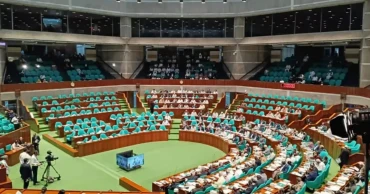
Parliament on Monday passed seven bills, including Representation of the People (Amendment) Bill, 2026 and Electoral Rolls (Amendment) Bill, 2026 as part of the move to endorse the relevant ordinances promulgated during the interim government period.
Law Minister Md Asaduzzaman placed the bills in the House and then Deputy Speaker Barrister Kayser Kamal, who was chairing the House, piloted the bills separately to votes.
The bills were passed by voice votes as there was consensus in the all-party parliamentary special committee to accept these ordinances.
Voting for reserved women seats of 13th parliament on May 12
Other bills, passed in the parliament, include Delimitation of Parliamentary Constituency Bill, 2026, Election Commission Secretariat (Amendment) Bill, 2026, Election Officer (Special Provision) (Amendment) Bill, 2026, National Parliament Secretariat (Interim Special Provision) (Repeal) Bill, 2026, and Bangladesh Law Officers (Amendment) Bill, 2026.
Besides, the Law Minister placed four other bills in Parliament. The bills are Supreme Court Judges Appointment (Repeal) Bill, 2026, Supreme Court Secretariat (Repeal) Bill, 2026, National Human Rights Commission (Repeal and Restoration) Bill, 2026, and Land Use Control and Agriculture Land Protection Bill, 2026.
6 months ago

Bill tabled to make registration of tour operators, guides mandatory
‘The Bangladesh Tour Operators and Tour Guides (Registration and Operation) Bill, 2021’ was placed in Parliament on Saturday, making it mandatory for tour operators and guides to get registered.
It was prepared aiming to bring the tour operators under the legal framework for ensuring the best services and thus give a boost to the tourism sector.
State Minister for Civil Aviation and Tourism M Mahbub Ali placed the Bill and it was sent to the respective Standing Committee for further scrutiny. The Committee was asked to submit its report within one month.
As per the proposed law, a touring company will have to collect a license. No company will be allowed to operate tours without registration. If anyone does, it would be tried under the Code of Criminal Procedure.
The proposed law also has a provision of handing over the registration to another tour operator in case of death, physical and financial incapability.
Also read: 12th session of Parliament begins
The draft law suggested that criminal acts of the tour operators will be tried under the Code of Criminal Procedure 1898 aimed at protecting the interest of the tourists.
As proposed, the activities of tour operators, tour guides, general tour guides, cultural guides, nature guides and trekking guides will now be regulated.
Now, there’s no guideline and rule for tour operators in the country.
The conditions for getting registration, period of registration and provisions for cancellation of registration have been mentioned in the bill.
Also read:JS session goes into session on Jan 18
It has precisely been defined in the bill who can be tour operators and tour guides.
Once the bill is passed, it will make tour operators operate properly within legal framework, the tourism sector will flourish, the revenue of government will increase and it will be easier to avail the tour services, the Bill stated in its objective.
5 years ago