Kurigram

Woman killed, husband injured in knife attack by son in Kurigram
A woman was killed and her husband critically injured after their son stabbed them with a knife at Palashbari village in Kurigram Sadar upazila early Wednesday.
The deceased was identified as Munira Begum, 56, while her husband, Sardar Ali, 65, a retired textile engineer, sustained serious injuries in the attack. Their son, Suman Mia, who is reportedly addicted to drugs, went into hiding after the incident.
Police and locals said Suman has long been addicted to drugs. His parents had sent him to drug rehabilitation centres several times in an effort to help him return to a normal life, but he escaped from the centres each time.
The family was preparing to send Suman to a rehabilitation centre again. In the early hours of Wednesday, staff from a Sirajganj-based centre arrived to take him.
Agitated, Suman stabbed his mother in the chest and his father repeatedly in the abdomen before fleeing.
The rehabilitation centre staff members rescued the couple in critical condition and took them to Kurigram General Hospital, where the on-duty doctor declared Munira dead. Sardar Ali was referred to Rangpur Medical College Hospital.
Officer-in-Charge of Kurigram Sadar Police Station Kamal said several police teams were conducting drives to arrest Suman, who remained absconding.
The body was sent to the morgue of Kurigram General Hospital for an autopsy.
4 days ago

Elderly man electrocuted in Kurigram
An elderly man was electrocuted at Char Boroloi area in Phulbari upazila of Kurigram on Sunday morning.
The deceased was identified as Soleman Ali, 75.
Soleman was preparing to take his cattle toward the char area in the morning.
Unaware that a live electric wire was trapped in a nearby green bamboo pole, he accidentally touched it and died on the spot, said Borobhita Union Parishad (UP) Chairman Ataur Rahman Mintu.
14 days ago
Flash floods, erosion by major rivers combine to unfold fresh humanitarian crisis in Kurigram
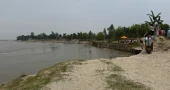
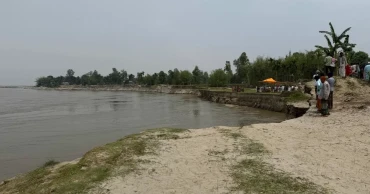
As the monsoon arrives, the country's poorest district Kurigram is already grappling with a severe humanitarian crisis as flash floods and intense river erosion struck a double blow forcing hundreds of families from their homes.
Several major rivers crossing the district are causing the erosion, including the Brahmaputra, Dharla, Dudhkumar, Teesta and Kaljani, damaging homes, farmland, rural roads and trees daily.
According to locals, more than 500 families have already lost everything, even as they moved to safer areas.
The Water Development Board (WDB) said severe erosion is currently occurring at 36 points across a stretch of around 11.245 kilometres in the district.
Fear of further erosion has forced riverbank residents to stay awake at night, guarding their homes.
The Dudhkumar is flowing 23 centimetres above the danger level. Strong currents are continuously swallowing farmland and homesteads in areas of Sadar and Nageshwari upazilas.
Severe erosion is also reported along the Dharla River in Sadar and Phulbari upazilas, while the Brahmaputra is swallowing large chunks of Sadar, Nageshwari, Ulipur, Chilmari, Roumari and Rajibpur upazilas.
Erosion pressure is also rising along parts of the Teesta River in Rajarhat and Ulipur upazilas, while fresh fears have emerged along the Kaljani River in Bhurungamari and Sadar upazilas.
Residents say the river is advancing day by day, leaving them with little time to respond.
“The river is moving a few feet every day. I have already removed the tin roof of my house. My family stays awake at night in fear,” said Abdul Kader, a resident of Satkalua village in Sadar upazila.
Another affected farmer, Nur Islam from Ulipur, said he has already lost his land. “Now our house will go too. There is no way left for us to survive,” he says, resigned to his fate.
Emergency response and relief
WDB Executive Engineer Rakibul Hasan said emergency protection work is ongoing over an area of about 5.35 square kilometres, with around 100,000 sand-filled geo-bags being used at a cost of Tk 3.9 crore.
Rakibul however emphasises that additional funds to tackle the situation.
Char Development and Implementation Council President Prof Shafiqul Islam Bebu said the people of the char areas are facing a “severe humanitarian crisis” due to the combined impact of floods and erosion.
He added that permanent river management solutions and quick compensation are needed for affected families.
District Relief and Rehabilitation Officer Benazir Rahman said lists of affected families are being prepared through upazila administrations. So far, 275 tonnes of rice, Tk 1.62 lakh in cash and 1,000 packets of dry food have been allocated for relief.
Meanwhile, local journalist and general secretary of the Kurigram District Development and Implementation Council Syed Ahmed Babu said stop-gap measures such as geobags are no longer enough.
“Only permanent river management can save Kurigram. Affected families must also receive proper compensation without delay,” he said.
3 months ago
Kurigram residents call for urgent govt action to tackle Dudhkumar erosion
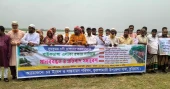
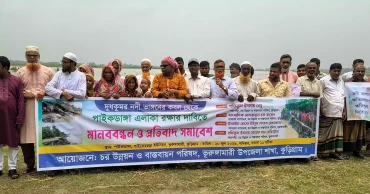
A human chain and a rally were held demanding protection of the Paikdanga area of Paikerchhara Union in Bhurungamari Upazila of Kurigram from erosion by the Dudhkumar River.
The programme was organised on Saturday afternoon in the severely erosion-affected area on the banks of the Dudhkumar River. Around five hundred men and women, all victims of local river erosion, took part in the rally.
The rally was chaired by Rafiqul Islam, President of the Bhurungamari Upazila Char Development and Implementation Council. Professor Shafiqul Islam Bebu, President of the Kurigram District Char Development and Implementation Council, attended as the chief guest.
Professor Shafiqul Islam Bebu said that not only the Dudhkumar River, but around 36 points of 16 rivers in Kurigram district are experiencing severe erosion. Over the past 10 years, hundreds of thousands of people in the district have lost their homes and been forced to relocate.
However, he said, no government office has an accurate count of these displaced people, and even new victims of river erosion are not being properly tracked.
Citing examples from other countries, he said that in many nations, people affected by river erosion are immediately compensated and rehabilitated. In contrast, he said, victims in Bangladesh often do not receive even minimal government assistance or proper documentation, let alone compensation.
He further said that improving the living standards of char dwellers and ensuring their permanent rights is essential. Referring to the formation of the Ministry of Chittagong Hill Tracts Affairs, he said a similar “Ministry of Char Affairs” is now urgently needed to improve the lives of millions living in the char areas.
District Char Development and Implementation Council General Secretary Journalist Ashraful Haque Rubel, Organising Secretary Abdul Akher, Office Secretary Humayun Kabir, Bhurungamari Upazila Committee General Secretary Ismail Hossain Yusuf, Vice President Yasin Ali, and Kachakata Thana Committee President Journalist Abdul Quddus Chanchal, among others, also spoke at the event.
The speakers urged the Water Development Board and relevant government authorities to immediately construct a permanent embankment to protect the Paikdanga area from erosion by the Dudhkumar River.
3 months ago
Kurigram’s rail link with rest of country suspended
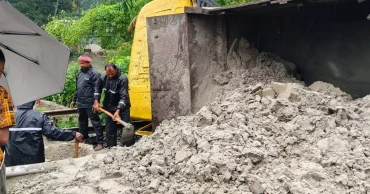
Rail communication between Kurigram and the rest of the country remained suspended since Thursday morning after a sand-laden truck overturned on a railway track in Rajarhat upazila, causing immense suffering to passengers.
A sand-laden truck overturned on the railway tracks around 6:30 am, blocking the line, said Konika Akther, Officer-in-Charge of Kurigram Railway Station.
“Work is underway to remove the truck. However, it is not possible at this moment to say exactly when the train services will resume,” she said.
Dhaka-bound Kurigram Express could not reach Kurigram Railway Station on schedule, while the operation of the Ramna Commuter train was also disrupted.
Hundreds of passengers were left stranded, with many forced to seek alternative transportation to Teesta Railway Station to continue their journeys.
Railway officials said the Kurigram Express was scheduled to depart for Dhaka from Kurigram Station at 7:10 am, but the train could not reach the station because the track remained blocked.
After being informed, railway authorities, local administration officials and rescue teams rushed to the scene and began efforts to remove the truck and restore train operations.
4 months ago
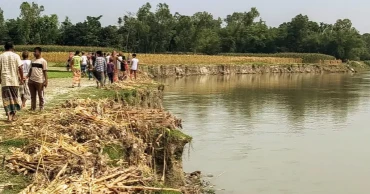
Kurigram residents face fresh displacement as Teesta devours land
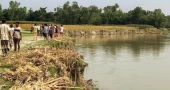
Severe erosion along the Teesta River has once again put vast areas of Kurigram at risk, swallowing cropland and homesteads and pushing thousands of riverbank residents into deep uncertainty.
Farmland is disappearing almost daily, leaving farmers without livelihoods and families fearing the loss of their homes.
“We are losing land every day. Now our homes are also at risk. We don’t know where we will go with our families,” said Mahbub Hossain, a resident of Palashpur village under Nazimkhan union.
“We cannot even sleep properly due to the erosion. Every year we hear promises of work, but nothing changes in reality,” said housewife Rahima Begum.
Farmers said the loss of cultivable land has cut off their only source of income.
“My farmland has gone into the river. There is no way to earn anymore. We urgently need a permanent solution,” said Moksed Ali.
Originating in India’s Sikkim, the Teesta travels about 315 kilometres before entering Bangladesh, flowing through Nilphamari, Rangpur, Lalmonirhat, Kurigram, and Gaibandha before meeting the Brahmaputra in Gaibandha.
Around 115 kilometres of the river lie within Bangladesh.
According to the Kurigram office of the Bangladesh Water Development Board (BWDB), nearly 45 kilometres of the Teesta riverbank in the district are erosion-prone.
Several vulnerable stretches have already been identified including 400 metres in Ramhari area under Ghoriyardanga union, 500 metres in parts of Nazimkhan union, 1,000 metres in Chaprarpar under Thetarai union of Ulipur upazila, 500 metres in Saduar Damarhat, and 700 metres in Bajra area.
Despite recurring losses over the years, residents alleged that no effective long-term measures have been taken, said locals.
Temporary efforts such as dumping sand-filled geo-bags, have failed to provide lasting protection.
Shafiqul Islam Bebu, president of the Kurigram District Char Development and Implementation Council, said countries like the Netherlands have comprehensive systems to support erosion victims, including housing and rehabilitation.
“In our country, there is no such structured support. A legal framework is urgently needed to ensure compensation for those affected,” he said.
BWDB Executive Engineer Md Rakibul Hasan said the situation is being monitored closely.
“We have identified the vulnerable areas. As an emergency measure, around 100,000 geo-bags filled with sand will be placed to prevent further erosion,” he said.
However, locals said similar assurances are given every year without yielding durable solutions.
As a result, fresh waves of displacement continue, with families losing their homes and land to the relentless river.
5 months ago
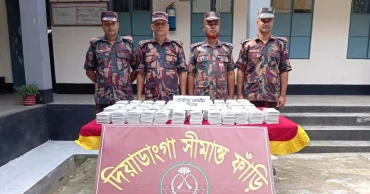
BGB seizes smuggled goods worth Tk 56 lakh in Kurigram
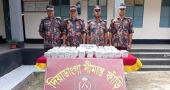
Border Guard Bangladesh (BGB) members seized smuggled goods including drugs worth Tk 56 lakh from different borders in the district in 24 hours till Saturday morning.
According to BGB sources ,a team of Kurigram Battalion (22 BGB) conducted drives at different places and seized the goods.
The seized goods include mobile phone displays, a motorcycle and various types of narcotics.
Commander of Kurigram Battalion (22 BGB) Lt. Col. Mohammad Mahbub-ul-Haq said that BGB is following zero tolerance policy as per instructions its headquarters to prevent drug and smuggling in border areas.
The members of the battalion are continuously performing their duties with utmost vigilance, efficiency and professionalism to ensure border security, prevent smuggling and prevent illegal infiltration, he added.
6 months ago
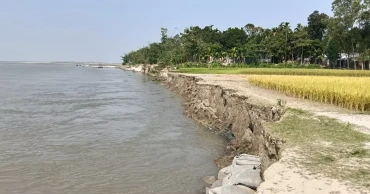
Kurigram battles climate-driven river erosion; Tk 850cr project awaits nod
Intensifying climate change impacts are accelerating the Brahmaputra’s relentless erosion in Kurigram, deepening a decades-long crisis that has displaced thousands, wiped out vast stretches of land and pushed vulnerable communities into chronic uncertainty.
For decades, the river has been steadily eating into its banks across the northern district, drastically altering its landscape and displacing hundreds of thousands of people, many of whom have rebuilt their homes multiple times only to lose them again.
Originating in India’s Assam, the Brahmaputra enters Bangladesh through Narayanpur union of Nageshwari upazila and flows through Kurigram Sadar, Ulipur, Chilmari, Roumari and Char Rajibpur before reaching Bahadurabad in Jamalpur, where it becomes known as the Jamuna.
A roughly 70-kilometre stretch from Narayanpur to Rajibpur has been experiencing continuous erosion since the 1950s, said locals.
Large parts in unions in Nageshwari, Kurigram Sadar, Ulipur, Chilmari, Roumari and Rajibpur have been partially or completely eroded, displacing several lakh people and reshaping the district’s geography.
The loss of agricultural land, educational institutions, religious establishments and other assets has dealt a severe blow to the local economy and social structure.
To address the crisis, the Bangladesh Water Development Board (BWDB) has proposed a riverbank protection project worth around Tk 850 crore to protect the left bank of the Brahmaputra.
The project aims to safeguard about 16.305 kilometres of vulnerable riverbanks across Ulipur, Roumari and Rajibpur upazilas.
Planned for implementation from January 2026 to June 2029, it will cover areas including Saheber Alga, Habiganj Bazar, Namajer Char, Sonapur, Ghughumari and Sukher Bati in Ulipur; Phulua Charghat in Roumari; and Kodalkati, Hajipara and Char Neoyaji in Rajibpur.
BWDB officials said the proposal has been sent to the Ministry of Water Resources after completing necessary surveys.
It was forwarded to the Planning Commission on March 2 but is yet to receive final approval.
Residents in erosion-hit areas say they are living in extreme hardship after losing their homes repeatedly.
“I have built my house five times in my life, and each time it was taken by the river. I don’t know where to go now,” said Sharafat Ali, 56, from Saheber Alga in Ulipur.
“The river has taken everything from me. I now live on someone else’s land with my children, and I fear the monsoon every year,” said Rahila Khatun from the same area.
Zaidul Islam, a farmer from Phulua Char in Roumari, said he now works as a day labourer after losing 10 bighas of farmland to the river.
“It is becoming impossible to survive after losing our homes again and again. If immediate steps are not taken, we will become completely homeless,” said Zarina Khatun from Char Rajibpur.
Local representatives have urged the government to take urgent action, warning of a looming humanitarian disaster.
“People have had to relocate five to six times. Without a sustainable embankment, a major humanitarian crisis is inevitable,” said Mozzaffar Hossain, chairman of Saheber Alga union in Ulipur.
Representatives from Roumari and Rajibpur echoed similar concerns, stressing the need for immediate intervention to control erosion.
Experts say the Brahmaputra’s unstable nature is a key factor behind the worsening situation.
“The Brahmaputra is an extremely dynamic river. On average, it erodes about 50 metres of its banks each year, destroying homes, farmland and infrastructure. Over time, this is intensifying poverty and humanitarian challenges,” said Prof Shafiqul Islam Bebu, president of Kurigram District Char Development and Implementation Organisation.
He also emphasised the need for regular dredging alongside embankment protection to maintain the river’s navigability.
BWDB Executive Engineer Rakibul Hasan said a project proposal has been prepared after identifying vulnerable areas and that work would begin once approval is secured.
Residents now hope the project will be approved and implemented without delay, offering protection from the relentless erosion and restoring some stability to life in the char areas.
Although Bangladesh is responsible for less than 0.5 percent of global carbon emissions, it faces some of the gravest impacts of climate change.
According to the World Bank, climate-related disasters could displace one in seven people in the country by 2050.
6 months ago
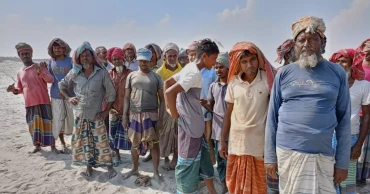
Kurigram looks to new government for solutions to river erosion, jobs crisis
Expectations are running unusually high in the northern district of Kurigram, as residents look to the newly formed government for visible and sustainable solutions to the chronic problems of river erosion and unemployment that have shaped life in the area for decades.
Bordering India and crisscrossed by rivers, Kurigram has long struggled with poverty, unemployment and underdevelopment in education, health care and communications. Locals say repeated promises and short-term projects have failed to deliver lasting change, leaving thousands trapped in a cycle of displacement and economic insecurity.
At least 16 rivers, including the Brahmaputra River, Dharla River, Teesta River and Dudhkumar River, flow through the district. Every year, monsoon floods and erosion eat away homesteads, farmland, schools and roads, forcing hundreds of families to lose their land and relocate, often repeatedly.
Residents say temporary embankments and piecemeal projects have done little to stem the damage. What they want now, they say, is a comprehensive and long-term river management plan involving permanent embankments, regular dredging and science-based river training.
“River erosion destroys our lives every year. Every year we have to battle erosion to survive,” said Shajahan Ali of Baldi Para in Kurigram Sadar upazila, recalling how his family has been displaced multiple times by erosion. “We want a permanent solution.”
Alongside erosion, the lack of employment opportunities has emerged as Kurigram’s most pressing social challenge. With few industries in the district, large numbers of educated and semi-educated youths migrate to Dhaka, Gazipur and Chattogram in search of work, often leaving families behind.
“There is no work here,” said Raju Mia from Char Baraibari village under Bhogdanga union. “We don’t want to leave our families and go to big cities. We want jobs in our own district.”
Sahinur Rahman, a young resident of Jhunkar Char in Jatrapur union, echoed the frustration. “I finished my studies, but there are no jobs. If there were factories here, we could work locally. Instead, we are forced to move to Dhaka.”
Local development advocates argue that the situation can change if the government prioritises Kurigram in its development agenda. They are calling for the establishment of agro-based industries, food processing plants, cold storage facilities, and stronger support for small and medium enterprises, alongside skills development programmes for youths.
PM Tarique urges market restraint ahead of Ramadan
According to Khaja Sharif Uddin Ali Ahmed Rintu, senior vice-president of the Kurigram District Development and Implementation Council, around 1.65 million of the district’s nearly 2.3 million people live in poverty.
“River erosion and decades of mismanagement have repeatedly stripped people of their homes and livelihoods,” he said. “Many NGOs have worked here in the name of poverty reduction, but the lives of ordinary people have not changed much. Proper implementation of development allocations is crucial if poverty is to be reduced.”
Professor Shafiqul Islam Bebu, president of a local char development organisation, said balanced development is key to Kurigram’s future.
“To bring neglected Kurigram forward, we must stop river erosion, improve living standards in char areas and create employment through industrialisation,” he said. “Only fair and equitable distribution of national development resources can ensure sustainable progress here.”
For residents, the message to the new government is clear: move beyond paper plans and political promises to deliver real action on the ground.
“If river erosion is controlled and jobs are created, Kurigram will change,” said one local elder. “People will finally be able to live with dignity, hope and stability.”
As the new administration settles into office, the people of Kurigram wait to see whether this time their long-standing demands will finally translate into lasting change.
8 months ago

Woman dies from electrocution in Kurigram
A housewife died from electrocution in Bhurungamari upazila of Kurigram district on Saturday morning.
The deceased was identified as Zarina Begum, 40, wife of Safar Uddin of West Chat Gopalpur village under Bhurungamari upazila.
Tilai Union Parishad Chairman Kamruzzaman said she got electrocuted when she touched the auto-rickshaw purchased by her neighbour Ariful Islam. The vehicle was left charging overnight.
Woman dies from electrocution in Kushtia
She was immediately taken to Bhurungamari Upazila Health Complex where doctors declared her dead.
Al Helal Mahmud, officer-in-charge of Bhurungamari police station said police were sent to the scene.
A UD case will be filed in this regard.
1 year ago