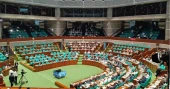
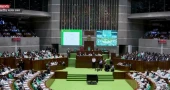
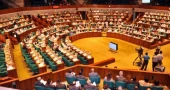
parliament session
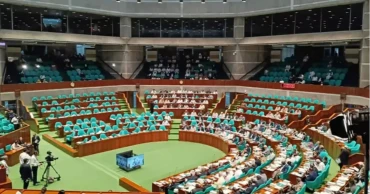
Fourth session of 13th Parliament to begin Nov 9
The fourth session of the current parliament will begin on November 9 next (Monday), according to a notification issued by the Parliament Secretariat on Wednesday.
President Mirza Fakhrul Islam Alamgir has summoned the session to be held at 3:30pm on the day at the Sangsad Bhaban in the capital.
The President summoned the session in exercise of the powers conferred upon him under Article 72(1) of the Constitution of Bangladesh, said a notification signed by Md Monir Hossain, director of the Public Relations Sub-division-1 of the Bangladesh Parliament Secretariat.
This will be the fourth session of the current parliament constituted following the latest general election held on February 12, 2026.
With this, the 13th parliament is going into the session after a 60-day recess as the third session was prorogued on September 10 last after only nine sittings.
Earlier, the second session, also known as the budget session, was prorogued on July 15 after 27 working days. During that session, Parliament passed the Tk 938,000-crore national budget for the 2026-27 fiscal year, the first budget under the current BNP government.
The first session of the Parliament commenced on March 12, following the general election held on February 12.
During its first session, Parliament passed 94 bills, including 91 bills against ordinances promulgated during the interim government’s tenure, and formed several parliamentary committees.
The first session commenced on March 12, following the general election held on February 12.
During its first session, Parliament passed 94 bills, including 91 bills against ordinances promulgated during the interim government’s tenure. The maiden session was prorogued on April 30 after 25 sittings.
6 days ago
481 non-freedom fighters dropped since August, 2024: Minister tells Parliament
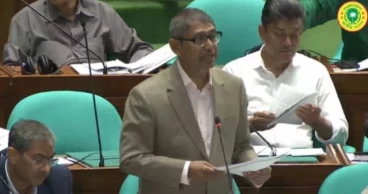
Liberation War Affairs Minister Ahmed Azam Khan on Wednesday told Parliament that the official recognition of 481 non-freedom fighters were rebuked since August, 2024 following recommendations from the Jatiya Muktijoddha Council (Jamuka).
“Based on complaints, the Jatiya Muktijoddha Council conducted verification and investigations and based on its recommendations, the ministry cancelled the gazette notifications, Lal Muktibarta and Indian lists of 481 individuals,” he said.
The minister made the remarks responding to questions from NCP lawmaker Akhter Hossen and ruling party lawmaker Md Jahander Ali Miha (Madaripur-2) during the question-and-answer session in the House.
In his question, Akhter asked whether any steps would be taken against alleged fake freedom fighters, noting that various media reports and government reviews suggest that out of around 250,000 gazetted freedom fighters more than 100,000 people are fake freedom fighters.
The Liberation War Affairs Minister said that since August 2024, a total of 842 complaints related to non-freedom fighters have been forwarded to Jamuka for scrutiny.
He said when allegations are received, a subcommittee formed with members of the council conduct investigations and hearings.
If an individual is proven not to be a genuine freedom fighter, recommendations are made to cancel their gazette status, he said.
Ahmed Azam said the process of reviewing such complaints is ongoing and a regular function of Jamuka. “If any allegation is raised against a listed freedom fighter, it will be verified through investigation and hearing, and if proven false, the name will be recommended for removal from the list,” he added.
‘Fifth Primary Education Development Programme’ to begin July 1: PM
He also informed the House that since its establishment, Jamuka has held 103 meetings and recommended cancellation of gazette status for a total of 6,465 persons.
In reply to a starred question from treasury bench lawmaker AM Mahbub Uddin Khokon (Noakhali-1), the minister said there are currently 198,037 recognised freedom fighters in the country, according to the integrated database maintained in the ministry’s Management Information System (MIS).
He further said that each freedom fighter receives a monthly honorarium of Tk 20,000, two festival allowances of Tk 10,000 each annually and a Pahela Baishakh allowance of Tk 2,000 and also a Victory Day allowance of Tk 5,000 for living freedom fighters.
The minister, however, said that there is currently no plan under government consideration to increase the honorarium for freedom fighters.
6 months ago
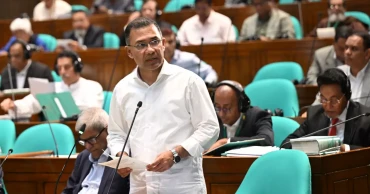
Govt giving top priority to recovery of money siphoned abroad: PM tells Parliament
Prime Minister Tarique Rahman on Wednesday told Parliament that the current government will take effective steps to recover money siphoned off from Bangladesh and spend the recovered funds for the welfare of the people and the country.
“You can be assured that this government will take the way and the step whichever is effective to bring back the public money, Inshallah,” he said, while replying to a supplementary question from treasury bench lawmaker Md Abul Kalam (Cumilla-9) during the question-and-answer session.
The prime minister said the laundered money is the assets of the people. This government, elected by the people, has a responsibility towards them and the country, he said.
“So, it is only natural that recovering the people’s money and spending it for the people and the country is one of the major responsibilities of this government,” he added.
Replying to a starred question from the same lawmaker, Tarique Rahman said since assuming office the government has been trying to use the taxpayers’ money the best way in the interest of the people and the country by choking the throat of corruption and plugging leakages in various sectors.
He said the current government is working giving the highest priority to recovering money siphoned abroad as US$ 234 billion money was laundered from Bangladesh between 2009 and 2023, as per a white paper prepared during the interim government.
“The present government is working, giving the highest priority to the recovery of assets siphoned abroad as an important part of a broader strategy to combat corruption, money laundering and financial crimes,” he said.
The Prime Minister said the amount of illicit capital outflow from Bangladesh is US$234 billion between 2009 and 2023, which averages about US$16 billion per year, according to the data of the white paper preparation committee formed by the interim government.
Since the laundered money was allegedly transferred to multiple countries, it has been strengthening cooperation with the concerned countries through information exchange, asset identification and mutual legal assistance, he said.
23,865 politically motivated cases withdrawn: Law Minister
To this end, the Ministry of Foreign Affairs is working closely with all relevant ministries and agencies to sign Mutual Legal Assistance Treaties (MLAT) and facilitate the exchange process of Mutual Legal Assistance Requests (MLAR), he added.
The prime minister said ten countries—the United States, the United Kingdom, Canada, Switzerland, Australia, Thailand, the United Arab Emirates, Singapore, Malaysia and Hong Kong (China)—have been initially identified as possible destinations of the laundered money.
Among them, Malaysia, Hong Kong and the United Arab Emirates have already agreed to sign agreements, while the process is underway with the remaining seven countries, he said.
Tarique Rahman said an inter-agency task force has been formed under the chairmanship of the Governor of Bangladesh Bank. Legal procedures are currently underway to recover laundered
He added that 11 Joint Investigation Teams (JITs) have been formed to investigate these priority cases under the leadership of the Anti-Corruption Commission (ACC). The teams were formed with representatives from the Criminal Investigation Department (CID) of Bangladesh Police, the Central Intelligence Cell of the National Board of Revenue and the Customs Intelligence and Investigation Directorate.
Highlighting progress since the formation of the JITs, the prime minister said courts have so far ordered the attachment and freezing of movable and immovable assets worth Tk 57,168.09 crore within the country as of March 25, 2026.
In addition, assets worth Tk 13,278.13 crore traced abroad have also been attached and frozen following court directives, he said.
“Altogether, movable and immovable assets worth approximately Tk 70,446.22 crore at home and abroad have been attached and frozen by the courts,” the prime minister said.
He further said 141 cases have already been filed to recover the laundered money, of which 15 cases have seen charge sheets submitted and six cases have already received court verdicts.
The prime minister mentioned that the government’s election manifesto emphasized publishing a comprehensive white paper after investigation in money laundering and corruption committed during the previous fascist Awami League regime as well as taking legal action against those identified as responsible.
Replying to a supplementary question from opposition Jamaat lawmaker Md. Mujibur Rahman (Rajshahi-1), the PM said the government will take all steps as per laws against those who looted the public money.
Replying to a supplementary question from opposition Jamaat lawmaker Md Mujibur Rahman (Rajshahi-1), the prime minister said the government will take all steps in accordance with the law against those who looted public money.
Noting that the law will take its own course, he said, “Those who looted or siphoned off the people’s money will face punishment as per the existing laws of the country,” he said.
6 months ago
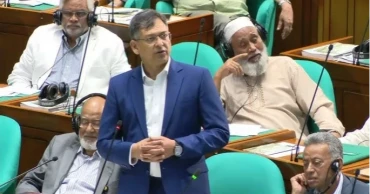
July Charter Implementation Order 'a document of infinite deception': Salahuddin
Home Minister Salahuddin Ahmed on Tuesday characterized the July National Charter (Constitution Reform) Implementation Order as an invalid legal document, labeling it a manifestation of "infinite deception" by the interim government.
“This order is a document of infinite deception by the interim government. I reiterate this again today,” he said, joining the two-hour discussion on a motion placed by the opposition leader in Parliament for summoning the session of the Constitution Reform Council.
Bangladesh Jamaat-e-Islami Ameer Dr Shafiqur Rahman placed adjournment motion in the House under the Section 62 of the Rules of Procedure, seeking the adjournment of the business of the House for the discussing summon of the session of the Constitution Reform Council as per the July National Charter (Constitution Reform) Implementation Order, 2025.
Speaker Hafiz Uddin Ahmad, Bir Bikram, moved the motion for two-hour discussion as the last agenda for Tuesday’s business in the House.
The Home Minister argued that the order holds no legal standing as it is categorized as neither a law nor an ordinance.
He, however, said they (the government) hold on to every single word of the July National Charter which was signed by the political parties as a historic document.
Salahuddin Ahmed pointed out the President had the jurisdiction to issue such orders only between March 1971 and April 1973, and that authority ceased following the formation of the first parliament in 1973.
He said 133 ordinances issued during the interim government have been introduced in parliament but the July Charter Implementation Order was not among them as it lacks legislative legitimacy.
He further questioned the President's authority to convene a session of the constitution reform council, citing the absence of constitutional provisions for such a body or its accompanying oath of office.
The Minister dismissed claims that the BNP opposes reform or the July Charter itself, asserting that the party upholds the spirit of the historic document.
“All the issues that were agreed upon in July National Charter 2025 with notes of dissent…. But where are the notes of dissent here (in the Order)?” he said.
"No order of the President can reduce the sovereignty of the parliament," Ahmed stated, citing Article 93 of the Constitution, which prohibits the President from issuing ordinances that change constitutional provisions.
Reaffirming the BNP's commitment to the July Charter, the Home Minister emphasized that the party intends to pursue democratic constitutional amendments through inclusive dialogue.
On behalf of the Leader of the House, he proposed the formation of a special parliamentary committee—including all represented parties and independent lawmakers—to draft a constitutional amendment bill based on broad consensus.
Later, Leader of the Opposition Dr Shafiqur Rahman suggested forming a parliamentary committee to take a decision on the implementation of the referendum results.
PM seeks steps to reduce school-time gridlock
“We want a solution. We want it on the basis of justice. After discussing this issue, if you think it is good, you can form a committee. However, we will call for the committee to be formed with an equal number of members from two sides,” he said.
He said if the committee is formed with majority from the ruling side, it will bring no good result. “We’ve raised our desire. Now the decision is yours,” he said.
Referring to the remark that the order is a document of endless fraud, he said the interim government and the President did this together on November 13, 2025 but the referendum was held on February 12, 2026. BNP officially congratulated the government for holding the parliamentary election and the referendum on the same day due to their demand. “So, the referendum was also their demand.”
"We will sincerely appeal to the government party - the people have accepted the referendum. If we also respect the people by accepting it, then this parliament will be respected. Let the public desire be reflected through this with our joint initiative,” said Dr Shafiqur Rahman.
Law Minister Md. Asaduzzaman said that all reform initiatives must be implemented within the framework of the Constitution, stressing that the constitution remains the supreme legal foundation of the state and parliament.
He said the July Charter is the central focus of current political discourse and that it represents the public mandate following the July 24 mass uprising. “The people have given us the mandate to conduct all activities under the constitution and bring necessary reforms through parliament,” he said.
The law minister explained that the July Charter outlines reform measures that must be adopted through parliamentary processes rather than through extra-constitutional means.
He emphasized that parliament is sovereign in law-making and cannot be compelled by unauthorized orders.
“The July Charter should guide reforms, but all actions must be taken through constitutional and parliamentary procedures,” he said, adding that national unity and democratic consensus are essential for sustainable constitutional reform.
Joining the discussion, BJP chairman Andaleeve Rahman (Partho) asked the NCP leaders not to turn into the Jamaat generation while representing Gen Z.
“You are our heroes. Those who fought (in the July uprising) are here (in Parliament). I would like to tell them that you represent Gen Z. You should not become Jamaat generation,” he said, pointing at the NCP leaders.
He said there is a tendency among some political actors to push them (BNP-led alliance) against the spirit of the July uprising for political advantage, which could harm national unity.
“We are seeing an attempt to push us against the spirit of July,” he said, adding that such “tagging politics” was also seen during the Awami League regime.
Questioning the formation of the Constitution Reform Council, the BJP chief said they wanted to remain within the constitutional process through which amendments are made.
He claimed that although around 70 percent of people voted “yes” in the referendum, 51 percent supported the BNP-led alliance (in the 13th parliamentary election) in favour of constitutional changes.
Focusing on the roles of different political parties and actors in the 2024 July movement, the BJP chief said, “You scored 12 runs from six balls. But we scored 300 runs before.”
Stressing the need for political unity over the spirit of July movement, he said, “We must respect the Constitution and at the same time we must respect the spirit of July.”
Earlier, NCP Member Secretary Akhter Hossen said BNP chairman Tarique Rahman on January 30 last had urged people to vote “yes” in the referendum during a pre-election rally in Rangpur, the birthplace of July martyred Abu Sayeed, but now BNP is showing reluctant to accept the referendum results.
“We want to ask the Prime Minister (Tarique Rahman) why you don't want to accept the verdict of the referendum after asking (the people) to vote 'yes' in the referendum," said the NCP leader.
Noting that the people had given their verdict in favour of implementing the July National Charter, he said terming the public verdict as unconstitutional is audacity and stigmatization of Parliament.
“Whether the Referendum Order is approved by Parliament or not, there is no chance of making the referendum illegal,” he said.
Besides, Jamaat lawmakers Md. Rafiqul Islam Khan (Sirajganj-4), Muhammad Nazibur Rahman (Pabna-1), Md Saiful Alam (Dhaka-12), Md. Shafiqul Islam (Patuakhali-2) and Md Nurul Islam (Chapainawabganj-3), and NCP lawmaker Md Abul Hasnat, who is widely known as Hasnat Abdullah (Cumilla-4), joined the discussion.
6 months ago
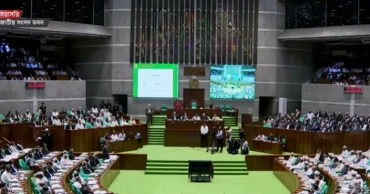
First session of 13th Parliament begins
Bangladesh’s 13th Parliament started its five-year journey with its first session on Thursday morning, just one month on from the February 12 general election.
Unlike in the past however, the first session of the new parliament began with the Chair of Speaker vacant as the Speaker and the Deputy Speaker are currently unavailable.
At the outset of the session, Leader of the House and Prime Minister Tarique Rahman will deliver a welcome speech and nominate the name of a senior member of parliament to temporarily chair the House before election to the Speaker and the Deputy Speaker by Members of Parliament.
Following their elections, the session is likely to be adjourned for some time and the new Speaker and Deputy Speaker will take oath.
President Mohammed Shahabuddin will administer the oath.
Then the session will resume with the newly elected Speaker or Deputy Speaker in the chair. In the first-day sitting of the session, a condolence motion will be placed, expressing profound grief at the death of three-time prime minister and BNP chairperson Khaleda Zia, former MPs and other noted personalities.
President Mohammed Shahabuddin will also deliver his speech in the House on Thursday.
Traffic restrictions in parts of Dhaka this morning over parliament session
A meeting of the BNP Parliamentary Party chaired by Tarique Rahman was held at the ruling party’s meeting room at Sangsad Bhaban, a day before the maiden session of the 13th parliament.
Following the meeting, Home Minister Salahuddin Ahmed told reporters on Wednesday that the prime minister will nominate a senior BNP lawmaker to temporarily preside over the House as the Speaker and Deputy Speaker are currently unavailable.
“Since the Speaker and the Deputy Speaker are not available, the leader of the House will announce who will preside over the House. Then the Speaker and the Deputy Speaker will be elected,” he said, outlining the tentative procedure of the first day business of the maiden session.
After their election, the newly elected Speaker and Deputy Speaker will take oath. “The President (Mohammed Shahabuddin) will administer the oath to them as per the rules of procedure of Parliament, " he said.
Salahuddin said then the House will sit again and the panel of chairmen for the first session of Parliament will be announced. Then a condolence motion will be placed and discussion on the motion will be held, he added.
The Law Minister will place 133 ordinances (seeking endorsement of parliament) and several parliamentary committees such as the business advisory committee of parliament will be elected, he said.
“Then the President will deliver the speech in the House,” said Salahuddin Ahmed.
The first meeting of the business advisory committee is likely to be held the following day and the session is most likely to be adjourned after another sitting on March 15, he said.
Usually the first session of a new parliament begins with the Speaker of the previous parliament in chair and then the election of the new Speaker and Deputy Speaker is held.
First Kalema in Arabic calligraphy inscribed in Parliament’s session hall
Meanwhile, Chief Whip Nurul Islam Moni on Wednesday said the ruling party wants the 13th parliament to be effective and vibrant where problems will be resolved through discussion and debate.
“Our goal is to run an effective, vibrant and responsible parliament. We want an environment of constructive discussion, rational argument and healthy debate on national issues in parliament,” he said at a press briefing after a meeting of BNP’s parliamentary party.
He said a member nominated by the Prime Minister will temporarily preside over the House.
The Chief Whip said the BNP Parliamentary Party (BPP) on Wednesday authorised the Prime Minister and Leader of the House Tarique Rahman to decide the candidates for the posts of Speaker and Deputy Speaker of the 13th Parliament.
“We have entrusted the Leader of the House with the responsibility of deciding the Speaker and Deputy Speaker. He will take the decision, and we will know it tomorrow,” he said.
He said the proceedings of Thursday’s sitting will begin with the Speaker’s chair vacant. The session will start with recitation from the Holy Quran, he added.
After that, the Leader of the House will propose the name of a senior MP to preside over the sitting temporarily, which will be seconded by another MP. The nominated member will then preside over the session, said the Chief Whip.
Nurul Islam also said 133 ordinances promulgated during the tenure of the interim government will be placed before parliament on Thursday.
Replying to a question, the Chief Whip said the Prime Minister showed “great generosity” by offering the post of Deputy Speaker to the opposition.
“But we have not received any positive response from them so far. If we do, necessary steps will be taken accordingly,” he said.
Energy conservation plea goes unheeded as Dhaka malls glow with lights
On February 23 last, President Mohammed Shahabuddin summoned the first session of the new parliament under the powers conferred by Article 72(1) of the Constitution.
This session will mark both the inaugural sitting of the 13th Parliament and the first parliamentary session of 2026.
The parliamentary elections were held on February 12 last, with Bangladesh Nationalist Party (BNP) winning it with two-thirds majority.
The 13th parliamentary election was held in 299 out of the country’s 300 constituencies on February 12 as the election to Sherpur-3 constituency was postponed following the death of a candidate.
The Election Commission of Bangladesh published the gazette notification on February 13, declaring results for 297 seats.
In the 297 constituencies, BNP won in 209 parliamentary seats, while Jamaat-e-Islami in 68, NCP settled victory in six constituencies, independent candidates in seven constituencies, Bangladesh Khelafat Majlish in two, Islami Andolan Bangladesh in one, Bangladesh Jatiya Party-BJP (led by Andaleeve Rahman Partho) in one, Ganaodhikar Parishad in one, Ganasamhati Andolan in one and Khelafat Majlish in one parliamentary seat.
Later, the newly elected MPs were sworn in on February 17 and Chief Election Commissioner AMM Nasir Uddin administered the oath. BNP chairman Tarique Rahman, who was elected from two constituencies, took oath as MP from Dhaka-17 constituency, leaving Bogura-6 constituency for by-election.
According to Article 72(1) of the Constitution, Parliament must be summoned to meet within 30 days after the declaration of the results of polling at any general election.
The same article also states that unless sooner dissolved by the President, Parliament shall stand dissolved on the expiration of five years from the date of its first meeting. So, the five-year tenure of the 13th Parliament will officially commence with its first sitting on March 12.
7 months ago
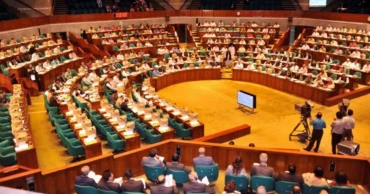
21st Parliament session to continue till Feb 9
The 21st session of the current parliament that began Thursday will continue till February 9.
The session will start at 4:15pm on each working day.
On January 10, a special discussion will be held on the Homecoming Day of the Father of the Nation Bangabandhu Sheikh Mujibur Rahman.
The decisions came at a meeting of the Business Advisory Committee (BAC) of the current parliament held at Jatiya Sangsad Bhaban in Dhaka.
Read more: Parliament back in session; to continue till July 4
Committee Chair and Speaker Dr Shirin Sharmin Chaudhury presided over the meeting.
It also decided to hold a special session in April to observe the Golden Jubilee of Bangladesh Jatiya Sangsad. President Abdul Hamid will address the session and general discussion will be held on Thanksgiving motion of his speech.
It also decided that the Speaker may extend or cut the working days of the current session.
Prime Minister Sheikh Hasina, Opposition Leader Raushon Ershad, Amir Hossain Amu, Sheikh Fazlul Karim Selim, Obaidul Quader, Rashed Khan Menon, Hasanul Huq Inu, Deputy Speaker M Shamshul Huq Tuku, Anisul Huq, Golam Mohammad Quader, Anisul Islam Mahmud and Noor-E-Alam Chowdhury attended it.
Read more: 19th JS session to continue till September 1
3 years ago

Parliament’s winter session begins on January 5
President Abdul Hamid on Monday convened the 21st session of the 11th Parliament on January 5, 2023.
The President convened the first session of 2023, exercising the power bestowed upon him as per the Clause (1) of Article 72 of the constitution, said a press release of Parliament Secretariat.
The winter session will begin at 4pm on January 5.
Read more: PM thanks JaPa for playing positive role in parliamentary democracy
The President has to address the first parliament session in a new year, according to Article 73(2) of the Constitution. Later, there’ll be a discussion over a thanksgiving motion on the President’s speech in the House during the session.
Earlier, the 20th session of the current parliament was prorogued on November 06 only after six sittings. So, the House is going into session after a recess of 59 days.
Read more: 5 parliamentary seats now vacant after BNP MPs’ resignation: Speaker
3 years ago

JP to join JS session upon speaker’s assurance
Jatiya Party’s parliament members have decided to join the parliamentary session on Monday, a day after they announced to stay away from parliament till the speaker recognises GM Quader as the leader of the opposition instead of Raushan Ershad.
JP Chairman GM Quader directed all the MPs of the party to join the 20th session of parliament on Monday upon assurance from Speaker Dr Shirin Sharmin Chaudhury, said Khandakar Delwar Jalali, JP press secretary.
Earlier on Sunday, Jatiya Party announced they will stay away from Parliament after a discussion with the speaker where she offered no hint of a positive decision in this regard coming soon.
Currently, Raushan Ershad is the opposition leader who has been abroad for a long time for medical treatment with GM Quader as her deputy.
Read: Jatiya Party removes Ranga as opposition chief whip
Earlier on September 3, the JP parliamentary party proposed to make GM Quader the opposition leader of the parliament instead of Raushan but the speaker is yet to take a decision in this regard.
The 20th session of the current parliament that began Sunday will continue till November 6.
3 years ago

President summons Parliament session on Sunday
The 19th session of the 11th Parliament will begin at 5 pm on Sunday where the new deputy Speaker will be elected.
President Md Abdul Hamid convened the session exercising the power bestowed upon him as per the Clause (1) of Article 72 of the constitution.
On 30 June, the eighteenth session of 11th Parliament was prorogued after 20 sittings.
The new deputy Speaker will be elected on the first day of this session. Before the start of the Parliament session at 4 pm, the duration of the session and other functions will be decided in the business advisory committee meeting. The business of the day will start with the nomination of the panel chairmen followed by the election of the new deputy Speaker.
In this case, an MP will place the name of the new deputy Speaker, which will be supported by another MP. The Speaker will then put the proposal on vote.
Generally, the Chief Whip of the Parliament places the proposal while another whip or senior member supportes it. According to the rules, if the post of Speaker or deputy Speaker becomes vacant, there is a provision for election within seven days if the Parliament is in session at that time.
And if the Parliament is not in the session, there is an obligation to elect on the first day of the next session.
Read: AL hails EC decision to use EVMs in 150 JS seats in next polls
That is why the deputy Speaker will be elected at the beginning of Sunday's proceedings. Fazle Rabbi Miah, tgen deputy speaker, passed away on July 22 at Mount Sinai Hospital in New York, USA, while undergoing treatment.
His death left the post of deputy Speaker and Gaibandha-5 seat vacant. The new deputy Speaker will be sworn in by the President Hamid at 7pm.
According to the sources, this oath will be taken in the President's chamber in the Parliament building. After the election of the deputy Speaker, the Speaker will move the condolence motion on Fazle Rabbi Miah.
According to custom, the session will be adjourned after the discussion on the condolence motion. In this session as well, all the employees of the parliament secretariat, including the members of Parliament, are being tested for coronavirus. Three bills have been prepared to be placed in the upcoming session. These are the International Centre for Diarrhoeal Disease Research Bill, the Public Service (Amendment) Bill and the Universal Pensions Management Bill.
4 years ago

14th parliament session prorogued
The fourteenth session of the 11th parliament was prorogued on Thursday, after only seven sittings as it was another short session amid the Covid pandemic.
Speaker Dr Shirin Sharmin Chaudhury read out the prorogation order of the President.
Earlier, Leader of the Parliament and Prime Minister Sheikh Hasina and Deputy Leader of the Opposition in Parliament GM Quader delivered their concluding speeches.
Nine bills were placed in the session that began on the first day of this month.
During the brief session, 31 important notices under section 71 of the rules of procedure were received, but none of them was discussed.
Read: Medical Degrees (Repeal) Bill goes through Parliament
Twenty-four questions were received for prime minister’s question-answer session and she replied to 16 of them. The session also received 584 questions for different ministers with the minsters answering 389 ones.
Only a limited number of MPs joined the parliament session maintaining health safety rules due to the pandemic.
There was a parliament sitting of this session on Friday, which is unusual as the day is a public holiday.
Before reading out the prorogation order, the Speaker thanked all the MPs of treasury and opposition benches and all other officials concerned for their cooperation in holding the session smoothly.
5 years ago