Tanguar Haor

A Ramsar site under pressure: Plastic traps threaten Tanguar Haor
One of Bangladesh’s most ecologically significant freshwater wetlands, Tanguar Haor, is facing growing environmental threats from the widespread use of plastic fish traps and what conservationists describe as a lack of effective enforcement against destructive fishing practices.
Spread across nearly 126 square kilometres in Sunamganj’s Tahirpur and Madhyanagar upazilas, Tanguar Haor is recognised as the country’s second Ramsar site after the Sundarbans and serves as a vital reservoir of biodiversity.
But environmentalists warn that increasing plastic pollution coupled with illegal fishing methods is undermining the fragile ecosystem.
Once home to between 140 and 200 species of indigenous fish, the haor has witnessed a steady decline in aquatic biodiversity in recent years.
Experts attribute the trend to multiple environmental pressures, including overfishing, illegal fishing nets and the growing use of plastic-made “Kiranmala chai” traps that have become common across the wetland.
According to locals and environmental groups, fishermen frequently leave behind discarded plastic traps after harvesting fish.
These non-biodegradable materials remain floating on the water surface or settle on the lakebed for years, gradually breaking down into microplastics.
Environmental experts said the resulting microplastic contamination poses a serious risk to fish and other aquatic organisms.
The particles can enter the food chain through aquatic species, affecting fish growth and reproduction while threatening the broader ecological balance of the wetland.
The discarded plastic also obstructs natural water flow, further disrupting the haor’s ecosystem.
Representatives of the Environment and Haor Development Organisation said Tanguar Haor is already under pressure from illegal current nets, ‘China duari traps’ and excessive fish harvesting.
The addition of plastic pollution has made the situation increasingly alarming.
They also noted signs of declining oxygen levels in water, reduced aquatic vegetation growth and lower fish breeding rates.
Every year, fresh floodwaters entering the haor through rivers bring various fish species into the wetland.
With early monsoon flows arriving this year due to heavy rainfall in Cherrapunji, water levels in the Jadukata and Patlai rivers rose earlier than usual, allowing fish to enter the haor ahead of schedule.
Taking advantage of the situation, many local fishermen have reportedly intensified the use of plastic traps throughout the wetland. The traps are particularly popular because they can catch shrimp and a variety of small fish species with minimal effort.
Despite recurring criticism and periodic discussions about the environmental impact of the traps, locals alleged authorities have yet to establish a sustained campaign to stop their production, storage and sale.
4 months ago

Illegal electric fishing raises fresh fears for Tanguar Haor
Fresh allegations of illegal electric fishing in countrys Tanguar Haor have renewed fears for the future of one of the country’s most ecologically significant wetlands, after fish killed overnight were seen floating on the water the following day.
The cause, according to villagers and environmentalists, is the illegal use of battery-powered electric shock machines to catch fish during the night.
The practice, carried out in darkness across different parts of the haor, has triggered fresh concerns about the future of one of Bangladesh’s most important freshwater ecosystems.
Tanguar Haor, located in the Sunamganj district’s Madhyanagar and Tahirpur upazilas, is an internationally recognised Ramsar site and among the country’s largest wetlands.
It supports rich biodiversity, sustains thousands of fishing-dependent families and attracts migratory birds, as well as domestic and foreign tourists, every year.
But environmental experts warn that the indiscriminate use of electric shocks for fishing could cause long-term and possibly irreversible damage.
“Electric fishing does not discriminate,” said local resident Nazier Hossain, adding, “Large fish die, but so do fingerlings, small fish and other aquatic animals. This destroys the natural breeding cycle and severely harms the haor’s ecosystem.”
Residents say organised groups operate at night, moving from one area of the wetland to another with shock machines powered by batteries.
Kushiyara River’s slow bite threatens key road in Sunamganj
Fish killed instantly by electric current are collected, while many others are left to float to the surface by morning.
The practice has alarmed conservationists, who say it threatens not only fish stocks but the entire ecological balance of the wetland.
Tanguar Haor plays a crucial role as a breeding ground for freshwater species and as a habitat for countless aquatic organisms that form the base of the food chain.
If this continues, the biodiversity of the haor will face extreme danger, environmental experts warn, adding that a major fisheries crisis could emerge in the future.
The issue has also raised questions about enforcement in the protected wetland area. Members of the local community have demanded stronger action, including increased night patrols, mobile courts and the seizure of illegal shock machines.
Illegal topsoil extraction threatens ‘Gaillar Haor’, croplands in Sunamganj
Without swift intervention, they say, the destruction could accelerate during peak fishing seasons.
Madhyanagar Upazila Nirbahi Officer (UNO) Ujjwal Roy acknowledged the seriousness of the allegations.
He said the use of shock machines for fishing in Tanguar Haor is completely illegal and constitutes a punishable offence.
“The administration is taking a strict stance to protect the haor’s environment and fisheries resources. If complaints are received, immediate operations will be carried out and legal action will be taken against those involved,” he said.
8 months ago

As haor waters recede, Sunnamganj farmers sow hope in every field
As the floodwaters of Madhyanagar’s haors slowly recede, farmers have embarked on the crucial boro rice planting season, working relentlessly to ensure timely transplantation.
The effort has drawn participation from all sections of haor-side communities. With examinations concluded, students have joined the fields with some delivering midday meals to labourers, while others assist with collecting seedlings to support the planting process.
A field visit to Tanguar Haor, Ghoradoba Haor, Shaldigha Haor and other wetlands in the upazila revealed farmers actively engaged across expansive tracts of land.
Read more: Rice prices keep food inflation high despite slight easing in Nov: GED
According to the Upazila Agriculture Office, the target for this season is the cultivation of boro rice on 13,640 hectares. To date, approximately 2,815 hectares have been successfully planted.
Nazar Hossain, a farmer from Nishchintpur village in Tanguar Haor’s Banshikunda South Union, pointed out that delayed water recession has hindered transplantation across all fields. “Once the water fully recedes, we will be able to complete planting swiftly,” he said.
Similarly, Ghoradoba Haor farmer Abdul Majid said, “We are planting rice in the fields every day. This is the final period for boro transplantation, but the slow receding of water has caused some delay.”
Meanwhile, Noor Alam, Assistant Engineer at the Upazila Water Development Board, reported that work has begun on strengthening the haor-protection embankments. “As water levels drop, we will fully resume construction. We hope the project will be completed efficiently in the near future,” he added.
Upazila Agriculture Officer Ashayad Bin Khalil Rahat emphasised that, under government incentives, high-quality seeds and fertiliser have been distributed to marginal and smallholder farmers to boost production.
Read more: Haor farmers reap early gains as mustard cultivation flourishes in Sunamganj
With the normalisation of water levels, he assured, boro rice transplantation will be completed within the scheduled timeframe.
The ongoing activity, Rahat said, underscores the resilience of haor communities, blending tradition and collective effort to meet seasonal agricultural demands despite climatic uncertainties.
9 months ago
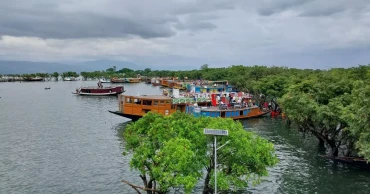
Haor tourism: Sunamganj sees increased tourist flow after losses
Tourism businesses in Sunamganj are bouncing back gradually after suffering significant losses for over two months due to three rounds of flood and political instability. Restrictions in several tourist areas of the Chittagong Hill Tracts redirected tourists to Sunamganj’s famed Haor region, including Tanguar Haor and the Tahirpur border areas, providing a much-needed boost to local businesses. Houseboat owners said they suffered losses amounting to around Tk 50 crore during this period. Tour operators said they are now facing overwhelming demand, with all houseboats fully booked in advance.
Travel ban hits tourism businesses in CHT hard Popular tourist destinations like Tanguar Haor, Shaheed Siraj Lake (Niladri), Shimul Garden, and the Jadukata River are now filled with visitors.
Aziz Sarkar, a banker from Rajshahi, expressed his amazement after exploring the region for the first time. “The Tanguar Haor has amazed us greatly. We are overjoyed. We have never seen such large haor before. The diversity of the haor, especially the settlements on its shores, and how they survive and live, has left a mark on our minds,” said Aziz, who came with a group of 36 people, most of whom are bank employees. Tourist Mahbuba Rahman Sathi, a tourist from Dhaka, said, “We had been planning to visit Tanguar Haor for a long time. The weather is good now, so we came. Our group consists of 12 family members. Sylhet is always beautiful, but the haor is even more beautiful. We’ve been touring in a houseboat since morning. It feels great.” However, the region’s poor road infrastructures are challenge for visitors, said some tourists.
Moulvibazar Travel Guide: Explore the Top Tourist Attractions “The road from Sunamganj to Tahirpur is in bad shape. Women and children, in particular, had a hard time getting here. These things stand as obstacles to the development of tourist areas,” said Manjurul Islam Soumik from Feni.
He also raised concerns about the lack of visible tourist police and disconnected phone numbers listed on safety sign boards. Responding to these complaints, Habibur Rahman, Officer-in-Charge of the Tourist Police in Sunamganj, explained that his mobile phone had been out of service due to damage but is now operational. “We have 8 members. The tourist police are working round the clock to ensure the safety of tourists,” he said. Arian Emon, CEO of Haimanti Houseboat, said, “We have incurred losses of around Tk 50 crore in the past two months. Currently, due to the restrictions in Rangamati, Bandarban and Khagrachhari tourists are coming to the Haor. All our boats are fully booked. Many are still trying to book. There’s now a festive atmosphere in the Haor,” he said.
Trip to Tanguar Haor, Sunamganj: Majestic aquatic beauty soaking the horizon
2 years ago

8 Best Winter Travel destinations in Bangladesh
Bangladesh being on the tropical spectrum of the climate, experiences a moderate winter season. Apart from the northern regions of the country, the mild winter season makes for a perfect time to go for a vacation and explore the diverse landscape of the country. With that said, here are the 8 top popular tourist destinations in Bangladesh for spending winter vacation.
Top Place to Visit in Bangladesh During Winter
Saint Martin’s Island
One of the prime attractions of winter travel is Saint Martin’s island. This Bea coral island is situated in the south of Bangladesh off the coast of Cox’s Bazar. The ship operation to St. Martin remains closed from April to October. It begins in early November and runs through March for the winter and spring seasons.
Every year, millions of tourists flock to the island to experience the serene landscape and the blue lagoon all around. Getting to St. Martin Island is also easy. There are direct bus services from Dhaka to Teknaf. From Teknaf, there is an abundance of ships and launches going to St. Martin. It takes about two and a half to three hours by ship to get to the island.
Read more: Bandarban Tourist Spots – Best Places to See and Craziest Things to Do
To protect the biodiversity and environment of this coral island, the government of Bangladesh has taken some initiatives. Tourists are required to take permission before visiting this island.
Make sure to take ample winter clothes as nights can get pretty cold. Take note of the tides to experience the unobstructed beach along the coast of the island.
Kuakata
Kuakata is famous for being the only place in Bangladesh where one can enjoy both sunrise and sunset. Often referred to as the “Daughter of the Sea”, Kuakata is comparatively less crowded than Cox’s Bazar during the peak travel season.
Read more: Best Places for Honeymoon in Bangladesh
3 years ago

34 Buet students among 36 detained while touring Tanguar Haor
Police detained 36 people, including 34 students of Bangladesh University of Engineering and Technology (Buet), while they were visiting Tanguar Haor in Tahirpur upazila of Sunamganj district on Sunday.
The police however did not clarify on what charges they were detained. No legal steps have been taken yet.
Rajon Kumar Das, additional superintendent of Sunamganj Police, said 36 tourists were detained for 'suspicious movement'. Efforts are still ongoing to scrutinise the whole thing, he said.
700 arrested over Saturday’s clashes, arson attacks on buses: Home Minister
According to locals, the Buet students went to Tanguar Haor around 7am on Sunday by boat. When they reached Natun Bazar on the Patlai River in the afternoon, a team of police on two speed boats obstructed them while they were heading towards Tekerhat tourist spot and detained the students and two boatmen—Ahadul Mia and Muhaddis Mia.
DB arrests two accused of pirating 'Surongo' movie
Later, they were taken to Tahirpur Police Station.
When asked about the detention, police said they detained them based on information received from Dhaka, said Shahinur Ralukdar, president of Tahirpur Boat Owners Association.
Father arrested for clashing with physician over admission into his dengue affected daughter gets bail
3 years ago

Trip to Tanguar Haor, Sunamganj: Majestic aquatic beauty soaking the horizon
Tanguar Haor consists of 51 swamps located between Dhormopasha and Tahirpur Upazilas under the Sunamganj district of greater Sylhet. Spread over an area of about 100 sq-km, this river basin is the second largest freshwater wetland in Bangladesh. Tourists often flock to Tanguar Haor to see the mountains of Meghalaya in the distance, the clear water coming down from the springs, the chirping of innumerable birds, and the amazing beauty of the Koroch-Hijol forest. Let's have the details about the Tanguar Haor trip.
The specialty of Tanguar Haor
To enjoy the magical beauty of Tanguar Haor, many tourists spent days on boats. This experience sets the Tanguar Haor tour apart from all other tours.
Read Waterfalls in Bangladesh: Everlast Destination for Fountain Lovers
More than thirty springs descending from the Meghalaya hills made this Mother Fishery, which contains 200 species of aquatic animals, including 200 species of fish. Hijal Karach's sight has given shelter to more than two hundred species of plants including blue water lily, Helancha, Swarnolota.
In winter, about 250 species of migratory birds, such as the extinct Palaces eagle and the large Gray-Kingstork, fly from faraway Siberia. Among the local birds, you will see many different types of birds including Balihash, Ganchil, Egret, Stork. Tanguar Haor is a sanctuary for two birds called Leuchchamara and Berberiar Beel. Right in the middle of Tanguar Haor is the beautiful Bill Hatirgata, most of which dries up in winter.
Read Sylhet Tourist Places – Where to Go and What to Do
Tanguar Haor: The best time to visit
The monsoon is the best season to travel to Tanguar Haor. Because at this time all the swamps of the whole Tanguar Haor are filled with water full to the brim. The best time is from mid-July to the first week of September.
But if you would like to witness the wonderful birds, winter would be a perfect choice. In this case, from the end of December to the whole month of January is the right time. Although the water level in the Haor is very low at this time, there is still no lack of beauty.
Read Picnic Spots near Dhaka City for Short Break
Dhaka to Tanguar Haor tour guide
To go to Tanguar Haor, you have to go to Sunamganj first. The distance from Dhaka to Sunamganj by road is about 269 kilometers. From Sayedabad and Mohakhali bus terminals in Dhaka, several AC and non-AC buses including Hanif, Ena, Shyamoli travel directly to Sunamganj. It takes about 6 hours and a half to reach Sunamganj by Non-AC bus with ticket fare 550 Tk.
Then you have to take a rickshaw from Sunamganj bus terminal to Shahebbazar Ghat. During monsoon, it is possible to reach Tangua in 2 hours by speed boat directly from Saheb Bari Ghat. The cost to go by speed boat is 7,500-8,000 Tk. However, it is possible to go between 2,500 Tk and 3,000 Tk by an engine boat. In that case, it will take about 5 hours to reach the destination.
Read Buddha Dhatu Jadi: The sacred tourist spot and its trouble
Accommodation for overnight stay
You can rent a room at a low price in a wooden house called Haor Bilash in Tekerhat adjacent to Haor. However, it is a bit difficult to get a room in the on-season. Apart from this, there is no accommodation in private management. However, in Sunamganj you can get a residential hotel for 500 to 2000 Tk.
5 years ago