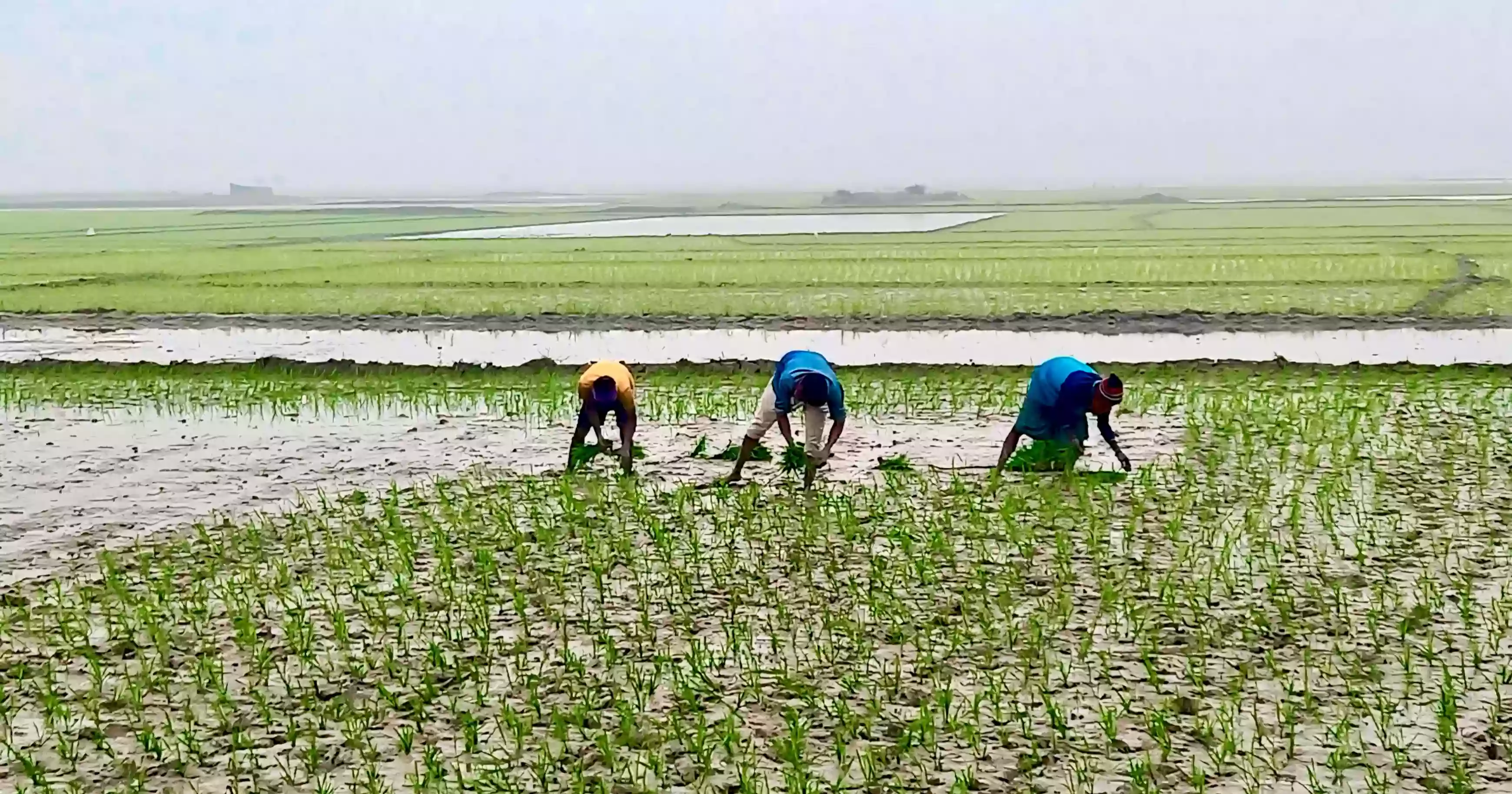
As the floodwaters of Madhyanagar’s haors slowly recede, farmers have embarked on the crucial boro rice planting season, working relentlessly to ensure timely transplantation.
The effort has drawn participation from all sections of haor-side communities. With examinations concluded, students have joined the fields with some delivering midday meals to labourers, while others assist with collecting seedlings to support the planting process.
A field visit to Tanguar Haor, Ghoradoba Haor, Shaldigha Haor and other wetlands in the upazila revealed farmers actively engaged across expansive tracts of land.
Read more: Rice prices keep food inflation high despite slight easing in Nov: GED
According to the Upazila Agriculture Office, the target for this season is the cultivation of boro rice on 13,640 hectares. To date, approximately 2,815 hectares have been successfully planted.
Nazar Hossain, a farmer from Nishchintpur village in Tanguar Haor’s Banshikunda South Union, pointed out that delayed water recession has hindered transplantation across all fields. “Once the water fully recedes, we will be able to complete planting swiftly,” he said.
Similarly, Ghoradoba Haor farmer Abdul Majid said, “We are planting rice in the fields every day. This is the final period for boro transplantation, but the slow receding of water has caused some delay.”
Meanwhile, Noor Alam, Assistant Engineer at the Upazila Water Development Board, reported that work has begun on strengthening the haor-protection embankments. “As water levels drop, we will fully resume construction. We hope the project will be completed efficiently in the near future,” he added.
Upazila Agriculture Officer Ashayad Bin Khalil Rahat emphasised that, under government incentives, high-quality seeds and fertiliser have been distributed to marginal and smallholder farmers to boost production.
Read more: Haor farmers reap early gains as mustard cultivation flourishes in Sunamganj
With the normalisation of water levels, he assured, boro rice transplantation will be completed within the scheduled timeframe.
The ongoing activity, Rahat said, underscores the resilience of haor communities, blending tradition and collective effort to meet seasonal agricultural demands despite climatic uncertainties.