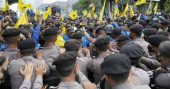
Fuel price hike

Adviser Zahed defends fuel price hike, says subsidy burden needs balancing
Prime Minister’s Information and Broadcasting Adviser Zahed Ur Rahman on Tuesday defended the government’s decision to raise fuel prices and acknowledged that the hike is causing and will continue to cause hardship for people.
“The move is causing and will cause hardship for people but the government has to maintain a balance between spending on fuel subsidies and other sectors including social safety-net programmes, healthcare and education,” he said while responding to questions from journalists at a press briefing held at the Secretariat on the progress of various government activities.
Global oil prices has declined slightly over the past few days but the international market remains unstable, with the possibility of further increases ahead, said the adviser.
“Crude oil prices have fallen by two or three percent over the last two or three days. It is still above $100 per barrel. It has come down somewhat, but there is actually little possibility that this will be sustained,” he added.
Pointing to the Middle East crisis, the adviser said the risk of disruptions to key shipping routes, possible disruptions to Saudi Arabia’s oil exports and attacks on oil facilities linked to the Russia-Ukraine war as factors that could further destabilise the global fuel market.
The government could not spend heavily on fuel subsidies while simultaneously allocating large amounts to social protection, healthcare and education, he said.
“One of the very important tasks of a government is spending on the welfare sector. We want to spend on social safety, healthcare and education at the same time. But if we try to do everything together, it becomes difficult,” he said.
The adviser also highlighted the pressure of subsidies in the gas and electricity sectors.
He said around Tk 48,000 crore were allocated for subsidies in the current fiscal year, but nearly half of that amount has already been spent within two and a half months.
“If you continue providing subsidies for gas and electricity at this rate, by the end of the year it will stand at Tk 1.25 lakh crore to Tk 1.5 lakh crore,” he said.
Zahed acknowledged that higher diesel prices would increase transportation costs, saying the government would try to ensure that transport fares are adjusted by a reasonable amount.
He also said initiatives are being taken to expand food assistance, Open Market Sale (OMS) programmes and Family Card programmes for low-income and vulnerable people.
Regarding the price increases for petrol and octane, he said domestic production from condensate was insufficient to meet the country’s total demand and so petrol and octane also have to be produced from imported crude oil.
He said there was also a policy rationale for keeping petrol and octane prices relatively higher, as these fuels are used more by comparatively affluent consumers.
Fuel price hike not due to IMF condition
Asked whether the fuel price increase was linked to any specific condition imposed by the International Monetary Fund (IMF), Zahed said there was no such condition.
“No, there is actually no such condition. The basic rule of the IMF is that it does not want a government to provide excessive subsidies,” he said.
He said the government is considering reducing large subsidies for fuel, gas and electricity based on economic realities rather than any specific IMF condition.
Adviser explains public servants' pay hike
Responding to questions about the decision to increase government employees’ salaries amid pressure from fuel subsidies, Zahed said the last pay scale was implemented in 2015 and has not been revised for around a decade.
“The last pay scale was in 2015, if I am not mistaken. Ten or 11 years have passed since then, and inflation has been around 10 percent, more or less, grossly. So think about the fact that it has not been revised during this period,” he said.
He said the decision was to implement the recommendations of the pay commission gradually rather than all at once, describing it as part of the government’s effort to balance resource allocation among various priorities.
PM's trip shortened for cost-cutting, domestic situation
The adviser said Prime Minister Tarique Rahman’s current foreign trip was shortened to reduce expenses and in view of the country’s domestic situation.
“A shorter trip is more cost-effective than a long trip. You will notice that he has gone with a very small delegation. At the same time, the country is going through various kinds of crises. So staying in the country is certainly a better priority for him at this moment,” he said.
He also said they are not yet aware of any plan for a bilateral meeting between the prime minister and US President Donald Trump during the trip.
18 days ago

Fuel price hike triggers rush at Lalmonirhat pumps
Motorists rushed to fuel stations across Lalmonirhat district on Sunday night following the government’s announcement of a Tk 20 per litre hike in fuel prices.
As news of the new prices spread, long queues formed at filling stations in the district’s five upazilas, with motorcycles and private cars crowding the pumps.
A visit to several fuel stations found that some pump owners were reluctant to sell fuel before midnight, apparently waiting to charge the newly fixed prices after 12:00am.
At Akash Filling Station in Kaliganj upazila, more than 100 motorcycles were seen waiting in a long queue. However, pump workers were selling fuel in limited quantities, citing operational reasons.
Many motorists left the station without buying fuel after seeing the long queues.
The government announced the new fuel prices on Sunday night, raising the prices of all types of fuel by Tk 20 per litre.
Under the revised rates, diesel now costs Tk 135 per litre, up from Tk 115, while kerosene has increased to Tk 155 from Tk 135.
The price of octane has risen to Tk 165 per litre from Tk 145, while petrol now costs Tk 160, up from Tk 140.
20 days ago
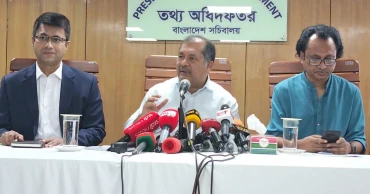
Fuel, electricity price hike unlikely to significantly affect market: Adviser Zahed
Prime Minister's Information Adviser Dr Zahed Ur Rahman on Saturday expressed hope that the recent hike in electricity and fuel prices will not have a significant impact on the market.
“ We do not think that this will create a major impact on the market,” he said at an emergency press briefing on energy and power held at the Press Information Department (PID) conference room in Secretariat.
Information and Broadcasting Minister Zahir Uddin Swapon was also present at the event.
Responding to a question on the timing of the price hike ahead of the budget session, the adviser said adjustments in fuel and electricity prices are inevitable at some point.
The prices of essentials particularly vegetables and fresh produce often rise around the budget period, although the current market trends showed some stability compared to previous periods, he said.
“There is a trend and we are now seeing signs of reversal,” he said adding that the government is also under pressure due to rising subsidy costs.
Increased subsidy spending limits the government’s ability to invest in development projects, healthcare, education and social safety programmes, he added.
Citing the ongoing initiatives such as farmer cards and family cards, the adviser said the government must ensure funding for such social protection measures.
Acknowledging that price increases are undesirable, he said the Ministry of Commerce would remain vigilant to prevent unjustified hikes.
The impact of the recent price adjustment would be limited as vulnerable groups are being protected, he said adding “We have not increased electricity or fuel prices for vulnerable people and many of them will continue to receive government support and allowances.”
A significant portion of low-income families would benefit from family card programmes in the upcoming budget, alongside continued support through other safety net initiatives such as TCB programmes, he added.
He also said the government would continue to take action against any unjustified price hikes in the market.
4 months ago

Diesel crisis, fuel price hike deepen harvesting woes for haor farmers
A diesel shortage coupled with the recent hike in fuel prices has sharply increased the cost of harvesting Boro paddy in the haor regions of northeastern Bangladesh, leaving farmers struggling to bring in their crops on time and facing mounting financial losses.
Although the harvesting season has already begun across Sylhet division, many farmers say they are unable to cut their paddy in time due to a lack of fuel and soaring machine rental costs, raising fears of crop damage from untimely rain or early flooding.
According to the Department of Agricultural Extension (DAE), a total of 2,23,511 hectares of land across 137 small and large haors in 12 upazilas of Sunamganj district were brought under Boro cultivation this year, with a production target of 14 lakh metric tons.
With farmers increasingly dependent on combine harvesters to quickly harvest crops in the flood-prone haor areas, rental charges for the machines have risen steeply.
Farmers said where harvesting one acre of land cost Tk 4,500 to Tk 5,000 last year, it has now increased to Tk 7,500-Tk 12,000, with some areas seeing even higher rates.
According to the DAE, a total of 1,473 combine harvesters are currently active across the four districts of Sylhet division, but authorities say the number remains insufficient compared to the demand.
Selim Reza Chowdhury, a farmer of Rajapur union in Dharmapasha upazila of the district, said though the yield is good this year, farmers are facing the greatest difficulty during harvesting.
“Even after offering up to Tk 12,000 per acre, we often cannot get a harvester. Costs are increasing every day and there is always the fear of rain or early flooding damaging the crops,” he said.
Besides, rice prices have not increased proportionately despite rising input costs, including fertiliser, seeds, irrigation and harvesting, pushing many farmers towards financial losses and debt.
Abdul Karim, another farmer said they are being forced to wait for available machines, with many farmers booking harvesters in groups due to the shortage.
Harvester owner Moinul Islam from Balijuri area of Tahirpur upazila said the situation is equally challenging for operators.
“Machines cannot run without diesel, but we are not getting sufficient fuel from dealers even after obtaining permits from agriculture offices. As a result, we are buying diesel from the open market at higher prices,” he said, adding that maintenance costs have also increased.
Jahangir Alam, a harvester operator, said it has become difficult to meet demand despite working day and night due to fuel shortages.
Deputy Director of the Sunamganj DAE Mohammad Omar Faruk said there is no actual fuel shortage in the district, but distribution complexities under a controlled system have created some disruptions.
Fuel is being supplied based on certification and administrative coordination is ongoing to stabilise the situation, he added.
5 months ago
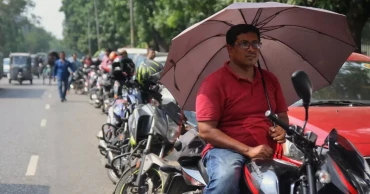
Even after price hike, fuel stations in Dhaka see long queues under intense heat
Long queues of motorcycles and vehicles stretched across fuel stations in the Asad Gate area of the capital, as motorcyclists and private car owners continued to struggle to refuel even after a recent increase in fuel prices.
5 months ago
Govt increases prices of all types of fuel
The government has increased the prices of all types of fuel at the consumer level in line with the rise in global fuel prices.
Following the hike, the price of diesel rises to Tk 115 per litre from Tk 100 per litre, octane rises to Tk 140 per litre from Tk 120 per litre, petrol to Tk 135 per litre from Tk 116 per litre, and kerosene to Tk 130 per litre from Tk 112 per litre, said a PID handout. The new prices will come into effect from Sunday.
In raising the prices in the middle of the month, the government circumvented the system introduced in March 2024, whereby an automatic pricing formula is used to fix fuel prices on a monthly basis, with prices for the following month announced at the end of each month.
As a result, diesel prices have gone up by Tk 15 per litre, octane by Tk 20, petrol by Tk 19, and kerosene by Tk 18.
Fuel crisis hits Rangpur, motorists spend hours in queues
Previously, fuel prices were reduced by Tk 2 per litre on February 1. The revised rates remained unchanged in March and were also maintained in April despite fluctuations in the global market.
The recent escalation of tensions in the Middle East, following joint attacks by the United States and Israel on Iran, has contributed to instability in global energy markets.
The situation has particularly affected the Strait of Hormuz, a key route through which a significant portion of the world’s oil supply is transported.
The impact has also been felt in Bangladesh, where there has been a surge in demand at petrol stations in recent days.
Fuel prices may rise if Middle East conflict prolongs: PM’s Adviser Zahed
Consumers reported difficulties obtaining fuel, although the government assured that sufficient stocks are available and supply remains normal.
Authorities have also taken action against illegal stockpiling. The Energy Department said that more than 500,000 litres of fuel have been recovered during nationwide drives targeting hoarding.
Earlier, the government had indicated it would try to avoid raising fuel prices to ease public hardship.
However, Prime Minister’s Adviser on Information and Broadcasting Dr Zahed Ur Rahman said on Wednesday that the government may consider adjusting fuel prices if the ongoing conflict in the Middle East prolongs and worsens.
Govt enforces sweeping austerity measures: Cuts fuel use, suspends car loans
“It is not certain yet. The situation in the Middle East could deteriorate or it could improve through negotiations. Tensions involving shipping routes and Iran could negatively impact the global energy market if the situation persists for a prolonged period. If this continues for long, it will be difficult to maintain subsidies indefinitely,” he told reporters at the conference room of the Department of Information at Secretariat.
Any decision on fuel price adjustment would depend on the evolving global situation, he added.
5 months ago
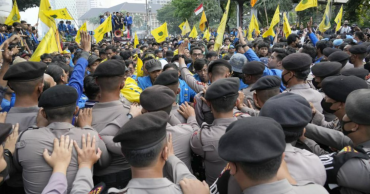
After hiking fuel price by 30%, Indonesia considering buying cheap Russian oil
Joko Widodo, President of Indonesia, is contemplating buying Russian oil to ease the burden of rising energy prices.
In an interview with the Financial Times, Widodo said, “We always monitor all of the options. If there is the country (and) they give a better price, of course,”
Widodo raised the price of subsidised fuel by 30% earlier this month, citing financial concerns as the reason for the price increase.
Read: Indonesia hikes fuel prices by 30%, cuts energy subsidies
Thousands of protestors gathered last week in Jakarta and other major cities to condemn the government’s decision to reduce fuel subsidies. The 270 million-strong nation was rocked by demonstrations after the decision.
However, any decision to buy Russian crude oil at a price higher than the G7-agreed price cap could result in US penalties against Indonesia.
Sandiaga Uno, Indonesia’s minister of tourism, claimed in August that Indonesia had received a 30% discount on Russian petroleum. The nation’s state-owned oil corporation, Pertamina, then declared that it was examining the risks of acquiring Russian oil.
Read: Special Presidential Envoy for Climate Kerry to visit Greece, Indonesia, Vietnam
Due to rising food costs, Indonesia, the largest economy in Southeast Asia, reported annual inflation of 4.7% in August.
4 years ago
.jpg)
Price gauging by Dhaka bus operators pinches commuters
Be it government employees or those working in the private sector, the recent bus fare hike is hurting commuters already burdened by inflation.
Jannatul Ferdous, a government officer, for instance, is now forced to shell out Tk 100 for a 'Green Dhaka' air-conditioned bus ride to Paltan from the Bashundhara Residential Area, instead of the earlier Tk 60.
The fare hike seems to be whimsical on Green Dhaka's part, given the Bangladesh Road Transport Authority (BRTA) on August 6 allowing bus operators in the capital to increase the same by 35 paisa to Tk 2.50 per kilometre from the earlier Tk 2.15.
From the main gate of the Bashundhara Residential Area to Paltan, the distance is roughly 10 kilometres.
Also read: Fuel price hike: Govt raises bus fares
Had Green Dhaka followed the BRTA’s direction, Jannatul’s daily bus fare would have risen only by Tk 3.50 and not by Tk 40 -- which is almost tenfold more.
On August 5, the government hiked the prices of fuel in Bangladesh. Diesel prices were increased by Tk 34 to Tk 114 per litre, octane by Tk 46 to Tk 135 per litre and petrol by Tk 44 to Tk 130 per litre.
4 years ago
.jpg)
Why farmers of Jhenaidah are in distress
Already hit hard by a drought-like situation in the district and rising fertiliser rates, farmers of Jhenaidah have been dealt another severe blow -- this time, by the recent fuel price hike and power crisis in the country.
Farmers say their agricultural fields have dried up due to inadequate rainfall and their inability to continuously irrigate the same using diesel-powered pumps that entails a huge operational cost given the recent fuel price hike in Bangladesh.
Besides, the prices of fertilisers have also increased over the past year, multiplying the losses of the farmers.
Majnur Rahman of Rangiyarpota village in Sadar upazila, cultivated Ropa Aman on just five-and-a-half bighas of his eight-bigha land this year. "Rising fuel and fertiliser prices forced me to take such a decision."
Another farmer, Jamal Uddin Biswas, expresses frustration over the recent fuel price hike. "If the fuel prices are not reduced, we will have to bear huge losses as the cultivation target will not be met this year," he says.
Farmer Somir Uddin says the Aman paddy needs plenty of rainfall. "Due to scanty rains this year, farmers need to spend an extra Tk 1,200 per bigha for irrigation."
Read:Why fuel price hike through gazette notification should not be declared illegal: HC
Many farmers have demanded the provision of low-cost diesel through agricultural cards if the government cannot reduce fuel prices.
"If the prices of fertilisers, fuel and electricity are increased in this agriculture-dependent country in this way, farmers will be forced to give up farming at some point,” Somir Uddin adds.
Azgar Ali, deputy director of Jhenaidah Agricultural Extension Department, says a target has been set for the cultivation of Ropa Aman on 1,04,750 hectares of land in the district this year.
"By mid-August, 53,262 hectares have been cultivated only. Besides, various types of vegetables are being cultivated on 2,554 hectares of land," he says.
According to Azgar, there are two lakh farmer families in the district. "The target has not been met yet as the farmers could not irrigate their fields due to lack of water amid this fuel price hike and power crisis.We are advising the farmers to try their best to meet the target of Aman cultivation.”
The government hiked the prices of fuel by a big margin on August 5.
Diesel prices were increased by Tk 34 to Tk 114 per litre, octane by Tk 46 to Tk 135 per litre and petrol by Tk 44 to Tk 130 a litre. The government also recently embarked on rationing of power to tackle the ongoing energy crisis in the country.
4 years ago

Why fuel price hike through gazette notification should not be declared illegal: HC
The High Court on Tuesday issued a rule asking the government to explain as to why raising fuel price through a gazette notification instead of holding a public hearing should not be declared illegal.
The HC bench of Justice Md Mojibur Rahman Mia and Justice Kazi Md Ejarul Haque Akondo issued the rule after hearing a writ petition challenging the legality of the latest hike in fuel prices in the country.
The Secretary of the Ministry of Power, Energy and Mineral Resources and the other authorities concerned have been made respondents to the rule.
Supreme Court Advocate Md Eunus Ali Akond and Barrister Jyotirmoy Barua stood for the petitioner while deputy attorney general Arbinda Kumar Roy represented the state.
Read: Fuel price hike hinders transportation at Benapole Port
On august 8, a writ petition was filed with the High Court challenging the legality of the latest hike in fuel prices in the country.
The writ petition sought the HC’s directive to stay the gazette issued by the Ministry of Energy, Power and Mineral Resources raising fuel prices.
Lawyer Eunus Ali said Bangladesh Energy Regulatory Commission (BERC) has the authority to raise the fuel price according to the law. But the fuel prices were increased through issuing a gazette by the ministry.
Read: Not worried over allies’ protesting fuel price hike: Obaidul Quader
According to that gazette, this decision was taken as per the order of the President. But the constitution does not give the President the authority to raise the fuel prices and for this reason the writ petition was filed, he added.
The government hiked the price of fuel by a big margin on August 5.
Diesel prices were increased by Tk 34 to Tk 114 per litre while octane price hiked by Tk 46 to Tk 135 and petrol by Tk 44 to Tk 130.
4 years ago