electronic voting machines
Graft-tainted EVMs turn burden; experts push for disposal after probe
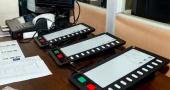
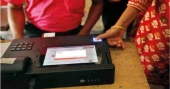
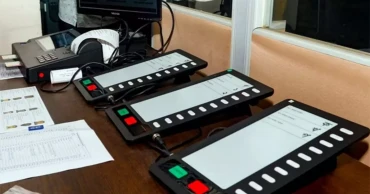
Around 150,000 Electronic Voting Machines (EVMs), procured at a cost of Tk 3,825.34 crore to modernise Bangladesh’s election system during the Awami League regime, have now become a burden for the Election Commission, with experts calling for their disposal after most of the devices fell into disrepair.
Officials say the majority of these machines are no longer usable – with only a few thousand currently functional, raising serious concerns over the effectiveness of the project and the use of public funds.
The EVM project has also been hit by allegations of massive corruption and irregularities.
Experts have questioned the quality of the machines, excessive expenditure and their overall usability, with some claiming that the devices were procured in a way that could allow manipulation in elections.
According to findings, audit objections have been raised over the procurement of the machines and related equipment. Investigators believe that irregularities in the purchase process contributed to significant financial losses.
Bangladesh first introduced EVMs on a trial basis in 2010 under the leadership of then Chief Election Commissioner ATM Shamsul Huda. The machines were used for the first time in a ward during the Chattogram City Corporation election in 2011, using devices developed by the Bangladesh University of Engineering and Technology.
However, technical problems soon became evident. In the 2013 Rajshahi City Corporation election, a malfunction in one centre prevented the announcement of results, prompting the then commission to step back from using EVMs.
The initiative was revived after a new Election Commission took charge under KM Nurul Huda, with plans to expand the use of EVMs in elections. In 2017, the machines were again used on a trial basis in several polling rooms in a ward during the Rangpur City Corporation election.
From the beginning, the introduction of EVMs remained politically controversial. While the then ruling Awami League promoted the system as a modern and transparent method of voting, opposition parties, including the BNP, raised doubts about its neutrality.
Election experts, observers and civil society members also expressed concerns, but critics say these views were largely ignored.
From digital dream to dumping dilemma: EVM project falters
Ahead of the 2018 national election, the government approved a project worth Tk 3,825 crore to procure 150,000 EVMs. However, the project reportedly did not clearly mention where the machines would be stored or how they would be maintained.
Now, the Election Commission is facing a dilemma over what to do with the machines, many of which have already exceeded their usable life. Officials are considering disposal, but the process has been stalled due to ongoing investigations into alleged corruption in procurement.
The Anti-Corruption Commission is currently probing the allegations, while audit objections from the Comptroller and Auditor General’s office remain unresolved.
Officials said the machines cannot be disposed of at this stage, as doing so could create further complications during the investigation.
In addition, any disposal process would require clearance from the Department of Environment, adding another layer of complexity to the situation.
As a result, the costly EVM project now stands as a major challenge for the Election Commission, with unresolved questions over accountability, financial loss and the future of electronic voting in Bangladesh.
One of the key issues highlighted by auditors relates to the pricing of the machines.
ACC finds defects in EVMs, questions experts' endorsement
According to the Comptroller and Auditor General’s office, each EVM was purchased at around Tk 2.34 lakh, significantly higher than the estimated market price. The audit suggests that the total cost could have been limited to about Tk 343 crore, indicating excess expenditure of more than Tk 3,000 crore.
Experts have also questioned the procurement method, noting that the machines were acquired without an open tender process. Instead, a direct procurement approach was followed, limiting competition and raising concerns about transparency and accountability.
Besides, the machines were supplied with only a one-year warranty. After the warranty period expired, further public funds were required to maintain and repair the equipment. Despite an expected lifespan of at least 10 years, many machines reportedly developed faults within a short period.
The ACC has launched an investigation into the project, focusing on procurement procedures, cost irregularities and the quality of the machines. Officials said the probe would also examine possible irregularities in training and operational expenses.
Contacted, election expert Dr Abdul Alim said the EVMs used in Bangladesh were fundamentally flawed as they lacked an internationally recognised verification system.
In many countries, he noted, EVMs are equipped with a Voter Verifiable Paper Audit Trail (VVPAT), which produces a paper slip after a vote is cast showing the chosen symbol.
Riding the rough ride: ADB projects modest growth for Bangladesh
The slip is then deposited in a sealed box and can be counted alongside the machine results in case of any dispute or audit. “This dual system ensures transparency and allows verification if confusion arises,” Alim said.
He said Bangladesh’s EVMs did not have such a provision, making the results difficult to independently verify.
The election expert also alleged that the machines were unusually expensive despite being locally produced with technology developed by BUET and manufactured at the Bangladesh Machine Tools Factory.
“Our EVMs are among the costliest in the world, which raises questions about possible corruption in the project,” he said.
Referring to the procurement, Alim claimed the initiative was associated with Tarique Ahmed Siddique, former military adviser to ousted Prime Minister Sheikh Hasina, alleging that the project was mainly designed to misappropriate public money.
He said the machines are currently unused but the government is still spending public funds to store them.
The expert suggested that after completing investigations and preserving a small number of machines as samples for legal or court purposes, the rest should be destroyed to avoid further wastage of taxpayers’ money.
Election Reform Commission Chairman and noted election expert Dr Badiul Alam Majumdar also criticised the EVM project, saying there are allegations that the machines were procured at several times the price of similar machines used in India.
Cleared today, occupied tomorrow! Why can’t Dhaka keep its footpaths free?
He described the machines as low-quality and unsuitable for ensuring credible elections, noting that many of them have already become damaged and unusable.
Badiul Alam said there are allegations that the procurement was carried out with the intention of facilitating the misappropriation of public funds.
He emphasised that a neutral and independent investigation should be conducted into the purchase of the EVMs and that anyone found responsible should face exemplary punishment.
The election expert said the machines are unlikely to be used again in Bangladesh’s elections and have effectively become a financial burden, making it necessary for the authorities to take a clear and lawful decision regarding their future.
6 months ago

ACC finds defects in EVMs, questions experts' endorsement
The Anti Corruption Commission has commenced its investigation into the purchase of electronic voting machines (EVMs) by the Election Commission, to find out if there were any irregularities in the procurement process.
Among the 618 machines at the Election Commission's headquarters, the ACC randomly tested some for their 'operational capacity.' The defects indicate the purchase of substandard machines. Additionally it was unable to find any trace of 1,599 EVMs.
ACC Director General (Prevention) Mohammad Akhtar Hossain said that it has become apparent that the basis on which renowned experts like Muhammad Zafar Iqbal deemed the machines appropriate must also be brought to the commission's attention.
After reviewing the relevant records gathered during yesterday's operation, the Enforcement Team will submit a detailed report.
Cadman warns against rushing cases before ICT, seeks further changes to legal framework
Although EVMs were used in various elections under the Awami League government, the Election Commission, led by Kazi Habibul Awal after taking office in 2022, assessed the feasibility of using EVMs in elections.
In May of that year, a group of technology experts, including Professor Zafar Iqbal of SUST and Professor A. Kaykobad from BUET's Computer Science and Engineering Department, were shown the EVMs, and the EC sought their consent to use them in voting.
After observing the EVMs and exchanging views with the EC on May 25, 2022, Zafar Iqbal and Kaikobad argued in favor of using the machines in elections.
On that day, Zafar Iqbal said, "I have seen the full demonstration of the EVM. I have learned all the details, the technical aspects inside it. Finally, I opened the machine that was kept for us. Personally, I am convinced. It's an excellent machine."
He also urged political parties opposed to EVMs to approve the use of the machine.
On Sunday, the ACC conducted an operation accusing the previous government of wasting public money by purchasing substandard EVMs. During the review of the relevant records, it was found that the machines are stored at the Election Commission's headquarters, 10 regional offices, and the Bangladesh Machine Tools Factory, which was contracted to provide the machines.
1 year ago

By-polls to 6 JS seats end amid stray incidents
Voting in the by-polls to the six parliamentary seats — left vacant after BNP MPs resigned —concluded amid some stray incidents on Wednesday afternoon.
The voting began at 8:30 am and continued till 4:30 pm, said SM Asaduzzaman, Joint Secretary of the Election Commission.
The six constituencies are: Thakurgaon-3, Bogura-4 and 6, Chapainawabganj-2, 3 and Brahmanbaria-2.
Electronic voting machines (EVMs) were used in the by-elections. However, no CCTV cameras were installed in the polling centers, he added.
Forty aspirants are vying in the 6 constituencies for MP post.
In Chapainawabganj, a chase and counter-chase occurred between supporters of two candidates at the District Ideal High School Centre around 9 am.
A scuffle took place between the supporters of independent candidate Samiul Haque Liton and Awami League-backed candidate Abdul Wadud at the polling station -- triggering a chase and counter-chase, said Additional Superintendent of Chapainawabganj Police, Abul Kalam Shaheed.
However, police brought the situation under control. A crude bomb was recovered from the spot.
UNB Chapainawabganj correspondent reports: Voting in the by-election ended peacefully amid low voter turnout.
Read more: By-polls to 6 JS seats underway amid stray incidents
Abu Asif Ahmed, an expelled leader of BNP and an independent candidate who went missing on Friday, could not be traced till Wednesday afternoon.
Some 1,100 police have been deployed at the polling stations while four platoons of BGB members, nine teams of RAB, nine mobile teams of police, and four striking teams were also performing their duties to maintain the law and order situation.
Meanwhile, the government on Tuesday announced a public holiday on Wednesday in the election areas on the occasion of the by-elections.
Earlier on December 10, 2022 at a public rally, parliamentarians of BNP announced their resignation from the JS. The next day, on December 11, Chapainawabganj-2 lawmaker Md Aminul Islam, Bogura-4 lawmaker Md. Mosharraf Hossain, Bogura-6 lawmaker Golam Mohammad Siraj, and Thakurgaon-3 lawmaker Zahidur Rahman resigned.
Two other BNP lawmakers — Advocate Abdus Sattar of Brahmanbaria-2 constituency and Harun-or-Rashid of Chapainawabganj-3 — resigned later.
3 years ago

Polls underway at 57 Zila Parishads
Elections at 57 Zila Parishads of Bangladesh began on Monday (October 17, 2022) morning by using electronic voting machines (EVMs).
The voting began at 9:00 am and will continue until 2:00 pm without any break under the supervision of the deputy commissioners who are acting as returning officers, according to the Election Commission.
Voting in the Zila Parishads will be held at 925 booths in 462 centres across the country while 60,866 voters will cast their vote.
Read:EC doing its job, not under any pressure: CEC
Elected representatives of other local government bodies such as Union Parishads, municipalities and Upazila Parishads are eligible to vote in the election.
Chief Election Commissioner (CEC) Kazi Habibul Awal said on Sunday that CCTV cameras will be used in every centre in the Zila Parishad elections just like the recently held Gaibandha-5 elections. The EC suspended the election to the Gaibandha-5 parliamentary seat for “widespread malpractices” recorded in the CCTV cameras.
The Election Commission says it will monitor the 57 Zila Parishads polls of Bangladesh through CCTV cameras from a monitoring cell set up in its headquarters in Dhaka.
Read: Gaibandha-5 polls: Not a reckless decision, says CEC
3 years ago
EVMs in 150 constituencies: EC finalises Tk 8,711cr project
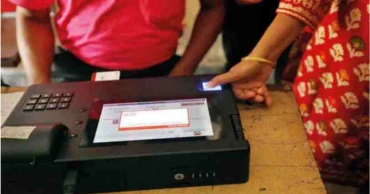
The Election Commission (EC) today approved a Tk 8,711 crore project to procure Electronic Voting Machines (EVMs) for 150 constituencies, out of 300, for the 12th parliamentary election.
The project details will soon be sent to the Planning Commission for approval, Election Commissioner Md Alamgir said in a press briefing.
Earlier, the project was approved in a meeting of the commission. Chief Election Commissioner (CEC) Kazi Habibul Awal, who recently tested positive for Covid-19, joined the meeting virtually.
Read: Jatiya Party to shun alliances at next election: GM Quader
EC Alamgir said, “The commission earlier decided to use EVMs in 150 constituencies, in the next general election, but 1.5 lakh machines we currently have can be used in highest 70 to 80 constituencies.”
So, the project was approved to procure and maintain new EVMs, he said.
The Election Commission unveiled roadmap for next the general election at a function held at the auditorium of the Nirbachan Bhaban on Wednesday.
Read: Next national election by Jan 29, 2024; EVMs to be used in 150 constituencies
On August 23, the EC decided to use electronic voting machines instead of traditional ballot papers in maximum 150 constituencies in the next general election – likely to be held late next year.
The decision received strong opposition from BNP and its allies, who didn’t join the talks with the CEC that continued throughout the month of July.
However, the ruling Awami League welcomed the decision as it was their demand to use EVMs in all 300 seats in the next election.
Read AL in favour of using EVMs in national election: Quader
Earlier, the commission had invited 39 political parties registered with it for talks on the use of electronic voting machines; 28 political parties responded to the commission’s invitations while 11 parties, including BNP, rejected it.
4 years ago

AL in favour of using EVMs in national election: Quader
Awami League general secretary Obaidul Quader on Tuesday said Awami League is in favour of voting by Electronic Voting Machines (EVMs) in the upcoming national election.
"We are in favour of using EVM in the national election.AL has no objection if EVMs are used in the upcoming national election," he said.
Quader, also the Road Transport and Bridges Minister, came up with the remarks while talking to reporters after a meeting organised by the Election Commission at Nirbachan Bhaban in the city.
Quader said the Awami League believes that the EC's acceptability, neutrality and capacity are important for holding fair and free elections.
"Our party's decision is loud and clear in favour of EVMs. There is nothing to hide here. I am calling for raising the use of EVMs in the upcoming election,” he said.
In his opening remarks, Chief Election Commissioner (CEC) Kazi Habibul Awal said, "We have discussed with more parties. Many parties supported the use of EVM. We had no idea about EVM before. Now there is a complete idea. Many have told that they will not go to polls without EVM.”
READ: Don’t play with fire, Obaidul Quader warns BNP
I will take decision after discussion with all,” he added.
The meeting was attended by representatives of nine political parties, election commissioners and senior EC officials.
The Election Commission called 39 political parties for discussion on using EVMs in the national election. Thirteen of the 39 registered political parties were invited to the EC office on June 19 while another 13 parties joined the discussion on June 21.
4 years ago
.jpg)
EC announces polls schedule for 3 municipalities
Election will be held in three municipalities –Panchbibi and Khetlal in Joypurhat, and Dohar in Dhaka—on July 27 with the use of electronic voting machines (EVMs).
Also read: EC suspends Eochia UP election in Ctg
The Election Commission on Monday announced the polls schedule for the three local bodies by issuing a notification.
Also read: EC suspends Chambal UP election in Ctg
As per the schedule, the deadline for submission of nomination papers is June 28, while the date for scrutinizing nomination papers is June 30 and the last date for withdrawal of candidature is July 7.
4 years ago

Election using EVMs won’t be acceptable: Jatiya Party
Jatiya Party Secretary General Mujibul Haque Chunnu on Saturday said fair voting using the Electronic Voting Machines (EVMs) will not be possible.
“EVM is good, but those who will operate it are not neutral. So, the election using the EVMs will not be acceptable,” he said.
Chunnu also said Jatiya Party will decide in its party forum whether it will go to the polls or not if the Election Commission decides to use the EVMs in the next general election.
He was speaking as the chief guest at the conference of Jatiya Party’s 33-No ward in the city’s Mohammadpur area.
Also read: EC: EVMs to be customized in presence of candidates in Cumilla polls
The Jatiya Party leader voiced concern as a quarter suddenly lodged complaints with the Anti-Corruption Commission (ACC) against 116 alems (Islamic scholars).
“It’s important to find out why this quarter came up with such allegation. It’s also necessary to make an inquiry about their incomes, expenditures and wealth,” he said.
Stating that 400,000 crores have been siphoned off abroad from Bangladesh from 2009 to 2016, Chunnu wanted to know why it is not being investigated.
He renewed their party’s demand for publishing a list of money launderers and urged the government to take legal action against them.
The Jatiya Party secretary general also alleged that the country is spending three times higher than the actual costs in the name of mega projects. “Looting is taking place in the name of development.”
Also read: EVMs in national election won't be logical: GM Quader
He also said there is no difference between Awami League and BNP in terms of corruption and misrule. “So, the people of the country no longer want to see Awami League and BNP in power. They now want to see the government of Jatiya Party.”
4 years ago

NCC polls: Voting ends peacefully, counting begins
Voting in the Narayanganj City Corporation (NCC) election ended on Sunday without report of any untoward incident.
Balloting for the election started at 8am and continued till 4pm without any break.
Counting of votes began shortly after the voting ended.
Read: NCC polls see good voter turnout, says Returning Officer
Voters exercised their franchise in a festive mood using Electronic Voting Machines (EVMs).
Long queues were seen as voters turned up at the polling stations to cast their votes braving cold weather and fear of Covid infection.
Besides, returning officer Mahfuza Akter said voter turnout in NCC election is good as 40% voters exercised their franchise till noon.
“The number of voters increased after noon. Some 40% people have cast their votes in the election till now,” she told UNB on Sunday.
Seven candidates are running for the post of the NCC mayor including ruling party nominee Selina Hayat Ivy, her principal rival Advocate Taimur Alam Khandaker, a veteran BNP who has been contesting as an independent candidate.
Selina Hayat Ivy cast her vote at Deubhog Kalrab polling center around 9:30 am while Taimur cast his vote at Masdair Primary Government School around 10 am.
4 years ago

NCC polls: Voting underway amid tight security
Balloting for the Narayanganj City Corporation election is underway using Electronic Voting Machines (EVMs) on Sunday.
The voting started at 8am and will continue till 4pm without any break.
The electioneering officially ended on Friday midnight.
READ: NCC: An unprecedented hattrick, or the mother of all upsets?
Seven candidates are running for the post of the NCC mayor including ruling party nominee Selina Hayat Ivy and her principal rival Advocate Taimur Alam Khandaker, a veteran BNP who has been contesting as an independent candidate.
Selina Hayat Ivy cast her vote at Deubhog Kalrab polling center around 9:30 am while Taimur cast his vote at Masdair Islamia Fazil Madrasha around 10 am.
Besides, 148 candidates are contesting for 27 ward councilors post while 38 women are contesting for conserved seats for women in the NCC polls.
This time the NCC elections have 517,357 voters – including 257,519 females.
4 years ago