Searched by - uGC
Total - 133

30,000 global e-books, journals open up to 76 universities under UGC deal
Teachers, researchers and students at 76 public and private universities will get access to more than 30,000 e-books and e-journals from seven international institutions under a new agreement aimed at widening the country's access to global academic resources.
The Higher Education Acceleration and Transformation (HEAT) project and the Bangladesh Research and Education Network (BdREN) signed the deal on Thursday at the University Grants Commission (UGC) meeting room in Dhaka, under the banner "E-Books for UGC Digital Library".
BdREN Chief Executive Officer Mohammad Tawrit and HEAT Project Director Asaduzzaman signed the agreement in the presence of UGC Chairman Mamun Ahmed.
Under the deal, academics and students will be able to use the e-books, e-journals and other research materials from the seven institutions.
Stressing greater use of e-resources, the UGC chairman said the materials are being procured in line with universities' needs and the country's priority sectors. "This will make it easier for teachers and researchers to access international e-books, e-journals and other research materials."
He said universities must step up their use of e-resources to improve the quality of education and research.
"We have to use this facility to move the country's research sector forward," he said, adding that the UGC is working on ways to boost e-resource use in research.
Highlighting the digital transformation drive at universities, Mamun said initiatives are underway to expand high-speed WiFi and broadband internet and to build an e-resource sharing system.
This, he said, would strengthen digital links among local universities and with institutions abroad. "The UGC is also moving to connect expatriate academics and researchers with Bangladeshi universities through digital platforms."
The UGC chairman said the commission is taking effective steps to develop the country's universities into fully digital campuses.
8 days ago
UGC Chief calls for zero audit objections at public universities
University Grants Commission (UGC) Chairman Professor Dr Mamun Ahmed has directed the relevant authorities to take necessary steps to bring audit objections at public universities down to zero.
He urged universities to gradually settle outstanding audit objections and take effective measures to prevent new ones from arising.
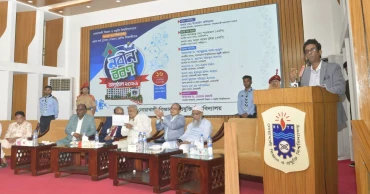
The UGC chairman made the remarks on Wednesday while addressing the inaugural session of a day-long workshop titled “Budget Formulation and Implementation in Public Universities” at the UGC auditorium.
Emphasising the need for financial discipline, Professor Mamun said the number of audit objections has been increasing every year at most public universities, with the growth this year higher than in the previous year.
He said such objections create a public perception that government funds are not being used properly.
“Our decision at this moment is that we aim to reach a state of zero audit objections,” he said.
The UGC chairman acknowledged that it would not be possible to resolve all long-standing objections overnight. He called for a gradual reduction of existing objections while ensuring that no new ones are created.
He identified failure to properly follow the Public Procurement Rules (PPR) and financial regulations as major causes of audit objections.
Officials and staff involved in procurement should be properly trained in PPR, he said, adding that the UGC would provide assistance if necessary. He also stressed the importance of complying with financial management rules.
The government makes the laws and regulations, while universities implement them; the UGC mainly works as a coordinator between the government and universities.
“We do not wish to impose new rules on the universities. We aim to foster coordination between the government and the universities to prevent any duplication of efforts or conflicts. University autonomy will be preserved, while government laws and regulations will also be duly observed,” he said.
The UGC chairman also stressed the need to follow rules on recruitment, promotion and restructuring of organisational structures.
He said efforts are under way to address complications arising from past irregularities within the existing legal and regulatory framework. At the same time, universities must ensure that no new irregularities occur.
Professor Mamun urged universities to assess their staffing needs carefully and submit proposals supported by reliable data.
He pointed to a case where a university received approval to recruit staff in 2023 but did not make the appointments in 2024, 2025 or 2026.
“This indicates a flaw in the initial assessment of requirements,” he said.
“We want to cooperate. If you submit logical proposals backed by appropriate data, the Commission will implement them promptly,” he added.
Referring to the UGC's strategic plan for transforming higher education, Professor Mamun said implementation of the plan may require funding beyond existing budgetary and development allocations.
He stressed that transparency in financial and administrative systems must therefore be ensured.
“Ensuring transparency will build trust in universities among the government, society and the state. Funding will then cease to be a major issue. It is not enough for us to merely earn this trust; we must also make that trust visible to the public,” he said.
He also announced plans to hold regular high-level discussions and share government rules and regulations with officials responsible for administrative and financial management at universities.
The UGC is also working to establish digital connectivity with every university, he said. Existing software systems will be reviewed and necessary features will be added.
UGC Member Professor Dr Md Aslam Hossain presided over the workshop.
15 days ago
UGC, UN Women partner to combat sexual, gender-based violence at universities
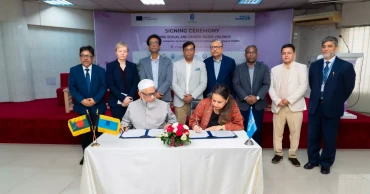
The University Grants Commission (UGC) of Bangladesh and UN Women on Thursday signed a Memorandum of Understanding (MoU) to strengthen efforts to prevent and respond to sexual and gender-based violence at tertiary educational institutions across the country.
The agreement was signed at the UGC Auditorium in Dhaka under UN Women’s Ending Sexual and Gender-Based Violence in Public Spaces, Workplaces and Tertiary Educational Settings in Bangladesh (ESGBV) project, funded by the European Union.
The partnership will also support the implementation of the 2009 High Court directives on the prevention of sexual harassment, which require educational institutions and workplaces to establish effective mechanisms to prevent and address such incidents and ensure safe, dignified and respectful environments.
According to the Bangladesh Bureau of Statistics’ (BBS) 2024 National Violence Against Women Prevalence Survey, 16 percent of young women aged 20-24 experienced technology-facilitated gender-based violence in the previous year.
Under the collaboration, UGC and UN Women will work with five public and private universities including Begum Rokeya University, Rangpur; Shahjalal University of Science and Technology (SUST); Khulna University; Daffodil International University; and American International University-Bangladesh (AIUB) — to strengthen institutional capacity to prevent and address gender-based violence, including sexual harassment, on campuses.
UGC Chairperson Professor Dr Mamun Ahmed and five members of the UGC Executive Committee, vice-chancellors and representatives of the five participating universities, representatives of the European Union and UN Women, and other stakeholders attended the signing ceremony.
Prof Mamun Ahmed stressed the importance of collective action to ensure safe and enabling environments for students and staff at higher education institutions.
“True academic excellence can never be achieved in an environment where fear, harassment and discrimination exist,” he said, stressing that universities must remain spaces where students, particularly women, can pursue their aspirations without fear of gender-based violence.
Representing the European Union, Deputy Head of Delegation and Head of Political, Economic, Trade, Press and Information Section Baiba Zarina said the partnership could help translate standards into practice, strengthen institutions and ensure that students and staff have confidence that their concerns will be heard and addressed.
UN Women Representative Gitanjali Singh underscored the importance of strong institutional systems, accountability and coordinated action to prevent violence against women and girls.
“Safe campuses are essential for young women and girls to pursue their education and aspirations,” she said, calling for safer learning and working environments free from harassment and violence.
A discussion moderated by Shrabana Datta, Ending Violence Against Women Unit Manager at UN Women, highlighted commitments from the vice-chancellors of the participating universities.
Under the ESGBV project, UN Women and its civil society partner Ain o Salish Kendra will work with the universities to strengthen internal complaint committees and institutional mechanisms, improve reporting and referral systems, and raise awareness among students and staff.
The partnership is expected to contribute to creating university campuses across Bangladesh where students and staff can learn, work and participate in campus life free from sexual harassment and gender-based violence.
SUST Vice Chancellor Professor Dr Md Khairul Islam, project implementing task team convenor Dr Mohammad Sayful Islam, Khulna University sexual harassment prevention committee president Professor Mst Taslima Khatun, Begum Rokeya University Vice Chancellor Md Showkat Ali, AIUB Vice Chancellor Professor Dr Saiful Islam, representatives Farheen Hassan and Nazia Farhana, and Daffodil International University Vice Chancellor Professor Dr M R Kabir and sexual harassment prevention committee chairperson Professor Dr Sharifa Sultana were present at the ceremony.
1 month ago

UGC to set up language centres at 25 universities to boost multilingual skills, employability
The University Grants Commission (UGC) has taken an initiative to establish modern language centres at 25 public and private universities across the country to enhance the competitive capacity of Bangladeshi students in the global job market, internationalise higher education, and create an attractive academic environment for foreign students.
"These language centres at the 25 universities will teach a total of eight international languages, including Japanese, Korean, Chinese, Arabic, French and German," UGC Chairman Professor Mamun Ahmed said while addressing an exchange meeting with foreign students studying at Bangladesh Agricultural University (BAU) on Thursday.
The meeting was organised to encourage the enrolment of international students at universities in the country, review their academic experiences, and identify existing problems along with ways to address them. Foreign students studying at BAU took part in the programme.
The UGC chairman said the current government has adopted a plan to include a third language in the curriculum with a view to enhancing international communication skills within the education system.
This, he said, would create massive demand for skilled foreign language teachers from the primary to higher education levels. "The university-based language centres would meet that demand while equipping students with proficiency in internationally sought-after languages, thereby creating new employment opportunities both at home and abroad."
He further said that in the era of the fourth industrial revolution, artificial intelligence, global trade and international cooperation, multilingual proficiency is no longer an added qualification but an essential capability.
Language education, he added, would further smooth the path for Bangladeshi youth to pursue international higher education, research, technology, diplomacy, entrepreneurship, and entry into the global job market.
Mamun said the UGC is formulating a five-year strategic plan aimed at transforming the country's higher education system and improving its international standards. "One of the key objectives of the plan is to establish Bangladesh as a regional education hub in South Asia, making it a preferred destination for foreign students, researchers and teachers."
He said an "International Desk" would be formed with coordination among the Ministry of Foreign Affairs, the Ministry of Home Affairs, the Ministry of Education and the UGC to simplify admission, visa, accommodation, healthcare and other administrative services for foreign students. "Simultaneously, five public and five private universities in the country would be developed as model education hubs, with expanded infrastructure and services to ensure international-standard accommodation, medical centres, student support services, counselling, career support, and a multicultural learning environment."
He added that the proposed language centres would not be limited to language education alone; they would also serve as effective platforms for cultural exchange, international cooperation, joint research, academic exchange, and the practice of global citizenship among local and foreign students.
These initiatives, the UGC chairman said, would open up new possibilities for Bangladeshi universities in international rankings, research collaboration, and attracting foreign students.
2 months ago

UGC finalising five-year roadmap to transform higher education
The University Grants Commission (UGC) is finalising a five-year national action plan to transform Bangladesh's higher education sector through reforms focused on employability, digitalisation, research, artificial intelligence and internationalisation.
The proposed "National Action Plan for Higher Education Transformation: Achieving Sustainable Excellence (2026–2030)" aims to raise the country's universities to international standards and better align higher education with global technological changes and labour market demands.
A discussion meeting on the draft action plan was held on Thursday at the UGC, chaired by Education Minister Dr ANM Ehsanul Hoque Milon, where senior officials of the Ministry of Education and the UGC exchanged views.
Speaking at the meeting, Milon said the roadmap for transforming the country's higher education sector should originate from the UGC itself, since the commission plays a vital role as the central regulator and coordinator of the higher education system.
He said the UGC's leadership needs to be made more effective and dynamic to raise higher education to the desired standard.
The minister said successful higher education reform initiatives and experiences from different countries should be reviewed and the aspects suited to Bangladesh's context should be implemented, suggesting that experiences from China, the United Kingdom, Malaysia and Pakistan be put to use in this regard.
He said the government's goal is not merely to produce meritorious students but to ensure the excellence of their talent.
Universities need to take effective steps to attract foreign students and turn Bangladesh into a regional higher education destination, Milon said, calling for a coordinated national policy on foreign student admission, academic cooperation and internationalisation.
He added that the country's large population is a potential asset that can be transformed into an effective force for national development through planned higher education, skill development, research and investment in innovation.
UGC Chairman Prof Dr Mamun Ahmed said the long-term reform plan has been undertaken to align the country's higher education with changing global realities, technological advancement and labour market demand.
He said the draft five-year action plan was prepared based on the recommendations of a recent national workshop on higher education transformation held at Dhaka University in the presence of Prime Minister Tarique Rahman, along with government priorities and the UGC's strategic plan.
Mamun said the action plan sets out five strategic priorities: enhancing graduate employability and ensuring demand-based education while strengthening university-industry collaboration and global competitiveness; digital transformation and the use of artificial intelligence; teacher development and professional skill enhancement; research excellence, innovation and internationalisation; and governance, quality assurance and institutional reform.
He said targets have been set for all universities in the country to introduce outcome-based education (OBE), career development centres, internship and employment-tracking systems, a learning management system (LMS), digital administration and AI-based education systems by 2030.
“The plan also includes doubling the number of research publications and patents, expanding international research and academic partnerships, building an integrated national higher education database, and establishing Bangladesh as one of the regional hubs for higher education and research,” the UGC chairman said.
He said a series of consultation meetings with vice chancellors of public and private universities, academics, industry representatives, development partners and civil society representatives will be held as part of finalising the draft. “The plan will be finalised based on the opinions and recommendations of the stakeholders concerned and then placed before the Ministry of Education for implementation.”
Mamun sought the ministry's overall cooperation for the plan's swift implementation.
2 months ago
UGC promises research funding boost for universities
The University Grants Commission (UGC) has assured that academic freedom and autonomy of the country's universities will remain fully intact even as research budgets are implemented through the commission in line with a government decision.
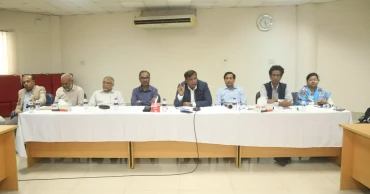
UGC Chairman Mamun Ahmed gave the assurance while addressing an exchange meeting with the Association of Bangladesh University Council at the UGC auditorium on Thursday, held to discuss implementation of the research budget for the 2026-27 fiscal year.
He said a coordinated committee involving university representatives will be formed to ensure proper, effective and transparent use of the allocated research funds. "The UGC will also frame a clear policy for management and implementation of the research budget."
Speaking at the meeting, Association of Bangladesh University Council President Prof SM Abdur Razzak said allocating the research budget under the UGC code, instead of universities' own codes, created some administrative complications.
He, however, noted the need to balance the government's priority of advancing education and research with the universities' long-standing practice of autonomy.
Responding to the concern, Mamun said the research budget is being disbursed through a specific code as per government decision, and the UGC will implement it while ensuring an effective mechanism through regular discussions and coordination with the universities.
He disclosed that Tk 226 crore has been allocated for the research sector in the 2026-27 fiscal year, to be spent under three key sub-sectors.
Calls for research proposals at undergraduate, postgraduate, MPhil and PhD levels will be issued at the start of the fiscal year, with universities vetting proposals through their own institutional processes before sending them to the UGC. Funding decisions will then be made based on national priorities and the quality of research, he said.
The UGC chairman said fund disbursement processes for the new fiscal year have already begun, with research proposals set to be collected quickly and necessary funds released within two weeks of receiving proposals to avoid delays in research activities.
He assured that no university's allocation would decrease despite the funds being routed through the UGC; rather, universities stand to receive more funding compared to previous years. "Regional universities across the country will get equal opportunities in research allocation, with no discrimination."
Citing last fiscal year's figures, Mamun said around Tk 900 crore was allocated for research, of which public universities received about Tk 793 crore and private universities around Tk 56 crore, dismissing the notion that private universities are deprived of research funding.
He further said initiatives are underway to establish an integrated research ecosystem and a national research repository to ensure maximum effective use of allocated funds, which will help preserve research data, enable information sharing, and enhance the visibility of research at national and international levels.
UGC chairman added that significant funding for higher education and research development is also being channelled through UGC-implemented projects, including the Higher Education Acceleration and Transformation project and the Improving Computer and Software Engineering Tertiary Education project.
UGC members Mohammad Anwar Hossain, Saidur Rahman, Masuma Habib, Mohammad Ayub Islam and Abdullah-Al-Mamun were present at the meeting, along with vice-chancellors or their nominated representatives from 45 public universities and concerned UGC officials.
Participants expressed hope that the new management system would ensure greater transparency, accountability and efficiency in research funding, and strengthen the overall research environment in the country's higher education sector.
2 months ago

DU Prof Abdullah-Al-Mamun made UGC member
Dr Abdullah-Al-Mamun, professor and former chairman of the Department of Japanese Studies at Dhaka University, has been appointed a full-time member of the University Grants Commission (UGC).
The Secondary and Higher Education Division under the Ministry of Education issued a notification in this regard on Saturday.
According to the notification, Dr Mamun has been appointed as a UGC member for the next four years under the University Grants Commission Act, 1973. The appointment will take effect from the date of joining.
He has already submitted his joining letter to the UGC chairman, the notice said.
Dr Mamun has also made notable contributions to education and research at the international level.
In 2024, he received the Fulbright Research Professorship at Adelphi University in the United States. In 2023, he served as a Japan Foundation Fellow at the International University of Japan.
He earned his PhD in International Economic Development from the University of Huddersfield, UK, in 2020. In 2018, he obtained a Postgraduate Certificate in Research Methods from the same university.
He also received a Certificate in Law from the University of Northumbria, UK, in 2009 and holds an MBA in Marketing.
Earlier, he completed a postgraduate diploma from the Department of Japanese Studies at Dhaka University. He also obtained his Bachelor’s and Master’s degrees from the Department of Sociology at the university.
His research interests include Japanese studies, development planning, international development cooperation, development project management, aid effectiveness, development sociology and political sociology.
4 months ago
PM to open UGC workshop on higher education at DU Tuesday
The University Grants Commission of Bangladesh (UGC) will organise a national workshop on Tuesday aimed at transforming Bangladesh’s higher education system into a more contemporary, inclusive and sustainable model.
Prime Minister Tarique Rahman will inaugurate the daylong workshop titled “Transforming Higher Education in Bangladesh: Roadmap to Sustainable Excellence,” as the chief guest at the Nabab Nawab Ali Chowdhury Senate Bhaban of Dhaka University in the morning.
This will be his first official programme at Dhaka University since assuming office as Prime Minister through the February 12 national election.
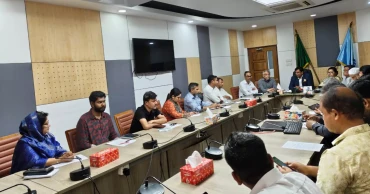
The information was shared at a press conference held at the UGC conference room on Monday afternoon.
UGC Chairman Prof Dr Mamun Ahmed, its members, secretary, directors and members of the workshop organising committee were present at the press conference.
In his speech, Mamun Ahmed said the workshop will play an important role in improving the quality of higher education and developing internationally competent human resources.
“It will also help shape the government’s future plans and policy directions regarding tertiary education,” he said.
The UGS Chairman stressed the importance of ensuring a proper educational environment, saying a conducive atmosphere is essential for effective teaching and learning and for the overall development of students.
He also highlighted the importance of governance and collaboration among government bodies and stakeholders in establishing and maintaining a strong education system.
Policymakers, UGC members, vice-chancellors of different universities, teachers, researchers, representatives from industries and development stakeholders will participate in the workshop.
Education Minister Dr ANM Ehsanul Hoque Milon and Prime Minister’s Adviser Mahdi Amin will attend the opening session as special guests with the UGC Chairman in the chair.
Following the opening ceremony, five technical sessions will be held focusing on graduate employability, soft skills development and demand-driven education; industry-academia collaboration and global competitiveness; digital transformation, digital literacy and integration of artificial intelligence; teachers’ professional development, research excellence and internationalisation; and governance, quality assurance and institutional reforms.
Discussions and recommendations will be formulated during the sessions.
Organisers said a practical policy roadmap for higher education development will be prepared based on the opinions and recommendations of the participants.
The closing session of the workshop will be attended by Dhaka University VC Prof Dr ABM Obaidul Islam as the chief guest.
Among the special guests at the concluding session will be Bangladesh University of Engineering and Technology VC Prof Dr ABM Badruzzaman, North South University VC Prof Dr Abdul Hannan Chowdhury, and State University of Bangladesh VC Pro Dr Md Akhter Hossain Khan.
4 months ago

Obaidul Islam appointed Dhaka University VC, Mamun Ahmed named UGC chairman
Professor Dr ABM Obaidul Islam has been appointed the new vice-chancellor of University of Dhaka, Education Minister ANM Ehsanul Hoque Milon announced on Monday.
The announcement was made during a briefing at the Ministry of Education.
Prof Obaidul Islam is currently serving as the vice-chancellor of Bangladesh Open University. He was appointed to that post on September 12, 2024 following the fall of the Awami League government during the uprising.
He is also the current president of the University Teachers Association of Bangladesh (UTAB).
A professor of the Physics Department at the University of Dhaka, Obaidul Islam earlier served as the general secretary of the Dhaka University Teachers’ Association and also led the pro-BNP teachers’ platform known as the ‘White Panel’.
He completed his bachelor degree in 1987 and master degree in 1988 from the Physics Department of Dhaka University and later joined the same department as a faculty member. He earned his PhD from University of Toyama in Japan in 1999.
Earlier, after the fall of the Awami League government during the 2024 uprising, Professor Niaz Ahmed Khan of the Development Studies Department was appointed vice-chancellor of Dhaka University.
On February 10, two days before the national election, he announced his intention to step down from the post at a press conference.
Six days after the formation of the new government led by Bangladesh Nationalist Party, Prof Niaz submitted his resignation on February 22 but continued to discharge duties until the appointment of a new vice-chancellor.
Meanwhile, Professor Mamun Ahmed has been appointed the new chairman of the University Grants Commission of Bangladesh.
The announcement was also made by Education Adviser Ehsanul Haque Milon at the same briefing.
Prof Mamun Ahmed, from the Biochemistry and Molecular Biology Department of Dhaka University, had been serving as the university’s pro-vice-chancellor. He is a member of the advisory council of Bangladesh Nationalist Party chairman and president of the Nationalist Social and Cultural Organisation.
He replaces Professor S M A Faiz as chairman of the University Grants Commission.
6 months ago
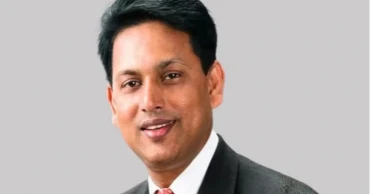
Education Minister urges action from UGC to develop world-class universities
Education Minister ANM Ehsanul Hoque Milon on Wednesday called upon the University Grants Commission of Bangladesh (UGC) to take effective steps to develop internationally competitive universities stressing that quality higher education and research are key to transforming Bangladesh into a knowledge-based nation.
“BNP has always attached the highest importance to the education sector. Former Prime Minister Khaleda Zia and former President Ziaur Rahman worked to improve standards and address teachers’ concerns.
Inspired by their ideals, Prime Minister Tarique Rahman has placed education at the top of the government’s priorities,” the minister said while addressing a view-exchange meeting with the UGC chairman and members.
Milon said expansion of research activities, promotion of innovation and development of skilled human resources must be prioritised to meet global standards.
Describing the UGC as the central body of the country’s higher education system, the minister said the commission plays a crucial role in oversight, quality assurance and implementation of development plans.
“With the rapid increase in the number of public and private universities, the responsibilities and scope of work of the commission have expanded significantly. The UGC must therefore function in a more dynamic, effective and result-oriented manner,” he said.
Referring to the declining global rankings of Bangladeshi universities, the minister termed it a major challenge.
“We are a nation of 180 million people, yet we do not have a single university that meets international benchmarks. In this context, establishing a world-class postgraduate university and forming an effective research council to promote advanced research should be given top priority,” said the minister.
Milon also emphasised implementing a “reverse brain drain” initiative to bring back talented Bangladeshi academics and researchers working abroad and engage them in the country’s education and research sectors.
Urging UGC members and officials to adopt innovative and practical plans, the Education Minister said each official should set a clear vision and mission within their respective responsibilities and take concrete steps to improve higher education outcomes.
The minister requested the commission to submit a brief written report outlining its ongoing activities and future plans to help review progress and challenges in the higher education sector and take necessary measures.
Technical education must align with global labour market trends: Education Minister
At the meeting, UGC Chairman SMA Faiz and commission members discussed various aspects, challenges and prospects of the higher education sector and informed the adviser about steps taken to enhance academic standards.
Milon underscored the need for coordinated efforts by the UGC and all stakeholders to strengthen the country’s higher education system and elevate it to international standards.
6 months ago