education
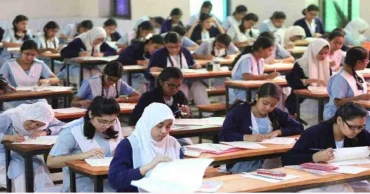
Routine for SSC exam published
The routine for Secondary School Certificate (SSC) examinations 2023 has been published.
The Board of Secondary and Higher Secondary Education released the routine for all educational boards on Monday.
According to the routine, the examination will begin on April 5 and continue till May 23.
3 years ago

Ex-BCL men stage demo at IU demanding VC’s resignation
Former leaders and activists of Islamic University unit Bangladesh Chhatra League, the student organisation of the ruling Awami League, staged a demonstration for the second consecutive day on Monday demanding vice-chancellor Professor Shaikh Abdus Salam's resignation.
A group of IU ex-BCL leaders and activists went to the vice-chancellor office and kept it under lock and key in the morning after a total of three audio conversations between IU VC and a job seeker went viral on social media Facebook.
The agitators vowed to continue their demonstration on the campus until their demand was met.
Read: IU issues appeal for information to aid investigation
IU BCL unit former organising secretary Rasel Joarder told UNB that the vice-chancellor advised a job seeker of the Mass Communication and Journalism department over phone regarding the question patterns for the recruitment board of the department.
He had no rights to share any recruitment information with a job seeker. They urged the government to look into the matter, he added.
The university proctorial body, however, raided the VC office to search if there was any hidden device set up at the vice-chancellor office in the morning.
A total of seven audio conversations, three with a job seeker and two with ministry officials and two others with IU officials, went viral on social media Facebook on Thursday night to Monday afternoon.
Three audio clips of conversations between vice-chancellor Shaikh Abdus Salam and the mass communication and journalism department jobseeker Oliur Rahman were leaked and posted on Facebook where the VC asked Oliur to collect two other job seekers to fulfill the requirement for the department’s recruitment test.
Read: VC’s leaked audio clips: IU postpones 3 departments’ recruitment process
The vice-chancellor also told Oliur that Oliur failed to write his answer to the question of the recruitment test held on October 25, 2022. He also told him that he was not good at IQ.
The vice-chancellor gave him some advices for the test.
IU acting registrar HM Ali Hasan filed a general diary with Islamic University police station in this connection on Friday night.
3 years ago

IU issues appeal for information to aid investigation
The Islamic University issued an open notice for all of its students with a view to gathering information regarding the ragging incident reportedly by the university unit Bangladesh Chhatra League vice-president Shanjida Chowdhury Ontora and her cohorts on the campus in Kushtia on February 12nigh.
A press release, signed by IU information and public relations office deputy registrar Rashiduzzaman Khan Tutul, was issued in this regard on Saturday night.
According to the press release, the university administration has issued the open notice for all to gather information from them for fair investigation of the ragging incident. If anyone has any evidence or information about the torture of female students, he/she should be asked to submit it, in written form or in person, to the probe body convener Professor Reba Mondol of law department of the university on Monday around 11:00am.
The identity of the informant will be kept confidential, the press release added.
Campus sources said that the fresher student of IU finance and banking department was brought to the campus under tight security on Saturday to testify before the inquiry committee as per the High Court directive.
She was later taken directly to the Deshratna Sheikh Hasina Hall to testify in front of the inquiry committees appointed by the university authorities and the hall administration from 1:00pm to 4:00pm on Saturday.
The victim left the campus after her meeting with the probe committees formed by the hall authorities and the university administration, IU proctor Professor M Shahadat Hossain Azad said.
Four other students of the Deshratna Sheikh Hasina Hall of the university also told the probe body that they were also tortured and intimidated by IU BCL unit vice-president Shanjida Chowdhury Ontora and her cohorts in the last few months.
They also demanded their immediate punishment to the probe bodies so that they could not dare to do such a heinous act in the future.
Talking to UNB, the victim said, "I have told the investigation committee whatever happened to me. I want fair justice for the accused involved in the incident," she said.
Ataur Rahman, father of the victim, said that the university administration assured them that legal action would be taken against the accused after a fair investigation.
But he demands immediate punishment of the accused.
Three other accused, Israt Jahan Mim of law department, Halima Khatun Urmi of fine arts department and Maobiya of finance and banking department, also took part in the ragging incident along with Ontora, a group of eye witnesses said on Sunday.
On February 12 night, a group of BCL activists led by Ontora and her cohorts including Tabassum went to the victim’s room and reportedly assaulted and tortured her.
Ontora, at one stage, forced the victim to get undressed and videoed the incident on her mobile phone.
The BCL leader also threatened that she would make the video viral on social media if the victim disclosed the matter to anyone, according to the complainant.
The victim lodged a written complaint with the university administration, including the university proctor, student adviser and the hall provost, demanding punishment of those involved in the incident on February 14.
A writ petition was also filed by Gazi Mohammad Mohsin, an alumnus of the university and a lawyer, with the High Court on Thursday.
The HC on the same day ordered the accused to leave the hall and the university administration to look into the matter seriously, and submit a report in this regard within the next 10 days.
It also asked the deputy commissioner of Kushtia to form a three-member probe body to further inquire into the incident, and submit a report within the next seven days.
Accused BCL leader Ontara and activist Tabassum left the hall following the High Court order.
3 years ago

DU Chhatra League issues 10-point directive to rein in activists
The Dhaka University unit of Bangladesh Chhatra League, the ruling party's student front, has issued a set of ten instructions to leaders and activists of DU Unit, in an apparent attempt to instill discipline in the ranks following a series of untoward incidents.
The instructions include not to involve themselves in any group activities outside of BCL; not to engage in motorbike showdowns; not to behave in loud, rowdy manner; to take part in all cultural activities in the campus; to ensure proper environment for education and not to get involved in activities that hamper the environment of education in the halls; to take part in the development activities in the halls; not to use banners and festoons to keep the surroundings clean; maintain good relations with progressive and other organizations including other student organizations, cultural organizations and bus committees; to be cooperative with the media workers, to help university administration take legal actions against misdeeds and crimes including drugs, terrorism, extortion etc., and not to involve in any work that violates the rules of organization.
The package of instructions came with an official notification signed by the president of Dhaka University Chhatra League Mazharul Kabir Shoyon, and general secretary Tanbir Hasan Saiakat.
BCL was forced to expel many leaders and activists in light of the recent incidents.
3 years ago

Writ challenges legality of DU notice to keep female students' faces visible during exams
A writ petition has been filed at the High Court challenging the legality of a notice issued earlier to keep all female students' ears and faces visible during examinations and presentations at Dhaka University's (DU) Bangla Department.
Lawyer Faizullah Foyez, representing three students of the university, submitted the writ petition on Sunday.
Education secretary, VC of Dhaka University, the registrar and chairperson of the Bangla Department of DU have been made respondents in the writ.
The writ petition may be heard by the High Court bench comprising Justice Farah Mahbub and Justice Ahmed Sohel this week, said lawyer Faizullah.
Besides, a request has been made to issue a rule questioning the validity of the notice.
Earlier on December 11, the Bangla Department of DU issued a notice, signed by the chair, instructing female students to keep their faces and ears visible during all examinations, including viva and presentations.
The notice also warned that if anyone violated the instruction, action would be taken against them as per the university regulation.
3 years ago

VC’s leaked audio clips: IU postpones 3 departments’ recruitment process
The authorities of Islamic University in Kushtia have postponed the recruitment process of its three departments following the leak of three audio clips purportedly containing a conversation between the university’s Vice-Chancellor and a job seeker on Facebook.
The decision was made at an emergency meeting of the university administration.
A press release, signed by IU acting registrar HM Ali Hasan, was issued in this regard on Sunday morning.
The recruitment tests for the medical officer was scheduled to be held on February 20, for physical education and sports science department on February 22 and for Mass Communication and Journalism Department on February 22. All have been postponed two days after three audio conversations between VC Professor Shaikh Abdus Salam and the job seeker went viral on social media.
IU acting registrar HM Ali Hasan told UNB that they postponed the recruitment tests of the departments due to unavoidable reasons.
The fresh date and time of these recruitment tests would be informed later, he added.
Earlier, a total of five audio clips, three between Oliur, a jobseeker at the Mass Communication and Journalism Department and the VC and two others with an official of a ministry went viral on Facebook.
In the audio clip, the VC purportedly asked Oliur to collect two other candidates to fulfill the requirement for the department’s recruitment board.
Read more: Ex-BCL leaders lock IU VC office demanding resignation
According to the audio clips, the VC told Oliur that he, Oliur, failed to write his answer to the question of the recruitment test held on October 25, 2022. He also told him that he was not good at his IQ.
The VC advised him over the phone regarding the recruitment test. He assured Oliur that he did not accept the recruitment policy of the University Grants Commission regarding the requirement process of recruiting teachers at Journalism department.
IU acting registrar HM Ali Hasan filed a general diary with the Islamic University police station in this regard on Friday night.
Many senior progressive alliance teachers said that he had no right to share any recruitment test information with anyone as vice-chancellor of the university.
The government and ministry concerned should look into the matter. If there was any involvement of the vice-chancellor with the audio clip he should be brought under the law, they added.
When contacted, IU vice-chancellor Professor Shaikh Abdus Salam acknowledged that he talked to Oliur who was a part-time teacher in the mass communication department. He, however, denied the allegation brought against him.
3 years ago

'Special exam' at JU: Opportunity turns to burden for students
Having failed a third year course in his pursuit of a bachelor's degree in economics at Jahangirnagar University, Salim (not his real name) had applied to sit for a special examination in the third-year course he failed even as he prepared for his fourth-year final exams. Since it was one of the core courses counting towards his degree, he cannot afford to not pass it somehow.
However he will not be able to appear in the 4th -year final examination along with his batchmates, the students of his academic year, if he sits chooses to for the examination as per the conventional rules.
Salim had applied to the Vice-Chancellor in January 2020 for a special exam to complete his graduation with the students of his academic year.
The Vice-Chancellor's office told him to contact the office of the Examination Controller. told him that the approval file had not arrived from the Vice Chancellor's office.He was repeatedly given several working days to search by deputy controller. He said that he should not come to the examination controller's office without paying the examination fee in the bank.
While he was there, Salim inquired about the approval of the examination from the Vice-Chancellor's office.
Selim isn’t the first person to face this kind of harassment from the exam controller's office. Allegedly, Nazrul Islam (initially, charge of special examination) puts all the students who come to him in their hour of need. Even more damning are allegations that he would misplace the students' examination approval files, that are sent by the supervisors, and tells the student that "There is no special examination". Neither he applied nor his file was sent from the Vice-Chancellor's office to his office.
A student who lost the approval paper said, I applied for the special examination when the university office opened after Corona. A few days later, I found out that he (Nazrul Islam) lost my paper and instructed me to apply again.
Another case found that a student applied in 2019 but only managed to sit for the special exam he needed, finally in 2022.
According to the university rules, a fee of Tk15,000 has to be paid for each course to sit for the special examination. If the students do not pass for any reason, they apply for the special examination in order to complete their academic life on time., but due to the negligence of Nazrul Islam of the examination controller office, no student is able to participate in the examination as soon as possible.
When asked about how long the turnaround for a special exam should be, Controller of Examinations (Acting) Professor Md. Salauddin said 'three working days' should be enough for the approval letter from the vice-chancellor's office authorising the special exam. After that it is only a matter of arranging it. There was also a suggestion that each department should conduct its own special exam every year.
If any student's education suffers just for the negligence of some entrenched officials, this all will be held against him according to the employment rules of the university
3 years ago

JU's 6th convocation: All prior instructions must be followed
The sixth convocation of Jahangirnagar University (JU) is going to be held next Saturday (February 25). On this occasion, several instructions must be followed.
These instructions were highlighted in a circular signed by Rahima Kaniz, member-secretary of the university's registrar and member-secretary of the sixth convocation management committee.
According to the notification, the registered graduates must bring the print copy of the registration card with them.
Four counters will be opened by the office of the Controller of Examinations from 20th February to 23rd February daily from 10 am to 4 pm and on February 24 from 10 am to 6 pm. By submitting the temporary certificate at the designated counter, the reverse side of the registration card must be sealed and signed by the officer in charge.
Graduates who have not taken the provisional certificate should go to the gown counter after collecting the clearance with seal and signature from the Officer-in-Charge of the Office of the Controller of Examinations as 'Not Taken Provisional Certificate'.
Every graduate should watch out for errors while taking the original certificate. If any mistake is found then the original certificate should be returned to the counter after identifying it and the revised certificate should be collected from the office of the Controller of Examinations within the next 15 working days. On the day of the convocation ceremony, wear the convocation gown and sit at the designated place in the pandal by 1 p.m.
There will be no seating in the convocation pandal for persons other than the convocation recipients and invited guests. If the degree recipient is a member of the Senate or Syndicate or Board of Education or two or more authorities of this University, he shall be given the sass of the highest authority in addition to the gown.
A degree recipient who fails to return the convocation gown will not be issued with the original certificate. Also, if someone loses the convocation gown, he/she will have to pay 3000 rupees as fixed by the university for the gown.
The invitation must be brought to the convocation. Invitation letter is not transferable in any way. Mobile phones, cameras, umbrellas, keys, briefcases, handbags, vanity bags, pens, water bottles and any other electronic devices are not allowed. It is recommended to follow hygiene rules including wearing a mask.
Graduates must enter the pandal between 1 pm and 2 pm on the day of convocation. For security reasons, the pandal cannot be entered after 2:30. No graduate will be allowed to enter the convocation pandal without an invitation letter issued by the university.
Also, detailed information on all convocation related instructions can be found at https://convocation.juniv.edu.
3 years ago
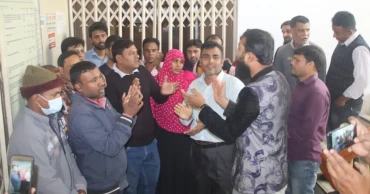
Ex-BCL leaders lock IU VC office demanding resignation
A group of former leaders and activists of the Islamic University unit of Bangladesh Chhatra League, student wing of the ruling Awami League, locked the collapsible gate of the university vice-chancellor’s office on Saturday, demanding his resignation.
Around thirty former BCL leaders and activists went to the administration building and locked the collapsible gate of IU vice-chancellor Professor Shaikh Abdus Salam's office to press home their demand at around 10:00am.
Campus sources said that they staged a demonstration on the campus as three audio conversations between the university vice-chancellor and a jobseeker of the university’s mass communication and journalism department went viral on social media Facebook.
They would continue their demonstration on the campus until their demand for the resignation of the vice-chancellor was met.
The vice-chancellor had earned a huge amount of money illegally by recruiting teachers at the university, Rasel Joarder, former organising secretary of IU BCL unit said.
The government and ministry concerned should look into the matter, he added.
Read: Several injured in BCL attack on Chhatra Odhikar
The Islamic University Teachers’ Association and progressive teachers’ alliance Shapla Forum have issued written statements to inform them of the position of the vice-chancellor immediately, regarding the leaked audio.
IU VC Abdus Salam acknowledged that he talked to Oliur, who was already a part-time teacher in the mass communication department, and is applying for a permanent role.. He, however, denied the allegation brought against him.
A total of five audio conversations, three with a job seeker and two others with ministry officials, went viral on social media Facebook on Thursday and Friday.
Three audio clips of conversations between vice-chancellor Shaikh Abdus Salam and jobseeker Oliur Rahman were leaked and posted on Facebook where the VC asked Oliur to collect two other job seekers to fulfill the requirement for the department’s recruitment test to be valid. At the moment, Oliur is the only applicant, which renders the process moot. At least three aspirants must appear for the recruitment test for the process to move forward.
The vice-chancellor also told Oliur that Oliur failed to write his answer to the question of a previous recruitment test held on October 25, 2022.
The vice-chancellor gave him some advice for the test.
IU acting registrar HM Ali Hasan, however, filed a general diary with Islamic University police station in this connection on Friday night.
3 years ago
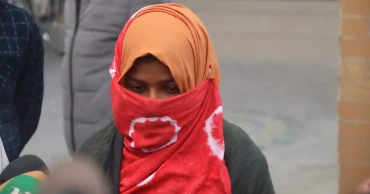
Islamic University: Victim of BCL torture returns to campus
The female student of finance and banking department of Islamic University in Kushtia, who was allegedly tortured by leaders and activists of the university's Bangladesh Chhatra League unit, student wing of the ruling Awami League, returned to the university under tight security as per the High Court's directive on Saturday.
She returned to the campus along with her parents five days after she had been tortured and intimidated by IU BCL unit vice-president Shanjida Chowdhury Ontora and her cohorts at the Sheikh Hasina Hall on February 12.
A police van carrying the student arrived on the campus at around 12:30pm. She was taken directly to the Deshratna Sheikh Hasina Hall to testify in front of the enquiry committee appointed by the university.
She was later interviewed by the probe committee formed by the hall authorities and the university administration respectively from 1:00pm-4:00pm.
Islamic University police station officer-in-charge Annur Jayed Biplob told UNB that additional police personnel were deployed on the campus for the security of the student.
She left the campus after her meeting with the investigation committees, the OC added.
Earlier, IU BCL unit vice-president and residential student Shanjida Chowdhury Ontora called the girl to her room on February 9.
A group of BCL activists led by Ontora and her cohort Tabassum of the finance and banking department went to the room of the victim and misbehaved with her as the victim did not meet with Ontora because of her illness on Saturday night.
Read: Two city college teachers quit under BCL pressure
Later, Ontora along with her cohorts assaulted and tortured her both physically and mentally. Ontora, at one stage, forced the victim to get undressed and videoed the ‘ragging’ incident on her mobile phone.
Ontora threatened that she would make the video viral on social media if the victim disclosed the matter to anyone, the complaint also said. All in all, her ordeal is said to have lasted over 4 hours.
The victim lodged a written complaint with the university administration, including the university proctor, student adviser and the hall provost, demanding punishment for those involved in the incident on February 14.
A writ petition was also filed by Gazi Mohammad Mohsin, an alumnus of the university and a lawyer, with the HC on Thursday.
The HC ordered the accused to leave the hall and the university to look into the matter seriously, and submit a report in this regard within the next 10 days.
Alongside the committee appointed by the university, the HC also asked the deputy commissioner of the district to form a separate committee to further enquire into the incident, and submit a report in the next seven days.
3 years ago