Local-Business
US tariffs on India and China can open doors for Bangladeshi exporters
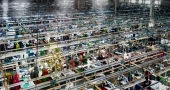
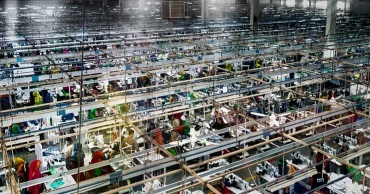
Bangladesh is emerging as a preferred destination for global apparel buyers as new US tariffs impose a significant competitive disadvantage on its main rivals, India and China.
With the Trump administration levying an additional 25 percent tariff on Indian and 30 percent on Chinese goods, buyers are increasingly turning to Bangladesh, which faces a comparatively lower 20 percent tariff on its products.
The shift in global trade dynamics presents a rare opportunity for Bangladesh's ready-made garment (RMG) sector. Apparel exporters believe the country has the capacity and expertise to meet the new demand.
The BGMEA President Mahmud Hasan Khan stated that Bangladesh is fully capable of handling a diversion of orders from India and China, assuring there will be "no problem to meet the additional supply demand."
Leaders of Bangladesh’s textile industry have expressed confidence in their ability to seize this opportunity.
Muhammad Hatem, President of the BKMEA, affirmed, "We have enough preparation to increase supply as per the demand of US and other buyers."
He highlighted that lower production costs and tariffs in Bangladesh make it an attractive alternative.
In a move to strengthen trade ties with the US, the Bangladesh Textile Mills Association (BTMA) announced plans to increase its cotton imports from the United States to $1 billion. This decision, disclosed in a press release yesterday, comes after recent trade negotiations secured a tariff reduction for Bangladeshi goods from 35 percent to 20 percent.
Market analysts are optimistic but also cautious. While the new tariffs are a "major commercial blow to India," they warn that this window of opportunity is not permanent. They urge Bangladesh to act quickly with a concrete roadmap and public-private partnerships to solidify its position.
Mohiuddin Rubel, a former director of the BGMEA, echoed this sentiment, stating, "This new tariff policy opens up immense possibilities for Bangladesh. I believe our export sector is now better positioned than ever before.” He noted that India had previously benefited from a decline in China's market share, but the new policy could reverse that trend.
India’s Market Share at Risk:
The increased tariffs pose a significant challenge for India's apparel exports to the US, which had seen a 55.34 percent growth from $3.02 billion in 2020 to $4.70 billion in 2024. Analysts predict that the new 50 percent tariff (25 percent retaliatory plus 25 percent for importing Russian oil) will severely undercut India's competitive pricing, leading to substantial market share loss.
The strained relationship between the US and India is rooted in trade disputes over issues like genetically modified foods and agricultural policies. The new tariffs, alongside existing trade agreements between the US and other nations, have made competition increasingly difficult for India.
To fully capitalize on this opportunity, experts emphasize that Bangladesh must focus on maintaining high quality, timely delivery, competitive pricing, and political stability. These factors will be critical for accelerating its market penetration in the US and establishing itself as a dominant exporter in South Asia.
The strained relationship between the US and India is rooted in trade disputes over issues like genetically modified foods and agricultural policies. The new tariffs, alongside existing trade agreements between the US and other nations, have made competition increasingly difficult for India.
6 months ago

Inflation in Bangladesh marks a slight rise
The country’s general point-to-point inflation rose slightly to 8.55 percent in July 2025, up from 8.48 percent in June, according to the latest data released by the Bangladesh Bureau of Statistics (BBS).
The slight increase was attributed to a modest rise in food and non-food inflation, the BBS report mentions.
In July, the food inflation stood at 7.56 percent, compared to 7.39 percent in the previous month. Non-food inflation also inched up to 9.38 percent, just above June’s 9.37 percent.
Despite the month-on-month rise, food inflation has shown some fluctuation in recent months—falling to 8.59 percent in May, down from 8.63 percent in April, before rising again in July.
The BBS data also revealed a marginal increase in inflation across both rural and urban areas, continuing the trend of elevated cost-of-living pressures facing households nationwide.
Inflation has remained a persistent concern for policymakers and consumers, as elevated prices continue to impact purchasing power, especially among low- and fixed-income groups.
6 months ago
Bangladesh’s economic momentum picks up in July, PMI rises by 8.4 points
Bangladesh’s economic momentum picked up notably in July, with the country’s Purchasing Managers’ Index (PMI) rising by 8.4 points from the previous month to reach 61.5, signalling a robust expansion in business activity.
The July PMI, jointly released on Thursday by the Metropolitan Chamber of Commerce and Industry (MCCI), Dhaka and Policy Exchange Bangladesh (PEB), reflects a growing confidence in the country’s economic landscape.
Developed with support from the UK government and technical assistance from the Singapore Institute of Purchasing & Materials Management (SIPMM), the Bangladesh PMI is a pioneering initiative designed to provide timely, reliable insights for businesses, investors and policymakers.
Government cracks down on lobbying for promotions in bank jobs
According to the report, the latest PMI reading was primarily driven by faster expansion in the manufacturing and services sectors.
The construction sector also returned to growth, while the agriculture sector, although still expanding, recorded a slower pace due to seasonal factors and monsoon-related disruptions.
The manufacturing sector posted its 11th consecutive month of expansion, with increases across key indicators such as new orders, factory output, input purchases, finished goods, imports and supplier deliveries.
The indexes for employment and new exports, however, showed contraction.
In the services sector, July marked the 10th straight month of expansion, with all major indicators—new business, business activity, employment, input costs and order backlogs—registering growth at a faster rate.
After contracting for the first time in June, the construction sector rebounded in July, showing expansion in new business, construction activity, input costs and order backlogs, though employment continued to decline.
Bangladesh receives $328 million in remittances in 5 days of August
The agriculture sector, meanwhile, experienced its 10th month of expansion but at a slower rate. Most sub-indicators, including new business and input costs, posted slower growth and employment contracted further.
Future business outlooks showed slower expansion across agriculture, manufacturing and services, while the construction sector registered an uptick in optimism.
“The latest PMI readings indicate that the overall Bangladesh economy expanded in July, primarily driven by growth in services and manufacturing sectors—with exports hitting an all-time monthly high of $4.77 billion,” the report says.
“The agricultural sector, however, recorded slower expansion in July, reflecting the lean period and monsoon disruptions,” it mentions
6 months ago

Bangladesh receives $328 million in remittances in 5 days of August
Bangladesh received US$328 million remittance in the first 5 days of August of the fiscal year 2025-26.
According to the latest data from the Bangladesh Bank, in the same period of the previous fiscal year, the amount was $181 million.
The central bank's report, released on Wednesday shows a significant year-on-year increase of 81.6 percent compared to August 1-5 days of FY2024-25.
The expatriates sent a record US$2.48 billion remittance in the first month of the fiscal year 2025-26.
July-December 2025 Interest Rates of Pensioner Sanchayapatra under Bangladesh's National Savings Scheme
The central bank's report showed a significant year-on-year increase of 29.48 percent in FY2025-26 compared to July of the previous FY2024-25, when remittances totaled $1.91 billion.
In the FY2024-25 fiscal year also saw a record-breaking remittance inflow, with a total of $30.33 billion. This represents a 27 percent increase from the $23.74 billion received in the FY2023-24, setting a new all-time high for a single fiscal year, he pointed out.
The continuous rise in remittance inflow is bringing stability to the economy and providing much-needed relief to the country's dollar supply, said Arif Hosain, spokesperson of Bangladesh Bank.
Indices fall in both Dhaka and Chattogram stock markets
7 months ago

DSE edges up, CSE dips in early trading
rading at the Dhaka Stock Exchange (DSE) began on a positive note on Wednesday, the third working day of the week, while the Chittagong Stock Exchange (CSE) experienced a decline during the early hours.
In the first two hours of trading, DSE’s benchmark index DSEX gained 4 points.
The Shariah-based DSES index advanced by 6 points, while the blue-chip DS30 index moved up by 1 point.
Of the 397 issues traded so far at DSE, prices increased for 223 companies, declined for 97 and remained unchanged for 77.
The turnover on the DSE stood at Tk 500 crore during the period.
Major setback in DSE, CSE as markets face widespread decline
But, trading at the CSE began on a bearish trend, with the overall index dropping by 36 points in the early session.
Out of the 149 companies that participated in trading at the port city bourse, 65 advanced, 65 declined and 19 remained unchanged.
The turnover at the CSE stood at Tk 16 crore in the first two hours of trading.
7 months ago

Government cracks down on lobbying for promotions in bank jobs
The government has introduced new policies for promotions within state-owned commercial and specialized banks, with a strict new rule: any lobbying or recommendations for promotion will now be considered "misconduct."
The Financial Institutions Division of the Ministry of Finance issued two separate policy circulars today (Monday), making this a first-of-its-kind provision in the country's banking sector.
One policy covers permanent employees of the six state-owned commercial banks: Sonali, Rupali, Janata, Agrani, Basic, and Bangladesh Development Bank PLC (BDBL). The other policy applies to six specialized banks and two financial institutions, including Bangladesh Krishi Bank, Rajshahi Krishi Unnayan Bank, Probashi Kallyan Bank, Karmasangsthan Bank, Ansar-VDP Unnayan Bank, Palli Sanchay Bank, Investment Corporation of Bangladesh (ICB), and Bangladesh House Building Finance Corporation.
The new rules apply to promotions for positions ranging from Senior Officer to Deputy General Manager (DGM) within these institutions.
According to the new guidelines, promotions will be based on a combination of factors, including:
Educational qualifications
Satisfactory job records
Merit and work efficiency
Training
Integrity
Seniority
A minimum of a bachelor's degree is now required for an employee to be eligible for promotion under this new policy. The new measures are aimed at ensuring a more transparent and merit-based promotion system.
7 months ago

Bangladesh's goods export marks a growth by 25% in July
Bangladesh's goods export has marked a strong start in the new fiscal year (FY2025-26), with an outstanding growth by 24.90 percent in July.
According to data released on Monday by the Export Promotion Bureau (EPB), the country exported goods worth US$4.77 billion in July.
This growth follows the performance of the last fiscal year (2024-25), when the total merchandise exports reached $48.28 billion, marking a growth by 8.5 percent.
RMG Takes Lead
The readymade garment (RMG) sector was a primary driver of this growth. In July, RMG exports totalled $3.96 billion, which is a 24.67 percent jump from July of the previous year.
Beyond garments, several other sectors also contributed to the export surge in July, including:
· Leather and leather products
· Agro-processed goods
· Home textiles
· Jute and jute products
· Engineering products
· Frozen foods
· Plastic products
According to economists, this strong performance in the first month of the fiscal year 2025-26 suggests a promising outlook for the country's export economy.
7 months ago

Omar Faruk Khan made new Managing Director of Islami Bank
Md. Omar Faruk Khan has been appointed as Managing Director (MD) of Islami Bank Bangladesh.
Prior to this, he was serving as the Managing Director (Current Charge) of the bank. He previously served as the acting managing director at NRB Bank.
Bangladesh Bank approved his appointment on Sunday, while the board of directors of Islami Bank was made a recommendation of his appointment as MD on July last week.
Bangladesh Bank directs all banks to participate in ‘Tarunner Utsab 2025’ procession
Khan joined Islami Bank in 1986 after completing his master’s degree in Sociology from Dhaka University. He successfully served nearly four decades in various positions as the head of Treasury, Foreign Trade, different Wings including Corporate Investment, and different Divisions at the head office, as well as the head of Zone and branches, including Local Office.
Khan is a Diploma Associate of the Institute of Bankers Bangladesh and holds the Certified Documentary Credit Specialist (CDCS) qualification from the London Institute of Banking and Finance, affiliated with the ICC.
Garment factories to observe 'July Uprising Day' as holiday
Throughout his career, he participated in various seminars and training programs on banking, including international banking and credit management, in several countries, i.e, Switzerland, France, Germany, Italy, China, Malaysia, Qatar, Thailand, India, Saudi Arabia, the United Arab Emirates, and Nepal. He was born in 1963 at Laxmipur, according to a press release.
7 months ago

Bangladesh Bank directs all banks to participate in ‘Tarunner Utsab 2025’ procession
Bangladesh Bank has instructed all commercial banks to ensure the participation of their officials in a procession organised to celebrate ‘Tarunner Utsab 2025’.
The central bank's Department of Financial Institutions and Bank Inspection sent a letter to all managing directors on Sunday outlining the directive. The letter states that a procession, organised by the Ministry of Youth and Sports, will take place on Tuesday, August 5, around 1 PM near the Novo Theatre in the Bijoy Sarani area of Tejgaon.
Garment factories to observe 'July Uprising Day' as holiday
The Bangladesh Bank letter noted that the participation of banks, under a 'Tarunner Utsab 2025' banner, is "highly expected."
Following the directive, most banks have prepared their banners and are calling on officials from their head offices in Dhaka and various branches to attend. The program aims to celebrate and encourage the power of youth while highlighting the coordinated participation of various government sectors in a shared partnership.
7 months ago
Market slips further as trading slows at DSE, CSE
The downward trend in the capital market continued on Monday, the second working day of the week, as trading at both the Dhaka Stock Exchange (DSE) and Chattogram Stock Exchange (CSE) showed signs of decline, with most company share prices falling.
At the DSE, the benchmark index DSEX slipped by 7 points within the first two hours of trading.
The other key indices followed suit — the Shariah-based DSES was down by 1 point, while the DS30, which tracks blue-chip stocks, dropped 4 points.
DSE turnover hits Tk 1,063cr as indices soar, but most stocks slip
Of the companies that traded during this period, prices rose for 184, declined for 141, and remained unchanged for 68. The total transaction volume at the DSE stood at Tk 570 crore.
The CSE also mirrored this negative momentum, with its overall index falling by 30 points. Among the 176 companies that traded on the Chattogram bourse, 78 saw their prices go up, 82 declined, and 16 remained unchanged.
Trading at the CSE during the same period amounted to Tk 3.7 crore.
7 months ago