Local-Business
Remittance inflow to Bangladesh soars by 29.48% in July; totals $2.48bn
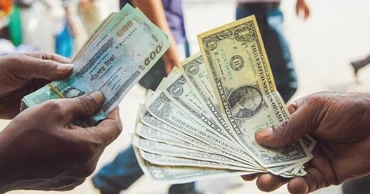
Bangladesh received a record-breaking remittance of US$2.48 billion in July, the first month of the 2025-26 fiscal year, marking a robust 29.48 percent year-on-year growth.
According to the latest data released by Bangladesh Bank on Saturday (August 3), the inflow translates to approximately Tk 30,230 crore, calculated at the current exchange rate of Tk 122 per US dollar.
This notable rise comes in sharp contrast to the same period last year, when remittance stood at $1.91 billion. In July 2024, remittance inflows had dropped significantly due to calls on social media urging expatriates to halt money transfers in protest against political unrest.
Bangladesh received $2.36 billion remittances in 30 days of July, up 32%
Following subsequent political changes, the remittance trend has, however, steadily gained a big momentum.
Bangladesh Bank officials attribute this upward trajectory to several proactive government measures, including the 2.5 percent cash incentive on remittances, stronger regulatory measures against informal channels like the hundi system and overall improvements in the formal banking infrastructure.
These efforts are not only encouraging expatriates to use legal channels but are also contributing to a healthier foreign exchange reserve.
Bangladesh received $2.36 billion remittances in 30 days of July, up 32%
“This follows a strong performance in June, when remittances reached $2.82 billion, marking an 11 percent increase over the same period the previous year,” said Arif Hosain Khan, Executive Director and spokesperson of Bangladesh Bank.
He pointed out that the previous fiscal year (FY2024-25) saw record-breaking remittance inflows, totalling $30.33 billion, which reflected a significant 27 percent jump from the $23.74 billion received in FY2023-24, setting a new all-time high for annual remittances.
“The continuous rise in remittance inflow is bringing stability to the economy and providing much-needed relief to the country’s dollar supply,” Arif Hosain added.
7 months ago
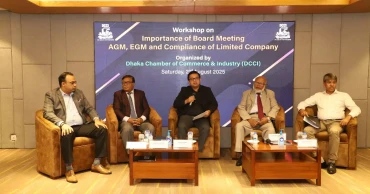
Experts call for updating, modernizing Companies Act 1994
Experts have called for urgent reforms to the Companies Act 1994, stressing the need to update and modernize the legislation to reflect the evolving business environment, technological advancements, and global best practices.
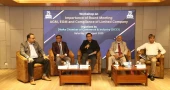
The experts came up with the recommendation at a workshop on 'Importance of Board Meeting, AGM, EGM and Compliance of Limited Companies' held at DCCI auditorium on Saturday, according to a media release.
The workshop was organised by Dhaka Chamber of Commerce & Industry (DCCI) where Registrar (Additional Secretary) of Joint Stock Companies and Firms (RJSC) AKM Nurunnabi Kabir was present as the chief guest.
DCCI President Taskeen Ahmed in his opening remarks said the importance of institutional transparency, accountability and good governance in the management of limited companies is increasing with the economic progress of Bangladesh and the development of the industrial sector.
He also pointed out that in many cases many entrepreneurs or company professionals get confused due to lack of clear understanding of the complexities of company law, constitution or compliance issues.
The DCCI president said that the workshop provided a detailed understanding of the importance of board meetings, annual general meetings, extraordinary general meetings, procedures for timely and proper completion of meetings, strategies for maintaining necessary compliance under the Companies Act, and maintaining good relations with the regulatory bodies.
Registrar (Additional Secretary) of Joint Stock Companies and Firms AKM Nurunnabi Kabir said that at present, about 2 lakh 75 thousand business enterprises of Bangladesh are registered with RJSC and almost all the processes of company registration are now available online except the share transfer system. But soon, the RJSC has a plan to incorporate this service online after necessary security observations.
To run a business, he suggested that we comply with all rules and regulations to avoid unexpected incidents.
He also suggested the business owners train their professionals regarding different procedures of Companies Act, Articles of Association, Securities Law, and other related laws.
Mohammed Sanaullah, CEO & Lead Consultant of Sanaullah & Associates and Partner of Artisan, Chartered Accountant, Md. Selim Reza, FCA presented two separate keynote papers.
They said either the company is public limited or private limited or proprietorship, every category of businesses should be in compliance with laws and regulations.
They also said that the economy of Bangladesh is expanding day by day with the help of businessmen. In this era of globalization, to compete in the international market, maintaining compliance in business is a must now, they added.
They also said that complying with rules will help to stop all malpractices and misuse. They also said that the Companies Act of Bangladesh should be reformed as it is backdated now.
DCCI Senior Vice President Razeev H Chowdhury and Vice President Md. Salem Sulaiman were also present.
7 months ago

BTMA lauds govt's trade delegation for securing Trump's tariff reductio
The Bangladesh Textile Mills Association (BTMA) has extended its heartfelt appreciation to the government’s trade delegation, led by Commerce Adviser SK Bashir Uddin, following a successful mission to Washington DC that resulted in significant progress toward reducing tariffs on Bangladeshi exports to the United States.
On Saturday in an official statement, BTMA described the development as a “milestone” for Bangladesh’s textile and apparel industry, noting that it would enhance the country’s export competitiveness and strengthen bilateral trade relations with the U.S.
A delegation led by BTMA President Showkat Aziz Russell joined the official visit to Washington DC with the government’s trade delegations, where the team participated in high-level discussions aimed at securing a more favorable tariff regime for Bangladeshi products in the US market.
During the mission, several BTMA member mills reaffirmed their commitment to strengthening trade partnerships by pledging increased imports of US cotton—underscoring Bangladesh’s intention to build a sustainable and mutually beneficial supply chain.
The participating mill representatives included- Mohammad Mosharaf Hossain, Managing Director, Mosharaf Composite Textile Mills Ltd.; Mohammad Masud Rana, Managing Director, Asia Composite Mills Ltd. And Chowdhury Mohammad Hanif Shoaib, Managing Director, and Salma Chowdhury, Chairperson, Salma Group Ltd.
The delegation was honored at a reception hosted by the Deputy Chief of Mission at the Bangladesh Embassy in Washington DC, DM Salahuddin Mahmud.
As part of the visit, the delegation also held productive meetings with the U.S. Chamber of Commerce and leading American business representatives. Notably, the meetings were attended by former US Ambassador to Bangladesh, Peter D. Haas, who now serves as Strategic Adviser at Excelerate Energy, a US-based energy firm.
During the discussions, American stakeholders expressed strong interest in expanding trade and investment ties with Bangladesh. Commerce Adviser SK Bashir Uddin assured them of the Bangladesh government’s full support in fostering a conducive environment for mutual growth and cooperation.
Also present during the visit were National Security Adviser Dr. Khalilur Rahman, Commerce Secretary Mahbubur Rahman, and Additional Secretary (WTO Wing) Dr. Nazneen Kauser Chowdhury, among other senior officials.
In the event BTMA President Showkat Aziz Russell said, “Our entrepreneurs are fully committed to building sustainable trade partnerships and enhancing Bangladesh’s role in the global textile supply chain.”
7 months ago
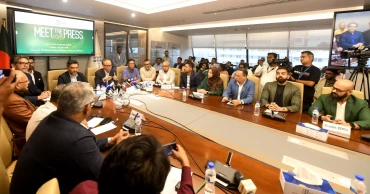
Garments industry to ramp up US cotton imports, to access more trade benefits from President Trump
Bangladesh is strategising to increase its use of US cotton as an important and much used input in apparel manufacturing, to leverage a new tariff exemption deal with the United States.
This was announced by Mahmud Hasan Khan, President of the Bangladesh Garment Manufacturers and Exporters Association (BGMEA), at a press briefing at the BGMEA building in Uttara on Saturday.
The briefing was organized by the BGMEA to express gratitude to both the Bangladesh and US governments for their efforts in significantly reducing reciprocal tariffs.
Khan highlighted that the US is Bangladesh’s largest export market, accounting for 20 percent of its total exports, with 75 percent of these products being cotton-based. Under the new executive order on tariffs, a 20 percent additional duty will not be applied to the value of American raw materials if at least 20 percent of them, such as US cotton, are used in the final product.
"Our focus will be to increase US cotton content in clothing so we get more tariff exemption," Khan stated.
He mentioned that while Bangladesh currently imports a small amount of cotton from the US, this is expected to increase significantly to 2 million bales soon as a result of the new tariff deal.
This aligns with the US Department of Agriculture's (USDA) forecast that Bangladesh's cotton imports will rise to 8.2 million bales in the fiscal year 2026.
Khan noted that Bangladesh previously paid a Most Favored Nation (MFN) duty of 16.5 percent on exports to the US. The newly determined 20 percent additional duty brings the total rate to 36.5 percent on certain products, posing a significant challenge for the industry, which is already struggling with rising production costs.
"A 20 percent tariff on Bangladeshi exports will inevitably increase the cost of sourcing from Bangladesh," said BGMEA President. But would that be large enough to eat into the margins they enjoy, the cost advantage they are able to offer, thanks to the cheapest labour in the world today.
He emphasized that Bangladesh cannot afford to be complacent, as ongoing trade negotiations between the US and other countries could further reduce tariffs for their competitors.
He urged the government to continue negotiations with the US to ensure Bangladesh remains competitive.
The BGMEA president stressed the need for collective action to navigate these new challenges. He called on the government to support the industry like- improving the efficiency of institutions like the National Board of Revenue (NBR), making customs policies more industry-friendly, increasing the efficiency of Chittagong Port, ensuring an uninterrupted supply of electricity and gas.
He also urged industry leaders to increase value addition, invest in backward linkages, and diversify markets and products.
"If industry owners, government, educational institutions, labor organizations, and civil society all work together and collectively take the right decisions for the industry, then this tariff can open the door to new possibilities rather than becoming a barrier," Khan concluded.
Members of BGMEA Board and Senior leaders were also present in the press briefing.
7 months ago
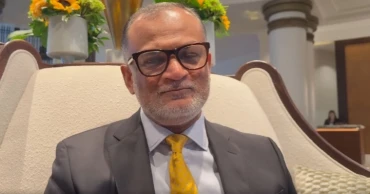
No secret deal over US tariff cut: Commerce Adviser
Commerce Adviser Sk Bashir Uddin has dismissed the speculations of any secret deal with the United States in exchange for the reciprocal tariff reduction on Bangladeshi exports from 35 percent to 20 percent, saying all discussions prioritised the national interests.
“There is no room to ignore our own interests,” he said during an informal interview with journalists in Washington on Friday.
“Whatever we did, we did by prioritising our country—just as the US prioritises its national security," the adviser said.
When asked about the full disclosure of the agreement, the adviser said a joint statement may be issued soon and the details will be shared with the consent of the United States.
“Any components that might affect our interests had been resolved through discussions,” he added.
He also noted that a Bangladeshi business delegation is currently in the USA, and "they will not do anything that goes against their own interests."
Regarding speculations about Bangladesh agreeing to purchase 25 Boeing aircraft as part of the deal, the adviser clarified, “The US never mentioned anything about Boeings. Instead, they have shown interest in food, agricultural products and fuel.”
Regarding achievements in the aviation sector, the adviser expressed optimism, stating, “We are working to ensure transparency and carrying out necessary reforms in the sector. Hopefully, during our tenure, we will implement structural reforms within the ministry that will benefit those who come after us.”
7 months ago
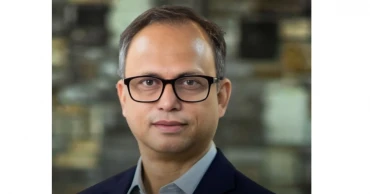
Tariff reduction to 20% 'a relief': BGMEA President
President of the Bangladesh Garment Manufacturers and Exporters Association (BGMEA), Mahmud Hasan Khan, has welcomed the recent decision by the United States to reduce the reciprocal tariff on Bangladeshi exports from 35 percent to 20 percent.
In a statement issued on Friday, Khan described the move as a significant relief for the country’s garment sector, which has been grappling with uncertainty over the past three months.
According to Khan, the prolonged period of unpredictability surrounding tariff rates had made it difficult for businesses to operate smoothly. Both Bangladeshi exporters and US buyers were uncertain about the future, which disrupted the usual flow of trade. The tariff reduction, he said, restores some much-needed stability and predictability to the market.
He also mentioned that while Bangladesh’s new tariff rate is still 1 percent higher than that of its competitor Pakistan, it is 5 percent lower than India’s and 10 percent lower than China’s. This comparative advantage, Khan believes, will help sustain Bangladesh’s competitiveness in the US market.
Despite the positive development, the BGMEA president warned of potential short-term disruptions. With higher tariffs now applicable on US imports from Bangladesh than before, American buyers may find their capital stretched. If they are unable to secure additional financing, they might reduce order volumes. Ultimately, the extra cost of the tariffs is expected to be passed down to US consumers, whicph could lead to higher retail prices and potentially a drop in overall sales.
Khan pointed out that the impact of recent US trade policies has already been felt.
Since April, the Trump administration has imposed a minimum 10 percent reciprocal tariff on imports from all countries. Some US buyers responded by pressuring suppliers in Bangladesh to share the additional cost burden.
He emphasised that going forward, this duty must be borne by the importers and buyer companies, and not by Bangladeshi manufacturers. He stressed the importance of clearly communicating this position to all BGMEA members and stakeholders.
Referring to the situation with China, he said that the country is currently facing a 30 percent counter-tariff, with further increases likely. If China’s final tariff rate remains higher than Bangladesh’s, there is a strong possibility that more orders will be redirected from China to Bangladesh.
He sees this as a potential opportunity for expansion but cautioned that for Bangladesh to take full advantage of it, infrastructure and policy support must be in place.
He specifically mentioned the need for a reliable energy supply, expanded capacity at the Chittagong Port, and continued political stability.
Khan also commented on the broader trade agreement, stating that so far only the draft or summary has been shared publicly. He expressed hope that the final deal has been negotiated in a way that protects Bangladesh’s trade and national interests.
He highlighted the importance of following through on the commitments made during the counter-tariff negotiations. These include short-term purchases of wheat, cotton, and LNG, as well as long-term commitments like aircraft procurement.
The BGMEA president warned that any failure to honour these agreements could put them in a difficult situation again.
7 months ago
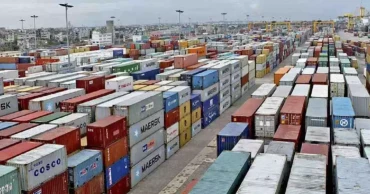
Bangladesh secures 20% US tariff rate, matching key apparel competitors
Bangladesh secured a 20% US tariff rate—comparable to its key apparel-sector competitors such as Sri Lanka, Vietnam, Pakistan and Indonesia, which received rates between 19% and 20%.
As a result, Bangladesh's relative competitiveness in apparel exports remains unaffected, according to Chief Adviser's press wing.
By contrast, it said, India received a 25% tariff after failing to reach a comprehensive agreement with the US.
“We negotiated carefully to ensure that our commitments aligned with our national interests and capacity,” said Dr Khalilur Rahman, Bangladesh’s National Security Advisor and lead negotiator.
“Protecting our apparel industry was a top priority, but we also focused our purchase commitments on U.S. agricultural products. This supports our food security goals and fosters goodwill with U.S. farming states,” he said.
“Today, we successfully avoided a potential 35% reciprocal tariff. That’s good news for our apparel sector and the millions who depend on it. We’ve also preserved our global competitiveness and opened up new opportunities to access the world's largest consumer market,” Dr Rahman added.
Now US could collect over $1 billion in tariffs from Bangladeshi goods: CPD study
President Donald Trump today announced new tariff rates—up to 41%—on imports from 70 countries, just ahead of the August 1 deadline for finalising bilateral trade agreements.
These agreements extend beyond tariff adjustments to include domestic policy reforms that the Trump administration views as contributing to trade imbalances.
They also address broader economic and national security concerns.
As part of the negotiations, countries were required to make explicit commitments to purchase US goods to help narrow trade deficits.
Given the scope of issues involved, the negotiation process has been complex and time-consuming.
Tariff relief was tied not only to reductions in duties on US exports but also to a country’s willingness to address U.S. concerns on non-tariff barriers, trade imbalances, and security matters, said the Chief Adviser’s press wing on Friday.
BNP urges US to keep tariffs on Bangladesh at reasonable level
President Trump's executive order made clear that each country’s tariff rate would reflect the depth of its commitment across all these areas.
7 months ago

Fuel prices to remain unchanged in August
The government has decided to keep fuel prices unchanged at the consumer level in August, based on the revised pricing formula and guidelines.
According to a statement issued by the Ministry of Power, Energy and Mineral Resources on Thursday, the prices will remain at Tk 102 per litre for diesel, Tk 114 for kerosene, Tk 122 for octane, and Tk 118 for petrol.
The new rates, which will come into effect from August 1, have been fixed and approved by relevant authorities, the ministry said.
The move aims to ensure a steady and affordable fuel supply for consumers.
7 months ago
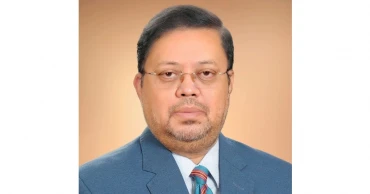
Southeast Bank MD Nuruddin resigns
Nuruddin Md. Sadeque Hossain, managing director of Southeast Bank, has resigned citing health reasons.
His resignation letter was submitted to the bank’s chairman on July 28.
Nuruddin had been on a three-month leave since May 4, set to end on August 4.
During his absence, Additional Managing Director Abidur Rahman Chowdhury has been serving as Acting Managing Director.
Appointed MD on April 5, 2023, Nuruddin previously served as the bank’s Deputy Managing Director.
7 months ago

Bangladesh received $2.36 billion remittances in 30 days of July, up 32%
Bangladeshi expatriates have sent inward US$2.36 billion in remittances in the first 30 days of July, the first month of the current fiscal year 2025-26.
Arif Hossain Khan, Executive Director and Spokesperson for the Bangladesh Bank, confirmed these figures Thursday.
Remittances cross $2bn in 27 days of July
According to central bank data, the expatriates were sent $1.79 billion in the same period of the previous fiscal year (FY2024-25). It means inward remittance flow has grown by $574 million or by 32 percent in 30 days of July. Last year during this period, expatriate workers were observing a so-called 'remittance strike'.
On 30 July, the expatriates sent $92 million remittance in a single day.
The expatriates sent $30.32 billion remittance in FY2024-25, which is the highest ever.
Bangladesh received $1.07bn in remittances in 12 days of July
7 months ago