Local-Business
Bangladesh Bank eases foreign currency rules for exporters in Specialized Zones
Bangladesh Bank has relaxed the foreign currency rules for exporters in specialized zones like Export Processing Zones (EPZs), Private Export Processing Zones (PEPZs), Economic Zones, and High-Tech Parks to retain foreign currency.
This move is aimed at simplifying foreign exchange management and streamlining transactions for these businesses.
The central bank issued a circular on Sunday, (August 10), stating that Type B and Type C factories within these zones can now hold their export earnings in a foreign currency account until their back-to-back import liabilities are settled.
Bangladesh’s banking sector pulled back from the brink: BB Governor
The foreign currency can be divided into two portions: one for back-to-back import payments and another for the value addition portion of local production.
The local value addition portion can be held as dollars for a maximum of 30 days. If the funds are not spent within this period, they can be transferred to another bank to cover the company's import liabilities.
After 30 days, any unused dollars must be converted into Bangladeshi Taka. The remaining balance—after converting 20 percent of total export earnings (or 25 percent for the garment sector)—can be held in the exporter's foreign currency account.
Exporters who do not use the back-to-back Letter of Credit (LC) facility can also hold dollars for up to 30 days for essential expenses. Any unused foreign currency must be converted into Taka after this period, following the same procedure.
Bangladesh’s economic momentum picks up in July, PMI rises by 8.4 points
According to industry insiders, this decision will enable exporters to conduct transactions more easily and manage their dollars more effectively. The new regulations are also expected to create a level playing field between exporters in specialized and general zones.
9 months ago
Onion prices soar by Tk 25-30 in Khulna per kg; consumers concerned
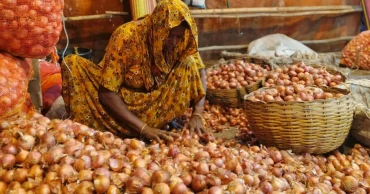
Onion prices in Khulna have jumped by Tk 25 per kilogram over the past two weeks, despite no visible shortage in the market, leaving consumers deeply concerned.
Large stocks of onions are seen piled up in warehouses and retail shops, yet prices keep climbing almost daily.
Wholesalers blame reduced supply caused by ongoing rainfall, while retailers say they have no choice but to sell at higher prices because they are buying at inflated rates.
Consumers, however, accuse hoarding syndicates of manipulating prices using baseless excuses.
A visit to retail markets including Khalishpur, Daulatpur, New Market, Moylapota, Jorakal Market, Natun Bazar and Boyra Bazar in Khulna city showed onions selling for Tk 75–80 per kg, an increase of Tk 25–30 from two weeks ago.
At Sonadanga wholesale market, prices range from Tk 62–68 per kg, with a Tk 12–13 gap between wholesale and retail.
Harun-or-Rashid, a customer at KDA New Market, expressed frustration, “Onions that used to cost Tk 50–60 are now selling for Tk 80. I can’t figure out the reason. Is it due to hoarding or the floods?”
Shukur Ali, another buyer, said, “I earn a small wage. How am I supposed to buy onions, fish, vegetables and rice now? Poor people are really struggling.”
Onion prices surge in Bangladesh amid import halt, supply shortages
Retailer Sohag from Khalishpur said, “We have to sell onions with limited profit margins. Wholesalers suddenly raised prices due to rain, so we are forced to increase our rates too. Currently, onions cost between Tk 75 and 80 per kilogram, whereas two weeks ago, the price was Tk 50–55.”
9 months ago

Bangladesh’s banking sector pulled back from the brink: BB Governor
Bangladesh’s banking sector has managed to pull back from the brink over the past year, Bangladesh Bank Governor Ahsan H Mansur said on Sunday, crediting a series of measures taken since he assumed office.
Speaking at a seminar titled 'Interim Government’s 365 Days' organised by Centre for Policy Dialogue (CPD), the governor said the sector was “right at the edge of the cliff” when the interim government took office in August last year.
“Our two main challenges were to stabilise the macroeconomy and reform the financial sector. Reforms cannot be done in a year, but we have started them in every area,” Mansur said.
Upon taking charge, he held meetings with international financial institutions to maintain lines of credit.
“We assured them that we would repay every penny we owed, and we did. Our situation did not turn like Sri Lanka or Pakistan,” he said.
According to him, the biggest support in debt repayment came from remittance inflows alongside export earnings over the past year.
On inflation, the governor said controlling it was a major challenge.
Since August 14 last year, Bangladesh Bank has not sold a single dollar from reserves, instead buying dollars at Tk 122 despite pressures to adjust the rate.
Bangladesh Bank tightens monetary policy further, aims to curb inflation
Inflation has since fallen below 10%, and Mansur expects it to drop below 5% in the future.
While the balance of payments is now in surplus, the economy is still lagging in attracting investments, he noted.
“Before elections, big investors will not come, but we have already prepared the ground to encourage investment after the polls,” he added.
On why no banking commission was formed, Mansur said it would have delayed urgent decisions, taking six to nine months to produce a report. Instead, three separate taskforces have been formed to reform the banking sector, central bank operations, and recover laundered money.
Recovering funds siphoned abroad is proving the most challenging, he said, as it requires coordination with 8–10 ministries.
Major legal reforms are also underway, including extensive amendments to the Bank Companies Act, fundamental changes to the Money Laundering Act — adding asset recovery provisions — and broad revisions to the Bangladesh Bank Order to enhance the central bank’s accountability and autonomy.
Amendments will also be made to the Deposit Insurance Act and the Money Loan Court Act to resolve long-pending loan default cases.
The central bank also plans to amend the Bangladesh Bank Resolution Ordinance to allow it to acquire any bank facing liquidity crises due to irregularities. “No more leniency. If a bank cannot operate properly, Bangladesh Bank will take it over,” Mansur warned.
Bangladesh Bank buys $10 million through auction to boost taka
He added that a single body will be created for “360-degree monitoring” of all banks to tackle irregularities in a coordinated manner.
The governor further stressed initiatives to make Bangladesh a cashless economy, including the promotion of QR codes, wider credit card usage, expansion of nano-loans, banking education for school students, Tk 200 student bank accounts, housing reforms, revenue department restructuring, and lowering smartphone prices to expand digital banking coverage.
9 months ago
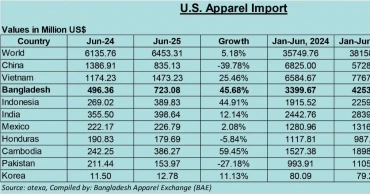
Bangladesh's apparel exports to US surge to $4.25 billion in first six months of the year
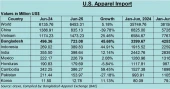
From January-June this year, the US witnessed a modest increase in apparel imports, reaching $38.16 billion globally, reflecting a 6.74% rise from the previous year.
Noteworthy changes in the number of units include a 4.26% growth in SME and a 2.37% increase in unit price.
Particularly, imports from Bangladesh surged to $4.25 billion, displaying a substantial growth rate of 25.12% compared to the same period in 2024.
In the year 2025 May, Bangladesh's export to the US was US $547.42 million and on June 25 it is US $723.08 million, meaning growth is 32.09% from May to June 2025, said Mohiuddin Rubel, former director, Brand BGMEA.
US tariffs on India and China can open doors for Bangladeshi exporters
Key insights on apparel imports during this period reveal interesting trends:
- China experienced a significant negative growth of -16.07%.
- India's imports rose by 16.26%.
- Pakistan's imports increased by 11.21%.
- Indonesia saw a rise of 17.95% in imports.
- Cambodia witnessed a notable increase of 24.28%.
- Vietnam showcased a growth of 17.96%.
Comparing the number of pieces imported:
- Bangladesh witnessed a substantial surge of 23.81%.
- Vietnam experienced a 13.82% increase.
- China had a significant decrease of -12.78%.
- India noted a noteworthy 15.92% growth.
- Cambodia saw a substantial 31.11% increase.
- Pakistan displayed a 15.76% increase.
The unit price per piece varied across countries:
- Bangladesh observed a 1.06% increase.
- Vietnam noted a 3.64% increase.
- China experienced a -3.77% decrease.
- India saw a 0.29% increase.
- Cambodia had a -5.21% decrease.
9 months ago

Hilsa gets cheaper as veggies, onions, eggs, chicken cost more in Dhaka
While hilsa prices eased in the capital’s kitchen markets on Friday, the cost of vegetables, onions, eggs and chicken continued to rise, mounting pressure on consumers already struggling with higher food inflation.
A visit to several kitchen markets revealed that smaller-sized hilsa, which had been selling for Tk 800–900 per kg, is now available at Tk 650–700.
Medium-sized hilsa prices have dropped from Tk 1,800–2,000 to Tk 1,400–1,600 per kg, while large hilsa weighing a kilo or more now fetch Tk 2,000–2,300, down from Tk 2,400–2,600 just days ago.
Despite the fall in hilsa prices, other fish varieties remained unchanged.
Big hilsa sold for Tk 13,000 in Barishal, draws crowd
Rui and katla were selling at Tk 380–450 per kg depending on size, shing and magur at Tk 450–500, tilapia at Tk 180–250, boal and coral at Tk 900–1,200, giant freshwater prawns (galda) at Tk 1,200–1,500 and sea prawns (bagda) at Tk 750–850.
Beef prices have eased slightly in recent days, from Tk 800 to Tk 750–780 per kg in most markets. Mutton prices, however, remain unchanged at Tk 1,100–1,200 per kg.
Chicken prices, in contrast, have climbed. Broiler chicken rose by Tk 10–15 per kg from last week’s Tk 160, now selling for Tk 170–180 depending on location.
Pakistani Sonali chicken prices also surged, from Tk 300 to Tk 320–330 per kg this week.
Egg prices saw a similar upward trend. In wholesale hubs like Karwan Bazar and Kaptan Bazar, a dozen brown broiler eggs were priced at Tk 130, while retail rates ranged between Tk 135–140.
White eggs were slightly cheaper, selling for Tk 125–130 per dozen.
9 months ago
US tariffs on India and China can open doors for Bangladeshi exporters
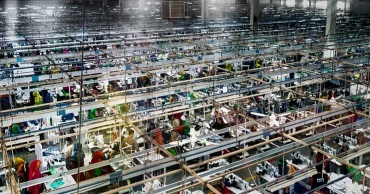
Bangladesh is emerging as a preferred destination for global apparel buyers as new US tariffs impose a significant competitive disadvantage on its main rivals, India and China.
With the Trump administration levying an additional 25 percent tariff on Indian and 30 percent on Chinese goods, buyers are increasingly turning to Bangladesh, which faces a comparatively lower 20 percent tariff on its products.
The shift in global trade dynamics presents a rare opportunity for Bangladesh's ready-made garment (RMG) sector. Apparel exporters believe the country has the capacity and expertise to meet the new demand.
The BGMEA President Mahmud Hasan Khan stated that Bangladesh is fully capable of handling a diversion of orders from India and China, assuring there will be "no problem to meet the additional supply demand."
Leaders of Bangladesh’s textile industry have expressed confidence in their ability to seize this opportunity.
Muhammad Hatem, President of the BKMEA, affirmed, "We have enough preparation to increase supply as per the demand of US and other buyers."
He highlighted that lower production costs and tariffs in Bangladesh make it an attractive alternative.
In a move to strengthen trade ties with the US, the Bangladesh Textile Mills Association (BTMA) announced plans to increase its cotton imports from the United States to $1 billion. This decision, disclosed in a press release yesterday, comes after recent trade negotiations secured a tariff reduction for Bangladeshi goods from 35 percent to 20 percent.
Market analysts are optimistic but also cautious. While the new tariffs are a "major commercial blow to India," they warn that this window of opportunity is not permanent. They urge Bangladesh to act quickly with a concrete roadmap and public-private partnerships to solidify its position.
Mohiuddin Rubel, a former director of the BGMEA, echoed this sentiment, stating, "This new tariff policy opens up immense possibilities for Bangladesh. I believe our export sector is now better positioned than ever before.” He noted that India had previously benefited from a decline in China's market share, but the new policy could reverse that trend.
India’s Market Share at Risk:
The increased tariffs pose a significant challenge for India's apparel exports to the US, which had seen a 55.34 percent growth from $3.02 billion in 2020 to $4.70 billion in 2024. Analysts predict that the new 50 percent tariff (25 percent retaliatory plus 25 percent for importing Russian oil) will severely undercut India's competitive pricing, leading to substantial market share loss.
The strained relationship between the US and India is rooted in trade disputes over issues like genetically modified foods and agricultural policies. The new tariffs, alongside existing trade agreements between the US and other nations, have made competition increasingly difficult for India.
To fully capitalize on this opportunity, experts emphasize that Bangladesh must focus on maintaining high quality, timely delivery, competitive pricing, and political stability. These factors will be critical for accelerating its market penetration in the US and establishing itself as a dominant exporter in South Asia.
The strained relationship between the US and India is rooted in trade disputes over issues like genetically modified foods and agricultural policies. The new tariffs, alongside existing trade agreements between the US and other nations, have made competition increasingly difficult for India.
9 months ago

Inflation in Bangladesh marks a slight rise
The country’s general point-to-point inflation rose slightly to 8.55 percent in July 2025, up from 8.48 percent in June, according to the latest data released by the Bangladesh Bureau of Statistics (BBS).
The slight increase was attributed to a modest rise in food and non-food inflation, the BBS report mentions.
In July, the food inflation stood at 7.56 percent, compared to 7.39 percent in the previous month. Non-food inflation also inched up to 9.38 percent, just above June’s 9.37 percent.
Despite the month-on-month rise, food inflation has shown some fluctuation in recent months—falling to 8.59 percent in May, down from 8.63 percent in April, before rising again in July.
The BBS data also revealed a marginal increase in inflation across both rural and urban areas, continuing the trend of elevated cost-of-living pressures facing households nationwide.
Inflation has remained a persistent concern for policymakers and consumers, as elevated prices continue to impact purchasing power, especially among low- and fixed-income groups.
9 months ago
Bangladesh’s economic momentum picks up in July, PMI rises by 8.4 points
Bangladesh’s economic momentum picked up notably in July, with the country’s Purchasing Managers’ Index (PMI) rising by 8.4 points from the previous month to reach 61.5, signalling a robust expansion in business activity.
The July PMI, jointly released on Thursday by the Metropolitan Chamber of Commerce and Industry (MCCI), Dhaka and Policy Exchange Bangladesh (PEB), reflects a growing confidence in the country’s economic landscape.
Developed with support from the UK government and technical assistance from the Singapore Institute of Purchasing & Materials Management (SIPMM), the Bangladesh PMI is a pioneering initiative designed to provide timely, reliable insights for businesses, investors and policymakers.
Government cracks down on lobbying for promotions in bank jobs
According to the report, the latest PMI reading was primarily driven by faster expansion in the manufacturing and services sectors.
The construction sector also returned to growth, while the agriculture sector, although still expanding, recorded a slower pace due to seasonal factors and monsoon-related disruptions.
The manufacturing sector posted its 11th consecutive month of expansion, with increases across key indicators such as new orders, factory output, input purchases, finished goods, imports and supplier deliveries.
The indexes for employment and new exports, however, showed contraction.
In the services sector, July marked the 10th straight month of expansion, with all major indicators—new business, business activity, employment, input costs and order backlogs—registering growth at a faster rate.
After contracting for the first time in June, the construction sector rebounded in July, showing expansion in new business, construction activity, input costs and order backlogs, though employment continued to decline.
Bangladesh receives $328 million in remittances in 5 days of August
The agriculture sector, meanwhile, experienced its 10th month of expansion but at a slower rate. Most sub-indicators, including new business and input costs, posted slower growth and employment contracted further.
Future business outlooks showed slower expansion across agriculture, manufacturing and services, while the construction sector registered an uptick in optimism.
“The latest PMI readings indicate that the overall Bangladesh economy expanded in July, primarily driven by growth in services and manufacturing sectors—with exports hitting an all-time monthly high of $4.77 billion,” the report says.
“The agricultural sector, however, recorded slower expansion in July, reflecting the lean period and monsoon disruptions,” it mentions
9 months ago

Bangladesh receives $328 million in remittances in 5 days of August
Bangladesh received US$328 million remittance in the first 5 days of August of the fiscal year 2025-26.
According to the latest data from the Bangladesh Bank, in the same period of the previous fiscal year, the amount was $181 million.
The central bank's report, released on Wednesday shows a significant year-on-year increase of 81.6 percent compared to August 1-5 days of FY2024-25.
The expatriates sent a record US$2.48 billion remittance in the first month of the fiscal year 2025-26.
July-December 2025 Interest Rates of Pensioner Sanchayapatra under Bangladesh's National Savings Scheme
The central bank's report showed a significant year-on-year increase of 29.48 percent in FY2025-26 compared to July of the previous FY2024-25, when remittances totaled $1.91 billion.
In the FY2024-25 fiscal year also saw a record-breaking remittance inflow, with a total of $30.33 billion. This represents a 27 percent increase from the $23.74 billion received in the FY2023-24, setting a new all-time high for a single fiscal year, he pointed out.
The continuous rise in remittance inflow is bringing stability to the economy and providing much-needed relief to the country's dollar supply, said Arif Hosain, spokesperson of Bangladesh Bank.
Indices fall in both Dhaka and Chattogram stock markets
9 months ago

DSE edges up, CSE dips in early trading
rading at the Dhaka Stock Exchange (DSE) began on a positive note on Wednesday, the third working day of the week, while the Chittagong Stock Exchange (CSE) experienced a decline during the early hours.
In the first two hours of trading, DSE’s benchmark index DSEX gained 4 points.
The Shariah-based DSES index advanced by 6 points, while the blue-chip DS30 index moved up by 1 point.
Of the 397 issues traded so far at DSE, prices increased for 223 companies, declined for 97 and remained unchanged for 77.
The turnover on the DSE stood at Tk 500 crore during the period.
Major setback in DSE, CSE as markets face widespread decline
But, trading at the CSE began on a bearish trend, with the overall index dropping by 36 points in the early session.
Out of the 149 companies that participated in trading at the port city bourse, 65 advanced, 65 declined and 19 remained unchanged.
The turnover at the CSE stood at Tk 16 crore in the first two hours of trading.
9 months ago