local-business

Bangladesh Bank pledges support for garment exporters facing Eid cash crunch
Bangladesh Bank Governor Dr Ahsan H Mansur on Tuesday pledged policy backing and faster disbursement of pending export incentives to help garment manufacturers navigate a mounting liquidity crisis ahead of Eid-ul-Fitr, as factories scramble to pay wages and bonuses to millions of workers.
The assurance came at an emergency meeting held at the central bank headquarters with a delegation from the Bangladesh Garment Manufacturers and Exporters Association (BGMEA), led by Senior Vice President Inamul Haq Khan and Vice President Md Shihabuddoja Chowdhury.
BGMEA officials described a ‘deep crisis’ gripping the ready-made garment sector, which accounts for the bulk of Bangladesh’s export earnings.
They said February’s production cycle has been curtailed to 19 effective working days from 28 due to public holidays for the national election and Language Day, disrupting shipment schedules at a critical time.
The industry is also contending with weaker international demand, declining product prices and rising production costs, compounded by global geopolitical instability. With compressed production timelines, factory owners face what the association termed a “monumental challenge” in ensuring timely wage and Eid bonus payments.
To prevent labour unrest and safeguard industrial stability, BGMEA submitted a set of proposals to the central bank.
The association urged authorities to expedite the release of approximately Tk 5,700 crore in pending cash incentives for fiscal year 2025-26 that remain stalled in audit processes.
It also called for preferential treatment for small and medium-sized factories when disbursing those funds to help ensure their survival.
Besides, BGMEA sought a special wage-support loan facility equivalent to two months’ salaries, featuring a three-month grace period and a 12-month repayment schedule.
New govt to continue reforms in banking sector: Bangladesh Bank governor
The group further requested the reintroduction of Packing Credit at a 7 percent interest rate and an expansion of the Pre-shipment Credit Scheme from Tk 5,000 crore to Tk 10,000 crore, with an extension of the scheme’s tenure to 2030.
Mansur acknowledged the urgency of the situation and said the central bank would take ‘positive steps’ to address the liquidity shortage, with particular focus on prioritising cash incentive releases for SME factories.
Ensuring workers are paid on time to maintain stability in key industrial zones is a top priority for the central bank, he said.
The intervention comes as Bangladesh’s export-reliant apparel sector faces intensifying pressure from global market volatility, underscoring the central bank’s balancing act between financial discipline and safeguarding employment in one of the country’s most critical industries.
10 days ago

MP Arman meets governor over potential foreign investment in Nagad
Barrister Mir Ahmad Bin Quasem Arman, a Jamaat MP, met Bangladesh Bank Governor Ahsan H. Mansur on Tuesday at his office to discuss a potential foreign investment in the mobile financial service (MFS) provider, Nagad.
The meeting was held as Bangladesh Bank sought to restructure Nagad after administrative changes and allegations of financial irregularities.
In August last year, the interim government announced plans to move Nagad from the Directorate of Posts to the private sector.
Nagad announces Royal Enfield winner in mega campaign
After the meeting, the Central Bank governor told reporters that the Postal Department lacks the capacity to run such a large operation and that a tender for new investors would be issued.
He said Nagad needs a technologically advanced partner, similar to the model used by bKash, to regain competitiveness.
Governor Mansur said the central bank will only work with credible foreign investors.
He said a letter circulating on social media did not mention any recognised investor and no official proposal has been received yet.
Arman, MP of Dhaka-14 and son of the late Mir Quasem Ali, said he is acting as a local legal representative for a group of international investors.
Nagad to receive remittances thru National Bank
He added that initial communications are ongoing and formal talks will start when the investors arrive in Bangladesh.
The names and origins of the foreign firms were not disclosed.
Launched in 2019 and later licensed as a digital bank, Nagad has faced scrutiny since the fall of the Awami League government.
A central bank audit found a deficit of over Tk 101 crore in trust settlement accounts and an e-money gap of Tk 645 crore.
In February, Bangladesh Bank filed an embezzlement case against 24 people including former Chairman Syed Mohammad Kamal and former MD Tanvir A. Mishuk.
10 days ago

New govt to continue reforms in banking sector: Bangladesh Bank governor
The newly formed government will continue the ongoing reform programme in the banking sector, with priority given to controlling inflation, reducing non-performing loans and ensuring stability of the merged banks, Bangladesh Bank Governor Ahsan H Mansur said on Monday.
He made the remarks while speaking to reporters after a closed-door meeting with Finance Minister Amir Khosru Mahmud Chowdhury at the minister’s office in the Secretariat.
The governor said the meeting focused on reviewing the progress of various reform initiatives undertaken by the central bank in recent months.
“We briefed the finance minister on the reforms we are implementing. He has emphasised continuing these measures and expressed strong support. His response was very positive,” Mansur said.
Responding to questions, the governor said controlling inflation remains one of the government’s top priorities.
“Inflation must be brought down — there is no disagreement on this,” he said.
He said the central bank is working to reduce inflation through tighter monetary policy, better liquidity management and coordinated interest rate measures. Efforts are underway to control excess liquidity in the market and ensure that monetary policy remains aligned with inflation control objectives.
The issue of rising non-performing loans was also discussed at the meeting, with the central bank taking stricter measures to address the problem.
Mansur said legal actions against large defaulters are being strengthened, while loan restructuring policies have been tightened. Authorities are also identifying wilful defaulters and enhancing transparency in the loan classification process.
“We are holding regular discussions with bankers. Many believe the steps taken are beginning to produce results,” he said.
At the same time, he added, the central bank is ensuring that credit flow to productive sectors continues to support economic activity.
Bangladesh’s forex reserves surge past $34 billion driven by remittance boom
The stability of the five banks merged to form the consolidated Islami bank was also discussed during the meeting.
The governor said ensuring stability of the merged institution is now a key priority, noting that the deposit situation has been gradually improving.
“Depositors are receiving their funds, and new deposits are also coming in,” he said.
He added that the process of appointing a new managing director had been delayed after a potential candidate fell ill. Until a new appointment is made, the administrator and board will continue overseeing reform measures. Extending the board’s tenure, if necessary, is also under consideration.
The five banks — EXIM Bank, Social Islami Bank, First Security Islami Bank, Global Islami Bank and Union Bank — were merged to form the consolidated Islami bank. The bank has an authorised capital of Tk 400 billion and a paid-up capital of Tk 350 billion, of which the government has contributed Tk 200 billion.
Bangladesh’s financial sector has faced widespread allegations of irregularities and corruption in recent years, particularly involving loan scams, capital flight, politically influenced lending and weak regulatory oversight.
Following the political transition in August 2024, the interim government initiated a series of reforms to restore discipline in the financial sector. These included bank mergers, restructuring of bank boards, enhanced regulatory oversight, legal action against major defaulters and liquidity support measures.
However, many of the reforms remain ongoing due to the limited timeframe of the interim administration.
Officials said the responsibility for fully implementing these reforms and restoring stability and public confidence in the banking system now rests with the new government.
Bangladesh Bank officials said key reform priorities include strengthening governance, reducing capital shortfalls, improving risk management, lowering defaulted loans and enhancing supervision across the banking sector.
11 days ago
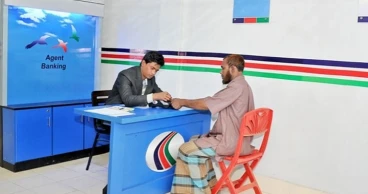
Agent banking deposits in Bangladesh makes a big jump
Bangladesh’s agent banking sector is defying conventional trends, recording strong deposit growth even as the number of agents and service outlets declines.
According to the latest report from Bangladesh Bank, total deposits in agent banking reached Tk 49,356 crore at the end of 2025, up 18 percent from Tk 41,785 crore in December 2024. This represents a net increase of Tk 7,571 crore.
The growth comes amid a contraction in the sector’s physical infrastructure.
Agent banking outlets fell from 21,248 in 2024 to 20,501 in 2025, a reduction of 747 service points. Active agents also declined from 16,019 to 15,328 over the same period.
Experts attribute the drop in outlets largely to Agrani Bank’s suspension of certain agent banking operations.
Remittance inflow crosses $2 billion in just 18 days of February
“While the closure of some networks impacted the numbers, the surge in deposits is a positive sign,” said Arfan Ali, a veteran banker and former Managing Director, highlighting renewed public confidence in the formal banking system.
Key Performance Indicators (2025 vs 2024):
· Deposits: Tk 49,356 crore, up 18%
· Loan Disbursement: Tk 11,755 crore, up 16%
· Active Accounts: ~2.5 crore
· Transaction Volume: 2.62 crore in Oct-Dec 2025, down 3% from 2.70 crore
Top Banks by Agent Banking Deposits:
· Islami Bank Bangladesh PLC: Tk 21,530 crore (Market Leader)
· Dutch-Bangla Bank: Tk 6,887 crore
· Bank Asia: Tk 6,515 crore
· Al-Arafah Islami Bank: Tk 3,869 crore
· BRAC Bank: Tk 2,897 crore
Agent banking remains a low-cost avenue for banks to reach rural markets, allowing them to mobilize small savings and channel funds into corporate loans.
Around 30 public and private banks currently offer services including cash deposits, loan processing, utility bill payments, and remittance disbursement.
Despite a slight decline in transaction numbers, the sector’s loan accounts grew to over 2.39 lakh, signalling its rising importance as a source of credit for small-scale borrowers and rural entrepreneurs.
11 days ago
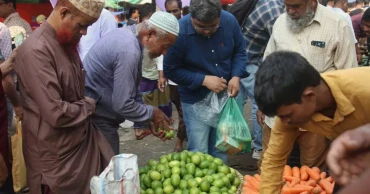
Karwan Bazar traders announce Ramadan price cuts on lemon, oil, sugar, meat
Traders at the capital’s Karwan Bazar on Monday announced price reductions on several essential commodities, including lemon, edible oil, sugar and beef, aiming to ease consumers’ burden as the holy month of Ramadan is underway.
The announcement came at a press conference organised by Islamia Shanti Samiti at the kitchen market of Karwan Bazar.
Business leaders said they have decided to lower prices by reducing their profit margins in consideration of consumers during the holy month of Ramadan.
According to the traders, the price of lemon will be reduced by Tk 2 per piece, edible oil by Tk 1 per litre, sugar by Tk 1 per kg, gram (chhola) by Tk 2 per kg, Tang (200g packet) by Tk 5, beef by Tk 30 per kg and Miniket rice by Tk 1 per kg.
Lemon traders said lemons are sold in different categories depending on quality and source. Premium-quality lemons are currently sold at up to Tk 17 per piece, while lower-grade ones sell for as low as Tk 3. Prices of all categories will be reduced by Tk 2 per piece, they added.
Edible oil traders said they will cut Tk 1 per litre. A five-litre bottle, previously sold at Tk 920, will now be available at Tk 915.
Traders also said packaged sugar, which has a printed price of Tk 105 per kg and was being sold at Tk 102, will now be sold at Tk 101 per kg. The price of gram has been reduced from Tk 85 to Tk 83 per kg.
Beef traders announced a Tk 30 reduction per kg, bringing the price down to Tk 750. Miniket rice will also be sold at Tk 1 less per kg, they said.
Among others, Saiful Islam Milon, MP from Dhaka-12 constituency, and business leaders of Karwan Bazar were present at the press conference.
11 days ago

BERC slashes furnace oil price by Tk 15.90 per litre
The Bangladesh Energy Regulatory Commission (BERC) on Sunday reduced the retail price of furnace oil supplied by the Bangladesh Petroleum Corporation (BPC) by Tk 15.90 per litre, effective from midnight.
Under the new rate, furnace oil will be sold at Tk 70.10 per litre, down from the previous price of Tk 86 per litre, according to a BERC media release.
The commission said the price was re-fixed in line with Sections 34(4) and 34(6) of the Bangladesh Energy Regulatory Commission Act, 2003.
BERC noted that BPC had submitted a proposal on January 20, 2024 seeking a revision of furnace oil prices. Subsequently, state-run oil marketing companies also proposed increases in their marketing and composite transportation charges.
Among them, Meghna Petroleum Limited submitted its proposal on May 26, 2025, Standard Asiatic Oil Company Limited on June 3, Jamuna Oil Company Limited on June 26, and Padma Oil Company Limited on July 11.
A public hearing on the proposals was held on January 29 this year. Stakeholders and interested parties were allowed to submit written opinions until February 3 following the hearing.
After reviewing and analysing all proposals and opinions in detail, the commission exercised its authority under the law to re-determine the price, the release said.
As per the new decision, the marketing charge for furnace oil has been set at Tk 0.72 per litre for Padma Oil Company, Meghna Petroleum, Jamuna Oil Company and Standard Asiatic Oil Company. The composite transportation charge has been fixed at Tk 1.20 per litre.
BERC said the revised retail price of furnace oil will come into effect nationwide from 12:00am Sunday night.
Furnace oil is a high-viscosity, cost-effective, and energy-dense residual fuel derived from petroleum refining, primarily used in industrial and heavy-duty applications.
Its key uses include powering industrial furnaces, boilers, and kilns for heating, steam generation, manufacturing, and as a fuel in marine vessels and power generation plants
12 days ago

Tk 1,000 discount & cashback on bKash payment at superstores this Ramadan
Like previous years, customers can enjoy up to Tk 1,000 in discounts and cashbacks this Ramadan on shopping with bKash payment at top superstores across the country. This offer has been introduced to make grocery and daily essential shopping more affordable, hassle‑free, and safe during the holy month of Ramadan and Eid. Additionally, exciting discounts and cashbacks of various amounts are also available on bKash payment at renowned fashion brands, bakeries, iftar markets, home appliances, restaurants, hotels, e‑ticketing, and many other products and services.
Tk 500 Discount at Superstores
Customers can get discount by applying ‘D2’ coupon code in bKash app and making minimum bKash payment of Tk 1,500 at selected superstores. During Ramadan, customers can avail Tk 100 once per day, and up to Tk 500 in 5 transactions during the campaign period.
This offer is available at different outlets of Agora, Unimart, Meena Bazar, Prince Bazar, Amana Big Bazar, Apon Family Mart, Big Bazar, Lavender, Mostafa Mart, Wholesale Club, Halishahar Mart, Khulshi Mart, Utsab Super Market, Bengal Meat, and several other superstores.
Tk 300 Discount at Shwapno & Daily Shopping
Meanwhile, customers can enjoy up to Tk 300 discount at ‘Shwapno’ and ‘Daily Shopping’ located nationwide by applying the ‘D3’ coupon code. The offer is applicable for minimum bKash payment of Tk 800. Customers can get Tk 100 discount once per day and up to Tk 300 in 3 transactions during the campaign.
Tk 200 Cashback on Online Groceries
For any order from online grocery platforms Chaldal, Daily Shopping, Meena Bazar, and Paragon, customers can get up to Tk 200 cashback by making a minimum bKash payment of Tk 1,200. Customers can receive 5% cashback up to Tk 100 once per day, and up to Tk 200 in 2 transactions during the campaign period.
It is to be noted that the bKash payment offers on grocery shopping will remain valid till March 21, 2026.
15 days ago

CAB demands action over obstruction of drive, unjustified price hike
Consumers Association of Bangladesh urged authorities to take strict legal measures against parties blocking a government-led market initiative and imposing unjustified price increases on essential goods, highlighting growing concerns over consumer protection and market regulation.
In a statement issued on Thursday, the consumer rights body strongly protested the incident that took place during a monitoring drive at Moulvibazar in the capital.
Date prices jump on first day of Ramadan despite ample supply, tariff cuts
According to the statement, a team led by Abdul Jabbar Mondal, Assistant Director of the National Consumer Rights Protection Department’s Dhaka Divisional Office, conducted the drive on Wednesday.
During the drive, inspectors found that the price of lentils had been increased by Tk 5 per kg within just 10 days at a trading establishment.
When asked to explain the price hike, the traders claimed higher procurement costs but failed to produce any valid cash memos in support of their claim.
They reportedly admitted that goods were purchased on credit and cash memos were collected only after payment was made following sales — a practice that violates existing laws and undermines market transparency.
In this connection, the authorities fined the establishment Tk 5,000 under Section 45 of the Consumer Rights Protection Act, 2009.
CAB alleged that Mohammad Ali Bhuiyan, president of the Moulvibazar Traders’ Association, publicly refused to pay the fine and mobilised traders, announcing a shutdown of shops.
He was also accused of inciting others and creating obstruction to the government operation.
CAB said unjustified price hikes of essentials, failure to maintain proper cash memo documentation and resistance to official monitoring drives reflect disorder in market management and anti-consumer practices.
The organisation called for exemplary punishment for those involved in price manipulation and obstruction of official duties, strict enforcement of mandatory cash memo issuance and stronger, regular market monitoring to ensure transparency and accountability.
It also urged the authorities concerned to take swift and effective steps to safeguard consumers’ rights and uphold good governance in the market system.
15 days ago
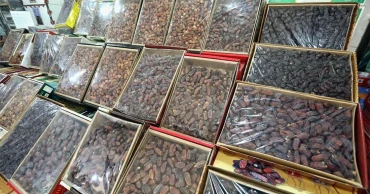
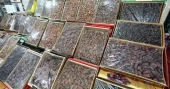
Date prices jump on first day of Ramadan despite ample supply, tariff cuts
The prices of dates surged by as much as Tk 50 per kilogram in Dhaka on the first day of Ramadan, even as traders and officials say supplies remain adequate and import duties were recently reduced to stabilise the market.
Zahidi dates, a popular choice among middle, and lower-income consumers, were selling for Tk 350 per kg on Thursday, up from Tk 280-300 earlier this week.
Compared with the first day of Ramadan last year, the variety is nearly Tk 100 per kg more expensive.
Lower-priced loose or ‘bosta’ dates were trading at Tk 250–280 per kg, up from Tk 220–250 two days ago, according to visits to several retail markets in the capital.
Premium varieties saw even steeper price points. ‘Ajwa’ dates were selling for up to Tk 1,000 per kg, while Medjool reached Tk 1,650-1,800 per kg. Mid-range varieties such as Mabroom and Kalmi Maryam were priced between Tk 850 and Tk 950 per kg.
The increase comes despite a recent decision by the National Board of Revenue to cut import duties on dates to 15 percent from 25 percent ahead of Ramadan, a move aimed at keeping prices in check during peak demand.
According to official data, Bangladesh’s annual demand for dates ranges between 90,000 and 100,000 tonnes, with Ramadan accounting for 60,000 to 80,000 tonnes. Current reserves are about 25 percent higher than total demand, suggesting no immediate supply shortfall.
Some traders attributed the spike to market speculation.
A rumour about 150 containers of dates sinking near Thailand has circulated in recent days, prompting concerns among retailers. However, wholesalers in Dhaka said prices at the wholesale level have not risen.
“There has been no increase in wholesale prices,” said Abdur Rahim, a fruit trader with 27 years of experience at Badamtoli, one of the capital’s main wholesale markets, in a phone interview.
Consumers expressed frustration over the sudden increase. Mohammad Azizul, a buyer in the Motijheel area, said he paid Tk 350 per kg for Zahidi dates on Thursday after purchasing the same variety for Tk 280 last week.
10 lakh families to get affordable protein-rich food during Ramadan
“If prices change this quickly, many of us will have to reconsider buying dates,” he said, urging authorities to monitor the market.
Retailers, meanwhile, maintained that supply remains sufficient across markets in Dhaka, even as prices climbed at the consumer level on the first day of the fasting month.
15 days ago
Chicken, chickpeas, fruit prices jump in Dhaka before Ramadan
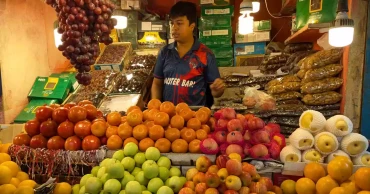
The prices of chicken, chickpeas and fruits have surged in Dhaka’s kitchen markets ahead of Ramadan, driven by rising demand and tighter supplies, adding fresh strain on household budgets.
A visit to several markets in the capital on Wednesday found that the prices of chickpeas, lentils, poultry and fruits have increased sharply over the past week, with traders blaming a sudden spike in demand while consumers alleged syndication.
At Karwan Bazar wholesale market, good quality chickpeas were selling at Tk 90-100 per kg. The same item was retailing at Tk 110-115 per kg in Shantinagar, Rampura and Badda, up from Tk 80-85 a week ago.
The prices of lentils also climbed. Anchor daal, which was selling at Tk 50 per kg earlier, is now priced at Tk 80. Coarse lentils used for preparing popular Ramadan snacks like onion fritters (piyaju) rose to Tk 120 per kg from Tk 90-100.
Chickpea traders said supply remains adequate but prices increased due to higher demand ahead of Ramadan.
Poultry prices witnessed a steep rise within days. Broiler chicken was selling at Tk 200-220 per kg, up from Tk 190-200 two days ago and Tk 160-170 a week earlier. Sonali chicken was retailing at Tk 340-360 per kg, compared to Tk 320-340 two days ago and Tk 280-300 last week.
“Wholesale prices of chicken increased from Tuesday evening, forcing us to adjust retail rates,” said Latif, a poultry trader in North Badda.
Local (deshi) chicken prices also rose by Tk 50-60 per kg to Tk 700-720 from Tk 650.
Beef prices increased to Tk 800 per kg in markets where it was previously sold at Tk 750. Mutton was selling at Tk 1,000-1,200 per kg depending on the market.
Consumers expressed frustration over the price spiral.
“Like every Ramadan, prices of almost all items have been raised before the fasting month begins. We have to spend an extra Tk 2,000-3,000 for monthly groceries,” said Afsana Akter at Rampura market.
Another buyer, Ehsanur Rahman, alleged manipulation. “If there were supply shortages, prices would have increased weeks ago. The sudden hike just before Ramadan indicates syndication.”
In the fruit market, prices of most fruits increased except dates, which dropped by Tk 50-100 per kg depending on variety.
Malta rose to Tk 300-350 per kg from Tk 250-260. Apples climbed to Tk 350-380 from Tk 280-320. Jujube increased to Tk 200-250 from Tk 120-180, while pomegranate prices jumped to Tk 520-580 per kg from Tk 450-480. Pineapple prices rose to Tk 80-100 per piece from Tk 60.
Fruit trader Suman in Motijheel alleged that a syndicate at the Badamtoli wholesale market influences prices every Ramadan.
Sirajul Islam, president of the Badamtoli Fruit Importers’ Association, said limited import permits given to a few traders create scope for syndication. Expanding import opportunities could help stabilise the fruit market.
Vegetable prices remained largely stable for beans, bottle gourd, turnip, radish and bitter gourd. However, cucumber, carrot and tomato prices increased to Tk 80-100 per kg from Tk 50-60 last week.
Lemon prices also climbed, with retail rates reaching Tk 120 per four pieces, while wholesale prices ranged between Tk 90-100 per four depending on variety.
Market insiders said monitoring has been relatively weak due to administrative focus on the 13th parliamentary elections, giving room to certain trader groups to raise prices of Ramadan essentials.
Vice-President of the Consumers Association of Bangladesh SM Nazer Hossain said stabilising the market during Ramadan is the first expectation from the new government. “The government must rein in prices at any cost.”
Meanwhile, Commerce Minister Khandaker Abdul Muktadir assured that the market would return to normal soon. “There is adequate stock of essential commodities for Ramadan and beyond. Supplies are normal and there is no reason to panic.”
Muktadir attributed the initial price hike to a one-off surge in demand, as many consumers purchase groceries for the entire month at once, creating temporary pressure on the retail market.
Describing Ramadan market management as a major test for the government, the minister said there is no alternative to ensuring stability in essential commodity prices during the holy month.
16 days ago