local-business

Indices up at DSE, CSE in first hour of trading
Both bourses of the country witnessed an upward trend in indices during the first hour of trading on Wednesday, with most companies seeing price gains.
On the fourth trading day of the week, Dhaka Stock Exchange’s (DSE) key index DSEX rose by 11 points, while the Shariah-based index DSES gained 2 points and the blue-chip index DS30 edged up by 1 point.
Out of the 223 companies traded during the period, prices of 223 advanced, 70 declined and 97 remained unchanged.
The turnover at DSE crossed Tk 300 crore in the first hour.
Read: Stock market shows recovery as investors return: DSE chairman
The Chittagong Stock Exchange (CSE) also saw a positive movement, as its overall index advanced by 32 points.
Among the 90 issues traded, 45 gained, 31 lost and 14 remained unchanged, with a turnover of Tk 6 crore in the first hour of trading.
5 months ago
Gold price hits record high in Bangladesh again
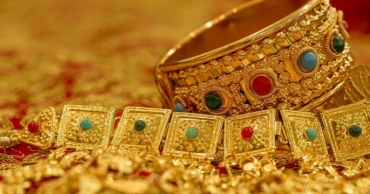
The Bangladesh Jewellers Association (BAJUS) has once again raised gold prices in the country, setting a new all-time high.
As per the revised rate, the price of 22-carat gold has been increased by Tk 3,675 per bhori (11.664 grams), reaching Tk 189,622 — the highest in the country’s history.
BAJUS announced the new price in a press release on Tuesday night, saying the rate will come into effect from Wednesday.
According to the statement, the price of pure gold (Tejabi) has increased in the local market. Considering the overall situation, the new price has been set.
Under the new tariff, the price of 21-carat gold has been fixed at Tk 181,002 per bhori, 18-carat gold at Tk 155,143 per bhori, and traditional method gold (Sanatani) at Tk 128,701 per bhori.
Gold price hike in Bangladesh shows no sign of slowing down
BAJUS further said that the selling price of gold must include 5 percent VAT fixed by the government and a minimum making charge of 6 percent set by the association. However, the making charge may vary depending on jewellery design and quality.
Earlier on September 9, BAJUS last adjusted gold prices, raising the price of 22-carat gold by Tk 3,137 per bhori to Tk 185,947.
5 months ago
EPA agreement between Bangladesh and Japan to be signed soon: Japanese Ambassador
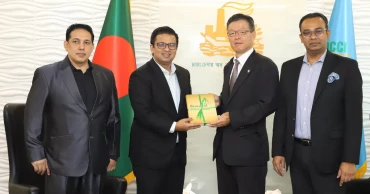
Japanese Ambassador to Bangladesh Saida Shinichi has expected that an Economic Partnership Agreement (EPA) will be signed soon to expand bilateral trade and investment between Bangladesh and Japan.
The ambassador made the remarks during a bilateral meeting with the President of Dhaka Chamber of Commerce and Industry (DCCI), Taskeen Ahmed, at the DCCI office in Gulshan on Tuesday.
He said, “Seventh meeting between Bangladesh and Japan on the EPA was recently held in Tokyo. The agreement would be signed soon after the necessary dialogue is completed, which would bring new momentum to the economic relationship between the two countries.”
During the meeting, the DCCI President acknowledged Japan's undeniable contribution to Bangladesh's infrastructural development and overall economic progress.
He stated that according to data from the Export Promotion Bureau (EPB), the bilateral trade volume between Bangladesh and Japan stood at US$3.12 billion in fiscal year 2023-24. Of this, imports were $1.81 billion, and exports were $1.31 billion. Currently, Japan is the 12th largest export market for Bangladeshi products.
Labour environment improved in Bangladesh, still room for progress: Japan
Taskeen noted that Japanese investment in various sectors, including construction, textiles, fertilizers, power, gas, and petroleum, has already reached $507 million.
However, with Japan's total foreign investment amounting to $184 billion, there is significant room for Bangladesh to attract more investment, said DCCI President.
He emphasized the importance of Japanese technology and technical assistance in sectors such as automobiles, machinery, agro-processing, information technology, infrastructure, logistics, and human resource development.
He also sought cooperation to expand export markets by enhancing the capacity of the SME sector.
Ambassador Saida Shinichi stated that Bangladesh has immense potential for business and investment.
However, to harness this potential, it is crucial to diversify the industrial sector and ensure efficiency and accountability in government services. Bangladesh's domestic market is expanding, which makes it attractive to Japanese investors, he added.
The ambassador also said that there are employment opportunities in Japan for Bangladesh's skilled workforce in the IT sector.
Japan reaffirms support for Matarbari deep sea port development
DCCI Senior Vice President Rajib H. Chowdhury, Vice President Md. Salim Solaiman, and officials from the Japanese Embassy were also present at the meeting.
5 months ago
BB to appoint administrators for merger of five troubled Islami banks
Bangladesh Bank has decided to appoint administrators to oversee the merger of five struggling Shariah-based private banks into a single state-owned Islamic bank.
The decision was taken at a special board meeting chaired by Bangladesh Bank Governor Dr Ahsan H Mansur on Tuesday at the central bank headquarters, with other board members present.
A senior central bank official told UNB that office orders will soon be issued to appoint the administrators and dissolve the existing boards of the affected banks.
He said amendments to the Bank Resolution Ordinance and other supporting laws will be introduced as needed to facilitate the process.
Each bank will be assigned an administrator supported by a team of four officers.
The initiative aims to safeguard depositors’ funds and restore public confidence in the banking sector.
According to the government’s plan, First Security Islami Bank, Social Islami Bank, Global Islami Bank, Union Bank, and Exim Bank will be consolidated into a new state-owned entity, provisionally named United Islami Bank.
Bangladesh Bank plans five-bank merger by November
The central bank is expected to issue a licence for the new bank soon.
Bangladesh Bank officials believe the merger will help end long-standing irregularities and corruption in the Islamic banking sector, while restructuring is expected to rebuild customer trust.
Following the merger, the existing boards of directors and managing directors will be dissolved, and the shares of the merged banks declared void.
All assets and liabilities will be transferred to the new entity, which will begin operations as United Islami Bank.
To recover government investment, shares of the new bank will eventually be sold to the private sector. Large depositors may be given the option to convert part of their deposits into shares, while small depositors will face no restrictions on withdrawals.
A forensic audit revealed defaulted loans at the five banks ranging from 48 to 98 percent. The central bank estimates Tk 35,200 crore will be required for the merger, with Tk 20,200 crore to be provided by the government.
Eight-Member committee formed to merge five sharia-based banks
Four of the banks -- First Security, Union, Global, and Social Islami -- have long been under the control of the S. Alam Group, while Exim Bank is owned by Nazrul Islam Majumder, Chairman of the Nassa Group.
5 months ago
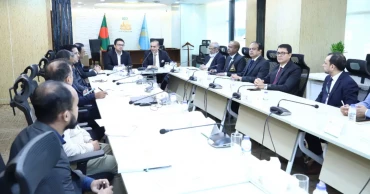
Stock market shows recovery as investors return: DSE chairman
Chairman of the Dhaka Stock Exchange (DSE) Mominul Islam on Tuesday described the country’s stock market outlook as encouraging, saying that the market has begun to recover as investors are gradually returning.
Mominul made the remarks during a discussion at the Dhaka Chamber of Commerce and Industry (DCCI) office on the development of Bangladesh’s capital market, SME company listings, investor confidence, the introduction of new financial products and financing for startups and small and medium enterprises (SMEs).
He praised the interim government for taking unprecedented steps to support the capital market.
Measures in the current budget, including reductions in turnover tax, merchant bank taxes and adjustments in corporate tax rates between listed and unlisted companies, have strengthened market activity, he said.
Mominul also noted that the Bangladesh Securities and Exchange Commission (BSEC) has become more proactive, restoring market discipline through initiatives such as resolving issues related to CC account interest and reducing BO account renewal fees.
These measures, along with limiting unwarranted interventions, have boosted investor confidence.
“Investors are coming back to the market, and institutional investors are becoming more active. We are also digitizing the IPO process and working to bring strong companies to the market quickly through a green channel,” Mominul said.
DSE gains 46 points, CSE up 57 in early trade
He called for closer collaboration between DSE and DCCI to enhance economic growth and strengthen the stock market in a sustainable way, emphasizing the need to develop the bond market alongside the equity market.
During the session, DCCI President Taskeen Ahmed stressed the importance of increasing SME participation in the capital market and boosting investor confidence.
He suggested both long-term and short-term strategies, including revising the dual taxation system and diversifying financial products.
Highlighting the significant contribution of SMEs to the economy, Taskeen noted that only 360 out of more than 200,000 companies in RJSC are listed, emphasizing the need for greater focus on listing government and multinational companies as well.
“We need to enhance SME participation in the stock market and focus on building investor confidence. SMEs contribute significantly to the economy, and the capital market has enormous potential to attract investment from these enterprises,” Taskeen said.
Taskeen also pointed out that Bangladesh’s market capitalization to GDP ratio remains below 20 percent, compared with 40–50 percent in similar economies.
DSE up in first hour, CSE remains flat
He highlighted the potential of the SME sector, which constitutes around 75 percent of the private sector, noting that the capital market could attract substantial investment from these enterprises.
Both DSE and DCCI agreed to organise separate programs in the near future to facilitate SME listings on the SME Board and the Alternative Trading Board (ATB), further strengthening the market’s role in the country’s economic development.
5 months ago
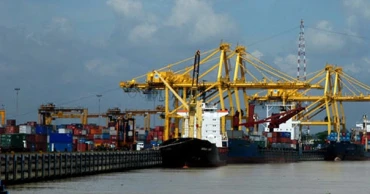
Chittagong port tariffs increased by up to 50 per cent
The Chittagong Port Authority has increased tariffs for the first time in 39 years by up to 50 per cent.
The new tariffs came into effect in the early hours of Tuesday.
Businessmen warned that the increased port service charges will raise trading costs and affect business competitiveness. The increased tariffs will increase consumer prices.
Some of the port charges have increased more than others. For instance, the berthing charge for the first 12 hours has been increased by 100 per cent. After 36 hours, the berthing charge has been increased by up to 900 per cent.
The new tariff sets the pilotage fee at $800 per movement, while the new fees for tugboat services range between $ 615 and $ 6,830, depending on vessel size.
Container handling and other services’ charges have seen a 25 per cent to 50 per cent increase.
"The scope and capacity of the port are expanding. We are committed to building new facilities and ensuring smooth services for port users. We do not believe this tariff adjustment will significantly impact consumers," said Omar Faruk, the CPA secretary.
Syed Mohammad Arif, chairman of the Bangladesh Shipping Agents Association, said that the new tariffs will hurt trade.
"We had requested a maximum increase of 10-12 per cent” he said.
However, port officials estimated the per-kilogram impact of the increased tariff to be marginal, increasing costs by 32 to 44 paisa.
The Chattogram port handles about 33 lakh containers and 13 crore metric tons of cargo annually, with over 4,000 ships using the port service each year.
Container handling at Ctg Port up 9% in Aug-October: CPA Chairman
The new tariff structure was built on the advice of the Spain-based consultancy firm IDOM, which compared tariffs of 17 major global ports, including 10 Asian ports, before coming up with its recommendations.
Export-bound containers, both full container load and less-than-container-load, now get 6 days of free time instead of the earlier four days’ time. The port will start charging from the 7th day at the daily rate of $ 6.90. The charge will rise with time, reaching $ 62 a day after 21 days.
Issuing a warning that the revised tariffs could pose serious challenges, SM Saiful Alam, president of the Chittagong Customs Agents Association, said, “Where will traders recover these new costs from? Ultimately, it will be passed on to consumers. This is a bad development for the economy.”
He pointed out that Chittagong port still lacks modern equipment, even compared with the ports in the neighboring countries.
Currently, the port has only 18 gantry cranes, while 12 other berths rely on ship cranes to handle cargo.
Shafiqul Alam Jewel, vice chairman of the BSAA, demanded that the port authority ensure better service after the tariff increase.
According to the gazette, the entry fee per gross ton now stands at $ 0.306, while the vessel working charge within the port was set at $ 0.017.
The minimum pilotage charge was fixed at $ 800. Vessels over 10,000 GT will have to pay $ 0.08 per gross ton.
The night navigation surcharge has been increased by 25 per cent, while the outer pilotage area surcharge has increased by 50 per cent. The tugboat fee per movement for 200–5,000 GT was set at $ 615.
The water supply charge from the mainline has been fixed at $ 2.92 per 1,000 liters. The cost of supplying water by a port lorry travelling a distance of 5 km has been fixed at $ 6.23. Using a water boat for water supply in the Karnaphuli River will cost $ 12.46. The boat water supply cost beyond 7 nautical miles from the Patenga lighthouse will be $ 24.96 per 1,000 liters. The waste handling cost within the Karnaphuli is now $ 2,456.99. Outside the Karnaphuli, the waste handling cost will be $ 4,063.15. The crane use charge per container for a crane less than 21 feet has been fixed at $ 20.80. For using a crane over 40 feet, now traders will have to pay $ 35.10.
This is the first time since 1986 that the CPA announced new tariffs.
CPA urged to take action against LPG import from sanctioned countries
Port authorities say the tariff review was necessary to improve services and fund infrastructure upgrades to meet global standards.
With around 80 per cent of the country’s apparel exports going through Chittagong port, business leaders said the increased costs could affect competitiveness.
Rakibul Alam Chowdhury, a director of the Bangladesh Garment Manufacturers and Exporters Association, said, “The industry was struggling to cope with the US-imposed 20 per cent tariff. The new charges will complicate the situation further.”
Mahfuzul Haque Shah, a former director of the Chittagong Chamber of Commerce and Industry, said that such a steep rise in cost is very difficult to deal with.
“Our request to stand by businessmen in this difficult time was not heeded,” he said.
“It will raise the costs of imported consumer goods and raw materials, impact manufacturing and hurt the economy,” he said.
Chittagong Port is currently ranked 68th among the world’s top 100 busiest ports and handles 93 per cent of Bangladesh’s total import-export trade.
5 months ago
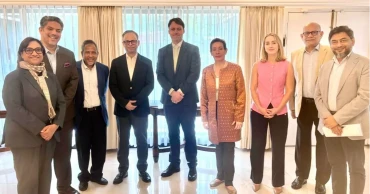
BGMEA, USTR discuss tariff cuts, labour law reforms
Bangladesh and the United States discussed tariff reductions, the use of US raw materials and labour law reforms at talks between the Bangladesh Garment Manufacturers and Exporters Association (BGMEA) and the US Trade Representative (USTR) on Monday.
The talks, hosted at the Chief of Mission's Residence in Gulshan by the US Embassy, brought together a BGMEA delegation led by President Mahmud Hasan Khan and a US team headed by Assistant Trade Representative Brendan Lynch.
Hasan highlighted that while Bangladesh has achieved a 20 percent tariff benefit, the average Most Favoured Nation (MFN) tariff on apparel exports to the US is 16.5 percent.
Combined with the 20 percent countervailing duty, total tariffs reach around 36.5 percent, posing challenges for exporters.
He urged further duty reductions and proposed a “stacking method” to ease the burden and boost competitiveness.
The meeting also covered a US executive order granting partial exemptions from the additional 20 percent duty if at least 20 percent of raw materials are sourced from the US.
BGMEA welcomed the initiative but sought clarity on evaluation and traceability, with the US side saying a resolution is expected soon.
The US delegation also called on Bangladesh to align its labour laws with international standards and ILO guidelines.
Both sides expressed satisfaction with the discussions and hope for increased US imports from Bangladesh to help narrow the trade deficit.
5 months ago

BB buys 353 million dollars through auction to stabilise rate
Bangladesh Bank on Monday purchased US$353 million from 26 commercial banks through a multiple-price auction in a bid to stabilise the exchange rate of the dollar.
According to the central bank, the measure aims to maintain stability in the foreign exchange market and encourage the inflow of remittances.
In the first two months of the current fiscal year, Bangladesh Bank has bought a total of 1.74 billion US dollars.
Arif Hossain Khan, executive director and spokesperson of the central bank, told UNB that Monday’s purchases were made at rates between Tk121 and Tk121.75 under the multiple-price auction method.
He said Bangladesh Bank is purchasing surplus dollars from commercial banks as they receive foreign currency from remittances and the repatriation of export proceeds.
This initiative is expected to support remittance inflows and export earnings, he added.
5 months ago
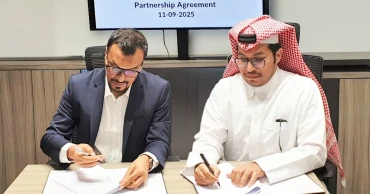
BKash, Gulf Exchange partner to revolutionize remittance services for Bangladeshis in Qatar
BKash, the largest mobile financial services platform in Bangladesh, and Gulf Exchange, a premier financial services provider in Qatar, have announced a strategic partnership to improve cross-border remittance services for the Bangladeshi community in Qatar.
This collaboration will allow Bangladeshi expatriates in Qatar to send money directly to bKash wallets in Bangladesh, providing their families with instant access to funds through bKash’s secure digital network, said a media statement on Sunday.
Amount settlement will be channelized through a schedule commercial bank in Bangladesh. The new service offers highly
competitive exchange rates, fast transfer times, and a user-friendly experience, making it a convenient and reliable option for users.
The agreement was formalized at Gulf Exchange’s headquarters in Doha with senior leadership from both organizations in attendance, including Ahmad Ali Al-Sarraf, chief executive officer, Gulf Exchange and Ali Ahmmed, chief commercial officer, bKash Limited.
“This partnership with bKash reinforces our commitment to delivering innovative, customer-centric financial solutions,” said Ahmad Ali Al-Sarraf. “By integrating with bKash’s trusted and far-reaching platform, we can provide our Bangladeshi customers with a faster, more secure, and more convenient way to send money home.”
Ali Ahmmed said this collaboration with Gulf Exchange is a key milestone in expanding our global remittance ecosystem.
“Our goal is to make financial services simpler and more accessible for the millions of Bangladeshis working abroad. This new remittance channel will ensure their hard-earned money is delivered safely and instantly, supporting their families and contributing to Bangladesh’s economic growth,” he added.
This partnership reflects both organisations’ shared commitment to financial inclusion and innovation. It is expected to significantly benefit the large Bangladeshi population living and working in Qatar by offering a secure, reliable, and efficient means of sending money back home.
5 months ago

BGMEA seeks easier customs bond services to boost RMG competitiveness
The Bangladesh Garment Manufacturers and Exporters Association (BGMEA) has requested the Dhaka (South) Customs Bond Commissionerate to expedite and simplify customs bond-related services and provide policy support to enhance the readymade garment (RMG) industry's competitiveness.
A delegation of BGMEA, led by Director Faisal Samad, met with Commissioner Mohammad Hasmat Ali at his office on Monday, to place the request. The delegation included BGMEA Directors Sumaiya Islam and Kazi Mizanur Rahman, according to a press release.
During the meeting, the delegation handed over a letter from BGMEA President Mahmud Hasan Khan to the Customs Commissioner, urging the simplification of customs bond processes and asking for policy assistance for both the Dhaka (South) and Dhaka (North) Bond Commissionerate. The discussion focused on making customs procedures more efficient, faster, and harassment-free to sustain the industry's competitive edge.
The BGMEA directors highlighted several specific areas needing improvement, including-Simplifying the annual audit process for garment exporters, expediting the clearance of back-to-back L/Cs that were not covered by the utilization declaration (UD), maintaining bond registers through the Customs Bond Management System (CBMS) software, avoiding cutting supervision based solely on suspicion without valid reason, simplifying the process of adding HS codes to bond licenses.
The delegation also drew the Commissioner’s attention to several policy support issues, simplifying the process for importing raw materials on a Free of Cost (FOC) basis, eliminating VAT-related harassment for services provided by non-bonded companies (like washing, printing, dyeing, and embroidery) to bonded garment exporters, removing complexities in the supply of goods and services from bonded sub-contracting firms to non-bonded direct exporters and simplifying sub-contracting activities.
5 months ago