local-business
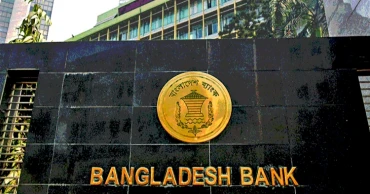
BB signs deals with 20 banks, FIs to boost startup financing
Bangladesh Bank has signed participation agreements with 16 scheduled banks and four financial institutions under its Tk 500-crore refinance fund to expand low-cost loans and investments for startup entrepreneurs.
Governor Dr Ahsan H Mansur joined the signing ceremony virtually, while Deputy Governor Nurun Nahar and Executive Director Husne Ara Shikha attended it in person at the central bank headquarters on Tuesday.
On behalf of BB, Mohammad Mostafizur Rahman, director of the SME and Special Programs Department, signed the agreements with managing directors of the participating banks and financial institutions.
FSIBL backs BB’s plan to form ‘United Islami Bank’ through merger
As per the central bank’s master circular issued on July 9, entrepreneurs can now avail refinance loans and investments at a maximum interest/profit rate of 4%.
The circular also raised loan ceilings for startups, setting limits between Tk 2 crore and Tk 8 crore.
The meeting also discussed the formation of an equity investment company involving 52 partner banks to strengthen startup financing.
Nagad to be privatised to boost MFS competition: BB Governor
Officials said the initiative comes as startups increasingly drive innovation, create jobs and attract global investment linkages in line with the Sustainable Development Goals.
The central bank hoped that the refinements will ease financing for promising ventures while accelerating the sustainable growth of the startup ecosystem.
6 months ago
NBR to hold monthly ‘Meet-the-Business’ Session from Sept
The National Board of Revenue (NBR) has decided to hold a ‘Meet-the-Business’ session on the second Wednesday of every month to strengthen trade facilitation through direct stakeholder engagement.
The first session will be held on September 10 at 3pm at the NBR headquarters, according to a press release.
The platform will allow business representatives to directly share field-level concerns related to customs, income tax and VAT with the NBR chairman and members.
NBR officials said the discussions will help the board have a better understanding of operational challenges and work out effective solutions to improve revenue administration and trade services.
Business representatives from different sectors are expected to attend and provide inputs on streamlining procedures and addressing sector-specific issues.
6 months ago
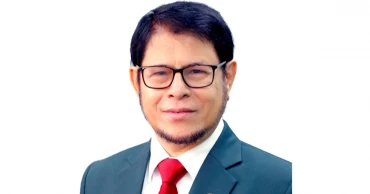
Dr. Kamal Uddin Jasim promoted as AMD of Islami Bank
Dr. M. Kamal Uddin Jasim has been promoted to the position of Additional Managing Director (AMD) of Islami Bank Bangladesh PLC.
Earlier, he also served as Chief Human Resources Officer, CAMLCO, head of operations and development wings and Deputy Managing Director of the bank.
He joined the bank in 1992 as a probationary officer and has since served as head of Dhaka East Zone, head of the Business Promotion & Marketing Division, as well as head of various departments and branches.
Before joining the bank, he was involved in journalism, working with newspapers such as The Bangladesh Observer and Dainik Ajker Kagoj.
He obtained Bachelor’s (Honors) and Master’s degrees in Mass Communication and Journalism from the University of Dhaka, and in 2005, he received a PhD from IBS of the University of Rajshahi.
He is the Treasurer of the Dhaka University Alumni Association and the elected Vice President of the DU Mass Communication and Journalism Alumni Association.
Jasim is also a member of the Asiatic Society of Bangladesh, the Bangladesh Economic Association, and several other national and international social organizations. He has traveled extensively and participated in international training and conferences in the United Kingdom, Australia, New Zealand, Russia, Turkey, China, Singapore, India, Malaysia, Indonesia, Thailand, Saudi Arabia, Oman, the United Arab Emirates, Brunei, Vietnam, the Maldives, Myanmar, Sri Lanka, and other countries, according to a press release.
6 months ago
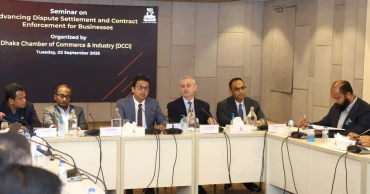
Businesses want special court to dispose 40 lakh commercial disputes pending in courts
Speakers at a seminar highlighted that the delays in resolving trade disputes have significantly impeded foreign and domestic investment in Bangladesh.
They highlighted that the country's lower and higher courts are currently burdened with approximately 40 lakh pending cases, which contributes to a challenging business environment.
Speakers made the remarks while speaking at a seminar on ‘Advancing Dispute Settlement and Contract Enforcement for Businesses’ organized by the Dhaka Chamber of Commerce & Industry (DCCI).
The event, held on Tuesday (September 2), at the DCCI Auditorium, brought together government officials, foreign diplomats, and legal experts to discuss critical reforms needed to improve the business environment.
Commerce Secretary Mahbubur Rahman, the chief guest at the event, said that the legal system's slow pace is making it difficult to attract foreign investment.
“A draft of a new law to create commercial courts is expected to be finalized within the next month. The need for these new courts to be staffed by expert judges to ensure an efficient process,” he added.
The DCCI President, Taskeen Ahmed, stated that as economic activities in the country are growing significantly, disputes related to business contracts, investments, and intellectual property are also increasing.
"Currently, around 40 lakh cases remain unresolved in lower and higher courts. The prolonged judicial processes are hampering both local as well as foreign investment. Although the Arbitration Act was passed in 2001, it has not been implemented effectively,” he said.
He stressed the need for establishing a separate Commercial Court with the appointment of experienced judges and reforming the existing legal framework, which will accelerate the pace of trade and investment.
Michael Miller, Ambassador and Head of Delegation, the European Union in Bangladesh, said that in order to reform the legal process, the EU has been working closely with the government.He expressed that the reform of the legal system will significantly improve the public’s quality of life.
Michael noted that as Bangladesh moves toward LDC graduation and pursues export diversification, the formation of Commercial Courts will be crucial to attract foreign investment. Such courts will facilitate both domestic and foreign investment expansion.
He hoped that the government would prioritize this issue for the greater interest of the economy.
He further stated that strengthening arbitration mechanisms will help reduce the current investment stagnation. He also added that European companies are keen to invest in Bangladesh’s logistics and shipping sectors.
Md. Abdur Rahim Khan, Additional Secretary (Export Wing), Ministry of Commerce & Vice Chairman, Export Promotion Bureau (EPB) said that delays in resolving trade disputes not only hinder FDI attraction but also negatively impact export expansion.
Besides, due to this, Bangladesh is gradually losing its place in global trade, he said. To overcome this, he proposed forming “legal institutions” outside traditional courts to resolve disputes through negotiations in a comparatively shorter time, he said.
Vikna Rajah, Co-Head, South Asia Desk, Rajah and Tann, Singapore, highlighted that due to strong legal structures, skilled human resources, strict law enforcement, and robust commercial dispute settlement mechanisms, Singapore continues to attract high levels of foreign investment.
He stressed the need for comprehensive legal reforms, the establishment of specialized commercial courts, and revision of the Arbitration Act in Bangladesh to attract more foreign investment.Judge Tareque Muajjem Hussain, Special Officer (Additional District Judge), Special Officer to the
Chief Justice of Bangladesh (Additional District Judge), stressed the need to appoint experienced judges specialized in commercial disputes along with proper training, which will ensure smooth and faster dispute resolution.
Barrister Md. Sameer Sattar and Rizwan Rahman, former Presidents of DCCI, Md. Ariful Haque, Director General, Bangladesh Investment Development Authority (BIDA), K A M Majedur Rahman, CEO of Bangladesh International Arbitration Centre (BIAC), Md. Salem Sulaiman, vice president of DCCI, members of the Board of Directors, and stakeholders from relevant sectors were also present at the event.
6 months ago
BSEC cuts BO account maintenance fee
The Bangladesh Securities and Exchange Commission (BSEC) has approved a proposal to reduce the maintenance fee for Beneficiary Owners (BO) accounts of capital market investors.
The approval came at the commission’s 971st meeting held on Tuesday, with BSEC Chairman Khondoker Rashed Maqsood in the chair, according to a press release signed by BSEC Director and Spokesperson Abul Kalam.
As per the new decision, the annual maintenance fee for BO accounts will be Tk 150.
The amount will be equally distributed among the depository, depository participants (DPs) and the commission, with each receiving Tk 50.
The new rate will come into effect for the fiscal year 2025-26 after publication in the official gazette. Investors will, however, continue to pay Tk 450 as per the previous rule for the earlier years.
Meanwhile, the deadline for payment of BO account maintenance fees has been extended again until October 15.
Earlier, following an appeal from Central Depository Bangladesh Limited (CDBL), the deadline had been extended to August 31.
6 months ago

FSIBL backs BB’s plan to form ‘United Islami Bank’ through merger
First Security Islami Bank PLC (FSIBL) has agreed in principle to a Bangladesh Bank plan to merge five troubled banks into a new bank called ‘United Islami Bank’.
FSIBL Chairman Mohammad Abdul Mannan disclosed the bank’s stance after a meeting with Bangladesh Bank Governor Ahsan H Mansur on Tuesday.
He said discussions are underway to combine First Security Islami Bank, Social Islami Bank, Global Islami Bank, Union Bank and Exim Bank into one entity, as the banks reel from a severe financial crisis linked to massive loan defaults by the S Alam Group.
“Although three banks have verbally indicated support for the merger, the other two are yet to give their consent,” Mannan said, without naming the reluctant ones.
Dismissing the possibility of dissolving the banks altogether, Mannan described the central bank’s consolidation proposal as more pragmatic, adding that FSIBL had no objection to the move.
The chairman stressed that protecting depositors was his foremost priority in the talks. “We want to make sure depositors do not face any losses in this process,” he said.
Mannan also alleged that the S Alam Group siphoned off Tk 38,000 crore from FSIBL alone through direct and proxy borrowing.
“Because of this malpractice, a bank that was once in sound condition has now fallen into deep distress,” he said.
6 months ago

Bangladesh’s export earnings hit $8.69 billion in July-August
Bangladesh recorded export earnings of US$ 8.69 billion during the first two months (July–August) of the current fiscal year 2025–26, reflecting a 10.61 percent growth compared to the same period during the previous fiscal year.
Despite this overall positive performance, the year-on-year growth declined by 2.93 percent in August 2025. Export earnings for August 2025 stood at $3.92 billion, slightly lower than the $ 4.03 billion achieved in August 2024.
Expatriates sent $2.08 billion in remittances in 27 days of August
US tariffs disrupted global demand and supply chains, causing a fall in supply orders from international buyers. After a successful tariff negotiation with Washington, export orders surged in Bangladesh, businesses said.
The Export Promotion Bureau (EPB) noted that while export performance in the opening months of the fiscal year indicates resilience, the slowdown in August underlines the challenges facing Bangladesh’s export sector in the context of global demand fluctuations and evolving market dynamics.
Bangladesh Bank reconstitutes Premier Bank board over poor governance
6 months ago

Bangladesh Bank issues new master circular to simplify loan, ovedraft regulations
Bangladesh Bank has issued a new master circular, bringing all rules related to loans, overdrafts, and guarantees under a single framework.
Foreign Exchange Policy Department (FEPD) issued the circular on Tuesday aiming to simplify and consolidate the policies governing foreign exchange transactions.
Bangladesh Bank stated that instructions previously scattered across various guidelines and circulars have been consolidated into this new circular with necessary amendments. This move unifies the provisions for loans, overdrafts, and guarantees into a single structure, which will be effective for one year from the date of its issuance.
NBR chairman calls for meeting revenue targets
The circular includes provisions for commercial loans, loans against guarantees or collateral provided abroad, various types of guarantees for both domestic and foreign parties, repayment guarantees, and provisions for licensed financial institutions to provide foreign loans.
Banks are instructed to follow internationally recognised rules for guarantees, Standby Letters of Credit (SBLCs), and other payment commitments. They must adhere to international standards such as URDG, UCP, and ISP, provided they are consistent with the country's laws and regulations.
The new circular also clearly outlines loan facilities for institutions in specialised zones, opportunities for borrowing in various foreign and local currencies, usance bill discounting, working capital facilities, and provisions for medium- and long-term foreign loans. It also includes instructions regarding guarantees for foreign loan borrowing and repayment by government, private, and foreign-owned institutions.
NBR: Govt gives final nod to draft Revenue Policy and Management Ordinance
The circular stated that bringing all provisions under one umbrella will make foreign exchange transactions related to loans, overdrafts, and guarantees more streamlined and transparent. This initiative is expected to be particularly helpful for foreign-owned institutions. Bangladesh Bank's move is seen as an important effort to simplify foreign exchange policy and modernise financial transactions in the context of globalisation.
6 months ago
Govt aims to raise tax-GDP ratio to over 10pc by FY35
In an ambitious move the government aims to raise the country’s tax-to-GDP ratio to 10.5 percent by the 2034–35 fiscal year, according to officials.
This will do through the implementation of a Medium- and Long-Term Revenue Strategy (MLTRS) for FY2025–26 to FY2034–35, said the officials familiar with the plan on Tuesday.
The government has formally endorsed the MLTRS — a comprehensive reform blueprint designed to overhaul the taxation system, strengthen compliance, and boost revenue mobilisation.
The strategy is built around six core goals: end-to-end automation of the National Board of Revenue (NBR)’s business processes; raising the tax-to-GDP ratio; improving voluntary compliance; closing the gap between potential and actual revenue; ensuring uniform enforcement of laws; and strengthening integrity and transparency.
Currently, Bangladesh’s tax-to-GDP ratio stands at 7.3 percent — one of the lowest in South Asia.
Automation is central to the MLTRS, aiming to improve tax administration, ease access, and deliver better services to taxpayers. A cross-cutting project will integrate several ongoing initiatives, such as the Customs Modernisation Strategic Action Plan, Asycuda World, and online tax filing platforms. Given its complexity, the project is expected to extend into the long-term phase of the strategy.
According to the Ministry of Finance’s Macro-Economic Policy Statement (2023–24 to 2025–26), Bangladesh achieves some of the highest returns on investment in taxation systems compared to other developing countries. The automation drive, therefore, presents a unique opportunity to significantly enhance the tax-to-GDP ratio.
Over the years, the NBR has introduced multiple automation and digitalisation initiatives, including the Tax Modernisation Plan (2011–16), Reforms in Revenue Administration (RIRA, 2008), Management of Information System of Taxation (MIST, 2008–09), Tax Administration Capacity and Taxpayer Services (TACTS), Comprehensive Modernisation Plan (CMP, 2011), Strengthening Governance Management Project (SGMP, 2011–18), VAT Improvement Programme (VIP, 2014–2024), Electronic Fiscal Device (EFD, launched in 2019), Bangladesh Integrated Tax Administration System (BITAX, 2016), and ASYCUDA modernisation (initially introduced in 2003).
These efforts will serve as a foundation for the MLTRS, though officials acknowledge that Bangladesh remains in the early stages of automation and some previous initiatives have yet to meet their objectives.
The NBR is targeting a minimum 10 percent tax-to-GDP ratio by 2032, with significant efforts to meet the 10.5 percent target by FY2034–35. Unlike in previous plans, future Five-Year Plans (FYPs) will adopt benchmarks aligned with the MLTRS.
Improving voluntary compliance is another major goal. Current shortcomings in VAT, personal, and corporate income tax compliance undermine the credibility of the tax system and erode public trust. Factors contributing to low compliance include complex tax laws, traditional administration practices, low awareness, and weak trust in government systems.
To address this, the MLTRS suggests simplifying tax rules, enhancing taxpayer services, improving enforcement with consistent penalties, incentivising compliant taxpayers, and promoting a culture of compliance through education and outreach.
Revenue generation remains below potential, which partly explains overly optimistic targets in the Eighth Five-Year Plan (8FYP). Increasing direct tax yields, easing filing procedures, expanding digital platforms, and intensifying revenue collection efforts are seen as critical as customs duties continue to decline. The report also highlights an estimated USD 15–20 billion lost annually through money laundering, which, if addressed, could significantly expand the tax base.
The NBR emphasises that its mandate is rooted in the rule of law, with administrative practices requiring uniformity and fairness to build taxpayer confidence. Automation is viewed as a key enabler of standardised and transparent enforcement, though institutional reforms will remain essential to ensure equity and efficiency.
Strengthening integrity and transparency is equally critical. The NBR plans to enforce a Code of Ethics and Conduct and bolster internal mechanisms to investigate fraud, corruption, and other malpractices, fostering a culture of ethical behaviour and accountability.
Building trust and achieving the MLTRS goals will be a gradual process, but officials believe the strategy will lay the groundwork for a more resilient, transparent, and efficient tax administration system.
6 months ago
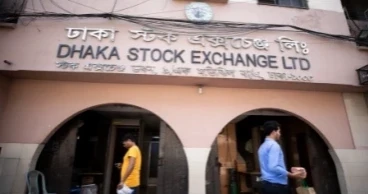
Stocks gain in early trading at Dhaka and Chattogram bourses
Indices at both the Dhaka and Chattogram stock exchanges witnessed an upward trend in the first half of trading on Monday, as most share prices made gains.
At the Dhaka Stock Exchange (DSE), the benchmark index DSEX gained 21 points, while the Shariah-based index DSES rose 7 points. But, the blue-chip index DS30 remained almost flat.
Of the issues traded, 236 advanced, 78 declined and 78 remained unchanged.
The turnover stood at over Tk 580 crore during the first half of the session.
The Chittagong Stock Exchange (CSE) also ended the first half on a positive note, with the overall index gaining 29 points.
Among the issues traded, 84 gained, 51 declined and 17 remained unchanged, with a turnover of around Tk 5 crore.
6 months ago