local-business
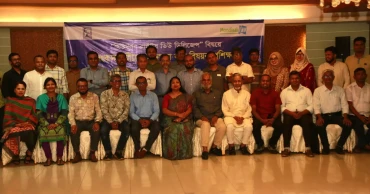
EU due diligence laws to mandate fair pricing for buyers, said speakers at a workshop
Speakers at a workshop highlighted that the buyers of different brands from the European Union (EU) will be required to pay fair prices to source countries under the new Corporate Sustainability Due Diligence Directive (CSDDD) and other related national and international laws.
They made the remarks at the two-day workshop on "Human Rights and EU Due Diligence in the Garment Sector," which concluded on Sunday at a hotel in Dhaka. The event was jointly organized by the Bangladesh Institute of Labour Studies (BILS) and the Netherlands-based international labor organization Mondiaal FNV.
Speakers at the event opined that while brands often exert excessive control over Bangladeshi suppliers—even scrutinizing minor details like the availability of separate washrooms for transgender workers—they frequently fail to offer fair prices. This practice, they noted, makes it difficult for factory owners to provide even minimum wages to their employees.
The EU Parliament passed the CSDDD in April last year, and it is expected to be strictly enforced by 2029 after being adopted by member states' national parliaments.
Once the law is in effect, EU brands will be held accountable for the production sources of their goods. This means they will be prohibited from importing products from sources with questionable environmental and human rights records.
Speakers emphasized that to avoid a significant drop in exports, Bangladesh's industrial sector must prioritize environmental sustainability and human rights protection.
They pointed out that EU bloc laws and national laws like Germany's Supply Chain Act will hold all parties in the supply chain—from importers to exporters—accountable. Failure to comply will result in goods being barred from entering EU countries.
They (speakers) said that it is impossible to establish workers' rights at the factory level if buyers do not pay fair prices for the garments.
They urged all stakeholders to raise awareness to ensure buyers are compelled to offer fair prices. The workshop also covered detailed discussions on improving the labor environment and human rights.
Among the speakers were Syed Sultan Uddin Ahmed, head of the Labour Reform Commission and BILS Executive Director; Nazma Yasmin, BILS Director; and Md. Shahinur Rahman, consultant for Mondiaal FNV; Md.Aurongajeb Akon, Associate Professor Aurangzeb Akand of Maulana Bhashani Science and Technology University, and BILS Deputy Director Md. Yusuf Al-Mamun.
6 months ago

Bangladesh Bank simplifies foreign internet service bill payments
The Bangladesh Bank has eased the payment of bills for foreign internet bandwidth services by no longer requiring central bank approval for each transaction.
Under new guidelines, banks can now directly remit payments to foreign providers, subject to specific conditions.
Previously, banks had to seek the central bank's approval before sending money abroad for internet bandwidth. The new circular issued on Sunday by the Foreign Exchange Policy Department of Bangladesh Bank allows banks to handle these transactions on their own, provided they verify all required documentation.
Banks are required to maintain all transaction-related documents and must present them for inspection by the Bangladesh Bank upon request. The new circular also emphasizes strict adherence to policies on anti-money laundering and combating the financing of terrorism.
In a related move, the central bank has also granted general approval for banks to issue performance bonds and guarantees on behalf of local exporters and subcontractors working with foreign contractors. This eliminates the need for separate authorization from the Bangladesh Bank for each guarantee.
An official from the Bangladesh Bank stated that this change would streamline operations and increase the flow of foreign currency. "Foreign contractors often have local suppliers and subcontractors who need guarantees. Now banks can directly issue these guarantees, which will accelerate work and boost foreign exchange," the official said.
Businesses have welcomed the new directives, stating that they will save time and simplify foreign transactions by removing the previous approval waiting period for bandwidth service payments.
6 months ago
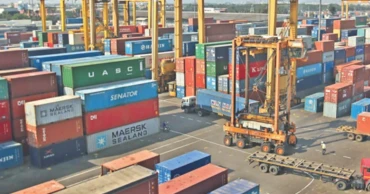
Freight forwarders oppose 20-80% increase in container handling charges
Freight forwarders in Bangladesh have strongly opposed a sharp increase in container handling charges, warning that the move will severely impact the export trade.
The Bangladesh Inland Container Depots Association (BICDA) has reportedly decided to raise charges by 20 percent to 80 percent for export containers, with the new rates set to take effect in September.
The protest was made through a press conference held at the Dhaka Reporters Unity on Saturday, organized by the general members of the Bangladesh Freight Forwarders Association (BAFA).
The conference was presided over by Abrarur Alam, with other key members, including Adnan Mohammad Iqbal, Abul Hasan Shamsul Haq, Mahfuz Raihan, and Anwar Hossain Milan, also in attendance.
Abrarur Alam stated that solutions to existing problems could be found through improving efficiency, such as reducing cargo unloading times, using modern equipment, and addressing labor shortages—not by increasing costs.
He urged BICDA to withdraw the decision, especially in light of the current economic downturn.
He also mentioned that the Bangladesh Garment Manufacturers and Exporters Association (BGMEA) has already expressed solidarity with the freight forwarders by writing a letter to the Chittagong Port Authority, and other exporters also support the demand for a rollback of the new charges.
According to the freight forwarders, the new rates will significantly increase the cost of doing business. The charge for a 20-foot export container will jump from Tk 6,187 to Tk 9,900, while a 40-foot container will cost Tk 13,200 instead of Tk 8,250. The charge for a 45-foot high-cube container will rise from Tk 8,250 to Tk 14,900.
Additionally, costs for almost all other services, including empty container handling, lift-on/lift-off, documentation, and ground rent, will also be increased.
6 months ago
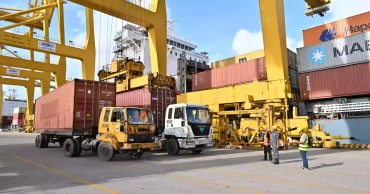
Chittagong Port sets new daily container handling record at NCT
Chittagong Port has set a new record for container handling in a single day at the New Mooring Container Terminal (NCT), according to a press release issued by the Bangladesh Navy on Friday.
The terminal’s operator, Chittagong Dry Dock Limited (CDDL), claimed the record-breaking performance marks a significant milestone in NCT’s operational history.
According to the press release, between 8am on August 28 and 8 am on August 29, a total of 5,019 TEUs (twenty-foot equivalent units) were handled—2,101 TEUs of import containers and 2,918 TEUs of export containers—setting the highest-ever single-day container handling record at the terminal.
CDDL assumed operational control of berths NCT-2, NCT-3, NCT-4, and NCT-5 on July 7, 2025.
Since then, container handling at NCT has increased significantly, aided by what the Navy describes as efficient and disciplined management.
CDDL officers and personnel have been actively involved in all aspects of port operations—from ship points and delivery zones to appraisal points and C&F sheds—leading to improved productivity and quicker turnaround times.
6 months ago

Vegetable prices remain high, most selling above Tk 100 per kg
The prices of vegetables remained high in the capital’s kitchen markets over the past three weeks, with most varieties selling above Tk 100 per kilogramme, leaving consumers frustrated.
During visits to kitchen markets in Motijheel, Shantinagar, Malibagh, Rampura and Badda on Friday, many buyers were seen expressing anger over the spiralling prices.
“Brinjal is still being sold at Tk 200 per kg. How is this even possible? Pointed gourd (Potol) that usually sells at Tk 50 a kg has now doubled in price,” said Shahnima Akter, a buyer at kitchen market in Badda area.
“If the prices remain like this, how will low-income people afford vegetables?” she asked.
Good quality round brinjal was found selling between Tk 180–220 per kg, long brinjal at Tk 140–160, and white brinjal at Tk 100–120 per kg.
Other vegetables also witnessed price hikes. Pointed gourd was selling at Tk 80–100 a kg, teasel gourd at Tk 100, yardlong beans at Tk 100–120, ridge gourd at Tk 80–100, and bitter gourd at Tk 80–120 per kg.
Vegetable prices soar in Dhaka's kitchen markets; no item below Tk 80
Tomato was being sold at Tk 160–180 per kg, cucumber at Tk 80–100, and carrot at Tk 140–180. Bottle gourd was priced between Tk 80–120 per piece, while ash gourd was selling at Tk 80–100.
Papaya was the cheapest among vegetables, though its price rose by Tk 10 in the past week to Tk 40 per kg.
Newly harvested beans entered the market at higher prices, selling at Tk 240–280 per kg.
“Compared to other times, supply of vegetables has dropped by half. This season usually sees lower supply, and on top of that, extra tolls are being charged at different points. That’s why the prices are so high,” alleged Aslam, a vegetable trader in North Badda.
Another trader, Monsur, said supply is likely to increase from mid-September, which may bring prices down slightly. Until then, consumers will have to bear with higher rates.
Leafy greens have also become pricier. A bundle of water spinach, spinach or helencha, previously sold at Tk 10, was now priced at Tk 15–20. Bottle gourd and pumpkin leaves were selling at Tk 50–70 a bundle, up from Tk 30–40 earlier.
Green chili was still selling at high prices — Tk 200–250 per kg.
Onion prices eased slightly, retailing at Tk 65–70 per kg, while garlic was selling between Tk 120–180. Lentil prices, however, increased — with coarse lentils selling at Tk 140 and finer varieties at Tk 160 per kg.
Prices of chicken, beef, mutton, and eggs remained unchanged. Broiler chicken was selling at Tk 170–180 per kg, Sonali chicken at Tk 300–320, and local chicken between Tk 580–650 per kg depending on size.
A dozen brown eggs were selling at Tk 150 and white eggs at Tk 140. Beef was selling at Tk 750–800 per kg, while mutton was selling between Tk 900–1,100.
Prices of chicken, fish rise in Dhaka’s kitchen markets
Fish prices also showed little change. Hilsa remained highly priced, with fish weighing over one kg selling at Tk 2,500–2,800 per kg, one-kg hilsa at Tk 2,300–2,500, hilsa below one kg at Tk 1,600–1,800, and smaller ones at Tk 800–1,200.
Giant freshwater prawns (golda) were selling between Tk 1,200–1,500 per kg, while tiger prawns (bagda) were priced at Tk 800–1,000. Rui was selling at Tk 300–350 per kg, catla at Tk 350–400, kalibaush at Tk 320–380, and tilapia at Tk 220–260.
Market insiders said unless vegetable prices come down, the overall market will not return to stability.
They also warned that persistent high prices of eggs, chicken, and fish may push up food inflation further next month.
6 months ago

Chinese company to invest in LED plant in Mongla EPZ
Chinese company Senxin BD Co. Ltd. is set to invest US$ 10.81 million to establish a manufacturing plant for LED bulbs and packaging materials at Mongla Export Processing Zone (Mongla EPZ).
An agreement was signed on Thursday at the BEPZA Complex in Dhaka between the Bangladesh Export Processing Zones Authority (BEPZA) and Senxin BD Co. Ltd.
Member (Investment Promotion) of BEPZA Md. Ashraful Kabir and Chairman of Senxin BD Wu Changqin inked the deal on behalf of their respective organizations.
Executive Chairman of BEPZA Major General Abul Kalam Mohammad Ziaur Rahman witnessed the signing ceremony, according to a press release.
Under the new venture, Senxin BD will produce a wide range of LED lighting products including bulbs, street lights, spotlights, panel lights, solar street lights, explosion-proof lamps, floodlights, strip lights, along with packaging items such as cartons and polybags.
The company is expected to create employment opportunities for 717 Bangladeshi nationals.
Welcoming the investment, BEPZA’s Executive Chairman said: “While the readymade garment sector continues to play a vital role in our economy, BEPZA is working to attract and facilitate diversified industries.”
He said that Senxin BD’s investment reflects growing investor confidence in our EPZs.
“We will extend all necessary support for their successful operations,” he added.
6 months ago
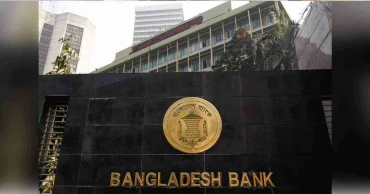
Bangladesh Bank invites applications for country’s first-ever digital banks
Banking in Bangladesh is set for a digital leap, as Bangladesh Bank has called for applications to establish the country’s first-ever digital banks, promising faster and better accessible financial services.
The application window is open from September 1 to September 30 of 2025 to receive such applications.
The central bank’s notice, signed by Md Bayezid Sarkar, General Manager of the Banking Regulation and Policy Department (BRPD), says that the licensing of digital banks comes in response to global shifts in the technology-driven financial sector.
The initiative aims to expand the reach and efficiency of financial services, particularly for small, cottage and medium-sized enterprises (CMSMEs).
The central bank says that digital banking will help harness the opportunities of the ‘Fourth Industrial Revolution’, supporting sustainable economic growth and employment generation. It also views digital banks as a vital tool for simplifying credit flows, especially for marginalised communities.
Applicants must submit a non-refundable fee of Tk 500,000 via a bank draft or pay order in favour of Bangladesh Bank.
SCB sets new standard in digital banking
Applications, along with all required documents, can be submitted in person and via email. Detailed instructions are available on the Bangladesh Bank website.
Digital bank licenses will be issued under the 1991 Bank Company Act, while payment services will be governed by the 2014 Bangladesh Payment and Settlement System Regulations.
According to the central bank's policy, a digital bank will have a head office but will not require physical branches, sub-branches, ATMs, CDMs, or CRMs.
All services will be app-based and accessible via mobile phones or other digital devices, meaning they will not offer over-the-counter (OTC) services.
Nagad’s digital banking license adjourned to review its activities: Bangladesh Bank Governor
The central bank previously established the digital bank policy on June 14, 2023. Under the initial policy, the minimum paid-up capital required to establish a digital bank was Tk 125 crore. This amount has recently been increased to Tk 300 crore.
Applications, along with all required documents, can be submitted in person and via email.
6 months ago

Indices rise in early trading at DSE, CSE
Stock indices witnessed an uptrend in the first hour of trading at both Dhaka and Chattogram stock exchanges, as the prices of most companies advanced on Tuesday.
At the Dhaka Stock Exchange (DSE), the benchmark index DSEX gained 40 points while the Shariah-based index DSES added 11 points and the blue-chip index DS30 rose by 14 points.
Of the issues traded, prices increased for 218 companies, fell for 97 and remained unchanged for 75.
The turnover on the DSE stood at over Tk 400 crore during the first hour.
Stock indices see slight rise in early trading at Dhaka bourse
The uptrend was also seen at the Chittagong Stock Exchange (CSE) where the overall index gained 72 points.
Out of 101 issues traded, 59 advanced, 30 declined and 12 remained unchanged.
The turnover at the CSE stood at Tk 4 crore during the early session.
6 months ago

Onion import through Benapole Port resumes after 2.5 years
For the first time in two and a half years, a consignment of 15 metric tonnes (MTs) of onion has arrived at Benapole land port in Jashore district from India.
Shyamal Kumar Nath, deputy assistant at the port’s Plant Quarantine Centre, said the first consignment entered the port around 8 pm on Monday.
After quality inspection, customs cleared the shipment for release.
Onion imports via Benapole were suspended from March 2023, he said.
Assistant Commissioner of the port Rajon Hossain said field officials were instructed to expedite customs formalities for swift release.
One SM Well Traders of Bagerhat imported the consignment while India's National Trading Corporation exported it.
Aminul Haque Anu, vice president of Benapole Port Importers-Exporters Association, said the government had earlier restricted onion imports to maintain fair prices of locally produced yield.
Another 202 mts onion imported from India through Bhomra land port
As the price of onion at the local markets soared the government allowed imports to bring the prices under control.
Customs sources said each metric tonne was imported at Tk 37,429.
In the local market, the imported onions are expected to sell for Tk 58–60 per kilogram depending on quality.
6 months ago

Digital banks' minimum capital requirement increased to Tk 300 Crore
Bangladesh Bank has increased the minimum capital requirement for establishing a digital bank to Tk 300 crore.
The change was made by a circular issued by the central bank on Sunday (August 24).
The new requirement marks a significant jump from the Tk 125 crore set in the Digital Bank Guideline on June 14, 2023.
In comparison, a conventional bank in Bangladesh needs a paid-up capital of Tk 500 crore to obtain a license.
The circular states that digital bank licenses will be issued under the Bank Company Act of 1991.
However, all payment services operated by the bank will fall under the purview of the Bangladesh Payment and Settlement Systems Regulations-2014.
The central bank has also mandated that a digital bank must go public and be listed on the stock exchange within five years of receiving its license. The size of the Initial Public Offering (IPO) must be equivalent to the initial investment made by the sponsors.
According to the circular, all regulations related to business operations, corporate governance, and activities applicable to conventional banks will also apply to digital banks.
A digital bank is a fully online banking system where all services are provided via the internet. Unlike conventional banks, they will not have physical branches, operating solely from a head office.
Bangladesh Bank's move to approve digital banks comes as many countries worldwide are shifting from branch-based banking to digital-first models.
In South Asia, neighboring countries like India and Pakistan launched their digital banks in 2022.
The new initiative is being introduced at a time when Bangladesh's banking sector is considered oversaturated, with 61 conventional banks currently in operation.
6 months ago