local-business

FSIBL backs BB’s plan to form ‘United Islami Bank’ through merger
First Security Islami Bank PLC (FSIBL) has agreed in principle to a Bangladesh Bank plan to merge five troubled banks into a new bank called ‘United Islami Bank’.
FSIBL Chairman Mohammad Abdul Mannan disclosed the bank’s stance after a meeting with Bangladesh Bank Governor Ahsan H Mansur on Tuesday.
He said discussions are underway to combine First Security Islami Bank, Social Islami Bank, Global Islami Bank, Union Bank and Exim Bank into one entity, as the banks reel from a severe financial crisis linked to massive loan defaults by the S Alam Group.
“Although three banks have verbally indicated support for the merger, the other two are yet to give their consent,” Mannan said, without naming the reluctant ones.
Dismissing the possibility of dissolving the banks altogether, Mannan described the central bank’s consolidation proposal as more pragmatic, adding that FSIBL had no objection to the move.
The chairman stressed that protecting depositors was his foremost priority in the talks. “We want to make sure depositors do not face any losses in this process,” he said.
Mannan also alleged that the S Alam Group siphoned off Tk 38,000 crore from FSIBL alone through direct and proxy borrowing.
“Because of this malpractice, a bank that was once in sound condition has now fallen into deep distress,” he said.
9 months ago

Bangladesh’s export earnings hit $8.69 billion in July-August
Bangladesh recorded export earnings of US$ 8.69 billion during the first two months (July–August) of the current fiscal year 2025–26, reflecting a 10.61 percent growth compared to the same period during the previous fiscal year.
Despite this overall positive performance, the year-on-year growth declined by 2.93 percent in August 2025. Export earnings for August 2025 stood at $3.92 billion, slightly lower than the $ 4.03 billion achieved in August 2024.
Expatriates sent $2.08 billion in remittances in 27 days of August
US tariffs disrupted global demand and supply chains, causing a fall in supply orders from international buyers. After a successful tariff negotiation with Washington, export orders surged in Bangladesh, businesses said.
The Export Promotion Bureau (EPB) noted that while export performance in the opening months of the fiscal year indicates resilience, the slowdown in August underlines the challenges facing Bangladesh’s export sector in the context of global demand fluctuations and evolving market dynamics.
Bangladesh Bank reconstitutes Premier Bank board over poor governance
9 months ago

Bangladesh Bank issues new master circular to simplify loan, ovedraft regulations
Bangladesh Bank has issued a new master circular, bringing all rules related to loans, overdrafts, and guarantees under a single framework.
Foreign Exchange Policy Department (FEPD) issued the circular on Tuesday aiming to simplify and consolidate the policies governing foreign exchange transactions.
Bangladesh Bank stated that instructions previously scattered across various guidelines and circulars have been consolidated into this new circular with necessary amendments. This move unifies the provisions for loans, overdrafts, and guarantees into a single structure, which will be effective for one year from the date of its issuance.
NBR chairman calls for meeting revenue targets
The circular includes provisions for commercial loans, loans against guarantees or collateral provided abroad, various types of guarantees for both domestic and foreign parties, repayment guarantees, and provisions for licensed financial institutions to provide foreign loans.
Banks are instructed to follow internationally recognised rules for guarantees, Standby Letters of Credit (SBLCs), and other payment commitments. They must adhere to international standards such as URDG, UCP, and ISP, provided they are consistent with the country's laws and regulations.
The new circular also clearly outlines loan facilities for institutions in specialised zones, opportunities for borrowing in various foreign and local currencies, usance bill discounting, working capital facilities, and provisions for medium- and long-term foreign loans. It also includes instructions regarding guarantees for foreign loan borrowing and repayment by government, private, and foreign-owned institutions.
NBR: Govt gives final nod to draft Revenue Policy and Management Ordinance
The circular stated that bringing all provisions under one umbrella will make foreign exchange transactions related to loans, overdrafts, and guarantees more streamlined and transparent. This initiative is expected to be particularly helpful for foreign-owned institutions. Bangladesh Bank's move is seen as an important effort to simplify foreign exchange policy and modernise financial transactions in the context of globalisation.
9 months ago

Govt aims to raise tax-GDP ratio to over 10pc by FY35
In an ambitious move the government aims to raise the country’s tax-to-GDP ratio to 10.5 percent by the 2034–35 fiscal year, according to officials.
This will do through the implementation of a Medium- and Long-Term Revenue Strategy (MLTRS) for FY2025–26 to FY2034–35, said the officials familiar with the plan on Tuesday.
The government has formally endorsed the MLTRS — a comprehensive reform blueprint designed to overhaul the taxation system, strengthen compliance, and boost revenue mobilisation.
The strategy is built around six core goals: end-to-end automation of the National Board of Revenue (NBR)’s business processes; raising the tax-to-GDP ratio; improving voluntary compliance; closing the gap between potential and actual revenue; ensuring uniform enforcement of laws; and strengthening integrity and transparency.
Currently, Bangladesh’s tax-to-GDP ratio stands at 7.3 percent — one of the lowest in South Asia.
Automation is central to the MLTRS, aiming to improve tax administration, ease access, and deliver better services to taxpayers. A cross-cutting project will integrate several ongoing initiatives, such as the Customs Modernisation Strategic Action Plan, Asycuda World, and online tax filing platforms. Given its complexity, the project is expected to extend into the long-term phase of the strategy.
According to the Ministry of Finance’s Macro-Economic Policy Statement (2023–24 to 2025–26), Bangladesh achieves some of the highest returns on investment in taxation systems compared to other developing countries. The automation drive, therefore, presents a unique opportunity to significantly enhance the tax-to-GDP ratio.
Over the years, the NBR has introduced multiple automation and digitalisation initiatives, including the Tax Modernisation Plan (2011–16), Reforms in Revenue Administration (RIRA, 2008), Management of Information System of Taxation (MIST, 2008–09), Tax Administration Capacity and Taxpayer Services (TACTS), Comprehensive Modernisation Plan (CMP, 2011), Strengthening Governance Management Project (SGMP, 2011–18), VAT Improvement Programme (VIP, 2014–2024), Electronic Fiscal Device (EFD, launched in 2019), Bangladesh Integrated Tax Administration System (BITAX, 2016), and ASYCUDA modernisation (initially introduced in 2003).
These efforts will serve as a foundation for the MLTRS, though officials acknowledge that Bangladesh remains in the early stages of automation and some previous initiatives have yet to meet their objectives.
The NBR is targeting a minimum 10 percent tax-to-GDP ratio by 2032, with significant efforts to meet the 10.5 percent target by FY2034–35. Unlike in previous plans, future Five-Year Plans (FYPs) will adopt benchmarks aligned with the MLTRS.
Improving voluntary compliance is another major goal. Current shortcomings in VAT, personal, and corporate income tax compliance undermine the credibility of the tax system and erode public trust. Factors contributing to low compliance include complex tax laws, traditional administration practices, low awareness, and weak trust in government systems.
To address this, the MLTRS suggests simplifying tax rules, enhancing taxpayer services, improving enforcement with consistent penalties, incentivising compliant taxpayers, and promoting a culture of compliance through education and outreach.
Revenue generation remains below potential, which partly explains overly optimistic targets in the Eighth Five-Year Plan (8FYP). Increasing direct tax yields, easing filing procedures, expanding digital platforms, and intensifying revenue collection efforts are seen as critical as customs duties continue to decline. The report also highlights an estimated USD 15–20 billion lost annually through money laundering, which, if addressed, could significantly expand the tax base.
The NBR emphasises that its mandate is rooted in the rule of law, with administrative practices requiring uniformity and fairness to build taxpayer confidence. Automation is viewed as a key enabler of standardised and transparent enforcement, though institutional reforms will remain essential to ensure equity and efficiency.
Strengthening integrity and transparency is equally critical. The NBR plans to enforce a Code of Ethics and Conduct and bolster internal mechanisms to investigate fraud, corruption, and other malpractices, fostering a culture of ethical behaviour and accountability.
Building trust and achieving the MLTRS goals will be a gradual process, but officials believe the strategy will lay the groundwork for a more resilient, transparent, and efficient tax administration system.
9 months ago
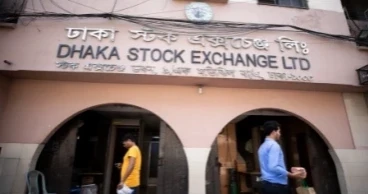
Stocks gain in early trading at Dhaka and Chattogram bourses
Indices at both the Dhaka and Chattogram stock exchanges witnessed an upward trend in the first half of trading on Monday, as most share prices made gains.
At the Dhaka Stock Exchange (DSE), the benchmark index DSEX gained 21 points, while the Shariah-based index DSES rose 7 points. But, the blue-chip index DS30 remained almost flat.
Of the issues traded, 236 advanced, 78 declined and 78 remained unchanged.
The turnover stood at over Tk 580 crore during the first half of the session.
The Chittagong Stock Exchange (CSE) also ended the first half on a positive note, with the overall index gaining 29 points.
Among the issues traded, 84 gained, 51 declined and 17 remained unchanged, with a turnover of around Tk 5 crore.
9 months ago

EU due diligence laws to mandate fair pricing for buyers, said speakers at a workshop
Speakers at a workshop highlighted that the buyers of different brands from the European Union (EU) will be required to pay fair prices to source countries under the new Corporate Sustainability Due Diligence Directive (CSDDD) and other related national and international laws.
They made the remarks at the two-day workshop on "Human Rights and EU Due Diligence in the Garment Sector," which concluded on Sunday at a hotel in Dhaka. The event was jointly organized by the Bangladesh Institute of Labour Studies (BILS) and the Netherlands-based international labor organization Mondiaal FNV.
Speakers at the event opined that while brands often exert excessive control over Bangladeshi suppliers—even scrutinizing minor details like the availability of separate washrooms for transgender workers—they frequently fail to offer fair prices. This practice, they noted, makes it difficult for factory owners to provide even minimum wages to their employees.
The EU Parliament passed the CSDDD in April last year, and it is expected to be strictly enforced by 2029 after being adopted by member states' national parliaments.
Once the law is in effect, EU brands will be held accountable for the production sources of their goods. This means they will be prohibited from importing products from sources with questionable environmental and human rights records.
Speakers emphasized that to avoid a significant drop in exports, Bangladesh's industrial sector must prioritize environmental sustainability and human rights protection.
They pointed out that EU bloc laws and national laws like Germany's Supply Chain Act will hold all parties in the supply chain—from importers to exporters—accountable. Failure to comply will result in goods being barred from entering EU countries.
They (speakers) said that it is impossible to establish workers' rights at the factory level if buyers do not pay fair prices for the garments.
They urged all stakeholders to raise awareness to ensure buyers are compelled to offer fair prices. The workshop also covered detailed discussions on improving the labor environment and human rights.
Among the speakers were Syed Sultan Uddin Ahmed, head of the Labour Reform Commission and BILS Executive Director; Nazma Yasmin, BILS Director; and Md. Shahinur Rahman, consultant for Mondiaal FNV; Md.Aurongajeb Akon, Associate Professor Aurangzeb Akand of Maulana Bhashani Science and Technology University, and BILS Deputy Director Md. Yusuf Al-Mamun.
9 months ago

Bangladesh Bank simplifies foreign internet service bill payments
The Bangladesh Bank has eased the payment of bills for foreign internet bandwidth services by no longer requiring central bank approval for each transaction.
Under new guidelines, banks can now directly remit payments to foreign providers, subject to specific conditions.
Previously, banks had to seek the central bank's approval before sending money abroad for internet bandwidth. The new circular issued on Sunday by the Foreign Exchange Policy Department of Bangladesh Bank allows banks to handle these transactions on their own, provided they verify all required documentation.
Banks are required to maintain all transaction-related documents and must present them for inspection by the Bangladesh Bank upon request. The new circular also emphasizes strict adherence to policies on anti-money laundering and combating the financing of terrorism.
In a related move, the central bank has also granted general approval for banks to issue performance bonds and guarantees on behalf of local exporters and subcontractors working with foreign contractors. This eliminates the need for separate authorization from the Bangladesh Bank for each guarantee.
An official from the Bangladesh Bank stated that this change would streamline operations and increase the flow of foreign currency. "Foreign contractors often have local suppliers and subcontractors who need guarantees. Now banks can directly issue these guarantees, which will accelerate work and boost foreign exchange," the official said.
Businesses have welcomed the new directives, stating that they will save time and simplify foreign transactions by removing the previous approval waiting period for bandwidth service payments.
9 months ago
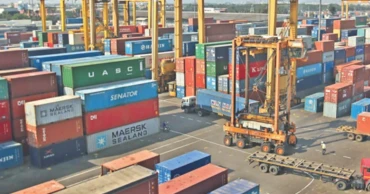
Freight forwarders oppose 20-80% increase in container handling charges
Freight forwarders in Bangladesh have strongly opposed a sharp increase in container handling charges, warning that the move will severely impact the export trade.
The Bangladesh Inland Container Depots Association (BICDA) has reportedly decided to raise charges by 20 percent to 80 percent for export containers, with the new rates set to take effect in September.
The protest was made through a press conference held at the Dhaka Reporters Unity on Saturday, organized by the general members of the Bangladesh Freight Forwarders Association (BAFA).
The conference was presided over by Abrarur Alam, with other key members, including Adnan Mohammad Iqbal, Abul Hasan Shamsul Haq, Mahfuz Raihan, and Anwar Hossain Milan, also in attendance.
Abrarur Alam stated that solutions to existing problems could be found through improving efficiency, such as reducing cargo unloading times, using modern equipment, and addressing labor shortages—not by increasing costs.
He urged BICDA to withdraw the decision, especially in light of the current economic downturn.
He also mentioned that the Bangladesh Garment Manufacturers and Exporters Association (BGMEA) has already expressed solidarity with the freight forwarders by writing a letter to the Chittagong Port Authority, and other exporters also support the demand for a rollback of the new charges.
According to the freight forwarders, the new rates will significantly increase the cost of doing business. The charge for a 20-foot export container will jump from Tk 6,187 to Tk 9,900, while a 40-foot container will cost Tk 13,200 instead of Tk 8,250. The charge for a 45-foot high-cube container will rise from Tk 8,250 to Tk 14,900.
Additionally, costs for almost all other services, including empty container handling, lift-on/lift-off, documentation, and ground rent, will also be increased.
9 months ago
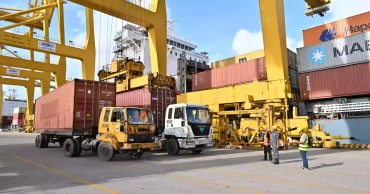
Chittagong Port sets new daily container handling record at NCT
Chittagong Port has set a new record for container handling in a single day at the New Mooring Container Terminal (NCT), according to a press release issued by the Bangladesh Navy on Friday.
The terminal’s operator, Chittagong Dry Dock Limited (CDDL), claimed the record-breaking performance marks a significant milestone in NCT’s operational history.
According to the press release, between 8am on August 28 and 8 am on August 29, a total of 5,019 TEUs (twenty-foot equivalent units) were handled—2,101 TEUs of import containers and 2,918 TEUs of export containers—setting the highest-ever single-day container handling record at the terminal.
CDDL assumed operational control of berths NCT-2, NCT-3, NCT-4, and NCT-5 on July 7, 2025.
Since then, container handling at NCT has increased significantly, aided by what the Navy describes as efficient and disciplined management.
CDDL officers and personnel have been actively involved in all aspects of port operations—from ship points and delivery zones to appraisal points and C&F sheds—leading to improved productivity and quicker turnaround times.
9 months ago

Vegetable prices remain high, most selling above Tk 100 per kg
The prices of vegetables remained high in the capital’s kitchen markets over the past three weeks, with most varieties selling above Tk 100 per kilogramme, leaving consumers frustrated.
During visits to kitchen markets in Motijheel, Shantinagar, Malibagh, Rampura and Badda on Friday, many buyers were seen expressing anger over the spiralling prices.
“Brinjal is still being sold at Tk 200 per kg. How is this even possible? Pointed gourd (Potol) that usually sells at Tk 50 a kg has now doubled in price,” said Shahnima Akter, a buyer at kitchen market in Badda area.
“If the prices remain like this, how will low-income people afford vegetables?” she asked.
Good quality round brinjal was found selling between Tk 180–220 per kg, long brinjal at Tk 140–160, and white brinjal at Tk 100–120 per kg.
Other vegetables also witnessed price hikes. Pointed gourd was selling at Tk 80–100 a kg, teasel gourd at Tk 100, yardlong beans at Tk 100–120, ridge gourd at Tk 80–100, and bitter gourd at Tk 80–120 per kg.
Vegetable prices soar in Dhaka's kitchen markets; no item below Tk 80
Tomato was being sold at Tk 160–180 per kg, cucumber at Tk 80–100, and carrot at Tk 140–180. Bottle gourd was priced between Tk 80–120 per piece, while ash gourd was selling at Tk 80–100.
Papaya was the cheapest among vegetables, though its price rose by Tk 10 in the past week to Tk 40 per kg.
Newly harvested beans entered the market at higher prices, selling at Tk 240–280 per kg.
“Compared to other times, supply of vegetables has dropped by half. This season usually sees lower supply, and on top of that, extra tolls are being charged at different points. That’s why the prices are so high,” alleged Aslam, a vegetable trader in North Badda.
Another trader, Monsur, said supply is likely to increase from mid-September, which may bring prices down slightly. Until then, consumers will have to bear with higher rates.
Leafy greens have also become pricier. A bundle of water spinach, spinach or helencha, previously sold at Tk 10, was now priced at Tk 15–20. Bottle gourd and pumpkin leaves were selling at Tk 50–70 a bundle, up from Tk 30–40 earlier.
Green chili was still selling at high prices — Tk 200–250 per kg.
Onion prices eased slightly, retailing at Tk 65–70 per kg, while garlic was selling between Tk 120–180. Lentil prices, however, increased — with coarse lentils selling at Tk 140 and finer varieties at Tk 160 per kg.
Prices of chicken, beef, mutton, and eggs remained unchanged. Broiler chicken was selling at Tk 170–180 per kg, Sonali chicken at Tk 300–320, and local chicken between Tk 580–650 per kg depending on size.
A dozen brown eggs were selling at Tk 150 and white eggs at Tk 140. Beef was selling at Tk 750–800 per kg, while mutton was selling between Tk 900–1,100.
Prices of chicken, fish rise in Dhaka’s kitchen markets
Fish prices also showed little change. Hilsa remained highly priced, with fish weighing over one kg selling at Tk 2,500–2,800 per kg, one-kg hilsa at Tk 2,300–2,500, hilsa below one kg at Tk 1,600–1,800, and smaller ones at Tk 800–1,200.
Giant freshwater prawns (golda) were selling between Tk 1,200–1,500 per kg, while tiger prawns (bagda) were priced at Tk 800–1,000. Rui was selling at Tk 300–350 per kg, catla at Tk 350–400, kalibaush at Tk 320–380, and tilapia at Tk 220–260.
Market insiders said unless vegetable prices come down, the overall market will not return to stability.
They also warned that persistent high prices of eggs, chicken, and fish may push up food inflation further next month.
9 months ago