local-business

Bangladesh leads world in green garment factories
Bangladesh has significantly solidified its position as a global leader in sustainable apparel manufacturing, with 68 of the world's top 100 eco-friendly ready-made garment (RMG) factories now located in the country.
An impressive nine out of the top 10 highest-rated LEED (Leadership in Energy and Environmental Design) certified factories worldwide are also based in Bangladesh.
This remarkable achievement follows the recent certification of four more Bangladeshi garment factories with internationally recognized 'environmentally friendly certificates’.
The latest certifications bring the total number of LEED-certified garment factories in Bangladesh to 248.
Among these, 105 factories have achieved Platinum certification, and 129 have secured Gold certification.
A particularly significant highlight is Bangladesh's overwhelming presence among the world's elite: 9 of the top 10 highest-rated LEED-certified factories globally are Bangladeshi and the country boasts 68 facilities within the top 100.
2 more RMG factories get LEED certification, total number now 220
The four newly LEED-certified factories are Advance Attire Limited, Fukuria, Manikganj: Achieved Platinum certification with 96 points.
Amanat Shah Fabrics Limited (Woven Composite Unit), Pachdonan and Narsingdi: Awarded Platinum certification with 82 points.
Cotton Field BD Limited (Production Building), Rajnagar, Tongi, Gazipur: Received Platinum certification with 83 points.
KM Apparel Knit Private Limited, Chanpara, Uttarkhan, Dhaka: Earned Gold certification with 62 points.
BGMEA President Mahmud Hasan Khan Babu told UNB that this is a matter of great pride for Bangladesh. “We have now emerged as a global role model in green industrialization,” he added.
On the broader impact of LEED certification, he said, "LEED certification not only signifies environmentally friendly infrastructure but also builds trust among international buyers and makes Bangladesh's garment industry more competitive.”
2 more RMG factories get LEED certification, total number now 220
Analysts suggest that this achievement elevates Bangladesh's ready-made garment sector to an unparalleled height in global standards. It serves as clear evidence that Bangladesh is now one of the world's leading nations in sustainable and environmentally friendly industrial development.
11 months ago

Index gains mark early trading at Dhaka, Chattogram stock markets
Trading at the stock markets in Dhaka and Chattogram began on Monday, the second working day of the week, on a positive note, with key indices showing gains and most listed companies seeing a rise in their share prices.
At the Dhaka Stock Exchange (DSE), the benchmark DSEX index rose by 24 points.
The Shariah-based DSES index increased by 8 points, while the blue-chip DS30 index went up by 7 points.
A majority of the companies participating in trading saw gains.
Out of all the traded securities, 256 companies witnessed an increase in share prices, while 39 declined and 72 remained unchanged.
During the first hour of trading, the DSE recorded transactions worth over Tk 80 crore in shares and units.
Stocks slide sharply in early trading at DSE, CSE
Meanwhile, at the Chittagong Stock Exchange (CSE), the overall index climbed by 34 points.
Of the 53 companies traded on the CSE, prices rose for 26, fell for 15, and remained unchanged for 12.
The first hour of trading on the CSE saw transactions amounting to over Tk 40 lakh in shares and units.
11 months ago

Trade through Benapole resumes after 10-day Eid holiday
Export and import activities between Bangladesh and India through Benapole land port resumed on Sunday morning after a 10-day closure for the Eid-ul-Azha holidays.
Due to the extended holidays from June 5 to 14, a large quantity of goods had piled up at the port.
Around 4,000 handling workers joined duty in the morning to load and unload the goods, said the port’s Deputy Director Mamun Kabir Talukdar.
Imdadul Haque Lata, General Secretary of the Benapole C&F Agents Association, said bustling activity has returned to the port.
Businessmen involved in trade, along with port and customs officials, employees and dock workers, are all busy unloading goods.
Screening tightened at Benapole border to prevent spread of new Covid variant
Ibrahim Ahmed, officer-in-charge of Benapole Checkpost Immigration Police, said immigration services at the land port continued as usual during the holidays.
“In previous years, thousands of people used to travel to India during the Eid holidays, but this year, a different scene was observed,” he added.
11 months ago

Stock markets in Bangladesh reopen with decline after Eid holidays
Trading on Bangladesh’s stock markets resumed on a downward trend on Saturday, following a 10-day closure for Eid-ul-Azha, with both the Dhaka and Chattogram bourses witnessing a fall in key indices and a majority of listed companies seeing price drops.
During the first hour of trading, the benchmark index of the Dhaka Stock Exchange (DSE) fell by 26 points.
The other two indices—the Shariah-based DSES and the blue-chip DS30—also declined by 8 points each.
Right from the opening, most shares on the DSE were in the red.
Out of the traded securities, prices fell for 212 companies, rose for 46, and remained unchanged for 50.
Turnover during the opening hour stood at Tk 30 crore.
Stock markets in Bangladesh end on high note ahead of Eid holidays
Chattogram Stock Exchange (CSE) also opened on a similar note, with the overall index dropping by 44 points.
Out of the 17 companies that participated in early trading on the CSE, share prices rose for 7, declined for 8, and remained unchanged for 2.
CSE’s early turnover stood at approximately Tk 9 lakh in shares and units.
11 months ago

How is economy coping with 10-day Eid holiday?
With government offices, banks, ports, factories, private institutions and retail outlets all shut for the 10-day Eid-ul-Azha holiday, economists and business leaders say the country has entered a state of economic stagnation.
A visit to several bustling wholesale and retail markets in the capital — typically alive with traders and buyers — reveals that normal trade and daily business activities are yet to resume.
Kawran Bazar, one of the largest wholesale hubs in Dhaka, remains stagnant even days after the holiday.
Traders report that supplies have only just started to arrive, but operations are far from normal.
“Supplies, from vegetables to other items, are only now beginning to come in. The city still has fewer people, and many warehouse workers are still on leave, so business is virtually at a standstill,” said Monota Gazi, a wholesale vegetable trader at Kawran Bazar.
Holiday trap in Bangladesh: Businesses struggle as economic activity slows
The same scenario is visible across major trading centres in Old Dhaka, Badda, Jatrabari and Sadarghat.
Transportation of goods is moving slowly, affecting supply chains and overall market management.
“Mangoes, fish, vegetables – all types of goods are being transported sluggishly. It doesn’t seem like things will return to full pace before Sunday,” said Mokbul Hossain, a wholesale trader in Sadarghat.
The situation is similar in foreign trade. Land ports at Banglabandha, Bhomra and Benapole are closed for 10 days, bringing cross-border trade to a halt.
Though the Chattogram port remains open, cargo handling has significantly slowed down.
Port authorities report that most workers are on holiday, causing delays in unloading shipments even though pressure is lower due to factory closures.
Industry owners and business associations argue that such extended Eid holidays are detrimental to the economy.
Following a nine-day closure for Eid-ul-Fitr earlier in the year, they now see Eid-ul-Azha’s extended holiday as another disruption to production.
“Our economy is already under pressure. We had nine days off during Eid-ul-Fitr, and now 10 days for Eid-ul-Azha.
Every sector of the economy is closed. This is nothing but madness. Instead of shutting everything down for 10 days, one day off with normal operations resuming the next day would have made more sense,” said Taskeen Ahmed, President of the Dhaka Chamber of Commerce and Industry (DCCI).
He added, “It’s not as though people return from a 10-day holiday and jump into work full of energy. It will take another week to shake off the festive mood. If businesses operate only 20 days in a month, the owners will suffer and so will the workers.”
Commenting on the holiday length, Towfiqul Islam Khan, Senior Research Fellow at the Centre for Policy Dialogue (CPD), said, “A 10-day holiday is a big decision, and it doesn’t seem like the government consulted stakeholders beforehand. Without consultation, such decisions will have adverse impacts. Naturally, there is no way to avoid the partial economic fallout of such a long closure.”
He suggested that factories should at least follow the labour laws while deciding on closures.
Highlighting the issue from a global business perspective, Mohammad Helal Uddin, Executive Vice Chairman of the Microcredit Regulatory Authority, said, “Even during a long holiday, it was vital to keep some economic wings operational. For example, all banks are closed now. If banks or specific departments involved in import-export are shut for 10 days, trade will suffer. Select specialised banks could have remained open.”
He pointed out that although people enjoyed travelling during the long holiday, there was no clear roadmap for keeping essential economic activities running with limited manpower.
He urged authorities to adopt a planned approach to holiday management in future to avoid unnecessary economic losses.
11 months ago

Eid Holidays: Banks fail to implement central bank directive to keep adequate cash at ATMs
Banks have failed to follow Bangladesh Bank’s instructions to keep ATM booths in service during the Eid holidays.
There is a 10-day holiday from June 5 to June 14 on the occasion of Eid-ul-Azha. Banks are also closed during this holiday.
As a result, ATM booths have become the only hope for withdrawing cash. But during this long Eid holiday, the booths have not provided the desired service. Customers are facing hardships.
Most of the ATMs in Dhaka city are now out of service or out of operation. The same is true of ATMs located in different districts.
The central bank announced in a circular on May 29 that all scheduled banks in the country will have to provide sufficient money to their ATM booths to allow customers to make smooth financial transactions during the Eid holiday.
Bangladesh Bank instructs commercial banks every year before Eid to keep sufficient money in the booths and have a system for refilling around the clock. But in reality, this is not reflected.
Several bank officials told UNB that ATM booths are usually operated in two ways – one is a booth attached to the bank branch, and the other is a separate or independent booth. The booths adjacent to the branch are operated by that branch.
Since the banks were closed last Thursday during the Eid holiday, new money could not be deposited in these booths because all the branch officials were on leave. However, some banks have taken special initiatives and have kept some officials in charge only for filling money in ATMs.
As a result, although some booths had money, most were empty.
An official of Bangladesh Bank said, “We have already given instructions so that sufficient money is kept in each booth.”
However, there are complaints at the field level that many banks are not following those instructions.
11 months ago
Rawhide loans fall short; only Tk 125cr disbursed of Tk 232cr target
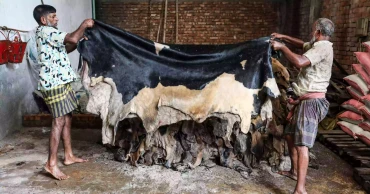
Bangladesh Bank's initiative to inject Tk 232 crore into the leather sector for procuring rawhide during Eid-ul-Azha has fallen significantly short, with only Tk 125 crore disbursed to businesses, according to industry insiders.
Bankers cited a lack of interest among leather traders in taking out new loans as a reason for the shortfall, while the industry insiders highlighted a sharp rise in loan defaults, which has made banks more reluctant to extend credit to the sector.
As a result, tannery owners and seasonal leather suppliers have been unable to purchase sufficient quantities of rawhide during the peak Eid-ul-Azha season.
Stakeholders are now calling for easier loan terms and relaxed documentation requirements ahead of what is typically the country’s largest rawhide collection period.
Qurbani Rawhides: Even price revisions fail to ease market woes
Although nine banks initially approved Tk 232 crore in loans for rawhide procurement this year, only Tk 125 crore was disbursed, leading to a funding shortfall that entrepreneurs say has hampered both the collection and processing of rawhide.
According to sources, the Tk 125 crore disbursed this Eid season marked a steep decline from previous years -- down from Tk 270 crore in 2024, Tk 259 crore in 2023, Tk 443 crore in 2022, Tk 735 crore in 2021 and Tk 1,800 crore in 2019.
Md Shaheen Ahmed, Chairman of the Bangladesh Tanners Association (BTA), told UNB, “Since leather is a perishable product, it needs to be collected and stored quickly. Cash is needed to buy leather collected from various warehouses across the country.
“For this, the warehouses collect leather from part-time traders during the Eid season. But even though tannery owners do business with their own capital throughout the year, special financing is needed for additional cash during Qurbani. This time, the banks had a demand of Tk 300–350 crore. They gave only Tk 125 crore, which is not enough,” he added.
He said with adequate cash loan support, problems in the leather sector could have been mitigated. “The poor and needy would have received cash from the leather. Foreign exchange income would have increased by exporting this,” he pointed out.
Bangladesh Bank Executive Director and Spokesperson Arif Hossain Khan said the target for lending to the leather sector this time was Tk 232 crore. “It is not possible to say before the bank opens how much loan will be waived in the end,” he said.
He also acknowledged that a segment of traders fail to repay borrowed funds, which has led to a significant rise in loan defaults in the sector. “If they ask for loans and don't repay them, who will give them new loans? So they have to take loans with the mindset of repaying them. Otherwise, the crisis will not end,” he said.
7.74 Lakh Qurbani rawhides preserved in Chattogram Division
According to Bangladesh Bank’s latest report, the outstanding loan balance in the leather industry stood at Tk 12,628 crore as of December 2024. Of this, Tk 4,844 crore has defaulted, accounting for 38 percent of total loans in the sector.
The Bangladesh Tanners Association (BTA) represents approximately 800 members, including tannery owners and commercial exporters. There are 1,866 large and medium-sized tanneries across the country.
Besides, many small tanneries collect leather from seasonal entrepreneurs during Eid-ul-Azha.
Tanner Anwar Hossain said while most rawhide is collected during Eid-ul-Azha, inadequate management leads to the wastage of roughly 30 percent each year.
The leather sector not only contributes to national growth and employment but also earned approximately $1.13 billion in foreign exchange during the last fiscal year, underscoring the need for focused attention and support.
Amjad Ali, a seasonal leather supplier, said, “Banks only give loans to tannery owners and exporters. They do not give loans to others involved in the raw leather business. If money had been received according to demand, the spoilage of leather could have been prevented.”
11 months ago

Holiday trap in Bangladesh: Businesses struggle as economic activity slows
Businesses in Bangladesh have fallen into a holiday trap, with economic activity slowing due to supply chain disruptions and bank closures during the extended 10-day Eid-ul-Azha holidays.
Export-import operations through land ports, delivery of goods to retailers and the supply of seasonal fruits -- such as mangoes, jackfruits and litchis -- have all been disrupted during this holiday period.
Although the mango season is now in full swing, the market in Kansat, Shibganj upazila of Chapainawabganj, known as the country’s largest mango hub, has been struggling with sluggish sales amid the long break.
Since the beginning of peak harvesting, the mango market has remained paralysed by the holiday closure. As a result, prices have fallen by Tk200 to Tk400 per maund (40 kg) and in some cases, even more.
Trading underway with index making gains in Bangladesh bourses
On Wednesday (June 11), Aroz Uddin, a mango farmer from Shibganj, told UNB over the phone that he had been at the market since 9:45 am with 9.5 maunds of mangoes. Standing under the scorching sun, he managed to sell them at around 1:45 pm for Tk1,700 per maund.
He said he had sold the same quality mangoes for Tk2,300 per maund before the Eid break.
Ramzan Ali, a mango trader from Chapainawabganj, said the price of mangoes has dropped by Tk300 to Tk500 per maund after Eid, with courier services shut during the holidays.
Online sellers have also been absent, leading to further declines in market prices. While traders had anticipated lower supply during the holidays, this did not happen at all.
Farmers brought their mangoes to market regardless of the price and sold them before heading home, said traders in Chapainawabganj.
Mokhlesur Rahman, an online mango seller in Chapainawabganj, said, "Online mango sales are increasing day by day. So far this season, I’ve sold 80 maunds of mangoes. Hundreds of sellers like me are working. Since 4 June, most online sellers have stopped or reduced sales. This seems to have affected the mango market severely during the long Eid holidays, which coincided with the main mango harvesting season."
Trade through Benapole to remain suspended for 10 days
The trading of other seasonal fruits, including litchis and jackfruits, has also been affected by the prolonged holiday.
Rubayet Ahmed, a garment trader from the Ashulia area, told UNB that he had prepared 200,000 pieces of readymade garments before the Eid break but was unable to make the shipment due to a lack of transport and incomplete banking documentation.
The extended holiday has affected export businesses, as many sectors are involved in processing export orders.
He emphasised the need for an alternative system to ensure continuous export-import activities.
Rubayet also mentioned that an import order for raw materials from China could not be processed because of the bank holidays.
Bangladesh is currently experiencing an unprecedented 10-day Eid-ul-Azha holiday, a significantly longer break than usual.
While many expected a complete economic standstill, a closer look reveals a complex blend of challenges and shifting business patterns.
The broader effects include:
The extended break -- spanning official holidays and weekends--has triggered a mass exodus from cities like Dhaka, transforming consumer behaviour, disrupting business operations, and shaping a distinctive economic landscape.
Mass Migration: A large movement of people from Dhaka and other cities to rural areas, with bus terminals, railway stations and ferry terminals teeming with travellers.
Rural Boom: The migration has boosted rural economies. Local small businesses and informal sectors have seen a surge in activity, driven by increased spending on essentials, local crafts and services in villages.
Urban Lull: Business activity in major cities has slowed. Delivery services, restaurants, hospitals, and private offices have operated at reduced capacity, leading to a lull in urban commerce during the Eid holidays.
11 months ago
7.74 Lakh Qurbani rawhides preserved in Chattogram Division
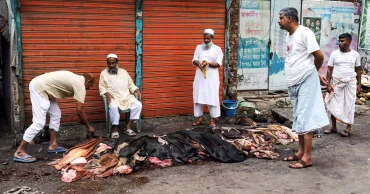
A total of 7,74,756 rawhides of sacrificial animals have been preserved with salt in 11 districts of Chattogram division this time.
The hides, collected from madrasas, orphanages and Lillah boarding houses across the division, include 7,74,756 cow and buffalo hides and 74,302 goat hides, according to information sent from Chattogram divisional administration to the control room of the Ministry of Commerce.
Among the districts, Chattogram preserved 2,72,100 hides, Cox’s Bazar 37,889, Noakhali 1,13,831, Chandpur 23,065, Brahmanbaria 99,781, Khagrachhari 5,859, Lakshmipur 11,837, Feni 13,509, Rangamati 2,848, Bandarban 2,292 and Cumilla 1,91,775.
Rawhides being sold at govt-set prices: Commerce Adviser
The rawhides were preserved under the supervision of district and upazila administrations using salt provided free of cost by the government.
The government supplied 30,000 metric tonnes of salt to orphanages, mosques and madrasas across the country to ensure proper preservation of hides and uphold the rights of orphans in the Qurbani season.
This preservation process is expected to keep the rawhides usable for two to three months locally.
11 months ago

Niaz wins 'Royal Enfield' in bKash referral campaign
Niaz Ahmed from Sylhet has won a Royal Enfield motorcycle by referring the bKash app to the highest number of people during a recent referral campaign.
The award was presented to Niaz at the Royal Enfield showroom in the capital's Tejgaon, recently, bksah said in a media statement on Saturday.
bKash offers refrigerator, TV for top remittance receivers this Eid
In addition to the grand prize, other top referrers received various attractive prizes. Moreover, for each successful referral during the campaign, referrers earned a BDT 50 bonus.
The campaign ran from November 15, 2024, to December 29, 2024, and rewarded the highest referrers. Participants referred non-bKash app users through their unique referral links within the app.
The bKash app continues to enhance its platform by introducing new and innovative services. This campaign aimed to motivate customers to explore and familiarize themselves with these new features through the app.
Up to Tk 6,000 discount and cashback on Eid shopping with bKash payment
Sharing his thoughts, Niaz said, “I often take part in bKash’s campaigns. My main goal was to encourage my near and dear ones to start using the bKash app for their financial needs, and I’m thrilled to have won the Royal Enfield as a result. It’s a wonderful feeling—thank you, bKash!”
11 months ago