local-business
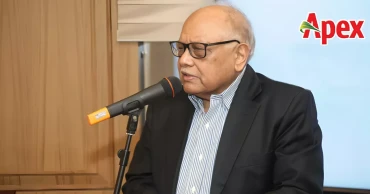
Golam Moin Uddin appointed as new chairman of Apex Footwear
Golam Mainuddin, the former independent director of Apex Footwear Limited, has been elected as the chairperson of the company's board of directors.
He was elected by a single majority vote in the 282nd board meeting of the company on April 23, according to a press release.
Traders seek easier VAT management, improved law & order
“His valuable advice and policy steps have played an important role in the management of Apex Footwear Limited. With his new responsibility as chairman, a new era is beginning for the company in the coming days,” said the release.
Mainuddin is widely appreciated for his role as chairman of British American Tobacco Bangladesh. He has also served in leadership positions in several companies.
1 year ago

Traders seek easier VAT management, improved law & order
Small traders, struggling with high interest rates, weak law enforcement and complex regulations amid global challenges, on Saturday called for easier VAT management and improved law and order to revive trade and investment.
The small traders of Dhanmondi, Mohammadpur, Shyamoli and Adabor areas expressed these concerns during an interactive view-exchanging meeting organised by the Dhaka Chamber of Commerce & Industry (DCCI).
The meeting, held at Tokyo Square Convention Centre, Mohammadpur, focused on issues such as the recent trade and investment scenario, law and order, income tax and VAT matters, high inflation, elevated interest rates, traffic congestion and related challenges.
The discussion was held with DCCI President Taskeen Ahmed in the chair.
In his opening remarks, the DCCI President said the current global economic conditions, compounded by domestic business challenges, the complexity of the tax and VAT system, crises in foreign exchange management, delays in export-import processes, and an overall weak law and order situation are adversely impacting the economy, particularly affecting SME entrepreneurs.
"In the current circumstances, there is no alternative to building a safe, stable, and predictable business environment," he said.
FBCCI and Bhutan delegation explore enhanced agricultural trade cooperation
Taskeen mentioned that the Dhaka Chamber has already proposed, for the upcoming budget, the complete automation of revenue management, rationalisation of tax rates, the introduction of a single-digit VAT rate, fixing a 1% VAT for the informal sector, and the development of a VAT return app — all aimed at improving the business environment and boosting government revenue collection.
He highlighted that easy access to credit, enhanced mobility through automation of export-import activities, and timely policy support from the government are crucial to maintaining the momentum of industrialisation.
The DCCI President reiterated that businessmen are willing to pay taxes and VAT, but they do not want harassment.
Emphasising the importance of the rule of law, he said it is vital to ensure effective enforcement to maintain active business operations at every level.
Mohammad Mostafizur Rahman, Additional Director (SME and Special Programmes Department) of Bangladesh Bank, said the central bank recently issued a master circular on 17 March 2025 to increase credit flow to the SME sector.
To facilitate entrepreneurs, he informed that the term loan period has been extended from 5 to 7 years, recognising that investors require at least two years to establish a factory.
He also shared that under various schemes, Bangladesh Bank has created a Tk 25,000 crore fund dedicated to SME entrepreneurs, offering loans at a maximum interest rate of 7%, with an even lower rate of 5% for women entrepreneurs and reduced rates for agro-entrepreneurs.
Besides, the Cash Reserve Ratio (CRR) has recently been reduced from 5.5% to 3% to increase credit flow to the private sector.
Md Milon Sheikh, Additional Commissioner of Customs, Excise and VAT Commissionerate, Dhaka (West), said about 80% of the government's total revenue target has been achieved through the National Board of Revenue (NBR), describing it as a very challenging task.
He noted that VAT collection growth in Mohammadpur and surrounding areas has increased by around 15–20% this year, and 98% of small businesses in the area have been brought under VAT registration within the last three months.
Regarding the proposal for a mobile app to facilitate online VAT registration, he welcomed the idea, saying the government would seriously consider it as it would reduce human contact and minimise harassment.
He urged SME entrepreneurs not to overlook VAT matters but rather to familiarise themselves with VAT laws for their own benefit, acknowledging that it remains a complex, mathematics-driven subject.
Md Alamgir Kabir, Additional Deputy Commissioner of Police (Tejgaon Zone), Dhaka Metropolitan Police (DMP), said that the law and order situation in the area has improved considerably over the past two months, with a notable decrease in the number of criminal cases.
He said on 27 March, around 63 extortionists were arrested during police block raids, and more recently, 71 miscreants were apprehended in a single day in the Mohammadpur area alone.
Besides, he mentioned, around 63 patrol teams are actively working across this large area under a robust policing strategy to ensure public safety.
He assured that police are ready to extend all possible support to small traders during the upcoming Eid-ul-Adha celebrations.
Tania Sultana, Additional Deputy Commissioner of Police (Traffic, Tejgaon Zone), stressed the need for increasing public awareness and adherence to traffic rules to reduce congestion, emphasising that traffic jams are not created by the police.
1 year ago

FBCCI and Bhutan delegation explore enhanced agricultural trade cooperation
Bangladesh and Bhutan are seeking to strengthen bilateral trade ties, with a particular focus on agricultural products such as fruits, vegetables and spices.
Business leaders from both nations emphasised the importance of expanding mutual cooperation to unlock the trade potential between the two South Asian countries.
The discussions were held at a meeting organised by the Federation of Bangladesh Chambers of Commerce and Industry (FBCCI) at its headquarters in Motijheel on Wednesday morning.
The meeting brought together a visiting Bhutanese delegation and Bangladeshi business leaders to explore new avenues for collaboration.
Leading the Bhutanese delegation was Dawa Dakpa, Regional Director of the Regional Agricultural Marketing and Cooperative Office (RAMCO).
Also in attendance were Md Zafar Iqbal ndc, Head of FBCCI’s International Affairs Wing, and Dawa Tshering, Minister Counsellor (Commerce) at the Bhutanese Embassy in Dhaka.
Gold price slashed after three consecutive hikes since Saturday: Bajus
The participants highlighted the need to simplify import-export procedures to harness the full potential of the market.
They also underlined the importance of improving supply chain mechanisms, developing supporting infrastructure, and increasing port capacities to facilitate more efficient trade flows.
Among the Bangladeshi attendees were FBCCI’s former directors Haji Md Enayetullah and Dr Ferdousi Begum, along with AM Amirul Islam Bhuiyan, President of the Bangladesh Agro Feed Ingredients Importers and Traders Association, Md Zakir Hossain, and Sheikh Al Mamun.
Stakeholders on both sides agreed that enhanced cooperation in the agricultural sector could pave the way for a mutually beneficial partnership, with emphasis on exploring untapped areas and capitalising on each country’s unique strengths and resources.
1 year ago

UNIDO, Haison Intl host B2B event in Tokyo to enhance Bangladesh-Japan bilateral economic ties
United Nations Industrial Development Organization (UNIDO) Tokyo, in collaboration with Haison International, an investment advisory firm, organised a business-to-business (B2B) event at the United Nations Headquarters Hall in Tokyo on Tuesday.
The event aimed to foster bilateral trade and investment between Bangladesh and Japan.
The programme was also supported by the Embassy of Bangladesh in Japan and the Japan External Trade Organization (JETRO).
A total of 14 Bangladeshi companies from diverse sectors—including power, engineering, construction, logistics, shipping, Special Economic Zone (SEZ) management, ICT parks, real estate & hospitality, healthcare, machinery, automobiles and consultancy services participated in the programme. The Bangladeshi companies had met with over 80 Japanese companies to explore the potential ventures for collaboration.
A key highlight of the event was a seminar titled “Doing Business in Bangladesh,” which focused on investment opportunities and the evolving business climate in the country.
Ariful Hoque, Director General of the Bangladesh Investment Development Authority (BIDA), delivered a comprehensive presentation on Bangladesh’s investment landscape.
Yuji Ando, JETRO Representative in Bangladesh, also spoke on the advantages and practicalities of doing business in Bangladesh from a Japanese perspective.
M Siraj Uddin Miah, Principal Secretary to the Chief Advisor's Office and Mr. Syed Nasir Ershad, Economic Minister of Bangladesh to Japan, were present at the event.
The Principal Secretary said "UNIDO Tokyo has remained a consistent partner in our development journey, supporting Bangladesh through various programs and initiatives. HAISON’s annual program, ‘Investor B2B Japan,’ is one such example of this fruitful collaboration."
Both dignitaries emphasised the Government of Bangladesh's strong commitment to promoting foreign investment and deepening economic ties with Japan. They highlighted the enduring friendship and growing economic partnership between the two nations.
The day-long programme served as a significant platform for strengthening Bangladesh-Japan economic relations and showcased Bangladesh as a competitive destination for Japanese investments.
1 year ago

Gold becomes pricier in Bangladesh than ever
Gold has become even more expensive in Bangladesh, as the Bangladesh Jewellers’ Association (Bajus) has increased its prices for the 18th time this year.
On Monday, Bajus set the price of 22-carat gold at Tk172,545 per bhori (11.664 grams), effective from Tuesday.
Just a day earlier, on Sunday, the price of 22-carat gold stood at Tk167,833 per bhori, following a decision made on Saturday.
The latest hike marks an increase of Tk4,712 per bhori.
So far this year, Bajus has raised gold prices 18 times while reducing them on six occasions.
Despite gold prices in Bangladesh already being higher than those on the global market, Bajus has continued to justify the hikes, citing a global upward trend. But, the association’s pricing often outpaces international forecasts.
Bajus also reminded traders that the selling price of gold and silver must include 5 percent VAT, as per government regulations, along with a 6 percent minimum wage for workers, as set by the association.
This means that a 22-carat gold ornament weighing one bhori would now cost around Tk191,545 – the highest price ever recorded in the country.
The rising cost has led many consumers, particularly from middle-income households, to turn to alternative metals as gold becomes increasingly unaffordable.
According to the revised pricing effective from Tuesday:
Hallmarked 22-carat gold will be sold at Tk172,545 per bhori21-carat at Tk164,695 per bhori18-carat at Tk141,169 per bhori
Traditional method gold at Tk116,779 per bhori
Previously, on Monday:
22-carat gold was sold at Tk167,833 per bhori21-carat at Tk160,205 per bhori18-carat at Tk137,309 per bhoriTraditional method gold at Tk113,491 per bhoriMeanwhile, the price of silver remains unchanged.
1 year ago
Bangladesh Bank urges best practices in LC payments
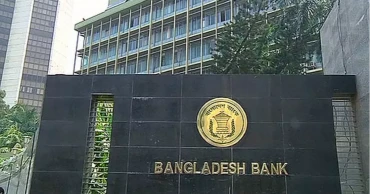
Bangladesh Bank has instructed all scheduled banks to adhere to best practices in processing payments against Letters of Credit (LCs).
In a recent notification, the central bank also allowed banks to consider defective import bills as eligible for payment, provided importers can present logical justification for accepting the errors.
It, however, emphasised that banks must ensure the acceptance of such bills does not lead to any change in the nature of the imported goods.
The directive comes amid reports that several local banks are declining to settle import bills with foreign banks, citing defects in documentation. This trend has been affecting the commercial relations between Bangladeshi and foreign banks, the notification noted.
Expatriates sent $1.78 billion in remittances in first 19 days of April
To address this, Bangladesh Bank has urged domestic banks to align their practices with international standards in settling import payments.
The central bank further instructed banks to exercise caution when issuing delivery orders against import bills received through importers.
Previously, banks were allowed to make payments against defective bills or bills received directly by importers, but only after submission of the bill of entry following customs clearance.
Business leaders have long complained that despite receiving defective import bills, banks often refused payment, forcing foreign suppliers to wait until the goods were released, exposing them to financial risks.
The new directive is expected to reduce confirmation charges and interest rates on import loans, ultimately helping to lower overall import costs.
1 year ago

Standard Chartered Bangladesh launches Freelancer Account
Standard Chartered Bangladesh has launched the Freelancer Account, a tailored banking solution designed to meet the unique needs of the country’s vibrant freelance community.
The Freelancer Account makes it easier for freelancers to receive overseas payments swiftly and securely.
It offers end to end digital account opening process from anywhere — whether working from a home office, university dorm, or startup hub.
This account offers zero account maintenance fees, free inward remittance, foreign currency remittance certificate, a complimentary international debit card along with processing fee and annual fee waiver on personal loan and selected credit card, said a press release.
It provides freelancers with a simple, cost-effective, and globally accessible banking solution. Account holders can submit Form C via Standard Chartered’s Internet Banking app, enabling faster crediting of remittances.
Bangladesh’s gold price exceeds global market prediction
Lutful Habib, Head of Wealth and Retail Banking, Standard Chartered Bangladesh, said that Freelancer Account designed specifically for the bold and brave Freelancers of our country.
“This is more than a bank account, it is an entire banking experience built so that freelancers can easily receive payments from global platforms like Upwork, Fiverr, and more.”
Dr. Tanjiba Rahman, Chairman, Bangladesh Freelancers Development Society (BFDS), said that Freelancing is a powerful pathway to transform the unemployed into skilled contributors to the knowledge-based digital economy.
“We are delighted that Standard Chartered has introduced a user-friendly account that meets the financial needs of freelancers and supports the flow of foreign remittances into Bangladeshi.”
1 year ago

Bangladesh’s gold price exceeds global market prediction
The latest hike in gold prices in Bangladesh has pushed the precious metal’s value beyond levels anticipated from global market trends.
On Sunday, high-quality 22-carat gold was being sold at Tk 167,833 per bhori (11.664 grams), marking the highest price ever recorded in the country.
This follows the most recent price revision, which came into effect today.
Meanwhile, Goldman Sachs has forecast that the global price of gold could reach USD 3,700 per ounce by the end of 2025. One ounce equals 31.1035 grams.
The Bangladesh Jewellers' Association (Bajus) has fixed the 22-carat gold price at Tk 14,389 per gram. Accordingly, the local price of one ounce of gold stands at Tk 447,548.
But, the current spot price for gold in the United States is approximately USD 3,328.30 per ounce, equivalent to around Tk 402,724.
Gold prices rising globally due to central bank policies
This means gold in Bangladesh is being sold at Tk 44,824 higher than the international market rate.
Bajus had earlier raised the price of gold by Tk 3,033 per bhori last Wednesday.
On Saturday, the association announced a further increase of Tk 2,624 per bhori, effective from Sunday.
As per the new pricing, from Sunday, hallmarked 22-carat gold is being sold at Tk 167,833 per bhori, 21-carat at Tk 160,205 per bhori, and 18-carat at Tk 137,309 per bhori. Besides, the price of traditional method gold has risen to Tk 113,491 per bhori.
Up until Saturday, the prices stood at Tk 165,209 per bhori for 22-carat hallmarked gold, Tk 157,697 for 21-carat, Tk 135,174 for 18-carat, and Tk 111,660 per bhori for traditional gold.
Gold prices reach record high in Bangladesh ahead of Eid
In a press release, Bajus stated that the selling prices of gold and silver must include a 5 percent VAT as mandated by the government, along with a 6 percent minimum wage set by the association.
The wage component may vary based on the jewellery’s design and craftsmanship.
1 year ago

Weekly Market Review: All indices, turnover, share prices drop sharply
The stock markets of Dhaka and Chattogram suffered a significant setback this past week, with all major indicators, transaction volumes and the majority of share prices experiencing considerable declines.
A review of the Dhaka Stock Exchange (DSE) weekly report reveals that the benchmark index, DSEX, dropped by 108 points over the four trading sessions.
Starting the week at 5,205 points, the index ended at 5,097, marking a fall of over 2 per cent.
Other indices also saw marked drops.
The Shariah-based DSES index shed 29 points, losing nearly 2.5 per cent of its value. Even the blue-chip DS30 index, which tracks performance of well-established companies, declined by 52 points or 2.72 per cent, leaving investors in high-performing stocks in a grim situation.
The SME index also mirrored the negative trend, falling by 4.15 per cent. The DSMEX lost 40 points over the week, underlining the overall distress in the capital market.
Turnover, too, took a hit. The average daily turnover dropped to Tk 399 crore from the previous week’s Tk 487 crore—an 18.11 per cent fall. Investor participation waned, leading to a sharp reduction in share transfers. From Tk 98 crore in the second week of April, the total value of traded shares and units fell to Tk 57 crore in the third week.
Only 77 companies recorded gains during the week, while 299 lost value and 20 remained unchanged.
Only two sectors—corporate bonds and general insurance—posted positive returns. All other sectors continued to struggle, with mutual funds and ceramics seeing more than 6 per cent drop in returns.
Despite a marginal overall gain in the banking sector, individual bank stocks performed poorly. Of the 36 banks involved in trading, 24 witnessed price drops.
Mixed trends in stock markets: DSE gains, CSE declines in early trading
The non-bank financial institutions sector performed dismally, with a 41 per cent drop in share prices and 31 per cent fall in turnover.
Out of 23 listed financial institutions, only one recorded a price increase, 17 declined, and 5 remained unchanged.
While the general insurance sector saw an 85 per cent gain in share prices, life insurance faced a setback with over 50 per cent decline. The telecom and IT sectors declined by 32 per cent and 38 per cent respectively. The engineering sector also underperformed, losing 16 per cent in value.
In the block market, the top sellers were Marico, Beach Hatchery, and ACI Ltd. Marico offloaded shares worth Tk 25.2 crore, Beach Hatchery Tk 25.1 crore, and ACI Tk 20.68 crore.
Among the week's top-performing shares was Desh General Insurance Company Ltd. A B-category company, it posted a return of over 24 per cent in just four trading sessions—its share price climbing from Tk 25 to Tk 31.
In contrast, Bangladesh Finance was the worst performer, losing over 15 per cent. The A-category company’s share dropped from Tk 12 to Tk 10.
Chattogram Market Equally Strained
The Chattogram Stock Exchange (CSE) experienced a similar downturn. Its benchmark index fell by 250 points over the week. Excluding Z-category (non-dividend paying) companies, the selective CSCX index declined by 149 points.
DSE announces new trading hours for Ramadan
The CSE-50 benchmark index slipped by 17 points, while the Shariah-based CSI index dropped 21 points. The SME index fell by 4.57 per cent.
Among 301 companies that traded throughout the week in CSE, prices rose for only 65, fell for 218, and remained unchanged for 18.
Anwar Galvanizing Ltd topped the weekly gainers’ list in CSE, with its share price increasing by Tk 28—from Tk 68 to Tk 87. Meanwhile, Shamarita Hospital saw the steepest fall, losing Tk 20 per share. Orion Infusion recorded the highest turnover in the CSE with Tk 7.6 crore in total trades.
Investor Confidence Falters
Ongoing price falls have left investors demoralised. Many are closing their Beneficiary Owner (BO) accounts and exiting the market altogether.
According to Central Depository Bangladesh Ltd (CDBL), the number of BO accounts with zero balance rose from 3,69,210 before the Eid holidays to 3,73,367 by the end of the latest trading session—a net exit of 4,157 investors in just a few days.
Tareq Hossain, a retail investor, said, “No visible reforms have taken place in the market so far. There’s no progress in penalising or trying those involved in manipulation. Investors are gradually losing interest.”
Another investor, Habibur Rahman, added, “None of our demands have been met. Despite repeated discussions, the buy-back policy hasn’t been implemented. Those who lost everything through margin loans have also been ignored.”
Faridur Rahman pointed out the cascading effect of margin loans: “When junk stocks fall, investors are forced to sell off quality stocks to cover their losses—dragging even good stocks down.”
Where Are the IPOs?
Another major concern is the lack of quality IPOs. Several reputed companies were expected to go public this year, but those plans have not materialised.
Weekly Review: DSE plunges as investor confidence wanes; key sectors hit hard
A senior official from the Bangladesh Securities and Exchange Commission (BSEC), requesting anonymity, confirmed that no new IPOs are expected this year. “Good companies are not confident enough to enter the market,” he said.
He explained that BSEC is in the process of overhauling IPO listing rules. “The revised IPO guidelines may not be gazetted until September. After that, it may take another 5–6 months for new listings, meaning we may not see fresh IPOs before March or April 2026.”
In response to queries about the current commission's inability to attract strong listings, the official noted that many previously well-performing firms have undergone management changes due to political shifts. Moreover, higher interest rates on bank loans have cut into company profits, discouraging them from seeking public capital.
He concluded that substantial tax incentives are needed to attract large corporations to the market. “Offering meaningful benefits could encourage top firms to list, which would, in turn, revitalise the stock market.”
1 year ago

Yarn importers with prior LCs to be allowed to use land ports: NBR
Importers who opened or amended letters of credit (LCs) for yarn on or before April 13 will be allowed to bring in cotton through land ports, the National Board of Revenue (NBR) said on Thursday.
The clarification came amid confusion following the recent government ban on yarn imports through land ports.
On April 13, the NBR suspended the import of yarn including cotton yarn through major land ports such as Benapole, Bhomra, Sonamasjid, Banglabandha, and Burimari.
The move followed a request from the Bangladesh Textile Mills Association (BTMA) and recommendations from the Commerce Ministry.
The decision aims to support local yarn producers and curb under-invoicing of imported yarn.
The ban applies to all importers including 100% export-oriented industries and took effect immediately.
1 year ago