world-business

Asian stocks slide, oil surges as Iran war pushes US fuel prices past $4
Asian stock markets fell while oil prices surged on Tuesday as the ongoing war involving Iran continued to rattle global markets and drive up energy costs.
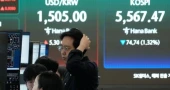
South Korea’s benchmark Kospi index dropped sharply by 3.82 percent, losing more than 200 points to stand at 5,075.92 around 01:00 GMT. Japan’s Nikkei 225 also declined 2.24 percent in early trading before recovering slightly, though it remained down 0.73 percent, or 377 points, at 51,507.99.
China’s FTSE China A50 Index edged lower as well, slipping between five and 10 points, or less than 0.07 percent, to hover around 14,570.
Meanwhile, oil prices climbed amid supply concerns linked to the conflict. The US benchmark West Texas Intermediate rose 1.08 percent to $103.99 per barrel, crossing the $100 mark for the first time since the war began. International benchmark Brent Crude jumped 2.23 percent to reach $109.78 per barrel.
Rising crude prices have translated into higher fuel costs in the United States. The average retail gasoline price has exceeded $4 per gallon for the first time in more than three years, according to data cited by Reuters from fuel tracking service GasBuddy.
Since the US-Israel war involving Iran began on February 28, gasoline prices across the US have surged by about $1.06 per gallon, marking a 36 percent increase. The last time prices reached the $4 threshold was in August 2022, following the outbreak of the Russian invasion of Ukraine.
During his 2022 campaign to return to the White House, Donald Trump had pledged to cut energy costs and boost domestic oil and gas production, a promise now facing renewed scrutiny amid the latest price spike.
#From Al Jazeera
1 day ago

Foreign loan disbursements, repayments almost same during first 8 months of fiscal: ERD
Foreign loan disbursements and repayments have remained almost equal during the first eight months of the current 2025-26 fiscal year, highlighting mounting pressure on external debt servicing, according to latest data from the Economic Relations Division (ERD).
Between July and February, the country received foreign loans and grants worth about US$3.05 billion, while repaying nearly US$2.9 billion to various lenders, the ERD reported in its updated statement released on Monday.
Of the repayments, around US$1.95 billion was paid as principal and US$950 million as interest, the report said.
Officials noted that the rising repayment burden reflects the growing maturity of previously received loans, as Bangladesh continues to service larger amounts of external debt.
In the last fiscal year, the country repaid more than US$4 billion in foreign loans.
Meanwhile, commitments for foreign assistance during the July-February period stood at around US$2.43 billion, slightly higher than the US$2.35 billion recorded in the same period of the previous fiscal year.
Disbursements came from multiple development partners, with Russia emerging as the largest provider, disbursing about US$755.1 million.
The World Bank followed with US$636 million, while the Asian Development Bank (ADB) provided US$566.1 million.
China and India each disbursed around US$250 million and US$257.7 million respectively, while Japan contributed nearly US$190 million during the period.
2 days ago
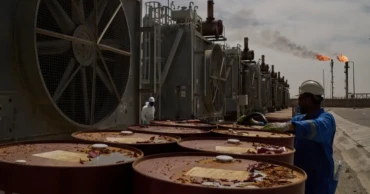
Oil tops $116 as Iran warns of US invasion
Oil prices surged to their highest level in nearly two weeks on Monday amid escalating tensions in the US-Israel war on Iran.
Brent crude, the global benchmark, jumped more than 3 percent to exceed $116 a barrel, reaching its highest level since March 19, when it briefly touched $119.
The rise followed Iran’s warning that it is prepared for a US ground invasion. The speaker of Iran’s parliament said Tehran was awaiting US troops to “set them on fire” and “punish” their regional allies.
The warning came as the conflict intensified over the weekend. Iranian-backed Houthi forces launched missiles at Israel for the first time in the war, while Israel expanded its invasion of southern Lebanon.
Asian stock markets fell sharply in morning trading, with Japan’s Nikkei 225 and South Korea’s KOSPI both down more than 4 percent as of 1:30 GMT.
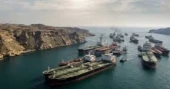
Iran’s effective closure of the Strait of Hormuz in response to US-Israeli attacks has disrupted roughly one-fifth of global oil and liquified natural gas (LNG) supplies, sparking the world’s largest energy crisis in decades.
Since the war began, oil prices have climbed nearly 60 percent, pushing fuel costs higher worldwide and prompting many countries to adopt emergency measures to conserve energy. Analysts warn that oil prices are likely to keep rising unless maritime traffic in the strait returns to normal levels.
US President Donald Trump has threatened to “obliterate” Iran’s energy infrastructure if Tehran does not lift its blockade of the waterway by April 6. He extended his initial deadline by 10 days on Thursday and has proposed a 15-point plan to end the conflict, highlighting the possibility of progress in indirect talks mediated by Pakistan.
“I do see a deal in Iran, yeah,” Trump told reporters on Air Force One late Sunday. “Could be soon.”
Tehran, however, rejected Trump’s plan, proposing its own ceasefire terms, including war reparations and recognition of Iran’s control over the strait.
Greg Newman, CEO of Onyx Capital Group, an oil derivatives trading firm, said consumers were only beginning to feel the full impact of the turmoil.
“Physical oil moves around the world in loading cycles, and Europe has taken around three weeks to really start feeling the effects of the oil shortage,” Newman told Al Jazeera. “Brent is starting to reflect the reality, and we think it’s a steady rise from here towards $120 and beyond.”
He added that the scale of the disruption had yet to be fully understood. “No one in the market has ever seen the outages we are now suffering from – physical premiums are the highest ever. There is still a sense that the macro world is not taking this seriously enough, but it is worse than anything that has come before it. The reality will come out in the economic numbers over the coming months.”
While Iran has allowed a limited number of transits by vessels not aligned with the US or Israel, traffic remains far below pre-war levels.
On Saturday, Pakistani Foreign Minister Ishaq Dar said Tehran had permitted 20 Pakistani-flagged vessels to pass the strait, describing it as a “meaningful step toward peace.” Malaysian Prime Minister Anwar Ibrahim also said last week that Iran had allowed Malaysian ships to transit the strait.
According to maritime intelligence firm Windward, seven non-Iranian vessels passed the strait on Thursday, up from five on Wednesday and four on Tuesday. Before the war began on February 28, the strait averaged 120 daily transits.
#From Al Jazeera
2 days ago
Iran war may impact growth, spur inflation in Asia and Pacific: ADB
The conflict in the Middle East (West Asia) could lower economic growth in developing Asia and the Pacific by up to 1.3 percentage points over 2026-2027 and raise inflation by 3.2 percentage points if energy market disruptions last more than a year, according to new research by the Asian Development Bank (ADB).
The conflict affects economies in Asia and the Pacific through higher energy prices, supply chain and trade disruptions, and tighter financial conditions. Tourism and remittances could also be impacted.
ADB to help developing member countries mitigate impacts from Middle East conflict
The ADB brief released on Thursday outlines three risk scenarios indicating that effects on the region’s developing economies will depend largely on the duration of disruptions.
Under a short-lived conflict, energy price pressures would ease relatively quickly. More prolonged disruptions would lead to larger and more persistent impacts on growth and inflation.
Adverse effects on growth will be most severe for economies in developing Southeast Asia and the Pacific, with inflation rising highest in South Asian economies.
The scenarios reflect the high degree of uncertainty around how the conflict and the associated disruptions will evolve, and should be treated with caution.
In addition to higher energy prices, they account for broader supply chain disruptions and a global tightening of financial conditions.
ADB Chief Economist Albert Park said that Prolonged energy disruptions could force economies in developing Asia and the Pacific to navigate a difficult trade-off between weaker growth and higher inflation.
“Governments should focus on containing market stress and protecting the most vulnerable, while adopting policies to improve longer-term resilience.”
The brief presents four key policy responses as follows:
Fistly, Policies should focus on stabilization rather than suppression of price signals. Allowing higher energy prices to pass through, at least in part, can encourage energy conservation, fuel switching, and investment in alternative energy sources.
Broad price controls or generalized subsidies risk distorting incentives, delaying adjustment, and misallocating resources.
Secondly, Fiscal support, where needed, should be targeted and time-bound. Priority should be given to supporting vulnerable households and the most affected industries.
Well-targeted measures can cushion the social impact of higher prices while containing fiscal costs and preserving incentives to adjust to the shock.
Thirdly, Central banks should focus on limiting excessive market volatility while keeping a close watch on inflation expectations.
The priority should be to provide targeted liquidity support to preserve orderly market functioning.
Tightening policy too aggressively risks amplifying growth headwinds and exacerbating financial volatility.
While some tightening may be warranted, anchoring inflation expectations with effective central bank communication will remain key.
Finally, Governments should curb energy demand where feasible. Practical measures include temperature mandates to limit air-conditioning, cuts to non-essential lighting, peak-hour electricity-saving campaigns, and work-from-home or staggered schedules.
Incentivizing public transport use and car-free days in urban areas on public holidays can also help reduce transport fuel use.
6 days ago
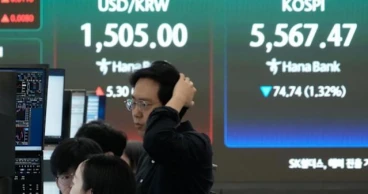
Asian stocks decline, oil prices rise amid uncertainty over Iran conflict
Asian share markets slipped on Thursday, while oil prices climbed back near $100 per barrel as hopes for easing tensions in the Iran conflict remained unclear.
U.S. futures dropped by 0.5%.
Japan’s Nikkei 225 fell 0.3% to 53,603.65, while South Korea’s Kospi saw a sharper decline of 3.2% to 5,460.46.
In Hong Kong, the Hang Seng index dropped 1.9% to 24,856.43, and China’s Shanghai Composite lost 1.1% to 3,889.08.
Australia’s S&P/ASX 200 slipped slightly by 0.1%, and Taiwan’s Taiex was down 0.3%.
Oil prices increased again on Thursday. Brent crude, the global benchmark, rose 3.3% to $100.41 per barrel after falling below $95 the previous day. U.S. crude also climbed 3.8% to $93.74 per barrel.
The rise in oil prices followed Iran’s rejection of a U.S.-proposed ceasefire plan on Wednesday. The proposal, put forward by the administration of President Donald Trump, included 15 points aimed at easing tensions. Trump also delayed his earlier deadline to take strong action against Iran’s power facilities in an effort to push Tehran to reopen the Strait of Hormuz.
Meanwhile, Iran carried out further attacks on Israel and Gulf Arab nations, while Israel launched airstrikes on Tehran. The U.S. is also preparing to send additional troops to the region.
The Strait of Hormuz — a key route between Iran and Oman through which about one-fifth of the world’s oil supply passes — has remained mostly closed since the conflict began. As a result, oil prices have been volatile, rising roughly 40% over the past four weeks.
On Wednesday, U.S. stock markets ended higher. The S&P 500 rose 0.5% to 6,591.90, the Dow Jones Industrial Average gained 0.7% to 46,429.49, and the Nasdaq composite increased 0.8% to 21,929.83.
Shares of Arm Holdings surged 16.4% in the U.S. after the British company announced plans to produce and sell its own chips, a move expected to boost future earnings.
Meanwhile, shares of Swiss sportswear brand On Holding dropped 11.2% after its CEO Martin Hoffmann announced he would step down. The company has appointed its two co-founders as co-CEOs.
In early Thursday trading, gold and silver prices declined. Gold fell 2.7% to $4,428.80 per ounce, while silver dropped 5.2% to $68.88 per ounce.
The U.S. dollar edged up slightly to 159.49 Japanese yen from 159.47 yen, while the euro remained unchanged at $1.1559.
6 days ago

US stocks fall again, global markets steady as oil prices ease
U.S. stock markets moved lower on Friday, heading toward a fourth straight week of losses, although a slight drop in oil prices helped calm markets in other parts of the world.
The S&P 500 fell 0.5% in early trading and was on track for its longest weekly losing streak in a year. The Dow Jones Industrial Average dropped 126 points, or 0.3%, while the Nasdaq Composite declined 0.8%.
Rising bond yields continued to put pressure on U.S. stocks. Higher yields make borrowing more expensive for businesses and consumers, which can slow economic growth and reduce investment demand. Yields have been increasing since the war with Iran began, as investors worry that higher oil and gas prices could push inflation up.
Due to these concerns, traders are now less hopeful that the Federal Reserve will cut interest rates this year. According to market data, some investors are even considering a small chance of a rate hike in 2026 — something that seemed very unlikely before the conflict.
Lower interest rates usually support economic growth and stock prices, and Donald Trump has repeatedly called for cuts. However, reducing rates too quickly could worsen inflation.
Outside the United States, markets showed more stability after Thursday’s sharp declines. Stock indexes rose slightly in Europe and gained 0.3% in South Korea, although markets in China fell.
The relative calm came as oil prices eased. Brent crude slipped 0.3% to $108.29 per barrel, while U.S. benchmark crude remained nearly unchanged at $95.53.
Oil prices have been highly volatile since the war began, rising from around $70 per barrel. Markets are closely watching how long the conflict will last and its impact on energy supplies, especially in the Strait of Hormuz, a key route for global oil shipments that Iran has restricted.
Among individual companies, Super Micro Computer shares plunged 28.2% after U.S. authorities accused a senior executive and others of illegally exporting advanced chips to China. The company said it is cooperating with investigators and has suspended the employees involved.
On the positive side, FedEx rose 2.8% after reporting stronger-than-expected quarterly profits.
In the bond market, the yield on the 10-year U.S. Treasury climbed to 4.32%, up from 4.25% a day earlier and significantly higher than 3.97% before the war began.
12 days ago

Alibaba targets $100B in AI and cloud revenue over 5 years
China’s technology giant Alibaba Group pledged on Thursday a goal of surpassing $100 billion in revenue from its artificial intelligence and cloud businesses over the next five years, which it said would be powered by the AI demand boom.
The announcement of the ambitious target came as the company posted a 67% drop in profit in the latest quarter, even as growth in its cloud business remained robust.
For the October-December quarter, the company, which shifted its focus to cloud and AI technologies in recent years, reported an overall revenue increase of 2% year-on-year to 284.8 billion yuan ($41.4 billion), lower than analysts’ estimates.
Revenue from its cloud business jumped 36% in the quarter to 43.3 billion yuan ($6.2 billion) from a year ago.
CEO Eddie Wu said during an earnings call on Thursday that Alibaba stands to benefit from the “exponential growth in AI demand.” It has been expanding and upgrading its flagship Qwen AI app and consumer-facing chatbot and also provides cloud computing and storage services to commercial customers.
“(There is) enormous and sustained growth momentum of the AI market,” Wu said.
Profit for the quarter was 16.3 billion yuan ($2.4 billion), down from 48.9 billion yuan the same quarter last year, in part due to growing marketing and sales expenses.
The Hangzhou-based company, which started out in e-commerce, has also seen a price war in the food delivery segment over the past months adding pressure to its profitability.
To help drive profit and amid rising costs and growing demand, the company said on Wednesday it would be increasing prices for some AI services by as much as 34%. It also launched the agentic AI tool Wukong this week, in an expansion of its products for commercial customers.
Alibaba’s AI ambitions was also tested recently following the departure this month of Lin Junyang, head of its AI model division Qwen. Last year, the company pledged investments of at least 380 billion yuan ($53 billion) in three years to advance its cloud computing and AI infrastructure.
Chinese tech companies have been stepping up their competitiveness against U.S. rivals and growing their dominance, especially after AI startup DeepSeek sent shock waves across the industry last year.
12 days ago
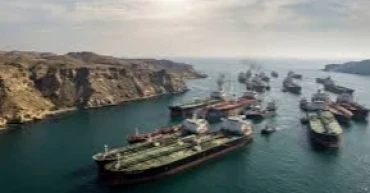
Oil prices jump amid Iran-Qatar tensions; Asian markets decline
Oil prices surged in early Asian trading, with Brent crude rising 4% to $112 (£84.34) per barrel, while US benchmark crude gained 3% to reach $99.27.
The spike followed an attack on Iran’s South Pars gas facility, one of the largest natural gas fields in the world. In response, Iran reportedly struck a major liquefied natural gas export facility in Qatar, causing extensive damage and heightening concerns over global energy supplies.
Despite the latest increase, oil prices remain below earlier highs in the conflict, when crude nearly reached $120 per barrel, though they are still significantly higher than pre-war levels.
Meanwhile, Asian stock markets opened lower on Thursday. South Korea’s Kospi dropped 3%, Japan’s Nikkei 225 fell 2.8%, and Australia’s ASX 200 declined by 1.6%.
With inputs from BBC
13 days ago
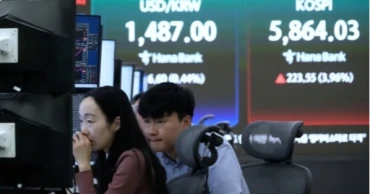
Asian shares rise, oil slips despite Iran attacks
Asian stock markets advanced on Wednesday, led by gains in Japan and South Korea, as oil prices eased slightly despite a series of attacks by Iran on its Gulf neighbors.
U.S. stock futures also rose 0.6% following moderate gains on Wall Street, ahead of the Federal Reserve’s interest rate decision later in the day. Analysts expect the Fed to keep rates unchanged amid concerns that higher oil prices could push inflation up.
Global oil and gas supply worries continue to weigh on markets. Brent crude, the international benchmark, dropped 2% to around $101 per barrel, down from over $106 on Monday. U.S. crude fell 3.6% to $92.78 per barrel.
Iran launched multiple attacks on Gulf countries and Israel on Wednesday after one of its top leaders was killed in an airstrike. The strikes, which included missiles designed to bypass air defenses, reportedly killed two near Tel Aviv. Despite the escalation, markets largely shrugged off the tensions.
In Tokyo, the Nikkei 225 rose 2.9% to 55,239.40 after February exports came in higher than expected. South Korea’s Kospi surged 5% to 5,925.03, boosted by lower oil prices benefiting major importers.
Hong Kong’s Hang Seng climbed 0.8% to 26,076.00, while Shanghai’s Composite Index gained 0.3% to 4,063.77. Australia’s S&P/ASX 200 added 0.3%, Taiwan’s Taiex rose 1.5%, and India’s Sensex advanced 0.9%.
Analysts from ING Bank noted that global oil flows remain limited, even as hopes grow that Iran may allow more vessels through the Strait of Hormuz, a crucial route for nearly a fifth of the world’s crude oil. The strait has been largely closed to ships linked to the U.S., Israel, and their allies.
In U.S. markets on Tuesday, the S&P 500 rose 0.3%, the Dow Jones edged up 0.1%, and the Nasdaq gained 0.5%. Delta Air Lines shares jumped 6.6% after raising its revenue forecast amid strong demand. Uber Technologies rose 4.2%, announcing plans to expand its autonomous vehicle partnership with Nvidia in San Francisco and Los Angeles next year.
In currency trading, the U.S. dollar fell to 158.76 Japanese yen from 159.01 yen, while the euro inched up to $1.1544 from $1.1542.
14 days ago

Inclusion of Bangladesh in US trade probe 'uncomfortable', but not a major challenge: BGMEA President
Mahmud Hasan Khan, President of the Bangladesh Garment Manufacturers and Exporters Association (BGMEA), on Thursday termed the inclusion of Bangladesh in a US investigation into overcapacity and overproduction in the manufacturing sector as "uncomfortable."
Reacting to the announcement by the office of the United States Trade Representative (USTR), the BGMEA president stated that there is "no logical basis" for including Bangladesh in the list of 16 countries targeted for the probe.
The investigation, initiated under Section 301 of the US Trade Act of 1974, aims to determine whether the policies, acts, or production structures of these countries are "unreasonable or discriminatory" and if they burden or restrict US commerce.
"Based on the USTR notice, it appears they will hold hearings to investigate unfair trade practices, labor rights violations, export incentives, and intellectual property rights (IPR) infringements," Mahmud Hasan Khan told reporters.
"If such allegations are proven, they may impose additional tariffs,” he added.
Despite the discomfort of being listed alongside economic giants like China, Japan, and the EU, the BGMEA President noted that he does not foresee a major challenge for the country’s apparel sector.
He noted that labor rights issues are already being addressed and the practice of IPR in local production is limited.
The BGMEA President argued that export incentives in Bangladesh are minimal. While questions might arise regarding agricultural subsidies, he pointed out that the US itself provides significant subsidies to its farmers, whereas Bangladesh primarily subsidizes fertilizers.
"The bulk of our exports to the US is readymade garments. US manufacturers are not producing the types of apparel we export, so we are not in direct competition with their local industry," he added.
The BGMEA chief suggested that the investigation might be an attempt by the US to protect its domestic industries and manage its massive consumer market. However, he urged the Ministry of Commerce to take proactive steps.
"Since Bangladesh has been named in the investigation, the government must take advanced preparations to handle the matter effectively during the hearings," Khan emphasized.
On Wednesday, US Trade Representative Jamieson Greer announced the investigation into 16 countries and entities. Besides Bangladesh, the list includes China, the European Union, India, Vietnam, Indonesia,
Malaysia, Cambodia, Thailand, South Korea, Taiwan, Mexico, Japan, Singapore, Switzerland, and Norway.
END/UNB/AI/ssk
20 days ago