world-business
Asian markets rise as US stock indexes near records amid easing trade tensions
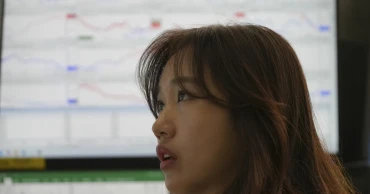
Shares rose early Tuesday in Asia after U.S. stock indexes drifted closer to records, while oil prices extended gains.
Beijing and Washington dialed back trade friction as the U.S. extended exemptions for tariffs on some Chinese goods, including solar manufacturing equipment, that U.S. industries rely on for their own production.
The U.S. Trade Representative extended those exemptions, which were due to expire on May 31, by three months through Aug. 31.
Still, China criticized the U.S. on Monday over moves it alleged harmed Chinese interests, including issuing AI chip export control guidelines, stopping the sale of chip design software to China, and planning to revoke Chinese student visas.
Hong Kong's Hang Seng gained 1.1% to 23,417.39, while the Shanghai Composite index added 0.3% to 3,356.36.
In Tokyo, the Nikkei 225 advanced 0.6% to 37,683.19.
South Korean markets were closed for a snap presidential election triggered by the ouster of Yoon Suk Yeol, a conservative who now faces an explosive trial on rebellion charges over his short-lived imposition of martial law in December.
Australia's S&P/ASX 200 was up 0.7% to 8,475.50.
Syria and Saudi Arabia agree to boost economic cooperation after Western sanctions eased
In Taiwan, the Taiex gained 1.4%.
On Monday, U.S. stock indexes drifted closer to their records following a stellar May, Wall Street’s best month since 2023.
The S&P 500 rose 0.4% to 5,935.94 after erasing an early loss from the morning. The Dow Jones Industrial Average added 0.1% to 42,305.48. The Nasdaq composite climbed 0.7% to 19,242.61.
Indexes had fallen close to 1% in the morning following some discouraging updates on U.S. manufacturing. President Donald Trump has been warning that U.S. businesses and households could feel some pain as he tries to use tariffs to bring more manufacturing jobs back to the country, and their on-and-off rollout has created lots of uncertainty.
But stocks rallied back as the day progressed. Nvidia climbed 1.7%, and Meta Platforms rose 3.6%, for example.
Oil prices have gained as attacks by Ukraine in Russia raise uncertainty about the flow of oil and gas around the world.
Early Tuesday, U.S. benchmark crude oil was up 62 cents at $63.14 per barrel. Brent crude, the international standard, picked up 57 cents to $65.19 per barrel.
Markets took in stride fresh salvos between the world’s two largest economies, just a few weeks after the United States and China had agreed to pause many of their tariffs that had threatened to drag the economy into a recession.
That followed President Donald Trump’s accusation at the end of last week, where he said China was not living up to its end of the agreement that paused their tariffs against each other.
Trump on Friday told Pennsylvania steelworkers he’s doubling the tariff on steel imports to 50% to protect their industry, a dramatic increase that could further push up prices for a metal used to make housing, autos and other goods. That helped stocks of U.S. steelmakers climb. Nucor jumped 10.1%, and Steel Dynamics rallied 10.3%.
On the losing side of Wall Street were automakers and other heavy users of steel and aluminum. Ford fell 3.9%, and General Motors reversed by 3.9%.
Asian shares mostly decline as uncertainty grows about what's next with Trump's tariffs
Lyra Therapeutics soared nearly 311% for one of the market’s biggest gains after reporting positive late-stage trial results of an implant to treat chronic sinus inflammation in some patients.
In the bond market, Treasury yields rose as worries continue about how much debt the U.S. government will pile on due to plans to cut taxes and increase the deficit.
The yield on the 10-year Treasury climbed to 4.44% from 4.41% late Friday and from just 4.01% roughly two months ago. That’s a notable move for the bond market.
Besides making it more expensive for U.S. households and businesses to borrow money, such increases in Treasury yields can deter investors from paying high prices for stocks and other investments.
Yields had dipped briefly in the morning, before rallying back, following the updates on manufacturing, which suggested that effects of Trump’s tariffs are taking root in the economy.
A report from S&P Global on manufacturing came in better than expected, though uncertainty caused by tariffs has worries high about supplier delays and rising prices.
Also early Tuesday, the dollar rose to 143.10 Japanese yen from 142.71 yen. The euro slipped to $1.1438 from $1.1443.
1 year ago

Highreso Announces Discount Plans for NVIDIA H200-equipped GPUSOROBAN-AI SPACON Cloud and Begins Accepting Reservations for NVIDIA B200
Highreso Co., Ltd. has announced discount plans for its NVIDIA H200-equipped GPUSOROBAN-AI SPACON Cloud.
GPUSOROBAN is a low-price cloud platform for GPU computing offered with a simple pricing system. The use of this high-performance GPU server greatly reduces the time required for large-scale computing and graphic processing. This platform provides a safe and secure computing environment since it is managed within Japan.
AI SPACON Cloud is the high-spec GPUSOROBAN lineup that provides cloud-based GPU instances with NVIDIA H200 or higher. Highreso is now announcing plans for AI SPACON Cloud equipped with H200 at a discount of up to 39% from the regular monthly rate of 2,530,000 yen (net, based on an exchange rate of USD 1 = JPY 143, as of the end of April), depending on the contract period.
Discount plans for NVIDIA HGX H200*
Monthly contract: USD 17,692.31 (regular price)
1-year contract: USD 15,923.08 (10% off)
2-year contract: USD 15,038.46 (15% off)
3-year contract: USD 11,323.08 (36% off)
5-year contract: USD 10,792.31 (about 39% off)
HGX H200's technical specifications: https://cdn.kyodonewsprwire.jp/prwfile/release/M108695/202505279551/_prw_PI1fl_08ELlsz3.png
Highreso also began accepting reservations for HGX B200 equipped with the "Blackwell," which is the latest NVIDIA architecture.
Discount plans for NVIDIA HGX B200*
Monthly contract: USD 18,881.12 (regular price)
1-year contract: USD 18,308.96 (about 3% off)
2-year contract: USD 17,482.52 (about 7% off)
3-year contract: USD 16,528.93 (about 12% off)
5-year contract: USD 15,257.47 (about 19% off)
HGX B200's technical specifications: https://cdn.kyodonewsprwire.jp/prwfile/release/M108695/202505279551/_prw_PI2fl_3h78HvgK.png
*Based on an exchange rate of USD 1 = JPY 143.
*Actual rates vary depending on the current exchange rate at the time of signing.
For details about the plans and contracts, please contact Highreso using the following link.
AI SPACON Cloud: https://lp-soroban.highreso.jp/en/index.html
About Highreso Co., Ltd.
Since 2019, Highreso has been operating one of Japan’s largest GPU data centers in Shika-machi, Ishikawa, from which it provides the GPUSOROBAN cloud-based GPU service.
In December 2024, Highreso opened a data center dedicated to GPU for AI development in Kagawa, which was certified for the provision of supplies for the METI Cloud Program. The GPU data center was the first of its kind in the Chugoku and Shikoku regions. Highreso has strategic rollouts to develop new GPU data centers at closed schools in Genkai-cho, Saga and Ayagawa-cho, Kagawa. Highreso is advancing regional revitalization and the evolution of generative AI through its expanding network of local hubs.
June 2022: Awarded "Best CSP Partner of the Year" by NVIDIA
April 2024: Certified for the provision of supplies for the METI Cloud Program
Company Profile
Company Name: Highreso Co., Ltd.
Head Office: 106-1, Moroura, Genkai-town, Higashimatsuura, Saga
Tokyo Head Office: 3-24-1, Ichigayatamachi, Shinjuku-ku, Tokyo
Representative: Chief Executive Officer Yoshiyuki Shikura
Business Summary: Developing and operating GPU data centers, providing the GPU cloud service GPUSOROBAN
Company Website: https://highreso.jp/
GPUSOROBAN: https://soroban.highreso.jp/
Source: Highreso Co., Ltd.
1 year ago

Syria and Saudi Arabia agree to boost economic cooperation after Western sanctions eased
Syria and Saudi Arabia said Saturday they aim to boost economic cooperation to for their mutual benefit and create jobs for Syrians after Western sanctions imposed on the war-torn country were eased earlier this month.
The announcement was made during a visit to Damascus by Saudi Foreign Minister Prince Faisal bin Farhan, who met Syrian President Ahmad al-Sharaa and other Syrian officials.
The easing of Western sanctions is likely to open the way for foreign investors into the country, where a civil war has been ongoing since March 2011. In early December, 54 years of Assad family rule came to an end, when gunmen opposed to then-president Bashar Assad captured his seat of power in Damascus.
The Saudi foreign minister said that the easing of sanctions by the U.S., the European Union and Britain earlier this month will help in “reactivating the Syrian economy that had been at a standstill for decades.”
Prince Faisal, who is heading an economic and business delegation, said Saudi businessmen will visit Syria in the near future to discuss opportunities in sectors including oil, infrastructure, information technology, telecommunications and agriculture.
Asian shares mostly decline as uncertainty grows about what's next with Trump's tariffs
He added that Saudi Arabia and Qatar will give financial assistance to employees of Syria's public sector without giving details.
“We assert that the kingdom will be a leading state among countries that will stand by Syria in its march for reconstruction and economic revival,” Prince Faisal said.
Syrian Foreign Minister Asaad al-Shibani said his country and Saudi Arabia have entered a new era of cooperation.
The meeting came two days after Syria signed an agreement with a consortium of Qatari, Turkish and U.S. companies for development of a 5,000-megawatt energy project to revitalize much of its war-battered electricity grid.
Al-Sharaa met President Donald Trump in Saudi Arabia earlier this month.
1 year ago
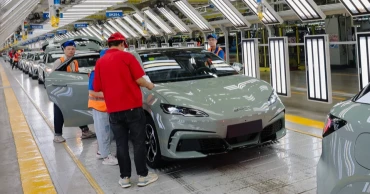
BYD's Jinan Base reinforces leadership in China’s new energy vehicle sector
The BYD manufacturing facility in Jinan, the capital of eastern China's Shandong province, has solidified its position as a pivotal hub in China's rapidly expanding new energy vehicle industry, signalling the company's ongoing commitment to innovation and sustainable mobility solutions.
With a substantial investment of 15 billion Chinese yuan from BYD Company Limited, the Jinan manufacturing facility has become a flagship in China’s burgeoning new energy vehicle (NEV) sector.
Featuring comprehensive full-process production—from stamping to assembly—the plant is among the region’s largest and most advanced projects.
According to BYD, their investment in Jinan commenced in September 2021.
"Later, we successfully established a complete vehicle production facility. Currently, the plant has an annual capacity of more than 700,000 vehicles," an official said during a recent interview with journalists.
1 year ago
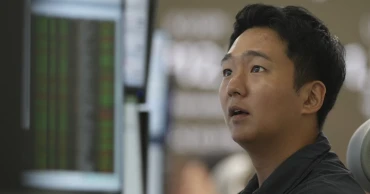
Asian shares mostly decline as uncertainty grows about what's next with Trump's tariffs
Asian shares were mostly lower Friday as uncertainty grew about what will happen next after a U.S. court blocked many of President Donald Trump’s sweeping tariffs.
Japan's benchmark Nikkei 225 lost 1.4% in morning trading to 37,892.39. Government data showed Tokyo core inflation, excluding fresh food, accelerating to a higher-than-expected 3.6% in May. Some analysts say that makes it more likely the Bank of Japan will raise interest rates.
Australia's S&P/ASX 200 was little changed, inching down less than 0.1% to 8,404.50. South Korea's Kospi declined 0.6% to 2,703.64, ahead of a presidential election set for next week.
Hong Kong's Hang Seng slipped 1.4% to 23,235.94, while the Shanghai Composite shed 0.3% to 3,353.07.
On Wall Street, the S&P 500 rose 0.4% on Thursday after giving up more than half of an early gain. The Dow Jones Industrial Average added 117 points, or 0.3%, and the Nasdaq composite rose 0.4%.
South Korea's cenbank cuts borrowing costs to nurse sluggish economy
It’s a downshift after stocks initially leaped nearly 2% in Tokyo and Seoul, where markets had the first chance to react to the ruling late Wednesday by the U.S. Court of International Trade. The court said that the 1977 International Emergency Economic Powers Act that Trump cited for ordering massive increases in taxes on imports from around the world does not authorize the use of tariffs.
The ruling at first raised hopes in financial markets that a hamstrung Trump would not be able to drive the economy into a recession with his tariffs, which had threatened to grind down on global trade and raise prices for consumers already sick of high inflation.
But the tariffs remain in place for now while the White House appeals the ruling, and the ultimate outcome is still uncertain. The court’s ruling also affects only some of Trump’s tariffs, not those on foreign steel, aluminum and autos, which were invoked under a different law.
The Court of Appeals for the Federal Circuit on Thursday allowed the president to temporarily continue collecting the tariffs under the emergency powers law while he appeals the trade court’s decision.
Trump “is still able to impose significant and wide-ranging tariffs over the longer-term through other means,” according to Ulrike Hoffmann-Burchardi, chief investment officer of global equities at UBS Global Wealth Management.
On Wall Street, tech stocks led the way after Nvidia once again topped analysts’ expectations for profit and revenue in the latest quarter.
The chip company has grown into one of the U.S. market’s largest and most influential stocks because of the frenzy around artificial-intelligence technology, and its 3.2% rise was the strongest force by far lifting the S&P 500.
Best Buy fell 7.3% even though it reported a stronger profit than expected. The electronics retailer also cut its forecasted ranges for revenue and profit over the full year on the assumption that “tariffs stay at the current levels,” Chief Financial Officer Matt Bilunas said.
All told, the S&P 500 rose 23.62 points to 5,912.17. The Dow Jones Industrial Average added 117.03 to 42,215.73, and the Nasdaq composite gained 74.93 to 19,175.87.
In the bond market, Treasury yields eased following some mixed reports on the economy. One said that the U.S. economy likely shrunk by less in the first three months of the year than earlier estimated. Another said slightly more U.S. workers applied for unemployment benefits last week than economists expected.
The yield on the 10-year Treasury fell to 4.43% from 4.47% late Wednesday.
ASEAN opens summit with Persian Gulf nations and China as US threatens tariffs
In energy trading, benchmark U.S. crude dropped 30 cents to $60.64 a barrel. Brent crude, the international standard, fell 31 cents to $63.84 a barrel.
In currency trading, the U.S. dollar declined to 143.92 Japanese yen from 144.12 yen. The euro cost $1.1355, down from $1.1367.
1 year ago

South Korea's cenbank cuts borrowing costs to nurse sluggish economy
South Korea’s central bank cut its key interest rate and sharply lowered its growth outlook for the country’s economy in 2025, as it moved Thursday to counter US President Donald Trump’s tariff hikes and weak domestic demand worsened by recent political turmoil.
Following a monetary policy meeting, the Bank of Korea cut its benchmark interest rate by a quarter percentage point to 2.5 per cent. It was its fourth cut since October, when it began lowering borrowing costs for the first time in years to support a weakening economy.
The bank slashed its 2025 growth outlook to 0.8 per cent, nearly halving its previous projection of 1.5 per cent announced in February.
Share prices jumped, with the Kospi gaining 1.7 per cent.
Although trade tensions have recently eased, the global economy is still expected to slow due to the lingering effects of increased tariffs.
Trump says he'll delay a threatened 50% tariff on the European Union until July
US-China friction over trade and geopolitical uncertainties will continue to weigh on markets, the bank said in a statement.
South Korea’s domestic economic activity remained sluggish in April following a contraction in the first quarter driven by weak consumption and business investment, the bank said. It said job creation in manufacturing and other sectors was slow.
Since beginning his second term, Trump has vowed to slap huge new tariffs on foreign products entering the United States, including those from Mexico, Canada and China, which he insists will create more domestic jobs and shrink the federal deficit.
In recent weeks, South Korea has sent trade officials to Washington to discuss the Trump administration’s trade measures, including reciprocal tariffs and potential product-specific duties on semiconductors and cars, which are major exports for the country’s trade-dependent economy.
A decision by a US federal court saying Trump lacks the legal authority to impose such tariffs could upset his plans, but the White House has appealed and it's unclear what will happen in the longer run.
Experts say South Korea's leverage in trade talks and its ability to tackle domestic economic challenges have been undermined by political instability after former President Yoon Suk Yeol’s ill-fated imposition of martial law in December. Yoon was formally ousted from office in April, setting the stage for a snap presidential election next week.
1 year ago

ASEAN opens summit with Persian Gulf nations and China as US threatens tariffs
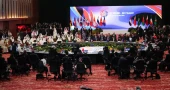
A regional association of Southeast Asian nations held a summit Tuesday with China and six Persian Gulf countries in efforts to expand economic engagement and bolster resilience amid global trade volatility due to U.S. tariff hikes.
Malaysian Prime Minister Anwar Ibrahim, in his opening remarks, said the inaugural summit in Malaysia's capital Kuala Lumpur would open up a new chapter of cooperation.
The 10-member Association of Southeast Asian Nations, the Gulf Cooperation Council and China have a combined GDP of nearly $25 trillion and a market of over 2 billion people, offering vast opportunities to promote cross-regional investment, he said.
“I am confident that ASEAN, the GCC, and China can draw upon our unique attributes and shape a future that is more connected, more resilient, and more prosperous,” he told the summit, attended by Chinese Premier Li Qiang.
Li said the three-way cooperation would benefit all sides, contributing to economic development and peace in the region. China is ASEAN's top trading partner, and has sought to present itself as a reliable ally to the region amid its rivalry with the U.S. The GCC supplies over a third of China's crude oil imports.
“China will join ASEAN and the GCC in forging synergies that multiply,” he said.
Malaysia is the current chair of ASEAN, which also includes Brunei, Cambodia, Indonesia, Laos, Myanmar, the Philippines, Singapore, Thailand and Vietnam.
Salesforce to acquire Informatica in $8 billion deal
Earlier Tuesday, Anwar told a separate ASEAN-GCC forum that partnership between the two blocs would be key to navigating an increasingly complex global economy. He later said the two sides planned to launch talks to establish a free trade area.
Kuwait's Crown Prince Sheikh Sabah Khalid Al Sabah said the two blocs, which held their first summit in Riyadh in 2023, would build on their momentum to deepen cooperation and “improve our ability to face crisis.” He said the GCC is ASEAN's seventh-largest trade partner, with total trade reaching $130.7 billion in 2023.
The GCC comprises the oil-producing nations of Bahrain, Kuwait, Oman, Qatar, Saudi Arabia and the United Arab Emirates. Anwar said last week the GCC already has strong links with the U.S. and “wants to be close to China too.”
ASEAN has maintained a policy of neutrality, engaging both Beijing and the United States, but U.S. President Donald Trump's threats of sweeping tariffs came as a blow. Six of the bloc's members were among the worst hit, with tariffs between 32% and 49%.
Trump announced a 90-day pause on tariffs in April for most of the world, and this month struck a similar deal with key rival China, easing trade war tensions. ASEAN is seeking a summit with Trump on the tariffs, while moving to expand trade ties with China and others.
Brunei’s Sultan Hassanal Bolkiah, one of the world’s wealthiest men and longest-reigning current monarch, was missing from the three-party summit after he was hospitalized for fatigue. He attended ASEAN summits on Monday and the ASEAN-GCC meeting earlier Tuesday.
“He is feeling a little tired, so he’s just resting” at the National Heart Institute, Anwar told reporters.
The sultan’s office also issued a statement saying the monarch will rest at the heart institute for “several days” following advice from Malaysian medical experts. It said he was “in good health” but didn’t elaborate.
Trump says he'll delay a threatened 50% tariff on the European Union until July
Anwar told a news conference at the end of the summit that ASEAN wasn't pivoting towards China but that it works with both Beijing and Washington because it makes economic sense.
“I don’t think (ASEAN) is tilting in any way,” he said.
Collins Chong Yew Keat, a foreign affairs, strategy and security analyst with Universiti Malaya, said the ASEAN-GCC-China summit underscored Beijing's efforts to strengthen support during its trade battle with the U.S. He noted it came on the heels of Trump’s recent charm offensive in Saudi Arabia, Qatar and the United Arab Emirates.
While relying on U.S. defense support, ASEAN is increasing reliance and partnership with China and other U.S. rivals, Chong said. The bloc has failed to take strong action against Beijing's aggression in the disputed South China Sea, he said. ASEAN members Vietnam, the Philippines, Malaysia and Brunei have overlapping claims with China, which asserts sovereignty over almost the entire South China Sea.
“If this continues under the current Trump administration, it will create further room for Washington to distance itself from the region, which will spell disaster and create an even deeper Chinese presence,” he said. ___
This story has been corrected to show that combined ASEAN-GCC-China GDP is nearly $25 trillion, not $25 billion.
1 year ago
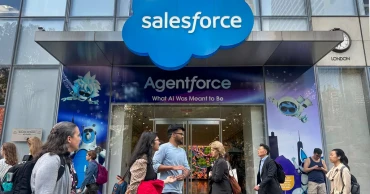
Salesforce to acquire Informatica in $8 billion deal
Salesforce is buying AI-powered cloud data management company Informatica in an approximately $8 billion deal.
Informatica's shareholders will receive $25 per share, a premium of about 11% from Friday's closing price of $22.55.
The transaction will give Salesforce access to Informatica's data management capabilities, AP reports.
“Joining forces with Salesforce represents a significant leap forward in our journey to bring data and AI to life by empowering businesses with the transformative power of their most critical asset — their data,” Informatica CEO Amit Walia said in a statement on Tuesday. “We have a shared vision for how we can help organizations harness the full value of their data in the AI era.”
Robin Washington, president and chief operating and financial officer at Salesforce, said in a statement that the acquisition will look to take advantage of Informatica's capabilities quickly, particularly in areas such as the public sector, life sciences, health care, and financial services. San Francisco-based Salesforce is set to report its quarterly financial results Wednesday after the bell.
Trump says he'll delay a threatened 50% tariff on the European Union until July
Both companies' boards have approved the deal, which is expected to close early in Salesforce’s fiscal 2027.
Shares of Salesforce rose slightly before the market open, while Informatica's stock jumped 6%.
1 year ago
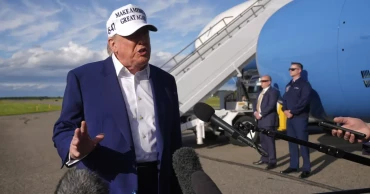
Trump says he'll delay a threatened 50% tariff on the European Union until July
President Donald Trump said Sunday that the U.S. will delay implementation of a 50% tariff on goods from the European Union from June 1 until July 9 to buy time for negotiations with the bloc.
That agreement came after a call Sunday with Ursula von der Leyen, the president of the European Commission, who had told Trump that she “wants to get down to serious negotiations,” according to the U.S. president’s retelling.
“I told anybody that would listen, they have to do that,” Trump told reporters on Sunday in Morristown, New Jersey, as he prepared to return to Washington. Von der Leyen, Trump said, vowed to “rapidly get together and see if we can work something out.”
In a social media post Friday, Trump had threatened to impose the 50% tariff on EU goods, complaining that the 27-member bloc had been “very difficult to deal with” on trade and that negotiations were “going nowhere.” Those tariffs would have kicked in starting June 1.
But the call with von der Leyen appeared to smooth over tensions, at least for now.
Boeing reaches $1.1bn deal with US Justice Dept to avoid prosecution over 737 Max crashes
“I agreed to the extension — July 9, 2025 — It was my privilege to do so,” Trump said on Truth Social shortly after he spoke with reporters on Sunday evening.
For her part, von der Leyen said the EU and the U.S. “share the world’s most consequential and close trade relationship.”
“Europe is ready to advance talks swiftly and decisively,” she said. “To reach a good deal, we would need the time until July 9.”
1 year ago

Boeing reaches $1.1bn deal with US Justice Dept to avoid prosecution over 737 Max crashes
The Justice Department has reached a deal with Boeing that will allow the airplane giant to avoid criminal prosecution for allegedly misleading U.S. regulators about the 737 Max jetliner before two of the planes crashed and killed 346 people, according to court papers filed Friday.
Under the “agreement in principle,” which still needs to be finalized, Boeing would pay or invest more than $1.1 billion, including an additional $445 million for the crash victims’ families, the Justice Department said.
In return, the department has agreed to dismiss the fraud charge against Boeing, allowing the manufacturer to avoid a possible criminal conviction that could have jeopardized the company’s status as a federal contractor, according to experts.
“Ultimately, in applying the facts, the law, and Department policy, we are confident that this resolution is the most just outcome with practical benefits,” a Justice Department spokesperson said in a statement.
“Nothing will diminish the victims’ losses, but this resolution holds Boeing financially accountable, provides finality and compensation for the families and makes an impact for the safety of future air travelers.”
Boeing on Friday declined to comment.
Some relatives of the passengers who died in the crashes, which took place off the coast of Indonesia and in Ethiopia less than five months apart in 2018 and 2019, have been pushing for a public trial, the prosecution of former company officials, and more severe financial punishment for Boeing. The Justice Department noted that the victims’ families had mixed views on the proposed deal.
“This kind of non-prosecution deal is unprecedented and obviously wrong for the deadliest corporate crime in U.S. history,” said Paul Cassell, an attorney for many of the families in the long-running case. “My families will object and hope to convince the court to reject it.”
Javier de Luis, whose sister, Graziella, died in the Ethiopia crash, said the Justice Department is walking away “from any pretense to seek justice for the victims of the 737Max crashes.”
“The message sent by this action to companies around the country is, don’t worry about making your products safe for your customers,” he said in a statement. “Even if you kill them, just pay a small fine and move on.”
Boeing was accused of misleading the Federal Aviation Administration about aspects of the Max before the agency certified the plane for flight. Boeing did not tell airlines and pilots about a new software system, called MCAS, that could turn the plane’s nose down without input from pilots if a sensor detected that the plane might go into an aerodynamic stall.
The Max planes crashed after a faulty reading from the sensor pushed the nose down and pilots were unable to regain control. After the second crash, Max jets were grounded worldwide until the company redesigned MCAS to make it less powerful and to use signals from two sensors, not just one.
The Justice Department charged Boeing in 2021 with deceiving FAA regulators about the software, which did not exist in older 737s, and about how much training pilots would need to fly the plane safely. The department agreed not to prosecute Boeing at the time, however, if the company paid a $2.5 billion settlement, including the $243.6 million fine, and took steps to comply with anti-fraud laws for three years.
Federal prosecutors, however, last year said Boeing violated the terms of the 2021 agreement by failing to make promised changes to detect and prevent violations of federal anti-fraud laws. Boeing agreed last July to plead guilty to the felony fraud charge instead of enduring a potentially lengthy public trial.
But in December, U.S. District Judge Reed O’Connor in Fort Worth rejected the plea deal. The judge said the diversity, inclusion and equity, or DEI, policies in the government and at Boeing could result in race being a factor in picking a monitor to oversee Boeing’s compliance with the agreement.
The plea deal had called for an independent monitor to be named to oversee Boeing’s safety and quality procedures for three years. Under the agreement announced Friday, Boeing must retain an “independent compliance consultant” who will make recommendations for “further improvement” and report back to the government, according to court papers.
1 year ago