world-business
Asia shares surge after Trump pauses tariffs
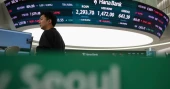
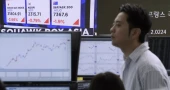
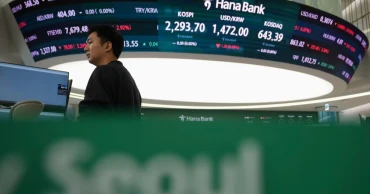
Asian shares soared on Thursday, with Japan’s benchmark Nikkei 225 index surging over 2,000 points shortly after the Tokyo market opened, following President Donald Trump’s decision to ease tariffs on most of the US’s biggest trading partners.
The regional market rally was anticipated after US stocks had their best day in history on Wednesday. Investor optimism grew after Trump announced he would ease tariff tensions, alleviating fears of an escalating trade war, AP reports.
Japan’s Nikkei 225 jumped 8.3% to 34,353.17, while Australia’s S&P/ASX 200 climbed 4.7% to 7,722.90. South Korea’s Kospi rose by 5.5% to 2,419.37, and Hong Kong’s Hang Seng advanced 3.7% to 21,003.84. The Shanghai Composite increased 1.5% to 3,232.86.
US stocks jitter as bonds strain amid tariff tensions
Stephen Innes, managing partner at SPI Asset Management, described the shift as "from fear to euphoria". He said, “It’s now a manageable risk, especially as global recession tail bets get unwound, and most of Asia’s exporters breathe a massive sigh of relief.”
Trump’s move came after recognising over 75 countries that had been negotiating on trade without retaliating against his tariff hikes. The US President confirmed that he would pause most of the tariffs on these nations for 90 days.
However, he maintained a 10% tariff on nearly all global imports, with China remaining a notable exception. Trump announced that tariffs on Chinese goods would rise to 125%, indicating the potential for further market volatility.
On Wall Street, the S&P 500 surged by 9.5%, marking a gain that would be considered strong for an entire year. This came after a period of significant market losses, as fears mounted that the trade war could drag the global economy into recession. But after Trump’s announcement on social media, investor sentiment shifted positively.
The Dow Jones Industrial Average rose by 2,962 points, or 7.9%, while the Nasdaq composite leapt 12.2%. The S&P 500 recorded its third-best day since 1940.
10 months ago
Trump pauses reciprocal tariffs for 90 days, except for China
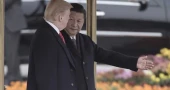
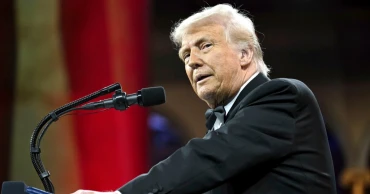
US President Donald Trump declared a complete halt on all “reciprocal” tariffs that took effect at midnight, with the exception of those imposed on China.
Trump announced that tariffs on China would rise from 104% to 125%, reports CNN.
Meanwhile, Chief Adviser Muhammad Yunus has expressed his gratitude to President Trump for his decision.
"Thank you, Mr. President, (@POTUS) for responding positively to our request for 90-day pause on tariffs. We will continue to work with your administration in support of your trade agenda," Chief Adviser's Press Secretary Shafiqul Alam said quoting Chief Adviser Prof Muhammad Yunus.
In a post on Truth Social on Wednesday, Trump stated that he had “authorized a 90-day PAUSE, and a substantially lowered Reciprocal Tariff during this period, of 10%, also effective immediately.”
“Due to the lack of respect China has shown to the World’s Markets, I am hereby raising the Tariff charged to China by the United States of America to 125%, effective immediately,” Trump wrote on his social media. “At some point, hopefully in the near future, China will realize that the days of ripping off the U.S.A., and other Countries, is no longer sustainable or acceptable,” he added.
The decision to raise tariffs on China followed Beijing's announcement of new retaliatory tariffs on the United States, set to take effect on Thursday. The Trump administration has specifically targeted China's trade practices, said the report.
Treasury Secretary Scott Bessent praised Trump’s resolve, stating on Wednesday that Trump had “great courage to stay the course until this moment.” The administration has warned countries worldwide, “do not retaliate and you will be rewarded,” and expressed willingness to negotiate with any nation seeking to engage in talks, Bessent noted.
Bessent emphasized that the move “signals that President Trump cares about trade and that we want to negotiate in good faith.”
Both Bessent and Commerce Secretary Howard Lutnick were with Trump when he posted his message on Truth Social, Lutnick confirmed on a post on X,added the report.
“Scott Bessent and I sat with the President while he wrote one of the most extraordinary Truth posts of his Presidency,” Lutnick wrote. “The world is ready to work with President Trump to fix global trade, and China has chosen the opposite direction.”
Stocks surged following the announcement, with the Dow climbing 2,200 points, or 5.9%. The S&P 500 gained 6.5%, and the Nasdaq rose by more than 8%. The markets had been under pressure due to the potential for significantly higher tariffs, as outlined by Trump last week, the report also said.
However, Trump did not indicate that he was pausing the 10% universal tariff on all trading partners, except for Canada and Mexico, which took effect over the weekend. As a result, countries that had reciprocal tariffs imposed on them would still face a 10% tariff, Bessent confirmed.
10 months ago
US stocks jitter as bonds strain amid tariff tensions
US stocks are experiencing choppy trading on Wednesday after major markets elsewhere sank, as President Donald Trump’s intensifying trade war continues to roil investors.
The S&P 500 edged up 0.3% during morning trading after a volatile start. The benchmark index, central to many 401(k) retirement plans, swung dramatically from a 0.5% decline to a 1.4% gain before easing again.
As of 10:15 a.m. Eastern time, the Dow Jones Industrial Average was down 34 points, or 0.1%, while the Nasdaq composite gained 1.1%.
Sharp fluctuations have become the norm for global markets lately—not just daily but even hourly—as investors try to anticipate the economic fallout from Trump’s escalating trade war. On Tuesday, the S&P 500 oscillated between a 4.1% rise and a 3% fall, marking a second consecutive day of drastic reversals.
Wall Street's latest movements follow the activation of Trump’s newest tariff measures, which took effect just after midnight, targeting goods from across the globe. This includes a 104% levy on Chinese imports. In response, China—the world’s second-largest economy—announced it would increase tariffs on U.S. products to 84% starting Thursday.
“If the U.S. insists on further escalating its economic and trade restrictions, China has the firm will and abundant means to take necessary countermeasures and fight to the end,” China’s Ministry of Commerce stated.
This hardline stance between the world’s two largest economies is fuelling fears that tariffs may become a long-term fixture—something many economists and investors believe could trigger a recession. On Wednesday, the European Union also authorised tariffs targeting $23 billion worth of U.S. goods in a retaliatory move of its own.
Despite this, some investors remain hopeful that Trump may eventually scale back tariffs following negotiations with other nations—an optimism that has occasionally driven stock prices higher.
“BE COOL!” Trump wrote on his Truth Social platform shortly after markets opened. “Everything is going to work out well. The USA will be bigger and better than ever before!”
One of the most notable market shifts on Wednesday was in the U.S. bond market, where Treasury yields surged once again. The yield on the 10-year Treasury rose to 4.37%, up from 4.26% on Tuesday and 4.01% last week. It briefly neared 4.50% earlier in the morning—an unusually large movement suggesting heightened stress.
Analysts point to various possible drivers, including hedge funds and other investors liquidating Treasury holdings to cover significant equity losses. International investors may also be offloading U.S. Treasurys due to trade tensions. Both scenarios would drive Treasury prices lower and their yields higher.
Regardless of the cause, rising Treasury yields exert pressure on the stock market and are likely to push up borrowing costs for mortgages and other consumer loans. Before markets opened, futures for the S&P 500 and other indexes trimmed earlier sharp losses as Treasury yields also moderated their gains.
The uncertainty surrounding tariffs is already complicating strategic planning for major U.S. corporations.
On Wednesday, Delta Air Lines withdrew its 2025 financial outlook, citing disrupted expectations for consumer and business spending and falling travel demand amid the trade conflict.
“With broad economic uncertainty around global trade, growth has largely stalled,” said CEO Ed Bastian in a statement. “In this slower-growth environment, we are protecting margins and cash flow by focusing on what we can control.”
Walmart, by contrast, affirmed its full-year projections for sales and operating income.
Overseas, stock markets saw widespread declines across Europe and much of Asia.
London’s FTSE 100 fell 2.2%, the Nikkei 225 in Tokyo dropped 3.9%, and Paris’ CAC 40 slid 2.6%.
Chinese markets, however, bucked the trend, with Hong Kong’s Hang Seng up 0.7% and Shanghai’s benchmark rising 1.3%.
10 months ago
Asia shares sink as US tariffs take effect
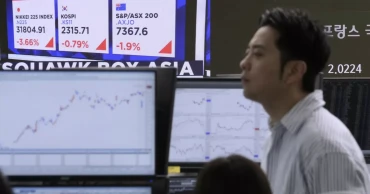
Asian stock markets tumbled on Wednesday after a sweeping new round of U.S. tariffs, including a staggering 104% duty on Chinese imports, officially came into force at midnight Eastern Time. The move has intensified global trade tensions and triggered widespread uncertainty among investors, economists, and policymakers.
Japan’s benchmark Nikkei 225 took a significant hit, at one point plunging more than 5%, while other key regional indices followed suit. By mid-afternoon in Tokyo, the Nikkei was down 4.7% at 32,475.57. Hong Kong’s Hang Seng dropped 1.8% to 19,769.24, South Korea’s Kospi shed 1.9% to 2,290.87, and Australia’s S&P/ASX 200 declined 1.8% to 7,374.80. Shanghai’s Composite Index edged slightly lower by 4 points to 3,141.46, and New Zealand markets also registered losses.
The market turmoil followed a volatile Tuesday on Wall Street. The S&P 500 erased a 4.1% gain to close 1.6% lower, falling nearly 19% below its February high. The Dow Jones Industrial Average dipped 0.8%, while the tech-heavy Nasdaq fell 2.1%.
China criticises US tariffs, warns of trade war losses
The latest tariffs, which build on previous rounds, include a baseline 10% duty on nearly all of America’s trading partners. Additional levies range from 20% to 50% on specific countries, with China facing the steepest hike. A 34% tariff was recently added to existing 70% duties on Chinese goods, bringing the combined rate to 104%. Other nations facing sharp increases include Vietnam (46%), Madagascar (47%), Taiwan (32%), South Korea (25%), Japan (24%), and the European Union (20%).
Economists warn the prolonged trade conflict could raise consumer prices in the U.S., dampen global economic growth, and potentially trigger a recession if the tariffs remain in place long-term. Some analysts believe the worst could still be averted if President Trump scales back the duties through negotiations.
Bangladesh Garment Sector at Risk
In Bangladesh, the world's second-largest apparel exporter after China, manufacturers are growing increasingly concerned about losing ground in the U.S. market. The country’s garments sector exported $7.34 billion worth of apparel to the U.S. in 2024, out of a nearly $39 billion industry.
However, with the U.S. now imposing a new 37% tariff on Bangladeshi apparel, manufacturers say American buyers are already pausing orders. Industry leaders warn this could allow competitors like India and Pakistan to gain market share.
To mitigate the impact, the Bangladeshi government has requested a three-month delay in implementing the new tariffs. Asif Ashraf, managing director of Urmi Group, cautioned that the measures could “change the global equilibrium.” The garments industry employs around 4 million people in Bangladesh, mostly women, and accounts for nearly 80% of the country’s exports.
South Korea Announces $2 Billion Auto Sector Support
Meanwhile, South Korea has rolled out an emergency support package worth 3 trillion won (approximately $2 billion) to shield its automobile industry from the fallout of the new tariffs. The initiative includes expanded low-interest financing from state-run banks, a joint support program with Hyundai and Kia, and increased subsidies for electric vehicle purchases.
China reiterates warning of retaliation over US tariffs
The auto sector is a key pillar of South Korea’s economy. Last year, the country exported $34.7 billion in vehicles and $8.2 billion in auto parts to the U.S. The South Korean government fears the newly imposed 25% U.S. tariff on cars and components will deal a “severe blow” to the sector.
As global markets reel from the escalation, all eyes remain on Washington to see whether further retaliatory moves or a return to negotiations will follow.
Source: With input from agency
10 months ago
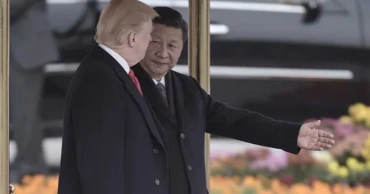
Beijing responds firmly to Trump’s 104% tariffs amid escalating trade tensions
Tensions between China and the United States intensified on Tuesday as President Donald Trump escalated trade hostilities by imposing a sweeping 104% tariff on all Chinese imports. With neither side showing signs of retreat, Beijing pledged to counter what it described as American "aggression" with unwavering resistance.
Initially, Trump had announced an additional 34% tariff on Chinese goods. In response, China imposed an identical tariff on American exports. The US then retaliated with another 50% duty. When combined with existing tariffs from earlier in the year, the total increase on Chinese imports under Trump’s second term has reached 104%.
China's Response
Beijing denounced the latest measures as economic blackmail and vowed to resist “to the end.”
In a phone conversation with European Commission President Ursula von der Leyen, Chinese Premier Li Qiang stated that China is well-prepared to cushion any external economic shocks. He expressed confidence in the continued "stable and healthy growth" of the Chinese economy in 2025 despite Washington’s latest tariff escalation.
Li emphasized that China’s macroeconomic planning had already factored in global uncertainties, and he condemned the US actions as examples of unilateralism, protectionism, and economic coercion. He said China’s firm response was aimed not only at safeguarding national interests but also at defending international trade norms.
China’s foreign minister criticizes US tariffs and accuses the country of ‘meeting good with evil’
"Protectionism leads nowhere – openness and cooperation are the way forward for all," Li told von der Leyen, as quoted by Bloomberg.
Beijing’s remarks followed another turbulent day for US markets, which saw sharp declines as Trump remained resolute. The China-EU call took place just hours before Trump’s new tariffs were set to affect Europe as well, with a 20% duty on EU exports looming.
Trump’s Trade War Strategy
The global economy has been rattled since Trump’s initial 10% tariffs came into effect over the weekend, triggering widespread market volatility and fears of a potential recession. Import costs to the US from numerous countries are set to rise even more starting Wednesday.
Trump claims the tariffs will restore America’s manufacturing base by compelling companies to bring production back to the US. However, economists and business leaders are skeptical, warning that such a shift would take time—if it happens at all—and that consumers will likely face higher prices as a result.
Despite mounting criticism, Trump declared on Tuesday that the US is “taking in almost $2 billion a day” from the tariffs.
Global Reactions
Following Washington’s refusal to reconsider its tariff policy, Canada announced it would implement its own duties on select American automobile imports starting Wednesday.
Meanwhile, the European Union—long criticized by Trump for its trade policies—is expected to announce its countermeasures as early as next week. French President Emmanuel Macron urged Trump to rethink his approach but said the EU would respond if necessary.
In response to US tariffs on steel and aluminum introduced last month, the EU has prepared duties of up to 25% on a range of American products, including soybeans and motorcycles, according to AFP.
Tailored Trade Agreements?
China criticises US tariffs, warns of trade war losses
Trump stated that the US is pursuing “tailored deals” with preferred trade partners, with the White House confirming it would prioritize allies such as Japan and South Korea.
US Trade Representative Jamieson Greer told the Senate that several countries—including Argentina, Vietnam, and Israel—had expressed willingness to lower their tariffs.
Despite retaliation from China and rising domestic criticism, Trump has ruled out softening his hardline trade policy.
Source: NDTV
10 months ago
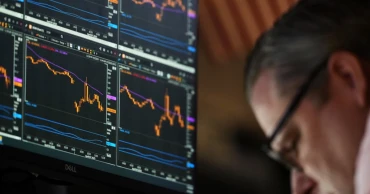
Asian markets rise; Nikkei jumps 6.5% amid tariff uncertainty
Asian markets opened higher on Tuesday, with Japan’s Nikkei 225 benchmark surging more than 6% after a nearly 8% drop the previous day.
This recovery followed a volatile session on Wall Street, where U.S. stocks fluctuated following President Donald Trump’s warning of increased tariffs.
On Tuesday morning, China's Commerce Ministry declared it would "fight to the end" and take unspecified countermeasures against the U.S. in response to Trump’s threat of an additional 50% tariff on Chinese imports.
By late morning in Tokyo, the Nikkei 225 had risen 6.5% to 33,148.52.
Hong Kong also regained some losses but not nearly enough to recover from its 13.2% plunge on Monday, marking the worst performance of the Hang Seng index since the 1997 Asian financial crisis. The Hang Seng rose 1.7% to 20,163.97, while the Shanghai Composite increased by 0.8% to 3,121.72.
South Korea’s Kospi climbed 1.6% to 2,364.22, and the S&P/ASX 200 also rose 1.6%, reaching 7,462.60. Markets in New Zealand and Australia saw similar gains.
On Monday, the S&P 500 fell 0.2%, as investors anxiously awaited Trump’s next moves in the trade conflict. If other countries agree to trade deals, he could reduce tariffs and avoid a potential recession, but if tariffs persist, stock prices may continue to drop.
The Dow Jones Industrial Average dropped 349 points (0.9%), while the Nasdaq composite rose by 0.1%.
All three indexes began the day sharply lower, with the Dow plummeting by as much as 1,700 points due to significant losses elsewhere globally. However, it suddenly surged by nearly 900 points by late morning. The S&P 500 recovered from a 4.7% loss to climb 3.4%, marking its biggest jump in years.
This sharp rise followed a false rumor that Trump was considering a 90-day break from his tariffs, which was quickly debunked by the White House on X as “fake news.” The fact that such a rumor could cause a trillion-dollar market shift illustrates investors' hopes that Trump might ease up on the tariffs.
Stocks soon reversed direction, and Trump reaffirmed his stance, indicating that he may escalate tariffs after China retaliated with its own set of tariffs on U.S. goods last week.
Trump's tariffs challenge globalization, which has shaped the current world economy by reducing prices but also relocating manufacturing jobs. He has expressed a desire to bring factory jobs back to the U.S., a process that may take years. Additionally, Trump aims to reduce trade deficits, but it remains unclear how much room for negotiation exists with the U.S. and its trade partners.
The fluctuations in stock indexes on Monday were partly due to investor hopes that ongoing negotiations might prevent the full implementation of these tariffs.
One certainty on Monday was the global financial strain following Trump’s tariff announcement on his April 2 “Liberation Day.”
Oil prices also dropped due to concerns that a global economy weakened by trade barriers will lead to reduced demand for fuel. U.S. crude oil fell below $60 per barrel on Monday for the first time since 2021 but rose by 62 cents to $61.32 per barrel early Tuesday.
Brent crude, the international benchmark, increased by 70 cents to $64.91 per barrel.
In currency markets, the U.S. dollar rose to 147.32 Japanese yen from 147.71 yen, while the euro fell to $1.0983 from $1.0917.
Gold prices increased by $38, reaching $3,011.60 per ounce, and Bitcoin gained 2.1%, rising to $80,081.17. On Monday, Bitcoin had dropped below $79,000, down from its January peak of over $100,000.
10 months ago
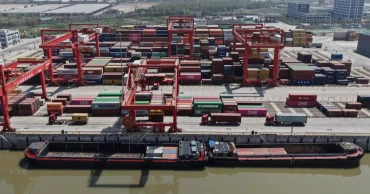
China vows to fight after Trump threatens more tariffs
China declared on Tuesday that it would “fight to the end” and implement countermeasures to protect its interests after U.S. President Donald Trump threatened to impose a further 50% tariff on Chinese goods.
The Commerce Ministry criticised the United States for introducing what it termed “so-called ‘reciprocal tariffs,’” describing them as “completely groundless” and an example of “typical unilateral bullying.”
China has already responded with retaliatory tariffs and signalled in its latest statement that more could follow.
“The countermeasures taken by China aim to safeguard its sovereignty, security, and development interests, as well as to uphold the normal order of international trade. These actions are entirely lawful,” the ministry stated. “The U.S. decision to escalate tariffs on China is a repeated blunder and again highlights the coercive nature of the U.S. approach. China will never yield. Should the U.S. persist, China will fight to the end.”
Trump’s latest threat, issued on Monday, sparked renewed fears that his efforts to restructure global trade could trigger a deeper and more damaging trade war. Stock markets from Tokyo to New York have experienced increased volatility as tensions rise.
Trump warns of additional tariffs on China
The threat followed China’s announcement that it would retaliate against tariffs introduced by Trump the previous week.
“If China does not withdraw its 34% increase, which adds to their already long-term trade abuses, by April 8th, 2025, the United States will impose ADDITIONAL tariffs of 50% on China, effective April 9th,” Trump wrote on Truth Social. “Furthermore, all discussions with China regarding their requested meetings will be cancelled!”
If enacted, the new tariffs would raise the total U.S. duty on Chinese imports to 104%. This includes the new 50%, plus the 20% levied as a penalty for fentanyl trafficking and an earlier 34% announced last week. These increases could lead to higher costs for U.S. consumers and prompt China to redirect lower-cost goods to other markets while strengthening trade ties with partners such as the European Union.
During his first term, Trump frequently pointed to stock market gains as a measure of success, and some analysts believed the threat of market losses could discourage aggressive economic policies during a second term. However, that hasn’t held true, as Trump has downplayed economic disruptions.
“I don’t mind going through it because I see a beautiful picture at the end,” he remarked.
Although Trump administration officials have regularly appeared on TV to defend the tariffs, their arguments have failed to calm the financial markets. The only temporary lift came from a false report claiming top economic adviser Kevin Hassett said Trump was considering pausing all tariffs except on China. Markets surged before the White House dismissed the claim as “fake news.”
China remains one of the largest U.S. trading partners, especially in consumer goods. Tariffs, which are effectively taxes on imports paid by American companies, are likely to result in higher prices for U.S. consumers.
Federal Reserve Chair Jerome Powell on Friday warned that these tariffs might fuel inflation. “There’s a lot of waiting and seeing going on, including by us,” he said, noting no immediate decisions would be taken.
European Commission President Ursula von der Leyen responded by saying the EU would seek trade opportunities with other nations beyond the U.S., pointing out there are “vast opportunities” elsewhere.
Dr Yunus urges Trump to delay reciprocal tariffs on Bangladesh by 3 months
In 2024, U.S. trade in goods with China totalled an estimated $582 billion, making China the top trading partner. The U.S. trade deficit in goods and services with China that year ranged between $263 billion and $295 billion.
10 months ago
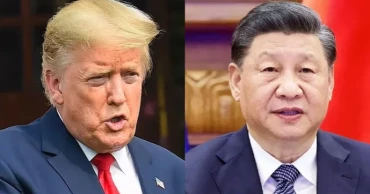
Trump warns of additional tariffs on China
U.S. President Donald Trump has warned that he will introduce further tariffs on Chinese goods starting tomorrow if Beijing does not roll back its recently announced 34% retaliatory tariffs on the United States.
Trump stated that the new tariffs on Chinese imports would be set at 50%.
Trump defends tariffs as 'medicine' despite market turmoil
This development follows China’s announcement on Friday that it would impose 34% tariffs on U.S. products, in response to the White House’s decision to apply the same rate of levies on all Chinese imports beginning April 9.
Source: With input from agency .
10 months ago

Asian markets crash; Nikkei plunges nearly 8%
sian stocks plunged Monday, following Friday’s dramatic sell-off on Wall Street amid escalating trade tensions sparked by U.S. President Donald Trump’s tariff increases and Beijing’s retaliation.
U.S. futures pointed to continued losses. Futures for the S&P 500 declined 2.5%, the Dow Jones Industrial Average futures dropped 2.1%, and Nasdaq futures slid 3.1%.
In Tokyo, the Nikkei 225 fell nearly 8% shortly after markets opened, and by midday, the index was down 6% at 31,758.28. A circuit breaker was briefly triggered, halting trading in Topix futures after a sharp drop in U.S. futures.
Financial stocks were among the hardest hit. Shares in Mizuho Financial Group plunged 11.3%, while Mitsubishi UFJ Financial Group’s stock fell 9.9%, as investors grew increasingly anxious about the potential global economic impact of the trade conflict.
Chinese markets, which often move independently of global trends, also experienced steep losses. Hong Kong’s Hang Seng Index dropped 9.4% to 20,703.30, and the Shanghai Composite Index shed 6.2% to close at 3,134.98.
Shares in tech giants also took a hit, with Alibaba Group Holdings tumbling 10% and Tencent Holdings falling 9.4%.
South Korea’s Kospi declined 4.1% to 2,363.82, and Australia’s S&P/ASX 200 lost 3.8% to 7,377.70, after paring back from earlier losses exceeding 6%.
Oil prices continued their descent, with U.S. benchmark crude dropping 4%, or $2.50, to $59.49 per barrel. Brent crude, the international standard, declined $2.25 to $63.33 a barrel.
In currency markets, the U.S. dollar weakened to 146.70 Japanese yen from 146.94 yen. The yen, typically considered a safe haven in times of financial distress, gained ground. The euro eased to $1.0926 from $1.0962.
Friday marked Wall Street’s most severe downturn since the COVID-19 crisis. The S&P 500 dropped 6%, the Dow fell 5.5%, and the Nasdaq Composite declined 5.8%.
Analysts anticipate heightened market volatility and further dramatic price movements in the near term, as hopes for a quick resolution to the trade dispute remain slim.
Stock Market sees fall in Dhaka, rise in Chittagong on first day after Eid
Nathan Thooft, chief investment officer and senior portfolio manager at Manulife Investment Management, warned that more countries are likely to introduce retaliatory tariffs against the U.S. Given the number of parties involved, “we believe it will take significant time to navigate through the upcoming negotiations.”
He added, “Our overall assessment is that market uncertainty and volatility are likely to continue for an extended period.”
China's response to Trump’s latest tariff escalation intensified global market losses. Despite a surprisingly strong U.S. jobs report—typically the month's main economic highlight—it wasn’t enough to stop the market slide.
So far, the trade war has yielded few if any winners in the financial markets. Beijing's announcement of retaliatory tariffs—including a 34% tariff on all U.S. imports starting April 10—fueled a fresh wave of selling across global exchanges.
As the world's two largest economies, the U.S. and China are central to global economic stability. A major concern is that a prolonged trade war could tip the world into a recession, which may push equity prices even lower. The S&P 500 has already fallen 17.4% from its record high in February.
Trump acknowledged that Americans may experience “some pain” due to tariffs but maintained that the long-term objectives—such as restoring manufacturing jobs to the U.S.—justify the cost. He appeared indifferent to the significant financial losses faced by investors.
From his Mar-a-Lago resort in Florida, Trump headed to his nearby golf course after posting on social media, “THIS IS A GREAT TIME TO GET RICH.”
The Federal Reserve could potentially soften the economic impact of tariffs by lowering interest rates, which generally encourages spending and borrowing. However, Fed Chair Jerome Powell cautioned on Friday that tariffs may drive up inflation expectations, and rate cuts could further stoke price increases.
“Our responsibility is to keep long-term inflation expectations well anchored and to ensure that a one-time rise in price levels does not evolve into persistent inflation,” Powell said.
Much depends on how long Trump’s tariffs remain in place and how other countries respond. Some on Wall Street are still hopeful Trump might reduce tariffs if he can secure favourable outcomes through negotiations.
Stuart Kaiser, head of U.S. equity strategy at Citi, noted in a Sunday briefing to clients that current earnings forecasts and stock valuations do not fully account for the trade war’s potential effects. “There’s still significant room for further decline despite the recent sharp pullback,” he said.
There was no indication from the Trump administration that it intends to ease the tariff policy that has wiped out trillions in market value.
In an interview on Fox News Channel’s “Sunday Morning Futures,” White House trade adviser Peter Navarro reiterated the president’s position, insisting investors should remain calm. He claimed that the administration’s trade strategy would ultimately lead to “the biggest boom in the stock market we have ever seen.”
Shift towards renewable energy both urgent necessity and strategic investment opportunity: BIDA
“People just need to stay put, let the market find its bottom, and not get rattled by the panic driven by the media,” Navarro said.
10 months ago
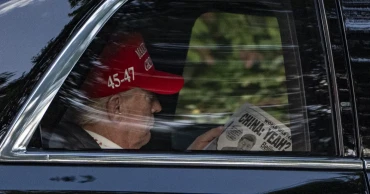
Trump goes all in with bet that the heavy price of tariffs will pay off for Americans
Not even 24 hours after his party lost a key Wisconsin race and underperformed in Florida, President Donald Trump followed the playbook that has defined his political career: He doubled down.
Trump’s move Wednesday to place stiff new tariffs on imports from nearly all U.S. trading partners marks an all-in bet by the Republican that his once-fringe economic vision will pay off for Americans. It was the realization of his four decades of advocacy for a protectionist foreign policy and the belief that free trade was forcing the United States into decline as its economy shifted from manufacturing to services.
The tariff announcement was the latest and perhaps boldest manifestation of Trump’s second-term freedom to lead with his instincts after feeling his first turn in the Oval Office was restrained by aides who did not share his worldview. How it shakes out could be a defining judgment on his presidency.
The early reviews have been worrisome.
Financial markets had their worst week since the onset of the COVID-19 pandemic, foreign trade partners retaliated and economists warned that the import taxes may boost inflation and potentially send the U.S. into a recession. It's now Republican lawmakers who are fretting about their party’s future while Democrats feel newly buoyant over what they see as Trump’s overreach.
Democratic activists participated in rallies across the country Saturday in the largest demonstrations since Trump returned to office in January. “The winds are changing,” said Rahna Epting, who leads MoveOn, one of many organizing groups.
Trump is unbowed.
He has promised that the taxes on imports will bring about a domestic manufacturing renaissance and help fund an extension of his 2017 tax cuts. He insisted Thursday as the Dow Jones fell by 1,600 points that things were “going very well” and the economy would “boom," then spent Friday at the golf course as the index plunged 2,200 more points.
China to impose 34% tariff on all US imports from April 10
The White House stayed the course Saturday. “This past November, America resoundingly rejected the business-as-usual policies coming out of D.C.,” said White House spokesman Kush Desai, adding, “The entire Trump administration is aligned on delivering on President Trump’s mandate to reject the status quo.”
In his first term, Trump’s tariff threats brought world leaders to his door to cut deals. This time, his actions so far have led to steep retaliation from China and promises from European allies to push back.
Even some Trump supporters are having their doubts.
Frank Amoroso, a 78-year-old resident of Dewitt, Michigan, said he is concerned about short-term rising interest rates and inflation, although he believes the tariffs will be good for the country in the long run.
Amoroso, a retired automotive engineer who voted for Trump, said he would give the president’s second-term performance a C-plus or B-minus. “I think he’s doing things too fast,” he said. “But hopefully things will get done in a prudent way, and the economy will survive a little downfall.”
Rep. French Hill, R-Ark., in a telephone town hall with constituents Thursday night, expressed reservations about the broad nature of the tariffs.
Hill, who represents a district that includes Little Rock, said he does not back tariffs on Canada and Mexico. He said the administration should instead focus on renegotiating a U.S. trade agreement with its two neighbors.
“I don’t support across-the-board tariffs as a general matter, and so I don’t support those, and I will be urging changes there because I don’t think they will end up raising a bunch of revenue that’s been asserted,” Hill said. “I wish I thought they did, but personally I don’t think they will. But I do support trade diplomacy.”
Still, much of Trump's “Make America Great Again” coalition remains publicly supportive.
Doug Deason, a prominent Texas-based Republican donor, said he loves the president's tariff plan, even if it causes some economic disruption.
Asian stocks tumble following Wall Street drop on Trump tariffs
“He told us during the election there would be pain for every American to get this ship turned around,” Deason said. “It is hard to watch our portfolios deteriorate so much, but we get it. We hope he holds course.”
As Trump struggles with the economy, Democrats are beginning to emerge from the cloud of doom that has consumed their party ever since their election drubbing in November.
They scored a decisive victory in Wisconsin’s high-profile state Supreme Court election on Tuesday, even after Elon Musk and his affiliated groups poured more than $20 million into the contest. New Jersey Sen. Cory Booker then breathed new life into the Democratic resistance by delivering a record 25-hour-long speech on the Senate floor that centered on a call for his party to find its resolve.
Booker told The Associated Press afterward that a significant political shift has begun even as his party tries to learn from its mistakes in the 2024 presidential election.
“I think you’re seeing a lot more energy, a lot more determination, a lot more feeling like we’ve got to fight,” Booker said. “You can’t sit back any more. You can’t sit on the sidelines. There’s a larger, growing movement.”
Booker, a 2020 presidential candidate, acknowledged he is not ruling out a 2028 run, although he said he is focused on his 2026 Senate reelection for now.
There is broad agreement among Democrats — and even some Republicans, privately at least — that what Trump has unleashed on the global economy could help accelerate the Democratic comeback.
Ezra Levin, co-founder of the progressive resistance group known as Indivisible, has been critical of Democratic officials’ response in recent weeks to Trump’s leadership. But on Friday, he was somewhat giddy about the political consequences for Trump’s GOP after the tariffs announcement.
“Raising prices across the board for your constituents is not popular,” Levin said. “It’s the kind of thing that can lead to a 1932-style total generational wipe out of a party.”
11 months ago