world-business

Evolving global order brings risks and opportunities for Bangladesh, economist Wahiduddin tells BIDS Conference
The evolving global order and changing geo-economic landscape present both challenges and opportunities for developing countries, as highlighted by renowned economist Wahiduddin Mahmud.
He shared his insights during a public lecture titled “Evolving Global Order and Geo-economics: Implications for Less Developed Countries” at the annual BIDS (Bangladesh Institute of Development Studies) conference in Dhaka.
Thailand keen on FTA with Bangladesh as soon as possible
The session, moderated by Policy Research Institute Chairman Zaidi Sattar, featured discussions with key figures including Selim Raihan, Executive Director of SANEM (South Asian Network on Economic Modelling), and Dr. Binayak Sen, Director General of BIDS.
Mahmud emphasized the significance of strong public support for governments to align political and foreign economic interests effectively. He pointed out that this support is crucial in tackling the exploitation of developing countries by multinational companies. He also noted the distinct nature of the current geopolitical tensions between superpowers, particularly the US and China, compared to the Cold War era.
High-level Saudi business delegation in Dhaka to explore investment opportunities here
Discussing the economic strategies of Vietnam and China, Mahmud illustrated how government involvement in privatized sectors can yield benefits.
Zaidi Sattar reflected on the shift from globalization to economic nationalism, observing that even advocates of globalization are adopting protectionist policies. This, he suggested, requires deep consideration by developing countries in crafting their economic strategies.
Selim Raihan commented on Bangladesh's historical non-involvement in geopolitics and its emerging role as a significant player amidst global power conflicts.
FBCCI will support steel industry to increase exports to Commonwealth nations
Overall, the discussions at the BIDS conference underscored the need for developing countries like Bangladesh to carefully navigate the new global order, balancing internal economic policies with external geopolitical pressures.
2 years ago
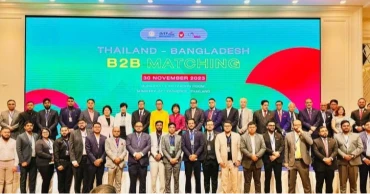
Thailand keen on FTA with Bangladesh as soon as possible
The Thai government has expressed interest in putting in place a free trade agreement with Bangladesh as soon as possible.
High-level Saudi business delegation in Dhaka to explore investment opportunities here
The two countries, during a recent series of meetings, emphasized on FTA for greater business opportunities.
A 50-member delegation from Bangladesh just concluded a bilateral visit to Thailand, organized jointly by Bangladesh Thai Chamber of Commerce and Industry (BTCCI), Ministry of Commerce of Thailand along with the Ministry of Foreign Affairs of Thailand and the Royal Thai Embassy in Bangladesh.
Bangladesh and Thailand are interested to explore new avenues of cooperation in blue economy, electronic vehicle assembly and ecosystem management, technical textiles, data-driven modern agriculture, light engineering, halal industry, value added food processing etc.
Policy support for SME industries in Bangladesh along with ESG compliance were also discussed for collaboration.
During these bilateral discussions between the private sector and government representatives, a host of new avenues for closer cooperation were discussed.
The largest ever business to business matchmaking event took place in Bangkok with more than 100 Thai businesses taking part in the event, said BTCCI on Wednesday.
Over 145 contracts were exchanged during this event between the business delegations.
Shams Mahmud, President of BTCCI, who led the delegation along with the Board of Directors and Makawadee Sumitmor, Ambassador of the Royal Thai Embassy in Bangladesh, called on the Adviser to the Prime Minister of Thailand and Thailand Trade Representative Dr. Nalinee Taveesin, Permanent Secretary of the Ministry of Foreign Affairs Sarun Charoensuwan, Secretary of the Minister of Industry Dr. Pailin Teansuwa and Ekachat Seetavorarat, Deputy Permanent Secretary of the Ministry of Commerce.
US Embassy inaugurates 2nd cohort of 'Academy for Women Entrepreneurs' in Bangladesh
During the visit, the delegates also visited the factories of Econowatt Waste Water Management, Lighting and Equipment Public Company Limited (L&E), Kubota Farm and Penn Asia Co., Ltd. (Dry Dye Technology).
BTCCI has planned a host of events in the coming year to take targeted sector trade delegation visits and explore new ways to enhance future trade and cooperation between the private sectors of both Thailand and Bangladesh.
2 years ago

High-level Saudi business delegation in Dhaka to explore investment opportunities here
A 31-member business delegation from Saudi Arabia is visiting Bangladesh to explore investment opportunities.
Saudi Investment Minister Khalid Abdul Aziz Al Falih and Deputy Minister for Investors Outreach Badr Ibrahim Al Badr came separately to Dhaka.
The high-level business delegation included representatives from Saudi investment entities including Saudi Fund for Development (SFD), Saudi chambers and leading Saudi companies including RSGTi, Acwapower, Saudi Exim Bank, Al-Jomaih Energy and Water, Desert Technology, Data Volt, Rasi Investment, SAL Logistics, Fly Nas, Engineering Dimension contracting, Al-Jamil Industrial, Al-Horaish for Trading etc.
Saudi company to operate Patenga Container Terminal
The business delegation had a networking session on Tuesday night with leading businessmen of Bangladesh.
They will join a business seminar today.
The Saudi investment minister is visiting Bangladesh to witness the signing ceremony of an agreement between Chittagong Port Authority and Saudi Red sea Gateway Terminal international (RSGTi) ltd and to attend other business meetings including a call on Prime Minister Sheikh Hasina.
The Ministry of Foreign Affairs is coordinating this high-level visit together with the Ministry of Shipping and Bangladesh Investment Development Authority.
Saudi Arabia wins the bid to host World Expo 2030 in Riyadh
2 years ago

FBCCI will support steel industry to increase exports to Commonwealth nations
The Federation of Bangladesh Chambers of Commerce and Industry (FBCCI) will support steel industry entrepreneurs to increase Bangladesh's steel exports to the potential markets of the Commonwealth countries.
US Embassy inaugurates 2nd cohort of 'Academy for Women Entrepreneurs' in Bangladesh
The FBCCI held a meeting with the Commonwealth Enterprise and Investment Council (CWEIC) and the Bangladesh Steel Manufacturers Association (BSMA) on Monday to discuss the prospects of Bangladesh's steel industry in line with recent Commonwealth Annual Summit in London.
FBCCI President Mahbubul Alam was present as the chief guest in the meeting at the office of the apex trade body in Gulshan in the capital.
CWEIC strategic advisor Zillur Hossain and BSMA president Jahangir Alam and secretary general Sumon Chowdhury were present along with representatives from the Bangladesh Investment Development Authority.
In the meeting, FBCCI President Mahbubul Alam said that the development of a country is measured by per capita consumption of steel while per capita steel consumption in Bangladesh is 48 kilograms.
“Most of the Commonwealth countries are developing countries. The pressure on the dollar can be eased somewhat by earning foreign exchange through steel exports needed for their growing development infrastructure. Steel manufacturers only need to take care of quality,” he said.
BMCCI prioritises promotion of Malaysian timber and furniture in Bangladesh
In the discussion. Dr Sumon Chowdhury said that currently the total steel production capacity of Bangladesh is about 15 million tonnes per year and by 2025 it will be 20 million tonnes.
“The infrastructure and construction work in Bangladesh increased rapidly after 1990. And demand for steel also increased gradually. Many large steel industries were established in the country to meet growing demand,” he said.
2 years ago

US Embassy inaugurates 2nd cohort of 'Academy for Women Entrepreneurs' in Bangladesh
Stephen F. Ibelli, Public Affairs Counselor at the US Embassy, on Thursday inaugurated the second cohort of the Academy for Women Entrepreneurs (AWE) program at the EMK Center in Dhaka.
AWE, a global initiative led by the US Department of State, provides enterprising women with the knowledge, professional network, and foundational materials essential for launching and expanding successful businesses.
In collaboration with BRAC University’s Center for Entrepreneurship Development, US Embassy Dhaka is deeply committed to supporting young aspiring women entrepreneurs, promoting small and medium enterprises (SMEs), and nurturing local women business leaders, especially those from historically underrepresented communities, said the Embassy.
As a flagship program promoting entrepreneurship through increased trade, AWE aligns seamlessly with the US Strategy of Global Women’s Economic Security, which envisions a world where women and girls from diverse backgrounds can fully, meaningfully, and equally contribute to and benefit from global economic growth and prosperity, according to the US Embassy.
The second cohort of the AWE program is set to empower 90 participants from three distinct geographic locations: Dhaka, Chattogram, and Sylhet.
Participants from Chattogram and Sylhet will join sessions at the EMK Center virtually through Zoom.
The program's goal this year is to recruit participants from historically underrepresented, indigenous, and minority communities, as well as women aged 20-45 who have traditionally been excluded from participation in formal training programs.
As a US government exchange initiative, AWE connects women with American learning and expertise, fostering stronger ties among women entrepreneurs across diverse American and Bangladeshi markets.
The AWE Program is in collaboration with Arizona State University’s Thunderbird School of Global Management (ASU) and the Freeport-McMoRan Foundation, the creators of DreamBuilder—a no-cost online learning platform.
This platform imparts fundamental business skills from a US perspective and offers access to soft-skills training to enhance participants’ overall business acumen.
2 years ago

Micro, small, medium enterprises in Bangladesh face a financing gap of $2.8 billion
In Bangladesh, the micro, small, and medium enterprises (MSME) sector faces a financing gap of $2.8 billion, according to IFC, a member of the World Bank Group.
With nearly 10 million SMEs contributing to about 25 percent of the country's GDP, enhancing SME financing is key to boosting economic growth, it said on Tuesday (November 28, 2023).
To explore the various aspects of financing for small and medium enterprises (SMEs) in Bangladesh, IFC, in association with Bangladesh Bank and the government of Norway, organized a conference in Dhaka.
Read: BTCCI to promote Bangladesh as 'gateway to South Asia' for Thailand
Experts, policymakers, and stakeholders from across the world shared their insights to help foster a resilient and inclusive environment for SME financing in the country.
The event touched upon the partnership between IFC and Bangladesh Bank, results of an impact assessment study carried out on women-owned SMEs, next-generation SME financing trends, and global best practices in SME financing.
It also addressed the challenges and opportunities in SME financing, identifying solutions and innovations in light of global SME finance developments.
Highlighting the joint efforts of IFC and Bangladesh Bank in SME financing, the conference showcased initiatives, including developing the country’s first Credit Guarantee Scheme (CGS), reforming an SME finance policy, and strengthening the sector’s capacity.
IFC’s impact study on CGS, supported by the Norwegian Embassy, revealed that the number of first-time borrowers receiving loans in cottage, micro, and small enterprises and the average ticket size of the loans for women-owned micro and small enterprises was statistically significantly higher after the launch of CGS than ever before. Women entrepreneurs who received CGS-backed loans reported that it helped their businesses survive amid crises and provided new impetus to thrive.
Speaking at the conference as the chief guest, Governor of Bangladesh Bank, Abdur Rouf Talukder, said that recognizing that cottage, micro, small and medium enterprises (CMSMEs) are the backbone of society, Bangladesh Bank is spearheading several initiatives to mainstream medium and small businesses into the financial landscape.
"This includes establishing a new and dedicated Credit Guarantee Department that has already piloted an online platform—the Credit Guarantee Information Management System—to help lodge applications seamlessly. We are at an important crossroads of economic development and must ensure that everyone, especially those who often get left out, can be part of the financial picture," he said.
Read: BGMEA chief for stepping up economic diplomacy to boost Bangladesh-US trade
Deputy Governor of Bangladesh Bank, Abu Farah Md. Nasser, said a strong SME sector is akin to a superpower for creating jobs, export earnings, and productive proficiency.
"Now more than ever, we need to work together to enhance credit guarantee schemes, tap into alternative databases for SME lending, and ultimately fast-track CMSME finance in Bangladesh. We want to bridge the gap between rich and poor, make sure men and women have equal opportunities, and boost economic growth across the country," he said.
Martin Holtmann, IFC Country Manager for Bangladesh, Bhutan, and Nepal, said Bangladesh is rapidly accelerating its economic development, and creating more and better jobs is a priority they share with the country as long-term partners since 1985.
"IFC’s collaboration with Bangladesh Bank to develop SME solutions highlights a milestone in achieving financial inclusion and economic advancement and underscores the transformative power of partnerships, innovation, and our collective commitment to progress. We aim to increase access to financial products that are affordable, sustainable, and responsive to risks while developing institutional, operational, and policy frameworks to ensure the benefits of economic growth permeate every facet of this dynamic nation,” he said.
Espen Rikter-Svendsen, Ambassador of the Royal Norwegian Embassy in Bangladesh, said, “Lack of access to finance is the biggest impediment to the growth of SMEs in Bangladesh, particularly for the women-headed SMEs."
Recognizing and addressing the challenges faced by SMEs and women entrepreneurs is not just a matter of economic significance but also a step towards fostering gender equality, he said.
"It is essential to create an environment that facilitates easier access to finance for SMEs, encourages more women to take on entrepreneurial roles, and provides them with the necessary financial resources to succeed," said the ambassador.
Other participants included Qamar Saleem, CEO of the SME Finance Forum; Abdoulaye Seck, Country Director of the World Bank for Bangladesh and Bhutan; and managing directors and CEOs of leading banking and non-banking financial institutions in Bangladesh.
The event also included technical sessions and panel discussions focusing on global best practices and a future roadmap to accelerate the SME financing market in Bangladesh.
Read more: BGMEA urges Proparco to provide SMEs with the low-cost fund, grant
2 years ago

BTCCI to promote Bangladesh as 'gateway to South Asia' for Thailand
A 50-member trade delegation from Bangladesh will be visiting Thailand to take part in the biggest business-to-business matchmaking seminar to be held in Bangkok on November 30.
The delegation will be led by Abdur Rahim, Additional Secretary to the Ministry of Commerce; Makawadee Sumitmor, Ambassador of Thailand to Bangladesh; and Bangladesh Thai Chamber of Commerce and Industry (BTCCI) President Shams Mahmud.
Bangladesh Thai Chamber of Commerce and Industry along with the Commerce Ministry of Thailand and the Royal Thai Embassy in Dhaka jointly organised this program.
The delegation visit will be the first of a series of planned visits to Thailand by Bangladesh Thai Chamber of Commerce and Industry to make Thailand the gateway for Bangladesh to Southeast Asia and promote Bangladesh as the gateway to South Asia for Thailand, BTCCI said on Tuesday.
Read: BGMEA chief for stepping up economic diplomacy to boost Bangladesh-US trade
A seminar titled “Bangladesh and Thailand: New Horizons for Trade and Investment” will also be held during this time where Dr Masrur Reaz, Chairman of Policy Exchange, will make the keynote presentation.
Over 100 Thai companies will be participating in this event, comprising of agro, beauty and skincare, construction, light engineering, textile, aviation, hospitality, renewable energy, and fisheries sectors.
During this visit, important discussions are expected to take place regarding free trade agreement between Bangladesh and Thailand along with ways to encourage FDI, joint ventures, transfer of technology, and new avenues of cooperation.
Besides this, the delegation leaders will make courtesy calls on Dr. Nalinee Taveesin, Adviser to the Prime Minister and Thailand Trade Representative; Sarun Charoensuwan, Permanent Secretary of the Ministry of Foreign Affairs; and Ekachat Seetavorarat, Deputy Permanent Secretary of the Ministry of Commerce.
Read: BMCCI advocates for business-friendly environment in meeting with deputy governor of central bank
Four factory visits have been arranged to showcase cutting edge technologies in garments and textile, environmental management, construction, light engineering, and agro sectors for the delegation members.
2 years ago

BMCCI prioritises promotion of Malaysian timber and furniture in Bangladesh
Malaysian Timber Council’s (MTC) Regional Representative Arif Nasir and MTC Executive Nur Adelin Mohd Haris visited the Bangladesh-Malaysia Chamber of Commerce and Industry’s (BMCCI) office and had an interactive meeting on Timber trade-related issues.
Senior Vice President of BMCCI Shabbir Ahmed Khan, Secretary General Md. Motaher Hoshan Khan, and Executive Secretary Hasanur Rahman Chowdhury were present at the meeting, said a press release.
The Malaysia Timber Council (MTC) was eager to engage with Bangladeshi timber importers, furniture and interior decor companies, and other stakeholders. Their aim was to provide updates about the Malaysian timber industry while exploring the market potential in Bangladesh.
During the meeting, they raised concerns regarding the decline in Malaysian timber imports to Bangladesh, reads the release.
The participants actively discussed potential cooperation between MTC and BMCCI, seeking policy support and research on market trends to address this issue effectively.
Senior Vice President Shabbir Ahmed Khan proposed the signing of a Memorandum of Understanding (MoU) between the MTC and the BMCCI.
This MoU would facilitate mutual information exchange and uncover further trade and investment opportunities in Bangladesh for their Malaysian counterparts.
He also said that promoting Malaysian Timber and Furniture in Bangladesh can be a mutually beneficial arrangement for both countries. BMCCI's efforts to facilitate this promotion can help Malaysian companies expand their market reach in Bangladesh while providing Bangladeshi consumers with access to high-quality and sustainable timber and furniture products.
The MTC also expressed its desire for increased engagement in the thriving consumer market of Bangladesh, requesting the support of the BMCCI in this regard.
Secretary General Md. Motaher Hoshan Khan agreed to collaborate on matters to investigate the potential of the timber and furniture industry. He also expressed interest in exploring inward investment opportunities from Malaysia in the Economic Zones of Bangladesh.
Assuring overall cooperation, Md. Motaher Hoshan Khan pledged greater engagement between the BMCCI and the furniture and timber industries of Bangladesh with their Malaysian counterparts.
The meeting also highlighted the shared commitment to strengthening bilateral trade relations and exploring avenues for growth in the timber and furniture sectors.
2 years ago

Import-export through Lalmonirhat’s Burimari land port off for Kali Puja
Export and import between Bangladesh and India through Lalmonirhat’s Burimari land port will remain off today and tomorrow, on the occasion of Kali Puja.
Three Indian organizations for businesses and drivers decided to keep their activities suspended for two days, marking Kali Puja.
However, internal activities at the land port in Lalmonirhat are going on.
Mur Hasan Kabir, sub-inspector of Burimari Land Port Immigration Outpost, said immigration activities between Bangladesh and India are on.
Gias Uddin, assistant director (traffic) of Burimari Land Port Authority, said businesspeople from both countries informed them about the suspension of business activities for two days on the occasion of Kali Puja.
2 years ago

No dollar trading at official exchange rate as Tk 15 spread opens up with kerb market
The US dollar crisis grows deeper in banks after Bangladesh Bank (BB) warned the banks to buy it at its prescribed pre-fixed rate, yet in the kerb (open) market, the dollar is selling at Tk128 even - an almost Tk 15 difference.
The central bank official avoid commenting on the record price of dollars in the kerb, arguing that the BB is searching for the illegal dollar traders who are behind the trading of dollars at a higher rate.
In this regard, the BB spokesperson and Executive Director Mezbaul Haque told UNB that the central bank warned banks strictly to buy dollars at an excessive rate.
The central bank will impose rigorous punishment if banks buy dollars ignoring the bank rate, he said.
Read: US dollar is costlier as local currency depreciated by Tk0.5
The price of the US dollar is rising unbridled in the open market. In contrast, three days later, the price of the dollar increased by Tk3 in the kerb market. On Saturday, the US dollar was selling in the kerb market at Tk127 per dollar.
Earlier, on Wednesday (November 8), every dollar was sold at Tk 124 in the kerb market.
For money exchangers, Bangladesh Bank has fixed the buying price of the dollar at Tk113.75 and the selling price at Tk115.25.
However, no money exchange traded dollars at this rate.
Read: PM Hasina launches Taka Pay, first-ever local currency card, to save costly dollars
In Motijheel, Dilkusha, Paltan, and Fakirapool areas, buyers have bought dollars at the rate of up to Tk128 per dollar in various shops and restaurants on Saturday while dollars are not traded in money exchanges.
In this regard, Secretary General of the Money Changers Association of Bangladesh Helal Sikder said that the dollar is not being traded at the rate set by Bangladesh Bank.
“The customer comes and goes back without getting a dollar. They are forced to buy dollars from illegal traders at high rates,” he added.
Read more:8 arrested for smuggling dollars through betting apps in Khulna: RAB
2 years ago