world-business

Ransomware attack on China's biggest bank disrupts Treasury market trades, reports say
A financial services business of China's biggest bank says it was it by a ransomware attack that reportedly disrupted trading in the U.S. Treasury market.
Industrial and Commercial Bank of China Financial Services handles trades and other services for financial institutions. A statement on its website seen Friday said the ransomware attack this week disrupted some of its systems but that it had disconnected parts of the affected systems to limit the impact from the attack.
Also read: White House invites dozens of nations for ransomware summit
The company, which is based in New York, said it was investigating and had reported the problem to law enforcement.
All Treasury trades executed Wednesday and repo financing trades on Thursday were cleared, it said. It said ICBC's banking, email and other systems were not affected.
Also read: Major US pipeline halts operations after ransomware attack
The company gave no further details but reports said the attack was by LockBit, a Russian-speaking ransomware syndicate that does not target former Soviet countries. It is one of the most efficient ransomware variants around, according to the cybersecurity firm Emsisoft. Active since September 2019, it has attacked thousands of organizations.
2 years ago

Bangladeshi businesses would take advantage of South Korea's preferential trade policy, ambassador hopes
South Korean Ambassador Park Young-sik is optimistic that the Bangladeshi business sector would take advantage of Korea's preferential trade policy towards the country.
South Korea has provided duty-free and quota-free access for 95 percent of Bangladeshi products to the Korean market since 2008.
Trump's business and political ambitions poised to converge as he testifies in New York civil case
To commemorate the 50th anniversary of establishment of diplomatic relations between Bangladesh and the Republic of Korea, a high-level delegation from the Korea Importers Association (KOIMA) visited Dhaka from November 5 to 6.
During the visit, the KOIMA delegation signed a MoU with Federation of Bangladesh Chambers of Commerce and Industry (FBCCI) to expand bilateral trade between South Korea and Bangladesh while diversifying and stabilizing global supply chains and strengthening partnership.
Bilateral trade between the two countries has exceeded $3 billion for the first time.
This MoU between KOIMA and FBCCI is expected to play a significant role in enhancing the bilateral trade in the future, the Korean side said.
Commerce Secretary Tapan Kanti Ghosh joined today’s event as chief guest.
Ambassador Park Young-sik said that the year 2023, which marks the 50th anniversary of diplomatic relations between South Korea and Bangladesh, will mark a significant turning point in the bilateral trade between the two countries by overcoming the challenges of Covid-19 pandemic and global economic challenges stemming from the Russia-Ukraine war.
Business leaders concerned over political unrest as blockade costs Tk6500cr a day
South Korea and Bangladesh have strengthened cooperation in various fields such as trade, investment, development and people-to-people exchanges.
With over 52 years of experience, KOIMA is Korea's only organization dedicated exclusively to facilitating imports into the country for the development of its industry.
KOIMA's 8,500 members are specialists in their respective business fields and perform various activities that ultimately contribute to strengthening trade relations with other countries.
South Korea is currently the fifth largest contributor of foreign direct investment (FDI) to Bangladesh, with the most notable recent investment being the expansion of manufacturing industries in automobiles, mobile phones and electronics.
Companies such as Samsung Electronics and Hyundai have established strong presence in Bangladesh, creating quality employment opportunities through domestic manufacturing.
Both countries are at the cusp of a new era in relations. Discussions on the Economic Partnership Agreement (EPA) and similar agreements between South Korea and Bangladesh are underway, promising to further enhance trade and investment cooperation.
Business behind medicines is like arms trading: Planning Minister
According to the statistics of Korea International Trade Association, Bangladesh and South Korea’s bilateral trade volume in 2022 was $3.035 billion, an increase of 38.71 percent from the previous year’s $2.188 billion.
2 years ago
Global energy transition offers opportunity for boosting growth in South Asia: World Bank
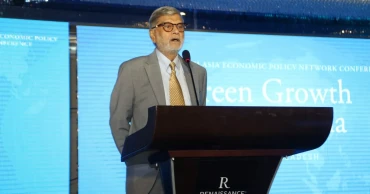
Despite solid growth, South Asia faces a risky outlook, says the World Bank in its latest regional economic update, urging countries to fully capitalize on the global energy transition to help boost growth.
‘Toward Faster, Cleaner Growth’ is the subject of a two-day conference organized by the BRAC Institute of Governance and Development (BIGD) and the World Bank.
Opening on Monday, the conference is a platform for academics, experts, and researchers to discuss the opportunities and challenges the region faces in pursuing green growth.
World Bank approves $1.25bn financing in 3 projects for Bangladesh
Constrained by slowing growth and fiscal challenges, South Asia’s governments have limited room to help their economies make the most of the global energy transition.
The global energy transition presents an opportunity to boost productivity and investment, create jobs, cut air pollution, and reduce reliance on fuel imports.
Even with limited fiscal space, countries can encourage firms to adopt more energy-efficient technologies through market-based regulations, information campaigns, broader access to finance, and the provision of reliable power grids.
“Bangladesh has made some impressive progress in green development. For example, our garments sector ranks among the world’s best on the number of green factories,” said Planning Minister M. A. Mannan.
World Bank approves $200 million to help Bangladesh improve primary healthcare for common illnesses including dengue
“We must continue on the path outlined in Bangladesh’s Energy Efficiency and Conservation Master Plan, which includes a series of programs that aim to help large industrial energy consumers, residential consumers, buildings, private companies, and government agencies move toward energy efficiency”, he added.
Improvements in energy efficiency could accelerate progress towards both economic and environmental goals in South Asia.
The region uses twice as much energy as the global average to produce each unit of output. While South Asian firms are enthusiastic adopters of basic energy-efficient technologies, they lag in the adoption of more advanced technologies.
“Bangladesh is among the countries most vulnerable to climate change,” said Abdoulaye Seck, World Bank Country Director for Bangladesh and Bhutan.
World Bank’s cooperation sought to build power transmission lines from Nepal to Bangladesh
“And as the intensity and frequency of natural disasters increase, Bangladesh must do more to tackle the environment and climate risks and sustain its strong growth performance. Green growth can help Bangladesh build long-term resilience against climate risks while help to attain its vision of becoming an upper-middle-income country,” he noted.
The energy transition will reshape South Asia’s labor markets. Almost one-tenth of the region’s workers are employed in pollution-intensive jobs.
These jobs are concentrated among lower-skilled and informal workers who may struggle to adjust to job or income losses.
While the energy transition can help create new jobs, it could also leave some workers stranded in declining industries.
The report recommends a wide range of policies to protect such workers, including providing better access to high-quality education and training, finance, and markets; facilitating worker mobility; and strengthening social safety nets.
“In this conference, we will truly emphasize the agenda of green growth and delve deeply into the choices we can make and how we can deliver on this agenda.” said Imran Matin, BIGD Executive Director.
“In South Asia, given the salience of our population and demographics, green growth agenda is not only a topic of central importance, but also a place to foster central innovation, and that’s what we are looking forward to,” he said.
The green growth agenda cannot be advanced without really thinking about how it delivers on growth and the importance of interdisciplinary approach is key to understanding green growth, he added.
2 years ago

Deal to force multinational companies to pay a 15% minimum tax is marred by loopholes, watchdog says
An ambitious 2021 agreement by more than 140 countries and territories to weed out tax havens and force multinational corporations to pay a minimum tax has been weakened by loopholes and will raise only a fraction of the revenue that was envisioned, a tax watchdog backed by the European Union has warned.
The landmark agreement, brokered by the Organization for Economic Cooperation and Development, set a minimum global corporate tax of 15%. The idea was to stop multinational corporations, among them Apple and Nike, from using accounting and legal maneuvers to shift earnings to low- or no-tax havens.
Those havens are typically places like Bermuda and the Cayman Islands where the companies actually do little or no business. The companies' maneuvers result in lost tax revenue of $100 billion to $240 billion a year, the OECD has said.
According to the report, being released Monday by the EU Tax Observatory, the agreement was expected to raise an amount equal to nearly 10% of global corporate tax revenue. Instead, because the plan has been weakened, it says the minimum tax will generate only half that — less than 5% of corporate tax revenue.
Much of the hoped-for revenue has been drained away by loopholes, some of them introduced as the OECD has been refining details of the agreement, which has yet to take effect. The watchdog group estimates that a 15% minimum tax could have raised roughly $270 billion in 2023. With the loopholes, it says, that figure drops to about $136 billion.
Read: Indra Mani Pandey of India to join as next Secretary General of BIMSTEC soon
Over the summer, the OECD agreed to delay for at least a year — until 2026 — a provision that would have let foreign countries impose additional taxes on U.S. multinational companies that failed to pay at least a 15% rate on their overseas earnings.
The EU Tax Observatory noted that even under the rules of the 2021 agreement, companies would maintain some ability to evade taxes. Companies that have tangible businesses — factories, warehouses, stores and offices — operating in a particular country, for example, could continue to pay a tax rate below 15%. That carveout, the EU Tax Observatory warned, could “give firms incentives to move production to countries with tax rates below 15%."
“This risks exacerbating the race-to-the-bottom with corporate income tax rates,” it said.
Another loophole lets countries offer tax credits, for such things as conducting research and investing in local factories, that can reduce companies’ tax rates below the 15% mark and still comply with the 2021 agreement.
Read: Three-day Expo on ‘marine and offshore items’ kicks off in Dhaka
The Tax Observatory also expressed concern that the race by governments to grant tax breaks for green technologies to fight climate change “raises some of the same issues as standard tax competition. It depletes government revenues."
It also “risks increasing inequality by boosting the after-tax profits of shareholders, who tend to be towards the top of the income distribution,” it said.
The EU Tax Observatory isn't calling for an outright ban on green-technology subsidies. But it is urging governments to consider other policies to offset the financial gains to the wealthy from such tax breaks.
The group said that multinational corporations shifted $1 trillion — 35% of the profits they earned outside their home countries — to tax havens. American companies account for about 40% of such global profit shifting.
Last week, U.S. Treasury Secretary Janet Yellen said the minimum-tax agreement wouldn't be finalized until 2024.
Read: Sri Lanka pay off $200 million loan from Bangladesh with $4.5 million interest
“There are some matters that are important to the United States and other countries that remain unresolved — open issues that still must be resolved before the treaty can be signed,″ she said after meeting with European finance ministers.
The EU Tax Observatory is run by Gabriel Zucman, a leading economist and tax-and-inequality researcher of the Paris School of Economics and the University of California, Berkeley. Its report is based on the work of more than 100 researchers around the world who often work with government tax agencies. It draws upon new sources of data on multinational corporate finances and offshore wealth held by corporations.
Despite its criticisms of what has happened to the minimum tax, the EU Tax Observatory praised a separate effort to stop the wealthy from dodging taxes. In 2017, tax authorities around the world began exchanging taxpayer information from financial institutions to better enforce tax laws. The results, essentially ending bank secrecy, have been dramatic, the Tax Observatory found.
Until the “automatic information exchange,’’ was introduced, it said, virtually all wealth that the world’s rich held offshore went untaxed. Now, only 25% escapes taxes.
Still, the group says, “the effective tax rates of billionaires appear significantly lower than those of all other groups of the population’’ because the richest use tax-avoidance schemes. In the United States, it says, billionaires pay an effective average tax rate of 23%, including all taxes at all levels of government. The poorest 10% of Americans pay more – 25.6%.
The EU TAX Observatory is calling for a 2% global tax on billionaires' wealth, a proposal it says would raise $250 billion annually from fewer than 3,000 people.
2 years ago

Indra Mani Pandey of India to join as next Secretary General of BIMSTEC soon
Indra Mani Pandey will be the next Secretary General of the Bay of Bengal Initiative for Multi-Sectoral Technical and Economic Cooperation(BIMSTEC).
He is an Indian Foreign Service Officer of 1990 batch and is presently the Ambassador/Permanent Representative of India to the United Nations and other International Organisations in Geneva.
Also read: BIMSTEC Summit: High-profile Bangladesh business delegation to visit Thailand in November
"My immense gratitude to Prime Minister Narendra Modi and External Affairs Minister Dr S Jaishankar for entrusting me with prestigious and challenging assignment of Secretary General of BIMSTEC, the key Regional Organization in Bay of Bengal," said Pandey on Saturday.
This is the first time that an Indian will hold the position of the Secretary General of BIMSTEC, said the Indian Ministry of External Affairs.
Indra Mani Pandey will take up the assignment shortly.
Also read: PM to attend BIMSTEC Summit later this year in Thailand
Tenzin Lekphell, the outgoing BIMSTEC Secretary General, assumed office as the Secretary-General of BIMSTEC on 06 November 2020.
He is the third BIMSTEC Secretary-General.
Also read: Enhancing growth, promoting prosperity: BIMSTEC retreat held in Bangkok
Ambassador Pandey served as Additional Secretary in Ministry of External Affairs in-charge of Disarmament & International Security Affairs Division.
Earlier, Ambassador Pandey had served as Ambassador of India to the Sultanate of Oman. Before Muscat, he had served as Deputy Ambassador of India to France and Consul General of India at Guangzhou in China.
Ambassador Pandey has also served in various capacities at Indian Missions in Cairo (Egypt), Damascus (Syria), Islamabad (Pakistan), Kabul (Afghanistan) and Permanent Mission of India to Conference on Disarmament in Geneva (Switzerland).
During his earlier stints at Ministry of External Affairs, Government of India, in New Delhi, Ambassador Pandey had handled assignments in West Asia North Africa Division; Consular, Passport and Visa Division; Counter Terrorism Cell; Americas Division; Bangladesh, Sri Lanka, Maldives and Myanmar (BSM) Division.
During 1998-99, Ambassador Pandey attended Foreign Service Programme at Oxford University. In 2009, he attended 49th Course on National Security and Strategy, conducted by National Defence College of India.
2 years ago

10th anniversary of Belt and Road Initiative: Leaders of emerging countries in Beijing for meeting
A stream of leaders of emerging market countries are arriving in Beijing for a meeting organized by the Chinese government that will mark the 10th anniversary of its Belt and Road Initiative.
Ethiopian Prime Minister Abiy Ahmed and Sri Lankan President Ranil Wickremesinghe both landed in Beijing on Monday, following the arrivals of Chilean President Gabriel Boric and Hungarian Prime Minister Viktor Orbán late on Sunday.
Read: Putin's visit to Beijing underscores China’s economic and diplomatic support for Russia
Orbán met Sunday with Chinese leader Xi Jinping and Premier Li Qiang, Hungary's state news agency MTI said.
Under the initiative, a signature policy of Xi, Chinese companies have built ports, roads, railways, power plants and other infrastructure around the world in a bid to boost trade and economic growth.
Read: Amazon, Google, Meta, Microsoft and other tech firms agree to AI safeguards set by the White House
But the massive Chinese development loans that funded the projects have also burdened some poorer countries with heavy debts.
Others leaders from Africa, Southeast Asia, Central Asia and the Mideast will attend the Belt and Road Forum, whose main events are on Wednesday. Russian President Vladimir Putin is expected to attend, as are representatives of the Taliban government in Afghanistan.
2 years ago

Three-day Expo on ‘marine and offshore items’ kicks off in Dhaka
A three-day exhibition on ship building, ship recycling, offshore oil and gas support, shipping, logistic and port, fishing vessels and fishery, process automation kicked off on Thursday at the International Convention City Bashundhara (ICCB), Dhaka.
The exhibition titled ‘Bangladesh International Marine and Offshore Expo, 2023 or BIMOX-2023’ was inaugurated by Khalid Mahmud Chowdhury, State Minister of the Shipping Ministry. Special guest Thijs Woudstra, Chargé d'affaires of the Embassy of the Kingdom of the Netherlands, cut the ribbon at the event, said a media release.
Read: Three-day maritime event hosted by Netherlands Embassy begins in Dhaka
Rear Admiral Mohammad Musa, Vice Chancellor of Bangabandhu Sheikh Mujibur Rahman Maritime University, Rear Admiral Golam Sadeq, Chairman of Payra Port Authority, Rear Admiral Mir Ershad Ali, Chairman of Mongla Port Authority, Commodore Mohammad Maksud Alam, Director General of the Department of Shipping, Commodore Arif Ahmed Mostafa, Chairman of Bangladesh Inland Water Transport Authority (BIWTA), Md Faizul Alam, Managing Director of the Savor International Limited, among others, were present at the inauguration ceremony.
Addressing the event, State Minister Khalid said, “We are offering a lot of facilities to the users of the ports in Bangladesh. We are trying to make the ports as 'smart ports' by using information and technology so that these can take the role of game changer in the economy of Bangladesh.”
He further said, “We are leading the way in shipbuilding and ship recycling sectors. We have taken various steps including modernizing sea ports to facilitate trades. Besides, we have taken many initiatives so that mother vessels can enter into the ports smoothly.”
Read: With its geostrategic location, Bangladesh is a key maritime power: BIPSS
Thijs Woudstra said, “For 50 years, the Netherlands and Bangladesh have maintained a productive and friendly partnership. Maritime cooperation between the countries is steadily growing. Our companies and knowledge institutes are actively engaged in Bangladesh in key areas such as ship building and repair, port development and management, costal and delta management education and training and research and innovation.”
Savor International Limited with the international alliance with Fireworks Trade Media Group of Singapore organized the exhibition. BSMRMU, BMA, NMI, BMFA, BPMA, BIWTA, DoS, CPA, MPA, PPA, DWASA, BCCCI, SIAA, CRUZ Expos, have joined as associate partners of the exhibition.
The purpose of the exhibition is to demonstrate new innovative, technologies, materials, equipment, method etc. in concern sectors and explore the avenue for the participants, organizations, and patrons in a single domicile. The exhibition will continue till October 14 from 10 am to 7 pm every day.
Read more: PM Hasina’s leadership praised at IMO for empowering women in maritime sector
2 years ago

Indian delegation meets BGMEA president to discuss trade,investment potential
A visiting Indian delegation led by Sandeep Poundrik, Additional Chief Secretary, Industries Department, government of Bihar, met the Bangladesh Garment Manufacturers and Exporters Association (BGMEA) president Faruque Hassan on Monday.
The meeting discussed potential areas of trade and investment between Bangladesh and India, with a specific focus on enhancing collaboration within the textile and apparel industry.
Read: BGMEA delegation visits LafargeHolcim's Geocycle Project in Sunamganj
Both sides recognized the immense potential that exists for cooperation in this sector, and discussed ways of harnessing these opportunities.
The Indian delegation highlighted the investment potential in Bihar and support to investors seeking opportunities in the region.
During the meeting, Faruque Hassan underscored the importance of intensifying business collaboration between the two countries.
Read: BGMEA delegation meets Kurdistan regional Minister Safeen
He emphasized the need to identify specific areas where both Bangladesh and India can collaborate to yield mutual benefits.
The BGMEA president expressed his optimism about the prospects of expanding trade and investment ties, particularly within the textile and apparel industry, which is a vital sector for both nations.
Bangladesh and India could complement each other to capture global market opportunities and grow together, he opined.
Read more: BGMEA delegation meets Investment Board Chairman of Kurdistan regional government to discuss investment opportunities
2 years ago

ADB capital management reforms unlock $100 billion in new funding over next decade to support Asia, Pacific
The Asian Development Bank (ADB) on Wednesday approved capital management reforms that unlock $100 billion in new funding capacity over the next decade to address the region’s overlapping, simultaneous crises.
The expansion of available funds will be further leveraged through mobilizing private and domestic capital to move from the billions to trillions required to tackle the climate crisis.
The reforms were introduced through an update of ADB’s Capital Adequacy Framework (CAF), according to a message received from Manila.
ADB provides $120 million loan for community resilience, livelihoods in rural Bangladesh
They expand the bank’s annual new commitments capacity to more than $36 billion—an increase of approximately $10 billion, or about 40%.
The expansion is achieved by optimizing ADB’s prudential level of capitalization while maintaining its overall risk appetite.
The reforms also create a Countercyclical Lending Buffer to support ADB developing member countries (DMCs) facing unexpected crises.
The measures, which will enable ADB to provide up to $360 billion of its own financing to its DMCs and private sector clients over the next decade, are designed to ensure ADB maintains its AAA credit rating and its ability to provide DMCs with funding at low cost and with long maturities.
ADB approves $100 million loan to three universities in Bangladesh
The reforms further safeguard ADB’s AAA credit rating through the introduction of a recovery plan that would prevent capital erosion during periods of financial stress. ADB’s capital adequacy framework is reviewed every 3 years.
“These important reforms will significantly expand ADB’s ability to support a broad range of critical development efforts across Asia and the Pacific, including greater concessional resources for our vulnerable members,” said ADB President Masatsugu Asakawa.
Latest ADB report predicts a better year for Bangladesh in FY2024
“Our decision today is part of ADB’s response to the call for multilateral development banks (MDBs) to do more with our resources and faster. These resources will help the region manage a complex set of overlapping crises, address gender inequality, and provide for basic needs in the context of the existential challenge of climate change. This extra lending power will be extended and leveraged further by renewed efforts to mobilize private and domestic capital and maximize the impact of our work.”
2 years ago

Despite Bangladesh Bank Governor’s decision to not raise exchange rate before election, dollar rate hiked again
Bangladesh Bank decided not to bring major changes in the US dollar exchange rate before the upcoming national election. The central bank’s Governor Abdur Rouf Talukder informed of this decision at a meeting with managing directors and CEOs of banks recently.
At that meeting, the governor said that Bangladesh Bank will not make any policy changes regarding the dollar market or the foreign currency market before the national election.
Despite this decision, the dollar rate has been raised by Tk .50 or 50 paisa in all cases. The price of the dollar has increased to Tk 110 in case of export and expatriates’ income, and to Tk 110.50 in case of import.
Read: Selling dollars at higher prices: What is Bangladesh Bank’s action against treasury heads of 10 banks?The dollar rate was hiked again yesterday, which is effective from today.
The dollar crisis in the country has become evident since March 2023, following the downturn caused by the Russia-Ukraine war.
To deal with this crisis, Bangladesh Bank fixed the dollar price at the beginning. This worsened the crisis. Later, last September, Bangladesh Bank withdrew from determining the price of the dollar.
Read: Bangladesh Bank seeks explanations from 13 banks for selling dollars at higher prices
This responsibility has been given to the Association of Bankers, Bangladesh (ABB) and Bangladesh Foreign Exchange Dealers’ Association (BAFEDA).
Since then the two organizations have been jointly setting the dollar price for export, remittance earnings, and payment of import liabilities.
Read more: Dollar goes off kerb market after central bank-led raids of money exchanges
2 years ago