cricket
Pakistan survives collapse to beat Netherlands by 3 wickets in World Cup opener
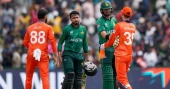
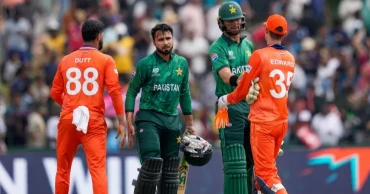
Pakistan defeated the Netherlands by 3 wickets in their opening match of the T20 World Cup in Colombo on Saturday.
Chasing a target of 147, Pakistan required 29 runs from the final two overs with only three wickets remaining. All-rounder Faheem Ashraf secured the victory, scoring an unbeaten 29 off 11 balls to earn the Player of the Match award.
In the critical 19th over bowled by Logan van Beek, Faheem struck three sixes and a four to take 24 runs. He was dropped on the second ball of the over by Max O'Dowd. Pakistan chased down the remaining 5 runs in the final over with three balls to spare.
T20 World Cup Opener: Pakistan opt to bowl first vs Netherlands
Earlier in the innings, Pakistan appeared comfortable at 98 for 2, needing 50 runs from 9 overs. However, the team suffered a collapse, losing five wickets for just 16 runs to fall to 114 for 7.
Opener Sahibzada Farhan scored 47, while Saim Ayub added 24. Captain Babar Azam scored 15 off 18 balls, while Usman Khan was out for a duck.
Batting first, the Netherlands reached 100 runs in 12.1 overs with seven wickets in hand. However, Pakistan's bowlers restricted them in the final five overs, where the Dutch lost six wickets for 26 runs to finish at 147 all out.
Pakistan's fielding was a highlight, with the team taking a total of nine catches. This included a relay catch on the boundary by Babar Azam and Shaheen Shah Afridi to dismiss Michael Levitt.
Pakistan will face the United States in their next Group A match on February 10
Nasser Hussain backs Bangladesh and Pakistan stance on T20 World Cup
3 months ago
T20 World Cup Opener: Pakistan opt to bowl first vs Netherlands
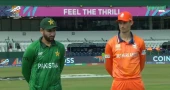
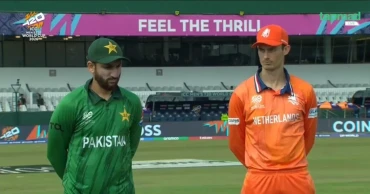
Pakistan captain Salman Ali Agha won the toss and opted to field first against the Netherlands as the ICC Men's T20 World Cup 2026 got underway at the Sinhalese Sports Club (SSC) in Colombo on Saturday.
Despite searingly hot conditions, Agha’s decision was influenced by what he described as “unusual” conditions for a Sri Lankan venue, pointing to a significant layer of grass on the surface.
“It looks like a fresh pitch and there's been rain for a few days, so if there's any moisture we want to use that,” Agha explained at the toss. “It's the first time I've seen that much grass in Sri Lanka”.
Looking to exploit the potential early movement, Pakistan named a seam-heavy attack featuring Shaheen Shah Afridi, newcomer Salman Mirza, and Faheem Ashraf.
Netherlands captain Scott Edwards admitted he would have also preferred to bowl first but remained optimistic about setting a target on what he termed a “very good batting wicket”.
“We're happy to be batting here,” Edwards said. “We've been in India and SL for a month and a half, used to the conditions. Plenty of all-rounders and options for bowling and batting”.
Bangladesh is not playing this World Cup as their demand to relocate their venues due to security concerns in India was rejected by the ICC.
3 months ago
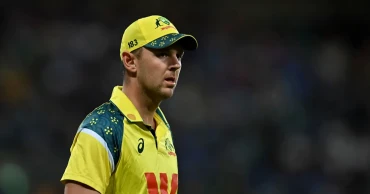
Hazlewood injury adds to Australia’s T20 World Cup woes
Australia’s T20 World Cup campaign has suffered a severe blow just five days before their opening match, with pace bowler Josh Hazlewood officially ruled out of the tournament due to injury.
The news comes as a double blow for the 2021 champions, who had already lost Test and ODI captain Pat Cummins to injury earlier.
Hazlewood, who has been battling ongoing hamstring and Achilles issues, did not travel with the squad to co-host nation Sri Lanka earlier this week.
Instead, he remained in Sydney for rehabilitation. Cricket Australia (CA) selector Tony Dodemaide confirmed that while the team had hoped for a late recovery, the timeline was too tight.
“We were hoping Josh would be fit to return for the Super Eights matches,” Dodemaide said. “However, the latest information indicates that he will need more time to be fully ready. Accelerating his preparation at this stage would significantly increase the risk of further injury.”
Hazlewood had been in stellar form in the T20 format last year, playing a pivotal role in Royal Challengers Bengaluru's IPL title win and performing well in series against South Africa, New Zealand, and India.
His troubles began with a hamstring injury during a Sheffield Shield match prior to the Ashes, followed by a recurring Achilles problem.
Cricket Australia has not yet named a replacement, though Sean Abbott is currently with the squad as a traveling reserve.
“We are not announcing a replacement player at this moment. We feel our squad is balanced enough for the initial matches. A decision will be made later based on priority if the situation demands,” Dodemaide added.
Injured Cummins left out of Australia’s T20 World Cup squad
The injury crisis in the Australian camp extends beyond the pace attack. The team fielded only 11 fit players for Thursday's warm-up match against the Netherlands in Colombo, which was eventually washed out.
However, there is some positive news, as leg-spinner Adam Zampa, who suffered a groin strain against Pakistan on February 1, is expected to be fit for the opener against Ireland. Nathan Ellis and Tim David are reportedly “on track” to recover from their respective hamstring issues for the group stage.
3 months ago
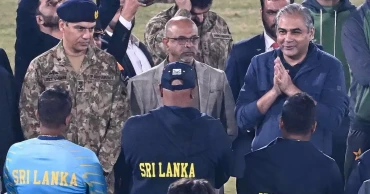
Sri Lanka urges Pakistan to reconsider India match
Sri Lanka Cricket (SLC) is facing concerns over a potential financial blow following Pakistan’s decision to boycott its high-profile T20 World Cup group match against India, scheduled for February 15 in Colombo.
The Pakistan Cricket Board’s last-minute refusal to play the fixture has already triggered alarm among organisers, as the match was expected to generate significant revenue through ticket sales, broadcasting and tourism-related income. Colombo is currently fully booked, with hotels and related services anticipating a surge of visitors for the marquee clash.
During an executive committee meeting on Tuesday, SLC decided to formally approach the PCB, urging it to reconsider the boycott. A letter to that effect was sent on Thursday.
Sources said SLC fears that if the match does not go ahead, it would not only hurt the board’s earnings but also negatively affect Sri Lanka’s broader economy. A no-match scenario could also impact funding from international broadcasters, with potential consequences for ICC revenue distribution to member boards and associate nations.
Prove you are fair: Pakistan legend Afridi tells ICC supporting Pakistan’s boycott
In its letter, SLC reminded Pakistan of Sri Lanka’s past support, particularly when the island nation toured Pakistan at a time when international teams were reluctant to visit following the 2009 attack on the Sri Lankan team bus in Lahore.
SLC also warned of possible adverse effects on tourism, including hotel booking cancellations, flight disruptions and complications for logistical service providers. The board reiterated that it was fully prepared to host the sellout match at the R Premadasa Stadium.
Meanwhile, India have made it clear they are ready to proceed with the fixture. India T20I captain Suryakumar Yadav said the team’s position remains unchanged and that they are prepared to travel to Colombo as scheduled.
“Our mindset is clear. We will play. Our flight is booked and we are going,” Suryakumar said during the captains’ media briefing in Colombo on Thursday, as quoted by the ICC. “We have been told we have a game on February 15.”
He acknowledged the complexity of the situation for Pakistan but stressed that the decision ultimately lies with them.
Kamran Akmal slams ICC’s ‘double standards’ as Pakistan stand firm on skipping India clash
Pakistan had earlier announced its boycott of the match against India in support of Bangladesh’s decision not to travel to India for the tournament.
The ICC Men’s T20 World Cup 2026 will run from February 7 to March 8. India begin their campaign against the United States on February 7 and are set to play their second group match on February 12.
#With inputs from NDTV
3 months ago
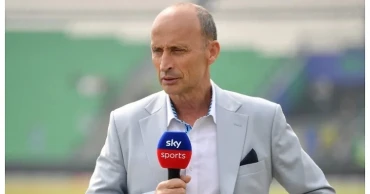
Nasser Hussain backs Bangladesh and Pakistan stance on T20 World Cup
Former England captain Nasser Hussain has thrown his weight behind Bangladesh and Pakistan in the ongoing T20 World Cup crisis, asserting that it is high time to halt the intrusion of politics into the sport.
Speaking on the Sky Cricket Podcast with fellow commentator Mike Atherton, Hussain praised Dhaka’s refusal to bow to pressure and Islamabad’s solidarity move.
“I liked that Bangladesh stood firm on their decision. They stood up for their player Mustafizur. I liked Pakistan's stance as well,” Hussain said.
Tracing the crisis to its flashpoint, Hussain pinpointed the exclusion of Bangladeshi pacer Mustafizur Rahman from the IPL as the catalyst.
Center of World Cup storm Mustafizur lands PSL deal with Lahore
He noted that everything “snowballed” from the moment the BCCI allegedly directed Kolkata Knight Riders to remove Rahman from the squad due to the political climate.
Hussain views Pakistan’s subsequent boycott of the India match as a strategic financial strike.
With the India-Pakistan fixture reportedly generating more revenue than the rest of the tournament combined, Hussain argued this was the only leverage left.
“The only way to hit the ICC or even India is through the money and finance of the India-Pakistan match. It is the only way,” he observed.
The former captain also posed a sharp hypothetical regarding the ICC’s consistency. He questioned whether the governing body would be as “inflexible’ if the roles were reversed—specifically, if the Indian government barred its team from traveling a month before a tournament.
ICC, Google announce first-ever AI-powered T20 World Cup for 2026
“Would the ICC still... say—you know the rules, bad luck, we are dropping you?” Hussain asked, implying a double standard in how Bangladesh was treated compared to India.
He further lamented how politics has seeped into player behavior, describing recent incidents where players refused handshakes or declined trophies as “depressing”. Warning that constantly “cornering” nations like Bangladesh and Pakistan would degrade global cricket, he urged the ICC to treat all members equally, regardless of financial background.
3 months ago
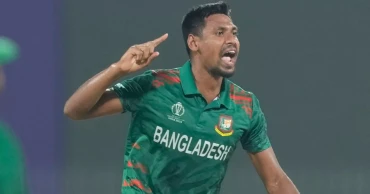
Center of World Cup storm Mustafizur lands PSL deal with Lahore
Bangladesh cricketer Mustafizur Rahman has been roped in by Lahore Qalandars for the next season of the Pakistan Super League (PSL).
Mustafizur was earlier bought by the Kolkata Knight Riders in the Indian Premier League (IPL), but was later released due to security concerns for him in India, which sparked a geopolitical storm in the cricketing world.
The franchise announced on Thursday that they have secured the left-arm pacer via a direct signing ahead of the league's auction. The deal is valued at 64.4 million Pakistani Rupees (approximately 28.1 million Bangladeshi Taka).
Mustafizur’s release from KKR triggered a domino effect that has since fractured the region's cricketing ties.
Read More: Mustafizur Rahman named in Wisden’s 2025 T20 team of the year
Following Mustafizur's exclusion, the Bangladesh government refused to send the national team to India for the T20 World Cup due to safety concerns. After the ICC rejected a venue change request and replaced Bangladesh with Scotland, the Pakistan government announced a boycott of their World Cup match against India in solidarity with Dhaka.
Welcoming Mustafizur back, the Lahore Qalandars described the signing as a “return to the family,” referring to his previous stint with the team during the 2017-18 season.
The 11th edition of the PSL, which has expanded to eight teams this year, is scheduled to run from March 26 to May 3. While the player draft is set for February 11, the Qalandars utilized the direct signing rule to secure Mustafizur’s services early.
3 months ago

ICC, Google announce first-ever AI-powered T20 World Cup for 2026
The International Cricket Council (ICC) and Google have announced a landmark partnership for the upcoming ICC Men’s T20 World Cup 2026, aiming to deliver the first-ever “AI-powered” edition of the tournament.
Under the collaboration, Google Gemini has been named the “Official AI Fan Companion,” while Google Pixel will serve as the “Official Smartphone” of the event.
The initiative seeks to merge live sporting action with advanced generative AI to deepen fan engagement globally.
The partnership kicks off with the “Craziest Fan Kaun” contest, an interactive campaign inviting fans to use Gemini’s image generation capabilities—powered by the Nano Banana model—to design unique “Crazy Fan” avatars.
Winners will be awarded an exclusive match-day experience, attending a World Cup game in person while wearing their custom AI-designed looks.
Yousuf questions ICC governance: ‘Cricket must be ruled by principles, not influence’
“This partnership brings together two global organisations united by consumer focus, scale, purpose and innovation,” said ICC Chief Executive Sanjog Gupta. “Together, we will use technology to deepen engagement, enhance experiences and make cricket more accessible and meaningful for fans worldwide.”
To further integrate AI into the fan journey, the Gemini app will feature a dedicated “Explore Cricket” tab. This hub will offer weekly refreshed content, including AI-generated explanations of complex rules like the DLS system, quizzes, and interactive challenges such as “Design a new cricket format.”
Additionally, fans can access “Insight Cards by Gemini,” which synthesize web data to create shareable digital snapshots of player milestones and trivia.
On the hardware front, Google Pixel devices will be used to capture exclusive, high-quality content from inside the stadiums. Leveraging Pixel’s 48MP 5x telephoto lens and advanced video capabilities, the partnership promises to offer fans never-before-seen perspectives of the on-field action across social media platforms.
Shekar Khosla, VP Marketing at Google India, expressed excitement about the collaboration.
“We are bringing together Gemini’s generative capabilities and Pixel’s advanced imaging to deliver features that empower fans with new avenues for creativity and celebration,” he said.
3 months ago
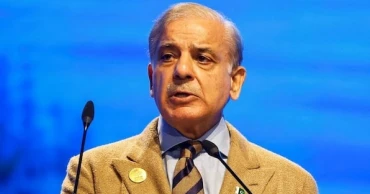
Pakistan PM breaks silence saying India boycott is a ‘thoughtful decision’ to support Dhaka
Pakistan Prime Minister Shehbaz Sharif has officially confirmed that their national cricket team will not take the field against India in the upcoming T20 World Cup, stating the decision was made to stand in solidarity with Bangladesh.
Addressing cabinet members in Islamabad on Wednesday, Sharif declared that “politics should not exist on the sports field.”
This is the first time the government has publicly articulated the specific reason behind the boycott, which was announced via social media last week.
“We have taken a very clear position on the T20 World Cup—we will not play the match against India,” Sharif told his cabinet. “We took this decision after much thought. We should fully stand by Bangladesh. I think this is a very appropriate decision.”
T20 World Cup: ICC rejects Bangladesh’s safe-venue request, includes Scotland
The diplomatic sporting row stems from the International Cricket Council's (ICC) decision to replace Bangladesh with Scotland in the tournament.
The Bangladesh government had refused to send their team to India citing security concerns, following threats from communal groups that led to pacer Mustafizur Rahman being dropped from the IPL on January 3.
While the Bangladesh Cricket Board (BCB) requested a venue change to Sri Lanka, the ICC rejected the plea, labeling the threat against Mustafizur as “isolated.” Bangladesh’s Sports Adviser Asif Nazrul later said that neither the ICC nor the Indian government provided necessary security assurances.
ICC warns PCB of legal and financial fallout over India match boycott
Pakistan Cricket Board (PCB) Chairman Mohsin Naqvi has supported Bangladesh throughout the process, criticizing the ICC for “double standards” regarding security protocols.
The T20 World Cup, co-hosted by India and Sri Lanka, begins on February 7. The India-Pakistan clash was scheduled for February 15 in Colombo.
The ICC has previously warned the PCB to “reconsider” the boycott, citing potential long-term implications for Pakistan cricket.
3 months ago
ICC warns PCB of legal and financial fallout over India match boycott
The International Cricket Council (ICC) has cautioned the Pakistan Cricket Board (PCB) that it could face legal action from the T20 World Cup’s official broadcasters, JioStar, over Pakistan’s decision to boycott its February 15 match against India, a PCB source said on Tuesday.
Pakistan decided not to play the high-profile match in Colombo following instructions from its government, but the PCB has yet to formally convey the reasons for the boycott to the ICC.
According to a PTI report, the ICC is considering withholding Pakistan’s entire annual revenue share, estimated at around USD 35 million, and using that amount to compensate the broadcasters. A PCB source said chairman Mohsin Naqvi had consulted the board’s legal team before briefing Prime Minister Shehbaz Sharif on the matter last week, but the board is now preparing for serious repercussions.
“If Pakistan does not back down and play against India, they could face heavy financial penalties, a possible lawsuit from broadcasters, and even an appeal to the ICC Dispute Resolution Committee is unlikely to succeed,” the source told PTI.
Prove you are fair: Pakistan legend Afridi tells ICC supporting Pakistan’s boycott
The ICC’s Dispute Resolution Committee is an internal body that does not entertain appeals against decisions taken by the ICC Board itself.
Another PCB source pointed out that Pakistan’s position could be further weakened because the team is already playing all its matches at a neutral venue in Sri Lanka, a condition it had sought instead of playing in India.
The source also noted that while the Indian government has not allowed its team to tour Pakistan, it has not prevented India from playing Pakistan at neutral venues in Asia Cup or ICC tournaments, even after the conflict in May.
The PCB has not yet sent a written communication to the ICC, though the boycott is reportedly being viewed as an act of solidarity with Bangladesh following their ouster.
India to show up at stadium as Pakistan confirms boycott of Feb 15 clash
“When the ICC signed a four-year broadcasting deal for its events, India-Pakistan matches were a key component of that contract, and payments were made accordingly,” the source said.
“As a result, the broadcaster would be well within its rights to take both the PCB and the ICC to court over what it sees as a major breach of contract.”
#With inputs from NDTV
4 months ago
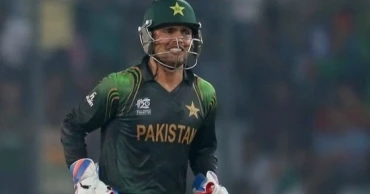
Kamran Akmal slams ICC’s ‘double standards’ as Pakistan stand firm on skipping India clash
Former Pakistan wicketkeeper-batter Kamran Akmal has launched an attack on the International Cricket Council (ICC), urging the Pakistan Cricket Board (PCB) to stand firm on its decision to boycott the high-profile group match against India in the upcoming T20 World Cup.
Akmal's comments come amid escalating tensions after the Pakistan government instructed the national team to participate in the tournament but refuse to play against arch-rivals India on February 15 in Colombo. The T20 World Cup, co-hosted by India and Sri Lanka, is set to begin this Saturday.
Speaking on the YouTube channel ‘Game Plan’, Akmal questioned the ICC's silence during previous controversies where India refused to travel to Pakistan.
“PCB should not back down! Was ICC sleeping when the Asia Cup happened in the hybrid model? Was ICC sleeping when India said it would not play the Champions Trophy in Pakistan and only play on a neutral venue?” Akmal asked.
He further highlighted what he perceives as a double standard, pointing out that Pakistan has traveled to India multiple times despite political tensions.
Akmal also referenced an incident during last year’s Asia Cup in the UAE, alleging that Indian players refused to shake hands with Pakistani players and declined to accept the trophy from ACC president Mohsin Naqvi.
“Things had gotten to such extreme levels... They had disrespected us!” Akmal added.
The Pakistan team has already departed for Sri Lanka to begin their campaign, with their opener scheduled against the Netherlands. Due to the ongoing standoff, Pakistan will play all their matches, including potential knockout fixtures, in Sri Lanka.
In response to the boycott announcement, the ICC released a statement warning of “significant and long-term implications” for Pakistan cricket. The governing body termed the “selective participation” difficult to reconcile with the principles of a global sporting event and urged the PCB to find a “mutually acceptable resolution”.
4 months ago