Asia

Trade resumes as Pakistan, Afghanistan reopen Torkham border
The normal trade and movement of people between Pakistan and Afghanistan fully resumed on Saturday after the two sides reopened a key border crossing that was shut nearly a week ago by Afghanistan's Taliban rulers, stranding people and thousands of trucks carrying food and essential items.
The Afghan embassy in Pakistan's capital, Islamabad, announced the reopening of the Torkham border on Saturday on Twitter. Pakistani officials and Afghanistan's Taliban-appointed administrator in Afghanistan's Nangarhar province also confirmed that the border crossing is open to passengers and trade.
The announcement sparked a wave of joy among those who had been waiting for the reopening of the international trade route since Sunday, when Afghanistan’s Taliban rulers closed the crossing. The Taliban had claimed Islamabad was not abiding by an agreement with Kabul to allow sick Afghan patients and their caretakers to cross into Pakistan without travel documents for medical care.
Last Monday, Afghan Taliban forces and Pakistani border guards exchanged fire, wounding a Pakistani soldier. Since then, officials from the two sides were in talks to resolve the issue amid demands from people on both sides to immediately reopen the crossing.
On Wednesday, Pakistan’s defense minister, Khawaja Mohammad Asif, and secret service chief, Lt. Gen. Anjum Nadeem, traveled to Kabul on an unannounced but previously scheduled visit and met senior Taliban officials to discuss the closure and other issues.
After the visit, the crossing was briefly reopened by the Afghan Taliban to allow some of the thousands of trucks that had lined up for days at the border — many with vegetables, fruits and other perishable food items — to cross over and ease the backlog. But Pakistan shut the border on Thursday, saying it needed an explanation from the Afghan side about the abrupt closure of the border on Sunday.
Pakistani and Taliban officials on Friday held talks and finally agreed to reopen the border.
On Saturday, Ziaul Haq Sarhadi, a director of the Pakistan-Afghanistan joint Chamber of Commerce and Industry, said “we are happy to confirm that Torkham is fully open for trade and movement of people." He said jubilant Afghan and Pakistani truck drivers were crossing the key trade route with supplies.
Although the Torkham border crossing is a vital commercial artery and a trade route to Central Asian countries for Pakistan, the Islamic nation has also accused the Afghan Taliban of providing sanctuary for Pakistani militants whose cross-border attacks have led to a spike in violence in Pakistan.
Pakistan recently warned that it has the right to target Pakistani Taliban sanctuaries in Afghanistan if the Afghan Taliban administration fails to rein in the militants, increasing the prospect of more cross-border violence. The Pakistani Taliban, known as Tehreek-e-Taliban Pakistan, are a separate group but allied with the Afghan Taliban, who seized power more than a year ago as U.S. and NATO troops withdrew from the country after 20 years of war.
The Taliban takeover in Afghanistan has emboldened the TTP, which in recent months has stepped up attacks in Pakistan, where security forces often raid their hideouts.
3 years ago
13 people killed as bus hits van on Pakistan motorway
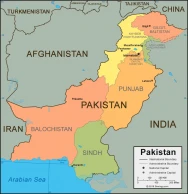
A speeding passenger bus rammed into a van on a motorway in eastern Pakistan, killing 13 people and injuring several others, a police spokesman said Saturday.
The accident happened overnight in Rahim Yar Khan, a district in Punjab province, according to Mohammad Awais, a district police spokesman. He said the dead and injured had all been moved to a hospital.
Awais provided no further details, saying officers were still investigating the cause.
Traffic accidents in Pakistan generally happen due to traffic rules violations, resulting in thousands of deaths or injuries every year. Last month, a bus crashed into a pillar and fell off a bridge, catching fire and killing 40 passengers in the southern district of Lasbela.
3 years ago

N. Korea food shortage worsens amid COVID, but no famine yet
There’s little doubt that North Korea’s chronic food shortages worsened due to the COVID-19 pandemic, and speculation about the country’s chronic food insecurity has flared as its top leaders prepare to discuss the “very important and urgent task” of formulating a correct agricultural policy.
Unconfirmed reports say an unspecified number of North Koreans have been dying of hunger. But experts say there is no sign of mass deaths or famine. They say the upcoming ruling Workers’ Party meeting is likely intended to shore up support for North Korean leader Kim Jong Un as he pushes ahead with his nuclear weapons program in defiance of intense U.S.-led pressure and sanctions.
“Kim Jong Un can’t advance his nuclear program stably if he fails to resolve the food problem fundamentally because public support would be shaken,” said Lim Eul-chul, a professor at Kyungnam University’s Institute for Far Eastern Studies in Seoul. “The meeting is being convened to solidify internal unity while pulling together ideas to address the food shortage.”
An enlarged plenary meeting of the Central Committee of the Workers’ Party is slated for late February. Its specific agenda is unknown, but the party’s powerful Politburo earlier said that a “a turning point is needed to dynamically promote radical change in agricultural development.”
The meeting will be the party’s first plenary session convened just to discuss agricultural issues, though they often are a key topic at broader conferences in North Korea. Raising grain output was one of 12 economic priorities the party adopted during a plenary meeting in December.
It is difficult to know the exact situation in the North, which kept its borders virtually closed during the pandemic. Food shortages and economic hardships have persisted since a famine killed an estimated hundreds of thousands of people in the mid-1990s.
In his first public speech after taking over from his father as leader in late 2011, Kim vowed that North Koreans would “never have to tighten their belts again.”
During the first several years of his rule, the economy achieved modest growth as Kim tolerated some market-oriented activities and increased exports of coal and other minerals to China, the North’s main ally and biggest trading partner. More recently, however, tougher international sanctions over Kim’s nuclear program, draconian pandemic-related restrictions and outright mismanagement have taken a severe economic toll.
South Korean estimates put North Korea’s grain production last year at about 4.5 million tons, a 3.8% decrease from a year earlier. Annual grain output has plateaued at about 4.4 million tons to 4.8 million tons in the past decade.
North Korea needs about 5.5 million tons of grain to feed its 25 million people, so it’s usually short about 1 million tons each year. About half of the gap is typically offset by unofficial grain purchases from China. The rest is an unresolved shortfall, said Kwon Tae-jin, a senior economist at the private GS&J Institute in South Korea.
Read more: North Korea says it is suffering worst drought in decades
Kwon says curbs on cross-border trade due to the pandemic have likely hindered unofficial rice purchases from China. Efforts by North Korean authorities to tighten controls and restrict market activities have also worsened the situation, he said.
“I believe this year North Korea is facing its worst food situation since Kim Jong Un took power,” Kwon said.
Koo Byoungsam, a spokesperson at the South Korean Unification Ministry, said that an unknown number of North Koreans have died of hunger, but said the problem is not as serious as the mid-1990s famine, which stemmed from natural disasters, the loss of Soviet assistance and mismanagement.
The current food problem is more an issue of distribution than of an absolute shortage of grain since much of the grain harvested last year has not yet been eaten, ministry officials said. Food insecurity has worsened as authorities tightened controls over private grain sales in markets, instead trying to confine the grain trade to state-run facilities.
Severe steps taken by the Kim government to contain the pandemic provided effective tools for imposing a tighter grip on the kinds of market activity that earlier helped foster stronger economic growth but might eventually erode the government’s authoritarian rule, analysts say.
Kwon said current food shortages are unlikely to cause mass deaths because food is still available in markets, though at high prices. During the famine in the mid-1990s, grain was hard to come by, he said.
North Korea monitoring groups have reported increases in the prices of rice and corn — the two most important staples — though the price of corn has stabilized recently in some regions.
“If North Korea indeed sees people dying of hunger and faces a chaos, it won’t publicly say things like ‘a very important and urgent task’ for an agricultural policy,” said Ahn Kyung-su, head of DPRKHEALTH.ORG, a website focusing on health issues in North Korea.
The North’s plenary meeting is “typical propaganda” meant to show Kim is working to improve living conditions and comes at a time when the leadership needs new fodder to burnish his image, on top of the nuclear program and assertions of a victory over the pandemic, Ahn said.
During the plenary meeting, Kwon said that leaders will likely pressure local farm officials to raise grain output without presenting any effective solutions for the food crisis. Targets will be set and officials may be punished for failing to meet them if food shortages worsen, Ahn said.
Yi Jisun, an analyst at the state-run Institute for National Security Strategy in Seoul, said in a report in January that North Korea recently imported large amounts of rice and flour from China, though it is unlikely to accept food assistance from the United States, South Korea and Japan.
While declaring that food problems must be improved at any cost, the state-run media in the North have continued to tout its longstanding policy of “self-reliance,” a strategy that shuns Western help.
“The assistance by imperialists is a trap for plundering and subjugation meant to wrest 100 things after giving one,” the North’s main Rodong Sinmun newspaper said in a commentary Wednesday. “Building up the economy by receiving this ‘poisoned candy’ would be a mistake.”
3 years ago

Modi urges G20 finance leaders to focus on ‘most vulnerable’
Policymakers of the Group of 20 leading economies should focus on helping the world’s most vulnerable people, Prime Minister Narendra Modi said on Friday as top-level financial talks kicked off in the Indian technology hub of Bengaluru.
“You represent the leadership of global finance and economy at a time when the world is facing serious economic difficulties,” Modi said in a video address to the finance ministers, central bank governors and other leaders attending the meetings, which wrap up Saturday.
“It is up to you, the custodians of the leading economies and market systems ... to bring back stability, confidence and growth to the global economy,” he said.
As countries deal with slew of challenges in the aftermath of the pandemic, including unsustainable debt, conflict, inflation and eroding trust in international financial institutions, Modi said, “I urge you to focus on the most vulnerable people in the world.”
Rear more: What is China’s peace proposal for Ukraine War?
The meetings in Bengaluru are due to touch on a wide range of issues including digital currencies and payments, reform of institutions like the World Bank, climate change and financial inclusion.
Multiple meetings between various leaders were also scheduled, including talks between U.S. and British officials and meetings of India’s finance minister, Nirmala Sitharaman, with her counterparts from France and Brazil.
As is usually the case, broader issues such as the war in Ukraine are overshadowing the talks.
On Thursday, U.S. Treasury Secretary Janet Yellen reaffirmed she would push for stronger sanctions against Russia for its invasion of Ukraine and better enforcement of restrictions meant to hinder Moscow’s war effort.
The G-20 meetings offer a chance for leaders to consider how to coordinate their policies: many central banks including the U.S. Federal Reserve have been raising interest rates sharply to try to rein in decades-high inflation brought on by various factors including the war and rebounding demand for travel, goods and services following the COVID-19 pandemic.
G20 Presidency: India to invite Bangladesh as guest country
With increases in income lagging far behind, rising costs for food, housing, fuel and fertilizer impose huge burdens, especially on the poor and in developing nations, where debt burdens have surged both at the national and household levels.
As the G-20 host this year, India is taking the opportunity to showcase its ascent as an economic power.
Modi suggested the gathering could “draw hope from the vibrant Indian economy,” which is forecast to grow at a more than 6% annual pace this year, making it one of the fastest growing in the world. He also pointed to the country’s digital payments technology as a model to be emulated.
Read more: Dhaka wants removal of tariff, non-tariff barriers to reduce trade deficit with Delhi
3 years ago

What is China’s peace proposal for Ukraine War?
One year into Russia’s war against Ukraine, China is offering a 12-point proposal to end the fighting.
The proposal follows China’s recent announcement that it is trying to act as mediator in the war that has re-energized Western alliances viewed by Beijing and Moscow as rivals. China’s top diplomat indicated that the plan was coming at a security conference this week in Munich, Germany.
With its release, President Xi Jinping’s government is reiterating China’s claim to being neutral, despite blocking efforts at the United Nations to condemn the invasion. The document echoes Russian complaints that Western governments are to blame for the Feb. 24, 2022 invasion and criticizes sanctions on Russia.
Read more: China calls for Russia-Ukraine cease-fire, peace talks
At the Munich meeting, U.S. Secretary of State Antony Blinken expressed skepticism about Beijing’s position before the plan’s release. He said China has provided non-lethal assistance that supports Russian President Vladimir Putin’s war effort and said the U.S. has intelligence that Beijing is “considering providing lethal support.” China has called the allegation a “smear” and said it lacks evidence.
WHAT HAS CHINA PROPOSED?
China’s proposal calls for a ceasefire and peace talks, and an end to Western sanctions against Russia. It says “relevant countries should stop abusing unilateral sanctions” and “do their share in de-escalating the Ukraine crisis.”
It says sovereignty of all countries should be upheld, though it doesn’t specify what that would look like for Ukraine, and the land taken from it since Russia seized Crimea in 2014.
The proposal condemns a “Cold War mentality,” a rebuke of the United States and NATO, the U.S.-European military alliance. “The security of a region should not be achieved by strengthening or expanding military blocs,” the proposal says. Russian President Vladimir Putin demanded a promise that Ukraine will not join the bloc before the invasion.
Read more: Russia, China show off ties amid maneuvering over Ukraine
Other points call for a cease-fire, peace talks, protection for prisoners of war and stopping attacks on civilians, keeping nuclear power plants safe and facilitating grain exports.
DOES CHINA BACK RUSSIA IN ITS WAR ON UKRAINE?
China has offered contradictory statements regarding its stance. It says Russia was provoked into taking action by NATO’s eastward expansion, but has also claimed neutrality on the war.
Ahead of Russia’s attack, Xi and Putin attended the opening of last year’s Winter Olympics in Beijing and issued a statement that their governments had a “no limits” friendship. China has since ignored Western criticism and reaffirmed that pledge.
Putin has said he expects Xi to visit Russia in the next few months. China has yet to confirm that.
China is “trying to have it both ways,” Blinken said Sunday on NBC.
“Publicly, they present themselves as a country striving for peace in Ukraine, but privately, as I said, we’ve seen already over these past months the provision of non-lethal assistance that does go directly to aiding and abetting Russia’s war effort.”
HAS CHINA PROVIDED SUPPORT TO RUSSIA?
China’s support for Russia has been largely rhetorical and political. Beijing has helped to prevent efforts to condemn Moscow at the United Nations. There is no public evidence it is currently supplying arms to Russia, but the U.S. has said China is providing non-lethal support already and may do more.
Blinken, at the Munich conference, said the United States has long been concerned that China would provide weapons to Russia. “We have information that gives us concern that they are considering providing lethal support to Russia,” he said.
Blinken said he expressed to the Chinese envoy to the meeting, Wang Yi, that “this would be a serious problem.”
NATO’s chief said Wednesday he had seen some signs that China may be ready to provide arms and warned that would be it would be supporting a violation of international law.
Russian and Chinese forces have held joint drills since the invasion, most recently with the South African navy in a shipping lane off the South African coast.
Ukraine’s defense minister Oleksii Reznikov expressed doubt about U.S. concerns Monday.
“I’m not sure because Russia needs also helmets, life vests, etc., etc. And I think that if China will help them … it will not (be) the weaponry. It will (be) some kinds of like clothes,” Reznikov said in Kyiv.
3 years ago
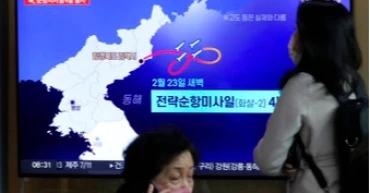
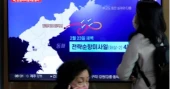
North Korea says it test-fired long-range cruise missiles
North Korea said Friday it test-fired long-range cruise missiles in waters off its eastern coast a day earlier, adding to a provocative streak in weapons demonstrations as its rivals step up military training.
The U.S. and South Korean militaries didn’t immediately confirm the North Korean launches, which state media said were intended to verify the reliability of the missiles and the rapid-response capabilities of the unit that operates those weapons.
Read more: China calls for Russia-Ukraine cease-fire, peace talks
The launches would have taken place as the United States and South Korea held a simulated military exercise in Washington aimed at sharpening their response to North Korean nuclear threats.
Pyongyang’s official Korean Central News Agency said the exercise involved four missiles, which flew for nearly three hours after being launched from a northeastern coastal area, drawing oval and figure-eight patterns above the sea, and showed that they can hit targets 2,000 kilometers (1,240 miles) away.
North Korea first tested a long-range cruise missile system in September 2021 and has implied they are being developed to be armed with nuclear warheads.
It also test-fired an intercontinental ballistic missile Saturday and a pair of short-range missiles Monday to demonstrate a dual ability to conduct nuclear strikes on South Korea and the U.S. mainland.
Read more: Fears, questions about N. Korea's growing nuclear arsenal
North Korea said Monday’s short-range launches were a response to the United States flying B-1B bombers to the region for joint training with South Korean and Japanese warplanes on Sunday in a show of force following the North’s ICBM test.
Prior to the ICBM launch, North Korea vowed an “unprecedentedly” strong response over a series of military drills planned by Seoul and Washington. North Korea for decades has described the annual U.S.-South Korea drills as rehearsals for a potential invasion, although the allies say their exercises are defensive in nature.
Long-range cruise missiles are among a growing number of North Korean weapons and are designed to be maneuverable in flight to better evade missile defenses.
Since the collapse of nuclear negotiations with the United States in 2019, North Korea has been accelerating its development of short-range solid-fuel ballistic missiles targeting South Korea, including those that travel on low trajectories that theoretically make them harder to intercept.
Read more: N Korea calls UN chief's remarks on missile test 'unfair'
North Korea is also trying to develop solid-fuel ICBMs, which could be easier to move on vehicles and can be fired faster than the North’s existing liquid-fuel ICBMs, reducing opportunities for opponents to detect the launches and counter them.
The KCNA said Thursday’s tests were aimed at verifying the war readiness of its nuclear combat force, which is “bolstering up in every way its deadly nuclear counterattack capability against the hostile forces.”
North Korea is coming off a record year in weapons demonstrations with more than 70 ballistic missiles fired, including ICBMs with potential to reach the U.S. mainland. It also conducted what it described as simulated nuclear attacks against South Korean and U.S. targets in response to the allies’ joint military exercises.
Leader Kim Jong Un doubled down on his nuclear push entering 2023, calling for an “exponential increase” in nuclear warheads, mass production of battlefield tactical nuclear weapons targeting “enemy” South Korea and the development of more advanced ICBMs.
Read more: Russia, China show off ties amid maneuvering over Ukraine
The U.S. Department of Defense and South Korea’s Defense Ministry said the U.S. and South Korean militaries conducted a simulation at the Pentagon on Wednesday that was focused on the possibility of the North Korean use of nuclear weapons. The allies also discussed various adoptions to demonstrate their “strong response capabilities and resolve to response appropriately” to any North Korean nuclear use.
The Americans during the meeting highlighted the Biden administration’s 2022 Nuclear Posture Review, which states that any nuclear attack by North Korea against the United States or its allies and partners is “unacceptable and will result in the end of that regime,” the U.S. Department of Defense said. It was referring to a legislatively mandated document that spells out U.S. nuclear policy and strategy for the next five to 10 years.
Read more: North Korea confirms ICBM test, warns of more powerful steps
The U.S. and South Korean delegations also visited U.S. nuclear submarine training facilities at Naval Submarine Base Kings Bay in Georgia, where they were briefed on the mission of Ohio-class nuclear-powered ballistic missile submarines. U.S. officials at the base described such forces as key means of providing U.S. extended deterrence to allies, referring to a commitment to defend them with the full range of its military capabilities, including nuclear ones.
In face of the North’s growing threats, South Korea has been seeking stronger reassurances from the United States that it would swiftly and decisively use its nuclear capabilities to defend its ally from a North Korean nuclear attack.
“The United States will continue to work with (South Korea) to ensure an effective mix of capabilities, concepts, deployments, exercises, and tailored options to deter and, if necessary, respond to coercion and aggression by (North Korea),” the Department of Defense said in a statement.
The U.S. and South Korean militaries have another joint computer-simulated exercise and field training scheduled in March, which South Korean officials say would involve the allies’ biggest live-fire training in years.
3 years ago

China calls for Russia-Ukraine cease-fire, peace talks
China, a firm Russian ally, has called for a cease-fire between Ukraine and Moscow and the opening of peace talks as part of a 12-point proposal to end the conflict.
The plan issued Friday morning by the Foreign Ministry also urges the end of Western sanctions imposed on Russia, measures to ensure the safety of nuclear facilities, the establishment of humanitarian corridors for the evacuation of civilians, and steps to ensure the export of grain after disruptions caused global food prices to spike.
China has claimed to be neutral in the conflict, but it has a “no limits” relationship with Russia and has refused to criticize its invasion of Ukraine over even refer to it as such, while accusing the West of provoking the conflict and “fanning the flames" by providing Ukraine with defensive arms.
Read more: UN approves resolution calling for Russia to leave Ukraine
China and Russia have increasingly aligned their foreign policies to oppose the U.S.-led liberal international order. Foreign Minister Wang Yi reaffirmed the strength of those ties when he met with Russian President Vladimir Putin during a visit to Moscow this week.
China has also been accused by the U.S. of possibly preparing to provide Russia with military aid, something Beijing says lacks evidence.
Given China's positions, that throws doubt on whether its 12-point proposal has any hope of going ahead — or whether China is seen as an honest broker.
Before the proposal was released, Ukrainian President Volodymyr Zelenskyy called it an important first step.
“I think that, in general, the fact that China started talking about peace in Ukraine, I think that it is not bad. It is important for us that all states are on our side, on the side of justice,” he said at a news conference Friday with Spain's prime minister.
Read more: Russia, China show off ties amid maneuvering over Ukraine
State Department spokesman Ned Price said earlier Thursday that the U.S. would reserve judgment but that China’s allegiance with Russia meant it was not a neutral mediator. “We would like to see nothing more than a just and durable peace ... but we are skeptical that reports of a proposal like this will be a constructive path forward,” he said.
Price added that the U.S. hopes “all countries that have a relationship with Russia unlike the one that we have will use that leverage, will use that influence to push Russia meaningfully and usefully to end this brutal war of aggression. (China) is in a position to do that in ways that we just aren’t.”
The peace proposal mainly elaborated on long-held Chinese positions, including referring to the need that all countries' “sovereignty, independence and territorial integrity be effectively guaranteed."
Read more: Philippines eyes South China Sea patrols with US, Australia
It also called an end to the “Cold War mentality" — it's standard term for what it regards as U.S. hegemony and interference in other countries.
“A country’s security cannot be at the expense of other countries’ security, and regional security cannot be guaranteed by strengthening or even expanding military blocs,” the proposal said. “The legitimate security interests and concerns of all countries should be taken seriously and properly addressed.”
China abstained Thursday when the U.N. General Assembly approved a nonbinding resolution that calls for Russia to end hostilities in Ukraine and withdraw its forces. It is one of 16 countries that either voted against or abstained on almost all of five previous resolutions on Ukraine.
The resolution, drafted by Ukraine in consultation with its allies, passed 141-7 with 32 abstentions, sending a strong message on the eve of the first anniversary of the invasion that appears to leave Russia more isolated than ever.
While China has not been openly critical of Moscow, it has said that the present conflict is “not something it wishes to see,” and has repeatedly said any use of nuclear weapons would be completely unacceptable, in an implied repudiation of Putin’s statement that Russia would use “all available means” to protect its territory.
Read more: China blasts Pentagon official’s Taiwan visit, military ties
“There are no winners in conflict wars," the proposal said.
“All parties should maintain rationality and restraint ... support Russia and Ukraine to meet each other, resume direct dialogue as soon as possible, gradually promote the de-escalation and relaxation of the situation, and finally reach a comprehensive ceasefire," it said.
3 years ago
6.8 earthquake shakes lightly populated part of Tajikistan
A 6.8 magnitude earthquake shook a lightly populated, remote part of Tajikistan early Thursday near China’s far western Xinjiang region.
It was 67 kilometers (41 miles) west of Murghob, Tajikistan, and 20 kilometers (12 miles) below ground, according to the U.S. Geological Survey.
Mughrob is the district capital with a population of a few thousand people high in the Pamir Mountains.
The quake was strongly felt across the border in some areas of Kashgar prefecture and Kizilsu Kyrgyz autonomous prefecture in Xinjiang, but no casualties or damage has been reported so far, state media CCTV said, citing local information officers.
China Earthquake Networks Center said the quake was 7.2 magnitude and 10 kilometers (6 miles) deep. Measurements by different agencies often differ.
3 years ago

Russia, China show off ties amid maneuvering over Ukraine
Russia and China showcased their deepening ties Wednesday in a series of meetings closely watched for signs that Beijing might offer the Kremlin stronger support for its war in Ukraine.
The visit by Wang Yi, the Chinese Communist Party's most senior foreign policy official, to Moscow comes as the conflict in Ukraine continues to upend the global diplomatic order.
Relations between Russia and the West are at their lowest point since the Cold War, and ties between China and the U.S. are also under serious strain. Moscow suspended its participation in the last remaining nuclear arms control treaty with Washington this week. And the U.S. expressed concern in recent days that China could provide arms and ammunition to Russia.
Speaking at the start of talks with Wang, Russian President Vladimir Putin hailed ties between the two countries and added that the Kremlin expects Chinese President Xi Jinping to visit Russia.
The Russian leader noted escalating international tensions, adding that “in this context, cooperation between the People’s Republic of China and the Russian Federation on the global arena is particularly important for stabilizing the international situation.”
While Wang that “Chinese-Russian relations aren’t directed against any third countries and certainly can’t be subject to pressure from any third countries,” the specter of the war and the ways in which it has galvanized the West and deepened its divide with Russia hung over his meeting with Putin.
For instance, Wang emphasized that Moscow and Beijing both support “multipolarity and democratization of international relations” — a reference to their shared goal of countering the perceived U.S. dominance in global affairs.
Earlier Wednesday, Wang held talks with Russian Foreign Minister Sergey Lavrov. “Our ties have continued to develop dynamically, and despite high turbulence in the global arena, we have shown the readiness to speak in defense of each other’s interests,” Lavrov said.
Wang responded in kind, underlining Beijing's focus on deepening ties with Russia — a relationship it has said has “no limits.”
China has pointedly refused to criticize the invasion of Ukraine while echoing Moscow's claim that the U.S. and NATO were to blame for provoking the Kremlin . The government in Beijing also has blasted the sanctions imposed on Russia after it invaded Ukraine.
Russia, in turn, has staunchly supported China amid tensions with the U.S. over Taiwan.
The two nations have held a series of military drills that showcased their increasingly close defense ties. China, Russia and South Africa are holding naval drills in the Indian Ocean this week.
A Russian frigate, the Admiral Gorshkov, arrived in Cape Town in recent days sporting the letters Z and V on its sides, letters that mark Russian weapons on the front lines in Ukraine and are used as a patriotic symbol in Russia.
The rapprochement has worried the West. U.S. Secretary of State Antony Blinken has said any Chinese involvement in the Kremlin’s war effort would be a “serious problem.”
Government-backed scholars in China shrugged off Washington's warnings over Beijing's relationship with Moscow as a reflection of what they described as a polarizing and distorted U.S. view.
The Global Times quoted Zhang Hong, associate research fellow at the Institute of Russian, Eastern European and Central Asian Studies of the Chinese Academy of Social Sciences, as saying the U.S. and its allies have looked at the Russia-Ukraine conflict through “colored glasses.”
“It seems like anyone who talks with Russia will be seen as siding with Moscow in Russia-Ukraine conflict,” the English-language Chinese newspaper quoted Zhang as saying.
Wang's talks with Lavrov followed his meeting Tuesday with Nikolai Patrushev, the powerful secretary of Russia’s National Security Council, who called for closer cooperation with Beijing to counter what he described as Western efforts to maintain dominance by thwarting an alliance between China and Russia.
While China recently has emphasized its close ties with Moscow, it also has to tread carefully to avoid an escalation of tensions with the West as it looks to stimulate its economy following the impact of the COVID-19 epidemic.
“Isolation from the West is not something (Beijing) wants to risk,” Yu Jie, senior research fellow for China in the Asia-Pacific program at Chatham House, a British think tank, said in comments published Wednesday. “President Xi and his colleagues have begun to realize that cooperation with Russia comes with substantial limits to avoid undermining China’s own political priorities and longer-term economic interests.”
Wang's trip to Moscow took place against a backdrop of grinding battles in Ukraine as neither side appeared to gain momentum, following weeks of virtual stalemate during the winter. Ukraine’s presidential office said at least seven civilians were killed between Tuesday and Wednesday mornings.
During a speech at a patriotic concert, Putin on Wednesday hailed Russia's “heroic” troops and claimed Moscow's forces were fighting for the country's “historic frontiers” to protect its “interests, people, culture, language and territory.”
“When we stand together we have no equals,” he shouted to enthusiastic crowds at a Moscow sports arena.
The growing relationship between China and Russia is another example of the ways the war could spread into perilous new terrain.
Putin’s announcement Tuesday that Russia would suspend its participation in the New START Treaty, raising new concerns about the fate of the arms pact, which was already on life support.
The move follows Moscow’s decision last fall to allow the resumption of U.S. inspections of its nuclear sites but also its refusal to hold a scheduled round of consultations under the pact.
The lower house of Russia’s parliament on Wednesday quickly endorsed Putin’s move to suspend the treaty, with officials and lawmakers casting it as an 11th-hour warning to Washington amid the tensions over Ukraine.
Reflecting Beijing's cautious stance, Chinese Foreign Ministry spokesperson Wang Wenbin said the treaty was key to peace and stability and said China hopes “the two sides will properly resolve their differences."
3 years ago

Philippines eyes South China Sea patrols with US, Australia
The Philippines is in talks with the United States as well as Australia on future joint patrols in the South China Sea, where China's increasingly aggressive actions in the disputed waters are causing concern, top defense officials in the three nations said Wednesday.
U.S. Defense Secretary Lloyd Austin called his Philippine counterpart, Carlito Galvez Jr., to reiterate Washington’s support and commitment to help defend its oldest treaty ally in Asia after a Chinese coast guard aimed a military-grade laser at a Philippine patrol vessel near a disputed shoal.
The Feb. 6 incident off Second Thomas Shoal briefly blinded some of the Filipino crew and prompted Manila to file a strongly worded diplomatic protest. President Ferdinand Marcos Jr. also summoned China’s ambassador to express his concern.
Also Read: US renews warning it’ll defend Philippines after China spat
“The two leaders discussed proposals to deepen operational cooperation and enhance the United States and the Philippines’ shared security, including the recent decision to resume combined maritime activities in the South China Sea,” according to details of the phone conversation provided by Pentagon press secretary Brig. Gen. Pat Ryder.
During Austin's visit to Manila this month, Galvez and U.S. officials had said the allies agreed to carry out joint patrols.
Separately, Galvez and visiting Australian Defense Minister Richard Marles said in a news conference on Wednesday that they were looking at Australian and Philippine forces possibly carrying out their joint patrols in the busy waterway.
Also Read: US, Philippines agree on larger American military presence
As countries asserting the rule of law, including the 1982 U.N. Convention on the Law of the Sea, in the South China Sea, where a bulk of Australia’s trade traverses, “we did talk today about the possibility of exploring joint patrols,” Marles said, without elaborating.
Australian and Philippine forces have undertaken joint patrols off the southern Philippines in the past to counter terrorist threats, Galvez said, and added, “We can do it again."
Aside from the United States, Australia is the only other country that struck a defense agreement with the Philippines for joint combat exercises in the country. The Philippine Constitution prohibits the permanent basing of foreign troops and their involvement in local combat.
Austin announced after meeting Marcos on Feb. 2 that the Philippines had approved an expanded U.S. military presence by allowing rotating batches of U.S. forces to stay in four more Philippine military camps, in addition to five others.
It was the latest move by the Biden administration to strengthen an arc of military alliances in the Indo-Pacific to better counter China, including in any future confrontation over Taiwan.
Austin reaffirmed in his talk with Galvez on Wednesday the U.S. Defense Department’s “commitment to bolstering the Philippines’ defense capabilities and capacity to resist coercion as the allies develop a security-sector assistance roadmap.” No details of the mutual security plan were immediately provided.
China opposes military activities involving the U.S. and its allies, especially in the South China Sea, and has warned Washington not to meddle in what it says is a purely Asian dispute.
Chinese forces have protested the presence of U.S. Navy ships and fighter jets that have been enforcing freedom of movement in the contested waters. The U.S. military insists it would exercise its rights under international law to sail and fly in international waters.
In Jakarta, visiting Chinese Foreign Minister Qin Gang said on Wednesday that China would work with the Association of Southeast Asian Nations, which is currently led by Indonesia, to hasten negotiations on a proposed nonaggression pact, which is designed to avoid armed confrontations in the South China Sea.
“China and Indonesia will work with other ASEAN countries to … accelerate consultations on a code of conduct in the South China Sea, and jointly maintain the peace and stability in the South China Sea fully and effectively.” Gang said in an online press conference.
The highly secretive talks between China and the 10-nation ASEAN, whose four members are locked in territorial conflicts with Beijing over the strategic waterway, have faced years of delay, including during the height of the coronavirus pandemic.
China and the regional bloc have agreed to speed up the negotiations this year but it's unclear how they can overcome key differences, including which areas should be covered by the pact and whether the agreement should be legally binding.
3 years ago