Asia

Chaos at Indian airports as IndiGo cancels flights over new crew rules
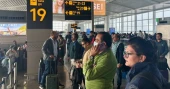
Major airports across India descended into chaos Friday as IndiGo, the country’s largest airline, cancelled numerous flights due to newly enforced rules limiting working hours for pilots and crew.
Passengers faced long queues at customer service counters, slept on airport floors, and struggled with minimal information from the airline. The disruptions mark the fourth consecutive day of operational turmoil for the low-cost carrier, which operates around 2,300 flights daily and holds nearly 65% of India’s domestic aviation market.
The regulations, implemented in two phases since July, mandate longer rest periods and restrict night flying to reduce fatigue and improve safety. IndiGo has struggled to adjust crew schedules, leading to widespread cancellations. On Thursday alone, over 300 flights were grounded, with hundreds more delayed.
Passengers expressed frustration, with senior citizen Sajal Bose saying he would take a nine-hour train ride to reach New Delhi after his flight from Kolkata was cancelled.
IndiGo CEO Pieter Elbers acknowledged disruptions, citing technology issues, schedule changes, weather, congestion, and new regulations. The Civil Aviation Ministry said planning gaps and misjudgment contributed to the problem. IndiGo has requested temporary exemptions and expects operations to be fully restored by Feb. 10, though some cancellations may continue in the coming weeks.
Source: AP
5 months ago
Hong Kong holds legislative elections amid fire tragedy and governance scrutiny
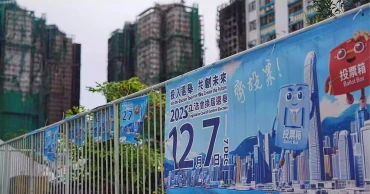
Hong Kong is holding legislative elections Sunday as the city grapples with the deadliest fire in decades, which killed at least 159 people and raised questions about government oversight and building safety. The vote for the 90-member Legislative Council comes amid a political landscape tightly controlled under Beijing’s “patriots-only” governance system.
The election follows a 2021 overhaul that reduced directly elected seats from 35 to 20, with the rest chosen by a pro-Beijing election committee and industry-based panels. All candidates must pass official vetting, including by national security authorities. Pro-democracy politicians have been completely excluded following arrests under the 2020 national security law.
The candidate pool includes more individuals with ties to mainland Chinese businesses and government bodies, reflecting Beijing’s emphasis on loyalty and alignment with its national agenda. Observers note the changes signal tighter control and a preference for candidates focused on national rather than local interests.
Hong Kong leader orders independent probe after deadly high-rise fire
Voter turnout will be closely watched. Political apathy has grown since 2021, and the recent fire may further dampen participation despite government efforts to facilitate voting through extended hours, additional polling stations, and subsidies. Experts suggest turnout could remain low, reflecting public concerns over systemic governance issues exposed by the tragedy.
City leader John Lee defended the election, calling personnel changes normal and dismissing accusations of interference, while candidates emphasized their dual roles in public service and work in Chinese-linked enterprises.
Source: AP
5 months ago
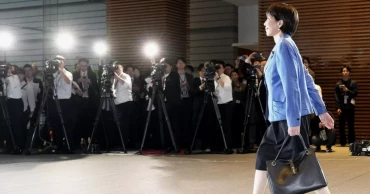
Japan’s Takaichi becomes unexpected style icon with ‘work, work, work’ mantra
Japanese Prime Minister Sanae Takaichi’s pledge to “work, work, work, work and work” — a line she used after winning the leadership of the ruling Liberal Democratic Party — has been selected as Japan’s catchphrase of the year, underscoring the determination that helped her become the country’s first female leader.
Takaichi, an ultraconservative politician, delivered the phrase in October during her LDP victory speech. It drew praise and concern in a country known for long working hours, especially for women who must balance jobs with family duties. The award triggered mixed reactions, with some interpreting it as a commentary on Japan’s culture of overwork.
Accepting the recognition this week, Takaichi said she meant only to express enthusiasm and did not intend to promote excessive labor. She also declined to elaborate on recent diplomatic tensions, including a dispute with Beijing after she suggested Japan could respond militarily if China attacked Taiwan.
Her rapid rise has also captured public attention for reasons beyond politics. Takaichi has become an unexpected fashion trendsetter, with many women trying to mirror her workwear and using the phrase “Sana-katsu” to express their support. Her simple black handbag, now known as the “Sanae Bag,” has become a major hit. The Grace Delight Tote, made by Tokyo-based Hamano Inc. and priced at 136,400 yen ($875), sold out in all eight colors shortly after she was photographed carrying it into her office on Oct. 21. The company says new buyers will have to wait until August because the handmade bags cannot be mass-produced.
Another item gaining popularity is her sparkly light-pink Jetstream 4&1 pen from Mitsubishi Pencil Co., which is frequently sold out online and in stores. Shoppers often post pictures proudly showing they use the same model as the prime minister.
Takaichi’s demanding schedule has also drawn attention. She held a 3 a.m. meeting on the first day of parliament and later told lawmakers she sleeps about two hours a night while caring for her husband, who is recovering from a stroke. She says her main source of relaxation is soaking in a hot bath morning and night.
Experts note that the intense public interest surrounding Takaichi is usually reserved for athletes or entertainers. Namiko Kubo-Kawai, a psychology professor at Nagoya Shukutoku University, says Takaichi has emerged as a new kind of role model — admired not for traditional femininity but for her authority, short haircut and practical clothing.
Takaichi’s conservative positions may limit her appeal among feminists. She supports maintaining male-only succession for Japan’s imperial family and opposes changes to a 19th-century law that would allow married couples to keep separate surnames. Still, Kubo-Kawai says her rise reflects growing diversity in Japan’s female role models, attracting women who may never have imagined rooting for a prime minister.
6 months ago
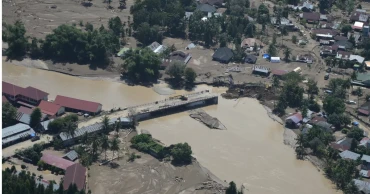
Floods in Asia: Death toll surpasses 1,500
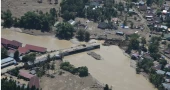
Deaths from last week’s catastrophic floods and landslides in parts of Asia surged past 1,500 Thursday as rescue teams raced to reach survivors isolated by the disaster with hundreds of people still unaccounted for across the region.
The tragedy of so much death and destruction was compounded by warnings that decades of deforestation caused by unchecked development, mining and palm oil plantations may have worsened the devastation. Calls grew for the government to act.
“We need the government to investigate and fix forest management,” said Rangga Adiputra, a 31-year-old teacher whose home in West Sumatra was swept away. The hills above his village on the outskirts of Padang city had been scarred by illegal logging.
“We don’t want this costly disaster to happen again," he said.
Authorities said 837 people were confirmed dead in Indonesia, 479 in Sri Lanka and 185 in Thailand, as well as three in Malaysia.
Many villages in Indonesia and Sri Lanka remained buried under mud and debris, with 861 people still unaccounted for in both countries.
Thousands reportedly faced severe shortages of food and clean water in cut off areas. The floods and landslides washed away roads and bridges and knocked out telecommunications, leaving many communities inaccessible.
Indonesian television showed images of huge amounts of felled timber carried downstream in North Sumatra, West Sumatra and Aceh provinces.
The leading Indonesian environmental group WALHI said that decades of deforestation — driven by mining, palm oil plantations, and illegal logging — stripped away natural defenses that once absorbed rainfall and stabilized soil.
“The disaster was not just nature’s fury, it was amplified by decades of deforestation,” said Rianda Purba, an activist with the group. “Deforestation and unchecked development have stripped Sumatra of its resilience.”
The group recorded more than 240,000 hectares (nearly 600,000 acres) of primary forest were lost in 2024 alone, leaving Sumatra’s small river basins dangerously exposed.
Another environmental group, Global Forest Watch, has said the flood-inundated Indonesian provinces of Aceh, North Sumatra and West Sumatra have since 2000 lost 19,600 square kilometers (7,569 square miles) of forest, an area larger than the state of New Jersey.
"Unless restoration begins now, more lives will be lost,” Purba warned.
Massive piles of neatly cut timber lay scattered among the debris across Parkit Beach, a sight that stunned emergency crews deployed to the area.
“From their shape, it was clear these were not just trees torn out naturally by the flood, but timber that had been deliberately cut,” said a member of a clean-up crew, Neviana, who goes by a single name.
Another resident of Padang, Ria Wati, 38, observed the same.
“The logs carried by the floods weren’t the kind you get from a flash flood,” she said, “If old trees were uprooted, you would see roots and fragile bark. But these were clean, neatly cut pieces of wood ... they looked like the result of illegal logging.”
President Prabowo Subianto pledged policy reforms after visiting flood-hit areas on Monday.
"We must truly prevent deforestation and forest destruction. Protecting our forests is crucial,” Prabowo said.
In Batang Toru, the worst-hit areas in North Sumatra, where seven companies operate, hundreds of hectares had been cleared for gold mining and energy projects, leaving slopes exposed and riverbeds choked with sediment. Rivers there were swollen with runoff and timber, while villages were buried or swept away.
Lawmakers called for the companies' permits to be revoked.
Facing public outrage, Environment Minister Hanif Faisol Nurofiq announced an investigation into eight companies suspected of worsening the disaster. He said environmental permits will be reviewed and future assessments must factor in extreme rainfall scenarios.
“Someone must be held accountable,” he said.
6 months ago

Hong Kong leader orders independent probe after deadly high-rise fire
Hong Kong will form an independent committee led by a judge to investigate last week’s deadly high-rise fire, Chief Executive John Lee said Tuesday, promising full transparency and major reforms in the city’s construction sector.
Lee said the probe must determine what caused the fire and identify failures that allowed it to spread so quickly. Police said more bodies were recovered on Tuesday, bringing the death toll to at least 156. Around 30 people remain missing one week after the blaze.
Lee told reporters the investigation must “uncover the truth” and ensure justice for the victims. He said the government is committed to preventing similar tragedies and will push through reforms despite resistance from vested interests.
The fire began last Wednesday around scaffolding at the Wang Fuk Court housing complex. It rapidly engulfed seven of the estate’s eight towers, home to over 4,600 residents. Many families have been left homeless, and 40 injured people are still in hospital.
Survivors welcomed the decision to set up an independent committee. May Liang, who lost all her belongings, said residents deserve to know exactly what went wrong.
At least 15 people have been arrested by police and anti-corruption investigators. Those detained include scaffolding contractors, company executives and an engineering consultant, as authorities examine suspected corruption and negligence tied to a renovation project at the site.
Early findings show the fire spread unusually fast because of strong winds and substandard materials used during maintenance work. Authorities said Monday that contractors used low-quality safety netting. Investigators collected 20 samples from the complex, and seven failed safety standards. Lee said some contractors mixed approved materials with substandard ones to deceive inspectors.
He pledged a full overhaul of Hong Kong’s building renovation system.
Lee declined to comment on media reports that recent arrests were aimed at suppressing criticism of the government. One person was reportedly detained for a petition demanding accountability. Lee said he would not tolerate crimes that try to “exploit the tragedy.”
John Burns, an honorary professor at the University of Hong Kong, said the public will expect credible findings. He added that transparency is essential to restore trust in the government.
Authorities have moved 2,500 residents into temporary housing, including government flats, hostels and hotels. About 20 people remain in emergency shelters, down from hundreds on the first night.
6 months ago
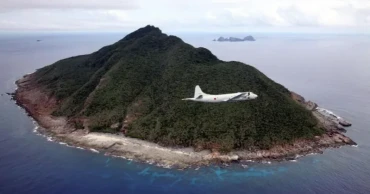
China and Japan coast guards clash near disputed islands
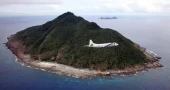
China and Japan reported differing accounts of a confrontation between their coast guard vessels near the disputed islands in the East China Sea on Tuesday.
China’s Coast Guard said a Japanese fishing boat had entered waters near the Diaoyu Islands, which Beijing claims as its territory. Japan calls them the Senkaku Islands and administers them. A China Coast Guard spokesperson, Liu Dejun, said Chinese ships approached the vessel, warned it off, and took necessary law enforcement measures, urging Japan to stop what it called infringements and provocations.
Japan’s Coast Guard said it intercepted two Chinese ships that approached the fishing boat and ordered them to leave Japanese waters. The JCG patrol ship stayed with the fishing vessel until the Chinese ships left.
The incident comes amid rising tensions following Japanese Prime Minister Sanae Takaichi’s comments last month suggesting Tokyo could take military action if China attacked Taiwan. China considers Taiwan part of its territory and has not ruled out using force to “reunite” with it.
The Senkaku/Diaoyu Islands, uninhabited and located about 160 kilometers northeast of Taiwan, have been a longstanding source of friction. Both countries agreed in principle in 2008 to jointly develop resources in the East China Sea, but tensions have grown in recent years.
China has increased patrols near the islands, testing Japan’s readiness to defend them. Last year marked the third consecutive record year for Chinese government ship activity in the area. Prior to Tuesday, the China Coast Guard last entered the waters on November 16, calling it a lawful patrol to protect its rights and interests.
Analysts say the confrontation reflects the broader deterioration in China-Japan relations, with hostile rhetoric affecting both governments and citizens.
With inputs from BBC
6 months ago

Sister allowed to meet Imran Khan at Adiala jail; PTI protests on
Authorities at Rawalpindi’s Adiala Jail on Tuesday allowed PTI founder Imran Khan’s sister, Uzma Khanum, to meet the incarcerated former prime minister.
Uzma visited her brother as scores of PTI supporters, who had accompanied her, gathered outside the prison, According to Pakistan news website Dawn.
The development comes amid ongoing PTI protests outside the Islamabad High Court and Adiala Jail, opposing restrictions on Imran Khan’s visitation rights. The party has claimed that the former premier’s family and party leaders had been denied access for several weeks.
According to Khyber Pakhtunkhwa Chief Minister Sohail Afridi, no one had been allowed to meet Imran or his wife, Bushra Bibi, since October 27.
Section 144 of the Criminal Procedure Code had been imposed in Islamabad and Rawalpindi ahead of PTI’s protests. The provision empowers district administrations to prohibit assemblies of four or more people in a designated area for a limited period.
Tallal’s warning
Earlier, Minister of State for Interior Tallal Chaudhry said that compliance with Section 144 would be strictly enforced in both cities. “Whether they come to the Islamabad High Court (IHC) or the Adiala jail, action under Section 144 would be carried out without any discrimination,” Chaudhry said, urging PTI-backed parliamentarians to “abide by the law.”
Chaudhry linked the measure to terrorism, warning that “terrorists look for instances [which they can use] to spread fear and make headlines; be it [a] political gathering, courts or important places or offices.” He also highlighted the misuse of social media and VPNs for terrorist communication, adding that the interior ministry, in coordination with the Pakistan Telecommunication Authority (PTA), would address the issue.
He noted the Peshawar High Court’s ruling that state resources should not be used for political activities. “We hope that the KP (Khyber Pakhtunkhwa) chief minister, who repeatedly comes to Islamabad and Pindi, will not use state resources for his political activities,” Chaudhry said, asserting that KP police would be deployed only within KP.
Chaudhry stressed that Section 144 was imposed to protect lives, recalling the May 9, 2023, protests following Imran’s arrest. He said, “They will do it themselves just like on May 9, and entire Pakistan will face the consequences. They will do it themselves, and will then deny [any responsibility].”
Regarding a possible transfer of Imran to a jail in Islamabad, the minister said, “It is too early to say anything,” noting that the prison’s construction is in its final stages and staff training is pending.
Security beefed up in Rawalpindi
Rawalpindi police said at least 3,000 officers were deployed to ensure law and order. “Section 144 has been imposed across Rawalpindi for three days which restricts unlawful assembly, rally and protest,” the statement said. Roads leading to key government buildings and the Adiala jail were reported blocked.
PTI leader Asad Qaiser said opposition lawmakers from both houses would protest outside the IHC before taking their demonstration to Adiala Jail. “It has been decided to hold protests because IHC has failed to implement its order and the Adiala jail administration is not willing to implement the court orders,” he said. Barrister Gohar Ali Khan and other leaders are also scheduled to stage demonstrations in the twin cities.
Last week, KP Chief Minister Afridi staged a sit-in outside the prison after being barred from meeting Imran for the eighth time. Imran’s sisters have previously staged sit-ins outside Adiala Jail, and the PTI alleged that police had “violently detained” them during a protest on November 19.
Despite speculations about the former prime minister’s health, both the government and PTI leaders have maintained that he remains in good health.
6 months ago
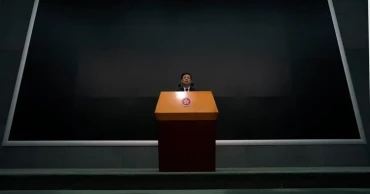
Hong Kong sets up judge-led independent panel as fire death toll climbs to 156
Hong Kong will establish an independent inquiry committee, chaired by a judge, to investigate the cause of a devastating apartment block fire and recommend reforms to prevent similar disasters, Chief Executive John Lee announced Tuesday. Public pressure for accountability has grown sharply as authorities confirmed the death toll had risen to at least 156, with around 30 people still unaccounted for.
Lee pledged to confront entrenched interests and overhaul Hong Kong’s building renovation system. The blaze erupted last Wednesday around scaffolding at the Wang Fuk Court complex in Tai Po, quickly engulfing seven of its eight towers and leaving thousands of residents displaced. Forty people remain hospitalized.
At least 14 individuals — including scaffolding contractors, company heads and an engineering consultant — have been arrested on suspicion of corruption and negligence linked to the renovation project.
Hong Kong probes corruption, negligence after deadliest fire in decades claims 128 lives
Investigators are examining why the fire spread so rapidly, aided by high winds and allegedly substandard construction materials. Authorities said seven of 20 netting samples collected failed safety standards and that inferior materials were mixed with approved ones to deceive inspectors.
Lee would not address reports of arrests tied to criticism of the government but warned he would not tolerate any crimes exploiting the tragedy. He said 2,500 people have been relocated to temporary housing, while about 20 remain in shelters.
Source: AP
6 months ago

Family fears ‘something irreversible’ is being hidden about Imran Khan’s condition
Jailed PTI founder Imran Khan’s son, Kasim Khan, has voiced alarm that authorities may be concealing “something irreversible” about his father’s condition.
His concern follows continued protests and sit-ins by PTI leaders and Imran’s sisters outside Adiala jail, where the former prime minister is being held, after being prevented from meeting him for more than three weeks.
Despite a court order allowing weekly prison visits, the family has had no direct or verifiable contact with Imran, Kasim told Reuters, as restrictions remain in place and speculation grows over possible transfers to another facility.
“Not knowing whether your father is safe, injured or even alive is a form of psychological torture,” he said in written remarks, noting that there had been no independently confirmed communication for a couple of months. “Today we have no verifiable information at all about his condition,” he added. “Our greatest fear is that something irreversible is being hidden from us.”
He said the family has repeatedly sought access for Imran’s personal physician, who has been denied the chance to examine him for more than a year.
Pakistan’s interior ministry did not respond to Reuters’ request for comment. A jail official, speaking anonymously, said Imran was in good health and that he was unaware of any plan to shift him to a higher-security facility.
Imran, 72, has been in prison since August 2023 after convictions in multiple cases he claims are politically motivated following his 2022 ouster in a no-confidence vote. His first conviction was in the Toshakhana case over allegedly selling state gifts, followed by lengthy sentences in the cipher case and the Al Qadir Trust case.
The PTI maintains that the prosecutions were designed to sideline Imran from public life and the 2024 elections.
Family anxiety grows amid silence
Imran’s family says the extended lack of communication has intensified their fear of what they believe is a deliberate attempt to keep him hidden from public view.
“This isolation is intentional,” Kasim said, accusing authorities of cutting his father off. “They are scared of him. He is Pakistan’s most popular leader, and they know they cannot defeat him democratically.”
Kasim and his elder brother, Suleiman Isa Khan, who live in London with their mother, Jemima Goldsmith, have largely stayed away from politics, speaking rarely except about their father’s imprisonment.
Kasim said the last time they saw Imran was in November 2022, when they visited after he survived an assassination attempt. “That image has stayed with me ever since. Seeing our father in that state is something you don’t forget,” he said. “We were told he would recover with time. Now, after weeks of total silence and no proof of life, that memory carries a different weight.”
He said the family is pursuing both domestic and international avenues, including appeals to human rights bodies, to restore court-ordered access. “This is not just a political dispute,” Kasim said. “It is a human rights emergency. Pressure must come from every direction. We draw strength from him, but we need to know he is safe.”
Responding to Defence Minister Khawaja Asif’s claim in a Zeteo interview that Imran’s sons can meet him, Jemima said, “They’re not even allowed to speak to him on the phone. No one is.”
HRCP voices concern
The Human Rights Commission of Pakistan (HRCP) said it was concerned about the conditions of Imran’s incarceration and the repeated denial of meetings with family members and lawyers.
“Allegations indicating that he has been unable to meet close relatives, associates or legal counsel warrant urgent clarification, as regular and unhindered access to immediate family and counsel is a fundamental safeguard against isolation and misuse of detention powers,” it wrote on X.
HRCP urged the federal government and the Punjab Home Department to ensure that all procedures “comply with constitutional due-process protections and international standards for humane treatment.”
END/UNB/FH/1850 Hrs
6 months ago
Asia flooding death toll rises as recovery efforts expand
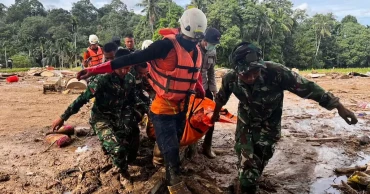
Recovery efforts intensified on Monday across Indonesia, Sri Lanka and Thailand as authorities reported new casualties from last week’s severe floods and landslides that have killed more than 1,000 people in the three countries.
Officials said at least 502 people have died in Indonesia, 334 in Sri Lanka and 170 in Thailand. Hundreds more remain missing after days of heavy rain that triggered widespread destruction.
Indonesia President Prabowo Subianto visited Sumatra island, where floods and landslides left thousands homeless and 508 people unaccounted for. He promised to rebuild damaged infrastructure and ensure relief reaches affected communities.
Some areas remain cut off after roads and communication lines were damaged. Indonesia’s disaster agency said aircraft are delivering supplies to remote areas, while more than 290,000 people have been displaced in North Sumatra, West Sumatra and Aceh.
Prabowo said the disaster shows the need for stronger environmental protection and climate preparedness. He urged local governments to strengthen mitigation efforts and stressed the impact of future extreme weather.
In Sri Lanka, rescuers continued searching for 370 missing people. Nearly 148,000 survivors are staying in temporary shelters after days of heavy rainfall caused flooding and landslides, particularly in the central hill country.
Thailand’s Prime Minister Anutin Charnvirakul on Saturday detailed recovery and compensation plans for the country’s southern region. Officials said severe flooding in 12 southern provinces has affected more than 1.4 million households and 3.8 million people.
6 months ago