Asia
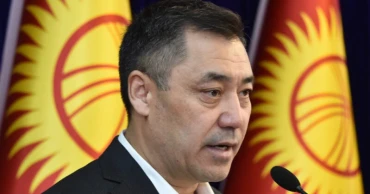
Kyrgyzstan holds early parliamentary vote amid arrests and media pressure
Kyrgyzstan held a snap parliamentary election on Sunday as authorities continued arresting opposition figures and shutting down independent media, actions that critics say have strengthened President Sadyr Zhaparov’s control over the country.
Polling stations opened at 8 a.m. and closed 12 hours later, though some stations abroad will remain open until Monday. Local media said final results are expected within two weeks. The vote was moved up by a year after officials argued it would otherwise fall too close to the 2027 presidential election.
The election is being held under a revised system in which 30 constituencies each elect three lawmakers. The Central Election Commission said 467 candidates are competing for 90 seats in the Jogorku Kenesh. A gender quota requires at least one female lawmaker from each district.
Analysts say candidates loyal to Zhaparov are likely to dominate, helped by Kyrgyzstan’s fast growing economy and its role in helping Russia bypass sanctions. Kyrgyzstan remains closely aligned with Moscow and hosts a Russian air base.
In the week before the vote, authorities detained at least 10 opposition figures and carried out searches and interrogations. Officials accuse them of calling for mass unrest. Zhaparov, who took power after unrest toppled the previous government in 2020, said in a preelection address that there would be no more coups.
Some of those targeted are allies of former President Almazbek Atambayev, who now lives in Spain. His son was detained and his wife was summoned for questioning.
Independent media outlets have also been under heavy pressure. In late October, a court declared Kloop, Temirov Live and AitAit Dese extremist organizations, blocking their websites and banning activity connected to their leadership. The ruling followed a new media law that requires all outlets to register with the authorities. Human Rights Watch said the government has intimidated journalists and restricted access to information.
Despite U.S. concerns about human rights in Kyrgyzstan, President Donald Trump hosted leaders of five Central Asian states, including Zhaparov, at the White House in November to discuss access to the region’s mineral resources.
Kyrgyzstan’s economy has grown for four straight years. Official figures show GDP increased 10 percent from January to September, a trend that analysts say has helped the government avoid public unrest.
Experts view Sunday’s parliamentary vote as a rehearsal for the January 2027 presidential election. They say full control of parliament would give Zhaparov a strong advantage as he prepares for his next campaign.
6 months ago
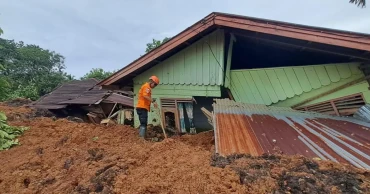
Death toll from floods and landslides in Indonesia tops 300
Improved weather on Saturday helped rescuers on Indonesia's Sumatra island recover more bodies as they struggled to reach several areas that were hit by landslides and flash floods that left more than 300 dead and scores missing.
Parts of Sumatra, known for its lush rainforests, volcanoes and mountain ranges, were cut off by damaged roads and downed communications lines, and relied on transport aircraft to deliver aid supplies. Rescue efforts were also hampered by a lack of heavy equipment.
Monsoon rains over the past week caused rivers to burst their banks. The deluge tore through mountainside village, swept away people and submerged thousands of houses and buildings in the three provinces of North Sumatra, West Sumatra and Aceh.
The death toll in North Sumatra rose to 166, while 90 people died in West Sumatra. Rescuers also retrieved 47 bodies in Aceh, said Suharyanto, head of the National Disaster Management Agency. About 59,660 displaced families fled to temporary government shelters.
Authorities used cloud seeding, which involves dispersing particles into clouds to create precipitation, to redirect rainfall away from the areas where search and rescue efforts were ongoing, said Suharyanto, who goes by a single name like many Indonesians.
In the Agam district in West Sumatra province, nearly 80 people were missing in three village, buried under tons of mud and rocks. There was a desperate need for heavy equipment to reach possible survivors. Relatives wailed as they watched rescuers pull bodies from a buried house in Salareh Aia village.
Images also showed massive piles of logs washed ashore on West Sumatra’s Air Tawar Beach, sparking public concern over possible illegal logging that may have contributed to the disaster.
In Aceh province, on the northern tip of Sumatra, authorities had difficulty deploying tractors and other heavy equipment. Hundreds of police, soldiers and residents dug through the debris with bare hands, shovels and hoes as heavy rain pounded the region.
“The death toll is believed to be increasing, since many bodies are still missing, while many have not been reached,” said Suharyanto, the head of the government's disaster relief agency, who like many Indonesians only uses one name.
TV reports showed two rescuers battling strong currents in a small rubber boat, moving toward a man clinging to a coconut tree.
“There are many challenges,” Aceh Gov. Muzakir Manaf said after declaring a state of emergency until Dec. 11 to address the disaster. “We have to do many things soon, but conditions do not allow us to do so.”
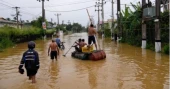
Local media said that flash floods in Bireuen district in Aceh collapsed ine bridges, paralyze two-way transportation from North Sumatra’s Medan city to Banda Aceh, and forced residents to cross the river from village to village by boat.
It was the latest natural disaster to hit Indonesia, which is frequently struck by earthquakes, volcanic eruptions and tsunamis because of its location on the “Ring of Fire,” an arc of volcanoes and fault lines in the Pacific Basin.
Seasonal rains frequently cause flooding and landslides in Indonesia, an archipelago of 17,000 islands where millions of people live in mountainous areas or near fertile flood plains.
6 months ago
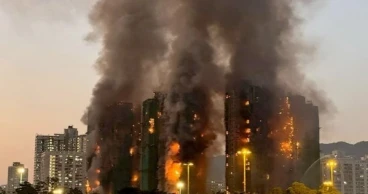
Hong Kong probes corruption, negligence after deadliest fire in decades claims 128 lives
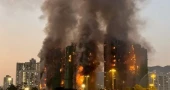
Hong Kong authorities are investigating possible corruption and severe negligence after a massive blaze swept through a residential complex this week, killing at least 128 people in the city’s worst fire disaster in decades.
The fire erupted Wednesday at the Wang Fuk Court estate in the city’s northern New Territories, engulfing seven of its eight residential towers. The complex housed nearly 4,800 people, some of whom had warned officials last year about fire safety risks linked to ongoing renovation work.
Police initially arrested three construction workers on suspicion of manslaughter and gross negligence, later releasing them on bail. Another eight individuals — scaffolding subcontractors, engineering consultants and renovation project managers — were detained as part of a widening corruption probe. Authorities did not name the company involved, though documents from the homeowners’ association list Prestige Construction & Engineering as the main contractor. Boxes of records have been seized from its offices.
Investigators are focusing on the materials used in the renovation, particularly the scaffolding netting and highly flammable foam panels. Early findings suggest the blaze began in the lower-level scaffolding net before spreading rapidly as foam insulation caught fire, said Security Secretary Chris Tang. Fire officials also discovered that several alarms in the estate, which houses many elderly residents, failed to activate.
Firefighters battled the inferno for 40 hours, prioritizing units from which emergency calls had been received. Seventy-nine people were injured, including 12 firefighters, and one firefighter died in the operation. Smoke continued to drift from the charred towers even two days later.
Rescuers have now completed searches, though more bodies may be recovered. Authorities say 89 sets of remains are awaiting identification, while roughly 200 people were initially reported missing.
Among the victims were two Indonesian domestic workers, and 11 more remain unaccounted for, Indonesia’s foreign ministry said.
Flags across the city flew at half-mast on Saturday as Chief Executive John Lee led officials in a three-minute silence to honour the dead. The tragedy marks Hong Kong’s deadliest fire since a 1996 commercial building blaze killed 41 people, and the deadliest overall since a 1948 warehouse fire claimed 176 lives.
6 months ago

Death toll from floods and landslides on Indonesia's Sumatra island rises to 248
Emergency crews in Indonesia faced immense difficulties Saturday as they attempted to reach survivors in several remote areas of Sumatra that were devastated by a combination of earthquakes, floods and landslides, with authorities reporting at least 248 confirmed deaths.
Severely damaged roads, collapsed bridges and disrupted communication lines left many communities cut off, forcing relief teams to rely on aircraft to deliver essential supplies to Central Tapanuli in North Sumatra and other isolated districts. The National Disaster Management Agency (BNPB) said the number of injured has surpassed 500.
A week of monsoon rains triggered rivers to overflow, sending torrents of water, mud and rocks through villages and sweeping away homes. Thousands of houses were inundated, and nearly 3,000 families have taken shelter in government-run facilities.
In West Sumatra’s Agam district, rescuers continued to uncover bodies from deep mud, bringing the region’s death toll to at least 74, while more than 70 people remain missing. Scenes of grief unfolded as families watched recovery teams pull victims from buried homes in Salareh Aia village.
Efforts in neighboring Aceh province were similarly hindered, with heavy rainfall blocking access routes and limiting the arrival of essential machinery. Police, soldiers and villagers dug with hand tools as persistent downpours slowed operations. Officials warned that the toll would likely rise as many areas remain unreachable.
Aceh’s governor declared an emergency through Dec. 11, noting dire shortages of fuel, clean water and generators. Local media reported that flash floods had collapsed nine bridges in Bireuen district, cutting off key transportation routes and forcing residents to use boats to move between villages.
Indonesia, located on the Pacific “Ring of Fire,” regularly faces deadly natural disasters, and seasonal rains often trigger severe flooding and landslides across the vast island nation.
6 months ago

PTI says it is blocked from meeting Imran; what Pakistan’s jail rules say
Government officials claim that Khyber Pakhtunkhwa Chief Minister Sohail Afridi’s attempt to meet jailed PTI founder Imran Khan violates prison regulations, an assertion strongly contested by the PTI, which says its court-sanctioned visiting schedule is being ignored.
According to prison authorities and former officials, all inmates in Punjab — including political detainees— are entitled to meet up to five people each week, including lawyers and family members. They are also allowed 30 minutes of phone calls weekly, conducted through monitored public call offices inside Adiala Jail. Even death-row prisoners receive similar visitation and call allowances, reports DAWN.
Political detainees are typically housed in special high-security cells and undergo daily medical check-ups. However, these privileges depend on an inmate’s “good behaviour”, giving jail superintendents wide discretion in permitting or blocking access. Those involved in terrorism or anti-state activities may lose these privileges entirely.
Officials say visitation rights can also be suspended if authorities fear unrest. This has become a key issue for PTI, as jail officials often cite protests and media briefings held by Imran Khan’s visitors — particularly after meetings involving his sister Aleema Khan — as reasons to restrict access.
While the government insists that meetings require explicit judicial approval, PTI leaders argue that even their court-approved Tuesday and Thursday meetings are being denied arbitrarily. Senator Rana Sanaullah, however, has supported limited family visits, while insisting that prison meetings cannot turn into lengthy press conferences.
Past cases reflect similar practices. Leaders such as Nawaz Sharif, Maryam Nawaz and Safdar Awan previously used phone facilities due to “good behaviour”. Veteran journalists also recall that prisoners provide approved visitor lists in advance, though political infighting within PTI over control of Imran Khan’s visitor list has added further complications.
6 months ago
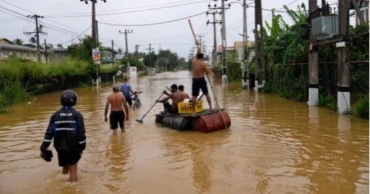
Death toll from floods and mudslides in Sri Lanka rises to 123
The death toll from flooding and landslides triggered by Cyclone Ditwah in Sri Lanka has climbed to 123, while another 130 people remain unaccounted for, officials said Saturday.
According to the country’s Disaster Management Center, nearly 44,000 residents have been forced from their homes and are now staying in temporary shelters. Authorities warned that the number of fatalities could rise further as rescuers struggle to reach several remote areas hit by mudslides overnight. Images circulating on social media showed entire slopes collapsed onto villages and roads that emergency teams have yet to access.
Sri Lanka has endured days of severe weather, which intensified on Thursday when torrential rain pounded large parts of the island. Homes, farmland and road networks were submerged, while numerous landslides were reported across the central highlands, known for their tea estates.
In response, the government suspended office operations and closed all schools, also postponing scheduled examinations. Overflowing rivers and reservoirs have blocked major highways, while fallen trees, mud and debris have made rail lines unusable. Passenger train services were halted, and authorities closed several key roads nationwide.
By Friday, floodwaters began moving downstream from the worst-hit regions, inundating low-lying areas around the capital, Colombo, which had initially seen lighter rainfall compared to the interior.
Cyclone Ditwah formed over the seas east of Sri Lanka and is expected to track toward India’s southern coast by Sunday, officials said. Weather forecasters predict more rainfall on Saturday as the storm system passes over the northern regions of the country.
6 months ago
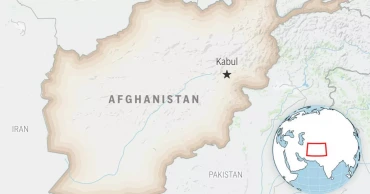
Afghanistan pledges cooperation after Tajikistan attack kills 3 Chinese workers
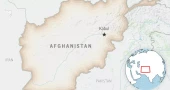
Afghanistan on Friday voiced deep regret and condemned a cross-border attack into Tajikistan that left three Chinese workers dead and another injured, promising full cooperation with Dushanbe in the investigation.
Foreign Ministry deputy spokesman Hafiz Zia Ahmad Takal said early findings suggested the attackers aimed to stir instability and distrust among regional countries. He said Afghanistan was ready to share information, offer technical support and conduct a joint assessment to determine the cause of the incident.
Tajikistan’s Foreign Ministry said the attack occurred late Wednesday and was launched from inside Afghanistan using a drone armed with grenades and firearms. The ministry said criminal groups operating across the border continued to disrupt efforts to maintain security and stability despite Tajikistan’s attempts to safeguard the frontier. It urged Afghan authorities to tighten security along the shared border.
The Chinese Embassy in Tajikistan asked Chinese nationals to avoid working or investing in the border region and advised those already there to leave immediately.
Ties between Tajikistan and Afghanistan have long been tense, particularly after the Taliban seized power in 2021, prompting Tajikistan to sever relations. However, relations have shown signs of improvement. Border markets reopened in 2023, and a Tajik delegation visited Kabul earlier this month.
6 months ago

ICC appeals judges deny Duterte’s bid for release, citing health claim insufficient
Former Philippine President Rodrigo Duterte will remain in International Criminal Court custody after appeals judges on Friday dismissed a request to free him on medical grounds.
Duterte, now in his 80s, is charged with crimes against humanity for allegedly directing or enabling dozens of extrajudicial killings linked to his violent anti-drug campaign — both during his years as mayor of Davao City and later as president.
Judge Luz del Carmen Ibáñez Carranza said Duterte’s legal team did not demonstrate that an earlier ruling refusing his release was flawed. Duterte was not present in court for the decision.
Defense lawyer Nick Kaufman said the team intends to renew its request after a medical evaluation expected next month. Attorneys argue Duterte is physically weak and cognitively impaired to the point that he cannot effectively assist in his own defense. A pretrial hearing was delayed in September pending a full medical assessment.
Judges previously ruled that Duterte must stay in custody, concluding he might not return for trial and could potentially intimidate witnesses if released. Court documents allege he authorized or condoned “violent acts including murder” against suspected drug offenders from November 2011 to March 2019, when the Philippines’ withdrawal from the ICC took effect.
Estimates of fatalities during Duterte’s presidency vary widely: national police cite more than 6,000 deaths, while rights groups claim as many as 30,000. His arrest in March was welcomed by families of victims.
The defense sought his transfer to another ICC member state during proceedings, but appeals judges upheld the lower chamber’s finding that risks posed by his release could not be reduced through such arrangements.
Judges noted earlier that a country cannot use withdrawal from the Rome Statute to shield individuals from accountability for crimes already under review. Duterte’s legal team is also challenging that ruling.
The Philippine government acknowledged Friday’s decision, with presidential Communications Secretary Claire Castro saying the administration respects the court’s judgment. The Duterte family said they accepted the ruling “with peaceful hearts” and would continue to support the former leader.
Source: AP
6 months ago

Death toll from Thailand floods rises to 145
At least 145 people have died in severe flooding across southern Thailand, authorities said Friday, as water levels continue to fall and the scale of destruction becomes clearer.
The Department of Disaster Prevention and Mitigation reported that more than 1.2 million households — involving roughly 3.6 million residents — have been affected by heavy monsoon rains inundating 12 southern provinces.
Government spokesperson Siripong Angkasakulkiat told reporters in Bangkok that the majority of casualties were in Songkhla, where at least 110 people have been confirmed dead. He said receding water is allowing search and rescue teams greater access to hard-hit communities.
Songkhla’s toll surged in recent days as rescue workers reached neighborhoods previously cut off by deep flooding. Local media footage showed teams navigating newly accessible areas around Hat Yai — the region’s largest urban center — and recovering additional bodies.
Officials noted that floodwaters have dropped significantly in most districts, though pockets of high water remain. The Meteorological Department said rainfall has eased but warned that thunderstorms may still develop in some southern areas.
The flooding caused widespread disruptions, stranding thousands, blocking roads and submerging homes, shops and vehicles. Images from the region on Friday showed washed-out roads, toppled utility poles, and piles of debris — including damaged appliances and uprooted belongings — lining muddy streets. Numerous abandoned cars lay overturned or stacked together after being swept away by strong currents.
Source: AP
6 months ago
Sri Lanka closes schools and offices as landslides and floods kill at least 56
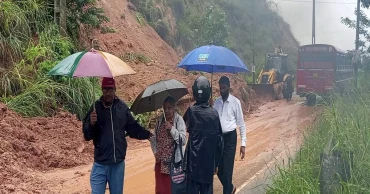
Sri Lanka shut government offices and schools Friday as severe floods and landslides across the country left at least 56 dead and damaged more than 600 homes.
The country has faced heavy rains since last week, with conditions worsening Thursday. Torrential downpours flooded homes, fields, and roads, while triggering deadly landslides, particularly in the central mountainous tea-growing regions of Badulla and Nuwara Eliya, about 300 kilometers (186 miles) east of Colombo. Officials reported more than 25 deaths in those areas, with 21 people missing and 14 injured. Additional fatalities occurred elsewhere across the nation.
Rivers and reservoirs overflowed, blocking roads and prompting authorities to suspend passenger train services and close major routes. Fallen rocks, mud, and trees further disrupted travel, and some railway tracks were submerged.
Rescue operations involved Sri Lanka’s air force, navy, and police, who used helicopters and boats to evacuate stranded residents. Local media footage showed three people rescued from a flooded rooftop and a car swept away near Ampara, killing all three passengers inside.
The government’s decision to close schools and offices aims to ensure public safety as the country continues to cope with widespread flooding and landslide damage.
6 months ago