Asia
Rift over Taiwan deepens friction between China and Japan
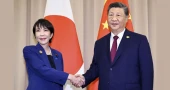
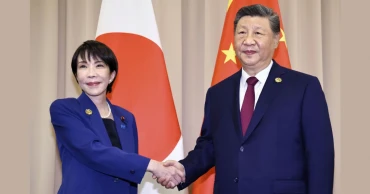
Less than a month into her term, Japan's conservative leader has stirred tensions with China by suggesting a Chinese move against Taiwan could prompt a Japanese military response.
China objects to the involvement of other countries in Taiwan, notably the United States, which is the main supplier of weapons to the self-governing island. Beijing claims it as its own and says it must come under its control. It says it's a domestic issue and “a red line” that others should not cross.
Takaichi went beyond past Japanese statements
Speaking to a parliamentary committee, Prime Minister Sanae Takaichi said on Nov. 7. that a Chinese naval blockade or other action against Taiwan could be grounds for a Japanese military response.
“If it involves the use of warships and military actions, it could by all means become a survival-threatening situation,” she said.
Her comments were stronger than those of her predecessors. Previous prime ministers have expressed concern about China's threat to Taiwan but haven't publicly said how Japan would respond.
Takaichi later refused to retract her remarks but told the same parliamentary committee three days later that she would avoid talking about specific scenarios in the future.
Japan's new leader is a longtime supporter of Taiwan. She views China as a growing threat and has ordered an acceleration of plans to boost Japan’s military spending.
Foreign Minister Toshimitsu Motegi said Friday that Japan’s position on Taiwan has not changed.
China responds with stern warnings
Takaichi's comments caused an uproar in China, with the foreign and defense ministries, the Taiwan Affairs Office and state media all weighing in.
Her remarks came as a surprise because tensions over Taiwan were not particularly high, said Wang Huiyao, the president of the Center for China and Globalization, a think tank in Beijing.
"We can’t just let the prime minister speak so openly at parliament," he said.
One of the first to speak out was China’s consul general in Osaka, who said in a now-deleted social media post that China has no choice but to cut off an intruding “dirty neck." The comment was understood as an allegation that Takiachi was interfering into what China sees as its internal affairs. Motegi called the post “extremely inappropriate.”
China's Foreign Ministry called in Japan's ambassador on Thursday to warn against any interference in Taiwan. The next day, Japan's Foreign Ministry summoned China's ambassador in Tokyo to complain about the social media post.
Beijing is upping the ante
On Friday night, China took aim at Japan's tourism economy. It issued a notification advising against travel to Japan. About 7.5 million Chinese tourists visited in the first nine months of this year, the largest number from any country and about one-fourth of the total.
China's Education Ministry followed up with a warning to students on Sunday about recent crimes against Chinese in Japan, though it didn't advise them not to go.
Also on Sunday, China's coast guard announced that it was patrolling the waters around a group of uninhabited islands that both countries claim. Japan criticized an incident in which a fleet of four Chinese coast guard ships briefly violated Japanese territorial waters around the islands Sunday.
On Monday, Mao Ning, a Chinese Foreign Ministry spokesperson, told reporters that Premier Li Qiang “has no arrangement to meet with the Japanese leader” during the upcoming Group of 20 summit in South Africa.
A bigger concern for Japan would be if China were to restrict the export of rare earth magnets, vital components in auto manufacturing and other industries. There was no immediate indication China was considering it.
Japanese officials are trying to calm the waters. Motegi said he planned to ask China to make "an appropriate response” to prevent a major impact on relations.
On Monday, Japan dispatched a senior diplomat to Beijing for talks with Chinese Foreign Ministry officials in an apparent move to calm the situation, but no details have been released.
The U.S.-Japan alliance looms in the background
Japan’s position is complicated by its post-World War II constitution, which bans its use of force except for defending its territory — the military is called the Self-Defense Force.
Former Prime Minister Shinzo Abe succeeded in expanding the military's mandate by winning parliamentary approval in 2015 of a law that would allow Japan to come to the aid of an ally — most likely the U.S. — in a conflict that is determined to be an existential threat to Japan.
Takaichi, who rose in politics as a protégé of Abe, said that a Chinese move against Taiwan could qualify as a threat, setting off the ensuing firestorm.
Another possible threat would be a conflict with North Korea that draws in the U.S., analysts say. Japan has previously not specified what would constitute an existential threat under the provision, which is called collective self-defense.
Now, Tokyo doesn’t want to withdraw Takaichi's remark, because it could narrow its options in a Taiwan crisis. Backpedaling could also hurt the new prime minister's high public support ratings and her image as a hawk on China.
6 months ago

Iran says uranium enrichment halted amid nuclear tensions
Iran’s Foreign Minister Abbas Araghchi said Sunday that the country is no longer enriching uranium at any site, signaling to the West that it remains open to potential negotiations over its nuclear program. Speaking to an AP journalist, Araghchi said all Iranian nuclear facilities are under International Atomic Energy Agency (IAEA) safeguards, and enrichment has paused because the sites were attacked in June during a 12-day conflict with Israel and the United States.
Araghchi emphasized that Iran retains the right to enrich uranium for peaceful purposes and would not give up its inalienable rights. Mohammad Eslami, head of Iran’s Atomic Energy Organization, noted that Tehran faces threats over accessing the bombed sites, limiting any major work at Fordo, Isfahan, and Natanz.
Iranian president orders probe after man dies from self-immolation in food stand dispute
Iran previously enriched uranium up to 60% purity after the U.S. withdrew from the 2015 nuclear deal. While European nations have sought renewed U.N. sanctions, Araghchi left open the possibility of talks if Washington alters its maximalist approach.
The summit, hosted by Iran’s Institute for Political and International Studies, highlighted Tehran’s perspective on the June conflict and framed Israel’s strikes as “aggression,” even as Iran faces ongoing economic pressures, high tensions over its nuclear program, and internal societal challenges.
Source: AP
6 months ago
Saudi Arabia bus crash: 42 Indian Umrah pilgrims feared dead in tanker collision
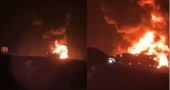
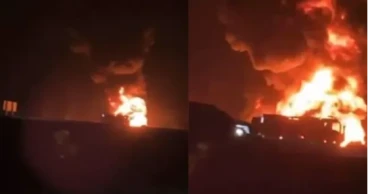
At least 42 Indian Umrah pilgrims are feared dead after a bus carrying them from Makkah to Madinah collided with a diesel tanker early Monday, causing a massive fire, media reports said.
Initial reports indicate that many of the victims were women and children from Hyderabad. Unofficial sources suggest that 11 women and 10 children may be among those killed, though authorities are still verifying the figures, reports Gulf News.
In response to the tragedy, the Indian Consulate in Jeddah has set up a 24-hour control room to assist families and concerned parties. The toll-free helpline number is 8002440003.
Indian External Affairs Minister S. Jaishankar expressed deep shock over the incident, saying the Indian Embassy in Riyadh and the Consulate in Jeddah are extending full support to the affected nationals and their families.
He conveyed his heartfelt condolences to the bereaved families and prayed for the speedy recovery of those injured.
6 months ago
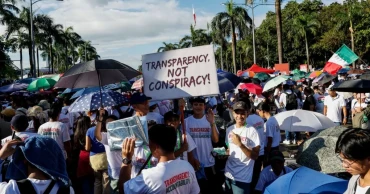
Hundreds of thousands rally in Manila over flood-control graft scandal
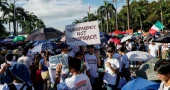
Hundreds of thousands of Filipinos poured into Manila’s streets on Sunday in the largest demonstration yet demanding accountability for a massive flood-control corruption scandal that has ensnared lawmakers, senior officials and construction executives.
Public anger has grown in recent months after authorities found thousands of flood-defense projects across the typhoon-prone nation to be substandard, unfinished or nonexistent. In Senate and fact-finding commission hearings, government engineers and construction executives alleged that members of Congress and officials in the Department of Public Works and Highways took kickbacks to secure contracts and evade oversight — accusations most of the officials denied.
Interior Secretary Jonvic Remulla said about 320,000 members of the influential Iglesia Ni Cristo began a three-day rally at Manila’s Rizal Park, many dressed in white and carrying anti-corruption placards. Another group, including retired generals, held a separate protest at the People Power monument in Quezon City.
Police and military units were placed on full alert, with thousands deployed across the capital. Authorities expect the gatherings to remain peaceful, though a rally on Sept. 21 turned violent when black-clad protesters hurled rocks, bottles and firebombs near the presidential palace, injuring more than 100 police officers. The palace has been under tight lockdown since Friday, with major access roads sealed by barricades and cargo containers.
Flood-control failures have intensified public frustration, with two typhoons killing at least 259 people this month, mostly in flash floods and landslides.
President Ferdinand Marcos Jr. has sought to calm the unrest, saying on Thursday that several powerful politicians and business figures implicated in the scandal “will be in jail by Christmas.” An independent commission has filed graft and plunder charges against 37 suspects, along with tax-evasion complaints involving nearly 9 billion pesos ($152 million) against dozens of construction executives and government officials.
Those accused include both allies and critics of Marcos: former House Speaker Martin Romualdez, his cousin; former Senate President Chiz Escudero; and Sen. Bong Go, an ally of former President Rodrigo Duterte. All have denied wrongdoing.
Duterte, currently detained by the International Criminal Court in the Netherlands over alleged crimes against humanity in his anti-drug campaign, has become a fierce critic of Marcos. His daughter, the vice president, said Marcos should also be held accountable for signing a budget that allocated billions for flood-control works.
Some pro-Duterte groups have called on the military to withdraw support from Marcos, but Armed Forces Chief of Staff Gen. Romeo Brawner Jr. dismissed the proposals, vowing the military would remain within constitutional bounds.
“Not today, not tomorrow and certainly not under my watch,” he said.
6 months ago
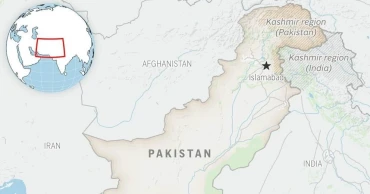
Explosion at fireworks factory in southern Pakistan kills 4, injures 11
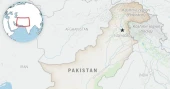
At least four people were killed and 11 others injured in a powerful explosion at a fireworks factory in Hyderabad city, Sindh province, southern Pakistan on Saturday, officials said.
Police and hospital authorities said rescuers transported the dead and injured to nearby hospitals. Footage shared on social media showed thick smoke rising from the collapsed building where firecrackers were manufactured.
Sindh government officials said an investigation would determine whether the factory had proper permission and adhered to safety regulations. The cause of the blast remains unknown.
Explosions at fireworks facilities are frequent in Pakistan. In August, five people died in a similar blast at a fireworks storage site in Karachi.
6 months ago
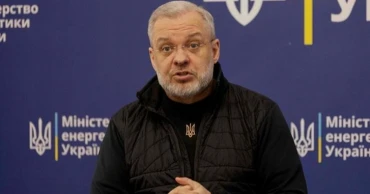
Ex-Zelenskyy associate accused of masterminding major corruption scheme
Tymur Mindich, a once-obscure dealmaker long linked to Ukrainian President Volodymyr Zelenskyy’s inner circle, has become the central figure in a high-profile corruption scandal involving the state nuclear energy company.
Mindich, 46, was pushed into the spotlight this week after Ukraine’s anti-corruption agencies released findings from a 15-month investigation accusing him of orchestrating a $100 million embezzlement and kickback scheme inside Energoatom. He has reportedly fled Ukraine, and any case against him will likely proceed in absentia. Two government ministers resigned following the revelations.
Though rarely spoken of publicly, Mindich had been viewed by activists and officials as a growing shadow power in Ukraine’s energy sector, allegedly enabled by his long-standing personal ties to Zelenskyy. The pair were once business partners in the president’s former production company Kvartal 95, and maintained close relations even after Zelenskyy entered politics.
Investigators say intercepted phone conversations show Mindich exerting strong influence over former Energy Minister Herman Haluschenko, who later became justice minister before resigning this week. The probe alleges Mindich coordinated a network that pressured Energoatom contractors for kickbacks of up to 15%, with illicit funds laundered through shell companies.
Mindich expanded his business holdings significantly after Zelenskyy’s 2019 election victory and was frequently linked to companies once associated with oligarch Ihor Kolomoysky. Anti-corruption activists argue Mindich’s rise would not have been possible without his privileged access to the presidency, particularly during wartime when Ukraine’s energy infrastructure is under strain.
NABU, the country’s anti-corruption bureau, is also investigating Mindich’s alleged ties to Fire Point, a top Ukrainian drone manufacturer. The company denies involvement, and findings from that probe have not yet been released.
6 months ago
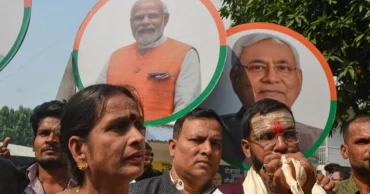
Modi’s alliance poised for sweeping Bihar victory, reinforcing his national standing
Prime Minister Narendra Modi’s ruling coalition is on track for a decisive win in Bihar, a key state election widely viewed as a major test of his political strength in one of India’s poorest but most influential regions.
Early results released Friday by the Election Commission of India show the BJP-led National Democratic Alliance (NDA) heading toward 208 seats in the 243-member state assembly. A party or alliance needs 122 seats to form government. The BJP alone is projected to claim 95 seats.
Bihar, home to nearly 130 million people, plays a crucial role in national politics as it sends the fourth-largest bloc of lawmakers to India’s lower house of parliament. The state is also considered a bellwether across the Hindi-speaking belt.
This year’s two-phase election unfolded amid public concerns over unemployment, security issues and complaints about voter list revisions. Campaigns by both the government and opposition were marked by large rallies and intensive voter outreach.
With the NDA leading in early counting, supporters celebrated across Patna with flags, music and firecrackers.
A win in Bihar is expected to bolster Modi as he prepares for the 2029 national elections and major state polls in Uttar Pradesh, West Bengal and Assam. Analysts say the victory will also give stability to the federal coalition, which has relied on regional allies since losing its outright parliamentary majority last year.
Modi, Starmer vow stronger India-UK ties, finalize defense and trade deals
In Bihar, the BJP partners with Chief Minister Nitish Kumar’s Janata Dal (United) and the Lok Janshakti Party (Ramvilas). Kumar, 74, has led the state for almost 20 years and is credited with improving infrastructure and restoring public order. Once a critic of Modi, he later returned to the NDA fold.
Observers had warned that a defeat in Bihar could weaken Kumar’s party and threaten the central coalition, which depends on his 12 lawmakers.
Source: AP
6 months ago

Minibus carrying Chinese tourists crashes in Bali, five dead
A minibus carrying Chinese tourists crashed on the Indonesian resort island of Bali Friday morning, killing five passengers and injuring eight others.
The vehicle was traveling from the southern to northern side of the island on a winding downhill road when the driver lost control. The minibus veered off the road, entered a garden, and struck a tree, said Ida Bagus Widwan Sutadi, police chief of Buleleng regency.
“Due to the driver’s carelessness while turning and descending, the vehicle left the asphalt road and entered a community garden, causing the accident,” Sutadi said.
The road in Padangbulia village was dry at the time of the crash. The eight injured passengers were treated at two local hospitals. The Indonesian driver, who was unharmed, has been arrested.
Road accidents are frequent in Indonesia due to poor safety standards and inadequate infrastructure.
Source: AP
6 months ago
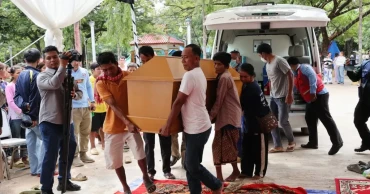
Cambodia evacuates border village amid rising tensions with Thailand
Cambodia on Thursday evacuated hundreds of residents from Prey Chan village along its disputed border with Thailand, a day after a villager was killed in cross-border shooting.
The incident follows a land mine blast two days earlier that injured a Thai soldier, prompting Thailand to blame Cambodia and suspend parts of a ceasefire partly brokered by former U.S. President Donald Trump.
Ly Sovannarith, vice governor of Banteay Meanchey province, said about 250 families were relocated to a Buddhist temple 30 kilometers from the border. Three others were also wounded in Wednesday’s shooting. The same village witnessed a tense but non-lethal confrontation between Thai forces and Cambodian villagers in September.
Cambodia’s Defense Ministry deployed a monitoring team, including ASEAN officials, to oversee the ceasefire. Prime Minister Hun Manet called for an independent investigation into the shooting and accused Thai forces of repeated provocative actions aimed at instigating conflict. “Cambodia will still honor the ceasefire terms,” he said.
Thailand’s army claimed Cambodian soldiers fired into its Sa Kaeo district and described the use of civilians as cover as a violation of humanitarian principles.
Border tensions between Cambodia and Thailand date back centuries and involve disputes over territory and historical sites, including the Preah Vihear temple. An October truce has yet to resolve these longstanding issues.
6 months ago
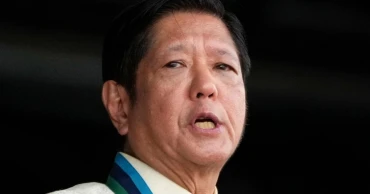
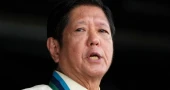
Philippine president vows jail for corrupt officials by Christmas
Philippine President Ferdinand Marcos Jr. on Thursday vowed that many of the at least 37 powerful lawmakers and wealthy businesspeople implicated in a massive flood control corruption scandal would be behind bars by Christmas, as public anger and street protests mount.
Marcos said an independent commission investigating the scandal has filed criminal complaints for graft, corruption, and plunder—a non-bailable offense—against the 37 suspects. Cases have also been lodged against 86 construction executives and nine government officials for allegedly evading taxes worth nearly 9 billion pesos ($152 million).
Corruption in flood control projects has been blamed for substandard or incomplete infrastructure, leaving the country vulnerable to deadly typhoons and floods. Last week, Typhoon Kalmaegi killed at least 232 people, while Super Typhoon Fung-wong claimed 27 lives and left millions affected by flash floods and landslides.
“I know that before Christmas, many of those named will end up in jail,” Marcos said, adding that further anomalies are expected to surface. “We don’t file cases for optics. We file cases to put people in jail.”
Vice President Sara Duterte, critical of Marcos, said the president should also be held accountable for approving the 2025 national budget, which funded questionable infrastructure projects.
The government has frozen assets of the suspects, including 1,671 bank accounts, 144 properties, and 244 vehicles valued at 6.3 billion pesos ($107 million). Some luxury vehicles have already been seized and are being auctioned.
A new detention facility in Quezon City, capable of holding 800 corruption suspects, has been opened, with officials pledging no VIP treatment for powerful detainees.
Among those under investigation are lawmakers both allied with and opposed to Marcos, including his cousin and former House Speaker Martin Romualdez, who has denied wrongdoing. “Nobody’s immune. Nobody would be exempted in these investigations,” Marcos said.
6 months ago