Asia
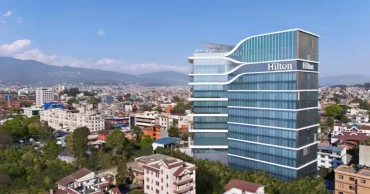
How Hilton Kathmandu, Nepal’s tallest hotel, was built and destroyed in hours
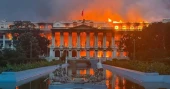
Nepal’s skyline was clouded with smoke this week after Hilton Kathmandu, the country’s tallest hotel, was destroyed during violent anti-government protests. Dramatic footage showed the glass tower engulfed in flames as demonstrators, largely from the Gen Z movement, targeted government buildings, parliament, and residences of political leaders.
Nearly 20 people have died amid clashes with security forces and curfews, with the burning of Hilton Kathmandu becoming a stark symbol of widespread unrest. Developed by the Shanker Group, Hilton Kathmandu broke ground in 2016 and opened in July 2024 after an investment of around Rs 8 billion. The 64-metre-high hotel, located in the Naxal neighbourhood, featured 176 rooms and suites, making it Nepal’s tallest hotel.
The hotel’s design was intended as a cultural statement, with glass fins inspired by Buddhist prayer flags and a facade that harmonized with the urban streets on one side and the Langtang mountain range on the other. Interiors offered world-class hospitality, including five restaurants, a spa, a gym, event spaces, and a rooftop bar, Orion, reflecting Nepalese heritage. Built with resilience in mind, the tower incorporated shear walls and damping systems to withstand earthquakes, qualifying it as an “immediate occupancy” structure.
Today, Hilton Kathmandu lies in ruins. Its glass facade is shattered, interiors gutted, and the structure scarred by fire. The destruction marks not only the loss of a luxury landmark but also the vulnerability of development amid political instability. The protests, initially sparked by social media restrictions, escalated into a broader uprising against corruption and political stagnation. Even the resignation of Prime Minister KP Sharma Oli failed to calm the unrest, which forced the temporary closure of Kathmandu’s international airport, severely affecting Nepal’s tourism-dependent economy.
Source: NDTV
8 months ago
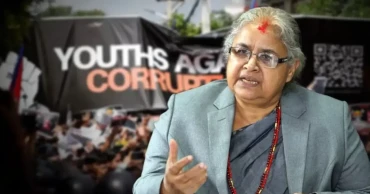
Nepal names Sushila Karki as interim PM, first woman leader
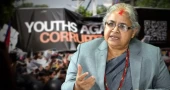
Nepal’s President Ram Chandra Poudel on Friday appointed former Supreme Court Chief Justice Sushila Karki as interim prime minister, making her the first woman to lead the Himalayan nation, following violent protests that toppled the previous government.
Karki, who earned popularity as Nepal’s only female chief justice during 2016–17, was scheduled to be sworn in later in the day, presidential spokesman Kiran Pokhrel announced.
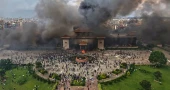
The appointment comes after a week of unrest sparked by a social media ban that quickly escalated into deadly clashes. Tens of thousands of protesters stormed and set fire to parliament, the presidential residence and private businesses, while also assaulting politicians. Police opened fire, and at least 51 people were killed.
The crisis forced the resignation of the prime minister earlier this week. The army took control of Kathmandu on Tuesday night and began talks with protest leaders, political representatives and the presidency on forming an interim government.
8 months ago
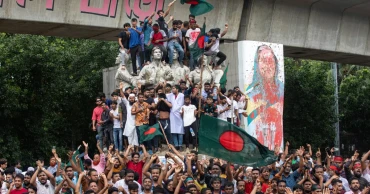
Public fury and political fallout: Inside the protest movements that reshaped South Asia
The swelling wave of public anger first swept through the island nation of Sri Lanka in 2022 and ousted the president. Two years later, it erupted in Bangladesh as protesters toppled the ruling government. On Monday public fury exploded in Nepal, forcing its prime minister to resign a day after.
Each protest movement began with a specific grievance that flared up, ending in the rejection of the government or its leaders.
In many ways, the protest movements share a common feature: disillusioned peoples’ resentment against the ruling elite and an entrenched political system they hold responsible for rampant corruption, deepening inequality and economic disparities.
Often led by young people, the protests have sparked deadly violence and sometimes left behind a political vacuum filled by unelected leaders and a worsening law and order situation.
“A perception of ruling elites as being both corrupt and ineffective at delivering a plausible path forward has created a structural basis for major crises,” said Paul Staniland, a politics professor specializing in South Asia at the University of Chicago.
Nepal's public fury is largely against the political elite
The youth-led protests in Nepal began on Monday as simmering discontent over years was ignited by the government’s ban on major social media platforms. Many were particularly angry that the children of political leaders seem to enjoy a lavish lifestyle, while most of the population was dealing with economic problems, rising unemployment and widespread corruption.
The unrest has left at least 19 people dead.
Protesters — who have not clearly spelled out their demands apart from rallying under the anti-corruption call — burned the parliament building, presidential house, and residences of several ministers and other politicians. Bending to mounting public pressure, Prime Minister Khadga Prasad Oli reversed the social media ban and quit. However, he will still lead a caretaker government until a new one is in place.
It is unclear what the new government would look like and whether it will constitute the old political guard. Many Nepalis fear a familiar sequence of bargaining among the same political class they want to overthrow.
Nepal is fraught with frequent political instability and each prime minister’s tenure has lasted just a year or two since the new constitution came into effect in 2015. The country abolished its monarchy in 2006, after a violent uprising that forced its former king to give up his authoritarian rule.
Staniland said the violence could make it “much harder to determine who should be in charge or how they should proceed.”
“The big question now in Nepal will be whether order can be restored and new, stable political dispensation forged,” he said.
Before Nepal there was Bangladesh and Sri Lanka
Those in Nepal looking for answers about its future will not find solace in Bangladesh and Sri Lanka.
The lack of consensus on basic reform demands like elections and anti-corruption mechanisms, and an uncertain road map for the future, have dented the democratic progress in those countries and further exacerbated the problems they face.
In Bangladesh, student-led protests started with anger against rules that limited the number of civil service jobs based on merit. They morphed into a massive nationwide uprising in July last year that culminated in the ousting of Prime Minister Sheikh Hasina. Hundreds of people, mostly students, were killed in violent protests.
Hasina fled to India, and an unelected interim administration, headed by Nobel laureate Muhammad Yunus, was installed. He promised to restore order and hold a new election after necessary reforms.
One year on, Bangladesh remains mired in instability. Politic parties are bickering over election dates. Mob violence, political attacks on rival parties and groups, and hostility to vulnerable minority groups by religious hard-liners have surged.
In Sri Lanka, the then-Prime minister Ranil Wickremensignhe took over the country after protesters forced the powerful Rajapaksa clan out in 2022. The country later had a democratic transition of power after Marxist lawmaker Anura Kumara Dissanayake was elected as president last year. He promised to improve standards of living, clean up government and hold corrupt politicians responsible for their actions.
Almost a year later, Sri Lanka's problems seem far from over. Its people continue to deal with issues like economic hardships, human rights concerns and foreign-debt default.
“There is no sign of the ideals of change desired by the protesters,” said Veeragathy Thanabalasingham, a Colombo-based political expert.
Wider instability in the region
Recent popular revolts have also rocked other nations in the region.
In Indonesia, deadly protests last week over lawmakers’ perks and the cost of living forced the country’s president to replace key economic and security ministers. The protests have led to the death of at least seven people.
In Myanmar, imprisoned former leader Aung San Suu Kyi ’s democratically-elected government was ousted by the military in 2021. Resistance to the military government has grown, and the country is now in the midst of a brutal civil war.
Staniland said while “most protests come and go without such dramatic results” as those seen in Nepal, Sri Lanka and Bangladesh, “the kindling is there for miscalculations and unexpected events to spiral.”
“I think Nepal represents the new politics of instability in South Asia," he said.
8 months ago
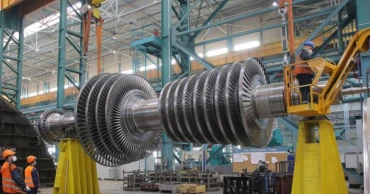
China rolls out 2-year plan to boost power equipment sector
China has launched a two-year action plan aimed at accelerating high-quality growth in its power equipment industry, with a focus on promoting green and intelligent transformation.
The official document outlines multiple development targets for the 2025-2026 period, including an average annual revenue increase of approximately 6 percent in traditional power equipment and a steady rise in new energy equipment. Leading enterprises in the sector are expected to achieve revenue growth of around 10 percent.
The move comes in response to a global shift toward low-carbon energy and China's own push to build a new-type power system.
Key measures listed in the plan include spurring wind power and other new energy equipment, advancing innovation in new energy storage technologies, expediting the construction of large onshore wind and photovoltaic bases, and eliminating outdated coal-fired capacity in an orderly manner. Efforts will also be made to deepen the integration of information technology with power equipment manufacturing.
International cooperation will be intensified. China aims to expand full supply chain cooperation with emerging markets in wind, photovoltaic and energy storage, encourage component makers to join overseas supply chains, and promote mutual recognition of technical standards, testing, and certification.
The plan was jointly released by the Ministry of Industry and Information Technology, the State Administration for Market Regulation, and the National Energy Administration.
China's green power expansion has gained momentum. By the end of July, the nation's installed power generation capacity had reached 3.67 billion kilowatts, up 18.2 percent year on year. Solar installations surged 50.8 percent to 1.11 billion kilowatts, while wind capacity rose 22.1 percent to 570 million kilowatts.
8 months ago
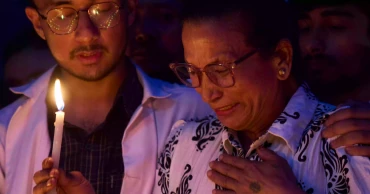
Tears and Tension in Nepal: Grieving protesters' families seek justice amid growing departures
Grieving families of protesters killed by police in Nepal gathered in the capital Thursday, expressing anger at authorities and seeking information about their missing loved ones.
Families held a candlelight vigil outside a hospital morgue in Kathmandu and announced plans to meet with Nepal army officials to seek justice.
Earlier on Thursday, hundreds of people crowded Nepal’s main airport in Kathmandu to get a flight out of the country, as confusion set in over who governs the Himalayan nation after violent protests toppled the country’s government.
The Health Ministry said that 34 people were killed and 1,368 wounded in protests on Monday and Tuesday. They were sparked by a short-lived social media ban and fueled by broader discontent over corruption and unemployment.
Nepal’s army took control of the capital Tuesday night after two days of huge protests that left the presidential residence and government buildings in flames and forced the prime minister to resign and flee.
The toll of the dead and wounded has been rising as reports on casualties trickled in from other parts of the country.
“We need to fight for justice for our family who were killed and we cannot stay silent any longer,” said Kamal Subedi, one of those at the vigil. He said his nephew was killed.
“We have lost our loved ones but politics seem to take priority right and no one has even approached us, so now we going to fight for justice for the honor they deserve.”
Protesters said they are demanding state honors for their loved ones and are not interested in monetary compensation.
Bhol Bahadur Bishwokarma was seeking information about his brother, Santosh Bishwokarma, who was killed by police fire.
“We have heard that the body is in the hospital morgue here but no one has confirmed that or in what condition and shape the body is in. We have not even been able to see the body. We demand the government address our concern at the earliest," he said.
In the capital, residents rushed to buy food staples like rice, vegetables and meat early Thursday, when the army briefly lifted a curfew. Armed soldiers were guarding the streets, checking vehicles and offering assistance to those in need.
Many tried to leave the country after the airport reopened late Wednesday and international flights resumed Thursday.
“It was very difficult time for us. We had trouble just to get to airport and back to hotel hoping for flights but finally I have found a seat and am going to be flying out of Nepal,” said Raj Kumar Bika, a chicken farmer who was trying to get to New Delhi for business.
The last day of the key Indra Jatra festival was also shortened by the organizers cancelling the chariot process of the living goddess in the heart of Kathmandu. A few hundred devotees were allowed in the old palace courtyards but the living goddess was not taken out of her palace temple.
It remained unclear who would take control of the government as the search for an interim leader continued.
Nepalis wonder who's in charge
When the protests prompted Prime Minister Khadga Prasad Oli to resign Tuesday, the country’s ceremonial President Ram Chandra Poudel asked him to lead a transitional government until a new one could be put in place. But Oli fled from his official residence, and his whereabouts were not clear.
Residents of the capital were left wondering who was in charge. "I feel there should be an election soonest and new leaders who are able to work for the country should be elected,” said Sanu Bohara, a shop owner. “After all this what we need is peace. I feel there should not have been so much destruction, but that has already happened.”
Anup Keshar Thapa, a retired government officer who was looking at the charred official residences of ministers, said it was not clear who would lead the country and if people would actually listen to them. “If the protests had gone in an organized way, it would be clear who was leading," he said.
Protest leaders met with military officials at the army headquarters in Kathmandu on Wednesday to discuss a transitional leader.
Rehan Raj Dangal, a representative of the protesters, said his group proposed to military leaders that Sushila Karki, a popular former chief justice, should head an interim government. Karki was the only woman to serve as chief justice of Nepal’s Supreme Court. Other protesters opposed her appointment.
Anger at social media ban triggered protests
Demonstrations by thousands of protesters were sparked Monday by a short-lived government ban on social media platforms including Facebook, X and YouTube, which the government said had failed to register with authorities and submit to oversight.
Officers opened fire on protesters, and the clashes escalated Tuesday with attacks on government buildings.
The social media ban was lifted on Tuesday, but the demonstrations continued, fueled by rage over the deaths of some 34 protesters blamed on police.
The protests also spiraled to reflect broader discontent. Many young people are angry about “nepo kids” of political leaders who seem to enjoy luxurious lifestyles and numerous advantages while most youth struggle to find work.
Protesters set fires at the parliament building, the presidential residence, the central secretariat that houses the offices of the prime minister and key ministries, and the prime minister’s official residence.
The building of Kantipur publication, Nepal’s biggest media outlet, also was torched and damaged. Car showrooms were also targeted, and burned-out vehicles dotted the streets.
“We are compelled to go abroad because there is no future for people like us in Nepal,” said Asmita Poudel, who was waiting to board a flight to Dubai. “If there were opportunities, we would all stay back in the country.”
The military takes control
The military is rarely mobilized in Nepal, and soldiers initially stayed in their barracks as police lost control of the situation. Security forces started to mobilize late Tuesday, saying they were committed to preserving law and order.
On Wednesday, soldiers quelled a jailbreak in the heart of Kathmandu. Inmates at the main jail had overpowered guards, set fire to buildings and tried to escape. Soldiers fired into the air, apprehended the escaping inmates and transferred them to other jails. No injuries were reported.
8 months ago
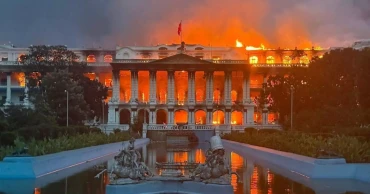
Did fire at Singha Durbar amid protest in Nepal destroy Charyapada?
Speculation has recently surfaced on social media in Bangladesh claiming that Charyapada manuscripts, regarded as the earliest surviving evidence of Bangla language, were destroyed in a fire at Nepal’s Singha Durbar amid recent anti-government protests.
However, the claim is yet to be confirmed by reliable sources and there is no verifiable evidence that ancient Bengali manuscripts—including Charyapada—were destroyed in Nepal during the protests.
The Charyapada, a collection of mystical Buddhist verses believed to date back over a thousand years, was rediscovered in 1907 by scholar Haraprasad Shastri at the Nepal Royal Court Library. Scholars have long regarded the discovery as a milestone in tracing the early history of Bangla literature.
Posts circulating on Facebook allege that demonstrators, who recently set fire to sections of the Singha Durbar complex, also destroyed the rare manuscripts along with other medieval Bengali literary works.
Ancient writers such as Alaol, Shah Muhammad Sagir, Daulat Kazi, Qureshi Magan Thakur and others were among those whose works had been preserved there.
However, the reality suggests that the original palm-leaf manuscript of the Charyapada is currently preserved at the National Archives of Nepal.
Nepal has long witnessed public anger over corruption, unemployment, inequality, and nepotism among politicians. Recently, the government decided to block 26 social media platforms, further intensifying public frustration.
On Monday, September 8, anti-government protests over allegations of corruption and mismanagement turned violent. Demonstrators set fire to the Parliament building, forcing the resignation of Prime Minister KP Sharma Oli on Tuesday.
Eyewitnesses said thousands of protesters entered the Parliament premises chanting slogans. The building was engulfed in gray and black smoke as demonstrators carried out acts of vandalism.
Protesters also broke through the western gate of Singha Durbar and entered the premises, setting the gate itself on fire.
Nepal army deployed as protesters demand former chief justice as interim leader
Singha Durbar is the central administrative complex housing Nepal’s key ministries and government offices. The complex had been repaired and reopened after being damaged in the 2015 earthquake.
While the speculation about the destruction of the Charyapada has caused concern among netizens in Bangladesh, authorities in Nepal have not issued any statement confirming damage to the manuscripts or other archival holdings.
8 months ago
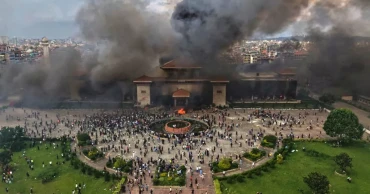
Nepal army deployed as protesters demand former chief justice as interim leader
Nepal’s army moved to restore order Wednesday after two days of deadly protests that forced the government to collapse, leaving at least 25 dead and more than 600 injured, officials said. Soldiers patrolled the capital, checked vehicles, and urged residents to remain indoors following overnight unrest in which demonstrators set government buildings on fire.
Protesters held talks with military officials at army headquarters in Kathmandu, proposing former Supreme Court Chief Justice Sushila Karki to lead a transitional government. Karki, Nepal’s first female chief justice, served from 2016 to 2017 and remains a popular figure. However, some protesters outside the army complex opposed the choice.
The demonstrations, initially triggered by a short-lived government ban on social media platforms including Facebook, X, and YouTube, escalated after police opened fire on Monday, killing 19 protesters. The unrest intensified on Tuesday with attacks on the parliament, presidential house, central secretariat, and prime minister’s residence. The building of Kantipur, Nepal’s largest media outlet, was also set ablaze, along with several car showrooms.
The unrest led Prime Minister Khadga Prasad Oli to resign Tuesday, though he fled his official residence, leaving his whereabouts unclear. President Ram Chandra Poudel asked him to lead a transitional government temporarily.
The protests reflect broader youth frustration over unemployment, social inequality, and the so-called “nepo kids” of political leaders enjoying privileges while many young Nepalese seek work abroad. Soldiers also quelled a jailbreak in central Kathmandu on Wednesday, preventing inmates from escaping after setting fires inside the main prison.
The government has defended the social media regulations as measures to ensure platforms are accountable, though critics say the rules curb free expression and target government opponents.
8 months ago
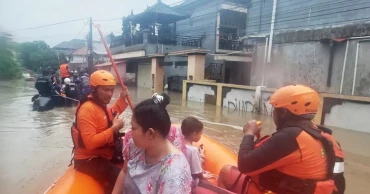
Flash floods in Indonesia kill 15, 10 missing
At least 15 people have been killed and 10 others remain missing after flash floods and landslides triggered by torrential rains struck Indonesia’s East Nusa Tenggara province and the tourist island of Bali, authorities said Wednesday.
The rains, which began Monday, caused rivers to overflow and unleashed landslides across the two provinces.
In East Nusa Tenggara, rescuers on Wednesday recovered the bodies of a mother and her child buried under mud in Mauponggo, the worst-hit village in Nagekeo district, along with a man in the neighboring village of Loka Laba. Earlier, three members of a family were found dead after their house was swept away in Mauponggo, where four others remain missing, officials said.
In Bali, rescuers pulled the body of a woman from a flooded area near Badung market in provincial capital Denpasar late Wednesday, said National Disaster Mitigation Agency spokesperson Abdul Muhari. Six people are still unaccounted for.
Eight other bodies were found earlier, including four who died when a building was washed away in the Kumbasari market area of South Denpasar, said Nyoman Sidakarya, head of Bali’s Search and Rescue Agency.
The floods and landslides have affected nine cities and districts in Bali, submerging at least 112 neighborhoods and damaging roads, bridges, shops and houses, according to Bali’s Disaster Mitigation Agency. Videos released by the National Search and Rescue Agency showed cars swept away in muddy waters, while soldiers and rescuers used rubber boats to evacuate children and the elderly from rooftops.
Bali Governor Wayan Koster said floodwaters reached up to 2.5 meters in places, forcing more than 800 people into temporary shelters. Electricity and water supplies were cut off, prompting hotels, restaurants, hospitals and other facilities to rely on generators, he added.
In Nagekeo, flash floods swept away villagers and vehicles, destroyed two bridges, two government offices, a plantation, rice fields and livestock, said local disaster agency head Agustinus Pone. At least six villagers were confirmed dead there, while four others remain missing.
Muhari said rescue operations have been hampered by severe weather and rugged terrain.
Indonesia frequently experiences floods and landslides during the rainy season, which typically lasts from September to March.
8 months ago

Ex-Nepal PM’s wife dies after protesters set their home on fire
Rajyalaxmi Chitrakar, wife of former Nepalese Prime Minister Jhalanath Khanal, was tragically killed when protesters, led by Generation Z activists, trapped her inside their house in the Dallu area of Kathmandu and set it ablaze. She was taken to Kirtipur Burn Hospital but succumbed to her injuries, according to family sources.
This incident happened amid widespread protests in Kathmandu against a brief government ban on social media platforms. The unrest, fueled by anger over political corruption and nepotism, escalated as demonstrators targeted homes of top leaders, including Prime Minister KP Sharma Oli, whose residence was also set on fire.
Following violent clashes, including police firing on crowds that resulted in 19 deaths, Prime Minister Oli resigned. Videos surfaced showing his finance minister, Bishnu Prasad Paudel, being violently attacked in the streets.
The protests began after the government blocked Facebook, X, and YouTube, citing failure by these platforms to comply with registration and regulatory demands. Many young protesters are particularly frustrated by the privileged lifestyles of politicians' children, known as “Nepo Kids,” while many youth face unemployment and hardship.
8 months ago
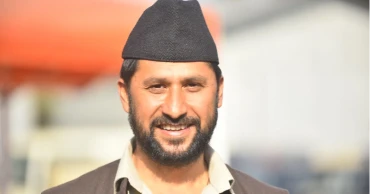
Nepal protests: Gen Z free Rabi Lamichhane, spark mass prison break
Former Deputy Prime Minister and Rastriya Swatantra Party (RSP) chief Rabi Lamichhane was freed from Nakkhu Prison on Tuesday after Gen Z protesters stormed the facility during nationwide demonstrations against Nepal’s recent social media ban.
According to local media outlet Khabarhub, Lamichhane was released as part of a wider push by protesters, who later facilitated the escape of around 1,500 other inmates after police abandoned their posts. His wife, Nikita Paudel, arrived at the prison to receive him as thousands of supporters gathered outside to greet the popular leader.
Lamichhane, who had been detained in connection with a cooperative savings case, addressed crowds in a video shared by RSP central member Krantishikha Dhital. Dressed in white, he waved to his supporters while security forces withdrew, raising concerns over the collapse of order in Kathmandu.
The development came hours before Prime Minister KP Sharma Oli announced his resignation amid intensifying anti-government protests. The movement, led largely by students, unemployed youth, and professionals, erupted after the government banned social media platforms—a move Oli reversed only after security forces killed 19 people and injured more than 300 on Monday.
Earlier in the day, at least 21 RSP lawmakers resigned en masse, deepening the country’s political turmoil. Analysts say the resignations are a calculated move to disrupt Parliament and accelerate demands for a reset of Nepal’s political system.
Lamichhane, seen by many as an uncorrupted and decisive alternative to Nepal’s scandal-hit leadership, has quickly become the face of this rising political tide. His background as a media personality and his ability to harness online frustration have allowed him to convert digital dissent into street power.
Chanting slogans such as “KP Chor, Desh Chhod” (KP thief, leave the country) and “Take Action Against Corrupt Leaders,” demonstrators across Kathmandu signaled their rejection of Nepal’s traditional political elite. With Oli gone, uncertainty looms over whether protests will settle—or escalate further—as demands now extend to the dissolution of the entire government.
8 months ago