asia
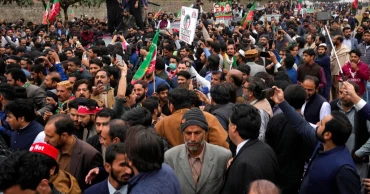
Pakistan's ex-PM Imran Khan no-show in court, avoids arrest
Pakistan’s former Prime Minister Imran Khan failed to appear before a court in Islamabad on Tuesday to answer charges in a graft case against him. The no-show was apparently a legal maneuver by the ex-premier to avoid arrest.
The hearing was set by Judge Zafar Iqbal and Khan was required to appear in person to respond to charges of selling state gifts while in office. The same judge last week issued an arrest warrant for Khan but only the government of Khan’s successor, Prime Minister Shahbaz Sharif, can order the police to take him into custody.
However, Khan's legal team petitioned a top court on Tuesday, requesting the suspension of the arrest warrant for him and seeking more time to appear before judge Iqbal for a pre-trial hearing.
Also Read: Suicide bombing in southwestern Pakistan kills 10 policemen
After hearing arguments from Khan's lawyer and the prosecution, the chief justice of the Islamabad High Court, Aamer Farooq, suspended the arrest warrant and ordered Khan to appear before Iqbal on March 13. It was unclear whether Khan will comply with the latest court order.
The 70-year-old former cricket star and now opposition leader is embroiled in a string of court cases against him, including terrorism charges raised by police. He has so far avoided arrest and claims the legal imbroglio has been orchestrated by the government in an attempt to discredit him.
Khan was ousted in a no-confidence vote in Parliament last April but has claimed, without providing evidence, that his removal was illegal and a conspiracy by Sharif and Washington. Both the United States and Pakistan's government have denied those allegations.
The charges in Tuesday's case accuse Khan of unlawfully selling state gifts he had received as premier and concealing the earnings from those sales from the country's election tribunal. In October, the tribunal disqualified him from holding public office for five years. Khan automatically lost his seat in Parliament because of the disqualification, which he has since challenged in court.
Mohsin Ranjha, a lawyer from the ruling Pakistan Muslim League party, criticized Khan for not appearing in court and said the former premier is mocking the legal system.
“Imran Khan only appears before the courts when he wants to,” said Ranja.
Fawad Chaudhry, a close aide of Khan and a senior leader in his Pakistan Tehreek-e-Insaf party, claimed Khan could not travel to Islamabad for health reasons. He also said Khan had been threatened with violence. However, Khan was expected to lead an election rally in Lahore on Wednesday, despite threats to his life.
Khan has been living in the eastern city of Lahore since November, when he was shot in the leg by a gunman during a protest rally. Since then, he has only once traveled to Islamabad — last week — for court appearances in other cases against him.
His party has threatened nationwide protests if Khan is arrested while the former prime minister claims there are serious threats on his life. Since his ouster, he has been campaigning for early elections — another demand that Sharif dismisses, saying the vote would be held as scheduled later this year.
Pakistan's election tribunal on Tuesday issued arrest warrants for Khan, and Chaudhry, who is a top leader from his Pakistan Tehreek-e-Insaf party, on charges of making insulting speeches against Sikandar Sultan Raja, who is the head of the elections overseeing body. The tribunal has asked police to produce Khan and Chaudhry before it on March 14.
3 years ago

Student gets 8 years in prison for criticizing Ukraine war
A court in Moscow sentenced a student activist to 8 1/2 years in prison for social media posts criticizing Russia’s war in Ukraine, the latest step in a sweeping crackdown on dissent unleashed by the Kremlin.
Dmitry Ivanov, 23, was convicted of spreading false information about the Russian army, which was made a criminal offense under a new law that Russian lawmakers rubber-stamped a week after Moscow sent troops into Ukraine.
The legislation has been used to prosecute individuals who deviate from the government’s official narrative of the conflict that the Kremlin insists on calling “a special military operation.”
Prominent opposition politicians, such as Ilya Yashin, who is serving an 8 1/2 prison term, and Vladimir Kara-Murza, who is in jail awaiting trial, also were charged with spreading false information about the military.
Also Read: A year into Ukraine war, bodies dug up in once occupied town
Ivanov was charged over a number of social media posts in his Telegram channel that called Russia’s campaign in Ukraine a “war” and talked about Russian forces attacking civilians and civilian infrastructure in Ukraine, committing war crimes in the Kyiv suburbs of Bucha and Irpin, and targeting the Zaporizhzhia Nuclear Power Plant. Most were reposts from other sources.
At the time of his April 2022 arrest, Ivanov was a student at Lomonosov Moscow State University, one of Russia’s top universities also known as the MSU. He ran a popular Telegram channel called Protest MSU, which was launched in 2018 to cover student protests against the construction next to the university’s main building of a fan zone for the Russia-hosted World Cup soccer tournament.
Ivanov initially was jailed for 10 days on the charge of organizing an unauthorized rally. Authorities jailed him again on the same charge for 25 days, and then he was arrested over the social media posts.
Also Read: Russians mark Ukraine war anniversary with flowers, arrests
While in custody, the student missed his final exams and failed to submit his final dissertation. He was expelled from the university.
During Ivanov’s trial, in an unusual twist the court approved a defense request to subpoena Russian Foreign Minister Sergey Lavrov, Russian Defense Ministry spokesman Igor Konashenkov and Russia’s ambassador to the U.N., Vasily Nebenzya.
Ivanov’s lawyers argued that since the authorities had used the officials’ statements to prove that Ivanov’s social media posts contained false information, they should be deposed in court.
However, neither of the three complied with the subpoenas to appear in court.
In his final address to the court last week, Ivanov rejected the charges against him as “looking absurd” and said the crime he was prosecuted for “shouldn’t exist at all.”
“The investigation, in trying to accuse me of spreading ‘fakes,’ has built one big fake (itself). Literally the entire indictment, from the first to the very last word, contradicts the reality,” Ivanov said. “I, in the meantime, stand by every word I wrote a year ago.”
3 years ago

5th body found in Malaysia floods; over 40,000 displaced
Malaysian police have found the body of a young woman trapped in a car that was swept away by rushing waters, the fifth death of seasonal floods that have also forced more than 43,000 people to flee their homes.
Police said in a statement Monday that a 23-year-old woman reported missing was believed to be driving to work earlier in the day on a flooded road in southern Johor state when her car was washed away. Rescuers retrieved the car hours later and found her body.
A man driving to work in a palm oil plantation in Johor was similarly found dead recently after rescuers retrieved his car from floodwaters. Three older people also drowned.
Johor, the country’s second-largest state bordering Singapore with four million people, is the worst affected with over 40,000 evacuated to schools and community centers. The number of evacuees has dropped from over 50,000 a few days ago.
Several other states including remote areas on Borneo island were also hit.
Also Read: Study: 15 million people live under threat of glacial floods
Prime Minister Anwar Ibrahim visited flood victims Sunday in Johor and vowed to speed up flood mitigation projects in the state. “This matter cannot be delayed and should be dealt with more seriously so that (flooding) does not happen again,” he tweeted.
The Meteorological Department has said the country was experiencing its sixth episode of continuous heavy rain from the annual monsoon season that started in November. In December, tens of thousands of people were also evacuated due to flooding.
Images posted by police in Johor showed roads and homes disappearing under muddy waters, with only rooftops visible.
Further rain and storms are predicted Tuesday in parts of Johor and eastern Malaysian states on Borneo, which could cause more flash floods. Authorities also warned waters in over a dozen rivers nationwide have reached dangerous levels.
3 years ago
Qatar’s top diplomat is sworn in as new prime minister
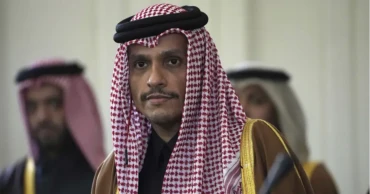
Qatar’s top diplomat was sworn in as the country’s prime minister on Tuesday, replacing another member of the ruling family who had held the post since 2020, state news reported.
The Qatar News Agency says Sheikh Mohammed bin Abdulrahman Al Thani was sworn in as the new head of government, without providing further details.
Qatar’s ruling emir, Sheikh Tamim bin Hamad Al Thani, appoints the holders of top offices, usually from members of the ruling family. As in other Gulf Arab countries, politics is largely confined to the ruling family and developments are rarely aired in public.
Sheikh Mohammed has served as foreign minister since 2016 and was the public face of Qatar as it navigated a 3 1/2-year economic boycott by Saudi Arabia, the United Arab Emirates, Bahrain and Egypt that only came to an end in January 2021.
He replaces Sheikh Khalid bin Khalifa bin Abdulaziz Al Thani, who had served as prime minister and interior minister — responsible for domestic security — since 2020. He was replaced as interior minister on Tuesday by Sheikh Khalifa bin Hamad bin Khalifa Al Thani.
Gas-rich Qatar, one of the wealthiest countries on earth, supported Islamist groups across the region during and after the 2011 Arab Spring uprisings, bringing it into conflict with its Gulf Arab neighbors, who view such groups as a threat to hereditary rule.
Relations have improved over the last two years. The rulers of Saudi Arabia, the UAE and Egypt visited Qatar as it hosted soccer’s World Cup last year.
3 years ago

Sri Lanka leader says IMF deal imminent after China’s pledge
Sri Lanka’s president said Tuesday that China has given crucial debt restructuring assurances that mean the bankrupt Indian Ocean nation could get its $2.9 billion bailout package approved soon.
President Ranil Wickremesinghe told Parliament that a letter from China’s EXIM bank with the necessary assurances was received on Monday night and immediately he and the Central Bank governor sent a letter of intent to the International Monetary Fund for the final approval.
“Now we have done our part, and I expect the IMF will do its share by the end of this month, by the third or fourth week,” Wickremesinghe said.
China owns about 10% of Sri Lanka’s foreign debt, which exceeds $51 billion. Its delayed assurances were seen as the last hurdle in securing the bailout deal after India and other creditors gave early pledges.
Wickremesinghe said he expects financial assistance from the World Bank and the Asian Development Bank to start coming soon after the IMF deal is reached.
He said, however, that difficult economic reforms needed to be carried out as agreed with the IMF and Sri Lanka can’t afford to sidestep from them as it has done with 16 past agreements.
“We must stress one fact: We don’t repay foreign debt at the moment, we only repay loans to the multilateral financial institutions. If we break the agreement with the IMF, we will be compelled to repay loans to foreign countries and private banks,” Wickremesinghe said.
Read more: IMF team due in Dhaka to discuss financial sector reform
“We have approximately $ 6-7 billion to repay every year until 2029. We don’t have foreign currency to do that, and therefore it is imperative that the IMF keeps engaging with our creditors on the agreements reached on debt sustainability.”
Wickremesinghe did not reveal what has been agreed with the IMF but said he will present details before Parliament for approval. He also warned he will crush any street protests trying to derail reform efforts.
Professionals and workers in many other sectors have been protesting for months over sharp increases in electricity charges and income taxes to strengthen state revenue, a prerequisite for the IMF package. Opposition parties have been demanding elections for village and town councils that were postponed by authorities citing a lack of funds.
Sri Lanka’s worst economic crisis caused severe shortage of food, medicine, fuel, cooking gas and electricity last year, leading to angry street protests that forced then-President Gotabaya Rajapaksa to flee from the country and resign.
The economy has shown signs of improvement since Wickremesinghe took over as president last July with shortages reduced, power cuts ended and the Sri Lankan rupee starting to strengthen.
3 years ago

US sees China propaganda efforts becoming more like Russia’s
China has long been seen by the U.S. as a prolific source of anti-American propaganda but less aggressive in its influence operations than Russia, which has used cyberattacks and covert operations to disrupt U.S. elections and denigrate rivals.
But many in Washington now think China is increasingly adopting tactics associated with Russia — and there’s growing concern the U.S. isn’t doing enough to respond.
U.S. officials and outside experts cite recent examples of China-linked actors generating false news reports with artificial intelligence and posting large volumes of denigrating social media posts. While many of the discovered efforts are amateurish, experts think they signal an apparent willingness from Beijing to try more influence campaigns as part of a broader embrace of covert operations, according to two people familiar with the matter who spoke on condition of anonymity to discuss sensitive intelligence.
“To us, the attempt is what stands out,” one U.S. intelligence official said.
An increasingly pessimistic mood in Washington about Beijing’s expansive political and economic goals and the possibility of war over Taiwan is driving calls for the U.S. to make a stronger effort to counter Chinese influence abroad.
Lawmakers and officials are particularly concerned about countries that comprise the “Global South” in Africa, Asia, and Latin America, where both the U.S. and China have huge economic and political interests. Many of those countries have populations that support both sides — what an official called “swing states” in the narrative battle.
“This should be a whole of government effort,” said Rep. Raja Krishnamoorthi of Illinois, who is the top Democrat on a newly formed House committee focusing on the Chinese Communist Party.
“The CCP is going around the world bad-mouthing the U.S., bad-mouthing our institutions, bad-mouthing our form of government,” Krishnamoorthi said in an interview. “We have to counter this because ultimately it’s not in the best interests of the United States.”
China’s embassy in Washington said in a statement that Beijing “opposes the fabrication and dissemination of false information” and blamed the U.S. in turn for making social media “into its tool to manipulate international public opinion and its weapon to stigmatize and demonize other countries.”
“On this issue, it is for the U.S. side to reflect on itself and stop shouting ‘catch a thief,’” said embassy spokesman Liu Pengyu.
Chinese state media and affiliated channels, as well as social media influencers with vast followings, routinely spread ideas that the U.S. labels exaggerated, false or misleading. In recent weeks, China’s foreign ministry has called attention to the train derailment that released toxic chemicals in Ohio as well as allegations the U.S. may have sabotaged pipelines used to transport Russian gas.
The Biden administration has strongly rejected the allegations about the Nord Stream pipelines and defended its response in Ohio.
China has long been seen as less willing than Russia to take provocative steps that could be exposed and more concerned about being publicly blamed. U.S. intelligence judged that Russia tried to support Donald Trump in the last two presidential elections, while China in 2020 considered but did not try to influence the election.
But some U.S. officials believe China is now undertaking or considering operations it would not have in the past, according to the two people familiar with the matter. That’s partly due to fears in Beijing that they are losing a battle of narratives in many countries, one of the people said.
Officials noted public examples identified in recent weeks by groups that track disinformation and influence.
The research firm Graphika recently identified AI-generated videos that it linked to a pro-Chinese influence operation. One video attacked the U.S. approach to stopping gun violence; another “stressed the importance of China-U.S. cooperation for the recovery of the global economy,” according to Graphika. And threat analysts at Google said they disrupted more than 50,000 instances of posts and other activity last year linked to a pro-China influence operation known as “Dragonbridge.”
The AI-generated videos are clearly fictitious, and Graphika said none of them had more than 300 views. Most Dragonbridge posts, Google said, also reached a tiny audience.
The U.S. intelligence official said Chinese tradecraft on social media was “uneven” and less sophisticated than what’s normally associated with the Kremlin. But that tradecraft — both in terms of social media operations and efforts to hide any linkage to Beijing — can be expected to improve over time and with practice, the official said.
And there are longstanding concerns in Washington about TikTok, the viral video-sharing app whose U.S. operations are currently undergoing a national security review. There’s no public evidence that Beijing has used its sweeping powers over businesses in China to direct content on the app or launch government-sanctioned influence operations, but there’s a belief that China could do so quickly enough not to be caught or stopped.
China is increasingly viewed unfavorably in the U.S., much of Europe, Australia, South Korea and Japan, according to Pew Research Center data published last year.
But in other countries in Asia as well as in much of Africa and Latin America, there are more positive attitudes about the Chinese government, often driven by Beijing’s economic investments and offers of infrastructure and security assistance.
Last year’s Africa Youth Survey, which was composed of 4,500 interviews of 18- to 24-year-olds in 15 countries, found that 76% of respondents believed China had a positive influence in their country. Of the U.S., 72% said they believed American influence was positive.
In the event of a war over U.S.-backed Taiwan, experts believe shaping global attitudes and narratives will be key in ensuring military and diplomatic support for either side.
Rep. Mike Gallagher, the Wisconsin Republican who chairs the new congressional committee on China, said in a statement after recently visiting Taiwan that Chinese influence operations are part of a broader strategy of “cognitive warfare.” He added that the committee would “work to expose the truth about the (Chinese Communist Party’s) pattern of aggression against America and our friends.”
The State Department’s Global Engagement Center is charged with countering Chinese messaging outside of both the U.S. and China. Speaking on condition of anonymity under ground rules set by the department, a State Department official responded to concerns that the U.S. doesn’t directly counter many lines of attack from Beijing.
“There was a decision made that we were not going to get in the business of playing whack-a-mole with specific lines of Chinese messaging,” the official said. “Frankly, there’s just too much of it. It would be like trying to put your finger in the dam to stop the leak.”
The State Department instead tries to fund programs exposing facts and ideas that China wants to suppress. The Global Engagement Center has funded third-party research of China’s crackdown in Xinjiang province against Uyghurs and other mostly Muslim ethnic groups. Beijing has long tried to frame its operations in Xinjiang as countering terrorism and radicalism in the face of international criticism about its network of detention camps and its restrictions on movement and religious expression in the province.
State has also funded training for investigative journalists in countries that have received Chinese investment and a project that tracked Chinese dam construction along the Mekong River, which is a key source of water for Southeast Asian countries downstream from China.
The U.S. also uses direct investment as a tool for countering Chinese influence, though critics have questioned whether some funded programs are effective.
In one instance, the U.S. Agency for International Development last year proposed using funding from an annual fund for countering Chinese influence to support bakeries in Tunisia. According to two other people familiar with the matter, officials wanted to buy software for bakery owners to help them determine which of their products were most marketable. The people spoke on condition of anonymity to discuss internal agency deliberations.
In a statement, USAID said the Tunisia program was intended to “create sustainable demand-driven jobs” and promote Western software over Chinese programs that “might be easily accessible” but “less efficient.”
“We know that our grants-based assistance can go even further when put together with public and private investments, which far outstrip the resources that the PRC has brought to the table to date,” the statement said.
3 years ago

Residents say Myanmar army killed 17 people in 2 villages
Soldiers in Myanmar rampaged through several villages, raping, beheading and killing at least 17 people, residents said, in the latest of what critics of the ruling military say are a series of war crimes since the army seized power two years ago.
The bodies of 17 people were recovered last week in the villages of Nyaung Yin and Tar Taing — also called Tatai — in Sagaing region in central Myanmar, according to members of the anti-government resistance and a resident who lost his wife. They said the victims had been detained by the military and in some cases appeared to have been tortured before being killed.
Myanmar has been in turmoil since the military’s February 2021 seizure of power from the elected government of Aung San Suu Kyi prompted nationwide peaceful protests that security forces suppressed with deadly force. The violence triggered widespread armed resistance, which has since turned into what some U.N. experts have characterized as a civil war.
The army has been conducting major offensives in the countryside, including burning villages and driving hundreds of thousands of people from their homes. It has faced some of its toughest resistance in Sagaing, in Myanmar’s historic heartland.
The soldiers involved in last week’s attacks were in a group of more than 90 who were brought to the area by five helicopters on Feb. 23, said local leaders of the pro-democracy People’s Defense Forces and independent Myanmar media.
They said the bodies of 14 people, including three women, were found Thursday on a small island in a river in Nyaung Yin. Three more male victims were found in Tar Taing, including two members of the local resistance. One of the two was dismembered, with his head cut off, they said.
The neighboring villages are about 45 kilometers (28 miles) west of the major city of Mandalay.
Tar Taing resident Moe Kyaw, 42, survived the attack but said his 39-year-old wife, Pan Thwal, and 18-year-old nephew were among those killed. Contacted by phone, he said Friday they were among 70 villagers detained in the middle of the night last Wednesday by soldiers who shot into the air as they herded their captives from their homes to the local Buddhist monastery.
Moe Kyaw said the soldiers stole beer and other items from his aunt’s small shop, and as they beat her, he fled for his life, escaping two soldiers who shot at him.
He said his wife and other villagers were tortured at the monastery and then taken away from the village, apparently as hostages against any attack. He said his wife and two other women were beaten, raped and shot dead on Thursday by the soldiers, who also took his spouse’s earrings, His two sons, 9 and 11 years old, were released when the soldiers departed, he said.
Moe Kyaw did not explain how he knew the details about his wife’s treatment.
Myanmar’s underground National Unity Government — the main organization opposed to military rule that describes itself as the country’s legitimate government — said in an online news conference on Monday that the soldiers were from the 99th Light Infantry Division based in Mandalay Region.
A leader of a Sagaing resistance group called the Demon King Defense Force said his group attacked the better-armed government troops on Wednesday in a failed effort to rescue the detained villagers.
When they went Thursday morning to the small island where the soldiers had taken about 20 villagers they found 14 bodies in three spots, said the resistance leader, who asked not to be identified because of fear of reprisals by the military.
Acknowledging that he had not seen the killings, he said he also believed the women had been raped.
In an earlier incident apparently involving the same army unit, two boys aged 12 and 13 assisting the People’s Defense Force were captured by government troops on Feb. 26 and beheaded after being forced to show the locations of their camps, according to independent Myanmar media. Photos said to be of their bodies, found at Kan Daw village, about 12 kilometers (7 miles) northwest of Tar Taing, were circulated on social media.
A separate group, the Sadaung Lighting People’s Defense Force, has said that two of its older teenage members were also killed and beheaded in fighting at Kan Daw on the same day.
The military government has not responded to the allegations. In the past, it has denied documented abuses and said that casualties occurred in the course of fighting against armed anti-government guerrillas. Online media supportive of the military government have made the same claim about the recent incidents in Sagaing or suggested that they were the result of factional fighting within the resistance.
Myanmar’s military has long been accused of serious human rights violations, most notably in the western state of Rakhine. International courts are considering whether it committed genocide there in a brutal 2017 counterinsurgency campaign that caused more than 700,000 members of the Muslim Rohingya minority to flee to neighboring Bangladesh for safety.
Last week, U.N. High Commissioner for Human Rights Volker Türk accused the ruling generals of carrying out “a scorched earth policy in an attempt to stamp out opposition.”
His agency said credible sources have verified the deaths of at least 2,940 civilians and 17,572 arrests by the military and its allies since the 2021 takeover.
3 years ago

Suicide bombing in southwestern Pakistan kills 10 policemen
A suicide bomber riding on a motorcycle rammed into a police truck in Pakistan's restive southwest, killing at least 10 policemen and wounding 12 officers in one of the deadliest attacks on security forces in recent months, authorities said.
No one immediately claimed responsibility for the bombing, which took place on a bridge in the district of Sibi in Baluchistan province, but Baluch separatists and local militants have been blamed for previous such attacks.
Mahmood Notenzai, a local police chief, said the officers were on a routine patrol when the attack happened, initially killing nine. The casualties were taken to a nearby hospital, where one of the critically wounded policemen later died, he added. Sibi is about 150 kilometers (90 miles) east of Quetta, the provincial capital.
Notenzai said the officers who came under attack were deployed last week to Sibi, where an annual cultural festival was held amid tight security. An army helicopter was sent to evacuate the seriously wounded to a hospital in Quetta, where better health facilities are available.
Last year, a suicide bomber from the extremist Islamic State group targeted President Arif Alvi 's security convoy when he attended the Sibi festival. Alvi was far away from the site of the bombing, which killed five troops. IS militants later claimed responsibility for that attack.
The festival has been celebrated for several centuries to mark the advent of summer.
Prime Minister Shahbaz Sharif condemned the attack. In a statement, he expressed his condolences to the families of those killed and ordered health officials to provide the best medical care for the wounded policemen. He said the attack was part of nefarious enemy plans to destabilize Pakistan and vowed to defeat terrorism.
Abdul Qudoos Bizenjo, the top elected official in Baluchistan, also denounced the bombing.
“The terrorists who are carrying out such attacks are the enemy of Pakistan,” he said, adding that they will not shake the resolve of the country's police.
Baluchistan has long struggled with a low-level insurgency by the Baluchistan Liberation Army and other small separatist groups demanding independence from the central government in Islamabad.
Authorities claim to have quelled the insurgency but violence has persisted. The province has also seen attacks by militants from both the Pakistani Taliban and the Islamic State group.
3 years ago

Netanyahu: Remarks to erase Palestinian town ‘inappropriate’
Israeli Prime Minister Benjamin Netanyahu on Sunday said the remarks by a key Cabinet ally calling for a Palestinian town to be erased were inappropriate, after the United States demanded that he reject the statement.
In a Twitter thread posted in English shortly after midnight, Netanyahu did not appear to condemn the remarks outright and implied that the ally, Finance Minister Bezalel Smotrich, misspoke.
Netanyahu thanked Smotrich for later walking the comments back and “making clear that his choice of words” was “inappropriate.” The bulk of the thread urged the international community to seek condemnations from the Palestinians over attacks against Israelis.
It appeared to be his first public response to Smotrich’s remarks since they were made on Wednesday.
Netanyahu’s Twitter thread underlines how the Israeli leader has had to balance the ideologies of the far-right members of his government with the expectations of Israel’s chief ally, the United States. Smotrich is the head of one of several ultranationalist parties that help make up Netanyahu’s government, Israel’s most right-wing ever. Jewish settlers in the occupied West Bank last week rampaged through the Palestinian town of Hawara, where earlier in the day two Israeli brothers were killed in a Palestinian shooting attack. Later in the week, Smotrich said the town should be erased — by Israeli forces and not by private citizens.
Also Read: Israelis step up protests over government’s legal overhaul
Smotrich later backtracked, saying he didn’t mean for the Hawara to be erased but for Israel to operate surgically within it against Palestinian militants. Still, his earlier comments sparked an international outcry. The U.S. called them repugnant and urged Netanyahu to “publicly and clearly reject and disavow them.” The United Nations and Middle East powerhouses Egypt and Saudi Arabia also condemned Smotrich’s remarks.
In a Hebrew tweet posted around the same time as his English thread, Netanyahu said even foreign diplomats make mistakes, an apparent reference to a report by Israeli Channel 12 that U.S. Ambassador to Israel Tom Nides made disparaging remarks about Smotrich ahead of his visit to Washington this week, saying he would “throw him off the plane,” if he could. The U.S. Embassy denied the ambassador had made the remarks.
The White House said Smotrich would not be meeting any U.S. government officials during the upcoming trip.
Smotrich, in a tweet Saturday, said he was “convinced that he didn’t mean to incite to kill me when he said I must be thrown from the plane just as I didn’t mean to harm innocents when I said Hawara must be erased.”
In his tweets, Netanyahu wrote that “it is important for all of us to work to tone down the rhetoric” amid a spiraling wave of violence between Israel and the Palestinians.
“That includes speaking out forcefully against inappropriate statements and even correcting our own statements when we misspeak or when our words are taken out of context,” he posted.
Netanyahu then slammed the Palestinian Authority for not condemning Palestinian attacks against Israelis, and the international community for not demanding condemnations from the Palestinians. Israel has long claimed the international community has a double standard in its expectations from Israel and the Palestinians.
Israel captured the West Bank, the Gaza Strip and east Jerusalem in the 1967 Mideast war, territories the Palestinians seek for their future state. Israel maintains a 55-year, open-ended occupation over Palestinians in the West Bank and a blockade, along with Egypt, of the Gaza Strip.
3 years ago

S. Korea pushes to end Japan disputes over forced laborers
South Korea on Monday announced a contentious plan to raise local civilian funds to compensate Koreans who won damages in lawsuits against Japanese companies that enslaved them during World War II.
The plan reflects conservative South Korean President Yoon Suk Yeol’s determination to mend frayed ties with Japan and solidify a trilateral Seoul-Tokyo-Washington security cooperation to better cope with North Korea’s nuclear threats. But it's drawn an immediate backlash from former forced laborer and their supporters, who have demanded direct compensation from the Japanese companies.
South Korean Foreign Minister Park Jin told a televised news conference the victims would be compensated through a local foundation that would be funded by civilian donations. He said South Korea and Japan were at a “new window of opportunity” to overcome their past conflicts and build future-oriented relations.
“And I think this is the last opportunity,” Park said. “If we compare it to a glass of water, (I) think that the glass is more than half full with water. We expect that the glass will be further filled moving forward based on Japan’s sincere response.”
Also Read: S. Korea says N. Korea fires missile as allies ready drills
Observers had earlier said the foundation would be funded by South Korean companies, which benefited from a 1965 Seoul-Tokyo treaty that normalized their relations. The accord was accompanied by hundreds of millions of dollars in economic aid and loans from Tokyo to Seoul that were used in development projects carried out by major South Korean companies, including POSCO, now a global steel giant.
Ties between the U.S. Asian allies have long been complicated by grievances related to Japan’s brutal rule of the Korean Peninsula from 1910 to 1945, when hundreds of thousands of Koreans were mobilized as forced laborers for Japanese companies or sex slaves at Tokyo’s wartime brothels.
Their history disputes intensified after South Korea’s Supreme Court in 2018 ordered two Japanese companies --- Nippon Steel and Mitsubishi Heavy Industries -- to compensate former Korean forced laborers or their bereaved relatives.
Japan, which insists all wartime compensation issues were settled under the 1965 treaty, reacted furiously to the 2018 rulings, placing export controls on chemicals vital to South Korea’s semiconductor industry in 2019, citing the deterioration of bilateral trust.
Also Read: S. Korea, US to hold simulated drill on North use of nukes
South Korea, then governed by Yoon’s liberal predecessor Moon Jae-in, accused Japan of weaponizing trade and subsequently threatened to terminate a military intelligence-sharing agreement with Tokyo, a major symbol of their three-way security cooperation with Washington.
The Seoul-Tokyo feuding complicated U.S. efforts to reinforce its cooperation with its two key Asian allies in the face of confrontations with China and North Korea. Worries about their strained ties have grown as North Korea last year adopted an escalatory nuclear doctrine and test-launched more than 70 missiles – the most-ever for a single year.
Since taking office in May last year, Yoon has been seeking to improve ties with Japan and strengthen its military alliance with the United States and a trilateral Seoul-Washington-Tokyo security cooperation.
Former forced laborers, their supporters and liberal opposition lawmakers berated the government plan, calling it a diplomatic surrender. Some activists supporting former forced laborers plan to hold rallies later Monday.
“Basically, the money of South Korean companies would be used to erase the forced laborers’ rights to receivables,” Lim Jae-sung, a lawyer who represented some of the plaintiffs, wrote on Facebook. “This is an absolute win by Japan, which insists it cannot spend 1 yen on the forced labor issue.”
3 years ago