asia
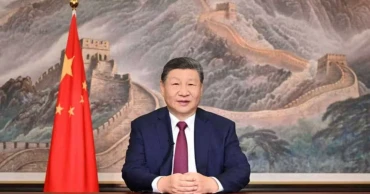
China bans exports of dual-use goods to Japan amid Taiwan tensions
China on Tuesday banned exports of dual-use goods that can serve military purposes to Japan, a move that comes at time of heightened tensions between the two countries over Taiwan, a self-ruled island Beijing claims as its sovereign territory.
The Chinese commerce ministry warned that individuals or organizations violating the ban would face legal action, regardless of nationality. The ministry did not specify the items affected, but technology products such as drones and navigation systems could be included.
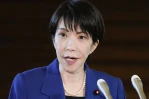
Japan’s Foreign Ministry strongly protested, calling the measure targeted and “unacceptable,” and demanded its withdrawal. The announcement follows months of escalating friction, including Japan’s plans to double military spending and incidents of Chinese aircraft locking radar on Japanese jets.
China recently conducted large-scale military drills around Taiwan, with Foreign Minister Wang Yi condemning both Taiwan and Japan’s “pro-independence” stance.
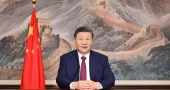
Chinese leader Xi Jinping also met South Korean President Lee Jae Myung, urging regional cooperation to defend the outcomes of World War II and maintain stability in Northeast Asia.
4 months ago
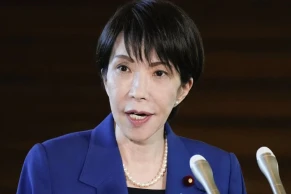
Western Japan shaken by strong quake, tsunami risk low
A strong earthquake struck western Japan on Tuesday, but there were no reports of major damage, life-threatening injuries, or tsunami risk.
The Japan Meteorological Agency (JMA) initially reported the quake in Shimane prefecture, northwestern Japan, as magnitude 6.2, later revising it to 6.4. The prefectural capital, Matsue, along with nearby cities—including some in Tottori prefecture—experienced the strongest shaking. The quake’s epicenter was inland at a depth of roughly 10 kilometers (6.2 miles).
JMA officials warned residents to remain cautious of possible aftershocks for about a week. Local fire departments reported a few minor injuries, and Shinkansen bullet trains in the area faced temporary suspensions or delays. The Nuclear Regulation Authority confirmed no issues at the Shimane nuclear power plant or nearby facilities.
Japan, situated on the Pacific Ring of Fire, is among the world’s most earthquake-prone regions.
4 months ago
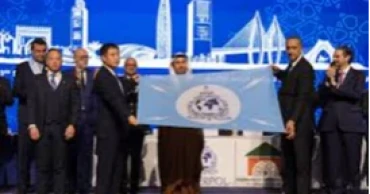
2026 INTERPOL General Assembly to be held in Hong Kong
Hong Kong will host the 94th INTERPOL General Assembly later this year, marking the first time the city serves as the venue and the third time the event is held in China. The gathering will bring police chiefs and ministers from INTERPOL’s 196 member countries together to discuss global security challenges and strengthen international cooperation.
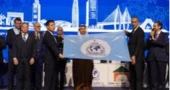
Vice Minister of Public Security of China, Xu Datong, recalled China’s previous hosting of the assembly in Beijing in 1995 and 2017, noting the significance of Hong Kong’s selection. At the closing ceremony of the 93rd General Assembly in Morocco last November, Xu, alongside Hong Kong Police Commissioner Chow Yat-ming, received the INTERPOL flag, officially designating Hong Kong as the next host city.
Commissioner Chow said the decision reflects China’s trust in both Hong Kong and the Hong Kong Police Force (HKPF), highlighting the city’s strategic role as a “super connector” in international policing. Chow expressed pride in hosting the event, emphasizing the opportunity to showcase Hong Kong’s vibrancy, friendly spirit, and the effectiveness of the “One Country, Two Systems” framework.
Hong Kong has long been active within INTERPOL. The HKPF contributes expertise in major crimes, cybercrime, and financial crime, with officers on secondment at INTERPOL headquarters in Lyon and the Global Complex for Innovation in Singapore. The force is expanding ties with overseas law enforcement, particularly within ASEAN and Belt and Road Initiative countries, to combat emerging transnational crimes. Platforms like FRONTIER+ now connect 13 jurisdictions for real-time intelligence sharing and cross-border fund interception.
In November 2025, the HKPF hosted its first Ethics Governance Roundtable with INTERPOL, ICAC, and international representatives, discussing ethics and financial risk management.
Chow said preparations for the 2026 General Assembly are well underway, with close coordination among HKPF, INTERPOL, and China’s National Central Bureau to ensure a smooth event. The HKPF aims to offer delegates a memorable experience, reflecting Hong Kong’s hospitality, rich culture, and culinary offerings.
4 months ago
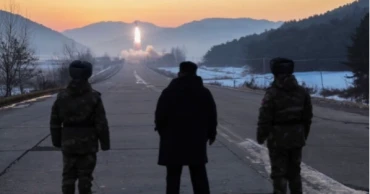
North Korea claims progress in hypersonic missile program amid regional tensions
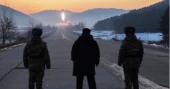
North Korea announced on Monday that leader Kim Jong Un oversaw test flights of hypersonic missiles, emphasizing the need to strengthen the country’s nuclear deterrent as it ramps up weapons demonstrations ahead of a major political gathering. The announcement came a day after neighboring countries reported multiple ballistic missile launches, condemning the tests as provocative. The launches occurred just hours before South Korean President Lee Jae Myung departed for China to meet President Xi Jinping.
According to the Korean Central News Agency (KCNA), the Sunday exercise aimed to assess the readiness of a hypersonic weapons system, enhance operational skills of missile troops, and evaluate the effectiveness of the country’s war deterrent. Kim stated that the drill confirmed a “very important technology task for national defense” and emphasized the need to continuously upgrade military capabilities, particularly offensive weapons.
Possessing operational hypersonic missiles would allow North Korea to bypass U.S. and South Korean missile defense systems. While Pyongyang has conducted multiple tests in recent years to achieve this, foreign experts remain skeptical about whether the missiles have reached the required speed and maneuverability.
North Korea fires ballistic missiles into sea ahead of south korean leader’s China visit
In recent weeks, the country has test-fired long-range strategic cruise missiles, new anti-air missiles, and released images showing progress in building its first nuclear-powered submarine. Analysts believe these demonstrations aim to highlight weapons development achievements ahead of the Workers’ Party congress, the first in five years, where attention will focus on potential shifts in U.S.-North Korea relations and the resumption of stalled negotiations.
The nuclear issue is expected to feature in the Lee-Xi summit, with South Korea urging China to play a constructive role in promoting peace on the peninsula. The missile tests followed a bold U.S. operation that captured Venezuelan leader Nicolás Maduro, which North Korea criticized as evidence of American aggression. Kim defended his nuclear ambitions, citing recent geopolitical tensions and complex international developments as justification for strengthening his country’s defense.
4 months ago
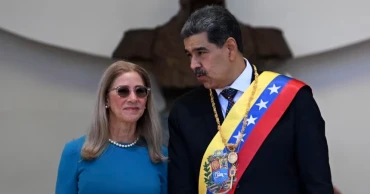
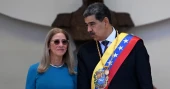
China urges US to immediately release Venezuela’s Maduro and his wife
China on Sunday called on the United States to immediately release Venezuelan President Nicolás Maduro and his wife, expressing serious concern over their seizure by U.S. forces.
A spokesperson for China’s foreign ministry said Beijing was responding to reports that U.S. forces captured Maduro and his wife on Saturday and took them out of Venezuela, drawing objections from several countries.
Starlink offers Free internet to Venezuela Until Feb 3
China said the move constituted a clear violation of international law, fundamental norms governing international relations, and the purposes and principles of the United Nations Charter.
The spokesperson urged the United States to ensure the personal safety of Maduro and his wife, stop efforts to overthrow the Venezuelan government, and resolve the issue through dialogue and negotiation rather than force.
5 months ago
North Korea fires ballistic missiles into sea ahead of south korean leader’s China visit
North Korea launched multiple ballistic missiles toward the sea on Sunday, just hours before South Korean President Lee Jae Myung departed for China for talks expected to focus on Pyongyang’s nuclear program. According to South Korea’s Joint Chiefs of Staff, the missiles were fired from the vicinity of North Korea’s capital around 7:50 a.m. and flew roughly 900 kilometers (560 miles). Authorities in South Korea and the U.S. are currently analyzing the details of the launches. The Joint Chiefs emphasized that Seoul is prepared to respond to any provocations and is closely coordinating with the U.S. and Japan.
Japanese Defense Minister Shinjiro Koizumi confirmed at least two missile launches, describing them as a serious threat to regional and global peace. Experts note that these latest launches are part of a broader display of military capabilities ahead of North Korea’s upcoming Workers’ Party congress, the first in five years. Analysts believe Pyongyang is using the congress to potentially announce new policies toward the U.S. and showcase progress in its defense programs.
Since the collapse of Kim Jong Un’s summit with former U.S. President Donald Trump in 2019, North Korea has focused on expanding its nuclear arsenal. Kim has also strengthened ties with Russia over the Ukraine conflict and maintained close relations with China. Although the exact date of the party congress is unannounced, South Korean intelligence predicts it will take place in January or February.
Sunday’s missile launches coincided with President Lee’s trip to China, where he aims to urge Beijing, North Korea’s main ally, to take a constructive role in promoting peace on the Korean Peninsula. South Korea and the U.S. have long sought Chinese influence over Pyongyang, though Beijing’s leverage remains uncertain. Seoul convened an emergency security meeting following the launches, warning that North Korea’s missile tests violate U.N. Security Council resolutions.
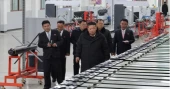
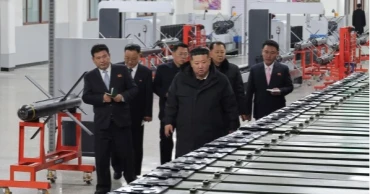
Meanwhile, North Korea has not commented on the recent U.S. military operation in Venezuela that ousted President Nicolás Maduro. Kim Jong Un was reported to have visited a weapons factory on Saturday, ordering a 2.5-fold increase in production of precision-guided arms, underscoring his continued focus on military development.
5 months ago
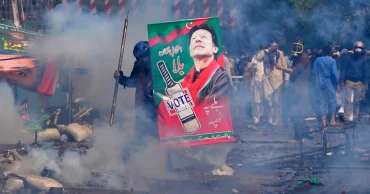
Pakistan court jails journalists, YouTubers for 2023 riots
A court in Pakistan’s capital on Friday sentenced seven people, including three journalists, two YouTubers and two retired army officers, to life imprisonment after finding them guilty of inciting violence during the 2023 unrest and spreading hatred against state institutions.
Anti-Terrorism Court Judge Tahir Abbas Sipra delivered the verdict in Islamabad after completing trials held in absentia, as none of the accused were present. All have been living abroad for several years to avoid arrest.
Those convicted are former editor Shaheen Sehbai, journalists Sabir Shakir and Moeed Pirzada, YouTubers Wajahat Saeed Khan and Haider Raza Mehdi, and retired army officers Adil Raja and Akbar Hussain.
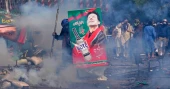
The charges stem from violent protests that broke out in May 2023 after the arrest of former Prime Minister Imran Khan in a graft case. During the unrest, Khan’s supporters attacked military installations, set fire to government property, looted the home of a senior army officer and damaged the state-run Radio Pakistan building.
Khan was also indicted in 2024 on charges of inciting violence against military and government targets, allegations he has denied. He was removed from office through a no-confidence vote in Parliament in April 2022.
Prosecutors said the seven men, known as public supporters of Khan, encouraged violence during the May 9, 2023 riots after Khan repeatedly blamed his ouster on the United States and Pakistan’s military. The US government, the military and Prime Minister Shehbaz Sharif have rejected those claims.
Sabir Shakir told The Associated Press that he was aware of the conviction and denied encouraging mob violence, saying he was abroad at the time. He described the ruling as political victimisation and said the trial proceeded without hearing arguments from his lawyer. He said he received two life sentences.
The other convicted men could not immediately be reached for comment.
The court order allows the seven to file appeals within seven days and directs police to arrest and jail them if they return to Pakistan.
Human rights groups and journalists’ unions say media freedom is shrinking in Pakistan amid growing restrictions. The Sharif government says it supports free speech but insists journalists and online commentators must follow ethical standards.
5 months ago
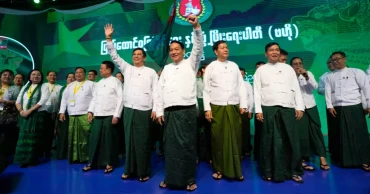
Military-backed party leads early Myanmar election results
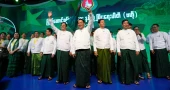
Myanmar’s military-appointed election body has released early results from the first phase of the country’s three-part general election, showing the military-backed Union Solidarity and Development Party (USDP) leading in most constituencies, as widely expected.
The Union Election Commission (UEC) reported that more than 6 million people, roughly 52% of the eligible voters in the first phase held on Dec. 28, cast ballots. Authorities called the turnout a major success despite opposition claims that the polls are neither free nor fair, with key parties barred and dissenters suppressed. Many opposition groups called for voter boycotts.
According to a UEC statement in the state-run Myanma Alinn newspaper, the USDP has so far won 38 of the 330 seats in the lower house, Pyithu Hluttaw, with many results still pending. USDP leader Khin Yi, a former general and police chief closely allied with military ruler Senior General Min Aung Hlaing, secured a seat in the capital Naypyitaw with 49,006 votes out of 68,681. The Shan Nationalities Democratic Party and Mon Unity Party won one seat each.
A senior USDP official told AP that the party has secured 88 of the 102 contested seats in the first phase, including 29 constituencies where it faced no opposition. The party also reportedly won about 85% of contested seats in regional legislatures, though final results will only be confirmed after the second and third phases scheduled for Jan. 11 and Jan. 25. Voting will not take place in 65 townships due to ongoing armed conflicts.
Myanmar’s legislature consists of 664 seats across two houses. The party with a combined parliamentary majority can choose the president, who then appoints the Cabinet. Under the constitution, the military automatically holds 25% of seats in each house.
Military rule began in February 2021 when soldiers ousted the elected government of Aung San Suu Kyi, barring her National League for Democracy from taking office despite its 2020 election victory. The NLD and 39 other parties were dissolved in 2023 after refusing to register under new military rules, sparking widespread opposition that has escalated into civil war.
5 months ago
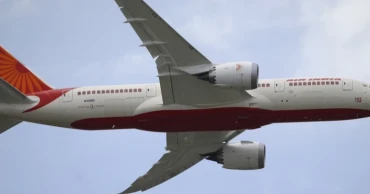
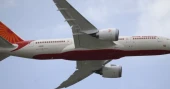
Canada warns Air India over alcohol rules after pilot’s arrest in Vancouver
Canada’s transport authority has warned Air India that it could lose its flight authorisations if it fails to comply with regulations on alcohol consumption by flight crew, following the arrest of one of the airline’s pilots at Vancouver International Airport.
Transport Canada said the incident occurred on December 23, when the pilot was preparing to operate an Air India flight. In a statement issued on Friday, the agency said it would work with Air India and Indian aviation authorities to ensure appropriate follow-up action.
The Royal Canadian Mounted Police said the pilot was arrested after receiving a “report of concern” involving an airline crew member. Police added that the investigation is ongoing and declined to provide further details.
An airport spokeswoman said the pilot had been preparing for Air India’s daily scheduled flight from Vancouver to Delhi. The flight was delayed for several hours but eventually departed safely.
According to flight tracking website FlightRadar24, the Air India flight on December 23, which was routed from Vancouver to Delhi via Vienna, was scheduled to leave at 3 pm but finally took off at 10:02 pm.
Air India did not immediately respond to requests for comment.
Transport Canada noted that India’s Directorate General of Civil Aviation has primary responsibility for regulatory oversight of Air India. However, it stressed that Canadian aviation rules strictly prohibit pilots and other crew members from performing duties within 12 hours of consuming alcohol or while under its influence.
The agency said airlines are responsible for ensuring that crew members assigned to flights are fit for duty. Failure to comply with these rules could lead to the suspension or cancellation of a Canadian Aviation Document under the Aeronautics Act.
Transport Canada also warned that airlines may face judicial and other penalties for violations of the regulations.
5 months ago
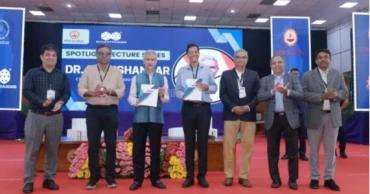
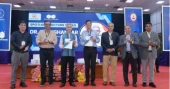
Jaishankar launches IITM Global, aimed at making world’s first Multinational University
Indian External Affairs Minister Dr. S. Jaishankar on Friday launched ‘IITM Global Research Foundation’, a landmark international initiative of Indian Institute of Technology Madras (IIT Madras), in the campus.
The launch marks a significant milestone in IIT Madras’ journey to become the world’s first multinational university, positioning the institute as a globally-networked hub for education, research, innovation and entrepreneurship.
Jaishankar also inaugurated ‘IITM Festival Fortnight,’ which includes the Open House, through which the public is given access to IITMs’ labs and innovation centres, Shaastra, the annual technical festival and Saarang, the annual cultural festival.
While Shaastra 2026 is being held from 2nd to 6th January 2026, Saarang 2026 is from 8th to 12th January 2026.
Prof. V. Kamakoti, Director, IIT Madras, Prof. Raghunathan Rengaswamy, Dean (Global Engagement), IIT Madras, Madhav Narayan, CEO, IIT Madras Global Research Foundation, witnessed the launch along with faculty, researchers, students and other stakeholders.
Jaishankar also took part in a fireside chat during the event.
Widely recognised as India’s leading institution for higher education, IIT Madras is ranked #1 Overall and #1 Engineering Institute in the National Institutional Ranking Framework (NIRF) for several consecutive years, and #180 in the QS World University Rankings besides #56 in the QS Asian University Rankings.
Building on this strong foundation, IITM Global has been conceived as a strategic, sustainable and scalable platform to take IIT Madras’s academic, research and innovation strengths to the global stage.
Taking a question on how to prevent other countries from misreading India’s intentions from Mith R Jain, Co-Curricular Affairs Secretary, IIT Madras, during the fireside chat, Jaishankar said, “How to prevent people from misreading you is to communicate. If you communicate well, clearly and honestly, other countries and other people respect it and accept it. A lot of people across the world are proud of their culture, tradition and heritage. I see no reason why we should not be. There are really very few ancient civilizations which have survived to become major modern nation states and we are one of them. We have a sense of our past which very few countries have... It was our decision to opt for a democratic political model which made the very idea of democracy as a universal political concept. Had we not gone that way, the democratic model, as we know it, would have been regional and narrow... Partnership with the West is also important and that is how we shape the world.”
Addressing the gathering, Jaishankar said, “Countries have grown by growing at home and then engaging abroad, leveraging the international environment in a way contributing to it and gaining from it. When we say ‘Vasudhaiva Kutumbakam’, the term is we have never considered the world as a inimical or hostile place from which we have to defensively protect ourselves."
He said they have limitations on their resources. "With limited resources how do you have maximum impact? that is actually the problem that has to be solved. What we try to do in Indian Foreign Policy and diplomacy today is solve that problem. We try to do that partly using our competitiveness and strengths and leveraging other institutions and possibilities.”
Speaking on India assisting foreign countries, Jaishankar said, “An IIT Madras Campus in Tanzania is a way by which Indian Foreign Policy has leveraged the capabilities of an Institution here to make a huge impact.”
As part of the IITM Global rollout, IIT Madras has signed a series of high-impact memoranda of understanding with leading multinational institutions and partners across key global regions.
These include three MoUs in the United States, one in the United Kingdom, three in Germany, three in Dubai, three across the Asia-Pacific region including Singapore and Malaysia, and six under the India-for-Global initiative.
The partnerships are focused on joint research, industry and startup collaboration, global talent and knowledge exchange, and translating deep-tech innovation into real-world applications.
Speaking on the occasion, Prof. V. Kamakoti, Director, IIT Madras, said, “IITM Global Research Foundation is a global outreach initiative of IIT Madras aimed at strengthening international collaborations. It follows a four-pronged approach. First, we aim to take our technologies abroad and explore opportunities for technology transfer across different countries.
Second, we plan to bring projects from these nations under joint development agreements, enabling our faculty to work on and provide solutions to global challenges. Third, we aim to introduce our start-ups to business opportunities in these countries. Fourth, we aim to attract foreign investments into our start-ups.”
Prof. V. Kamakoti said, “These four verticals form the core focus of IITM Global. Initially, we are establishing a presence in five locations, including the United States, Dubai, Malaysia and Germany. Based on success, this initiative will be expanded to multiple nations.”
IITM Global is designed as a dynamic ‘plug-and-play’ framework that enables deep-tech innovators, researchers, startups and industry partners to access global markets, capital and research opportunities.
By integrating local context with international engagement, the platform aims to catalyse innovation-led growth while fostering high-impact collaborations with global industry and R&D partners.
Anchored in IIT Madras’ world-class faculty, advanced infrastructure and strong industry linkages, IITM Global seeks to drive innovation and entrepreneurship with a clear focus on societal impact.
The initiative is structured around four core pillars that underpin global engagement: nurturing a vibrant startup ecosystem to accelerate commercialisation and scale-up; delivering globally recognised academic programmes, including online courses and training for international learners; advancing cutting-edge research and consultancy across domains such as Data Science and AI, Quantum Computing, Cybersecurity and Blockchain, Space Technology and Advanced Mobility, Energy and Water Sustainability, Health Tech and Green Tech; and enabling IP commercialisation and technology transfer to drive economic development.
With 18 academic departments, 15 Centres of Excellence, 23 research centres and nearly 100 advanced laboratories, IIT Madras hosts one of the most comprehensive R&D ecosystems in the world. Supported by over 650 faculty members and a student community of more than 10,000, the institute’s industry-connected research culture provides a strong base for meaningful global collaboration.
By enhancing employability, fostering entrepreneurship and enabling cutting-edge innovation at a global scale, IITM Global is set to transform how the world engages with IIT Madras.
The initiative strengthens the institute’s international presence while extending its legacy of excellence and impact to communities and partners across the globe.
5 months ago