asia

S. Korea says N. Korea fires missile as allies ready drills
South Korea’s military said North Korea on Saturday fired one suspected long-range missile from its capital toward the sea, a day after it threatened to take strong measures against South Korea and the U.S. over their joint military exercises.
The Joint Chiefs of Staff in Seoul said the ballistic missile was fired at around 5:22 p.m. from an area in Sunan, the site of Pyongyang's international airport. It didn't immediately say where the weapon landed.
North Korea’s Foreign Ministry on Friday threatened with "unprecedently" strong action against its rivals, after South Korea announced a series of planned military exercises with the United States aimed at sharpening their response to the North’s growing threats.
Toshiro Ino, Japan’s vice minister for defense, said the missile was expected have landed in waters within Japan’s exclusive economic zone, about 200 kilometers (125 miles) west of Oshima island. Oshima lies off the western coast of the northernmost main island of Hokkaido.
“We are doing our utmost, working closely with the U.S., to gain information, analyze and take appropriate vigilance and surveillance measures to protect the lives and property of our people,” he told reporters.
The launch was North Korea’s first since Jan. 1, when it test-fired a short-range weapon. It followed a massive military parade in Pyongyang last week, where troops rolled out more than a dozen intercontinental ballistic missiles as leader Kim Jong Un watched in delight from a balcony.
The unprecedented number of missiles underscored a continuation of expansion of his country’s military capabilities despite limited resources while negotiations with Washington remain stalemated.
Those missiles included a new system experts say is possibly linked to the North’s stated desire to acquire a solid-fuel ICBM. North Korea’s existing ICBMs, including Hwasong-17s, use liquid propellants that require pre-launch injections and cannot remain fueled for prolonged periods. A solid-fuel alternative would take less time to prepare and is easier to move around on vehicles, providing less opportunity to be spotted.
It wasn’t immediately clear whether Saturday’s launch involved a solid-fuel system.
“North Korean missile firings are often tests of technologies under development, and it will be notable if Pyongyang claims progress with a long-range solid-fuel missile,” said Leif-Eric Easley, a professor of international studies at Ewha Womans University in Seoul. “The Kim regime may also tout this launch as a response to U.S. defense cooperation with South Korea and sanctions diplomacy at the United Nations.”
North Korea is coming off a record year in weapons demonstrations with more than 70 ballistic missiles fired, including ICBMs with potential range to reach the U.S. mainland. The North also conducted a slew of launches it described as simulated nuclear attacks against South Korean and U.S. targets in response to the allies’ resumption of large-scale joint military exercise that had been downsized for years.
North Korea’s missile tests have been punctuated by threats of preemptive nuclear attacks against South Korea or the United States over what it perceives as a broad range of scenarios that put its leadership under threat.
Kim doubled down on his nuclear push entering 2023, calling for an “exponential increase” in the country’s nuclear warheads, mass production of battlefield tactical nuclear weapons targeting “enemy” South Korea and the development of more advanced ICBMs.
The North Korean statement on Friday accused Washington and Seoul of planning more than 20 rounds of military drills this year, including large-scale field exercises, and described its rivals as “the arch-criminals deliberately disrupting regional peace and stability.”
The statement came hours after South Korea’s Defense Ministry officials told lawmakers that Seoul and Washington will hold an annual computer-simulated combined training in mid-March. The 11-day training would reflect North Korea’s nuclear threats, as well as unspecified lessons from the Russia-Ukraine war, according to Heo Tae-keun, South Korea’s deputy minister of national defense policy.
Heo said the two countries will also conduct joint field exercises in mid-March that would be bigger than those held in the past few years.
South Korea and the U.S. will also hold a one-day tabletop exercise next week at the Pentagon to sharpen a response to a potential use of nuclear weapons by North Korea.
The exercise, scheduled for Wednesday, would set up possible scenarios where North Korea uses nuclear weapons, explore how to cope with them militarily and formulate crisis management plans, South Korea’s Defense Ministry said.
North Korea has traditionally described U.S.-South Korea military exercises as rehearsals for a potential invasion, while the allies insist that their drills are defensive in nature.
The United States and South Korea had downsized or canceled some of their major drills in recent years, first to support the former Trump administration’s diplomatic efforts with Pyongyang and then because of COVID-19. But North Korea’s growing nuclear threats have raised the urgency for South Korea and Japan to strengthen their defense postures in line with their alliances with the United States.
South Korea has been seeking reassurances that United States will swiftly and decisively use its nuclear capabilities to protect its ally in face of a North Korean nuclear attack. In addition to expanding and evolving military exercises with South Korea, the United States has also expressed commitment to increase its deployment of strategic military assets like fighter jets and aircraft carriers to the Korean Peninsula in a show of strength.
In December, Japan made a major break from its strictly self-defense-only post-World War II principle, adopting a new national security strategy that includes preemptive strikes and cruise missiles to counter growing threats from North Korea, China and Russia.
___
Associated Press writer Yuri Kageyama in Tokyo contributed to the report.
3 years ago
Turkey quake revives debate over nuclear plant being built
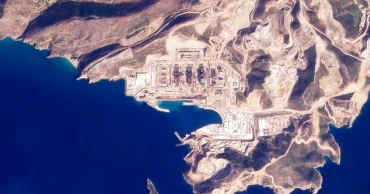
A devastating earthquake that toppled buildings across parts of Turkey and neighboring Syria has revived a longstanding debate locally and in neighboring Cyprus about a large nuclear power station being built on Turkey’s southern Mediterranean coastline.
The plant’s site in Akkuyu, located some 210 miles (338 kilometers) to the west of the epicenter of the Feb. 6 quake, is being designed to endure powerful tremors and did not sustain any damage or experience powerful ground shaking from the 7.8 magnitude earthquake and aftershocks.
But the size of the quake — the deadliest in Turkey’s modern history — sharpened existing concerns about the facility being built on the edge of a major fault line.
Rosatom, Russia’s state-owned company in charge of the project, says the power station is designed to “withstand extreme external influences” from a magnitude 9 earthquake. In nuclear power plant construction, plants are designed to survive shaking that is more extreme than what’s been previously recorded in the area they’re sited.
The possibility of a magnitude 9 earthquake occurring in the vicinity of the Akkuyu reactor “is approximately once every 10,000 years,” Rosatom told The Associated Press via email last week. “That is exactly how the margin of safety concept is being implemented.”
An official with Turkey’s Energy Ministry, when contacted by the AP, said there were no immediate plans to reassess the project. The official spoke on condition of anonymity in line with government protocol. Some activists, however, still say the project — the first nuclear power plant in Turkey — poses a threat.
Nuclear facilities are constructed of heavily reinforced concrete, sized for significant earthquake shaking and far more robust than commercial buildings, said Andrew Whittaker, a professor of civil engineering at the University at Buffalo who is an expert in earthquake engineering and nuclear structures.
The fact that it’s sited off the western end of the East Anatolian Fault, which was linked to last week’s powerful tremor, suggests that the design would have been checked for significant shaking, Whittaker added.
Still, Whittaker said, it would be prudent to reassess seismic hazard calculations in the region for all infrastructure, including the plant.
“There’s no reason to be concerned, but there’s always a reason to be cautious,” he said.
That’s little comfort to activists in Turkey and on both sides of ethnically divided Cyprus. They’ve renewed their calls for the project to be scrapped, saying that the devastating earthquake is clear proof of the great risk posed by a nuclear power plant near seismic fault lines.
In a statement to the AP, the Cyprus Anti-Nuclear platform, a coalition of over 50 Greek Cypriot and Turkish Cypriot environmentalist groups, trade unions and political parties, said it “calls on all political parties, scientific and environmental organizations and the civil society to join efforts and put pressure on the Turkish government to terminate its plans for the Akkuyu nuclear power plant.”
Cypriot European Parliament member Demetris Papadakis asked the European Commission what immediate actions it intends to take to halt the plant because of the dangers posed by building a nuclear power station in a seismic zone so close to Cyprus.
Nuclear power plants worldwide are designed to withstand earthquakes and shut down safely in the event of major earth movement — about 20% of nuclear reactors are operating in areas of significant seismic activity, according to the World Nuclear Association.
For example, Japanese nuclear plants, including the Hamaoka Nuclear Power Plant, are in regions where earthquakes of up to magnitude 8.5 may be expected, the association said. Stricter safety standards were adopted after the 2011 Fukushima nuclear disaster, when a tsunami crashed into the Daichi plant, melting three reactors and releasing dangerous levels of radiation. And the Diablo Canyon Power Plant in California was designed to safely withstand earthquakes, tsunamis and flooding that could potentially occur in the region too, according to its operator.
Turkish nuclear regulators provided the license for the plant’s construction in Akkuyu in 1976 following eight years of seismic studies to determine the most suitable location, but the project was slowed down after the Chernobyl nuclear accident in 1986. Construction of the first reactor started in 2018. Large nuclear power plants have traditionally taken a while to build because of the size, scale and complexity of the infrastructure, and delays associated with first-of-a-kind plants.
According to Rosatom, a study by Turkey’s Office for the Prevention and Elimination of Consequences of Emergency Situations indicates that the site in Akkuyu – some 60 miles (95 kilometers) from Cyprus’ northern coastline – is located in the fifth degree earthquake zone, which is considered the safest region in terms of earthquakes.
The plant design includes an external reinforced concrete wall and internal protective shell made of “prestressed concrete,” with metal cables stretched inside the concrete shell to give additional solidity to the structure, the company said. And the modern reactor design, Russia’s VVER-1200, includes an additional safety feature — a 144 ton steel cone called the “core catcher” that in an emergency, traps and cools any molten radioactive materials, Rosatom added.
The company emphasized that power units with VVER-1200 reactors comply with the post-Fukushima requirements of the International Atomic Energy Agency.
There’s a political dimension to qualms about the plant: Cyprus has accused Turkey of augmenting the Turkish Cypriots’ dependence on it in order to entrench the island’s ethnic division. Turkey has said it would supply the breakaway Turkish Cypriot north of the island with electricity through an undersea cable. A pipeline suspended a couple of hundred meters under the Mediterranean’s surface is already supplying the north with water.
The plant, whose first of four reactors is scheduled to go online later this year, will have a total capacity of 4,800 megawatts of electricity, providing about 10% of Turkey’s electricity needs. According to government figures, if the power plant started operating today, it could singlehandedly provide enough electricity for a city of about 15 million people, such as Istanbul, Rosatom added.
It’s estimated to cost $20 billion. Rosatom has a 99.2% stake in the project, and is contracted to build, maintain, operate and decommission the plant.
___
McDermott reported from Providence, Rhode Island. Suzan Fraser, in Ankara, Turkey, contributed.
3 years ago

Together for Turkiye
The event – Together for Turkiye – was hosted by Agile Minds Corporation in collaboration with
· The Turkish Embassy in Bangladesh
· TIKA (Turkish Cooperation and Coordination Agency)
· AFAD (an on-the-ground Turkish NGO which will help with logistical and installation aspects)
· The Earth Identity Project - NGO no. 1969 (which will help with local fund collection)
· THRIVE (a US-registered NGO that will, in due course, provide food packages for the earthquake victims)
Read More: Banglalink donates relief items for Turkey earthquake victims
Mishal Karim, Chairman of Agile Minds Corporation, started his speech with a quote by Mahatma Gandhi, “Be the change that you wish to see in the world.”
He then stated, “Our initiative will attempt to deliver a functional field hospital with all the required elements: 2 Air Domes - each 4,380 Square Feet, with a connecting channel of 459 Square Feet. The 2 Air Domes come with a 30KW Generator required for their operations. Furthermore, we are arranging for the donation of Sleeping bags, Battery-powered Heaters, Power banks, and Tent mats.”
3 years ago
N. Korea threatens unprecedented response to South-US drill
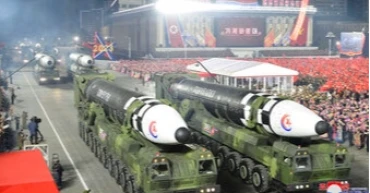
North Korea threatened Friday to take “unprecedently” strong action against its rivals, soon after South Korea announced a series of planned military drills with the United States to hone their joint response to the North’s increasing nuclear threats.
North Korea has halted weapons testing activities since its short-range missile firing on Jan. 1, though it launched more than 70 missiles in 2022 — a record number for a single year. Friday’s warning suggests the North's testing could resume soon over its rivals’ military training, which it views as an invasion rehearsal.
“In case the U.S. and South Korea carry into practice their already announced plan for military drills that (North Korea), with just apprehension and reason, regards as preparations for an aggression war, they will face unprecedentedly persistent and strong counteractions,” the North Korean Foreign Ministry said in a statement carried by state media.
The statement accused South Korea and the United States of planning more than 20 rounds of military drills, including their largest-ever field exercises. It called South Korea and the United States “the arch-criminals deliberately disrupting” regional peace and stability.
“This predicts that the situation in the Korean Peninsula and the region will be again plunged into the grave vortex of escalating tension,” the statement said.
It didn’t specify which U.S.-South Korean military trainings it was referring to. But North Korea has typically slammed all major regular military drills between Washington and Seoul as a practice to launch an invasion and responded with its own weapons tests.
Some experts say North Korea has used various South Korea-U.S. drills as a chance to test and perfect its weapons systems. They say North Korea would eventually aim to use its enlarged nuclear arsenal to win international recognition as a legitimate nuclear state and win sanctions relief and other concessions.
Read more: S. Korea, US to hold simulated drill on North use of nukes
Seoul and Washington have said their training is defensive in nature.
Earlier Friday, Heo Tae-keun, South Korea’s deputy minister of national defense policy, told lawmakers that Seoul and Washington will hold an annual computer-simulated combined training in mid-March. Heo said the 11-day training would reflect North Korea’s nuclear threats, as well as unspecified lessons from the Russia-Ukraine War.
Heo said the two countries will also conduct joint field exercises in mid-March that would be bigger than those held in the past few years.
The allies had downsized or canceled some of their regular drills in recent years to guard against the COVID-19 pandemic and support now-dormant diplomacy on North Korea’s nuclear program.
Earlier Friday, Seoul officials said that South Korea and the U.S. will hold a one-day tabletop exercise next week at the Pentagon in Arlington, Virginia, to sharpen a response to a potential use of nuclear weapons by North Korea. The exercise, scheduled for Wednesday, would set up possible scenarios where North Korea uses nuclear weapons, explore how to cope with them militarily and formulate crisis management plans, South Korea’s Defense Ministry said in a statement.
Seoul's security concerns about North Korea’s nuclear program deepened after Pyongyang last year adopted a law that authorizes the preemptive use of nuclear weapons, and tested nuclear-capable missiles that put South Korea within striking distance.
In response to the intensifying North Korean threats, South Korea and the United States have expanded their joint military drills and stepped up pressure on the North to abandon its nuclear program. In January, Defense Secretary Lloyd Austin said that the U.S. would also increase its deployment of advanced weapons such as fighter jets and bombers to the Korean Peninsula.
During their annual meeting in November, Austin and South Korean Defense Minister Lee Jong-Sup agreed to conduct tabletop exercises annually and further strengthen the alliance’s information sharing, joint planning and execution. Austin reiterated a warning that any nuclear attack against the U.S. or its allies would result in the end of North Korean leader Kim Jong Un's regime.
3 years ago

S. Korea, US to hold simulated drill on North use of nukes
South Korean and United States militaries will hold a tabletop exercise at the Pentagon next week to hone their joint response to a potential use of nuclear weapons by North Korea, Seoul officials said Friday.
The one-day computer simulation set for Wednesday comes as the two countries push to strengthen their 70-year alliance in the face of North Korea’s increasingly aggressive nuclear doctrine.
The exercise is meant to focus on measures against North Korean nuclear threats and discuss how to boost a U.S. extended deterrence — America's ability to use its full capabilities, including nuclear, to deter attacks on its allies, South Korea’s Defense Ministry said in a statement.
It said the exercise would set up possible scenarios where North Korea uses nuclear weapons, explore how to cope with them militarily and formulate crisis management plans.
Worries about North Korea’s nuclear program deepened in South Korea after the North conducted a record number of missile tests in 2022 and adopted a law that authorizes the preemptive use of nuclear weapons. Many of the missiles tested were nuclear-capable weapons that place South Korea within striking distance.
In response to the intensifying North Korean threats, South Korea and U.S. militaries have expanded their joint drills and stepped up pressure on the North to abandon its nuclear program. In January, Defense Secretary Lloyd Austin said that the U.S. would also increase its deployment of advanced weapons such as fighter jets and bombers to the Korean Peninsula.
During their annual meeting in November, Austin and South Korean Defense Minister Lee Jong-Sup also agreed to conduct tabletop exercises annually and further strengthen the alliance’s information sharing, joint planning and execution. Austin reiterated a warning that any nuclear attack against the U.S. or its allies would result in the end of North Korean leader Kim Jong Un's regime.
North Korea has previously slammed military drills between its rivals as an invasion rehearsal and responded with its own weapons tests, and could make an angry response to next week’s South Korea-U.S. tabletop exercise.
Some experts say North Korea has used some of the South Korea-U.S. drills as a chance to test and perfect its weapons systems. They say North Korea would eventually aim to use its enlarged nuclear arsenal to win international recognition as a legitimate nuclear state and win sanctions relief and other concessions.
3 years ago

Taiwan reports Chinese balloon found on northern island
Taiwan’s Defense Ministry says a Chinese weather balloon landed on one of its outlying islands, amid U.S. accusations that such craft have been dispatched worldwide to spy on Washington and its allies.
The ministry’s statement on Thursday said the balloon carried equipment registered to a state-owned electronics company in the northern city of Taiyuan.
The islet where it was found, Tungyin, is part of the Matsu island ground lying just off the coast of China’s Fujian province.
Taiwan maintained control of the islands after the sides split in 1949 amid civil war and they are considered a first line of defense should China make good on its threats to bring Taiwan under its control by force if necessary.
Calls and messages sent to the company identified in the report, Taiyuan Wireless (Radio) First Factory Ltd., went unanswered. Information on the equipment was written in the simplified Chinese characters used on the mainland rather than the traditional on Taiwan, the ministry said.
China regularly sends military aircraft and warships into Taiwan air identification zone and across the middle line of the Taiwan Strait. That has prompted Taiwan to boost military purchases from the U.S., expand domestic production of local planes, submarines and fighting ships, and extend compulsory military service for all males.
Washington is Taiwan's closest military and diplomatic ally, despite a lack of formal ties, which were cut in 1979. Beijing protests strongly over all contacts between the island and the U.S., but its aggressive diplomacy has helped build strong bipartisan support for Taipei on Capitol Hill.
On Thursday, President Joe Biden said the U.S. is developing “sharper rules” to track, monitor and potentially shoot down unknown aerial objects, following three weeks of high-stakes drama sparked by the discovery of a suspected Chinese spy balloon transiting much of the country.
Biden has directed national security adviser Jake Sullivan to lead an “interagency team” to review U.S. procedures after the U.S. shot down the Chinese balloon, as well as three other objects that Biden said the U.S. now believes were most likely “benign” objects launched by private companies or research institutions.
While not expressing regret for downing the three still-unidentified objects, Biden said he hoped the new rules would help “distinguish between those that are likely to pose safety and security risks that necessitate action and those that do not.”
3 years ago

China sanctions Lockheed Martin, Raytheon for Taiwan sales
China imposed trade and investment sanctions Thursday on Lockheed Martin and a unit of Raytheon for supplying weapons to Taiwan, stepping up efforts to isolate the island democracy claimed by the ruling Communist Party as part of its territory.
Lockheed Martin Corp. and Raytheon Technologies Corp.'s Raytheon Missiles and Defense are barred from importing goods into China or making new investments in the country, the Ministry of Commerce announced. It said they were added to the “unreliable entity” list of companies whose activities are restricted because they might endanger national sovereignty, security or development interests.
It wasn't clear what impact the penalties might have. The United States bars most sales of weapons-related technology to China, but some military contractors also have civilian businesses in aerospace and other markets.
Taiwan and China split in 1949 after a civil war. The island of 22 million people never has been part of the People's Republic of China, but the Communist Party says it is obliged to unite with the mainland, by force if necessary.
President Xi Jinping's government has stepped up efforts to intimidate Taiwan by flying fighter jets and bombers near the island and firing missiles into the sea.
The United States has no official relations with Taiwan but maintains extensive commercial and informal contacts. Washington is obligated by federal law to make sure the island's government has the means to defend itself.
The United States is Taiwan's main supplier of military equipment.
Raytheon Missiles and Defense, part of Raytheon Technologies Corp., was awarded a $412 million contract in September to upgrade Taiwanese military radar as part of a $1.1 billion package of U.S. arms sales to the island. Boeing Defense received a $355 million contract to supply Harpoon missiles.
Beijing responded to that sale by announcing sanctions against the CEOs of Raytheon and of Boeing Defense but gave no details of what they were.
Lockheed Martin has supplied Taiwan's military with radar, helicopters and air traffic control equipment. It plays a role in the island's development of its own fighter jet and navy frigates.
In China, Lockheed Martin has sold air traffic control equipment for civilian airports and helicopters for commercial use.
Beijing announced plans for the “unreliable entity” list in 2019 in response to U.S. restrictions imposed on Huawei Technologies Ltd., a Chinese maker of telecom equipment.
3 years ago

Indian officials probe BBC for 3rd day, alleging tax dodge
India’s tax officials were searching the BBC offices in New Delhi and Mumbai for a third straight day on Thursday seeking information about the organization’s business operations amid allegations of tax evasion, as opposition political parties and other media organizations criticized the move as an attempt to intimidate the media.
Some news staff members were questioned overnight but the tax officials on Thursday restricted themselves to the company's business executives and their offices, said some staff members who spoke on condition of anonymity because they weren't authorized to speak to media.
Prime Minister Narendra Modi's critics questioned the timing of the searches, which came weeks after the BBC aired a documentary critical of Modi in the U.K.
Kanchan Gupta, an adviser to India’s Information and Broadcasting Ministry, said there was no connection between the two.
"Whether you are a media organization or you are a manufacturer, the purpose of tax laws apply equally to everybody. And if you are found in violation of those tax laws, the appropriate action is taken as the due process of law,” Gupta said in an interview with Mirror Now television news channel.
The Indian tax department hasn’t so far issued any statement on what prompted the searches of the BBC offices since officials arrived there Tuesday morning.
Britain’s publicly funded national broadcaster said on Tuesday it was cooperating fully with Indian authorities and hoped “to have this situation resolved as soon as possible.”
“Many staff has now left the building but some have been asked to remain and are continuing to cooperate with the ongoing inquiries,” it said, adding: “Our output and journalism continue as normal.” BBC management told editorial and other staff members to work from home.
The Press Trust of India news agency cited unnamed officials as saying on Thursday that investigators collected financial data from select BBC staffers and made copies of electronic and paper data from the news organization.
The survey is being carried out to investigate issues related to international taxation and transfer pricing of BBC subsidiary companies, the agency said.
India’s News Broadcasters and Digital Association criticized the income tax “surveys” at the BBC offices.
Read more: India to help Bangladesh import hydropower from Nepal, Bhutan: FS
While the association “maintains that no institution is above the law, it condemns any attempt to muzzle and intimidate the media and interfere with the free functioning of journalists and media organizations," it said in a statement on Wednesday.
The main opposition Congress party leader, Mallikarjun Kharge described the government action as an assault on freedom of the press under Modi’s government.
The documentary, “India: The Modi Question,” was broadcast in the U.K. last month, examining the prime minister’s role in the 2002 anti-Muslim riots in the western state of Gujarat, where he was chief minister at the time. More than 1,000 people were killed in the violence.
Modi has denied allegations that authorities under his watch allowed and even encouraged the bloodshed, and the Supreme Court said it found no evidence to prosecute him. Last year, the court dismissed a petition filed by a Muslim victim questioning Modi’s exoneration.
The second portion of the two-part documentary examined “the track record of Narendra Modi’s government following his re-election in 2019,” according to the BBC website.
The program drew an immediate backlash from India’s government, which invoked emergency powers under its information technology laws to block it from being shown in the country. Local authorities scrambled to stop screenings organized at Indian universities, and social media platforms including Twitter and YouTube complied with government requests to remove links to the documentary.
The BBC said at the time that the documentary was “rigorously researched” and involved a wide range of voices and opinions.
“We offered the Indian Government a right to reply to the matters raised in the series — it declined to respond,” its statement said.
India’s Foreign Ministry called the documentary a “propaganda piece designed to push a particularly discredited narrative” that lacked objectivity.
Press freedom in India has been on a steady decline in recent years. The country fell eight places, to 150 out of 180 countries, in the 2022 Press Freedom Index published by Reporters Without Borders. Media watchdog groups accuse the Modi government of silencing criticism on social media under a sweeping internet law that puts digital platforms including Twitter and Facebook under direct government oversight.
Some media outlets critical of the government have been subjected to tax searches.
Authorities searched the offices of the left-leaning website NewsClick and independent media portal Newslaundry on the same day in 2021. Tax officials also accused the Dainik Bhaskar newspaper of tax evasion in 2021 after it published reports of mass funeral pyres and floating corpses that challenged the government’s handling of the COVID-19 pandemic. In 2017, the government’s investigation bureau said it was probing cases of loan defaults when it raided the offices of New Delhi Television, known for its liberal slant.
3 years ago

Philippines quake causes hospital evacuation, minor damage
A strong earthquake rocked a central Philippine province on Thursday, sending people out of their homes at night, prompting dozens of patients to be evacuated from a hospital and causing minor damage to a government coliseum and business establishments, officials said.
There were no immediate reports of injuries or major damage from the magnitude 6 quake that was set off by a local fault line at a depth of 10 kilometers (6 miles), about 11 kilometers (6.8 miles) west of the coastal town of Batuan in Masbate province, officials said.
The quake struck about two hours after midnight, rousing many people from their sleep, Masbate provincial disaster-mitigation officer Adonis Dilao said.
“The first jolt was really strong followed by shaking that woke me up and my baby,” Red Cross officer MJ Oxemer told The Associated Press by telephone from the provincial capital of Masbate city. “We could hear the rumbling of the ground.”
Dozens of patients from a Masbate provincial hospital were evacuated but later brought back after the quake caused some cracks in the three-story building. A part of the ceiling on a small government coliseum in Masbate city was also damaged, Dilao said.
Cracks were also spotted in the concrete pillars of some business establishments, including grocery and drug stores in Masbate city’s downtown area, and in some houses, Dilao told The AP by telephone.
Although business owners have discretion when to reopen, Dilao said they should heed the advice of government safety inspectors because at least two strong aftershocks were felt following the quake. “Unlike typhoons, which can be predicted to give people time to brace, earthquakes can just suddenly hit,” he said.
The quake knocked out power in many areas of Masbate and nearby Ticao island, and some school classes were suspended, the Office of Civil Defense said, adding that damage assessments by local officials were underway.
The Philippines lies along the Pacific “Ring of Fire,” an arc of faults around the Pacific Ocean where most of the world’s earthquakes occur. Each year it is also hit by about 20 typhoons and tropical storms, making it one of the world’s most disaster-prone countries.
A magnitude 7.7 quake killed nearly 2,000 people in the northern Philippines in 1990.
3 years ago

Indian officials search BBC offices for second straight day
India’s tax officials searched BBC offices in India for a second straight day on Wednesday questioning staff about the organization's business operations in the country, some staff members said.
BBC management told editorial and other staff members to work from home after they were able to leave the office on Tuesday night, said staff who spoke on condition of anonymity as they were not authorized to talk to media.
The searches came weeks after the BBC aired a documentary critical of Prime Minister Narendra Modi in the U.K.
There was no overnight break in the search and investigators scanned the desktops of some employees who were earlier told not to use their phones and keep them aside, the staff members said.
Indian income tax officials have not made any statements since the searches were launched in the BBC’s New Delhi and Mumbai offices on Tuesday morning.
The Press Trust of India news agency said the officials were making copies of electronic and paper-based financial data from the organization.
Rights groups and opposition politicians denounced the move by India's Income Tax Department as an attempt to intimidate the media.
Britain's publicly funded national broadcaster said it was cooperating fully with authorities and hoped "to have this situation resolved as soon as possible.” Late in the evening, the BBC said officials were still at the two offices.
“Many staff have now left the building but some have been asked to remain and are continuing to cooperate with the ongoing inquiries,” it said, adding: “Our output and journalism continue as normal.”
While there has been no British government statement so far, U.S. State Department spokesperson Ned Price said on Tuesday: “We are aware of the search of the BBC offices in Delhi by Indian tax authorities."
“We support the importance of a free press around the world. We continue to highlight the importance of freedom of expression and freedom of religion or belief as human rights that contribute to strengthening democracies around the world. It has strengthened this democracy here in this country. It has strengthened India’s democracy,” Price told reporters in Washington.
India's News Broadcasters and Digital Association criticized the income tax "surveys" at the BBC offices.
While the association "maintains that no institution is above the law, it condemns any attempt to muzzle and intimidate the media and interfere with the free functioning of journalists and media organizations,'' it said in a statement.
Read more: ‘…As long as you don't spew venom’: BJP spokesperson on BBC
Gaurav Bhatia, a spokesperson for Modi's governing Bharatiya Janata Party, said the BBC should have nothing to fear if it follows Indian laws. But he added that the broadcaster's history is “tainted” and “full of hatred” for India and called it corrupt, without offering any specifics.
The documentary, “India: The Modi Question,” was broadcast in the U.K. last month, examining the prime minister's role in 2002 anti-Muslim riots in the western state of Gujarat, where he was chief minister at the time. More than 1,000 people were killed in the violence.
Modi has denied allegations that authorities under his watch allowed and even encouraged the bloodshed, and the Supreme Court said it found no evidence to prosecute him. Last year, the court dismissed a petition filed by a Muslim victim questioning Modi’s exoneration.
The second portion of the two-part documentary examined “the track record of Narendra Modi’s government following his re-election in 2019,” according to the BBC website.
The program drew an immediate backlash from India's government, which invoked emergency powers under its information technology laws to block it from being shown in the country. Local authorities scrambled to stop screenings organized at Indian universities, and social media platforms including Twitter and YouTube complied with government requests to remove links to the documentary.
The BBC said at the time that the documentary was “rigorously researched” and involved a wide range of voices and opinions.
“We offered the Indian Government a right to reply to the matters raised in the series — it declined to respond,” its statement said.
India’s Foreign Ministry called the documentary a “propaganda piece designed to push a particularly discredited narrative” that lacked objectivity.
Press freedom in India has been on a steady decline in recent years. The country fell eight places, to 150 out of 180 countries, in the 2022 Press Freedom Index published by Reporters Without Borders. Media watchdog groups accuse the Modi government of silencing criticism on social media under a sweeping internet law that puts digital platforms including Twitter and Facebook under direct government oversight.
Some media outlets critical of the government have been subjected to tax searches.
Authorities searched the offices of the left-leaning website NewsClick and independent media portal Newslaundry on the same day in 2021. Tax officials also accused the Dainik Bhaskar newspaper of tax evasion in 2021 after it published reports of mass funeral pyres and floating corpses that challenged the government's handling of the COVID-19 pandemic. In 2017, the government's investigation bureau said it was probing cases of loan defaults when it raided the offices of New Delhi Television, known for its liberal slant.
3 years ago