asia
China pledges firm stance against Trump’s 100% tariff threat
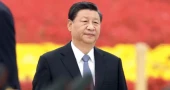
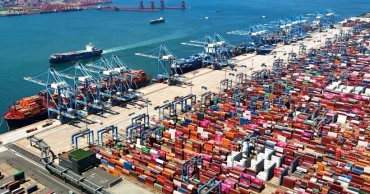
China on Sunday reaffirmed that it would not yield to U.S. threats of a 100% tariff hike, urging Washington to resolve trade disputes through dialogue rather than coercion.
“China’s position remains consistent,” the Commerce Ministry said in an online statement. “We do not seek a tariff war, but we are not afraid of one.”
The warning came two days after President Donald Trump threatened to double tariffs on Chinese imports starting November 1, in response to Beijing’s new restrictions on exporting rare earth minerals, which are essential for both consumer and military products.
The escalating tensions could undermine a potential Trump-Xi meeting and end the fragile truce in a trade war that saw tariffs briefly exceed 100% in April.
“Relying on threats of high tariffs is not the proper way to engage with China,” the ministry said, calling on the U.S. to address concerns through negotiation. “If the U.S. insists on its approach, China will take resolute measures to protect its legitimate rights and interests.”
Both countries have accused each other of violating the spirit of the trade truce by imposing new restrictions. Trump has criticized China for becoming “very hostile” and restricting global access to rare earth metals and magnets.
Under China’s new regulations, foreign companies must obtain special approval to export products containing even minimal amounts of rare earth elements sourced from China. These minerals are vital for products ranging from jet engines, radar systems, and electric vehicles to laptops and smartphones.
China controls nearly 70% of global rare earth mining and about 90% of processing, making access a key point in trade negotiations with the U.S. The ministry said export licenses will still be granted for legitimate civilian uses but noted the minerals’ strategic military applications.
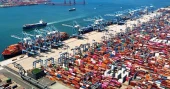
The statement also criticized recent U.S. measures, including expanding export controls on Chinese companies and introducing new port fees on Chinese ships. China announced last Friday that it would respond with reciprocal port fees on American vessels.
Source: AP
7 months ago
Afghan forces attack Pakistani border posts amid rising tensions
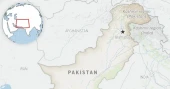
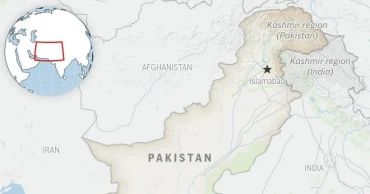
Afghan security forces launched attacks on Pakistani border posts late Saturday in what the Taliban government described as retaliation for repeated violations of its territory and airspace, marking an escalation in tensions between the two neighbours.
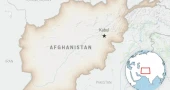
Earlier this week, Afghan authorities accused Pakistan of conducting airstrikes on Kabul and a market in eastern Afghanistan, though Islamabad has not claimed responsibility.
In a statement issued early Sunday, Afghanistan’s Ministry of Defense said its forces had carried out “retaliatory and successful operations” along the border.
“If the opposing side again violates Afghanistan’s territorial integrity, our armed forces are fully prepared to defend the nation’s borders and will deliver a strong response,” the ministry warned.
Pakistan, meanwhile, has long accused Afghanistan of sheltering militants belonging to the banned Tehreek-i-Taliban Pakistan (TTP), which Islamabad blames for deadly attacks inside the country. The Taliban administration denies the allegation, saying Afghan soil is not used against any other nation.
Pakistan’s Interior Minister Mohsin Naqvi condemned the cross-border gunfire, warning that Afghanistan would receive a “befitting reply like India” — a reference to an earlier crisis this year that brought the two nuclear-armed neighbours to the brink of conflict.
Qatar’s Foreign Ministry expressed concern over the latest escalation and its potential repercussions for regional security, urging both sides to pursue “dialogue, diplomacy, and restraint.”
According to a senior Pakistani security official, Afghan forces opened fire in multiple northwestern border districts, including Chitral, Bajaur, Mohmand, Angoor Adda, and Kurram in Khyber Pakhtunkhwa province.
Pakistani troops responded with heavy artillery near Tirah in Khyber district and across the frontier into Afghanistan’s Nangarhar province, the official added.
Another security official said a mortar shell fired from the Afghan side struck Tiri village in Kurram district, killing one person and injuring another.
The two countries share a 2,611-kilometre border known as the Durand Line, which Afghanistan has never formally recognized.
Source: AP
7 months ago
Chinese Vice Premier calls for consolidation of poverty reduction achievements
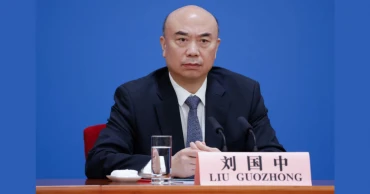
Chinese Vice Premier Liu Guozhong has called for sustained work to consolidate and expand China's poverty alleviation achievements, prevent a large-scale return to poverty and promote rural revitalization.
Liu, who is also a member of the Political Bureau of the Communist Party of China Central Committee, made the remarks during a research trip in southwest China's Sichuan Province from Wednesday to Saturday.
Vocational skills training and employment services should be enhanced to ensure stable employment for those lifted out of poverty, Liu noted.
Support for relocated residents should be reinforced -- with detailed implementation of assistance policies in industrial development, infrastructure and public services, Liu said.
To support underdeveloped regions, infrastructure and public services should be improved based on local conditions, while expanding and strengthening county-level economies, Liu added.
Liu also learned about the prevention and control of major infectious diseases such as AIDS -- urging work to prioritize prevention, integrate prevention with treatment and implement comprehensive management.
7 months ago
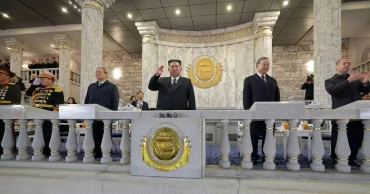
Kim unveils North Korea’s new ICBM at military parade
North Korean leader Kim Jong Un showcased his nuclear-armed military’s most powerful weapons, including a new intercontinental ballistic missile (ICBM), during a massive parade in Pyongyang on Friday night. The event, held in heavy rain to mark the 80th anniversary of the ruling Workers’ Party, demonstrated Kim’s growing diplomatic influence and his drive to build an arsenal capable of striking the U.S. mainland and regional rivals.
State media said the parade featured the Hwasong-20, a yet-to-be-tested ICBM described as the country’s “most powerful nuclear strategic weapon system.” Kim, speaking from a podium with high-ranking Chinese, Vietnamese, and Russian officials, called for his military to become “an invincible entity that destroys all threats,” though he did not directly mention the U.S. or South Korea.
Kim also praised North Korean troops sent to Russia’s war in Ukraine, lauding their “heroic fighting spirit” and “ideological and spiritual perfection.” Footage showed tens of thousands of spectators cheering as missile-mounted vehicles and goose-stepping soldiers, including those deployed to Russia, paraded through the square.
The Hwasong-20, wheeled out on massive 11-axle launchers, follows North Korea’s recent ICBM tests with solid-fuel rockets that are easier to transport and launch than previous liquid-fueled missiles. Experts suggest the missile could support multi-warhead systems designed to overcome missile defenses.
Other displays included shorter-range ballistic, cruise, and hypersonic missiles, along with new tanks, artillery, and drones, reflecting Kim’s focus on expanding conventional forces alongside his nuclear arsenal.
High-level foreign visitors, including Chinese Premier Li Qiang, Russian Deputy Security Council head Dmitry Medvedev, and Vietnamese Party General Secretary To Lam, underscored Kim’s growing diplomatic reach. The leader has sought closer ties with Russia and China, sending troops and weapons to support Russia in Ukraine while urging the U.S. to drop its nuclear disarmament demands.
7 months ago
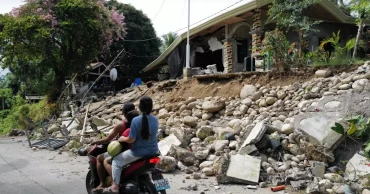
Two powerful earthquakes strike southern Philippines, leaving at least 7 dead
Two strong offshore earthquakes hit the same region in the southern Philippines within hours on Friday, killing at least seven people, triggering landslides, and prompting evacuations in coastal areas amid a brief tsunami alert.
The first tremor, measuring 7.4 in magnitude, struck off the coast of Manay town in Davao Oriental province, while the second, preliminary 6.8 magnitude quake, occurred later in the same area along the Philippine Trench at a depth of 37 kilometers (23 miles), according to Teresito Bacolcol, chief of the Philippine Institute of Seismology and Volcanology.
“This is a separate earthquake, which we call a doublet quake,” Bacolcol told The Associated Press. “Both occurred in the same region but with different magnitudes and epicenters.” Authorities warned that the second quake could further weaken or collapse structures already damaged by the first tremor.
President Ferdinand Marcos Jr., confronting another natural disaster after a recent deadly earthquake and consecutive storms, said rescue teams and relief operations were being readied to deploy once conditions are safe.
The first quake, centered about 43 kilometers east of Manay at a depth of 23 kilometers, claimed at least seven lives. Two hospital patients suffered fatal heart attacks, a resident in Mati city was struck by debris, and three villagers died in a landslide in Pantukan town, Davao de Oro province. Another casualty was reported in Davao city, where hundreds sustained injuries, officials said.
Buildings in several areas, including Davao city’s international airport, suffered structural cracks, but operations continued without flight cancellations. Residents described intense shaking that toppled power lines and sent people fleeing from homes and offices.
Schools were evacuated in Davao city and Governor Generoso town, about 100 kilometers south of Manay, as structural damage was reported in several buildings, including a high school where around 50 students were treated for minor injuries.
The Pacific Tsunami Warning Center reported small waves along the Philippines and Indonesia’s coasts, but the threat subsided about two hours after the first quake. Indonesia’s meteorological agency recorded minor tsunami waves of 3.5 to 17 centimeters in North Sulawesi.
The Philippines is still recovering from a Sept. 30, 6.9-magnitude quake in Cebu province that killed at least 74 people and displaced thousands. The archipelago experiences around 20 typhoons and storms annually, making disaster preparedness a constant challenge for authorities and volunteers.
Meanwhile, a separate 6.0-magnitude quake struck off Papua New Guinea’s coast on Friday. Centered in the Bismarck Sea northeast of Lae, no damage was reported, local police said.
Source: AP
7 months ago
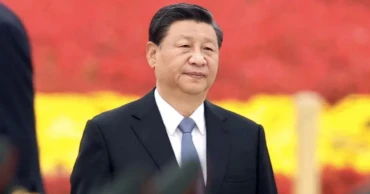
President Xi to deliver keynote at Global Leaders' Meeting on Women
Chinese President Xi Jinping will attend the opening ceremony and deliver a keynote speech at the Global Leaders' Meeting on Women, to be held in Beijing from October 13 to 14, a Chinese foreign ministry spokesperson said on Thursday.
The meeting is being co-hosted by China and UN Women, and will bring together heads of state, government leaders, parliamentarians, deputy prime ministers, ministers, international organization leaders, and representatives from across continents, said spokesperson Guo Jiakun at a regular press briefing.
World’s highest bridge opens in China’s mountainous southwest
This year marks the 30th anniversary of the historic Fourth World Conference on Women, held in Beijing in 1995, which adopted the landmark Beijing Declaration and Platform for Action.
Guo said that the upcoming summit seeks to reaffirm the spirit of the 1995 conference and accelerate the implementation of its outcomes.
76 Years of Endeavor, 50 Years of Partnership — Together for a Better and Shared Future of China and Bangladesh
The event is expected to inject new momentum into global efforts to promote gender equality and the comprehensive development of women, while contributing to the vision of building a shared future for humanity.
China, he added, looks forward to working with the international community to ensure the success of the meeting and make it another milestone in the global journey for women's empowerment and development.
Chinese vice premier urges stable and sustainable China-U.S. trade relations
7 months ago
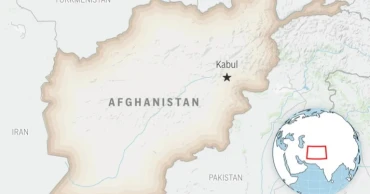
Taliban accuses Pakistan of airstrikes on Kabul and eastern Afghanistan
Afghanistan’s Taliban government on Friday accused Pakistan of carrying out airstrikes in Kabul and the eastern province of Paktika, alleging violations of its airspace and warning of consequences if such attacks continue.
An explosion hit Kabul’s Abdul Haq Square on Thursday night, near several ministries and the national intelligence agency. Although initial reports described it as an accident, the Afghan Defense Ministry later blamed Pakistan for the attack and another strike in the country’s east.
Pakistan has previously conducted cross-border strikes targeting alleged militant hideouts. Asked about the claims, Pakistani Army spokesman Ahmad Sharif declined to confirm or deny any operation, but said Afghanistan was being used as a “base of operations against Pakistan.”
The Afghan Defense Ministry condemned the strikes as “unprecedented, violent, and heinous,” cautioning Islamabad of repercussions.
Tensions have been rising between the neighbors as Pakistan faces increasing militant attacks linked to the Pakistani Taliban, which Islamabad claims operates from Afghan territory.
7 months ago

Powerful quake off southern Philippines kills 5, triggers landslides and tsunami evacuations
A powerful 7.4-magnitude earthquake struck off the southern Philippines on Friday, killing at least five people, triggering landslides, damaging buildings and hospitals, and prompting brief tsunami evacuations across coastal areas before warnings were lifted.
The quake hit at sea about 43 kilometers east of Manay town in Davao Oriental province at a depth of 23 kilometers, according to the Philippine Institute of Volcanology and Seismology. Authorities warned of possible aftershocks and further damage.
Among the dead were two hospital patients who suffered heart attacks during the tremor and a resident struck by debris in Mati city. Two other villagers died in a landslide in Pantukan town in Davao de Oro province, officials said.
The quake cracked several buildings, including Davao International Airport, which remained open. “People darted out of houses and buildings as the ground shook,” said Jun Saavedra, a disaster officer in Governor Generoso town.
Dozens of students were treated for minor injuries after panicking during the quake. Classes were suspended in affected towns.
Small tsunami waves were observed in the Philippines and Indonesia, but no major damage was reported.
The Philippines, located on the Pacific “Ring of Fire,” faces frequent earthquakes and typhoons. The country is still reeling from a deadly 6.9-magnitude quake that struck Cebu last month, killing at least 74 people.
7 months ago
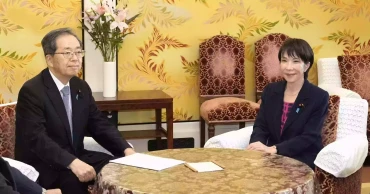
Japan’s Komeito quits ruling coalition with LDP over corruption concerns, dealing blow to Takaichi
Japan’s Komeito party on Friday announced it is leaving the ruling coalition led by the Liberal Democratic Party (LDP), citing growing unease over corruption scandals — a major political setback for newly elected LDP leader Sanae Takaichi, who had hoped to become the country’s first female prime minister.
Komeito leader Tetsuo Saito said his party’s decision ends a 26-year partnership with the LDP. He said while Komeito accepted Takaichi’s views on wartime history, visits to the controversial Yasukuni Shrine, and policies toward foreigners, her failure to show “sincerity” in tackling political corruption was unacceptable.
“The LDP’s response was that it will think about it, which was highly insufficient and extremely disappointing,” Saito said. “Our endeavor against money politics is the highest priority for the Komeito.”
Takaichi, a hardline conservative and close ally of the late former Prime Minister Shinzo Abe, called Saito’s decision “extremely disappointing.” She said she and LDP Secretary General Shunichi Suzuki had pledged to address Komeito’s concerns before the party abruptly quit.
The coalition’s collapse leaves the LDP without a majority in either house of parliament, forcing it to seek new allies before a parliamentary vote later this month to choose Japan’s next prime minister.
Saito also confirmed that Komeito lawmakers would not support Takaichi in the upcoming vote to replace outgoing Prime Minister Shigeru Ishiba. “I will vote for Tetsuo Saito,” he said.
Founded in 1964 by Buddhist leader Daisaku Ikeda, Komeito has long drawn support from Soka Gakkai followers and played a key role in helping LDP candidates win elections. The breakup comes amid a wave of corruption scandals implicating dozens of LDP lawmakers, many tied to Abe’s former faction — a political lineage Takaichi has vowed to continue.
7 months ago

India to upgrade Kabul mission to full embassy, signaling deeper engagement with Taliban
India will upgrade its technical mission in Kabul to a full embassy, Foreign Minister Subrahmanyam Jaishankar announced Friday after meeting his Afghan counterpart Amir Khan Muttaqi in New Delhi, marking the first high-level diplomatic contact between the two nations since the Taliban seized power in 2021.
Jaishankar said India remains committed to Afghanistan’s development and sovereignty, pledging cooperation in trade, health, and education. “Closer cooperation between us contributes to your national development, as well as regional stability and resilience,” he told reporters after talks with Muttaqi.
Muttaqi, who is under U.N. sanctions but was granted a temporary travel exemption, said Kabul has “always sought good relations with India.” His visit follows a multilateral meeting on Afghanistan in Russia earlier this week involving China, India, Pakistan, and Central Asian countries.
India’s move reflects a pragmatic shift in its Afghanistan policy — balancing regional strategy and the need to counter Pakistan and China’s growing influence in Kabul. Analysts say the outreach signals a reassessment shaped by lessons from previous disengagement.
“New Delhi doesn’t want Beijing or Islamabad to hold exclusive sway over Afghanistan,” said Praveen Donthi of the International Crisis Group. “Engaging the Taliban helps India develop modest influence and bolster its position as a regional power.”
India to upgrade Kabul mission to full embassy, signaling deeper engagement with Taliban
India established a technical mission in Kabul in 2022 to coordinate humanitarian aid. Despite ideological differences and the Taliban’s restrictions on women, New Delhi has steadily increased engagement through back-channel diplomacy and regional forums.
The Taliban has deepened ties with several countries in recent months. Russia recognized its government in July, and the UAE and China have both strengthened diplomatic and trade links.
While the decision may not amount to formal recognition of the Taliban regime, former Indian ambassador Gautam Mukhopadhaya cautioned that India should “preserve some levers to enable positive change internally for the benefit of all Afghans.”
7 months ago