Africa
US Aid Cuts Leave Lesotho’s HIV Care in Crisis, Patients Desperate Amid System Collapse
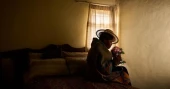
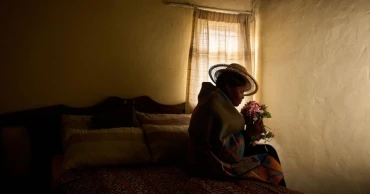
In Lesotho’s snow-capped mountains, people living with HIV are struggling for survival after sweeping U.S. aid cuts crippled the country’s once-robust health network. Clinics are closing, workers laid off, and patients forced to ration life-saving drugs.
For years, Lesotho — one of the world’s hardest-hit nations by HIV — relied heavily on nearly $1 billion in U.S. assistance through USAID and PEPFAR, the U.S. President’s Emergency Plan for AIDS Relief. The support helped the country reach the UNAIDS 95-95-95 target, with most people aware of their status, in treatment, and virally suppressed.
That progress unraveled when President Donald Trump, on his first day of his second term in January, froze foreign aid and dismantled USAID, abruptly cutting programs in more than 130 countries. Lesotho lost nearly a quarter of its PEPFAR funding, halting prevention, testing, and treatment programs and sending health worker’s home.
Patients describe the fallout as catastrophic. “Everyone who is HIV-positive in Lesotho is a dead man walking,” said miner Hlaoli Monyamane, who can no longer access a full course of medication. Many now ration pills, skip doses, or abandon treatment altogether.
Community health networks — once the backbone of care for sex workers, miners, and mothers — have collapsed. Lisebo Lechela, a sex worker turned HIV activist, saw her USAID-funded clinics shutter overnight. “People still call me for help,” she said, “but I have nothing left to give.”
The State Department has since announced a six-month “bridge” program to restore limited HIV services, but health experts warn that rebuilding infrastructure and trust will take much longer. UNAIDS estimates the aid freeze could cause millions of preventable deaths if not fully reversed.
Lesotho’s Parliament health chair Mokhothu Makhalanyane said the cuts have set the nation back 15 years, calling it a “wake-up call” for self-reliance. Yet with only 12% of the health budget funded domestically, the country remains deeply dependent on foreign aid.
As uncertainty lingers, health workers fear a resurgence of HIV infections and deaths. “Any step backward creates a risk of resurgence,” said Catherine Connor of the Elizabeth Glaser Pediatric AIDS Foundation. For many Basotho, the fear is already real — clinics are empty, and hope is fading fast.
4 months ago
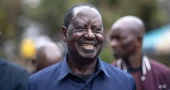
Former Kenyan PM Raila Odinga dies at 80
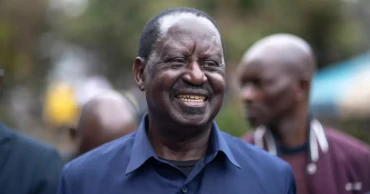
Former Kenyan Prime Minister Raila Odinga, a towering figure in African politics, has died of a heart attack in India, hospital authorities confirmed on Wednesday. He was 80.
Devamatha Hospital in Kerala State said Odinga passed away while undergoing treatment there.
Odinga, who contested Kenya’s presidency five times over three decades without success, had signed a political pact with President William Ruto in March. The agreement brought his opposition party into key government policymaking roles, with several of its members joining the cabinet.
A veteran campaigner for democracy, justice, and good governance, Odinga was also known for his role in promoting regional diplomacy. He recently lost a bid to become chairperson of the African Union.
President Ruto is expected to deliver a national address to officially announce Odinga’s death.
Source: AP
4 months ago
Madagascar plunges into chaos as president dissolves parliament, flees amid coup attempt
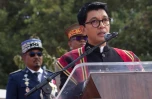
Madagascar’s President Andry Rajoelina on Tuesday dissolved the lower house of parliament, escalating a deepening political crisis after a military rebellion forced him to flee and go into hiding.
A decree announcing the immediate dissolution of the National Assembly was posted on the presidency’s Facebook page.
Rajoelina’s location remains unknown after an elite military unit joined youth-led anti-government protests over the weekend, demanding his resignation in what appeared to be a coup attempt. In a social media address Monday night, he said he had left the country for a “safe place” due to threats to his life but gave no details.
The president’s decision came as lawmakers were discussing impeachment proceedings to remove him from office — a process effectively halted by the dissolution of the assembly.
Madagascar, which has a long history of coups, now faces its worst political turmoil since 2009, when Rajoelina himself first seized power through a military-backed transition.
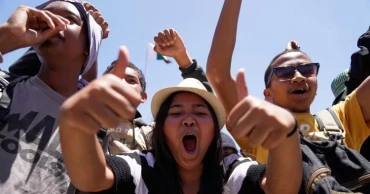
Recent protests, driven by Gen Z activists, have denounced poverty, corruption, and chronic power and water shortages. The unrest intensified when members of the elite CAPSAT unit defected to the protesters and declared control over the armed forces.
Rajoelina has condemned the move as “an illegal attempt to seize power” but called for dialogue and constitutional order to be maintained.
4 months ago
Madagascar president flees amid military rebellion, says he feared for his life
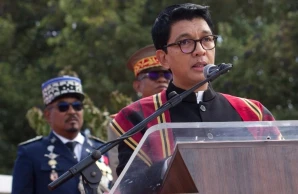
Madagascar’s President Andry Rajoelina said he fled the country fearing for his life following a military rebellion, but stopped short of announcing his resignation in a late-night address broadcast on social media Monday.
The president’s message — his first public appearance since the uprising began — came after weeks of Gen Z-led anti-government protests that escalated dramatically on Saturday when an elite military unit, the CAPSAT, joined the demonstrations and called for Rajoelina and his ministers to step down.
“I was forced to find a safe place to protect my life,” Rajoelina said in the speech, which was delayed for hours after soldiers reportedly tried to seize control of state television buildings. The message was eventually aired on the presidency’s official Facebook page.
Rajoelina described the events as “an illegal attempt to seize power” and called for dialogue “to find a way out of this situation,” urging all sides to respect the constitution. He did not disclose how or where he left Madagascar, though reports suggested he was flown out on a French military aircraft — a claim France has not confirmed.
The protests, which began on September 25 over severe water and electricity shortages, have grown into a broader movement accusing Rajoelina’s administration of corruption, mismanagement, and repression.
The situation marks the most serious unrest in the Indian Ocean island nation of 31 million since Rajoelina himself first rose to power in 2009 after a military-backed coup — led by the same CAPSAT unit that has now turned against him.
Military claims control
Colonel Michael Randrianirina, a CAPSAT commander, said the unit had “responded to the people’s calls” and now controlled all branches of the armed forces. He denied staging a coup, saying instead that “it’s up to the Madagascan people to decide what happens next.”
The defense minister reportedly accepted CAPSAT’s new appointee to lead the military. Randrianirina added that CAPSAT troops had exchanged gunfire with loyalist forces during weekend clashes that left one soldier dead, though large-scale fighting was avoided. Soldiers riding armored vehicles were greeted by cheering crowds in the capital, Antananarivo.
Growing international concern
The United States Embassy in Antananarivo urged American citizens to remain indoors, describing the situation as “highly volatile and unpredictable.” The African Union also appealed for calm and restraint.
The United Nations said at least 22 people had been killed and dozens injured since the protests began, criticizing authorities for their “violent response” to what were initially peaceful demonstrations. The government has disputed the UN’s figures.
The movement’s leaders — mostly young people who identify as “Gen Z Madagascar” — have cited poverty, rising living costs, lack of education access, and corruption as their main grievances. Their movement has drawn inspiration from mass protests in Nepal and Sri Lanka that toppled governments in recent years.
Nighttime curfews remain in force across Antananarivo and the northern port city of Antsiranana.
A recurring political cycle
Madagascar, a former French colony, has endured repeated political crises since independence in 1960. Rajoelina, 51, initially came to power following the 2009 coup that ousted then-President Marc Ravalomanana. He was elected president in 2018 and re-elected in 2023 in a vote boycotted by the opposition.
Adding to the turmoil, Madagascar’s former prime minister and one of Rajoelina’s top advisers reportedly fled to Mauritius early Sunday. The Mauritian government confirmed their arrival but expressed displeasure that the private aircraft had landed on its soil without prior authorization.
4 months ago

Madagascar president says coup underway after soldiers join anti-government protests
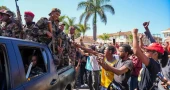
Madagascar’s President Andry Rajoelina on Sunday said an attempted coup is underway in the Indian Ocean nation, a day after members of an elite army unit joined youth-led demonstrations calling for his resignation.
Rajoelina’s office did not provide details on who is behind the coup, and no immediate signs of violence were reported on the streets, although there was a visible military presence.
Col. Michael Randrianirina, a commander of the elite CAPSAT unit, denied a coup had occurred but claimed that the unit had taken control of Madagascar’s armed forces and installed Gen. Demosthene Pikulas as the new military leader. “We responded to the people’s call,” Randrianirina told reporters. Pikulas, speaking alongside him, did not clarify whether Rajoelina had been asked to step down, but CAPSAT appeared to hold significant authority.
The protests, led by a youth group called “Gen Z Madagascar,” have shaken the country over the past three weeks, leaving at least 22 people dead and dozens injured, according to the United Nations, though the government disputes the toll.
Rajoelina’s office said he “wishes to inform the nation and the international community that an attempt to seize power illegally and by force has been initiated,” condemning it as a threat to constitutional order and national sovereignty.
CAPSAT played a key role in the 2009 military-backed coup that first brought Rajoelina to power as head of a transitional government. The situation escalated on Saturday when CAPSAT soldiers joined protests, calling for Rajoelina and his officials to resign. Randrianirina said his troops had exchanged fire with security forces attempting to disperse demonstrators, resulting in the death of one soldier.
The protests, which began last month over electricity and water outages, have evolved into broader demonstrations against the government, citing issues such as poverty, the cost of living, corruption, and limited access to education. Civic groups and trade unions have joined the movement, prompting curfews in the capital, Antananarivo, and other major cities.
Rajoelina, 51, first rose to power after the 2009 coup that ousted then-President Marc Ravalomanana. He was elected president in 2018 and re-elected in 2023 in a vote boycotted by opposition parties. On Sept. 29, he attempted to appease protesters by dismissing his entire government, including the prime minister, but demonstrations have continued.
The U.S. Embassy in Madagascar advised American citizens to shelter in place amid the “highly volatile and unpredictable” situation, while the African Union called on all parties, civilian and military, to exercise restraint.
The Gen Z-led protests were inspired by social movements in Nepal and Sri Lanka and have grown into one of the largest uprisings Madagascar has seen in years, reflecting widespread dissatisfaction with the government and leadership of Rajoelina.
4 months ago
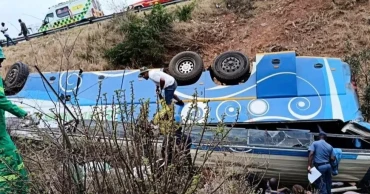
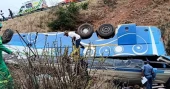
Bus crash in South Africa’s mountains kills at least 42
At least 42 people were killed when a bus crashed in a mountainous area of northern South Africa, authorities said Monday.
The accident occurred Sunday on the N1 highway near Louis Trichardt, about 400 kilometers (248 miles) north of the capital, Pretoria.
Simon Zwane, spokesperson for the Road Traffic Management Corporation, told News24 that authorities had confirmed 42 deaths, though the exact number of casualties and injuries is still being verified.
According to the provincial government, the bus veered off the road along a steep mountain pass and plunged into an embankment. Released images showed the blue bus lying overturned in the slope.
The bus, traveling from South Africa’s Eastern Cape, was reportedly carrying Zimbabwean and Malawian nationals en route to their home countries, the Limpopo provincial government said.
While the government did not immediately disclose the number of injured, several survivors were reportedly taken to nearby hospitals for treatment.
Source: AP
4 months ago

Burkina Faso rejects US proposal to take deportees, calls it “indecent”
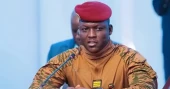
Burkina Faso has rejected a proposal from the Trump administration to accept deportees from the United States, calling the request “indecent” and contrary to national dignity.
Foreign Minister Karamoko Jean-Marie Traoré said Thursday on national television that Washington had asked whether Burkina Faso would accept non-citizens expelled by the U.S., in addition to its own nationals.
“Naturally, this proposal, which we deemed indecent at the time, is totally contrary to the value of dignity which is part of the very essence of the vision of Capt. Ibrahim Traoré,” he said, referring to the country’s military ruler.
The announcement came shortly after the U.S. Embassy in Ouagadougou suspended most visa services for Burkina Faso residents and redirected applications to its embassy in neighboring Togo.
Citing a U.S. diplomatic note accusing Burkinabe nationals of visa misuse, Traoré said the embassy’s decision may be a “pressure tactic,” stressing, “Burkina Faso is a land of dignity, not deportation.”
Since July, the Trump administration has deported more than 40 people to African countries under a secretive third-country deportation program. Human rights groups say several African nations — including Eswatini, South Sudan, Rwanda and Ghana — have accepted deportees in exchange for U.S. aid ranging from $5 million to $7.5 million.
4 months ago

Gen Z protests are shaking Morocco over government spending and social inequality
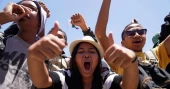
Demonstrations led by young people have swept through more than a dozen Moroccan cities for over a week, highlighting widespread frustration with government corruption, limited opportunities, and social inequality.
The protests are driven by a leaderless collective called Gen Z 212, named after Morocco’s dialing code. Organizers coordinate mainly on Discord, with about 180,000 core members and spin-off groups staging independent demonstrations. Many participants are under 35, and authorities say a significant portion of detainees are minors.
Demonstrators have criticized government spending on World Cup stadiums and infrastructure while essential services such as hospitals, schools, and public health remain underfunded. Morocco has a monthly minimum wage of roughly $300, and in some regions, residents struggle with poor medical care, unpaved roads, and overcrowded classrooms. The recent death of eight women during childbirth in Agadir fueled anger.
Protesters have targeted Prime Minister Aziz Akhannouch and Health Minister Amine Tahraoui, accusing them of corruption and prioritizing private business interests, including World Cup-related projects. Slogans such as “Stadiums are here, but where are the hospitals?” and “Freedom, dignity and social justice” have resonated widely.
Gen Z 212 recently addressed a letter to King Mohammed VI, urging him to dismiss the government, release detainees, and oversee reforms, while maintaining his role as a stabilizing figure.
5 months ago
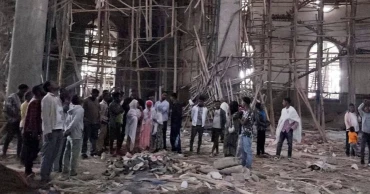
Scaffolding collapse at Ethiopian church under construction kills at least 25
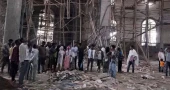
At least 25 worshippers were killed and more than 100 injured when scaffolding supporting a church under construction collapsed in Ethiopia’s Amhara region on Wednesday, authorities said.
The incident occurred in the morning at Menjar Shenkora Arerti Mariam Church in northern Ethiopia during an annual celebration of St. Mary. Many worshippers had climbed the wooden scaffolding to view a ceiling mural when the support structure gave way.
“We all had gathered in prayers when suddenly the scaffolding collapsed and people started falling from the ceiling,” said witness Mikias Mebratu, who lost three friends in the accident.
Gunman attacks Michigan church, kills 4, injures 8 before police shoot him dead
Seyoum Altaye, a clinician at a local hospital, confirmed that victims included children and elderly people. “So far we have confirmed 25 dead and over a hundred injured,” he said, adding that the hospital has sought assistance from the Red Cross to treat the injured.
Teshale Tilahun, the local administrator, warned that the death toll could rise further. “It is a tragic loss for the community,” he said.
Rescue efforts are ongoing as authorities work to provide medical care and support to victims’ families. The cause of the scaffolding collapse is under investigation.
5 months ago
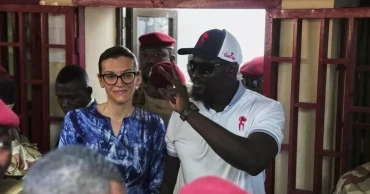
Guinea schedules first presidential vote since 2021 coup
Guinea will hold its first presidential election since Gen. Mamadi Doumbouya seized power in a 2021 coup, according to a presidential decree broadcast on state television Saturday.
The announcement came a day after the Supreme Court validated the results of a constitutional referendum that could pave the way for Doumbouya to run for president.
Guinea is among several West African nations where the military has assumed control and delayed a return to civilian rule. Doumbouya, who has led the country since 2021, had agreed in 2022 to initiate a democratic transition with a deadline of Dec. 31, 2024.
The junta’s failure to meet this timeline sparked opposition protests that paralyzed the capital, Conakry, earlier this year.
Doumbouya had previously declared he would not seek the presidency, but the newly approved draft constitution allows members of the ruling junta to contest elections. The changes also extend the presidential term from five to seven years, with the possibility of two renewals.
5 months ago