africa

Rwanda-backed rebels take more towns after seizing east Congo's largest city
Rebels backed by Rwanda captured more towns in eastern Congo on Wednesday as they moved beyond the key city of Goma in an apparent attempt to expand their control in the conflict-battered region.
The rebels advanced toward the center of South Kivu province after taking several towns, including Kalungu, Kanyezire and Mukwinja, according to a local civil society leader and an aid worker in the area. They spoke on condition of anonymity because they were not authorized to talk to the media, AP reports.
UN spokesman Stephane Dujarric said the developments were concerning, and that the United Nations was taking measures to protect civilians and UN staff.
The advance also raised fears of a prolonged occupation by the rebels, who have said they plan to set up a new administration in Goma, a city of 2 million people.
“Left unchecked, the fighting could spread ... recalling the horrors of the late 1990s and early 2000s, when millions died,” the Crisis Group said, citing the last, multi-country war there.
Rwanda-backed rebels claim capture of Goma in eastern Congo
Unlike now, the rebels captured Goma only briefly during their first rebellion in 2012, withdrawing after a few days under international pressure on Rwanda.
Meanwhile, Congolese President Félix Tshisekedi was conspicuously absent from a virtual summit of a regional East African bloc that began late Wednesday, hosted by Kenya.
Tshisekedi was on an official visit to Angola, which had mediated a ceasefire between Congo and Rwanda last year, the Angolan presidency said in a statement. He was to discuss the situation in eastern Congo with Angola’s President João Lourenço.
Faced with the rebel offensive, soldiers fighting for Congo — many of them mercenaries from other nations — were laying down their weapons at the border with Rwanda. Congo’s army seemed to be in disarray, and those at the border appeared disorganized and ill-equipped for any major fighting.
A rebel spokesman said nearly 300 mercenaries have surrendered their arms and returned to their countries.
“Let the people of Goma be calm, peace is here,” said Willy Ngoma, a spokesman of the M23 group. Ngoma, who is on the U.N. Security Council’s sanctions list for crimes committed by the rebels.
Death toll from Nigerian gasoline tanker explosion rises to 86
“It’s like you are fighting without command,” said Jean Marie Ndahambaza, one of the surrendering soldiers.
Armed groups have long vied for control of eastern Congo, which is rich in minerals critical to much of the world’s technology, and has been the scene of proxy battles between Congo and neighboring Rwanda, as well as other powers. Fighting reignited this week, and the rebels backed by Rwanda, known as M23, announced Monday that they had captured much of the provincial capital of Goma.
1 year ago

Rwanda-backed rebels claim capture of Goma in eastern Congo
Rwanda-backed M23 rebels announced Monday they had seized Goma, the last government stronghold in eastern Congo’s mineral-rich region. The capture marks a significant escalation in one of Africa’s longest-running conflicts, raising fears of worsening humanitarian conditions and a potential spillover into a broader regional crisis.
The rebel advance has forced thousands to flee their homes, adding to the over one million displaced residents already in Goma. Local hospitals are overwhelmed, treating hundreds of injured civilians caught in the crossfire daily.
Who are the rebels?
M23, one of nearly 100 armed groups in eastern Congo, traces its roots to a failed integration of ethnic Tutsis into the Congolese army. Named after a March 23, 2009, peace agreement, the group resurfaced in 2022 following a decade of dormancy after being defeated in 2012.
About 70 people killed in attack on hospital in Sudan's Darfur region, WHO chief says
Comprising primarily ethnic Tutsis, M23 claims to protect Tutsis and Congolese of Rwandan descent from discrimination. Critics argue the group’s actions serve as a front for Rwandan influence in eastern Congo.
In areas under their control, M23 has established parallel governance systems, replacing local chiefs, levying taxes, and managing natural resources.
The rebels have recently captured multiple towns, encircling Goma as part of their offensive.
Congo, the US, and UN experts accuse Rwanda of backing M23, which has grown from a few hundred fighters in 2021 to an estimated 6,500. Rwanda denies direct involvement but admits it has deployed troops in eastern Congo to protect its security. UN experts estimate there are as many as 4,000 Rwandan soldiers operating in the area.
Congo’s Foreign Minister Thérèse Kayikwamba Wagner, addressing the UN Security Council on Sunday, accused Rwanda of “direct aggression” and escalating tensions. In response, Rwanda’s UN Ambassador Ernest Rwamucyo placed blame on Congo, stating the crisis stemmed from its lack of commitment to peace.
The roots of the conflict
Eastern Congo has long been a hotspot of violence, driven by its vast reserves of valuable minerals, including copper, cobalt, lithium and gold. These resources, worth an estimated $24 trillion, have drawn local and international actors seeking control, often at the expense of the population, 60 per cent of whom live below the poverty line.
The conflict’s origins date back to the 1994 Rwandan genocide, where Hutu militias killed hundreds of thousands of Tutsis and moderate Hutus.
Death toll from Nigerian gasoline tanker explosion rises to 86
After the genocide, nearly two million Hutus, including suspected perpetrators, fled to eastern Congo, intensifying tensions with local Tutsis.
This historical animosity laid the groundwork for years of violence and provided a justification for foreign interventions, particularly by Rwanda, which has cited ongoing threats from Hutu militias in the region.
Strategic importance of Goma
Goma serves as a critical hub for trade, security and humanitarian operations in eastern Congo. Its airport is vital for transporting supplies to the region.
Since 2021, Congolese government forces, supported by Burundian troops and UN peacekeepers, have struggled to keep the rebels at bay.
The city’s fall represents a major victory for M23 and a devastating loss for the Congolese government. Its capture also raises concerns about heightened risks to civilians, with the UN warning of potential human rights abuses in the aftermath.
1 year ago
About 70 people killed in attack on hospital in Sudan's Darfur region, WHO chief says
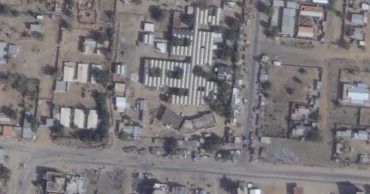
Around 70 people were killed in an attack on the only functional hospital in the besieged city of El Fasher in Sudan, the chief of the World Health Organization said Sunday, part of a series of attacks coming as the African nation's civil war escalated in recent days.
The attack on the Saudi Teaching Maternal Hospital, which local officials blamed on the rebel Rapid Support Forces, came as the group was experiencing apparent battlefield losses to the Sudanese military and allied forces under the command of army chief Gen. Abdel-Fattah Burhan. That includes Burhan appearing near a burning oil refinery north of Khartoum on Saturday that his forces said they seized from the RSF.
Saudi Arabia’s Foreign Ministry denounced the attack as “a violation of international law.”
International mediation attempts and pressure tactics, including a U.S. assessment that the RSF and its proxies are committing genocide, and sanctions targeting Burhan, haven't halted the fighting.
Reported attack follows RSF warning
WHO Director-General Tedros Adhanom Ghebreyesus posted the death toll in the hospital attack in El Fasher on the social platform X.
Officials and others in the capital of North Darfur province had cited a similar figure Saturday, but Tedros is the first international source to provide a casualty number. Reporting on Sudan is incredibly difficult given communication challenges, the indiscriminate violence faced by civilians and exaggerations by both the RSF and the Sudanese military.
“The appalling attack on Saudi Hospital in El Fasher, Sudan, led to 19 injuries and 70 deaths among patients and companions,” Tedros wrote. “At the time of the attack, the hospital was packed with patients receiving care.”
Another health facility in Al Malha also was attacked Saturday, he added.
“We continue to call for a cessation of all attacks on health care in Sudan, and to allow full access for the swift restoration of the facilities that have been damaged,” Tedros said. “Above all, Sudan’s people need peace. The best medicine is peace.”
Read: Sudan's warring forces are escalating attacks and outsiders are 'fueling the fire,' Guterres says
Tedros didn't identify who launched the attack, though local officials had blamed the RSF for the assault. Sudan’s Foreign Ministry also accused the RSF of launching a drone attack targeting the hospital’s emergency ward, describing the assault as a “massacre.”
U.N. official Clementine Nkweta-Salami, who coordinates humanitarian efforts for the world body in Sudan, warned Thursday that the RSF earlier had given “a 48-hour ultimatum to forces allied to the Sudanese Armed Forces to vacate the city and indicated a forthcoming offensive.”
“Since May 2024, El Fasher has been under RSF siege,” she said. “Civilians in El Fasher have already endured months of suffering, violence and gross human rights abuses under the prolonged siege. Their lives now hang in the balance due to an increasingly precarious situation.”
In a statement on Sunday night, the RSF alleged that the Sudanese military and its allies attacked the hospital in El Fasher, but offered no evidence to support the claim.
El Fasher is more than 800 kilometers (500 miles) southwest of Khartoum. The city is now estimated to be home to more than 1 million people, many of whom have been displaced by the war.
The U.N. said in December that the RSF siege had killed 782 civilians and wounded more than 1,140 others, warning that the figures likely were higher.
The Saudi hospital, just north of El Fasher's airport, sits near the front lines of the war and has been repeatedly hit by shelling. Still, its doctors continue surgeries, sometimes by the light of cellphones while the hospital is hit.
However, the RSF appeared in recent days to have lost control of the Khartoum refinery, the biggest in Sudan and crucial to both its economy and that of South Sudan. Burhan's forces also say they broke another RSF besiegement of the Signal Corps headquarters in northern Khartoum. The rebels claimed they were “tightening the noose” around that base.
Sudan’s war sees brutality by fighters
Read more: Paramilitary rampage kills over 120 in east-central Sudan: UN
Sudan has been unstable since a popular uprising forced the removal of longtime dictator Omar al-Bashir in 2019. A short-lived transition to democracy was derailed when Burhan and Gen. Mohammed Hamdan Dagalo of the RSF joined forces to lead a military coup in October 2021.
Al-Bashir faces charges at the International Criminal Court over carrying out a genocidal campaign in the early 2000s in the western Darfur region with the Janjaweed, the precursor to the RSF. Rights groups and the U.N. say the RSF and allied Arab militias are again attacking ethnic African groups in this war.
The RSF and Sudan’s military began fighting each other in April 2023. Their conflict has killed more than 28,000 people, forced millions to flee their homes and left some families eating grass in a desperate attempt to survive as famine sweeps parts of the country.
Other estimates suggest a far higher death toll in the civil war.
On Sunday, Burhan traveled to the military's General Command headquarters in Khartoum, a building he hadn't been to since the fighting broke out in 2023. The headquarters is near Khartoum International Airport, which has seen fierce fighting during the war.
“The armed forces are in their best condition and we will move forward with the determination of our people to eliminate the rebellion in all of Sudan,” Burhan said, according to the state-run SUNA news agency.
1 year ago
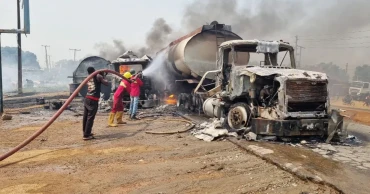
Death toll from Nigerian gasoline tanker explosion rises to 86
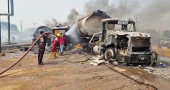
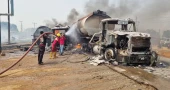
The death toll from a gasoline tanker explosion in north-central Nigeria has risen to 86, the country’s emergency response agency said on Sunday.
The blast happened in the early hours of Saturday near the Suleja area of Niger state after individuals attempted to transfer gasoline from a crashed oil tanker into another truck using a generator.
The fuel transfer sparked the explosion, resulting in the deaths of those transferring the gasoline and bystanders.
In an update, Hussaini Isah of the National Emergency Management Agency told the Associated Press that an additional 55 people were injured and are receiving treatment at three different hospitals in the Suleja area.
Read: Nigerian gasoline tanker explosion kills 70 people
“There were people that were burnt to ashes. How can we get that figure?” The official said, indicating that the death toll might be higher than 86. “We won’t know the exact figure without forensics.”
The blast claimed so many victims because a crowd had gathered at the scene, including people taking pictures, bystanders, and others attempting to scoop gasoline, Isah said.
Gasoline prices in Africa’s most populous country has soared after the administration of President Bola Tinubu removed subsides on the product more than a year ago in an attempt to channel the resources to more developmental purposes. However, the policy has caused untoward hardship.
Scooping gasoline from a fallen tanker is common in Nigeria as some people see that as an opportunity to get free product that they could either use or resell for a profit.
1 year ago
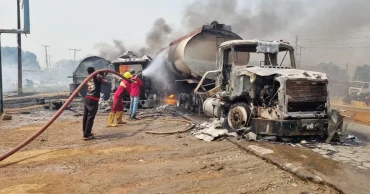
Nigerian gasoline tanker explosion kills 70 people
At least 70 people have died in north-central Nigeria after a gasoline tanker exploded, the country’s emergency response agency said.
The blast happened in the early hours of Saturday near the Suleja area of Niger state after individuals attempted to transfer gasoline from one tanker into another truck using a generator.
The fuel transfer sparked the explosion, resulting in the deaths of those transferring the gasoline and bystanders, Hussaini Isah, of the National Emergency Management Agency, told the Associated Press.
Search and rescue operations were underway, Isah said.
With the absence of an efficient railway system to transport cargo, fatal truck accidents are common along most of the major roads in Nigeria, Africa’s most populous country.r
Read: Over 100 killed as gasoline tanker explodes in Nigeria
In September, an explosion killed at least 48 people in Niger state after gasoline tanker collided with another truck conveying cattle.
There were 1,531 gasoline tanker crashes in 2020 resulting in 535 fatalities and 1,142 injuries, according to Nigeria’s Federal Road Safety Corps.
1 year ago
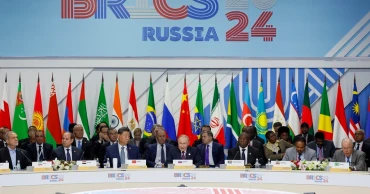
Nigeria joins BRICS as a partner country
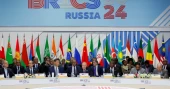
Nigeria has been accepted as a "partner country" of the BRICS group of emerging economies, as confirmed by Brazil, the current chair of the bloc, reports AP.
Established in 2009 by Brazil, Russia, India, and China, BRICS expanded in 2010 to include South Africa, positioning itself as a counterbalance to the Group of Seven leading industrialised nations.
Russia will help Vietnam to join BRICS bloc of developing nations
In the previous year, the bloc welcomed Iran, Egypt, Ethiopia, and the United Arab Emirates. Saudi Arabia has been extended an invitation to join, while Turkey, Azerbaijan, and Malaysia have submitted formal membership applications. Several other nations have also shown interest.
Nigeria is now the ninth partner country in BRICS, joining Belarus, Bolivia, Cuba, Kazakhstan, Malaysia, Thailand, Uganda, and Uzbekistan.
“With the world’s sixth-largest population, Africa’s largest, and as one of the continent’s leading economies, Nigeria shares aligned interests with other BRICS members,” Brazil’s government stated on Friday.
“It actively contributes to advancing South-South cooperation and reforming global governance, which are key priorities under Brazil’s current presidency.”
Indonesia becomes full member of BRICS
Last year, President-elect Donald Trump warned of imposing 100% tariffs on BRICS nations if they attempted to weaken the U.S. dollar. In response, BRICS leaders have reiterated their commitment to developing an alternative payment system independent of the dollar.
1 year ago
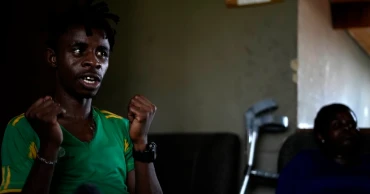
South African miner recalls horrors of months spent underground
Dozens of men sat and lay together in small caves, some so shallow they couldn’t stand up. The air was wet and stuffy, and wracking coughs echoed in the confined space.
Bodies wrapped in fabric and twine were set aside in rows nearby. Bad odors permeated everything, so it was hard to distinguish what smells were coming from the dead versus the unwashed bodies or the damp rock.
The miners were emaciated from lack of food, which was hard to come by since police cracked down on their illegal mining and for a time halted the supply deliveries.
Usually the men would eat meat, bread, and porridge cooked over camp stoves run by propane, but all of these had run out. With no mining work to distract them, they smoked cigarettes and marijuana for a while, when they still had it.
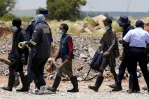
The description, from a miner and from cellphone videos sent to the surface earlier this month, sheds some light on the horror hundreds of men suffered deep underground in an abandoned mine in South Africa, after a police operation cut off food and supplies to “smoke them out” because they were digging illegally for gold. The videos were released publicly by a group representing the miners.
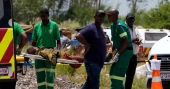
Police finally launched a rescue effort earlier this week, under court order, and said no one was left underground. Dozens of bodies were pulled out and at least 87 confirmed dead.
The miner, who spoke to The Associated Press on condition of anonymity out of fear of reprisals, said he surfaced on Christmas Day after entering the shaft in July, spending months underground where he experienced extreme hunger and saw many of his fellow diggers dying from starvation and illnesses.
He is one of nearly 2,000 illegal miners who have surfaced from the mine near the town of Stilfontein since August last year when police targeted it as part of an operation that aims to tackle the widespread illicit mining trade. The trade bled the South African economy of more than $3 billion last year, according to the mines minister.
At the worst of times, said the miner, they ate rough salt, the only thing leftover to stanch the hunger.
“I felt like I have some bad luck because I had only been underground for two weeks when the operation started. That is when things started going bad, we stopped receiving food and we lost contact with the outside world, that could only mean that the police have arrived and probably arrested or scared off the people lowering the food,” he said.
The miner said the months that followed were horrendous.
“By September, things were really bad. People started getting hungry, they started getting sick, some started dying. We started having dead bodies. There is nothing worse than seeing somebody die and there is nothing you can do about it,” he said.
The miner, a 40-year-old father of six children, exited the mine in December through a separate shaft that had steel stairs. It is extremely difficult to navigate, and he bruised his hands badly on his way out.
“As we were climbing out, we saw dead bodies of other guys who had attempted to exit the same way. Others had fallen down, others were full corpses but there were also lots of bones, almost like skeletons. It’s not easy to exit there, many people died trying to do that,” he said.
So why do the miners go into this subterranean purgatory in the first place?
It mostly comes down to money. Illegal mining is one of the biggest sources of income for poor households in townships located near an estimated 6,100 disused mines around the country where illegal mining is rife.
The miner said he was told he could earn about $5,300 for working for a few weeks to a month in one of the country's deepest gold mines, where there are no longer any official operations. It's a huge sum in South Africa, which has deep inequality and one of the highest unemployment rates in the world.
Many other miners come looking for work from neighboring countries like Mozambique, Zimbabwe, Lesotho, Malawi and Congo, and children are sometimes roped in. There were 13 children among those who came out of the Stilfontein mine last year.
Mmastona Mbizana, a community member of Khumo township, told The Associated Press that two of her sons were involved in illegal mining because of unemployment and poverty.
Her 22-year-old son was arrested after coming out of the mine during the police operation in December and is currently out on bail.
"I heard from somebody in the neighborhood that he had gone underground. His father died last year and he was not even here for the funeral because he was underground for months. They say they are doing it because of the situation here at home, things are tough,” said Mbizana.
Mbizana's other son, Lucky, was arrested at the same mine while working as a runner on the surface sending food and other supplies down to the miners. Walking on crutches, he said he had been convicted for involvement in illegal mining.
“Out of the blue the police came, firing rubber bullets and teargas. The teargas blinded me and I fell, broke my leg and collapsed," he said.
Lucky said he used to make $424 a month for lowering food and other parcels into the shaft daily, including tinned vegetables and fish, loaves of brown bread, porridge, meat, cigarettes and liquor.
Activists blame the South African government for the loss of lives that occurred at Stilfontein, saying authorities should have acted earlier.
However, the government has maintained that while the deaths were a tragedy, illegal mining is a criminal activity that is detrimental to the country’s economy.
Illegal mining in South Africa is known to cause far-reaching problems for nearby communities, including violent crime and destruction of community infrastructure.
Community members also speak of hearing gun battles between rival mining groups.
“The people who must take responsibility for the deaths that have happened here are those who are benefitting from illegal mining," Mines Minister Gwede Mantashe said in Stilfontein this week.
According to South African Police Minister Senzo Mchunu, authorities are investigating the entire value chain of illegal mining, including who the main beneficiaries are.
“Where these products go is a subject of our investigation," said Mchunu, adding illegal mining is "robbing South Africa of a lot of money.”
1 year ago
Death toll reaches 87 after a standoff between police and miners in South Africa
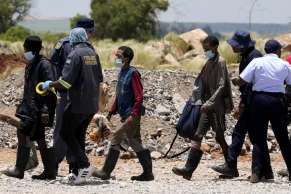
The death toll in a monthslong standoff between police and miners trapped while working illegally in an abandoned gold mine in South Africa has risen to at least 87, police said Thursday as they wound down a rescue operation that has pulled more than 240 survivors out from deep underground.
National police spokesperson Athlenda Mathe said that 78 bodies were retrieved from the mine in an official rescue operation that began Monday, while another nine had been recovered previously. She did not give details on how those other bodies were retrieved.
Community groups have said they launched their own rescue attempts when authorities said last year they would not help the hundreds of miners because they were “criminals.”
The miners are suspected to have died of starvation and dehydration, although no causes of death have been released.
South African authorities have been criticized for their approach, having cut off food and supplies to the miners for a period of time last year in an attempt, as one Cabinet minister said, to “smoke them out” of the Buffelsfontein Gold Mine. That tactic has been called “horrific” by one of South Africa's biggest trade unions.
Police and the mine owners are also accused by community members and civic groups of taking away ropes and dismantling a pulley system the miners used to enter the mine through one shaft and send supplies down from the surface.
A court ordered authorities last year to allow food and water to be sent down to the miners, while another court ruling last week forced the government to launch a rescue operation.
Many say the unfolding disaster underground was clear weeks ago, when community members sporadically pulled decomposing bodies out of the mine, some with notes attached pleading for food to be sent down.
“If the police had acted earlier, we would not be in this situation, with bodies piling up," said Johannes Qankase, a local community leader. “It is a disgrace for a constitutional democracy like ours. Somebody needs to account for what has happened here.”
He said he was saddened “seeing so many pathology vans coming to get bodies of dead people.”
South Africa's second biggest political party, which is part of a government coalition, called for President Cyril Ramaphosa to establish an independent inquiry to find out “why the situation was allowed to get so badly out of hand.”
“The scale of the disaster underground at Buffelsfontein is rapidly proving to be as bad as feared,” the Democratic Alliance party said.
Authorities now believe that nearly 2,000 miners were underground working illegally at the mine near the town of Stilfontein, southwest of Johannesburg, since August last year. Many of them resurfaced on their own over the last few months, police said, and all the survivors have been arrested, even as some of them emerged appearing badly emaciated and barely able to walk as they were helped to ambulances.
Mathe said at least 13 children had also come out of the mine before the official rescue operation, which authorities had declined to launch for months.
Police announced Wednesday that they were ending that rescue operation after three days and believed no one else was underground. A camera would be sent down on Thursday in a cage that has been used to pull out survivors and bodies to make certain no one was still down there, Mathe said.
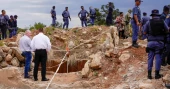
The mine is one of the deepest in South Africa and is a maze of tunnels and levels and has several shafts leading into it. The miners were working up to 2.5 kilometers (1.5 miles) underground in different groups.
Police have maintained that the miners were able to come out through several different shafts but refused out of fear of being arrested. That’s been disputed by groups representing the miners, who say hundreds were trapped and left starving in grim conditions underground with decomposing bodies around them.
The initial police operation last year to force the miners to come out and give themselves up for arrest was part of a larger nationwide clampdown on illegal mining called Vala Umgodi, or Close the Hole. Illegal mining is often in the news in South Africa and a major problem for authorities as large groups go into mines that have been shut down by companies to extract any leftover deposits.
The miners, known as “zama zamas” — "hustlers" or “chancers” in the Zulu language — are often armed and part of criminal syndicates, the government says, and they rob South Africa of more than $1 billion a year in gold deposits. They are often undocumented foreign nationals and authorities said Thursday that the vast majority of miners who came out of the Buffelsfontein mine were from Mozambique, Zimbabwe and Lesotho and in South Africa illegally.
Police said they seized gold, explosives, firearms and more than $2 million in cash from the miners and have defended their hardline approach.
“By providing food, water and necessities to these illegal miners, it would be the police entertaining and allowing criminality to thrive,” Mathe said Wednesday.
And while the police operation has been condemned by civic groups and others, the disaster hasn't provoked a strong outpouring of anger across South Africa, where the zama zamas have long been considered especially troublesome in a country that struggles with high rates of violent crime.
1 year ago
78 dead at abandoned South Africa gold mine
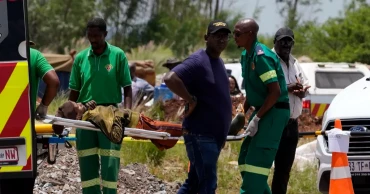
Rescuers and volunteers have pulled at least 78 dead miners and more than 160 survivors from an abandoned South African gold mine, where they have languished for over two months during a standoff with authorities who demanded they surrender to police because they were mining illegally.
Hundreds are still believed to be trapped Wednesday and the death toll is expected to rise in a disaster that has focused criticism on the South African government’s decision to try to “smoke them out” by cutting off food and other supplies for a time.
Civic groups claim authorities also removed the ropes and pulley systems that the miners used to enter and exit at least one shaft and send down supplies.
The groups say the government's weekslong refusal to stage a rescue effectively left scores of miners to die of starvation or dehydration. A rescue is now underway — after a court order — but only a few miners can be pulled up at a time, and the operation could take 10 days.
South African authorities have argued that the miners were always able to exit through another shaft at Buffelsfontein Gold Mine, one of the deepest in the mineral-rich country.
But activists said that would involve a dangerous trek underground that could take days for some, and many became too weak or ill after months underground with little food and water. Police contend some miners refused to come out.
Rescuers attempt to free survivors from trapped South African miners
Authorities ordered to launch a rescue operation
In response to a request by a relative of one of the miners, a court last week ordered a rescue operation, which began Monday. A specialist mining rescue company has been dropping a small cage thousands of meters (feet) into the mine to retrieve survivors and bodies.
But no personnel from the company entered the shaft because they consider it too dangerous — instead community volunteers headed down in the cage to help the miners out.
Police first tried to force the miners out of the closed mine near the town of Stilfontein, southwest of Johannesburg, in November by cutting off their supplies. The move, part of a larger crackdown on illegal mining, began a standoff between authorities and the miners and members of the community.
A court ruled that authorities had to allow supplies in — but civic groups argue that officials needed to do more at that point because even without police interference the miners weren't able to get enough food and water into the mine and the situation was becoming dire.
The mine is 2.5 kilometers (1.5 miles) deep with multiple shafts, many levels and a maze of tunnels. A group representing the miners said there are numerous groups in various parts of the mine and estimated that more than 500 miners were underground when the rescue started.
It's unclear exactly how long they've been underground, but relatives say some of them have been there since July.
Chinese gold mining endangers Congo's protected UN heritage site
A rising death toll
Police said Wednesday that 78 bodies have been recovered so far, and 166 survivors brought out since the official rescue operation began. A community group says another nine bodies were recovered on Friday and an unconfirmed number in the previous weeks after members of the community attempted to rescue miners themselves.
Civic groups representing the miners say at least 100 have died.
The official rescue is now proceeding slowly because only a few people can fit in the cage at a time and because the shaft is so deep.
Authorities have argued that the miners could have exited if they wanted to — and police say more than 1,000 did before the rescue operation — but they didn't because they feared arrest. Police say they have arrested everyone who has surfaced both before and after the rescue operation.
They will face charges of illegal mining and trespassing. Authorities seized gold, explosives, firearms and more than $2 million in cash from the miners.
1 year ago
Rescuers attempt to free survivors from trapped South African miners
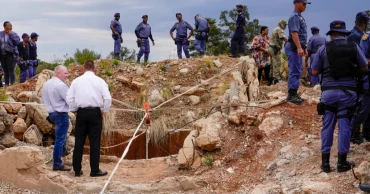
Efforts are underway to rescue survivors from one of South Africa’s deepest mines, where hundreds of illegal miners have been trapped underground for months.
A cage-like structure was sent down to the Buffelsfontein Gold Mine in a bid to bring out the survivors. Authorities believe over 100 miners have died from starvation or dehydration, AP reports.
Since Friday, 18 bodies and 26 survivors have been recovered from the mine. However, more than 500 miners are feared to still be trapped underground. While police are uncertain about the exact number, it is estimated that hundreds remain inside.
The mine, located near Stilfontein, southwest of Johannesburg, has been at the center of a standoff between miners, police, and local communities since November. The conflict began when authorities launched an operation to remove illegal miners. Some miners have reportedly been underground since July or August of the previous year.
Chinese gold mining endangers Congo's protected UN heritage site
Authorities insist the miners are refusing to leave, but rights organizations have contested this claim. They have criticized police for cutting off food and water supplies to force the miners out. Activists argue that many miners are unable to climb out because the shaft is too steep, and the ropes and pulley systems they used to enter have been removed.
Illegal mining is widespread in South Africa, especially in abandoned, gold-rich mines. Miners often stay underground for months, relying on supplies sent from the surface by others. Some miners have escaped since November, but many fear arrest if they emerge.
Rights groups say the miners’ only escape route is a dangerous journey to another shaft, a trek that can take days. The mine, 2.5 kilometers deep, is a maze of tunnels and multiple shafts. In December, a mining advocacy group took authorities to court to ensure food, water, and medicine were delivered to the trapped miners.
Two cellphone videos released by the group show emaciated miners and numerous dead bodies. South African authorities continue to face scrutiny for their response to the crisis.
1 year ago