africa

Sudanese RSF paramilitaries clash with the army, leaving at least 100 people dead
At least 100 people were killed, and dozens were injured after the paramilitary Rapid Support Forces attacked a village in Gezira province in Sudan on Wednesday, officials said.
Women, children, and the elderly were among the victims in the RSF attacks on Wad al-Noura village in Gezira, Mini Arko Minawi, the governor of Darfur province, said on X, formerly Twitter.
Catherina Russell, UNICEF Executive Director, said in a statement that at least 35 children were killed and 20 others were injured during the attacks.
A grassroots group set up to protect residents in Wad Madani, the capital city of Gezira, said late Wednesday on social media that the paramilitary force, which has been fighting the Sudanese army for over a year, used heavy artillery to besiege and attack the village.
The Madani Resistance Committee, which has been threatened and attacked by the RSF in the past, accused the paramilitaries of looting Wad al-Noura in the midst of the attacks which it said started Wednesday morning.
The RSF claimed in December that it had seized control of Wad Madani, about 100 kilometers (60 miles) southeast of the Sudanese capital, Khartoum, and a haven for hundreds of thousands of people displaced by fighting.
The resistance committee said the RSF invaded the village, displacing residents, including women and children, to other parts of the district of al-Manaqil.
The Sudanese transitional government in a statement on its Telegram channel condemned the attacks and called for the international community to hold the RSF accountable.
UN extends arms embargo on South Sudan despite appeals from African Union, Russia and China
“These are criminal acts that reflect the systematic behavior of these (RSF) militias in targeting civilians, plundering their property, and forcibly displacing them from their areas,” said the media office for the Transitional Sovereignty Council, which was set up after the ouster of longtime president Omar al-Bashir in 2019.
The RSF alleged on X late Wednesday that the Sudanese military planned to attack its troops in Jabal al-Awliya, in the west of al-Manaqil district, by mobilizing Sudanese armed forces in three bases. The Associated Press couldn’t verify this allegation.
The paramilitary group said it attacked three camps west, north and south of Wad-al Noura, clashing with the Sudanese army.
“Our forces will not stand idly by in the face of any movements or gatherings by the enemy and will work to pursue and defeat the enemy,” said the RSF in its statement.
UN chief calls for Ramadan truce in Gaza, Sudan
Clementine Nkweta-Salami, the United Nations Resident and Humanitarian Coordinator in Sudan, said Thursday on X that she was “shocked” by reports of the violent attacks.
“Human tragedy has become a hallmark of life in Sudan. We cannot allow impunity to become another one,” she said.
In a statement, Nkweta-Salami said that heavy gunfire and explosive weapons were used in populated areas, citing reports she deems credible.
She called for accountability and an investigation into the attacks.
Similarly, the UNICEF Executive Director, described the scenes on the ground as “devastating” and called for an end to the violence in Sudan, asserting that children in the country “need a cease-fire now.”
“This is yet another grim reminder of how the children of Sudan are paying the price for the brutal violence,” Russell said in the statement. “Over the past year, thousands of children have been killed and injured. Children have been recruited, abducted and subjected to rape and other forms of sexual violence. Over five million children have been forced from their homes.”
Proposed UN resolution calls for ceasefire in conflict-torn Sudan during upcoming Muslim holy month
The war between the RSF and the Sudanese army has wrecked the country as clashes spread across multiple cities and pushed its population to the brink of famine. More than 14,000 people have been killed and thousands have been wounded. Hundreds of thousands have been displaced.
1 year ago

UN agencies say over 1 million in Gaza could experience highest level of starvation by mid-July
United Nations agencies warned Wednesday that over 1 million Palestinians in Gaza could experience the highest level of starvation by the middle of next month if hostilities continue.
The World Food Program and the Food and Agriculture Organization said in a joint report that hunger is worsening because of heavy restrictions on humanitarian access and the collapse of the local food system in the nearly eight-month Israel-Hamas war.
It says the situation remains dire in northern Gaza, which has been surrounded and largely isolated by Israeli troops for months. Israel recently opened land crossings in the north but they are only able to facilitate truck loads in the dozens each day for hundreds of thousands of people.
Israel's incursion into Rafah has meanwhile severely disrupted aid operations in the south. Egypt has refused to open its Rafah crossing with Gaza since Israeli forces seized the Gaza side of it nearly a month ago, instead diverting aid to Israel's Kerem Shalom crossing nearby.
The Israeli military says it has allowed hundreds of trucks to enter through Kerem Shalom in recent weeks, but the U.N. says it is often unable to retrieve the aid because of the security situation. It says distribution within Gaza is also severely hampered by ongoing fighting, the breakdown of law and order, and other Israeli restrictions.
The Integrated Food Security Phase Classification, the world authority on determining the extent of hunger crises, said in March that around 677,000 people in Gaza were experiencing Phase 5 hunger, the highest level and the equivalent of famine.
The two U.N. agencies said in their report Wednesday that that figure could climb to more than 1 million — or nearly half of Gaza's total population of 2.3 million — by the middle of next month.
“In the absence of a cessation of hostilities and increased access, the impact on mortality and the lives of the Palestinians now, and in future generations, will increase markedly with every day, even if famine is avoided in the near term,” it said.
On Tuesday, a separate group of experts said it’s possible that famine is underway in northern Gaza but that the war, and restrictions on humanitarian access, have impeded the data collection to prove it.
“It is possible, if not likely,” the group known as the Famine Early Warning Systems Network, or FEWS NET, which is funded by the U.S. Agency for International Development, said about famine in Gaza.
Last month, the head of the World Food Program, Cindy McCain, said northern Gaza had already entered “full-blown famine,” but experts at the U.N. agency later said she was expressing a personal opinion.
An area is considered to be in famine when three things occur: Twenty percent of households have an extreme lack of food, or are essentially starving; at least 30% of the children suffer from acute malnutrition or wasting, meaning they’re too thin for their height; and two adults or four children per every 10,000 people are dying daily of hunger and its complications.
The war began when Hamas and other militants stormed across the border into Israel on Oct. 7, killing some 1,200 people, mostly civilians, and taking around 250 hostage. Israel's retaliatory offensive has killed over 36,000 Palestinians, according to local health officials. Most of Gaza's population have fled their homes, often multiple times, and the offensive has caused widespread destruction.
1 year ago
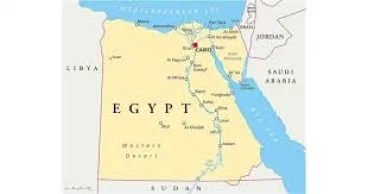
At least 6 Egyptian women die after vehicle slides off ferry and plunges into Nile River
At least six Egyptian women died Tuesday after a vehicle carrying about two dozen people slid off a ferry and plunged into the Nile River just outside Cairo, authorities said.
The accident, which happened in Monshat el-Kanater town in Giza province, also injured nine other passengers, the Health Ministry said in a statement. Giza is one of three provinces forming Greater Cairo.
The ministry said six of the injured were treated at the site while three others were transferred to hospitals. It didn't elaborate on their injuries.
Giza provincial Gov. Ahmed Rashed said the microbus was retrieved from the Nile, and rescue efforts were still underway as of midday Tuesday.
The cause of the accident was not immediately clear.
According to the state-owned Akhbar daily, about two dozen passengers, mostly women, were in the vehicle heading to work when the accident occurred.
Ferry, railway and road accidents are common in Egypt mainly because of poor maintenance and lack of regulations. In February, a ferry carrying day laborers sank in the Nile in Giza, killing at least 10 of the 15 people on board.
2 years ago

South Africa urges UN's top court to order cease-fire in Gaza to shield citizens in Rafah
South Africa urged the United Nations’ top court on Thursday to order a cease-fire in Gaza during hearings over emergency measures to halt Israel’s military operation in the enclave’s southern city of Rafah.
It was the third time the International Court of Justice held hearings on the conflict in Gaza since South Africa filed proceedings in December at the court, based in The Hague in the Netherlands, accusing Israel of genocide.
The country’s ambassador to the Netherlands, Vusimuzi Madonsela, urged the panel of 15 international judges to order Israel to “totally and unconditionally withdraw” from the Gaza Strip.
The court has already found that there is a “real and imminent risk” to the Palestinian people in Gaza by Israel’s military operations. “This may well be the last chance for the court to act,” said Irish lawyer Blinne Ní Ghrálaigh, who is part of South Africa’s legal team.
Judges at the court have broad powers to order a cease-fire and other measures, although the court does not have its own enforcement apparatus. A 2022 order by the court demanding that Russia halt its full-scale invasion of Ukraine has so far gone unheeded.
During hearings earlier this year, Israel strongly denied committing genocide in Gaza, saying it does all it can to spare civilians and is only targeting Hamas militants. The country says Rafah is the last stronghold of the militant group.
The latest request focuses on the incursion into Rafah.
South Africa argues that the military operation has far surpassed justified self-defense. “Israel’s actions in Rafah are part of the end game. This is the last step in the destruction of Gaza,” lawyer Vaughan Lowe said.
According to the latest request, the previous preliminary orders by The Hague-based court were not sufficient to address “a brutal military attack on the sole remaining refuge for the people of Gaza.” Israel will be allowed to answer the accusations on Friday.
In January, judges ordered Israel to do all it can to prevent death, destruction and any acts of genocide in Gaza, but the panel stopped short of ordering an end to the military offensive that has laid waste to the Palestinian enclave. In a second order in March, the court said Israel must take measures to improve the humanitarian situation.
South Africa has to date submitted four requests for the international court to investigate Israel. It was granted a hearing three times.
Most of Gaza’s population of 2.3 million people have been displaced since fighting began.
The war began with a Hamas attack on southern Israel on Oct. 7 in which Palestinian militants killed around 1,200 people and took about 250 hostages. Gaza’s Health Ministry says over 35,000 Palestinians have been killed in the war, without distinguishing between civilians and combatants in its count.
South Africa initiated proceedings in December 2023 and sees the legal campaign as rooted in issues central to its identity. Its governing party, the African National Congress, has long compared Israel’s policies in Gaza and the occupied West Bank to its own history under the apartheid regime of white minority rule, which restricted most Blacks to “homelands.” Apartheid ended in 1994.
On Sunday, Egypt announced it plans to join the case. The Ministry of Foreign Affairs said Israeli military actions “constitute a flagrant violation of international law, humanitarian law, and the Fourth Geneva Convention of 1949 regarding the protection of civilians during wartime.”
Several countries have also indicated they plan to intervene, but so far only Libya, Nicaragua and Colombia have filed formal requests to do so.
2 years ago
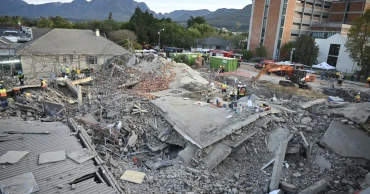
Rescuers contact some workers alive in the rubble of a deadly building collapse in South Africa
Rescue teams trying to find dozens of construction workers missing since a multi-story apartment complex collapsed in a coastal city in South Africa have made contact with 11 people buried alive beneath the mangled wreckage, authorities said Tuesday.
One man called his wife from underneath the rubble of the five-story building that had been under construction when it collapsed Monday, the head of the rescue operation said. That enabled emergency responders to locate the man, although he was still trapped and hadn't yet been brought out.
Six workers have been confirmed dead and there are fears that the death count could rise sharply. There is no news on 37 other people unaccounted-for amid the huge slabs of concrete and metal scaffolding that came crashing down when the building collapsed in the city of George, about 400 kilometers (250 miles) east of Cape Town.
Twenty-one other workers were rescued from the site and taken to various hospitals, with at least 11 of them suffering severe injuries, the George municipality said.
Colin Deiner, head of the provincial Western Cape disaster management services, said the search-and-rescue operation would likely take at least three days.
“We are going to give it the absolute maximum time to see how many people we can rescue,” Deiner said at a press conference. “It is very, very difficult if you are working with concrete breakers and drillers close to people.”
Deiner said it would take most of Tuesday to rescue the 11 workers that rescue teams were in contact with, some of whom had limbs trapped under concrete and couldn't move. Four of the workers are in what was the basement of the building, Deiner said.
“Our big concern is entrapment for many hours, when a person’s body parts are compressed.,” Deiner said. “So, you need to get medical help to them. We got our medics in as soon as we possibly could.”
Deiner said it was possible that there were more survivors deeper in the wreckage and a process of removing layers of concrete would begin after the 11 located workers were taken out.
More than 100 emergency services and other personnel worked through the night, using sniffer dogs to try to locate workers. Large cranes and other heavy lifting equipment were brought in to help with the rescue effort and tall spotlights were erected to allow search-and-rescue personnel to work in the dark.
Deiner said a critical part of the rescue operation came when they ordered everyone to remain quiet and shut off machinery so they could listen for any survivors. That's when they located the 11 workers, he said.
“We were actually hearing people through the rubble,” Deiner said.
Several local hospitals were making space in their trauma units in anticipation that more construction workers might be brought out alive. More than 50 emergency responders had also been brought in overnight from other towns and cities to help, including a specialized team that deals with rescue operations in collapsed structures.
Family and friends of the workers had gathered at the nearby municipal offices and were being supported by social workers, the George municipality said.
Authorities were starting investigations into what caused the tragedy, and a criminal case was opened by police, but there was no immediate information on why the building suddenly collapsed. CCTV footage from a nearby home showed the concrete structure and metal scaffolding collapsing at 2.09 p.m. Monday, causing a plume of dust to rise over the neighborhood.
People came streaming out of other buildings after the collapse, with some of them screaming and shouting.
Alan Winde, the Premier of the Western Cape province, said there would be investigations by both the provincial government and the police.
Authorities declined to give out any information on the construction company involved but said that under city law the private company's engineers were responsible for the safety of the building site until its completion, when it would be handed over to the city to check and clear.
Winde said the priority was the rescue effort and investigations would unfold after that.
“All the necessary support has been offered to emergency personnel to expedite their response. At the moment, officials are focused on saving lives. This is our top priority at this stage,” Winde said.
The national government was being briefed on the rescue operation, Winde said.
South African President Cyril Ramaphosa released a statement offering his condolences to families of the victims and also called for investigations into the cause of the collapse.
2 years ago

5 workers dead, 49 still missing after a building under construction collapsed in South Africa
Rescue teams worked through the night searching for dozens of construction workers buried for more than 12 hours under the rubble of concrete after a multi-story apartment complex that was being built collapsed in a coastal city in South Africa.
Authorities said early Tuesday that the death toll had risen to five, while 49 workers remained unaccounted-for in the mangled wreckage of the building, which collapsed on Monday afternoon. Authorities said a further 21 workers had been rescued from the rubble and taken to various hospitals, with at least 11 of them suffering severe injuries.
The collapse happened in the city of George, about 400 kilometers (250 miles) east of Cape Town on South Africa's south coast.
Horrified at details emerging from mass graves recently unearthed in Gaza Strip: UN experts
More than 100 emergency personnel and other responders were on the scene, using sniffer dogs to try to locate the workers, some of whom were feared buried under huge slabs of concrete that fell on them when the five-story building came down.
Large cranes and other heavy lifting equipment were brought to the site to help with the rescue effort and tall spotlights were erected to allow search and rescue personnel to work through the night.
There were 75 workers on the construction site when the building collapsed, the George municipality said. It said three teams of rescuers were working at separate sites around the collapsed building where they believed construction workers were likely to be.
Family and friends of the workers gathered at the nearby municipal offices.
“Our thoughts are with the families and all those affected who continue to wait on word of their loved ones,” George Executive Mayor Leon Van Wyk said.
Authorities were investigating what caused the tragedy and a case was opened by police, but there was no immediate information on why the building suddenly collapsed. CCTV footage from a nearby home showed the concrete structure and metal scaffolding around it come crashing down at 2.09 p.m. on Monday afternoon, causing a plume of dust to rise over the neighborhood.
People came streaming out of other buildings after the collapse, with some of them screaming and shouting.
Marco Ferreira, a local representative of the Gift of the Givers nongovernmental organization, was at the site with a team to offer support and food and drink to the rescuers on Monday. Gift of the Givers is a charity that often helps during disasters in South Africa. It also provided three sniffer dogs and handlers to help with the search, Ferreira said.
"The situation at this stage is still very much in the rescue stages," Ferreira told the eNCA TV news channel. “We don’t know, it’s probably going to carry on for days. There are some cranes there to help lift some concrete. But it’s not a pretty sight.”
The provincial Western Cape government sent the head of its disaster response unit from Cape Town to George to oversee the rescue operation and Western Cape Premier Alan Winde, the head of the provincial government, was also at the scene.
Celebrating excellence in journalism and the arts, Pulitzer Prizes to be awarded Monday
Winde said the provincial government had also sent extra resources to assist.
“All the necessary support has been offered to emergency personnel to expedite their response. At the moment, officials are focused on saving lives. This is our top priority at this stage,” Winde said in a statement.
The national government was being briefed on the rescue operation, Winde said.
2 years ago

African farmers blend ancient wisdom and modern tech to combat climate change
From ancient fertilizer methods in Zimbabwe to new greenhouse technology in Somalia, farmers across the heavily agriculture-reliant African continent are looking to the past and future to respond to climate change.
Africa, with the world's youngest population, faces the worst effects of a warming planet while contributing the least to the problem. Farmers are scrambling to make sure the booming population is fed.
With over 60% of the world’s uncultivated land, Africa should be able to feed itself, some experts say. And yet three in four people across the continent cannot afford a healthy diet, according to a report last year by the African Union and United Nations agencies. Reasons include conflict and lack of investment.
In Zimbabwe, where the El Nino phenomenon has worsened a drought, small-scale farmer James Tshuma has lost hope of harvesting anything from his fields. It's a familiar story in much of the country, where the government has declared a $2 billion state of emergency and millions of people face hunger.
Decision to double support to climate adaptation must be implemented: Saber H. Chowdhury
But a patch of green vegetables is thriving in a small garden the 65-year-old Tshuma is keeping alive with homemade organic manure and fertilizer. Previously discarded items have again become priceless.
“This is how our fathers and forefathers used to feed the earth and themselves before the introduction of chemicals and inorganic fertilizers,” Tshuma said.
He applies livestock droppings, grass, plant residue, remains of small animals, tree leaves and bark, food scraps and other biodegradable items like paper. Even the bones of animals that are dying in increasing numbers due to the drought are burned before being crushed into ash for their calcium.
Climate change is compounding much of sub-Saharan Africa’s longstanding problem of poor soil fertility, said Wonder Ngezimana, an associate professor of crop science at Zimbabwe’s Marondera University of Agricultural Sciences and Technology.
“The combination is forcing people to re-look at how things were done in the past like nutrient recycling, but also blending these with modern methods," said Ngezimana, whose institution is researching the combination of traditional practices with new technologies.
Apart from being rich in nitrogen, organic fertilizers help increase the soil’s carbon and ability to retain moisture, Ngezimana said. “Even if a farmer puts synthetic fertilizer into the soil, they are likely to suffer the consequences of poor moisture as long as there is a drought,” he said.
Other moves to traditional practices are under way. Drought-resistant millets, sorghum and legumes, staples until the early 20th century when they were overtaken by exotic white corn, have been taking up more land space in recent years.
Leaves of drought-resistant plants that were once a regular dish before being cast off as weeds are returning to dinner tables. They even appear on elite supermarket shelves and are served at classy restaurants, as are millet and sorghum.
This could create markets for the crops even beyond drought years, Ngezimana said.
A GREENHOUSE REVOLUTION IN SOMALIA
In conflict-prone Somalia in East Africa, greenhouses are changing the way some people live, with shoppers filling up carts with locally produced vegetables and traditionally nomadic pastoralists under pressure to settle down and grow crops.
“They are organic, fresh and healthy,” shopper Sucdi Hassan said in the capital, Mogadishu. “Knowing that they come from our local farms makes us feel secure."
Her new shopping experience is a sign of relative calm after three decades of conflict and the climate shocks of drought and flooding.
Urban customers are now assured of year-round supplies, with more than 250 greenhouses dotted across Mogadishu and its outskirts producing fruit and vegetables. It is a huge leap.
“In the past, even basic vegetables like cucumbers and tomatoes were imported, causing logistical problems and added expenses,” said Somalia’s minister of youth and sports, Mohamed Barre.
The greenhouses also create employment in a country where about 75% of the population is people under 30 years old, many of them jobless.
About 15 kilometers (9 miles) from the capital, Mohamed Mahdi, an agriculture graduate, inspected produce in a greenhouse where he works.
“Given the high unemployment rate, we are grateful for the chance to work in our chosen field of expertise,” the 25-year-old said.
Meanwhile, some pastoralist herders are being forced to change their traditional ways after watching livestock die by the thousands.
Collaboration is vital for addressing climate change, achieving adaptation goals: Environment Secretary
“Transitioning to greenhouse farming provides pastoralists with a more resilient and sustainable livelihood option,” said Mohamed Okash, director of the Institute of Climate and Environment at SIMAD University in Mogadishu.
He called for larger investments in smart farming to combat food insecurity.
A MORE RESILIENT BEAN IN KENYA
In Kenya, a new climate-smart bean variety is bringing hope to farmers in a region that had recorded reduced rainfall in six consecutive rainy seasons.
The variety, called “Nyota" or "star” in Swahili, is the result of a collaboration between scientists from the Kenya Agricultural and Livestock Research Organization, the Alliance of Bioversity International and research organization International Center for Tropical Agriculture.
The new bean variety is tailored for Kenya’s diverse climatic conditions. One focus is to make sure drought doesn’t kill them off before they have time to flourish.
The bean variety flowers and matures so quickly that it is ready for harvesting by the time rains disappear, said David Karanja, a bean breeder and national coordinator for grains and legumes at KALRO.
Hopes are that these varieties could bolster national bean production. The annual production of 600,000 metric tons falls short of meeting annual demand of 755,000 metric tons, Karanja said.
Farmer Benson Gitonga said his yield and profits are increasing because of the new bean variety. He harvests between nine and 12 bags from an acre of land, up from the previous five to seven bags.
One side benefit of the variety is a breath of fresh air.
“Customers particularly appreciate its qualities, as it boasts low flatulence levels, making it an appealing choice,” Gitonga said.
2 years ago
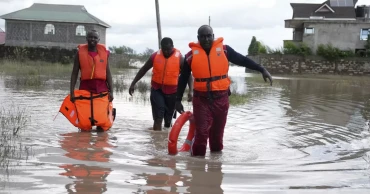
At least 70 people killed by flooding in Kenya as more rain is expected through the weekend
Flooding and heavy rains in Kenya have killed at least 70 people since mid-March, a government spokesperson said Friday, twice as many as were reported earlier this week.
The East African country has seen weeks of heavy rains and severe flooding in Kenya’s capital, Nairobi, as well as in the country's western and central regions.
Kenya's government spokesperson Isaac Mwaura on Friday refuted claims that hundreds of people have died in the ongoing flooding and said the official tally now stands at 70.
Five bodies were retrieved Friday from a river in Makueni county, east of the country, after a lorry they were traveling in was swept off a submerged bridge, local station Citizen TV reported. Another 11 were rescued.
Flooding in Tanzania has killed 155 people as heavy rains continue in Eastern Africa
Deputy President Rigathi Gachagua said Friday at a news briefing that the government had set aside 4 billion Kenya shillings ($29 million) for emergency relief efforts, but did not provide further details.
More than 130,000 people are currently affected with thousands of houses washed away and others flooded. Some 64 public schools in the capital were flooded and had to shut down. Roads and bridges have been damaged or destroyed.
Pakistani province issues a flood alert and warns of a heavy loss of life from glacial melting
The Kenya Meteorological Department on Friday issued a heavy rainfall advisory for the weekend and urged residents to be vigilant.
Other East African countries have reported flooding with 155 people reported to have died in neighboring Tanzania and more than 200,000 people affected in Burundi.
Flooding wreaks havoc across East Africa. Burundi is especially hard-hit
2 years ago

Flooding in Tanzania has killed 155 people as heavy rains continue in Eastern Africa
Flooding in Tanzania caused by weeks of heavy rain has killed 155 people and affected more than 200,000 others, the prime minister said Thursday.
That is more than double the number of deaths reported two weeks ago as the amount of rainfall increases, especially in the coastal region and the capital, Dar es Salaam.
Flooding wreaks havoc across East Africa. Burundi is especially hard-hit
Prime Minister Kassim Majaliwa told parliament that the El Niño climate pattern has worsened the ongoing rainy season, causing the flooding and destroying roads, bridges and railways. Flooded schools have been closed and emergency services have rescued people marooned by the flood waters.
Majaliwa warned those living in low-lying areas to move to higher ground and urged district officials to ensure that provisions meant for those whose homes were washed away go to those in need of the supplies. He said more than 51,000 households have been affected by the rains.
Extreme drought in southern Africa leaves millions hungry
The East African region is experiencing heavy rains, with flooding also reported in neighboring Burundi and Kenya.
In Kenya, 35 people were reported dead as of Monday, and the number was expected to increase as flooding continues across the country.
In the Mathare slum in the capital, Nairobi, at least four bodies were retrieved from flooded houses on Wednesday. Local media reported that more bodies were retrieved from the Mathare River.
Girl, 8, only survivor of bus crash that kills 45 Easter pilgrims on South Africa's deadly roads
Kenyan President William Ruto chaired a multi-agency flood response meeting on Thursday and directed the National Youth Service to provide land for people in flood-affected areas.
2 years ago

Flooding wreaks havoc across East Africa. Burundi is especially hard-hit
Deadly floods are wreaking havoc in many parts of East Africa that face torrential rainfall, with the poor nation of Burundi calling for international help to deal with the aftermath.
Lake Tanganyika's rising waters have invaded the port of Bujumbura, Burundi's economic capital, disrupting business there and elsewhere in the country that relies heavily on donor support to run government programs.
"We are issuing this statement to ask our development partners to combine efforts with the state of Burundi to help all people affected by these disasters," Interior Minister Martin Niteretse said April 17. "We need that support."
Niteretse spoke in Bujumbura alongside Violet Kenyana Kakyomya, the U.N. resident coordinator in Burundi.
Between September and April 7, some 203,944 people were affected by flooding, with 19,250 homes and 209 classrooms destroyed during that time. The number of people internally displaced by flooding rose by 25%, reaching over 98,000 people, according to Kakyomya.
Burundi is one of the world's poorest countries, with 80% of its 13 million people employed in agriculture, according to the World Bank.
Flooding there has created surreal scenes like game rangers entering the waterlogged Rusizi National Park in a canoe. The Boulevard du Japon, a major highway in Bujumbura, has been completely flooded in recent days.
Climate experts say flooding events in Burundi and elsewhere in the region are part of extreme conditions linked to the El Niño weather phenomenon.
"It must be said directly that these floods are associated with climate changes that affect Burundi like other countries in the region," said Jean Marie Sabushimike, a geographer and disaster management expert who teaches at the University of Burundi.
While climate change is the trigger, the impact of the flooding is exacerbated by poor land-use planning "that does not take into account areas at very high risk of flooding," he said.
The rising waters of Lake Tanganyika have caused the Kanyosha river to overflow, damaging homes and other property in Bujumbura. Some in the city have been unable to return to their homes — or leave.
Joachim Ntirampeba, resident of the village of Gatumba near the Congo border, said that while he had witnessed many flooding events over the years, this time "it's terrible."
He said it's "the first time" he's seen such heavy flooding.
Meanwhile, in Kenya 35 people have died since mid-March in flooding events that have affected more than 100,000 people, according to the U.N., which cites Red Cross figures in the most recent update.
Flooding has been reported in residential areas in Nairobi, the capital, as rivers broke their banks Sunday night.
The Kenyan government agency in charge of roads warned Nairobi residents to avoid flooded highways, including one to the coastal city of Mombasa. Those who live by the Nairobi river are being urged to move to higher ground.
Flooding and mudslides have also been reported in western Kenya. In the northern region, a passenger bus was swept away by floodwaters on a bridge earlier in April, with disaster avoided after 51 passengers were rescued.
Kenya's meteorology department predicts that rainfall will peak this week.
2 years ago