Europe
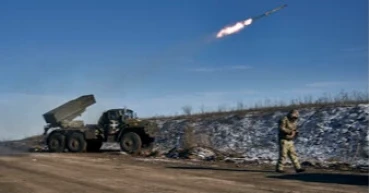
Russia says it took Soledar in bloody fight in east Ukraine
Russia claimed Friday that its forces captured a fiercely contested salt mining town, in what would mark a rare victory for the Kremlin after a series of setbacks in its invasion of Ukraine.
There was no immediate confirmation from Ukrainian authorities of Soledar's fall. There have been conflicting reports over who controls the town, the site of a monthslong bloody battle in the grinding fight for Ukraine's eastern regions. Given the dangers there, The Associated Press could not confirm Russia's claim.
Soledar is located in Ukraine's Donetsk province, one of four that Moscow illegally annexed in September. From the outset, Moscow identified Donetsk and neighboring Luhansk province as priorities, and it has treated the areas as Russian territory since their alleged annexation.
“The liberation of the town of Soledar was completed in the evening of Jan. 12,” Lt. Gen. Igor Konashenkov, the Russian Defense Ministry’s spokesman, said, adding that the development was “important for the continuation of offensive operations in the Donetsk region.”
Taking control of Soledar would allow Russian forces "to cut supply lines for the Ukrainian forces” in Bakhmut and then “block and encircle the Ukrainian units there,” Konashenkov said.
Read more: Most Ukrainians left without power after Russian strikes
Still, the Institute for the Study of War, a think tank in Washington, said that a Russian seizure of Soledar was "not an operationally significant development and is unlikely to presage an imminent Russian encirclement of Bakhmut.”
The institute said that Russian information operations have “overexaggerated the importance of Soledar,” a small settlement, arguing as well that the long and difficult battle has contributed to the exhaustion of Russian forces.
Just hours before Russia’s claim, Ukraine reported that there had been a heavy night of fighting but did not acknowledge loss of the town.
In a Telegram post early Friday, Ukraine’s deputy defense minister, Hanna Maliar, said that Moscow “had sent almost all (its) main forces” to secure a victory in the east. She said that Ukrainian fighters “are bravely trying to hold the defense.”
Read more: Russian missiles cross into Poland during strike on Ukraine, killing 2
“This is a difficult stage of the war, but we will win. There is no doubt,” Maliar added.
3 years ago

Rifts in Russian military command seen amid Ukraine fighting
As Russian troops wage a ferocious house-to-house fight for control of strongholds in eastern Ukraine, a parallel battle is unfolding in the top echelons of military power in Moscow, with President Vladimir Putin reshuffling his top generals while rival camps try to win his favor.
The fighting for the salt mining town of Soledar and the nearby city of Bakhmut has highlighted a bitter rift between the Russian Defense Ministry leadership and Yevgeny Prigozhin, a rogue millionaire whose private military force known as the Wagner Group has played an increasingly visible role in Ukraine.
Putin's shakeup of the military brass this week was seen as a bid to show that the Defense Ministry still has his support and is in charge as the troubled conflict nears the 11-month mark.
Prigozhin rushed Wednesday to declare that his mercenary force had captured Soledar, a claim rejected by Ukrainian officials. Furthermore, his statement that the prize was won exclusively by Wagner challenged the accounts from the Defense Ministry, which described action by airborne troops and other forces in the battle for Soledar.
The 61-year-old Prigozhin, who was known as “Putin's chef” for his lucrative catering contracts and was indicted in the U.S. for meddling in the 2016 presidential election, has expanded his assets to include Wagner, as well as mining and other spheres. He has scathingly criticized the military brass for blunders in Ukraine, saying Wagner was more efficient than regular troops.
He has found a powerful ally in Chechnya’s leader Ramzan Kadyrov, who has deployed elite troops from his southern Russian region to fight in Ukraine and also assailed the military leadership and the Kremlin for being too soft and indecisive.
While both have pledged loyalty to Putin, their public attacks on his top generals openly challenged the Kremlin’s monopoly on such criticism, something that Russia’s tightly controlled political system hadn’t seen before.
In the reshuffle announced Wednesday, the Defense Ministry said the head of the General Staff, Gen. Valery Gerasimov, was named the new chief of Russian forces in Ukraine, while the former top commander there, Gen. Sergei Surovikin, was demoted to Gerasimov’s deputy after only three months on the job.
The Washington-based Institute of the Study of War saw the reshuffle as an attempt by the Kremlin to “reassert the primacy of the Russian Ministry of Defense in an internal Russian power struggle,” weaken the influence of its foes, and send a signal to Prigozhin and others to reduce their criticism.
Prigozhin and Kadyrov have repeatedly criticized Gerasimov, the main architect of the Russian operation in Ukraine, and held him responsible for military defeats while praising Surovikin.
Russian troops were forced to retreat from Kyiv after a botched attempt to capture the Ukrainian capital in the opening weeks of the war. In the fall, they hastily pulled back from the northeastern Kharkiv region and the southern city of Kherson under the brunt of a swift Ukrainian counteroffensive.
Surovikin directed the retreat from Kherson, the only regional center captured by Russia, and was credited for shoring up command and increasing discipline in the ranks. But a Ukrainian missile strike on Jan. 1 in the eastern town of Makiivka killed scores of Russian troops and tainted his image.
Read more: Putin in Belarus, eyeing next steps in Ukraine war
Political analyst Tatiana Stanovaya observed that Gerasimov’s appointment marked yet another attempt by Putin to resolve his military problems by shaking up the brass.
“He is trying to reshuffle the pieces and is therefore giving chances to those who he finds persuasive," she wrote. "But in reality, the problem is not with the people, but with the tasks at hand.”
Stanovaya argued that Gerasimov could have asked for “carte blanche in the heat of verbal battles against the background of some very tense discussions.” For Putin, ”this is maneuvering, a tug-of-war between Surovikin (and sympathizers like Prigozhin) and Gerasimov,” she added.
Gerasimov, who began his military career as a Soviet army tank officer in the 1970s, has been chief of the General Staff since 2012 and was seen at the start of the conflict in February sitting next to Defense Minister Sergei Shoigu at a very long table with Putin. His appointment to directly lead the forces in Ukraine drew stinging comments from some Russian hawks.
Viktor Alksnis, a retired Soviet air force colonel who spearheaded botched attempts to preserve the USSR in 1991, noted that Gerasimov had overseen the action in Ukraine even before his appointment.
“This decision reflects the understanding by our political and military leadership that the special military operation has failed and none of its goals has been fulfilled in nearly a year of fighting,” Alksnis wrote on his messaging app channel. “Replacing Surovikin with Gerasimov will change nothing.”
Read more: Zelenskyy tells cheering US legislators funding Ukraine's war ...
Mark Galeotti, who specializes in Russian military and security affairs at University College, London, said the appointment handed Gerasimov “the most poisoned of chalices” as he now will bear direct responsibility for any more setbacks.
“Gerasimov is hanging by a thread,” Galeotti said in a commentary on Twitter. “He needs some kind of win, or a career ends in ignominy. This may well suggest some kinds of escalation.”
Galeotti also warned that frequent reshuffling of Russia's generals could erode allegiance in the officer corps.
“If you keep appointing, rotating, burning your (relative) stars, setting unrealistic expectations, arbitrarily demoting them, that’s not going to win loyalty,” he said.
Prigozhin, meanwhile, has taken advantage of military setbacks in Ukraine to expand his clout by making the Wagner Group a pivotal element of the Russian fighting force, augmenting the regular army that has suffered a heavy attrition.
Ukrainian officials alleged Wagner contractors were suffering massive losses in the fighting in Soledar and Bakhmut, advancing “on the bodies of their own comrades.”
Once convicted of assault and robbery, for which he served time in prison, Prigozhin in recent months went on a tour of Russia's sprawling network of penal colonies to recruit inmates to join Wagner's forces to fight in Ukraine in exchange for pardons.
He recently released a video showing about 20 convicts allowed to leave the ranks of fighters after a half-year on the front line, while also making clear that anyone breaking ranks will face brutal punishment.
Footage posted in the fall showed a Wagner contractor being beaten to death with a sledgehammer after allegedly defecting to the Ukrainian side. Despite public outrage and demands to investigate the incident, authorities have turned a blind eye to it.
Observers have warned that by giving Prigozhin a free hand to run Wagner as a private army governed by medieval-style rules, the government has effectively planted dangerous seeds of possible upheaval.
“In the end, there is chaos and the expansion of violence -– extrajudicial and illegal,” predicted Andrei Kolesnikov, an analyst with the Carnegie Endowment.
3 years ago

'Russia forces are edging closer to capturing salt-mining town in eastern Ukraine'
Russia said Thursday that its forces are edging closer to capturing a salt-mining town in eastern Ukraine, which would mark an elusive victory for the Kremlin but come at the cost of heavy Russian casualties and extensive destruction of the territory they claim.
More than 100 Russian troops were killed in the battle for Soledar over the past 24 hours, Ukraine’s Donetsk Gov. Pavlo Kyrylenko said in televised remarks.
Read more: Russia will launch new capsule to return space station crew
“The Russians have literally marched on the bodies of their own soldiers, burning everything on their way,” Kyrylenko said while reporting that Russian forces had shelled a dozen towns and villages in the region in the past day.
Russian forces are using mortars and rockets to bombard Soledar in an unrelenting assault, struggling for a breakthrough after military setbacks have turned what the Kremlin hoped would be a fast victory into a grinding war of attrition that has dragged on for nearly 11 months with no end in sight.
“Civilians are trying to survive amid that bloodbath as the Russians are pressing their attacks,” Kyrylenko said. Serhii Cherevatiy, a spokesman for Ukraine’s forces in the east, said Soledar was hit by Russian artillery more than 90 times in the past day.
Soledar’s fall would be a prize for a Kremlin starved of good battlefield news in recent months, after losing the significant city of Kherson in December. It would also offer Russian troops a springboard to conquer other areas of the eastern Donetsk province that remain under Ukrainian control, particularly the nearby strategic city of Bakhmut.
The Russians’ tactic in the assault on Soledar is to send one or two waves of soldiers, many from the private Russian military contractor Wagner Group who take heavy casualties as they probe the Ukrainian defenses, a Ukrainian officer near Soledar told The Associated Press. When Ukrainian troops suffer casualties and are exhausted, the Russians send in another wave of highly-trained soldiers, paratroopers or special forces, to get a new toehold on the battlefield, said the Ukrainian officer, who insisted on anonymity for security reasons.
Read more: Russia's hypersonic missile-armed ship to patrol global seas
Kremlin spokesman Dmitry Peskov praised the “selfless and courageous action” of Russian troops, which he said is helping them to press forward in Soledar.
“Gigantic work has been done in Soledar,” he said.
Peskov, however, stopped short of confirming a claim by Wagner Group owner Yevgeny Prigozhin, who boasted about capturing Soledar on Wednesday.
“There is still a lot to be done and it’s too early to stop and rub our hands, the main work is still ahead,” he said in a conference call with reporters.
Meanwhile, Ukraine’s deputy defense minister, Hanna Malyar, said at a briefing Thursday: “The enemy continues the assaults, but suffers significant losses and is not successful.”
The AP was unable to verify the claims made by either side.
Ukrainian President Volodymyr Zelenskyy vowed that the troops defending Soledar “will be guaranteed ammunition and everything necessary.”
Russia’s Defense Ministry made no mention of Soledar in its daily briefing on Thursday. The ministry announced Wednesday that the country’s top military officer — the chief of the military’s General Staff, Gen. Valery Gerasimov — was put in charge of the military operation in Ukraine. He replaces Gen. Sergei Surovikin, who was demoted to deputy only three months after he was installed in that job.
Ukrainian officials also said they were taking note of personnel changes at the top levels of the Russian military command, describing them as a sign that Moscow isn’t achieving what it had hoped.
“Personnel changes would not occur with such frequency if they were doing well,” a senior Ukrainian military official, Brig. Gen. Oleksiy Hromov, said.
Fighting continued elsewhere in Ukraine.
The deputy head of Ukraine’s presidential office, Kyrylo Tymoshenko, reported Thursday that two civilians were killed and a further eight were wounded in Russian attacks on Wednesday.
Citing data from regional officials, Tymoshenko said that one civilian died and five were wounded in the southern Kherson province, where shells hit a maternity hospital, private houses and apartment buildings, while one person was killed in Donetsk.
Two people were wounded in the southeastern Zaporizhzhia province, with one further civilian sustaining injuries in the southeastern Dnipropetrovsk province.
At the United Nations, Ukraine’s First Deputy Foreign Minister Emine Dzhaparova told the Security Council that Ukraine will seek a general assembly vote on a resolution supporting Zelenskyy’s 10-point peace formula that includes the restoration of Ukraine’s territorial integrity and the Russians’ withdrawal. The plan that Zelenskyy presented to the Group of 20 meeting in Bali, Indonesia in November also includes the release of all prisoners, a tribunal for those responsible for the Russian aggression, and security guarantees for Ukraine.
3 years ago
In Ukraine, power plant workers fight to save their 'child'
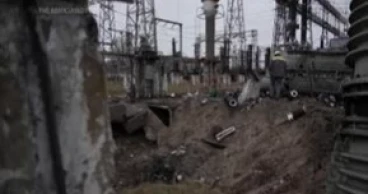
Around some of their precious transformers — the ones that still work, buzzing with electricity — the power plant workers have built protective shields using giant concrete blocks, so they have a better chance of surviving the next Russian missile bombardment.
Blasted out windows in the power plant's control room are patched up with chipboard and piled-up sandbags, so the operators who man the desks 24/7, keeping watch over gauges, screens, lights and knobs, are less at risk of being killed or injured by murderous shrapnel.
“As long as there is equipment that can be repaired, we will work,” said the director of the plant that a team of Associated Press journalists got rare access to.
The AP is not identifying the plant nor giving its location, because Ukrainian officials said such details could help Russian military planners. The plant’s director and his workers also refused to be identified with their full names, for the same reason.
Because the plant can't function without them, the operators have readied armored vests and helmets to wear during the deadly hails of missiles, so they can stay at their posts and not join less essential workers in the bomb shelter.
Each Russian aerial strike causes more damage, leaves more craters and more blast holes in the walls already pockmarked by explosions, and raises more questions about much longer Ukraine's energy workers will be able to keep homes powered, heated and lit in winter's subzero temperatures.
Read more: Ukraine: Russia put rocket launchers at nuclear power plant
And yet, against the odds and sometimes at the cost of their lives, they keep power flowing. They're holding battered plants together with bravery, dedication, ingenuity and dwindling stocks of spare parts. Each additional watt of electricity they manage to wring into the power grid defies Russian President Vladimir Putin's nearly 11-month invasion and his military's efforts to weaponize winter by plunging Ukrainians into the cold and dark.
Power, in short, is hope in Ukraine and plant workers won't let hope die.
In their minds, the plant is more than just a place where power is made. Over decades of caring for its innards of whirring turbines, thick cables and humming pipes, it's become something they have come to love and that they desperately want to keep alive. Seeing it slowly but systematically wounded by repeated Russian attacks is painful for them.
“The station is like an organism, each organ in it has some significance. But too many organs are already damaged," said Oleh. He has worked at the plant for 23 years.
“It hurts me so much to watch all this. This is inhuman stress. We carried this station in our arms like a child,” he said.
Successive waves of Russian missile and exploding drone attacks since September have destroyed and damaged about half of Ukraine's energy system, the government says. Rolling power cuts have become the norm across the country, with tens of millions of people now getting by with only intermittent power, sometimes just a few hours each day. The bombardments have also forced Ukraine to stop exporting electricity to neighbors Slovakia, Romania, Hungary, Poland and Moldova.
Russia has said the strikes are aimed at weakening Ukraine's ability to defend itself. Western officials say the suffering the blackouts cause for civilians is a war crime.
The plant that AP’s team visited has been struck repeatedly and heavily damaged. It still powers thousands of homes and industries, but its output is down significantly from pre-invasion levels, its workers say.
All parts of the facility bear scars. Missile fragments are scattered around, left where they landed by workers too busy to clear up. Workers say their families send them off to their shifts with the words: “May God protect you.”
Mykola survived one of the strikes. He started work at the plant 36 years ago, when Ukraine was still part of the Soviet Union.
“The windows flew out instantly, and dust began to pour from the ceiling,” he recalled. So he could immediately assess the damage, he put on his armored vest and helmet and ventured outside rather than taking cover in the bomb shelter.
“We have no fear,” Mykola said. “We’re more scared for the equipment that is needed to provide light and heat.”
Russian missile targeters seem to be learning as they go along, adapting their tactics to cause more damage, Oleh said. Missiles used to detonate at ground level, blasting out craters, but now they explode in the air, causing damage over wider areas.
As soon as it's safe, the plant's repair teams scramble — a dispiriting cycle of destruction and rebirth.
Read moreA:Ukraine's nuclear plant partly goes offline amid fighting
“The Russians are bombing and we are rebuilding, and they are bombing again and we are rebuilding. We really need help. We can’t handle it here by ourselves,” Oleh said. “We will restore it as long as we have something to repair it with.”
3 years ago

First day sales for Prince Harry’s tell-all memoir tops 1.4 million copies
No, the public has not tired of hearing about Prince Harry. Sales for “Spare” have placed the Duke of Sussex in some rarefied company.
Penguin Random House announced Wednesday that first day sales for the Harry’s tell-all memoir topped 1.4 million copies, a record pace for non-fiction from a company that also publishes Barack and Michelle Obama, whose “Becoming” needed a week to reach 1.4 million when it was released in 2018.
The sales figures for “Spare” include hardcover, audiobook and e-book editions sold in the U.S., Canada and the United Kingdom.
″‘Spare’ is the story of someone we may have thought we already knew, but now we can truly come to understand Prince Harry through his own words,” Gina Centrello, President and Publisher of the Random House Group, said in a statement.
“Looking at these extraordinary first day sales, readers clearly agree, ‘Spare’ is a book that demands to be read, and it is a book we are proud to publish.”
One of the most highly anticipated memoirs in recent times, “Spare” is Harry’s highly personal and intimate account of his life in the royal family and his relationship with the American actor Meghan Markle, Duchess of Sussex.
Michelle Obama’s memoir has since sold more than 15 million copies worldwide, its sales holding up over time in part because of highly favorable reviews. The verdict is mixed so far for “Spare.”
New York Times critic Alexandra Jacob called the book, and its author, “all over the map — emotionally as well as physically,” at times “frank and funny” and at other times consumed by Harry’s anger at the British press. In The Washington Post, Louis Bayard found “Spare” to be “good-natured, rancorous, humorous, self-righteous, self-deprecating, long-winded. And every so often, bewildering.”
3 years ago

Harry’s memoir, detailing toxic relationship between the monarchy and press, could accelerate change
In public, they present a united front — always. But Prince Harry has a very different story to tell about the British royals and the way they operate.
Harry’s explosive memoir, with its damning allegations of a toxic relationship between the monarchy and the press, could accelerate the pace of change already under way within the House of Windsor following the death of Queen Elizabeth II.
Harry’s description of royals leaking unflattering information about other members of the family in exchange for positive coverage of themselves is but one of the more tawdry allegations in his book, “ Spare,” published this week. The prince singled out King Charles III’s wife, Camilla, accusing her of feeding private conversations to the media as she sought to rehabilitate her image after her longtime affair with Charles when he was heir to the throne.
Read more: First day sales for Prince Harry’s tell-all memoir tops 1.4 million copies
Far from the unity that is presented in public, the royal family and their staffs are depicted as scheming rivals, ready to stab each other in the back to make themselves or their bosses look better in the public eye. The palace that Harry describes resembles a modern version of the court of King Henry VIII, where courtiers jockeyed for the monarch’s favor and some lost their heads.
The book leaves the impression of a deeply dysfunctional British royal family whose members are so concerned about the tabloid press that they are forced to make deals with journalists, says Ed Owens, author of “ The Family Firm: Monarchy, Mass Media and the British Public, 1932-53.” And the public, when faced with this proposition, may think twice.
“I think there needs to be some kind of reset, and we need to think carefully about what the monarchy is, what role it plays in society,” says Owens, a historian. “Because this idea of `we, the British taxpayers, pay and in return they perform’ — it’s really a broken and corrupting kind of equation.”
Largely funded by taxpayers, the monarchy plays a mostly ceremonial role in British society these days — masters of soft power. But supporters argue that the institution still serves a vital role, uniting the country behind shared history and traditions embodied in both the grandeur of royal ceremonies and the day-to-day work of royals as they open schools and hospitals and hand out honors to those who serve the nation.
News coverage of the royal family generally falls into one of two categories: carefully orchestrated public appearances or sometimes chaotic stories about the private lives of royals based on unidentified sources.
But change may be at hand.
The history of colonialism — so deeply intertwined with the crown — is being re-examined around the world. Protesters have torn down or defaced statues in British cities, and internationally respected universities such as Oxford and Cambridge are changing their course offerings. It all adds up to one thing: An institution that was once the symbol of the British Empire is facing scrutiny as never before.
Charles, who became king after the death of Queen Elizabeth II in September, faces the challenge of modernizing Britain’s 1,000-year-old monarchy to guarantee its survival. He has already said he plans to reduce the number of working royals and reduce the cost of the monarchy.
This has been a long time coming, perhaps, but was delayed by one key factor: Elizabeth herself.
Personal affection for the queen meant that the monarchy’s role in British society was rarely debated during her seven decades on the throne. Now that she’s gone, the royal family is confronting questions about its relevance in a modern, multicultural nation that looks very different than when Elizabeth ascended the throne in 1952.
In Elizabeth’s world — governed by the mantra “never complain, never explain” — the sort of personal revelations in Harry’s book would have been unthinkable. He describes his mental health struggles following the 1997 car accident that killed his mother, Princess Diana, He recounts a physical altercation with his older brother, Prince William, reveals how he lost his virginity and describes using cocaine and cannabis.
“Spare” is the latest effort by Harry and his wife, Meghan, to tell their own story after they quit royal life and moved to California in 2020, citing what they saw as the media’s racist treatment of Meghan and a lack of support from the palace.
In the ghostwritten memoir, Harry, 38, alleges that Camilla forged connections with the British press and traded information on her way to becoming queen consort, essentially feeding unflattering stories on Harry and Meghan to the press in exchange for better coverage of herself.
The allegations are particularly sensitive because of Camilla’s role in the acrimonious breakdown of Charles’ marriage to Diana. While many members of the public initially shunned Camilla, she has won fans by taking on a wide range of charitable activities and has been credited with helping Charles appear less stuffy and more in tune with modern Britain.
Daily Mail columnist Stephen Glover leapt to her defense, arguing that Harry was just thin-skinned.
“I daresay some members of the royal family have passed stories to the press through their courtiers over the years, but it is absurd and naïve to infer that this was part of an orchestrated attempt to destabilize Harry and Meghan,” he wrote. “Royals are not puppets of the press, since — if they have any sense — they realize they can be biffed as well as praised. The wise ones know how to take the rough with the smooth.’’
But unlike Elizabeth, who famously issued a statement suggesting that “some recollections may vary” when confronted with racism allegations after Meghan’s interview with Oprah Winfrey in 2021, Buckingham Palace has responded to the first major crisis of Charles’ reign with silence.
3 years ago

Several hurt in Paris station attack, attacker 'neutralized'
French media are reporting that people have been stabbed at a Paris train station and the interior minister says several people were injured before police “rapidly neutralized” the attacker.
Media reports, quoting unnamed police sources, say police opened fire early Wednesday morning on the attacker who was armed with a knife and injured several people.
Paris police say the incident at the Gare du Nord station is now over but are offering no other immediate details.
Read more: US warns of possible attack in Islamabad amid security fears
Interior Minister Gerald Darmanin also says the attacker injured several people at the station but his tweet gives no other details on their number or the extent of the injuries.
He says the attacker was “rapidly neutralized."
3 years ago
‘What madness looks like’: Russia intensifies Bakhmut attack
Russian forces are escalating their onslaught against Ukrainian positions around the wrecked city of Bakhmut, Ukrainian officials said, bringing new levels of death and devastation in the grinding, monthslong battle for control of eastern Ukraine that is part of Moscow’s wider war.
“Everything is completely destroyed. There is almost no life left,” Ukrainian President Volodymyr Zelenskyy said late Monday of the scene around Bakhmut and the nearby Donetsk province city of Soledar.
“The whole land near Soledar is covered with the corpses of the occupiers and scars from the strikes,” Zelenskyy said. “This is what madness looks like.”
The Kremlin, whose invasion of its neighbor 10 1/2 months ago has suffered numerous reversals, is hungry for victories. Russia illegally annexed Donetsk and three other Ukrainian provinces in September, but its troops have struggled to advance.
After Ukrainian forces recaptured the southern city of Kherson in November, the battle heated up around Bakhmut.
Ukraine’s deputy defense minister, Hanna Malyar, said Russia has thrown “a large number of storm groups” into the fight for the city. “The enemy is advancing literally on the bodies of their own soldiers and is massively using artillery, rocket launchers and mortars, hitting their own troops,” she said.
Pavlo Kyrylenko, the Donetsk region’s Kyiv-appointed governor, on Tuesday described the Russian attacks on Soledar and Bakhmut as relentless.
“The Russian army is reducing Ukrainian cities to rubble using all kinds of weapons in their scorched-earth tactics,” Kyrylenko said in televised remarks. “Russia is waging a war without rules, resulting in civilian deaths and suffering.”
Wounded soldiers arrive around the clock for emergency treatment at a Ukrainian medical stabilization center near the front line around Bakhmut. Medics fought for 30 minutes Monday to save a soldier, but his injuries were too severe.
Another soldier suffered a head injury after a fragment pierced his helmet. Medics quickly stabilized him enough to transfer him to a military hospital.
“We fight to the end to save a life,” Kostyantyn Vasylkevich, a surgeon and the center’s coordinator, told The Associated Press. “Of course, it hurts when it is not possible to save them.”
The Moscow-backed leader of the occupied areas of Donetsk said Tuesday that Russia’s forces were “very close” to taking over Soledar. But the gains were coming “at a very high price,” Denis Pushilin told Russian state TV.
Control over the city would create “good prospects” for taking over Bakhmut, as well as Siversk, a town further north where Ukrainian fortifications “are also quite serious,” Pushilin said.
The U.K. Defense Ministry concurred with that appraisal of the battle developments. Russian troops alongside soldiers from the Wagner Group, a Russian private military contractor, have advanced in Soledar and “are likely in control of most of the settlement,” the ministry tweeted Tuesday.
It said that taking Soledar, 10 kilometers (6 miles) north of Bakhmut, was likely Moscow’s immediate military objective and part of a strategy to encircle Bakhmut. But it added that “Ukrainian forces maintain stable defensive lines in depth and control over supply routes” in the area.
Read more: Ukraine faces grim start to 2023 after fresh Russian attacks
The Wagner Group’s leader, Dmitry Prigozhin, confirmed in a post on a Russian social media platform Tuesday that his forces are fighting in the area and acknowledged “heavy battles” in Soledar against a Ukrainian army he said “bravely fights.”
A Western official, speaking on condition of anonymity, said the Wagner Group “has moved from being a niche sideshow of Russia’s war to a major component of the conflict,” adding that its forces now make up as much as a quarter of Russian combatants.
An exceptional feature of the fighting near Bakhmut is that some of it has taken place around entrances to disused salt mine tunnels which run for some 200 kilometers (120 miles), the British intelligence report noted.
“Both sides are likely concerned that (the tunnels) could be used for infiltration behind their lines,” it said.
In Russia, two signs emerged Tuesday that officials were grappling with the military shortcomings revealed during the conflict in Ukraine.
Russian Defense Minister Shoigu, whose performance has been fiercely criticized in some Russian circles but who has retained Russian President Vladimir Putin’s confidence, said Tuesday that his military would use its experience in Ukraine to improve combat training.
Military communications and control systems will be improved using artificial intelligence, Shoigu said, and troops will be given better tactical gear and equipment.
The second indication of trouble involves Russia’s production of weapons and other supplies its military needs for the fight in Ukraine. The deputy head of Russia’s Security Council, Dmitry Medvedev, warned that officials who failed to meet deadlines for such items could face criminal charges.
Putin appointed Medvedev last month to head a new commission tasked with trying to solve the military’s supply problems. Numerous reports have suggested Russia is running low on certain weapons and was sending some troops into battle with insufficient equipment and clothing.
Part of the Kremlin’s challenge is keeping up with the weapons and supplies that Western allies have provided to Ukraine. Kremlin spokesman Dmitry Peskov said Tuesday that NATO members “have become a party to the conflict, pumping weapons, technology and intelligence data into Ukraine.”
Several front-line cities in eastern Ukraine’s Donetsk and Luhansk provinces have witnessed intense fighting in recent months.
Together, the provinces make up the Donbas, a broad industrial region bordering Russia that Putin identified as a focus from the war’s outset and where Moscow-backed separatists have fought since 2014.
Russia’s grinding eastern offensive captured almost all of Luhansk during the summer. Donetsk escaped the same fate, and the Russian military subsequently poured manpower and resources around Bakhmut.
Read more: Ukraine reports more Russian drone attacks
Taking Bakhmut would disrupt Ukraine’s supply lines and open a route for Russian forces to press on toward Kramatorsk and Sloviansk, key Ukrainian strongholds in Donetsk.
Like Mariupol and other contested cities, Bakhmut has endured a long siege without water and power even before Moscow launched massive strikes to take out public utilities across Ukraine.
Kyrylenko, the Donetsk region’s governor, estimated more than two months ago that 90% of Bakhmut’s prewar population of over 70,000 had fled since Moscow focused on seizing the entire Donbas.
Ukraine’s presidential office said at least four civilians were killed and another 30 wounded in Russian shelling between Monday and Tuesday.
Vitaliy Kim, the governor of the southern Mykolaiv region, said Russian forces shelled the port of Ochakiv and the area around it late Monday and again early Tuesday. He said 15 people, including a 2-year-old child, were wounded in Monday’s shelling.
3 years ago

Prince Harry accuses stepmother Camilla of 'dangerous' leaks to media
Prince Harry has accused his stepmother, Camilla, the queen consort, of leaking private conversations to the media to burnish her own reputation as he promotes a new book that lays bare his story of his life behind palace walls.
In interviews broadcast Sunday and Monday, Harry accused members of the royal family of getting “into bed with the devil” to gain favorable tabloid coverage, singling out Camilla’s efforts to rehabilitate her image with the British people after her longtime affair with his father, now King Charles III.
“That made her dangerous because of the connections that she was forging within the British press,” he told CBS. “There was open willingness on both sides to trade information. And with a family built on hierarchy, and with her on the way to being queen consort, there was gonna be people or bodies left in the street.”
Read More: Prince Harry says book an attempt to “own my story” after 38 years of “spin and distortion” by others
Harry spoke to Britain’s ITV, CBS’s “60 Minutes” and “Good Morning America″ to promote his book “Spare,” which is to be widely released Tuesday. Some U.K. bookshops opened at midnight to meet demand for the highly anticipated memoir, which has generated incendiary headlines with reports that it includes details of bitter family resentments, as well as Harry and his wife Meghan’s decision to give up their royal roles and move to California.
“I want to be able to paint the picture myself, see it for myself, and then be able to say, okay, yes, maybe things have changed or maybe the person has matured," said Chris Imfidon, chair of the charity Excellence in Education. He traveled from Essex to London to buy three copies of “Spare,” wanting to compare the media picture of Harry to what's in the book. "If I just read in the newspaper, I don’t think I’ll be satisfied just hearing because each newspaper gives it totally different picture of the duke, he said.
In the interviews, Harry repeatedly blamed the media for the troubles that afflicted the couple, also known as the Duke and Duchess of Sussex, saying the coverage contributed to the rift with his brother, Prince William, and his wife, Kate.
Read More: Prince Harry’s claim he killed 25 in Afghanistan draws anger, worry
“They always pitched us against each other,″ he told Good Morning America. “They pitch Kate and Meghan against each other.”
Harry was also unapologetic about launching legal battles against some parts of the British media. While he said his father believes it is “probably a suicide mission” to take on the press, Harry described changing the media landscape in the UK as being “my life’s work.”
But Harry also continued to criticize the royal family itself.
He repeated his claim that there was “concern” in the royal family about his unborn child’s skin color after he married biracial American actress Meghan Markle. Harry and Meghan first mentioned the incident during an interview with Oprah Winfrey in 2021, but they haven’t identified the family member who expressed concern.
Read More: Prince Harry’s assertion of killing 25 in Afghanistan criticised by both enemies and allies
Harry insisted his family wasn’t racist, but said the episode was an example of unconscious bias. The prince told CBS that he was “probably bigoted” before he met Meghan, and said that the royal family, which is held to a higher moral standard, needed to “learn and grow” in order to be “part of the solution rather than part of the problem.”
“Otherwise unconscious bias then moves into the category of racism,” Harry told ITV.
“Spare” explores Harry’s grief over the death of his mother in 1997, and his long-simmering resentment at his role as the royal “spare,” overshadowed by the “heir” — older brother William. He recounts arguments and a physical altercation with William, reveals how he lost his virginity and describes using cocaine and cannabis.
He also says he killed 25 Taliban fighters while serving as an Apache helicopter pilot in Afghanistan — drawing criticism from both the Taliban and British military veterans.
Read More: Prince Harry says William called Meghan “difficult, rude and abrasive” before physical attack
The allegations about Camilla are particularly sensitive because of her role in the acrimonious breakdown of Charles’ marriage to the late Princess Diana, William and Harry’s mother.
Diana once described Camilla, who carried out a long-term affair with Charles, as the third person in their marriage. While many members of the public initially shunned Camilla, she has won fans by taking on a wide range of charitable activities and has been credited with helping Charles appear less stuffy and more in tune with modern Britain.
Writing about his father’s 2005 wedding to Camilla, Harry says: “I had complex feelings about gaining a stepparent who, I believed, had recently sacrificed me on her personal PR altar.” Still, he says he wanted his father to be happy. “In a funny way I even wanted Camilla to be happy. Maybe she’d be less dangerous if she was happy?”
Read More: Harry and Meghan slam British tabloids in new Netflix series
“Spare” is the latest in a string of public pronouncements by Harry and Meghan since they quit royal life and moved to California in 2020, citing what they saw as the media’s racist treatment of Meghan and a lack of support from the palace. It follows the interview with Winfrey and a six-part Netflix series released last month.
In the ghostwritten memoir, Harry, 38, describes the couple’s acrimonious split from the royal family after their request for a part-time royal role was rejected.
The television interviews are certain to pile more pressure on the royal family. Harry is also appearing on “The Late Show with Stephen Colbert.”
Royal officials haven’t commented on any of the allegations, though allies have pushed back on the claims, largely anonymously.
Read More: Prince Harry's memoir ‘Spare’ to narrate journey from ‘trauma to healing’
Harry has defended the memoir describing it as his effort to “own my story” after years of “spin and distortion” by others. In the “60 Minutes” interview, Harry denied his book was intended to hurt his family.
Omid Scobie, co-author of “Finding Freedom,” a book on the Duke and Duchess of Sussex, said Harry is offering the look behind the palace walls that the public has always wanted.
“Of course, that does come with some downsides for those who have been part of his journey,″ Scobie told the BBC. “We heard some sort of really startling confessions and stories about members of the royal family, particularly when it comes to Camilla and her relationship with the press.’’
Read More: Meghan addresses youth summit on UK visit with Prince Harry
While Harry said he hadn’t spoken with his father or brother in a while, he hopes to find peace with them. But he told ITV that the “the ball is in their court.”
“They’ve shown absolutely no willingness to reconcile,” he said.
While the saga is damaging to the royal family, it may not be as harmful as people might think and will give the global audience a forum to discuss difficult issues like misogyny and racism, said Boston University professor Arianne Chernock, an expert in modern British history.
But she was cautious about doomsayers suggesting the monarchy itself was in trouble. The institution has endured more than 1,000 years after all.
“This is a central component of the history of the royal family,’’ she said. “Scandal is the norm not the exception.’’
Read More: William, Harry to unveil Diana statue as royal rift simmers
3 years ago

Prince Harry says book an attempt to “own my story” after 38 years of “spin and distortion” by others
Prince Harry defended his decision to publish a memoir that lays bare rifts inside Britain’s royal family, saying it’s an attempt to “own my story” after 38 years of “spin and distortion” by others.
Harry spoke to Britain’s ITV and CBS’s “60 Minutes” to promote his book, “Spare,” which has generated incendiary headlines with its details of private emotional turmoil and bitter family resentments.
In interviews broadcast Sunday, Harry accused members of the royal family of getting “into bed with the devil” to gain favorable tabloid coverage, claimed his stepmother Camilla, the queen consort, had leaked private conversations to the media and said his family was “complicit” in his wife Meghan’s “pain and suffering.”
Read more: Prince Harry’s claim he killed 25 in Afghanistan draws anger, worry
Harry said Camilla had to rehabilitate her image with the British people after her longtime affair with his father and that he was one of the victims of her efforts for better coverage in the tabloids.
“That made her dangerous because of the connections that she was forging within the British press,” he told CBS. “There was open willingness on both sides to trade information. And with a family built on hierarchy, and with her, on the way to being queen consort, there was gonna be people or bodies left in the street.”
He repeated his claim on ITV that there was “concern” in the royal family about his unborn child’s skin color after he married biracial American actress Meghan Markle, and said the British monarchy should address its attitudes to race.
Harry and Meghan first mentioned the incident during an interview with Oprah Winfrey in 2021. They have not identified the family member who expressed concern.
Read more: Prince Harry says William called Meghan “difficult, rude and abrasive” before physical attack
Harry said the episode was an example of unconscious bias rather than racism, adding that the royal family needed to “learn and grow” in order to be “part of the solution rather than part of the problem.”
“Otherwise unconscious bias then moves into the category of racism,” Harry said. He said that “especially when you are the monarchy – you have a responsibility, and quite rightly people hold you to a higher standard than others.”
He said a recent incident in which a former lady-in-waiting to Queen Elizabeth II asked a Black British woman where she was “really” from was “a very good example of the environment within the institution.”
“Spare” explores Harry’s grief at the death of his mother in 1997, and his long-simmering resentment at the role of royal “spare,” overshadowed by the “heir” — older brother Prince William. He recounts arguments and a physical altercation with William, reveals how he lost his virginity (in a field) and describes using cocaine and cannabis.
He also says he killed 25 Taliban fighters while serving as an Apache helicopter pilot in Afghanistan — a claim criticized by both the Taliban and British military veterans.
Harry told ITV that he cried only once after his mother’s death — at her burial. He said he feels guilt about not showing emotion when he and William greeted crowds of mourners outside Kensington Palace, Diana’s London home.
In the book Harry blames his family’s stiff-upper-lip ethos, saying he had “learned too well … the family maxim that crying is not an option.” The Associated Press purchased a Spanish-language copy of the book in advance of its publication around the world on Tuesday.
“There were 50,000 bouquets of flowers to our mother and there we were shaking people’s hands, smiling,” Harry told ITV journalist Tom Bradby. “I’ve seen the videos, right, I looked back over it all. And the wet hands that we were shaking, we couldn’t understand why their hands were wet, but it was all the tears that they were wiping away.
“Everyone thought and felt like they knew our mum, and the two closest people to her, the two most loved people by her, were unable to show any emotion in that moment.”
Harry told “60 Minutes” that it took him over a decade to accept that his mother was dead. He and his brother often discussed the notion that she had gone into hiding and would reappear later.
“I had huge amounts of hope,” he said.
It was only after reading the police report of his mother’s death, seeing photos from the scene and later — at the age of 23 — following the same route into the Paris tunnel where his mother died when her driver crashed while evading paparazzi that her death became a reality, he said.
“Spare” is the latest in a string of public pronouncements by Harry and Meghan since they quit royal life and moved to California in 2020, citing what they saw as the media’s racist treatment of Meghan and a lack of support from the palace. It follows the Winfrey interview and a six-part Netflix documentary released last month.
In the ghostwritten memoir, Harry, 38, describes the couple’s acrimonious split from the royal family in early 2020, after their request for a part-time royal role was rejected.
Harry contrasts the withdrawal of the couple’s taxpayer-funded security with the case of his uncle, Prince Andrew, who was removed as a working royal over his friendship with the U.S. sex offender Jeffrey Epstein.
Last year, Andrew settled a lawsuit from a woman who accused him of sexually abusing her while she traveled with financier Epstein when she was 17. Andrew paid an undisclosed sum as part of the settlement, but didn’t admit wrongdoing.
Harry alleges that no one considered removing Andrew’s security despite the “shameful scandal.”
The TV interviews are just two of several given by Harry that are set to heap more pressure on the royal family. He is also appearing on “Good Morning America” and “The Late Show with Stephen Colbert.”
Royal officials haven’t commented on any of the allegations, though allies have pushed back on the claims, largely anonymously.
Veteran British journalist Jonathan Dimbleby, a biographer and friend of King Charles III, said Saturday that Harry’s revelations were the type “that you’d expect … from a sort of B-list celebrity,” and that the king would be pained and frustrated by them.
In the “60 Minutes” interview, Harry denied that his description of his brother’s “alarming baldness” and fading resemblance to their mother as he aged was harsh and said his book was not intended to hurt his family.
While he said that he hadn’t spoken with his father or brother in a while, he hopes to find peace with them. Harry told ITV that he wants reconciliation with the royal family, but “the ball is in their court.”
“They’ve shown absolutely no willingness to reconcile,” he said.
3 years ago