Europe

France faces colonial legacy debate as stolen crown jewels spark scrutiny
The recent theft of France’s crown jewels from the Louvre has revived questions about the colonial origins of many museum treasures. While the jewels were crafted in France, their gems came from far-flung regions tied to imperial exploitation, including sapphires from Sri Lanka, diamonds from India and Brazil, pearls from the Persian Gulf, and emeralds from Colombia.
Experts say the heist has intensified calls for museums to be more transparent about their collections. “Many of these objects are entangled with violent, exploitative, colonial histories,” said criminologist Emiline C.H. Smith. Legal ownership under colonial-era rules does not erase the ethical questions about how these items were acquired.
The stolen pieces, including tiaras and necklaces of 19th-century queens like Marie-Amélie and Empress Eugénie, were crafted by French artisans, but the raw materials moved through imperial trade networks built on wealth extraction and forced labor. Historian Pascal Blanchard notes that while French craftsmen made the jewels, the stones themselves were “products of colonial production.”
The controversy echoes other restitution debates, such as India’s ongoing demand for the Koh-i-Noor diamond, and campaigns by Greece and Egypt to recover the Parthenon Marbles, the Rosetta Stone, and the Nefertiti bust. French law allows restitution only through specific parliamentary exceptions, which critics say limits the return of colonial-era treasures.
Art scholars argue that museums should provide fuller context on such artifacts. “Tell the honest and complete story,” said Dutch restitution specialist Jos van Beurden. This includes explaining where the materials came from, how they were traded, and who benefited, even if it complicates the museum narrative.
The theft has shone a spotlight not only on museum security but also on the ethical responsibility to acknowledge the colonial histories behind prized treasures, prompting calls for transparency and restitution across Europe’s leading institutions.
6 months ago
Spanish police arrest 13 suspected members of Venezuela’s Tren de Aragua gang
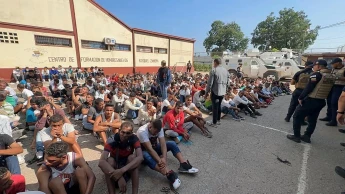
Spanish police have arrested 13 people accused of belonging to the Venezuelan criminal group Tren de Aragua, in what authorities said was the first major operation in Spain targeting the gang.
Police said Friday the arrests were carried out in five cities — Barcelona, Madrid, Girona, A Coruña and Valencia — as part of an operation to dismantle a suspected cell of the Venezuelan prison gang, which the U.S. government designated as a foreign terrorist organization earlier this year.
As part of the raids, officers also shut down two laboratories used to produce tusi — a synthetic drug made from a mix of cocaine, MDMA, and ketamine — and seized other narcotics, including cocaine.
The investigation began last year after the arrest in Barcelona of the brother of “Niño Guerrero,” the leader of the Tren de Aragua gang, under an international warrant issued by Venezuelan authorities.
Tren de Aragua originated more than a decade ago inside a notoriously violent prison in Venezuela’s Aragua state. The group has since expanded across Latin America and beyond, taking advantage of the mass exodus of Venezuelans — more than 7.7 million people — fleeing the country’s economic crisis.
Police said the operation marks a significant step in curbing the gang’s growing international reach and influence in Europe.
6 months ago

Audit warns Louvre to accelerate security upgrades after crown jewels heist
France’s court of auditors has urged the Louvre Museum to fast-track its security modernization plans, highlighting significant delays in upgrading safety systems before last month’s $102-million crown jewels heist.
Thursday’s report by the Cour des Comptes covers 2018–2024 and criticized the museum for prioritizing “visible and attractive” investments, such as acquiring new artworks and enhancing visitor experience, over building maintenance and technical upgrades, particularly in security.
“The theft of the crown jewels is undoubtedly a deafening alarm bell,” said Pierre Moscovici, head of the court of auditors. The report noted that plans to modernize security, first proposed in 2018, were repeatedly postponed, with actual technical work only scheduled to begin next year and completion planned by 2032.
The audit estimates the total cost of security upgrades at 83 million euros ($95 million), but only 3 million euros were invested between 2018 and 2024. Moscovici stressed that improved security could be achieved without increasing staff numbers, adding that outdated systems—not understaffing—enabled the October 19 heist, in which thieves used a basket lift to reach the Apollo Gallery.
The Louvre, in response, said it regretted the report did not consider disruptions caused by the COVID-19 pandemic and the 2024 Paris Olympics, which affected operational decisions. The museum confirmed it supports most of the auditors’ recommendations and noted that security improvements were already scheduled to start weeks after the theft.
Under the decade-long “Louvre New Renaissance” plan, the museum aims to modernize infrastructure, reduce crowding, and create a dedicated gallery for the Mona Lisa by 2031, at an estimated cost of 800 million euros ($933 million).
Following the heist, Culture Minister Rachida Dati announced immediate measures, including streetside anti-ramming and anti-intrusion devices, citing “security gaps” and structural underestimation of theft risks. Four suspects linked to the heist were recently arrested, though the stolen jewels have not yet been recovered.
6 months ago

Swastikas drawn with human blood shock German city of Hanau
German police have launched an investigation after dozens of swastikas painted with human blood were discovered on cars, mailboxes, and building walls across the central city of Hanau, authorities said Thursday.
Police spokesman Thomas Leipold said officers were alerted late Wednesday after a resident reported a swastika drawn in a reddish substance on the hood of a parked car. Nearly 50 vehicles were later found defaced in a similar manner. Tests confirmed the substance was human blood.
Displaying Nazi symbols, including the swastika, is illegal in Germany.
“The motive is completely unclear,” Leipold told reporters, adding that investigators do not yet know whether specific targets were chosen or if the attacks were random. Other unidentified markings were also found on some buildings and vehicles.
Police said they have no leads yet on who carried out the vandalism or how the blood was obtained. There were no reports of injuries linked to the incidents. Officers are currently investigating for property damage and use of unconstitutional symbols.
Hanau Mayor Claus Kaminsky expressed outrage, calling the act “a violation of every boundary of decency and humanity.” He said the city has filed a criminal complaint over the vandalism.
“Especially in our city, which was deeply scarred by the racist attack of February 19, 2020, this act causes deep consternation,” Kaminsky said, referring to the deadly far-right shooting that claimed nine lives at a local hookah bar five years ago.
He vowed that Hanau would not tolerate hate symbols or intimidation. “Swastikas have no place here,” the mayor said. “We will not allow such symbols to sow fear or division.”
6 months ago
Bank of England holds interest rate at 4% as inflation stays high
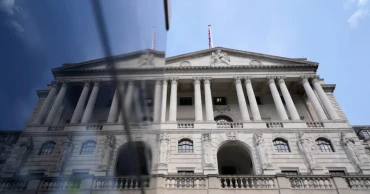
The Bank of England on Thursday decided to keep its benchmark interest rate unchanged at 4%, as inflation in the UK continues to remain well above its 2% target and policymakers await the government’s upcoming national budget.
The decision by the nine-member Monetary Policy Committee was narrowly split, with five members voting to maintain the current rate and four favoring a 0.25 percentage point cut.
Governor Andrew Bailey said the central bank still expects interest rates to move gradually downward but emphasized that policymakers must be confident inflation is heading sustainably toward the 2% target before easing further.
Consumer price inflation currently stands at 3.8%, nearly twice the bank’s goal. While inflation is projected to fall in the coming months and potentially return to target next year, uncertainty ahead of the Nov. 26 budget has prompted the bank to act cautiously.
Treasury chief Rachel Reeves has already warned that taxes may need to rise in the budget, a move that could weigh on Britain’s sluggish economy but also help curb price pressures. She has signaled that bringing inflation down remains a key priority for the government.
6 months ago
Six Turkish journalists questioned over reports on jailed Istanbul mayor
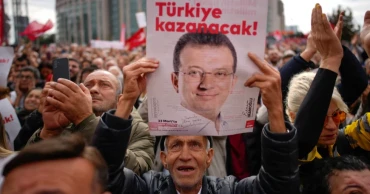
Six prominent Turkish journalists were summoned by police on Thursday for questioning over reports concerning Istanbul’s imprisoned opposition mayor, Ekrem Imamoglu.
According to the Istanbul Chief Prosecutor’s Office, the journalists were called to testify as part of an investigation into the so-called “Imamoglu criminal organization for profit.” They were questioned on accusations of “publicly spreading false information and aiding a criminal organization,” though it remains unclear whether formal charges have been filed.
Imamoglu, a member of the main opposition Republican People’s Party (CHP) and widely regarded as President Recep Tayyip Erdogan’s main political rival, has been detained since March following his arrest along with dozens of municipal officials on corruption allegations. He has yet to face trial.
His arrest sparked the largest street protests in Turkey in over a decade. CHP Deputy Chairman Burhanettin Bulut said police raided the journalists’ homes early Thursday, confiscating their phones.
“This is a clear attempt to intimidate and silence the opposition and the free press,” Bulut said, describing the incident as part of a “systematic witch hunt” against critical voices.
The journalists named by prosecutors are Soner Yalcin, Saban Sevinc, Asli Aydintasbas, Rusen Cakir, Yavuz Oghan, and Batuhan Colak — all known for questioning the legitimacy of the charges against Imamoglu, which many see as politically motivated.
Imamoglu also faces a separate espionage case filed on October 27.
According to Reporters Without Borders’ 2025 Press Freedom Index, Turkey ranks 159th out of 180 countries. Source: AP
6 months ago
Germany bans Muslim group over extremism threat
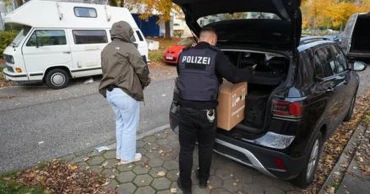
The German government on Wednesday banned a Muslim organization, accusing it of undermining human rights and democratic values, and launched nationwide raids targeting two other Muslim groups.
The Interior Ministry said the banned group, Muslim Interaktiv, posed a threat to Germany’s constitutional order by promoting antisemitism and discrimination against women and LGBTQ+ individuals. Known for its strong online presence, the group targeted young Muslims who feel marginalized in Germany’s predominantly Christian society.
Authorities said the organization promoted Islamic law over German law in community life, particularly regarding women’s rights. The government has recently stepped up actions against extremist groups, including far-right and Islamist organizations, following attacks by both factions.
Interior Minister Alexander Dobrindt said, “We will use the full force of the law against anyone who incites hatred, calls for a caliphate, or undermines women’s and minority rights.” Investigations are ongoing against two other Muslim groups, Generation Islam and Reality Islam.
Raids were conducted at seven locations in Hamburg, and 12 more in Berlin and Hesse. Authorities warned that Muslim Interaktiv aimed to indoctrinate people and create “permanent enemies of the constitution.”
Hamburg’s Interior State Minister Andy Grote praised the ban as a blow to “modern TikTok Islamism,” while anti-extremism activist Ahmad Mansour said the move was necessary to curb the group’s aggressive online campaigns targeting youth.
Muslim Interaktiv’s online platforms were reportedly taken down Wednesday morning, and the group was unavailable for comment.
6 months ago
Worker dies after 11 hours trapped in partially collapsed Rome tower
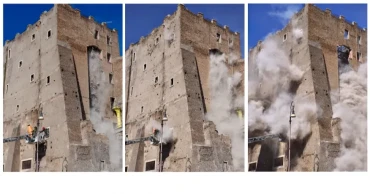
A worker trapped for 11 hours under rubble in a partially collapsed medieval tower in central Rome died Monday night despite rescue efforts, Italian authorities confirmed.
The Romanian foreign ministry identified the man as Octav Stroici and thanked rescuers for their determination. Another Romanian worker was rescued and is in stable condition. The collapse occurred during renovation work on the 13th-century Torre dei Conti, which has been closed since 2007 and is undergoing an €8 million restoration.
Rescue crews faced complex challenges as parts of the tower continued to crumble, using cranes, aerial ladders, and rubble-suction equipment to reach Stroici. Three other workers escaped unharmed, while a fourth was hospitalized in critical condition. No firefighters were injured.
Italian Premier Giorgia Meloni and Romanian President Nicusor Dan expressed condolences. Prosecutors have opened an investigation into possible negligence during the restoration work.
The Torre dei Conti, damaged by previous earthquakes and collapses over centuries, is being restored with new museum installations and updated electrical and water systems, with structural surveys conducted prior to the latest phase of work.
7 months ago

Centrist D66 party edges out far right in Dutch election
The centrist D66 party narrowly defeated far-right leader Geert Wilders’ Party for Freedom (PVV) in a tight Dutch national election that came down to ballots cast by citizens living abroad, according to final results released Tuesday by national news agency ANP.
Both parties secured 26 seats in parliament, but D66 held an advantage of roughly 28,000 votes, not enough to gain an extra seat under the country’s proportional voting system.
ANP projections based on nearly complete results had predicted a D66 victory, though confirmation came only late Monday night when overseas votes were tallied.
D66 leader Rob Jetten, 38, hailed the outcome as a “historic result,” saying he was proud but recognized the “great responsibility” that came with the win. Jetten is set to become the Netherlands’ youngest and first openly gay prime minister if he succeeds in forming a coalition government.
For Wilders, the result marks a major setback. His PVV lost 11 seats compared to its previous showing, a sharp decline from its shock victory two years ago that shifted Dutch politics dramatically to the right. Wilders’ party had helped form — and later collapse — a four-party coalition mired in internal disputes and unable to push through tough new migration measures.
After the results, Wilders hinted on social media that there may have been irregularities in the vote count, but local election officials and the independent Electoral Council quickly dismissed the allegations as baseless. The council is set to certify the final results on Friday.
With no single party near a majority, coalition talks are expected to take weeks or even months in the Netherlands’ fragmented political system. As the largest party, D66 will take the lead in forming the next government.
Jetten and other party leaders are scheduled to meet later Tuesday to begin preliminary coalition discussions.
7 months ago

Dutch court opens trial of Eritrean accused of brutal migrant smuggling network
A Dutch court on Monday began the trial of an Eritrean man accused of leading a violent migrant smuggling network that trafficked East Africans to Europe under harrowing conditions.
Prosecutors allege that the suspect, identified as Tewelde Goitom, also known as Amanuel Walid, extorted families of migrants held in detention camps in Libya, demanding large ransoms for their release.
Goitom, who appeared in court wearing jeans and a blue jacket, denied the charges, claiming he was wrongly identified. “I am still the one I said I was earlier,” he said through an interpreter. The 2022 extradition from Ethiopia, where he was convicted of similar crimes, brought him to the Netherlands for trial.
Dutch prosecutors said the case is among the largest human smuggling prosecutions ever held in the country and is expected to continue for three weeks. They also plan to merge the case with that of Kidane Zekarias Habtemariam, one of the world’s most wanted traffickers, who escaped from Ethiopian custody in 2020 and is now detained in the United Arab Emirates awaiting extradition.
Prosecutors claim Dutch jurisdiction because parts of the smuggling network allegedly operated in the Netherlands, while the defense argued there is “no clear connection,” saying payments were made in Eritrea or through the UAE.
Refugee aid group VluchtelingenWerk reported a rise in Eritrean asylum seekers in the Netherlands, many fleeing repression and indefinite national service in their home country. A recent UN probe found that Eritrean conscripts face torture, sexual violence, and forced labor. About 28,000 people of Eritrean descent currently live in the Netherlands.
7 months ago