Europe
Russian glide bomb kills 24 pensioners in eastern Ukraine
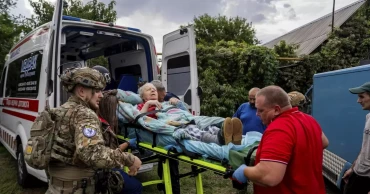
A Russian glide bomb struck a village in eastern Ukraine on Tuesday as residents queued to collect their monthly pensions, killing at least 24 people and injuring 19 others, Ukrainian officials said.
The attack hit Yarova village in Donetsk region around 11 a.m., less than 10 kilometers from the front line. Regional head Vadym Filashkin said 23 of those killed were elderly pensioners.
“It was beyond words,” said resident Hennadii Trush, who lost his wife in the blast as she waited to collect her bedridden mother’s pension. He fled the village with his elderly mother after the attack. “Before, strikes landed on the outskirts. This time it was right in the center of the village,” he told the Associated Press, weeping with soot still on his face.
The strike destroyed homes and set the village ablaze. “The whole village is on fire,” said Pavlo Diachenko, head of communications for the regional police, who rushed to the scene. “Private houses were burning, and people tried to put out the flames with their own hands.”
The explosion tore through a mobile post office vehicle where pensions were being distributed, according to Ukrposhta, Ukraine’s postal service. The local post office had shut down a week earlier after staff evacuated. “Apparently, someone gave away the coordinates,” said Ukrposhta head Ihor Smilianskyi, noting that the car had been parked under trees to avoid detection.
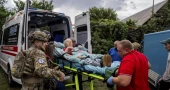
At the morgue, victims showed severe blast wounds and burns. “They were all lying in one heap,” said Zinaida Hrymailo, who came to identify her 75-year-old cousin. She said her cousin had been preparing to leave Yarova after collecting her pension but died before she could flee.
Ukrainian President Volodymyr Zelenskyy condemned the attack as “frankly brutal,” urging the world to impose tougher sanctions on Russia. “The world should not remain silent,” he wrote on Telegram. “The United States needs a reaction. Europe needs a reaction. Strong action is needed so that Russia stops bringing death.”
The UN says more than 12,000 civilians have been killed since Russia’s full-scale invasion in February 2022. The latest strike came two days after Russia launched its largest aerial barrage of Kyiv since the war began.
Poland on alert
The assault also raised tensions in neighboring Poland, whose military said it went on the highest state of air defense alert overnight Tuesday. “To ensure the security of Polish airspace, the operational commander of the Polish armed forces has activated all necessary procedures,” the Operational Command said.
Polish and allied aircraft, along with radar systems, were fully deployed in what officials called “preventative” actions to secure areas adjacent to Ukraine.
European Council President Antonio Costa denounced the attack, asking: “Is this what Russia means when it talks about peace? When will President Putin accept to start peace talks already accepted by President Zelenskyy?”
Meanwhile, US and European officials held talks in Washington on new sanctions and tariffs targeting Russian oil revenues, as fears mount that Ukraine’s air defenses are being depleted faster than they can be replaced.
Glide bombs — retrofitted Soviet-era weapons that can weigh up to 3,000 pounds — have devastated eastern Ukraine in recent months.
8 months ago
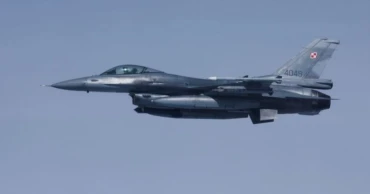
Poland shoots down drones after airspace violations amid Russian strikes on Ukraine
Poland said Wednesday it shot down drones that violated its airspace during Russia’s latest large-scale aerial assault on Ukraine, forcing the temporary closure of four airports and putting its armed forces on the highest state of alert.
The Operational Command of the Polish Armed Forces claimed in a statement, “During today’s attack by the Russian Federation targeting Ukraine, our airspace was repeatedly violated by drones.”
“At the request of the operational commander, weapons have been used, and operations are under way to locate the downed targets”, the military said.
Polish and NATO aircraft were scrambled, while ground-based air defence and radar systems were moved to maximum readiness. Prime Minister Donald Tusk confirmed that “an operation is under way related to multiple violations of Polish airspace.”
Earlier, flights were suspended at Warsaw’s Chopin Airport, Rzeszow–Jasionka Airport, Modlin Airport, and Lublin Airport, according to notices on the US Federal Aviation Administration’s website. The Polish military did not directly mention the closures.
Ukraine’s Air Force initially reported that Russian drones had crossed into Polish territory, posing a threat to the southeastern city of Zamosc. But the statement was later removed later. Overnight, much of Ukraine — including western border regions Volyn and Lviv — was under extended air raid alerts.
Border with Belarus to close amid Russian-led drillsSeparately, Poland said it will close its border with Belarus from midnight Thursday due to Russian-Belarusian military exercises known as “Zapad-2025,” scheduled to begin Friday in western Russia and Belarus. The drills have raised alarm in NATO countries bordering Belarus — Poland, Lithuania, and Latvia.
Interior Minister Marcin Kierwiński said the border would reopen only when the government is sure “there is no more threat to Polish citizens.”
Belarus summoned Poland’s chargé d’affaires to protest the move, calling it “an abuse of geographical position” that “caused significant difficulties.” Its Foreign Ministry said the suspension reflected “an intention to conceal one’s own actions rather than any real threat from Belarus.”
Lithuania also announced it would tighten border security with both Belarus and Russia during the drills.
8 months ago
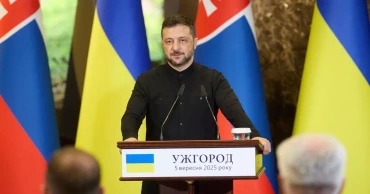
Russian glide bomb kills 21 pension seekers in eastern Ukraine village attack
A Russian glide bomb struck a village in eastern Ukraine on Tuesday as residents queued outside to collect their pensions, killing at least 21 people and injuring around two dozen others, according to Ukrainian President Volodymyr Zelenskyy and local officials.
The attack hit Yarova village in Donetsk region, less than 10 kilometers (6 miles) from the front line, Zelenskyy said on Telegram. It marked another deadly strike on civilians in the three-year conflict, which has claimed more than 12,000 civilian lives, according to the United Nations.
Calling the strike “frankly brutal,” Zelenskyy urged tougher international sanctions to hold Russia accountable. “The world should not remain silent … strong action is needed so that Russia stops bringing death,” he wrote.
The assault comes as U.S.-led peace initiatives have stalled and Russia has stepped up aerial attacks. On Sunday, Moscow launched the largest drone and missile barrage on Kyiv since the war began in February 2022.
Despite U.S. President Donald Trump’s efforts to convince Russian leader Vladimir Putin to agree to a ceasefire and talks with Zelenskyy, Moscow has intensified its bombing campaign. Western officials worry Ukraine is depleting its air defenses faster than replacements can arrive.
U.S. and European officials met at the Treasury Department in Washington on Monday to explore new economic measures against Russia, including additional sanctions and oil tariffs, according to a person familiar with the talks. Discussions were expected to continue Tuesday.
Glide bombs, Soviet-era munitions modified with guidance systems, have been devastating eastern Ukraine for months. Some now weigh up to 3,000 pounds (1,360 kilograms), six times heavier than those first deployed in 2022.
In rural Ukrainian villages, pensions are typically distributed in cash at local post offices or mobile postal vans due to limited access to banking services. Photos from the scene showed bodies near a damaged Ukrposhta vehicle parked under trees, apparently serving as a mobile post office.
Ukrposhta head Ihor Smilianskyi said the van was positioned under cover to avoid detection, but “apparently, someone gave away the coordinates.”
Donetsk Governor Vadym Filashkin confirmed 21 deaths and 21 injuries, calling the strike “pure terrorism.” Emergency services were deployed to the site, he added.
Yarova was occupied by Russian forces in 2022 but recaptured by Ukrainian troops later that year.
8 months ago
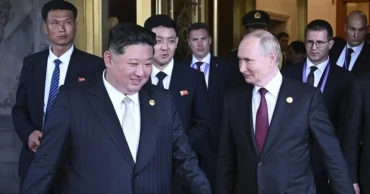
Russia unleashes 500+ drones and missiles on Ukraine as Zelenskyy appeals for more aid
Russia fired over 500 drones and two dozen missiles at Ukraine overnight, hitting civilian infrastructure and energy facilities in central and western regions, authorities said Wednesday. At least five people were wounded, Ukrainian officials reported.
President Volodymyr Zelenskyy described the strikes as “demonstrative,” accusing Vladimir Putin of showing “impunity” and calling for tougher sanctions on Russia’s war economy. The attacks come as Kyiv engages with European leaders to strengthen defenses and revive stalled U.S.-led peace efforts.
Zelenskyy visited Denmark and was due in Paris for talks with French President Emmanuel Macron on postwar security guarantees, while British Defense Secretary John Healey met Ukrainian officials on military aid. NATO Secretary-General Mark Rutte said clarity is expected after the Paris talks on what each country can contribute without overstretching alliance resources.
Meanwhile, Putin met in China with Xi Jinping, Kim Jong Un, and Indian Prime Minister Narendra Modi, countries Washington says are indirectly aiding Russia’s war effort through troops, weapons, and oil purchases.
9 months ago
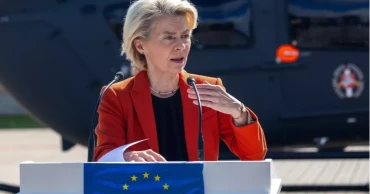
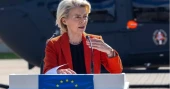
EU leader’s plane hit by suspected Russian GPS jamming in Bulgaria
A plane carrying European Commission President Ursula von der Leyen experienced GPS jamming over Bulgaria in what officials suspect was Russian interference, the EU said Monday.
The aircraft landed safely in Plovdiv, and von der Leyen continued her four-day tour of EU states bordering Russia and Belarus. Commission spokesperson Arianna Podestà confirmed the disruption, citing Bulgarian authorities’ suspicion of “blatant interference by Russia.”
Podestà said the incident highlighted the urgency of von der Leyen’s mission, stressing EU commitments to boost defense spending and readiness. Bulgaria also confirmed the aircraft lost GPS navigation signals on approach to Plovdiv Airport. Von der Leyen was scheduled to hold a press conference later in Romania.
9 months ago

UK court backs government in case over asylum-seekers’ hotel housing
Britain’s Court of Appeal on Friday overturned a High Court order that would have forced asylum-seekers to leave a hotel northeast of London, a site that has drawn weeks of protests and national political debate.
A three-judge panel ruled in favor of the Labour government and hotel owner Somani Hotels, allowing 138 asylum-seekers to remain at the Bell Hotel in Epping, Essex. The High Court had earlier ordered their eviction by Sept. 12, citing local planning laws.
Justice David Bean said the lower court “made a number of errors,” warning that closing one site would only shift the burden elsewhere and that considering protests as grounds for closure risked encouraging “lawlessness.”
The case has fueled controversy as councils elsewhere consider similar legal action. Opponents say the government is prioritizing asylum-seekers over local residents, a charge Labour denies. Conservative leader Kemi Badenoch said, “Local communities should not pay the price for Labour’s total failure on illegal immigration.”
Protests—both peaceful and violent—have been staged outside the hotel in recent weeks. Tensions escalated after a resident was charged with sexual assault of a 14-year-old girl.
Health Minister Stephen Kinnock warned that closing hotels could leave migrants homeless but said alternative housing options are being sought.
As of June, more than 32,000 asylum-seekers were housed in hotels across Britain, according to the Home Office, down from a peak of 56,000 in September 2023.
9 months ago
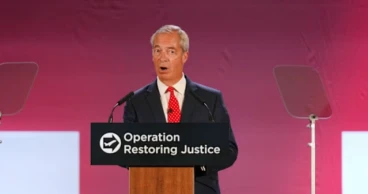
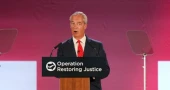
Far-right Reform UK promises to deport migrants en masse if elected
Nigel Farage, leader of Britain’s far-right Reform UK party, said Tuesday that if his party wins the next election, the U.K. will withdraw from the European Convention on Human Rights and begin immediate detention and deportation of anyone entering the country illegally.
Farage outlined his immigration plans amid a sharp rise in small-boat arrivals across the English Channel and weeks of protests over the use of hotels to house asylum-seekers.
Although Reform holds only four of the 650 seats in the House of Commons, recent polls show the party matching or overtaking both Labour and the Conservatives by capitalizing on public anger over the migrant crisis.
“If you come to the U.K. illegally, you will be detained and deported and never, ever allowed to stay, period,” Farage said at a press conference.
He added: “The mood in the country around this issue is a mix between total despair and rising anger,” warning of “a genuine threat to public order” if the problem is not addressed.
Farage repeated his claim that the U.K. is being “invaded” by migrants, linking the pressure on health care and housing to asylum-seekers. He pledged to leave the European rights framework and repeal or “disapply” other treaties to block asylum claims and enforce deportations.
The party also promised to expand detention capacity and strike return deals with countries such as Afghanistan, Eritrea and Iran. Asked about the risk of migrants facing torture or death if sent back, Farage said: “The alternative is to do nothing ... We cannot be responsible for all the sins that take place around the world.”
More than 28,000 people have crossed the Channel so far this year, up nearly 50% from last year, while asylum applications exceeded 111,000 in the 12 months to June.
Prime Minister Keir Starmer has already scrapped the Conservatives’ Rwanda deportation plan, instead relying on a deal with France to return some Channel crossers. Officials also plan to speed up asylum processing, but the government faces backlash over housing tens of thousands of asylum-seekers in hotels at public expense.
Protests erupted in recent weeks after a hotel resident was charged with sexually assaulting a 14-year-old girl, which he denies. Demonstrations and counterprotests intensified after authorities obtained a temporary injunction to shut down the Bell Hotel in Epping, near London.
9 months ago
Crimea: The strategic Black Sea peninsula claimed by Russia and Ukraine
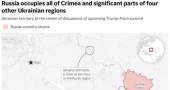
Russia’s swift and largely bloodless seizure of Ukraine’s Crimean Peninsula in March 2014 not only strained Moscow’s ties with the West to levels unseen since the Cold War but also paved the way for its full-scale invasion of Ukraine in 2022.
The annexation followed Ukraine’s 2013-14 uprising, which forced pro-Moscow President Viktor Yanukovych from office. Taking advantage of the chaos, Russian forces without insignia occupied Crimea, and a referendum later organized by Moscow—deemed illegal by Ukraine and Western nations—led to its annexation. Only a few countries, including North Korea and Sudan, recognized the move. In Russia, it sparked a surge of patriotism, with “Krym nash!” (“Crimea is ours!”) becoming a rallying cry and boosting President Vladimir Putin’s approval rating from 65% in January 2014 to 86% by June. The annexation was fiercely opposed by Crimean Tatars, and dissenting voices faced prosecution.
Following the annexation, fighting erupted in eastern Ukraine between pro-Kremlin militias and Kyiv’s forces, with Moscow providing covert support. Evidence included the 2014 downing of Malaysia Airlines Flight MH17 by a Russia-supplied missile. Russian hard-liners later criticized Putin for not taking full control of Ukraine during its vulnerable period. The conflict simmered until February 2022, when Russia launched a full-scale invasion.
Trump says Zelenskyy is prolonging war in Ukraine by resisting calls to cede Crimea to Russia
Strategically located on the Black Sea, Crimea has long been contested. Originally home to Tatars, it was annexed by Russia in the 18th century, later became part of the Soviet Union, and was transferred to Ukraine in 1954. Following the Soviet collapse in 1991, Crimea remained Ukrainian territory, though Russia maintained its Black Sea Fleet base in Sevastopol. Ukraine considers Crimea central to its national identity, and President Volodymyr Zelenskyy has vowed to reclaim it.
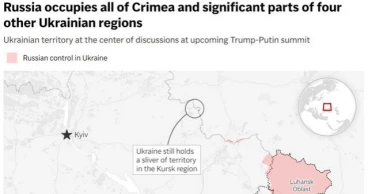
In the 2022 war, Russian forces used Crimea as a launch point to seize southern Ukraine and establish a land corridor linking Russia to the peninsula via Donetsk, Luhansk, Zaporizhzhia, and Kherson. Ukraine has repeatedly targeted Crimea, including the Black Sea Fleet and the Kerch Bridge, to weaken Russian control.
Crimea also remains central to peace negotiations. In 2024, Putin demanded Ukraine recognize Crimea as Russian territory as part of any settlement, alongside concessions over four other illegally annexed regions, NATO membership, military restrictions, and protections for Russian-speaking populations. Kyiv has rejected all territorial concessions. Any deal freezing frontlines would largely favor Moscow, which currently controls about 20% of Ukraine, including Crimea.
Source: Agency
9 months ago

European leaders to join Zelenskyy for White House talks
European and NATO leaders said Sunday they will join Ukrainian President Volodymyr Zelenskyy in Washington for key talks with U.S. President Donald Trump, showing support after Zelenskyy was excluded from Trump’s summit with Russian President Vladimir Putin.
The coordinated move — with several European leaders announcing they will accompany Zelenskyy to the White House on Monday — appears aimed at ensuring the meeting goes more smoothly than the February encounter, when Trump sharply criticized the Ukrainian president in the Oval Office.
“Europeans are very concerned about a repeat of the Oval Office confrontation, so they want to fully support Mr. Zelenskyy,” said retired French General Dominique Trinquand, former head of France’s military mission at the UN. “It’s a power play that could work with Trump,” he added.
Their presence could reassure Kyiv and other European capitals that Ukraine will not be pressured into a peace deal with Russia that Trump has expressed interest in brokering.
It remains unclear whether all of the European leaders will join the meeting with Trump.
Trump rolls out red carpet for Putin, leaving Ukrainians feeling betrayed
European Commission President Ursula von der Leyen confirmed on X that she will attend the talks, “at the request of President Zelenskyy.” NATO Secretary-General Mark Rutte will also participate, according to his office.
French President Emmanuel Macron’s office said he will travel to Washington alongside Zelenskyy, though it did not confirm if he will attend the meeting. German Chancellor Friedrich Merz is also part of the European delegation, but it is unclear whether he will take part in the actual discussions with Trump.
The joint trip highlights Europe’s determination to maintain a role in U.S.-led peace efforts following Trump’s Friday summit with Putin, which excluded Zelenskyy.
9 months ago
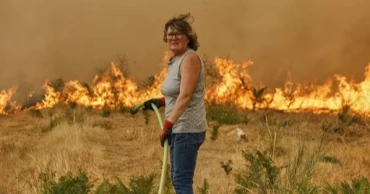
Spain, Portugal, and Greece fight wildfires amid prolonged heatwave
Firefighters in Spain, Portugal, and Greece continued battling wildfires Friday, a public holiday in all three countries, as hot, dry conditions hampered containment efforts.
Spain faced 14 major fires, with temperatures expected to rise over the weekend. “Today will once again be a very tough day, with an extreme risk of new fires,” Prime Minister Pedro Sánchez wrote on X. The national weather agency AEMET warned of extreme fire risk across most of the country, including northern and western regions where the largest blazes were burning. Fires in Galicia forced the closure of several highways, and the high-speed rail link to Madrid remained suspended. So far this year, wildfires have burned 158,000 hectares (610 square miles) in Spain, roughly the size of metropolitan London.
Firefighters struggle to contain wildfire near L.A. suburbs
In Portugal, nearly 4,000 firefighters were tackling seven major fires. Authorities extended the state of alert until Sunday amid continued high temperatures.
On the Greek island of Chios, a wildfire raged for a fourth day, prompting overnight evacuations. Two water-dropping planes and two helicopters aided firefighters as a brief lull in winds provided some relief. Authorities also remained on alert near Athens and southern regions following large fires earlier in the week.
The Ecumenical Patriarch Bartholomew expressed solidarity with wildfire victims during prayers for the Dormition of the Virgin Mary, an important Orthodox holiday.
Source: Agency
9 months ago