Europe
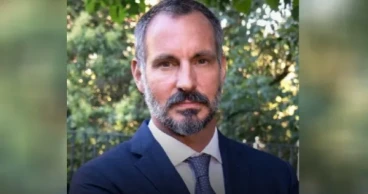
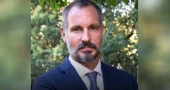
Rahim Al-Hussaini named new Aga Khan, spiritual leader of Ismaili Muslims
Rahim Al-Hussaini was named Wednesday as the new Aga Khan, spiritual leader of the world’s millions of Ismaili Muslims.
He was designated as the Aga Khan V, the 50th hereditary imam of the Shiite Ismaili Muslims, in his father’s will. His father died Tuesday in Portugal.
The Aga Khan is considered by his followers to be a direct descendant of the Prophet Muhammad and is treated as a head of state.
The Aga Khan Development Network and the Ismaili religious community announced earlier that His Highness Prince Karim Al-Hussaini, the Aga Khan IV and 49th hereditary imam of the Shiite Ismaili Muslims, died surrounded by his family.
It said his burial and will-reading will be held in the coming days, followed by an homage ceremony.
The late Aga Khan was given the title of “His Highness” by Queen Elizabeth in July 1957, two weeks after his grandfather the Aga Khan III unexpectedly made him heir to the family’s 1,300-year dynasty as leader of the Ismaili Muslim sect.
A defender of Islamic culture and values, he was widely regarded as a builder of bridges between Muslim societies and the West despite — or perhaps because of — his reticence to become involved in politics.
Serbia's prime minister resigns as anti-corruption protests grow
The Aga Khan Development Network, his main philanthropic organization, deals mainly with issues of health care, housing, education and rural economic development. It says it works in over 30 countries and has an annual budget of about $1 billion for nonprofit development activities.
Ismailis lived for many generations in Iran, Syria and South Asia before also settling in east Africa, Central Asia and the Middle East, as well as Europe, North America and Australia more recently. They consider it a duty to tithe up to 12.5% of their income to the Aga Khan as steward.
1 year ago
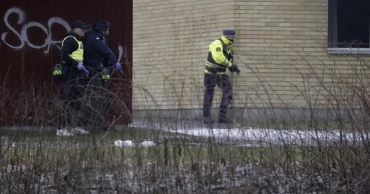
10 killed in shooting at adult education center in Sweden
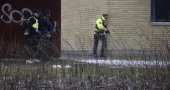
At least 10 people, including the gunman, were killed Tuesday at an adult education center in what Sweden’s prime minister called the country’s worst mass shooting. But a final death toll, a conclusive number of wounded and a motive hadn’t yet been determined hours later.
Prime Minister Ulf Kristersson gave a news conference in the aftermath of the tragedy, which happened on the outskirts of Orebro. The city is about 200 kilometers (125 miles) west of Stockholm.
The school, called Campus Risbergska, serves students over age 20, according to its website. Primary and upper secondary school courses are offered, as well as Swedish classes for immigrants, vocational training and programs for people with intellectual disabilities.
“Today, we have witnessed brutal, deadly violence against completely innocent people,” Kristersson told reporters in Stockholm. “This is the worst mass shooting in Swedish history. Many questions remain unanswered, and I cannot provide those answers either.
“But the time will come when we will know what happened, how it could occur, and what motives may have been behind it. Let us not speculate,” he said.
Gun violence at schools is very rare in Sweden. But there have been several incidents in recent years in which people were wounded or killed with other weapons such as knives or axes.
Justice Minister Gunnar Strömmer called the shooting “an event that shakes our entire society to its core.”
While Swedes read about such violence in other places, Strömmer said that the country previously felt it wouldn’t happen there. Other tragedies in Swedish schools weren't to the extent of Tuesday’s attack, he said, calling it “indescribably sad” for the community.
The shooting also sent shock waves through Europe, with officials in Brussels expressing their outrage at the carnage.
EU, Moldova agree on energy plan to cut Russian dependence
“What happened today in Örebro is truly horrifying,” European Commission President Ursula von der Leyen wrote on social media. “Such violence and terror have no place in our societies — least of all in schools. In this dark hour, we stand with the people of Sweden.”
The damage at the crime scene was so extensive that investigators were unable to be more definitive about the number of fatalities, said Roberto Eid Forest, head of the local police.
Police said that the death toll could rise. Eid Forest told reporters that the suspected gunman was among those killed. Police believe the perpetrator acted alone, and he wasn’t previously known to police, officials said.
Authorities said that there were no suspected connections to terrorism at this point, but police didn’t provide a motive.
“Of course, we all want to understand why this happened, what occurred, and what motives the perpetrator may have had,” Kristersson said. “We will have to wait for those answers — in due time, the picture will become clearer.”
Police raided the suspect’s home after Tuesday's shooting, but it wasn't immediately clear what they found. Eid Forest said there were no warning signs before the attack. Authorities were working to identify the deceased.
Swedish King Carl XVI Gustaf praised police and the rescue and medical personnel who responded to the shooting, and issued words of comfort to the families of the victims.
“It is with sadness and dismay that my family and I have received the information about the terrible atrocity in Örebro,” the monarch said in a statement. “We send our condolences tonight to the families and friends of the deceased. Our thoughts at this time also go to the injured and their relatives, as well as to others affected.”
Danish Prime Minister Mette Frederiksen expressed support to neighboring Sweden, calling Tuesday's shooting “a terrible situation.”
Serbia's prime minister resigns as anti-corruption protests grow
“I am so sad and all my thoughts are with the victims and their families and with the entire Swedish community and society,” she said after a meeting with British Prime Minister Keir Starmer in London. “It’s a terrible situation. And of course, our neighboring countries have all of our support.”
The shooting erupted after many students had gone home following a national exam. Police vehicles and ambulances, lights flashing, blanketed the parking lots and streets around the school as a helicopter buzzed overhead.
Teacher Lena Warenmark told SVT News that there were unusually few students on the campus Tuesday afternoon after the exam. She also told the broadcaster that she heard probably 10 gunshots.
Students sheltered in nearby buildings. Other parts of the school were evacuated following the shooting, which began at around 12:30 p.m. local time (1130 GMT).
Andreas Sundling, 28, was among those forced to barricade themselves inside the school.
“We heard three bangs and loud screams,” he told Expressen newspaper while sheltering in a classroom.
1 year ago
About 10 killed in shooting at adult education center in Sweden
Swedish police said that about 10 people, including the gunman, were killed during a shooting Tuesday at an adult education center. But a final death toll and a conclusive number of wounded hadn't yet been determined.
The damage at the crime scene was so extensive that investigators were unable to be more definitive, said Roberto Eid Forest, head of the local police. The shooting happened on the outskirts of the city of Orebro, which is located about 200 kilometers (125 miles) west of Stockholm.
Police said that the death toll could rise. Eid Forest told reporters that the suspected gunman was among those killed. Police believe the perpetrator acted alone, and he wasn’t previously known to police, officials said.
Authorities said that there were no suspected connections to terrorism at this point, but police didn’t provide a motive.
Car bomb blast in northern Syria leaves at least 15 dead
The school, called Campus Risbergska, serves students who are over age 20, according to its website. Primary and upper secondary school courses are offered, as well as Swedish classes for immigrants, vocational training and programs for people with intellectual disabilities.
Gun violence at schools is very rare in Sweden. But there have been several incidents in recent years in which people were wounded or killed with other weapons such as knives or axes.
Police raided the suspect’s home after Tuesday's shooting, but it wasn't immediately clear what they found. Eid Forest said there were no warning signs before the attack. Authorities were working to identify the deceased.
Prime Minister Ulf Kristersson will hold a news conference at 7:30 p.m. local time (1830 GMT) alongside Justice Minister Gunnar Strömmer,
Earlier, Kristersson said that it was “a very painful day for all of Sweden,” Swedish media reported.
“My thoughts are also with all those whose normal school day was exchanged for terror,” Kristersson said. “Being confined to a classroom with fear for your own life is a nightmare that no one should have to experience.”
The shooting erupted after many students had gone home following a national exam. Police vehicles and ambulances, lights flashing, blanketed the parking lots and streets around the school as a helicopter buzzed overhead.
Teacher Lena Warenmark told SVT News that there were unusually few students on the campus Tuesday afternoon after the exam. She also told the broadcaster that she heard probably 10 gunshots.
Pilot killed in northern Philippines helicopter crash
Students sheltered in nearby buildings. Other parts of the school were evacuated following the shooting, which began at around 12:30 p.m. local time (1130 GMT).
Andreas Sundling, 28, was among those forced to barricade themselves inside the school.
“We heard three bangs and loud screams,” he told Expressen newspaper while sheltering in a classroom.
1 year ago
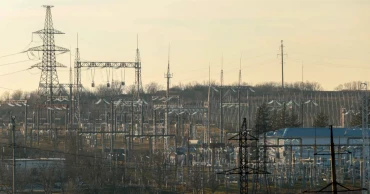
EU, Moldova agree on energy plan to cut Russian dependence
The European Union and Moldova on Tuesday agreed on an energy security plan aimed at weaning the country off its dependence on Russian supplies and integrating it into the 27-nation bloc’s network.
The EU’s executive branch, the European Commission, said that Moldova would receive 250 million euros ($258 million) this year — 40% of it by mid-April — after Russia’s state-owned energy giant Gazprom cut supplies on Jan. 1.
Daily electrical outages were imposed after hundreds of thousands of people in Moldova’s separatist pro-Russian Transnistria region were left without heating and hot water last month over an alleged $709 million bill for past supplies to Moldova.
The decision by Gazprom, which came into effect a day after a gas transit agreement between Russia and Ukraine expired, halted gas supplies to Transnistria’s gas-operated Kuciurgan power plant, the country’s largest, which provided a significant portion of Moldova’s electricity.
Musk says USAID “criminal organisation, we’re shutting it down”
The commission said that its financial package will provide support to consumers in Moldova – a candidate country for EU membership – to help pay their rising electricity bills. Some 60 million euros ($62 million) is earmarked for 350,000 people left in the cold in Transnistria.
Moldova, a former Soviet republic of about 2.5 million people, was left entirely dependent on Moscow for natural gas after Russia invaded Ukraine in 2022, but it has since pushed to diversify and expand its energy sources. The war also forced the EU to end its dependence on Russian energy imports.
It has faced pressure from Moscow to give up its westward shift of recent years.
Transnistria broke away from Moldova after a short war in 1992 but is not widely recognized.
1 year ago
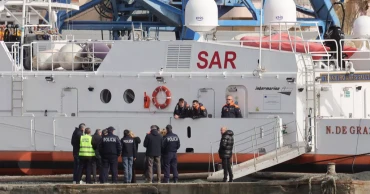
Italy takes back 43 migrants slated for processing in Albania
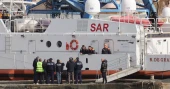
An Italian navy vessel transported migrants back to Italy from asylum processing centres in Albania following a ruling by a court in Rome, reports AP.
This marked the third unsuccessful effort by Giorgia Meloni’s far-right government to process migrants in the non-EU nation.
Italy sends 49 migrants to Albania after court rejections
A coast guard ship carried 43 migrants from the port of Shengjin, located 66 kilometres (40 miles) northwest of Tirana. They were part of a group of 49 men transferred to Albania aboard an Italian naval vessel on Tuesday. Five of them were returned the same day—four due to being minors and the fifth classified as a “vulnerable” individual.
The status of one remaining migrant remains uncertain.
According to Italian media, the men originated from Bangladesh, Egypt, Ivory Coast, and Gambia.
On Friday, an Italian appeals court in Rome declined to authorise the rapid expulsion of 43 asylum-seekers detained in Albania since Tuesday under a contentious migration agreement designed to relocate proceedings beyond European Union borders.
The court referred the case to the European Court of Justice in Luxembourg, which is expected to issue a ruling on 25 February regarding previous cases. A series of lower court decisions has created a rift between the Meloni government and Italy’s judicial system.
In October and November, judges similarly blocked the expulsion of smaller migrant groups, seeking clarification from the European court on which countries could be deemed safe for repatriation of individuals whose asylum applications had been rejected.
Last year, Italy signed a five-year agreement to process up to 3,000 migrants per month outside EU borders as part of Meloni’s strategy to curb illegal migration. Italy is a primary destination for tens of thousands of migrants who undertake the perilous central Mediterranean crossing.
While the agreement has drawn criticism from human rights activists, some European partners have shown interest in the initiative.
Italy, Albania, and the UAE sign clean energy deal
In the first four weeks of this year, 3,704 migrants arrived in Italy, nearly three times the number recorded in the same period last year. Over the entirety of last year, 66,317 migrants arrived in Italy, marking a 58% decrease from the previous year. The largest group consisted of Bangladeshis, followed by Syrians, Tunisians, and Egyptians, according to the Italian Interior Ministry.
1 year ago
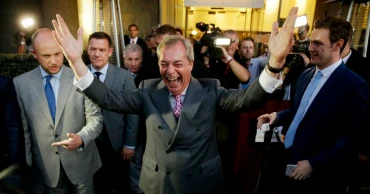
Five years on, Brexit’s full impact still unfolding
On 31 January 2020, at 11 p.m. London time—midnight in Brussels—the UK officially left the bloc following nearly five decades of membership that had enabled free trade and movement between Britain and 27 other European nations, reports AP.
For Brexit supporters, this was the moment the UK reclaimed its sovereignty. For opponents, it signified a nation diminished and isolated.
South Carolina set for 3rd execution since September
Undoubtedly, the country was deeply divided, having taken a step into the unknown. Five years later, individuals and businesses continue to grapple with the economic, social, and cultural repercussions.
“The impact has been quite profound,” said political scientist Anand Menon, who leads the think tank UK in a Changing Europe. “It has reshaped our economy.
“And our politics has been fundamentally altered as well,” he continued. “A new division surrounding Brexit has become embedded in electoral politics.”
A Nation Divided by Its Decision
As an island nation with a strong sense of historical significance, Britain had always had a complex relationship with the EU. The 2016 referendum on whether to remain or leave came after decades of deindustrialisation, years of public spending cuts, and high immigration—circumstances that allowed the pro-Brexit argument to thrive, promising the UK would ‘take back control’ of its borders, laws, and economy.
Yet the result—52% voting to leave and 48% to remain—came as a shock to many. Neither the Conservative government, which had campaigned to stay, nor pro-Brexit campaigners had prepared for the complexities of the separation.
The aftermath of the referendum saw years of tense negotiations over the terms of the split, with a divided UK and an embattled EU locked in prolonged disputes. The deadlock in Parliament ultimately brought down Prime Minister Theresa May, who was succeeded in 2019 by Boris Johnson, vowing to “get Brexit done.”
However, the reality was far from straightforward.
A Blow to the UK Economy
The UK left without an agreement on its future economic relationship with the EU, which had accounted for half its trade. What followed was 11 months of contentious negotiations, culminating in a last-minute trade deal on Christmas Eve 2020.
While the agreement ensured goods could move without tariffs or quotas, it introduced new bureaucracy, costs, and delays for businesses.
“It has cost us money. We are definitely slower and it’s more expensive. But we’ve survived,” said Lars Andersen, whose London-based company, My Nametags, ships children’s clothing labels to over 150 countries.
To continue trading with the EU, Andersen had to establish a base in Ireland, through which all EU-bound orders must pass before reaching customers. While he considers the effort worthwhile, he notes that some small businesses have ceased EU trade altogether or relocated manufacturing outside the UK.
Julianne Ponan, CEO of allergen-free food company Creative Nature, saw her growing export business to the EU collapse post-Brexit. Since then, she has successfully pivoted to markets in the Middle East and Australia, a shift she views as a positive outcome of leaving the EU.
Now that she has navigated the bureaucratic hurdles, she is cautiously rebuilding business ties with Europe.
“But we’ve lost four years of growth there,” she admitted. “And that’s the sad part. We would be much further along if Brexit hadn’t happened.”
Some hospitals pause gender-affirming care to evaluate Trump's executive order
According to the UK government’s Office for Budget Responsibility, long-term UK exports and imports are expected to be approximately 15% lower than if the country had remained in the EU, with economic productivity reduced by 4%.
Brexit advocates argue that this short-term economic strain will be outweighed by Britain’s ability to forge its own global trade deals. Since leaving the EU, the UK has signed agreements with Australia, New Zealand, and Canada.
However, trade expert David Henig of the European Centre for International Political Economy suggests these deals have not compensated for the decline in trade with Europe.
“The big players haven’t suffered as much,” Henig explained. “We still have Airbus, we still have Scotch whisky. We still do defence and pharmaceuticals. But mid-sized businesses are struggling to maintain their export position. And new firms aren’t entering the market.”
Unintended Consequences
In many ways, Brexit has unfolded differently from what both supporters and critics anticipated. The COVID-19 pandemic and Russia’s invasion of Ukraine added further economic turmoil, making it difficult to isolate Brexit’s precise impact.
One key area where expectations have not been met is immigration. A major motivation for many Leave voters was a desire to reduce immigration. Yet, post-Brexit, immigration has surged, as the UK has granted significantly more work visas to individuals from outside Europe.
Meanwhile, the return of protectionist political figures, particularly U.S. President Donald Trump, has placed Britain in a precarious position—caught between Europe and its long-standing ‘special relationship’ with the United States.
“The world is a far less forgiving place now than it was in 2016 when we voted to leave,” noted Menon.
Can Britain and the EU Rebuild Their Relationship?
Public sentiment towards Brexit appears to have shifted, with polls indicating a majority now view the decision as a mistake. However, the prospect of rejoining the EU remains remote. With divisions still fresh, few are eager to reopen the debate.
Labour Prime Minister Keir Starmer, elected in July 2024, has pledged to improve relations with the EU but has ruled out re-entering the customs union or single market. His approach focuses on incremental changes, such as easing restrictions for touring artists and recognising professional qualifications, alongside deeper cooperation on security and law enforcement.
While EU leaders have welcomed the change in tone, their focus remains on internal challenges, with the UK no longer a priority.
“I completely understand—it’s difficult to rebuild trust after such a tough divorce,” said Andersen. Nonetheless, he remains hopeful that the UK and EU will gradually move closer again.
“I suspect it will happen,” he said. “But it will be slow and subtle—without politicians making a big fuss about it.”
1 year ago
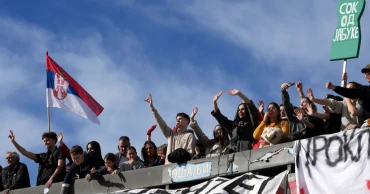
Serbia's prime minister resigns as anti-corruption protests grow
Serbia’s populist Prime Minister Milos Vucevic resigned Tuesday in an attempt to calm political tensions following weeks of massive anti-corruption protests over the deadly collapse of a concrete canopy.
The canopy collapse in November, which killed 15 people in the northern city of Novi Sad, has become a flashpoint reflecting wider discontent with the increasingly autocratic rule of Serbia’s populist President Aleksandar Vucic.
He has faced accusations of curbing democratic freedoms in Serbia despite formally seeking European Union membership for the troubled Balkan nation.
“It is my appeal for everyone to calm down the passions and return to dialogue,” Vucevic told a news conference announcing his resignation.
Novi Sad Mayor Milan Djuric also will step down on Tuesday, Vucevic said.
Vucevic’s resignation could lead to an early parliamentary election. The resignation must be confirmed by Serbia’s parliament, which has 30 days to choose a new government or call a snap election.
Pro-government media said President Vucic will attend a Cabinet session on Tuesday evening to decide whether a new prime minister-designate will be appointed or an early election called.
Opposition parties have said they would insist on a transitional government that would create conditions for a free and fair election. Vucic's populists have faced accusations of irregularities during past elections.
Serbian farmers support students in Belgrade blockade
Vucevic became the prime minister in April 2024, after the Serbian Progressive Party won most votes in an election marred by tensions.
“They (ruling party) have been in a free fall since the Novi Sad tragedy,” journalist Slobodan Georgiev said on N1 television, adding that Vucic was seeking a “buffer” with the prime minister's resignation.
Vucic in the past had managed to cushion the impact of anti-government street protests, but the current student movement has garnered widespread support from all walks of life, including actors, farmers, lawyers and judges.
On Monday, tens of thousands of people joined striking university students in a 24-hour blockade of a key traffic intersection in the Serbian capital. The students have been protesting for weeks, demanding accountability for the canopy collapse that critics have blamed on rampant government corruption.
In another attempt to defuse tensions, Vucic, Vucevic and Parliament Speaker Ana Brnabic on Monday evening urged dialogue with the students, who have so far rebuffed such invitations.
Vucevic said the immediate cause for his quitting was an attack on a female student in Novi Sad early Tuesday by assailants allegedly from the ruling Serbian Progressive Party. Vucevic said that “whenever it seems there is hope to return to social dialogue, to talk ... it’s like an invisible hand creates a new incident and tensions mount again.”
But the outgoing prime minister also said that the street protests “undoubtedly” have been organized from abroad “with an aim to directly jeopardize Serbia as a state.” Vucevic offered no evidence for his claims that echoed earlier similar statements by Vucic.
“I can never justify or understand many of these protests, blockades of lives, of roads and the freedom of movement of other citizens,” he said.
Serbia’s prosecutors have filed charges against 13 people, including a government minister and several state officials. But the former Construction Minister Goran Vesic has been released from detention, fueling doubts over the investigation’s independence.
1 year ago
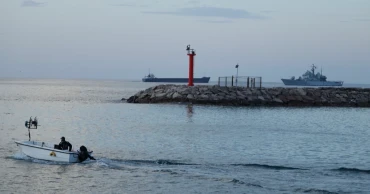
Italy sends 49 migrants to Albania after court rejections
Italy has sent 49 more migrants to Albania for processing following earlier court rejections, in a continuation of efforts to handle asylum applications, reports AP.
An Italian navy vessel arrived in Albania on Tuesday with the migrants, who were intercepted in international waters, to have their asylum claims processed at designated centres in Albania.
This marks the third attempt after previous setbacks in October and November, when Italian courts rejected the detention of two groups at the Albanian centres, which were established under a controversial agreement between Italy and Albania. The courts ruled that the migrants’ home countries were not deemed safe enough for them to face potential repatriation from these centres.
Colombia agrees to take deported migrants after Trump tariff showdown: White House
The cases are now being handled by the European Court of Justice, which has ruled that asylum seekers cannot undergo fast-track procedures leading to deportation if their home countries are not considered entirely safe. A hearing on the matter is scheduled for February 25.
Italy’s government, led by Premier Giorgia Meloni, remains determined to reactivate the centres in Albania despite the court decisions. In late December, Italy’s highest court ruled that Italian judges could not override government policy in determining which countries are safe for migrant repatriation, though lower courts may still make case-by-case decisions.
The migrants will be processed at a reception centre in Shengjin, a port city 66 kilometres northwest of Tirana, before being transferred to the Gjader accommodation centre, about 22 kilometres east. The agreement between Italy and Albania, which was signed in November 2023, permits up to 3,000 migrants intercepted by Italy's coast guard each month to be sheltered in Albania while their asylum claims are assessed.
71 Bangladeshis among 176 illegal immigrants held in Malaysia
Under the deal, Italy will take in those granted asylum, while migrants whose claims are rejected will be deported directly from Albania. While the agreement has been praised by some countries facing high migrant arrivals, human rights advocates have voiced concerns about the potential implications of outsourcing the accommodation of asylum seekers to a non-EU country.
So far this year, 3,704 migrants have arrived in Italy, more than double the number compared to the same period last year, which saw 1,305 arrivals. In total, 66,317 migrants reached Italy last year, a 58% decrease from the previous year. The majority came from Bangladesh, followed by Syria, Tunisia, and Egypt, according to Italy’s Interior Ministry.
1 year ago
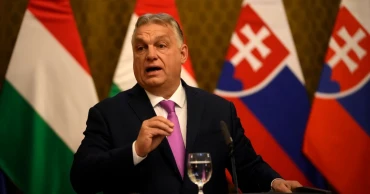
Hungary wants the EU to intervene in gas dispute with Ukraine
Hungarian Prime Minister Viktor Orbán on Friday said he wants the European Union to intervene in a gas dispute his country has with Ukraine, a potential sign of friction in the bloc's upcoming discussions over renewing sanctions against Russia.
Speaking on state radio, Orbán said that Ukraine's decision to cease transiting Russian gas into Central Europe through the Brotherhood pipeline had forced Hungary to turn to alternative routes, which raised energy prices.
Meanwhile, he claimed EU sanctions against Russia for its war in Ukraine had cost Hungary 19 billion euros ($20 billion) since the start of the full-scale invasion in February 2022. He did not cite how that sum was calculated.
“It’s no good that we pay for the economic consequences of sanctions to help Ukraine while they turn around and mess with us,” he said of Kyiv's decision to allow a prewar transit deal with Russia to expire at the end of 2024.
Belarus election likely extends Lukashenko's 30-year authoritarian rule
Natural gas prices did spike at the beginning of the year following the expiration of Ukraine's transit contract with Russia, though an increase in liquefied natural gas shipments to Europe has kept prices fluctuating.
As the EU prepares to renew sanctions on Moscow in the coming week — which requires unanimity among all the 27-member bloc’s leaders — Hungary has signaled it may use a veto to block the penalties.
Orbán, considered to have the closest relationship with the Kremlin of any other EU leader, has long been a vocal opponent of EU sanctions against Moscow, though he has ultimately always voted for them.
But following the inauguration of U.S. President Donald Trump last week, Orbán has publicly demanded an end to sanctions, raising the possibility that he would veto the newest round which must be decided by Jan. 31.
“The question of extending the sanctions is now on the agenda, and I pulled the handbrake and asked European leaders to understand that this cannot be continued," he said Friday. “It is not possible that Hungary will pay the price of the sanctions in this proportion.”
Micheál Martin to return as Ireland's PM again
“I told my (EU) colleagues to please understand that we are asking for help," he continued. "We ask that they be able to get the Ukrainians to restore the gas pipeline.”
He also said he wanted guarantees that Ukraine would not stop transiting Russian oil into Hungary, which he said would pose a “serious risk” to the country.
1 year ago

Belarus election likely extends Lukashenko's 30-year authoritarian rule
The upcoming Belarusian election is set to extend the 30-year rule of Alexander Lukashenko, who is often referred to as "Europe's last dictator."
In the 2020 presidential election, Lukashenko claimed an 80% victory, leading to accusations of fraud, widespread protests, and a brutal crackdown that saw thousands arrested, reports AP.
To prevent a repeat of such unrest, Lukashenko has moved the 2025 election from August to the colder month of January, when protests are less likely.
EU may suspend asylum for migrants 'weaponized' by Russia, Belarus
With many of his political rivals either imprisoned or living in exile, the 70-year-old Lukashenko is poised for a seventh term, solidifying his position as the only leader most Belarusians have known since the Soviet Union’s dissolution.
Belarus, once part of the Soviet Union, has a population of 9 million and is located between Russia, Ukraine, and NATO member states. Its close relationship with Russia and President Vladimir Putin has been central to Lukashenko’s rule, with Belarus providing military support, including allowing Russian forces to invade Ukraine in 2022 and hosting Russian nuclear weapons.
Lukashenko first took office in 1994, capitalising on public frustration over the economic collapse following post-Soviet reforms. He has maintained power through heavy reliance on Russian subsidies and has drawn criticism for his authoritarian methods, including suppressing dissent and holding elections the West deems unfair. His admiration for the Soviet Union is evident, as he has reintroduced Soviet-era economic controls and sought to reduce the prominence of the Belarusian language in favour of Russian.
While Lukashenko occasionally tried to ease repression to court Western approval, such gestures ended after the 2020 election, which was widely regarded as fraudulent. Following mass protests, authorities conducted a sweeping crackdown, arresting tens of thousands and closing independent media and NGOs, drawing sanctions from the West. Many opposition figures are either imprisoned or in exile, with Belarus reportedly holding around 1,300 political prisoners.
Belarus says Wagner chief who staged mutiny is in Russia, raising questions about Kremlin's strategy
Ahead of this election, Lukashenko moved the election date to January, citing the need to engage in "strategic planning," though critics argue it is to avoid protests in the winter. In an attempt to ease pressure, he pardoned 250 people deemed political prisoners but has continued to arrest those perceived as dissenters.
Unlike the previous election, Lukashenko faces minimal opposition this time, as most challengers have been barred from running. Early voting began on Tuesday, with the election concluding on Sunday. Exiled opposition leader Sviatlana Tsikhanouskaya has condemned the election as a farce and called for a boycott.
Lukashenko’s ties to Russia have strengthened, with a December 2024 treaty allowing Russian nuclear weapons to be stationed in Belarus. This agreement, alongside Russia’s new nuclear strategy, places Belarus under Russia's nuclear umbrella, increasing its strategic importance amid the ongoing conflict with Ukraine.
1 year ago