Europe
Russian cargo ship sinks in the Mediterranean, 2 crew missing
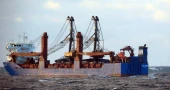
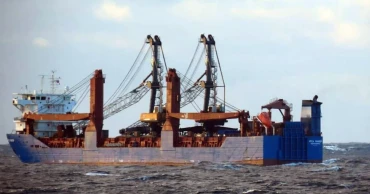
A Russian cargo ship sank in the Mediterranean Sea between Spain and Algeria, leaving two crew members missing, Spain's maritime rescue agency and the Russian Foreign Ministry said Tuesday.
Fourteen of the Ursa Major's crew were rescued uninjured from a lifeboat and transferred to Spain, the agency said. The Russian ministry said the ship started sinking following an explosion in the engine room.
The vessel was owned by SK-Yug, a subsidiary of the Russian shipping and logistics company Oboronlogistika, which was established under Russia's defense ministry and placed under U.S. and European Union sanctions for its ties to Russia's military.
Spanish authorities said there were empty containers and two cranes on board. They did not confirm the cause of the accident.
In a statement on Dec. 20, Oboronlogistika said the cargo ship was headed to Russia’s far eastern city of Vladivostok carrying two cranes for the port weighing 380 tons each. Ursa Major had left St. Petersburg 12 days ago, Russian state news agency Ria Novosti said.
Spanish authorities said they received an alert around 1 p.m. Monday when the vessel was roughly 57 nautical miles (106 kilometers) from Almería in southeastern Spain. The maritime rescue agency contacted a ship nearby that reported poor weather conditions, a lifeboat in the water and the Ursa Major listing.
Read: UAE stresses on security of eastern Mediterranean, Arab regions
Authorities said a Russian warship arrived later Monday to oversee rescue operations, and the 142-meter (466-foot) cargo vessel sank around midnight. The Russian embassy in Spain told RIA Novosti it was investigating the accident and was in contact with local authorities.
Ursa Major was in the western Mediterranean at the same time as Sparta — another Russian cargo ship under U.S. sanctions — whose destination as reported Tuesday was Port Said in Egypt, according to ship-spotting platform MarineTraffic.com.
It’s not unusual for Russian ships going from St. Petersburg to Vladivostok to transit through the Mediterranean and the Suez Canal. With global warming, the Northern Sea Route via Russia’s Arctic is increasingly traversed year-round, but most ships still choose the southern route in winter.
Spanish maritime rescue units remained in the area Tuesday to monitor for pollution and remove any floating objects that could be dangerous for navigation, authorities said.
1 year ago

France gets a new government again amid political crisis
France’s president and prime minister managed to form a new government just in time for the holidays. Now comes the hard part.
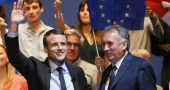
Crushing debt, intensifying pressure from the nationalist far right, wars in Europe and the Mideast: Challenges abound for President Emmanuel Macron and Prime Minister Francois Bayrou after an already tumultuous 2024.
What's wrong with French finances?
The most urgent order of business is passing a 2025 budget. Financial markets, ratings agencies and the European Commission are pushing France to bring down its deficit, to comply with EU rules limiting debt and keep France’s borrowing costs from spiraling. That would threaten the stability and prosperity of all countries that share the euro currency.
France’s debt is currently estimated at a staggering 112% of gross domestic product. It grew further after the government gave aid payments to businesses and workers during COVID-19 lockdowns even as the pandemic depressed growth, and capped household energy prices after Russia invaded Ukraine. The bill is now coming due.
But France’s previous government collapsed this month because Marine Le Pen’s far-right party and left-wing lawmakers opposed 60 billion euros in spending cuts and tax hikes in the original 2025 budget plan. Bayrou and new Finance Minister Eric Lombard are expected to scale back some of those promises, but the calculations are tough.
“The political situation is difficult. The international situation is dangerous, and the economic context is fragile,” Lombard, a low-profile banker who advised a Socialist government in the 1990s, said upon taking office.
“The environmental emergency, the social emergency, developing our businesses — these innumerable challenges require us to treat our endemic illness: the deficit,” he said. “The more we are indebted, the more the debt costs, and the more it suffocates the country.”
How long will this government last?
This is France’s fourth government in the past year. No party has a parliamentary majority and the new Cabinet can only survive with the support of lawmakers on the center-right and center-left.
Le Pen — Macron’s fiercest rival — was instrumental in ousting the previous government by joining left-wing forces in a no-confidence vote. Bayrou consulted her when forming the new government and Le Pen remains a powerful force.
That angers left-wing groups, who had expected more influence in the new Cabinet, and who say promised spending cuts will hurt working-class families and small businesses hardest. Left-wing voters, meanwhile, feel betrayed ever since a coalition from the left won the most seats in the summer's snap legislative elections but failed to secure a government.
Read: Staying in office is the main challenge for troubled France's new government
The possibility of a new no-confidence vote looms, though it's not clear how many parties would support it.
What about Macron?
Macron has repeatedly said he will remain president until his term expires in 2027.
But France's constitution and current structure, dating from 1958 and called the Fifth Republic, were designed to ensure stability after a period of turmoil. If this new government collapses within months and the country remains in political paralysis, pressure will mount for Macron to step down and call early elections.
Le Pen's ascendant National Rally is intent on bringing Macron down. But Le Pen faces her own headaches: A March court ruling over alleged illegal party financing could see her barred from running for office.
What else is on the agenda?
The National Rally and hard-right Interior Minister Bruno Retailleau want tougher immigration rules. But Bayrou wants to focus on making existing rules work. “There are plenty of (immigration) laws that exist. None is being applied," he said Monday on broadcaster BFM-TV, to criticism from conservatives.
Military spending is a key issue amid fears about European security and pressure from U.S. President-elect Donald Trump for Europe to spend more on its own defense. French Defense Minister Sebastien Lecornu, who champions military aid for Ukraine and ramping up weapons production, kept his job and stressed in a statement Tuesday the need to face down ‘’accumulating threats'' against France.
Read more: Macron to address France after no-confidence vote ousts govt
More immediately, Macron wants an emergency law in early January to allow sped-up reconstruction of the cyclone-ravaged French territory of Mayotte in the Indian Ocean off Africa. Thousands of people are in emergency shelters and authorities are still counting the dead more than a week after the devastation.
Meanwhile the government in the restive French South Pacific territory of New Caledonia collapsed Tuesday in a wave of resignations by pro-independence figures — another challenge for the new overseas affairs minister, Manuel Valls, and the incoming Cabinet.
1 year ago
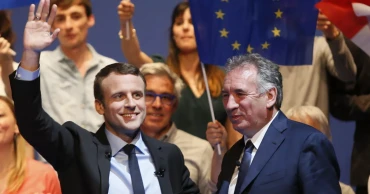
Staying in office is the main challenge for troubled France's new government
France’s president and prime minister managed to form a new government just in time for the holidays. Now comes the hard part.
Crushing debt, intensifying pressure from the nationalist far right, wars in Europe and the Mideast: Challenges abound for President Emmanuel Macron and Prime Minister Francois Bayrou, after an already tumultuous 2024.
What's wrong with French finances?
The most urgent order of business is passing a 2025 budget. Financial markets, ratings agencies and the European Commission are pushing France to bring down its deficit, which threatens the stability and prosperity of all countries that share the euro currency.
France’s debt — currently estimated at 112% of gross domestic product — has been high for years. It grew further after the government gave aid payments to businesses and workers during COVID-19 lockdowns even as the pandemic depressed growth, and capped household energy prices after Russia invaded Ukraine. The bill is now coming due.
But France’s previous government collapsed this month because Marine Le Pen’s far-right party and left-wing lawmakers opposed 60 billion euros in spending cuts and tax hikes in the original 2025 budget plan. Bayrou and new Finance Minister Eric Lombard are expected to scale back some of those promises, but the calculations are tough.
“The political situation is difficult. The international situation is dangerous, and the economic context is fragile,” Lombard, a low-profile banker who advised a Socialist government in the 1990s, said upon taking office.
“The environmental emergency, the social emergency, developing our businesses — these innumerable challenges require us to treat our endemic illness: the deficit,” he said. “The more we are indebted, the more the debt costs, and the more it suffocates the country.”
How long will this government last?
This is France’s fourth government in the past year. No party has a parliamentary majority and the new Cabinet can only survive with the support of lawmakers on the center-right and center-left.
Le Pen — Macron’s fiercest rival — was instrumental in ousting the previous government by joining left-wing forces in a no-confidence vote. Bayrou consulted her when forming the new government and Le Pen remains a powerful force.
That angers left-wing groups, who had expected more influence in the new Cabinet, and who say promised spending cuts will hurt working-class families and small businesses hardest. Left-wing voters, meanwhile, feel betrayed ever since a coalition from the left won the most seats in the summer's snap legislative elections but failed to secure a government.
The possibility of a new no-confidence vote looms, though it's not clear yet how many parties would support it.
What about Macron?
Macron has repeatedly said he will remain president until his term expires in 2027.
But France's constitution and current structure, dating from 1958 and called the Fifth Republic, were designed to ensure stability after a period of turmoil. If this new government collapses within months and the country remains in political paralysis, pressure will mount for Macron to step down and call early elections.
Le Pen's ascendant National Rally is intent on bringing Macron down. But Le Pen faces her own headaches: A March court ruling over alleged illegal party financing could see her barred from running for office.
What else is on the agenda?
The National Rally and hard-right Interior Minister Bruno Retailleau want tougher immigration rules. But Bayrou wants to focus on making existing rules work. “There are plenty of (immigration) laws that exist. None is being applied," he said Monday on broadcaster BFM-TV, to criticism from conservatives.
Military spending is crucial, amid fears about European security and pressure from U.S. President-elect Donald Trump for Europe to spend more on its own defense. French Defense Minister Sebastien Lecornu, who wants more military aid for Ukraine and to ramp up France’s own weapons production, kept his job and enjoys broad support.
More immediately, Macron wants an emergency law in early January to allow speeded-up reconstruction of the cyclone-ravaged French territory of Mayotte, in the Indian Ocean. Thousands of people are in emergency shelters and authorities are still counting the dead more than a week after the devastation.
Meanwhile the government in the restive French South Pacific territory of New Caledonia collapsed Tuesday in a wave of resignations by pro-independence figures — another challenge for the new overseas affairs minister, Manuel Valls, and the incoming Cabinet.
1 year ago

Putin holds talks with Slovakian PM Fico, in a rare visit to Moscow by an EU leader
Russian President Vladimir Putin on Sunday hosted Slovakia’s prime minister, Robert Fico, in a rare visit to the Kremlin by an EU leader since Moscow's all-out invasion of Ukraine in February 2022.
Fico arrived in Russia on a “working visit” and met with Putin one-on-one on Sunday evening, Kremlin spokesman Dmitry Peskov told Russia’s RIA news agency. According to Peskov, the talks were expected to focus on “the international situation” and Russian natural gas deliveries.
Russian natural gas still flows to some European countries, including Slovakia, through Ukraine under a five-year agreement signed before the war that is due to expire at the end of this year. At a summit in Brussels on Thursday, Ukrainian President Volodymyr Zelenskyy told EU leaders that Kyiv has no intention of renewing the deal, something Fico insisted will harm his country's interests.
Fico said on Facebook after meeting with Putin that he informed European Union leaders about his trip on Friday.
He said the talks in Moscow were a reaction to what Zelenskyy told him on Thursday in Brussels, that he is against any gas transit to Slovakia through Ukraine. Fico also said that Zelenskyy is in favor of sanctions against Russia’s nuclear program, which he said was unacceptable and against the interest of his country that relies on nuclear energy.
Fico said Putin confirmed to him that Russia is still ready to deliver gas to the West. He said the two also discussed the military situation in Ukraine, chances for a peaceful solution to the war and the bilateral relations between their two countries which Fico said they will seek to “standardize.”
His trip was condemned by the major Slovak opposition parties.
Slovakia last month signed a short-term pilot contract to buy natural gas from Azerbaijan, as it prepares for a possible halt to Russian supplies through Ukraine. Earlier this year, it struck a deal to import U.S. liquefied natural gas through a pipeline from Poland.
The country can also receive gas through Austrian, Hungarian and Czech networks, enabling imports from Germany among other potential suppliers.
Read: Germany's Merkel recalls Putin's 'power games' and contrasting US presidents in her memoirs
Visits and phone calls from European leaders to Putin have been rare since Moscow sent troops into Ukraine, although Hungary’s Prime Minister Viktor Orbán visited Russia in July, and Austrian Chancellor Karl Nehammer met with the Russian leader just weeks into the full-scale war. Both trips drew condemnation from Kyiv and European leaders.
Orbán, widely seen as having the warmest relations with Putin among EU leaders, has routinely blocked, delayed or watered down EU efforts to assist Kyiv and impose sanctions on Moscow for its actions in Ukraine. He has long argued for a cessation of hostilities in Ukraine but without outlining what that might mean for the country’s territorial integrity or future security.
Fico’s views on Russia’s war on Ukraine differ sharply from most other European leaders. The Slovakian PM returned to power last year after his leftist party Smer (Direction) won parliamentary elections on a pro-Russia and anti-American platform. Since then, he has ended his country’s military aid for Ukraine, lashed out at EU sanctions on Russia, and vowed to block Ukraine from joining NATO.
Read more: Russia to use new missile again in 'combat conditions': Putin
Fico has also been a rare senior EU politician to appear on Russian state TV following Moscow’s invasion of Ukraine. In an interview with the Rossiya-1 channel in October, he contended the West has “prolonged the war” by supporting Ukraine, adding that sanctions against Russia were ineffective. He declared that he was ready to negotiate with Putin.
Fico also vowed to attend a military parade in Moscow next May that will mark the 80th anniversary of Nazi Germany’s defeat in World War II. The Kremlin has used the annual “Victory Day” celebrations to tout its battlefield prowess, and Putin hailed Russian troops fighting in Ukraine as “heroes” at this year’s event.
1 year ago
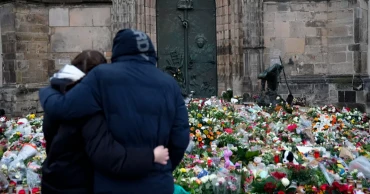
What we know about the deadly Christmas market attack in Germany
Four women and a 9-year-old boy were killed and 200 people were injured when a Saudi doctor drove into a Christmas market teeming with holiday shoppers in the German city of Magdeburg — an attack that has left Germans mourning the victims and with a shaken sense of security.
How did the attack unfold?
At first, Thi Linh Chi Nguyen thought the loud bangs were fireworks. The 34-year-old manicurist from Vietnam, whose salon is near the Christmas market, was on the phone during a break when she heard the noise just after 7 p.m. on Friday. Then she saw a car drive through the market at high speed. People screamed and a child was thrown into the air by the car.
The woman recalled seeing the car bursting out of the market and turning right onto Ernst-Reuter-Allee street and then coming to a standstill at a tram stop where the suspect was arrested.
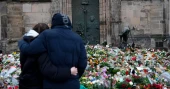
The market stood empty and cordoned off by police tape, with armed officers deployed around it. Nearby, people stopped Sunday to light candles or leave flowers at a growing makeshift memorial.
Who are the victims?
Police say the dead are four women, aged 45, 52, 67 and 75, and a boy aged 9. Authorities said 200 people were injured, including 41 in serious condition. They were being treated in multiple hospitals in Magdeburg, which is about 130 kilometers (80 miles) west of Berlin, and beyond.
Who’s the suspect in the attack?
Prosecutors said the suspect, a 50-year-old Saudi doctor, is under investigation on suspicion of murder, attempted murder and bodily harm. In a closed-door hearing on Saturday evening, a judge ordered that he be kept in custody pending a possible indictment.
Several German media outlets identified the suspect as Taleb A., withholding his last name in line with privacy laws, and reported that he was a specialist in psychiatry and psychotherapy. He has lived in Germany since 2006, practicing medicine in Bernburg, about 40 kilometers (25 miles) south of Magdeburg.
The suspect's X account describes him as a former Muslim. It is filled with tweets and retweets focusing on anti-Islam themes and criticism of the religion, while sharing congratulatory notes to Muslims who left the faith. He was critical of German authorities, saying they had failed to do enough to combat the “Islamification of Europe.” He has also voiced support for the far-right and anti-immigrant Alternative for Germany (AfD) party.
Some described Taleb as an activist who helped Saudi women flee their homeland. Recently, he seemed focused on his theory that German authorities have been targeting Saudi asylum-seekers.
What was the motive?
Investigators are trying to understand what motivated the man to drive his black BMW into a crowd in the eastern German city. Prosecutors said the motive may have been “dissatisfaction with the treatment of Saudi refugees in Germany.”
Investigators have to analyze computers, mobile devices and other evidence, “and at the end of the day we will know, or at least hope to know, what drove him to this act.”
Germany’s Federal Office for Migration and Refugees acknowledged Sunday it had received a warning about the suspect last year, and said it “was taken seriously.” The office also noted that it is not an investigative authority and that it referred the information to the responsible authorities.
German Chancellor Olaf Scholz is facing criticism about security lapses that allowed the attack to happen, and was heckled by some bystanders during a visit to Magdeburg on Saturday.
A string of attacks
The violence shocked Germany and the city, prompting several other German towns to cancel their weekend Christmas markets as a precaution, and out of solidarity with Magdeburg’s loss. Berlin kept its markets open but increased the police presence.
Germany has suffered several extremist attacks in recent years, including a knife attack that killed three people and wounded eight at a festival in the western city of Solingen in August. Friday’s attack came eight years after an Islamic extremist drove a truck into a crowded Christmas market in Berlin, killing 13 people and injuring many others.
Those attacks have led cities to beef up security at Christmas markets and other events.
The horror triggered by yet another act of mass violence in Germany make it likely that migration will remain a key issue as German heads toward an early election on Feb. 23.
It is the latest in a string of incidents around the world in which vehicles have been used as weapons by jihadi attackers, far-right extremists and others whose motives were unclear.
1 year ago
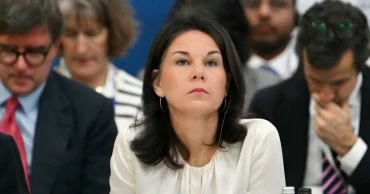
Germany warns Assad supporters in Syria against trying to flee there
Germany’s foreign minister is warning anyone involved in atrocities for the ousted Syrian government against seeking refuge in her country, saying they would face “the full force of the law.”
Germany has been a major destination for Syrian refugees over the past decade, and several hundred thousand Syrian nationals live there. In rulings since 2021, former Syrian secret police officers already have been convicted in Germany for overseeing or facilitating the abuse of detainees.
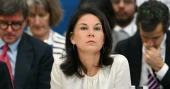
“To any of (former President Bashar) Assad’s torturers who might be considering fleeing to Germany now, I can only say clearly: We will bring all the regime’s henchmen to account for their terrible crimes with the full force of the law,” Foreign Minister Annalena Baerbock told Sunday’s edition of the Bild am Sonntag newspaper.
South Korea's opposition chief urges swift action from top court on impeachment
Baerbock called for international security authorities and intelligence services to work closely together.
Interior Minister Nancy Faeser said Germany is “extremely vigilant” and pointed to border checks that the country already has put in place on its frontiers as it tries to reduce irregular migration.
She told Bild am Sonntag that “no one who participated in atrocities is safe from prosecution here.” She said the convictions already handed down show that Germany pursues such crimes rigorously and should act as a deterrent against people involved in them going there.
More broadly, German officials have stressed that many well-integrated arrivals of recent years will be welcome to stay after the removal of Assad. That was followed by some talk of Syrians going home, which Chancellor Olaf Scholz acknowledged in a video released Friday “deeply unsettled” them.
“Anyone who is working here, who is well integrated, is and remains welcome in Germany,” he said. “That goes without saying.”
“Some of the refugees hope they can soon return to their homeland. We will support that as soon as the situation allows," he added. But “only the coming days, weeks and months will show what direction Syria takes after Assad.”
1 year ago
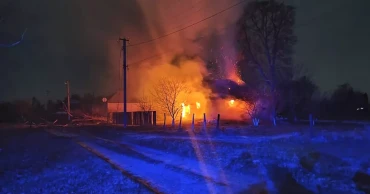
Russia launches massive attack on Ukrainian infrastructure with missiles
Russia launched one of its largest aerial assaults on Ukraine on Friday, firing 93 cruise and ballistic missiles along with nearly 200 drones, according to Ukrainian President Volodymyr Zelenskyy. This attack targeted the country’s energy infrastructure and is considered one of the heaviest since Russia’s full-scale invasion nearly three years ago.
Ukrainian air defenses successfully intercepted 81 missiles, including 11 cruise missiles downed by F-16 fighter jets provided by Western allies earlier this year, Zelenskyy reported. Despite these defenses, the assault still caused significant damage, particularly to Ukraine’s energy sector.
In a message on his Telegram channel, Zelenskyy accused Russia of “terrorizing millions of people” and called for a strong international response. "A massive strike – a massive reaction. This is the only way to stop terror," he urged, emphasizing the need for global unity against Russian President Vladimir Putin’s actions.
As the war continues, there is growing uncertainty over the future, especially with U.S. President-elect Donald Trump set to take office next month. Trump has pledged to end the war and cast doubt on the continuation of U.S. military support for Ukraine.
In response to the attack, the Russian Ministry of Defense stated that the missile and drone strikes targeted "critically important fuel and energy facilities" in Ukraine, which are crucial for its military-industrial complex. Russia framed the assault as retaliation for a Ukrainian strike earlier in the week using U.S.-supplied Army Tactical Missile Systems (ATACMs) on a Russian airbase.
Read: US warns Russia may use new lethal missile against Ukraine soon
Trump has expressed opposition to allowing Ukraine to strike Russian territory using U.S. weapons, a position that Kremlin spokesman Dmitry Peskov noted aligns with Russia’s stance. Peskov said, "We have a shared vision of the causes of escalation," acknowledging that Trump understands what exacerbates the conflict.
The U.S. Embassy in Kyiv confirmed that Friday's attack also targeted transportation networks and other vital infrastructure. Ukrainian energy company DTEK, the country’s largest private energy provider, reported that its thermal power plants had been "seriously damaged" in the strike.
Russia has consistently targeted Ukraine’s power grid, seeking to cripple its electricity supply and disrupt both civilian life and Ukraine's defense production capabilities. Ukrainian Energy Minister Herman Halushchenko assured the public that energy workers were taking all necessary measures to mitigate the damage, promising to provide more information once the security situation allowed.
The Ukrainian Air Force reported multiple drone strikes overnight, followed by a wave of cruise missile attacks across the country’s airspace. Additionally, Russia employed air-launched Kinzhal ballistic missiles in Ukraine’s western regions.
This attack mirrors a similar massive strike on November 28, which also involved over 200 missiles and drones, leaving more than a million households without power until emergency teams could restore the electricity. Ukrainian officials have warned that Russia is stockpiling additional missiles and drones for future strikes.
Read more: EU may suspend asylum for migrants 'weaponized' by Russia, Belarus
On November 21, Russia used its first-ever intermediate-range hypersonic missile, the Oreshnik, to target an industrial facility in Dnipro, eastern Ukraine. Putin had threatened more such attacks in response to Ukrainian strikes on Russian territory using Western-supplied long-range weapons. There were no reports of the Oreshnik missile being used in Friday’s assault, but U.S. officials have warned that it could be deployed in the near future.
Half of Ukraine’s energy infrastructure has already been destroyed during the conflict, and widespread electricity blackouts are a common occurrence. While Kyiv’s Western allies have provided advanced air defense systems to help protect critical infrastructure, Russia continues to overwhelm Ukraine’s defenses with large-scale "swarm" attacks, launching numerous missiles and drones in a single strike.
In the broader military context, Russia has maintained the initiative this year, making slow but steady progress in its eastern offensives, steadily pushing through Ukrainian defenses.
1 year ago

EU may suspend asylum for migrants 'weaponized' by Russia, Belarus
The European Union on Wednesday gave a greenlight to Poland and other countries on Europe’s eastern flank to temporarily suspend asylum rights when they believe that Belarus and Russia are “weaponizing” migrants to destabilize the bloc.
Poland’s Prime Minister Donald Tusk announced plans in October to introduce a law that would suspend asylum applications for up to 60 days as his country struggles with migratory pressures on its border with Belarus, angering human rights groups. The freeze has not yet been enacted.
The number of migrants arriving at the borders of EU member states from Belarus has increased by 66% this year, compared with 2023. Belarus authorities are accused of helping migrants to get into Europe, including by supplying them with ladders and other devices, according to the European Commission.
The EU’s executive branch also accuses Russian authorities of “facilitating these movements, given that more than 90% of migrants illegally crossing the Polish-Belarusian border have a Russian student or tourist visa.”
It said that “in view of the serious nature of the threat, as well as its persistence,” EU member countries can temporarily suspend a migrant’s request for international protection in exceptional circumstances. Some migrants are accused of attacking border guards.
The commission monitors EU laws to ensure that they are respected. The right for people to seek asylum when they fear for their lives or safety in their home countries is encoded in the bloc’s legislation and international law.
European Commission Executive Vice-President Henna Virkkunen said a freeze on asylum rights should only be used “when the weaponization is posing security threats for member states and exceptional measures are needed.”
New Indian central bank governor takes over amid economic challenges
Member states would be permitted to restrict a migrant’s access to asylum rights, but only under “very strict conditions and (with)in legal limits," she said. "So it means that they have to be truly exceptional, temporary, proportionate and for clearly defined cases.”
Virkkunen, who declined to provide details, said the commission is providing 170 million euros ($179 million) to Poland, Finland, Estonia, Latvia, Lithuania and non-EU country Norway to boost their border defenses, including upgrading electronic surveillance equipment, installing mobile detectors, improving telecommunication networks, and countering drones that might be sent into EU airspace.
1 year ago

Princess of Wales returns to public life after chemotherapy
The Princess of Wales took another step Friday in her return to public life following cancer treatment, in hosting her annual Christmas carol service at Westminster Abbey.
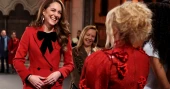
Dressed in a festive red coat featuring a large black bow on the collar and black buttons, the princess, often referred to simply as Kate, arrived with her husband Prince William and their three children.
Kate, the Princess of Wales, makes first public appearance after cancer treatment
They were met by clergy in front of a row of Christmas trees decorated with glittering white lights. Inside the abbey, Kate chatted with members of the congregation and performers, including Gregory Porter.
This year’s concert is designed to celebrate the support people give to one another, especially as they struggle through difficult times, a theme that may have particular resonance for the princess after abdominal surgery and chemotherapy forced her to step back from public duties for much of 2024.
Kate, the Princess of Wales, has finished chemotherapy and will return to limited public duties
Kate alluded to this in a letter thanking the 1,600 people invited to attend the event because of their efforts to help others in their communities.
“The Christmas story encourages us to consider the experiences and feelings of others,” Kate wrote. “It also reflects our own vulnerabilities and reminds us of the importance of giving and receiving empathy, as well as just how much we need each other in spite of our differences.”
Kate has hosted the carol service since it began in 2021, celebrating the work of doctors, nurses and emergency workers as Britain returned to normal following the COVID-19 pandemic. The princess wowed the audience, playing the piano to accompany Scottish singer Tom Walker on his song “For Those Who Can’t Be Here,” inspired by the loss and separation caused by the pandemic.
The order of service Friday will also feature a cover image by British artist Charlie Mackesy, who wrote and illustrated “The Boy, the Mole, the Fox and the Horse.’’ The 2019 book highlighted the importance of kindness through the unlikely friendship of the four title characters as they search for the boy’s home.
Read the transcript of Kate's video announcement about her cancer treatment
Kate and her husband have been open about the challenges they faced this year as both the princess and King Charles III were diagnosed with cancer.
The princess has made only a few public appearances since she underwent abdominal surgery in February and then announced she was undergoing treatment for cancer a few weeks later.
Her first post-chemotherapy appearances were geared toward moments of national significance, such as the king’s birthday parade and the annual Remembrance Day ceremonies to honor the nation’s war dead. But earlier this week she helped greet the emir of Qatar during his state visit to Britain, and now she’s returning to her signature event.
Charles was sidelined after revealing in February that he was suffering from an undisclosed form of cancer. But while he began returning to public duties at the end of April, Kate needed more time.
The carol service will feature performances by singers Porter and Paloma Faith. Prince William, actors Richard E. Grant, Michelle Dockery and Sophie Okonedo, as well as Olympic swimming champion Adam Peaty will give readings linked to the theme of love and empathy.
The event will be taped for broadcast on Christmas Eve by the British channel ITV1 and its streaming service ITVX.
1 year ago
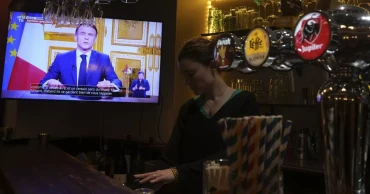
Macron vows to complete term, Promises new premier amid political crisis
French President Emmanuel Macron has vowed to serve out his term until 2027 and announced plans to appoint a new prime minister within days to address the political impasse caused by the ousting of former Prime Minister Michel Barnier.
The resignation of Barnier, following a historic no-confidence vote over budget disputes in the National Assembly, left France without a functioning government. Macron, addressing the crisis, blamed the far-right opposition for orchestrating the downfall, accusing them of choosing “disorder.”
“The far right and far left have joined forces in an anti-Republican front,” Macron said. “I will not shoulder the irresponsibility of others.”
While he refrained from naming a successor for Barnier, Macron promised swift action to restore stability, emphasizing that the next prime minister must form a “government of general interest.”
Acknowledging Responsibility Amid Chaos
Macron admitted to his own role in the political turmoil, citing his June decision to dissolve parliament. This move led to legislative elections that produced a hung parliament, with three minority blocs unable to secure a majority.
“I recognize that this decision was criticized and not fully understood,” he said. “But I believe it was necessary to let the voters express their will.”
Budget Priorities and Avoiding Shutdown
The immediate task for Macron's new government will be addressing France’s budget crisis. He confirmed plans to introduce a special law by mid-December to prevent a shutdown and ensure tax collection for 2024 based on existing rules. The government will also focus on passing the 2025 budget to invest in military, justice, and police services while supporting struggling farmers.
Rising Challenges and Economic Pressure
Macron highlighted France’s mounting challenges, including international crises like the wars in Ukraine and the Middle East and domestic economic struggles, particularly ballooning debt levels. Moody’s warned that the political instability could worsen the country’s financial outlook, with interest rates potentially rising and debt levels projected to hit 7% of GDP next year.
Read: Macron to address France after no-confidence vote ousts govt
The president urged the nation to take inspiration from recent achievements, such as hosting the Paris Olympics and the upcoming reopening of Notre Dame Cathedral, as symbols of resilience.
Opposition and Calls for Resignation
The no-confidence vote has emboldened opposition leaders, with some calling for Macron’s resignation. Manuel Bompard, leader of the far-left France Unbowed party, stated that “stability requires the departure of the President of the Republic.”
Marine Le Pen, leader of the far-right National Rally, stopped short of demanding Macron’s resignation but warned of increasing pressure on the president.
Despite the political turmoil, the French constitution does not require a president to step down after a government collapse, nor does it allow for new legislative elections before July, leaving policymakers in a precarious position.
Public Unrest and Teachers’ Protests
Amid the crisis, teachers protesting education budget cuts voiced frustration with Macron’s leadership. Demonstrators in Paris linked their demands to the broader political instability, with banners calling for Macron’s resignation.
“Macron is dismantling public services like schools,” said Dylan Quenon, a middle school teacher. “The only way to change this is to remove him.”
Read more: For the first time Macron recognizes 1944 Thiaroye killings as massacre
Although some protesters welcomed Barnier’s ousting, others expressed concerns about the uncertainty ahead. “This government’s fall could lead to something even worse,” said Élise De La Gorce, a teacher from Stains.
As Macron works to name a new prime minister and restore order, the stakes remain high, with economic and political stability hanging in the balance.
Source: With inputs from agencies
1 year ago