Europe

Ukrainian drone strikes another arms depot inside Russia, officials say
A Ukrainian drone struck an important arms depot inside Russia, the Ukraine military said Wednesday, three weeks after another drone blasted a major Russian armory and three days after a drone smashed into a key oil terminal in Russia-occupied Crimea.
The Tuesday night strike targeted an arsenal in Russia’s Bryansk border region where missiles and artillery munitions were stored, including some that had been delivered by North Korea, a Ukrainian General Staff statement said.
Hugely powerful glide bombs that have terrorized civilian areas of Ukraine and bludgeoned Ukrainian army defenses were also kept at the arsenal, located 115 kilometers (70 miles) from the Ukrainian border, and some of the ammunition was stored in the open, it said.
“Striking such arsenals creates serious logistical problems for the Russian army, thus significantly reducing (its) offensive capabilities,” the statement said.
Russia is expending enormous amounts of ammunition as it makes its advantage in artillery shells felt on the battlefield in a war of attrition that is approaching its 1,000-day milestone next month.
Read: New NATO chief Mark Rutte visits Ukraine in his first trip since taking office
Its slow but relentless drive deeper into Ukraine’s eastern Donetsk region is stretching Ukraine’s resources just as some of Kyiv’s key Western partners are being distracted by domestic concerns and Middle East wars.
Ukraine is building up its own arms industry, and authorities have identified drones as an important aspect of that.
“Among the key areas identified are drones for our army, and this should be a supply that not only constantly increases in volume, but also evolves and develops in line with the demands of war,” Ukraine President Volodymyr Zelenskyy said in a video address late Tuesday about weapons production.
The Russian military has also improved its drones’ capabilities and expanded their use.
Russian drones targeted Ukraine’s southern Odesa region for the third night in a row on Tuesday, injuring five people, regional Gov. Oleh Kiper said.
Read more: China, at UN, warns against 'expansion of the battlefield' in Ukraine war
However, Ukraine’s air defenses have proved resilient against drones. The Ukrainian air force said Wednesday it shot down 21 out of 22 drones that Russia launched over three Ukrainian regions.
1 year ago

Marcon calls for halt on arms deliveries to Israel for use in Gaza
French President Emmanuel Macron called for an immediate halt to arms shipments to Israel for use in the ongoing Gaza conflict, drawing swift condemnation from Israeli Prime Minister Benjamin Netanyahu.
In an interview with France Inter radio, Macron said, “the priority is that we return to a political solution, that we stop delivering weapons to fight in Gaza.”
He expressed concern over the continuation of violence in Gaza despite calls for a ceasefire and criticized Israel's deployment of ground troops in Lebanon during a summit in Paris, reports BBC.
Netanyahu responded sharply, declaring that “Israel will win with or without their support,” and labeled the call for an arms embargo as “a disgrace.” He condemned Macron and other Western leaders who support such measures, stating, “Shame on them.”
Macron reiterated in his interview, recorded on Tuesday and aired on Saturday, that France is not supplying weapons to Israel. He warned that the ongoing conflict is inciting “hatred” and stressed that preventing escalation in Lebanon is crucial, stating, “Lebanon cannot become a new Gaza.”
Read: Israel intensifies bombardment of Gaza and southern Lebanon ahead of Oct. 7 anniversary
In response to Netanyahu's office, which claimed that nations failing to support Israel are aiding Iran and its allies, Macron's office reaffirmed France's steadfast friendship with Israel and characterized Netanyahu's reaction as “excessive and detached from the friendship between France and Israel.”
Macron acknowledged both the U.S. and France’s calls for a ceasefire in Lebanon, expressing regret over Netanyahu’s decision for ground operations there. He reaffirmed Israel's right to self-defense and planned to meet with relatives of Franco-Israelis held hostage in Gaza.
During their recent call, Netanyahu emphasized that Israel's fight against Hezbollah would transform the situation in Lebanon and promote stability across the Middle East, stating that Israel's allies should support it without imposing restrictions that would bolster Iran's influence.
Read more:Israel strikes Gaza and southern Beirut as attacks intensify
As the first anniversary of Hamas's attack on Israel approaches, which resulted in around 1,200 deaths and 251 hostages, the humanitarian toll in Gaza has reportedly exceeded 41,000 deaths, according to the Hamas-run health ministry.
1 year ago
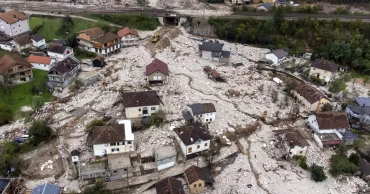
International rescue teams arrive in Bosnia after devastating floods and landslides
Rescue teams from Bosnia's neighbors and European Union countries on Sunday were joining efforts to clear the rubble and find people still missing from floods and landslides that devastated parts of the Balkan country.
Bosnia sought EU help after a heavy rainstorm overnight on Friday left entire areas under water and debris destroyed roads and bridges, killing at least 18 people and wounding dozens.
“Our hearts and thoughts are with the people of Bosnia and Herzegovina, hit by devastating floods,” EU Commission President Ursula von der Leyen said on X. “We have activated our EU Civil Protection Mechanism and are sending rescue teams on the ground. This is EU solidarity in action.”
Officials said that at least 10 people are still unaccounted for, many of them in the village of Donja Jablanica, in southern Bosnia, which was almost completely buried in rocks and rubble from a quarry on a hill above.
Residents there have said they heard a thundering rumble and saw houses disappear before their eyes.
Read: Rescue teams search for missing after floods, landslides kill at least 16 in Bosnia
“We heard water and rock coming down from the hill. I told my son, Let's go up to the attic, we don’t know what’s going to happen," recalled Munevera Dautbegovic. “In the morning when we got out, we saw large amount of sand around.”
Regional Gov. Nermin Niksic visited the village on Sunday, promising help to rebuild. “All material damage can be compensated somehow but human lives cannot. Grief will stay on.”
Earlier on Sunday, Luigi Soreca, who heads the EU mission in Bosnia, said on X that teams wer arriving to help. Bosnia is a candidate country for membership in the 27-nation bloc.
Authorities said Croatian rescuers have already arrived while a team from Serbia is expected to be deployed in the afternoon, followed by a Slovenian team with dogs. Montenegro, North Macedonia, Poland, Czechia and Turkey have also offered help, a government statement said.
Sunday is the date of a local election in Bosnia. Election authorities have postponed voting in the flood-hit regions, but the flooding has overshadowed the vote across the country.
Read more: Flooding from seasonal rains threatens residents in northern Thailand, including elephants
Ismeta Bucalovic, a resident of Sarajevo, Bosnia's capital, said “we are all overwhelmed by these flooding events. We all think only about that.”
Impoverished and ethnically divided, Bosnia has struggled to recover after the brutal war in 1992-95. The country is plagued by political bickering and corruption, stalling its EU bid.
1 year ago

New NATO chief Mark Rutte visits Ukraine in his first trip since taking office
New NATO Secretary-General Mark Rutte visited Ukraine on Thursday in his first official trip since taking office and pledging continued support for Kyiv in its war with Russia.
Rutte met with Ukrainian President Volodymyr Zelenskyy in Kyiv as air raid sirens twice went off in the Ukrainian capital.
The new head of NATO vowed when he took office Tuesday to help shore up Western support for Ukraine, which has been fighting Russia’s full-scale invasion since February 2022 and has recently been on the defensive due to a relentless Russian army push in eastern regions.
Rutte expressed confidence that he can work with whomever is elected president of the United States, the alliance’s most powerful member, in November. That could be a key moment for Ukraine’s effort to ensure continuing Western support.
Zelenskyy said he discussed with Rutte elements of Ukraine's so-called victory plan, ahead of a NATO meeting at the Ramstein air base in Germany next week.
The two also discussed the battlefield situation and the specific needs of Ukrainian military units. Zelenskyy reiterated that Ukraine needs more weapons, including long-range weapons.
Rutte reiterated the alliance's unwavering support for Ukraine, saying “Ukraine is closer to NATO than ever before.”
When asked about the prospects for NATO membership for Ukraine, Rutte said recent steps taken by NATO together “build a bridge to NATO membership,” including 40 billion euros ($44 billion) of funding assistance, bilateral security agreements between allies, and the formation of a new NATO command to coordinate assistance and training.
Rutte arrived after a Russian glide bomb struck a five-story apartment block in Kharkiv, Ukraine’s second-largest city, injuring at least 12 people including a 3-year-old girl, local officials said Thursday.
The bomb hit between the third and fourth floors of the building on Wednesday night, igniting blazes, Kharkiv regional Gov. Oleh Syniehubov said. Firefighters searched for survivors through smoke and rubble.
The city of Kharkiv, located around 30 kilometers (18 miles) from the Russian border, has been a frequent target of aerial attacks throughout the war against Russia that is now deep into its third year.
Glide bombs have become an increasingly common weapon in the war. They have terrorized civilians and bludgeoned the Ukrainian army’s front-line defenses.
They were a key weapon in Russia’s capture of the tactically significant town of Vuhledar on Wednesday, as Russian forces wreak destruction on the eastern Donetsk region and force weary Ukrainian troops to withdraw from obliterated towns and villages.
Ukraine has no effective countermeasure for glide bombs, which are launched from Russian aircraft inside Russia.
Ukraine President Volodymyr Zelenskyy said the latest Kharkiv attack highlighted the urgent need for increased support from Ukraine’s Western allies.
Zelensky recently held talks with officials in the United States in an effort to ensure further Western military support.
Russia has had the battlefield initiative since late last year, when a Ukrainian counteroffensive petered out. Ukraine is grappling with a critical manpower problem on the front line and is straining to hold back Russia’s grinding assaults.
Though Russia’s battlefield gains have been incremental, its steady forward movement is adding up as the Ukrainians are pushed backward and yield ground.
Both sides have kept up regular cross-border aerial attacks, usually at night.
Ukraine’s air force said Thursday that 78 out of 105 Shahed drones launched by Russia overnight were destroyed on Thursday as 15 regions of the country came under attack.
The Russian military, meanwhile, intercepted 113 Ukrainian drones overnight, according to a statement by the Defense Ministry in Moscow. The drones were destroyed over four Russian regions on the border with Ukraine —Belgorod, Bryansk, Kursk and Voronezh, it said.
1 year ago
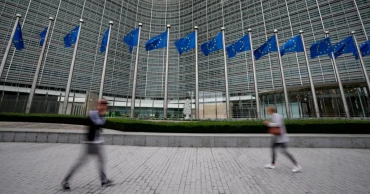
EU offers to delay new deforestation rules after an outcry from governments and farmers
The European Union on Wednesday offered to delay by a year the introduction of new rules that would outlaw the sale of products that come from forests following an outcry from several governments claiming that it will damage trade and hurt small farmers.
The EU’s executive branch, the European Commission, said that “it would make the law applicable on 30 December 2025 for large companies and 30 June 2026 for micro- and small enterprises,” if the 27 member countries and the bloc’s parliament agree.
The deforestation regulation’s scope is wide, including things like cocoa, coffee, soy, cattle, palm oil, rubber, wood and products made from them.
Critics say it discriminates against countries with forest resources and would hurt their exports, while supporters insist that it will help save forests on a global scale. Deforestation is the second-biggest source of carbon emissions after fossil fuels.
In offering to delay the regulation by a year, the commission said that “several global partners have repeatedly expressed concerns about their state of preparedness,” most recently during the United Nations General Assembly in New York.
Officials from leading exporters of affected commodities — including Brazil, Indonesia and the Ivory Coast — fear the regulation could act as a trade barrier, hit small farmers and disrupt supply chains.
But even EU governments, including in Austria and Germany, have also sought to water the regulation down or delay its introduction.
The commission conceded that “the state of preparations amongst stakeholders in Europe is also uneven. While many expect to be ready in time, thanks to intensive preparations, others have expressed concerns.”
In addition to offering a delay, it published additional guidance to better clarify the rules for companies and to help national authorities enforce them. The commission encouraged EU member countries and the parliament to endorse the delay by the end of this year.
1 year ago

An explosion and an ensuing fire at a service station blast kills 12 in Russia’s Dagestan
Local officials said two bodies were pulled from the rubble Saturday following an explosion at a gas station in Russia’s southern region of Dagestan, bringing the death toll to at least 12.
The explosion on Friday triggered a fire that tore through the service station and its cafeteria on the outskirts of the regional capital, Makhachkala, said Russia’s Emergencies Ministry, adding that two children were among the dead. The fire was later extinguished.
Makhachkala is about 1,600 kilometers (990 miles) south of Moscow.
Regional authorities said a criminal investigation into the cause of the explosion has been opened and that Saturday has been declared a day of mourning in Dagestan.
Last August, a massive explosion at a gas station in Dagestan killed 35 people and injured 115 more.
1 year ago

21 wounded in Russian strikes that hit apartment buildings in Ukrainian city of Kharkiv
ussia launched new strikes in the Ukrainian city of Kharkiv that hit high-rise apartment buildings, leaving at least 21 wounded in a second consecutive nighttime attack, authorities said.
The bombs fell Saturday night on the district of Shevchenkivsky, north of the center of Kharkiv, which is the second-largest Ukrainian city, local Gov. Oleh Syniehubov said. Residential buildings sustained varying degrees of damage, including 16- and nine-story buildings, he added. Kharkiv's city council said that 18 buildings were damaged.
The wounded included an 8-year-old child, according to Syniehubov and Kharkiv Mayor Ihor Terekhov. Terekhov said that 60 residents were evacuated from one of the buildings, a high-rise that was hit directly.
Kharkiv has been a frequent target of Russian attacks since Moscow launched its all-out invasion of neighboring Ukraine in February 2022. On late Friday, 15 people, including children ages 10 and 12, were wounded when Russian airstrikes hit three Kharkiv neighborhoods, Terekhov said.
Zelenskyy appeals for more weapons
Ukrainian officials said that KAB-type aerial glide bombs — a retrofitted Soviet weapon that has for months laid waste to eastern Ukraine — were used in both attacks.
President Volodymyr Zelenskyy condemned the strike and urged Kyiv’s Western allies to send more weapons to help it “protect lives and ensure safety.”
“Ukraine needs full long-range capabilities, and we are working to convince our partners of this,” Zelenskyy said on X, as he prepared to kick off a busy week in the United States shoring up support for Kyiv in the war.
And Ukrainian Defense Minister Rustem Umerov said Sunday that Kyiv was in talks with partners in Europe to secure Swedish-made Gripen and European Eurofighter Typhoon jets. Umerov said that commitments were already in place for deliveries of U.S.-made F-16s and French Mirages.
Russia sends drones and missiles elsewhere in Ukraine
Russia also launched 80 Shahed drones and two missiles at Ukraine overnight into Sunday, the Ukrainian air force said. Ukrainian defenses shot down 71 drones, and another six were lost on location because of electronic warfare countermeasures, the statement said.
Farther south, a 12-year-old girl and a woman died after a Russian drone struck a passenger car in the city of Nikopol, local Gov. Serhii Lysak reported. Two others, including a 4-year-old child, suffered wounds.
In the eastern Donetsk region, a Russian airstrike on Sunday morning struck homes in the city of Sloviansk, trapping a woman under rubble and wounding two of her neighbors, regional prosecutors reported.
In the same province, two miners died and one other person was injured late Saturday after Russian forces shelled a mine west of the city of Pokrovsk, local Gov. Vadym Filashkin and Ukraine’s Energy Ministry reported.
Pokrovsk and Sloviansk have both been key targets for Russian forces as they continue their grinding push westwards aimed at capturing the entirety of Ukraine’s industrial east.
In southern Ukraine, a Russian drone strike on Sunday morning wounded two civilians in the city of Kherson, regional authorities said. Hours later, police reported that Russian attacks wounded at least four more people elsewhere in the province.
Other Russian drone attacks Sunday damaged energy infrastructure in Ukraine’s central Poltava region and the northern city of Shostka, officials reported.
Shostka lies in the Sumy region, across the border from Russia's Kursk province — the target of a startling Ukrainian military incursion launched last month. Weeks into the incursion, Zelenskyy said that the aim is to create a buffer zone to prevent further Russian cross-border strikes that have for months wreaked havoc in Sumy.
Around 10,000 residents have left the nearby town of Hlukhiv because of intensified Russian shelling, around a third of its prewar population, the local military administration said Sunday.
That includes almost 70% of the town’s children, following the regional government’s calls to evacuate parts of the Sumy region nearest the Russian border. Hlukhiv lies less than 15 kilometers (9 miles) from Russian territory, and about 40 kilometers (25 miles) southeast of Shostka.
Ukrainian troops strike at Russian targets
Also on Sunday, a firefighter was killed and two others were injured by a Ukrainian drone in the Russia-occupied Luhansk province in eastern Ukraine, the Russian Emergencies Ministry said.
In Russia proper, in the Belgorod region bordering Ukraine, Ukrainian shelling wounded at least 12 people including a village official and members of a volunteer self-defense force, according to regional Gov. Vyacheslav Gladkov.
Several Russian regions, including Belgorod in the south, set up so-called territorial defense units to counter-sabotage activity after Russian troops moved into Ukraine in February 2022.
1 year ago

Denmark's Queen Margrethe who abdicated earlier this year has been hospitalised
Denmark’s Queen Margrethe II, who stunningly abdicated earlier this year, has been admitted to a hospital after falling in her home, Danish media said Thursday, adding that she is doing fine.
The 84-year-old queen was admitted late Wednesday to the Danish capital’s university hospital for observation after falling in the evening at Fredensborg Castle, north of Copenhagen, the royal house told Danish media.
“According to the circumstances, the queen is doing well, but was admitted for observation for the time being,” the head of communications, Lene Balleby was quoted as saying. The royal household had no further comments.
Margrethe was scheduled to participate in an event Friday, marking the 75th anniversary of the Department of Archeology at Aarhus University, but her participation has now been canceled. Margrethe had studied prehistoric archaeology at Copenhagen University, and earlier said that if she hadn’t been the monarch of Denmark, she would have become an archaeologist.
In January, Queen Margrethe became Denmark’s first monarch to abdicate in nearly 900 years when handing the throne over to her son, Crown Prince Frederik.
She always maintained during her 52-year reign that she wouldn’t quit, but back surgery and several ailments left her unable to undertake as much as she could in the past. “Time takes its toll,” she said, when announcing her plans to abdicate in a New Year’s address that stunned the kingdom.
1 year ago

Floods in Central Europe threaten new areas. Heavy rains also flood parts of Italy
A massive flood wave moving across Central Europe was threatening new areas and raising concerns among residents and leaders. It also prompted European Union head Ursula von der Leyen to plan a visit to the region on Thursday.
Heavy rains also caused flooding and evacuation of some 1,000 residents in the northern Italian region of Emilia-Romagna.
The death toll was rising in Central Europe, as receding waters were revealing the huge scale of the destruction caused by exceptionally heavy rains that began a week ago.
Czech Interior Minister Vit Rakusan said the death toll had risen to five in the hard-hit northeast Czech Republic, and that eight were still missing. That brings the death toll so far to 24 in the region.
Authorities have also reported seven deaths each in Poland and Romania, and five in Austria.
Authorities across the affected region have deployed their militaries. In the two hardest-hit regions in the northeast Czech Republic, troops joined firefighters and other emergency officials to help residents with cleanup and recovery efforts. Army helicopters have been used to distribute humanitarian help while soldiers are building temporary bridges after many were destroyed in the flooding.
Some 400 people remain in evacuation centers in the regional capital of Ostrava and are not able yet to return home. In the country's southwest near the border with Austria, the water level of the Luznice River has reached an extreme level but the evacuation of 1,000 people in the town of Veseli nad Luznici was not necessary for the moment, officials said.
Further to the south, in Hungary, flood waters continued to rise on Thursday as authorities shut down roadways, rail stations and ferries along the Danube River.
In the capital, Budapest, water spilled over the city’s lower quays and threatened to reach transport infrastructure like trams and metro lines. Some transport services were suspended. Further upriver, in a region known as the Danube Bend, homes and restaurants near the riverbanks were inundated as officials and volunteers continued to place sandbags to reinforce levees.
Nearly 6,000 professionals, including members of Hungary’s water authority and military, have been mobilized to assist in flood preparations, Prime Minister Viktor Orbán said in a news conference Thursday morning. Inmates from prisons had also been mobilized to help fill sandbags, Orbán said.
The Danube rose nearly one meter (3.3 feet) in 24 hours, and by Thursday morning stood at 771 centimeters, approaching the 891-centimeter record set during major flooding in 2013.
In southwestern Poland, the high water reached the city of Wroclaw and a stretched-out wave was expected to take many hours, even days to pass, exerting pressure on the embankments.
Concerned by the scope of the destruction and the need for immediate aid, Prime Minister Donald Tusk invited von der Leyen to Wroclaw to see the situation with her own eyes. Government leaders from the Czech Republic, Slovakia and Austria are also to be present.
To the south in Italy, about a thousand residents were evacuated in the northern region of Emilia-Romagna after it was hit by torrential rains and severe flooding overnight, local media reported Thursday.
Rivers flooded in three of the region’s provinces — Ravenna, Bologna and Faenza — as local mayors asked people to stay on the upper floors or leave their houses.
At least 800 residents in the Ravenna area and almost 200 in Bologna province spent the night in shelters, schools and sports centers as local rivers overflowed.
Trains were suspended and schools closed across the affected areas, and residents have been advised to avoid travel and work from home where possible.
1 year ago

Bank of England keeps its main interest rate on hold at 5% in wake of big US Fed rate cut
The Bank of England kept its main interest rate unchanged at 5% Thursday despite a big cut from the U.S. Federal Reserve, its first since the onset of the coronavirus pandemic more than four years ago.
The decision was widely expected amid ongoing concerns about inflation within the bank’s monetary policy committee, particularly the elevated levels in the crucial services sector, which accounts for around 80% of the British economy. Figures on Wednesday showed that inflation overall in the U.K. held steady at an annual rate of 2.2% in August, still above the bank’s goal.
Minutes to the meeting showed that eight of the nine members of the panel voted to keep rates unchanged, while one backed a quarter-point reduction.
“The economy has been evolving broadly as we expected. If that continues, we should be able to reduce rates gradually over time,” said Bank Gov. Andrew Bailey. "But it’s vital that inflation stays low, so we need to be careful not to cut too fast or by too much.”
The bank, which last month cut interest rates for the first time since the pandemic, is widely expected to reduce borrowing costs again at its next meeting in November, especially as it will have details of the government’s budget on Oct. 30.
On Wednesday, the Fed cut its main interest by half of a percentage point to roughly 4.8% from a two-decade high of 5.3%, where it had stood for 14 months. It also signaled that there will be more cuts to come in the next few months.
Central banks around the world dramatically increased borrowing costs from near zero during the coronavirus pandemic when prices started to shoot up, first as a result of supply chain issues built up and then because of Russia’s full-scale invasion of Ukraine which pushed up energy costs. As inflation rates have fallen from multi-decade highs recently, they have started cutting interest rates.
On Wednesday, the Fed became the latest major central bank to reduce borrowing costs, cutting its main interest by half of a percentage point to roughly 4.8% from a two-decade high of 5.3%, where it had stood for 14 months. It also signaled that there will be more cuts to come in the next few months.
The Bank of England is widely expected to reduce borrowing costs again at its next meeting in November, especially as it will have details of the government's budget on Oct. 30.
The new Labour government has said that it needs to plug a 22 billion pound ($29 billion) hole in the public finances and has indicated that it may have to raise taxes and lower spending, which would likely weigh on the near-term outlook for the British economy and put downward pressure on inflation.
Luke Bartholomew, deputy chief economist at abrdn, formerly Aberdeen Asset Management, said the Bank of England "will need to incorporate any fiscal changes in its next forecasts, which could provide the foundation for more rapid cuts in due course.”
1 year ago