Europe
After castigating video games during riots, France’s Macron backpedals and showers them with praise
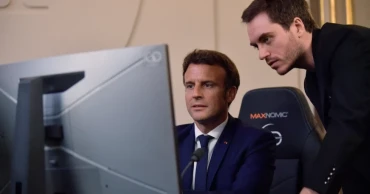
French President Emmanuel Macron is extending an olive branch to video gamers after previously linking computer games to rioting that rocked France earlier this year.
Posting on social media platform X, previously known as Twitter, Macron backpedaled on remarks in June where he blamed video games for having "intoxicated" some young rioters.
Those comments dismayed some in the gaming community, even beyond France. Japanese game director Kastuhiro Harada tweeted in response that "blaming something is a great way to escape the burden of responsibility."
France's Macron heckled by crowd angry over pensions
Macron started his unusually lengthy post this weekend with a mea culpa, saying: "I startled gamers."
He then sought to clarify his thinking and showered video games and the industry with praise.
"Video games are an integral part of France," Macron declared.
"I expressed my concerns at the end of June because delinquents had used video game habits to trivialize the violence on social networks," he said. "It is this violence that I condemn, not video games."
Emotions high at French protests over Macron's pension plan
The unrest started after the police shooting of Nahel Merzouk in the Paris suburb of Nanterre on June 27. The French-born 17-year-old of north African descent was stopped by two officers on motorbikes who subsequently alleged that he'd been driving dangerously. He died from a single shot through his left arm and chest.
From Nanterre, violent protests quickly spread and morphed into generalized nationwide mayhem in cities, towns and even villages that was celebrated on social networks.
In a government crisis meeting at the time, Macron accused social networks of playing "a considerable role" in the unrest and of fueling copycat violence and castigated video games.
"Among the youngest (rioters), this leads to a sort of escape from reality. We sometimes have the feeling that some of them are living out, on the streets, the video games that have intoxicated them," Macron said.
Macron's govt ignites firestorm of anger in France with unpopular pension reforms
His latest post, however, struck an entirely different tone.
"I have always considered that video games are an opportunity for France, for our youth and its future, for our jobs and our economy," he said.
The industry "inspires, makes people dream, makes them grow!" Macron continued.
He concluded: "You can count on me."
Anger spreads in France over Macron's retirement bill push
2 years ago

Erdogan says Turkey may part ways with the EU. He implied the country could ends its membership bid
President Recep Tayyip Erdogan said Saturday that Turkey may part ways with the European Union, implying that the country is thinking about ending its bid to join the 27-nation bloc.
“The EU is making efforts to sever ties with Turkey,” he told reporters before departing for the 78th U.N. General Assembly in New York.
Also read: Turkey’s Erdogan turns away reform-minded challenger to win another term
“We will evaluate the situation, and if needed we will part ways with the EU.”
He was responding to a question about a recent report adopted by the European Parliament, which stated “the accession process cannot resume under the current circumstances, and calls on EU to explore ‘a parallel and realistic framework’ for EU-Türkiye relations.”
Also read: Turkey's Erdogan retains power, now faces challenges over the economy and earthquake recovery
Turkey applied to join the European Union in 1999, and accession talks began in 2005. Accession negotiations were frozen in 2018 because of “democratic backsliding,” according to the European Parliament.
Also read: Incumbent Erdogan claims victory in Turkey’s presidential runoff
Erdogan's statement on Saturday came more than a week after Turkey's foreign minister affirmed his country’s resolve to join the EU and urged the bloc to take courageous steps to advance its bid.
2 years ago

Britain, France and Germany say they will keep their nuclear and missiles sanctions on Iran
Britain, France and Germany announced Thursday they will keep their sanctions on Iran related to the Mideast country's atomic program and development of ballistic missiles. The measures were to expire in October under a timetable spelled out in the now defunct nuclear deal between Tehran and world powers.
In a joint statement, the three European allies known as E3 and which had helped negotiate the nuclear deal, said they would retain their sanctions in a “direct response to Iran’s consistent and severe non-compliance” with the accord, also known by its official name as Joint Comprehensive Plan of Action or JCPOA.
The measures ban Iran from developing ballistic missiles capable of delivering nuclear weapons and bar anyone from buying, selling or transferring drones and missiles to and from Iran. They also include an asset freeze for several Iranian individuals and entities involved in the nuclear and ballistic missile program.
Iran has violated the sanctions by developing and testing ballistic missiles and sending drones to Russia for its war on Ukraine.
The sanctions will remain in place until Tehran “is fully compliant” with the deal, the E3 said. The sanctions, according to the accord from eight years ago, were to expire on Oct. 18.
Iran's Foreign Ministry called the European decision an “illegal, provocative action” that will hamper cooperation, in comments quoted by the country's official news agency IRNA.
“The actions of the European parties will definitely have negative effects on the efforts to manage the tension and create a suitable environment for more cooperation between the JCPOA parties,” the ministry said.
The 2015 nuclear deal was meant to ensure that Iran could not develop atomic weapons. Under the accord, Tehran agreed to limit enrichment of uranium to levels necessary for nuclear power in exchange for the lifting of economic sanctions.
Read: North Korea says it has deployed a new nuclear attack submarine to counter US naval power
In 2018, then-President Donald Trump unilaterally pulled the United States out of the accord, saying he would negotiate a stronger deal, but that did not happen. Iran began breaking the terms a year later and is now enriching uranium to nearly weapons-grade levels, according to a report by the United Nations’ nuclear watchdog.
Formal talks to try to find a roadmap to restart the deal collapsed in August 2022.
The E3 have informed the European Union's foreign policy chief, Josep Borrell, about their decision, the statement said. Borrell, in turn, said he had forwarded the E3 letter to other signatories of the 2015 deal — China, Russia and Iran.
The development comes at a delicate moment as the United States is preparing to finalize a prisoner swap with Iran that would include the unfreezing of Iranian assets held in South Korean banks worth $6 billion.
Iran’s mission to the United Nations did not immediately respond to a request for comment.
U.S. State Department spokesman Matthew Miller told reporters that Washington was in touch with the European allies over “the appropriate next steps.”
“We are working closely with our European allies, including members, of course, of the E3, to address the continued threat that Iran poses including on missiles and arms transfers with the extensive range of unilateral and multilateral tools that are at our disposal," he said.
Iran has long denied ever seeking nuclear weapons and continues to insist that its program is entirely for peaceful purposes, though Rafael Mariano Grossi of the International Atomic Energy Agency, the U.N. nuclear watchdog, has warned that Tehran has enough enriched uranium for “several” nuclear bombs if it chose to build them.
Read: China bans seafood from Japan after the Fukushima nuclear plant begins its wastewater release
Under the terms of the nuclear deal, a U.N. arms embargo against Tehran will expire on Oct. 18, after which countries that do not adopt similar sanctions on their own as the E3 — likely Russia and perhaps also China — will no longer be bound by the U.N. restrictions on Iran.
However, Iran has lately slowed the pace at which it is enriching uranium, according to a report by the IAEA that was seen by The Associated Press earlier this month. That could be a sign Tehran is trying to ease tensions after years of strain between it and the U.S.
“The decision makes sense,” Henry Rome, an analyst with the Washington Institute for Near East Policy, said of the European decision. “The real question is how Iran will react. Given the broader de-escalation efforts underway, I would expect Iran not to act rashly, but we never know.”
Read more: Putin profits off US and European reliance on Russian nuclear fuel
2 years ago

The Rolling Stones announce release date for their new album and unveil lead single, 'Angry'
The Rolling Stones are back, and they've brought a few famous friends.
"Hackney Diamonds," the band's first album of new songs in 18 years, features guest appearances from the likes of Lady Gaga, Paul McCartney and Stevie Wonder. Poignantly, it also features Charlie Watts, the stalwart Stones drummer who died in 2021 after almost six decades in the band. His drumming, recorded in 2019, features on two of the album's dozen tracks, with Steve Jordan playing on the rest.
Watts' absence lent a wistful note to the excitement of surviving Stones Mick Jagger, Keith Richards and Ronnie Wood when they came to east London's Hackney district on Wednesday to unveil the new album and announce its release date: Oct. 20.
Read : No satisfaction: Jagger has COVID, Rolling Stones gig off
Of Watts, Richards said: "Of course he's missed incredibly. But thanks to Charlie we have Steve Jordan, who was his recommendation if anything should happen to him."
"It would have been a lot harder without Charlie's blessing," he said.
The album reveal was executed with the swaggering showmanship the Stones are famous for. It followed a cryptic teaser campaign, in which a glittery, jagged version of the band's iconic mouth and tongue logo was projected onto the façade of landmarks in cities around the world, including New York, London and Paris.
Hard-core fans lined up in a heatwave outside the Hackney Empire, where the band members were interviewed onstage by "The Tonight Show" host Jimmy Fallon in front of dozens of sweltering journalists and a global online audience.
Inside the ornate former Edwardian musical hall where Charlie Chaplin and Stan Laurel once performed, Jagger, 80, Richards, 79 and Wood, 76 gave details of the Stones' first studio album of new songs since "A Bigger Bang" in 2005. The band released a set of blues covers, "Blue & Lonesome," in 2016.
The lead single is called "Angry," but Jagger said not all the songs are furious. The album also contains "love songs, ballads, country-type" sounds, he said.
Read : Rolling Stones return to stage, tour after Mick Jagger mends
Recorded in December and January at studios around the world, the album sees the Stones team up with Grammy-winning producer Andrew Watt, who helped assemble the starry guest list, which also includes former Stone Bill Wyman.
Jagger said Lady Gaga — who sings on "Sweet Sound of Heaven" — was recording in a next-door studio while the Stones were in Los Angeles and ended up on the album after she popped in to say hello.
"She walked in next to me and we started singing together," Jagger told The Associated Press backstage. "She sang it live and then we went in and tidied it up a bit."
The band screened the video for "Angry," which has a classic mid-tempo crunchy Stones sound. The clip features "Euphoria" star Sydney Sweeney, shown cruising LA's Sunset Boulevard in a red convertible, past billboards of the Stones from various eras.
As to why the band waited almost two decades between albums, Richards said the timing was largely down to Jagger.
"When you have a singer that wants to sing, you grab him and throw him in the studio," Richards told the AP. He said when they did get in the studio, the songs tumbled out with "energy and urgency."
Jagger joked that the long gap between albums was due to laziness.
"I don't want to be big-headed but we wouldn't have put this album out if we hadn't really liked it," he said. "We said we had to make a record we really love ourselves.
Read : Why are fans throwing objects at favourite musicians on stage? Adele speaks out
"We are quite pleased with it, we are not big headed about it, but we hope you all like it."
"Hackney Diamonds" is a slang term for shattered glass, and the band also teased fans with an ad in the local Hackney Gazette newspaper for a fictional glass repair business: "When you say gimme shelter, we'll fix your shattered windows."
Jagger said the phrase evoked "when you get your windscreen broken on Saturday night in Hackney and all the bits go on the street."
Richards said the band hit upon the title after "flinging ideas around the table, and we went from 'Hit and Run,' 'Smash and Grab' — and somehow between that we came up with 'Hackney Diamonds.'"
It was fitting, he said, because the Stones are a London band — though none of the members hails from Hackney.
Brazilian fan Taric Fioravanti, from Sao Paulo, was one of many who lined up to get a glimpse of the band.
"I love these guys," he said. "Keith Richards is one of the biggest guitar heroes in the history of rock music.
"(And) they're 80 years old. Most bands have stopped making new music" by that age, he said.
Founded in 1962, the Stones show no signs of planning to retire. The band played a 60th-anniversary tour of Europe in 2022, and Wood said they had an American tour "penciled in" for next year.
Wood said retirement would be "impossible."
"You've got to keep playing," he said.
2 years ago

Russian strike on a market in an eastern Ukrainian city kills 17 and wounds dozens, officials say
A Russian missile struck an outdoor market in eastern Ukraine on Wednesday, killing 17 people and wounding dozens, officials said. The deadly attack came as U.S. Secretary of State Antony Blinken arrived in Kyiv and was expected to announce more than $1 billion in new American funding for Ukraine in the 18-month-old war.
Associated Press journalists at the site of the attack in the city of Kostiantynivka in the Donetsk region saw covered bodies on the ground and emergency workers extinguishing fires at market stalls, with blackened and mangled cars nearby.
Minister of Internal Affairs Ihor Klymenko said 17 people were killed, and another 32 were wounded. The Defense Ministry said the market was hit by a ballistic missile.
Firefighters extinguished blazes that burned about 30 pavilions at the market, he added.
Twenty shops, power lines, an administrative building and the floor of an apartment building were damaged, according to the prosecutor general’s office.
The attack was another grim reminder of the war’s civilian toll. “A regular market. Shops. A pharmacy. People who did nothing wrong,” Zelenskyy said on his official Telegram channel.
“Those who know this place are well aware that it is a civilian area,” Zelenskyy said later at a news conference with visiting Danish Prime Minister Mette Frederiksen. “There aren’t any military units nearby. The strike was deliberate.”
Blinken’s visit was aimed at assessing Ukraine’s 3-month-old counteroffensive and signaling continued U.S. backing as some Western allies express worries about Kyiv’s slow progress in driving out Russian forces, according to U.S. officials.
“We want to make sure that Ukraine has what it needs, not only to succeed in the counteroffensive but has what it needs for the long-term, to make sure that it has a strong deterrent,” Blinken said. “We’re also determined to continue to work with our partners as they build and rebuild a strong economy, strong democracy.”
Blinken was set to pledge more than $1 billion in new U.S. funding, a senior State Department official said, speaking on condition of anonymity in order to discuss the announcement before it was made.
The money would be for “a range” of investments, the official said, without elaborating.
Roughly $275 million will be military aid, including depleted uranium tank rounds that had been a subject of internal administration debate until Tuesday, according to another U.S. official.
About $175 million of the total will be in the form of weaponry to be provided from Pentagon stockpiles, the official said. Another $100 million will be in the form of grants to allow the Ukrainians to purchase additional arms and equipment, the official said, also on condition of anonymity.
In addition to the military assistance, Blinken is expected to announce nearly $805 million in non-arms-related aid for Ukraine, according to another administration official. That will include $300 million for law enforcement, $206 million in humanitarian aid, $203 million to combat corruption and $90.5 million for demining, the official said.
Read: Russian strikes in Ukraine kill 10 civilians, wound 20 more
The package will also include an already-announced $5.4 million transfer to Ukraine of frozen Russian oligarch assets, according to the official, who like the others spoke on condition of anonymity ahead of the formal announcement.
The aid announced by Blinken comes from money previously approved by Congress. President Joe Biden has requested another $21 billion in military and humanitarian aid for Ukraine for the final months of 2023, but it’s not clear how much — if any — will be approved. Many Republican lawmakers are wary of providing more aid and the party’s presidential front-runner, former President Donald Trump, has criticized U.S. financial support. Opinion polls also have shown a decline in support for the war by the American public.
Biden and the Pentagon, however, have said repeatedly they they will support Ukraine for as long as it takes. As of Aug. 29, there was approximately $5.75 billion left in the already approved funding for weapons and equipment taken from existing Pentagon stocks.
Blinken was to discuss other issues, including support for Ukraine’s economy, building on his June announcement of $1.3 billion to help Kyiv rebuild, with a focus on modernizing its energy network, which was bombarded by Russia last winter.
Kremlin spokesman Dmitry Peskov said that U.S. assistance to Ukraine “can’t influence the course of the special military operation” — Moscow’s euphemism for the war.
Blinken arrived in Kyiv for an overnight visit hours after Russia launched a missile attack on the city.
On the train to Kyiv, Blinken met with Frederiksen, also on an official visit, and thanked her for Denmark’s leadership in training Ukrainian pilots on F-16s and for promising to donate the fighter jets to Ukraine, according to State Department spokesperson Matthew Miller.
Washington officials said there will be discussions of alternative export routes for Ukrainian grain following Russia’s exit from the Black Sea Grain Initiative and its frequent attacks on port facilities in the Odesa region.
Read: Civilians escape Kherson after Russian strikes on freed city
Those alternatives may include new overland routes, or ships hugging coastlines to keep out of international waters where they could be targeted by Russia’s navy.
After arriving in Kyiv, Blinken laid a wreath at the city’s Berkovetske cemetery to commemorate Ukrainian troops killed defending the country.
Blinken told Foreign Minister Dmytro Kuleba that the U.S. has “seen good progress in the counteroffensive. It’s very heartening.”
Meeting with Shmyhal, Blinken said he was in Ukraine “to reaffirm our commitment to stand with you ... to help ensure that you succeed militarily in dealing with the aggression, but also to stand with you to make sure that your efforts to build a strong economy and a strong democracy succeed.”
Shmyhal said Ukraine is grateful the money is coming in the form of grants, not loans that would drive it into debt.
Overnight, Russia fired cruise missiles at Kyiv in its first aerial attack on the capital since Aug. 30, according to Serhii Popko, the head of Kyiv’s regional military administration. Debris from a downed missile caused a fire and damage but no casualties.
In the Odesa region, one person was killed in a Russian missile and drone attack on the port of Izmail that damaged grain elevators, administrative buildings and agricultural enterprises, authorities said.
The trip was Blinken’s fourth to Ukraine since the war began, including one brief excursion over the Polish-Ukrainian border in March 2022, just a month after the Russian invasion. But it will be the first time America’s top diplomat spends the night in Kyiv since January 2022, before the invasion, in what U.S. officials called a signal of American support.
Blinken’s visit comes after some of Ukraine’s allies have privately expressed concern that Ukrainian troops may fail to reach their objectives.
Read more: Most Ukrainians left without power after Russian strikes
While the U.S. has been concerned by some day-to-day battlefield setbacks, U.S. officials said, they are still generally encouraged by Ukraine’s handling of the military situation, particularly its air defense capabilities in knocking down Russian drones aimed at Kyiv.
Blinken aims to see how the counteroffensive is progressing and what kind of support is needed, including materials to break through Russian defenses with winter approaching. Air defense will also continue to be a priority, the official said.
Western analysts and military officials caution that the counteroffensive’s success is far from certain and that it could take years to rid Ukraine of entrenched, powerfully armed and skilled Russian troops.
Both sides will have to assess their supply shortages, with more battles of attrition likely over the winter. A long war could stretch deep into next year and beyond, according to experts.
2 years ago
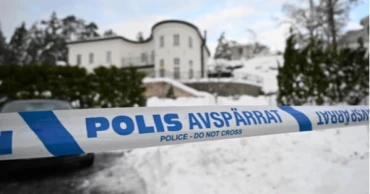
Clashes erupt in Sweden's third largest city after another Quran burning and at least 3 are detained
Clashes erupted in an immigrant neighborhood in Sweden’s third largest city after an anti-Muslim protester set fire to the Quran, police said Monday.
Police in Malmo said they were pelted with rocks and dozens of cars were set on fire, including in an underground garage, describing the events that started Sunday and lasted overnight as “a violent riot.”
The clashes started after an anti-Islam activist Salwan Momika on Sunday burned a copy of the Quran and an angry mob tried to stop him while police, some of them helmeted, detained several people. At least three people have been detained, police said.
Read: Israel's PM pitches fiber optic cable idea to link Asia and the Middle East to Europe
Early Monday, an angry crowd of mainly young people also set fire to tires and debris and some were seen throwing electric scooters, bicycles and barriers in Malmo's Rosengard neighborhood, which has seen similar clashes in the past. There were several banners relating to the Quran burning.
“I understand that a public gathering like this arouses strong emotions, but we cannot tolerate disturbances and violent expressions like those we saw on Sunday afternoon," senior police officer Petra Stenkula said.
Read: Putin profits off US and European reliance on Russian nuclear fuel
“It is extremely regrettable to once again see violence and vandalism at Rosengard,” she said.
In the past months, Momika, a refugee from Iraq, has desecrated the Quran in a series of anti-Islam protests mostly in Stockholm that have caused anger in many Muslim countries. Swedish police have allowed his actions, citing freedom of speech.
The Quran burnings have sparked angry protests in Muslim countries, attacks on Swedish diplomatic missions and threats from Islamic extremists. Muslim leaders in Sweden have called on the government to find ways to stop the Quran burnings.
Read: Thousands of Muslims take to the streets to express outrage over Quran desecration in Sweden
Sweden dropped its last blasphemy laws in the 1970s and the government has said it has no intention to reintroduce them.
However, the government has announced an inquiry into legal possibilities for enabling police to reject permits for demonstrations over national security concerns.
2 years ago

Ex-Italian PM says French missile downed an airliner in 1980 by accident in bid to kill Gadhafi
A former Italian premier, in an interview published on Saturday, contended that a French air force missile accidentally brought down a passenger jet over the Mediterranean Sea in 1980 in a failed bid to assassinate Libya’s then leader Moammar Gadhafi.
Former two-time Premier Giuliano Amato appealed to French President Emmanuel Macron to either refute or confirm his assertion about the cause of the crash on June 27, 1980, which killed all 81 persons aboard the Italian domestic flight.
In an interview with Rome daily La Repubblica, Amato said he is convinced that France hit the plane while targeting a Libyan military jet.
While acknowledging he has no hard proof, Amato also contended that Italy tipped off Gadhafi, and so the Libyan, who was heading back to Tripoli from a meeting in Yugoslavia, didn’t board the Libyan military jet.
READ: India launches spacecraft to study the sun after successful landing near the moon's south pole
What caused the crash is one of modern Italy’s most enduring mysteries. Some say a bomb exploded aboard the Itavia jetliner on a flight from Bologna to Sicily, while others say examination of the wreckage, pulled up from the seafloor years later, indicate it was hit by a missile.
Radar traces indicated a flurry of aircraft activity in that part of the skies when the plane went down.
“The most credible version is that of responsibility of the French air force, in complicity with the Americans and who participated in a war in the skies that evening of June 27,” Amato was quoted as saying.
NATO planned to “simulate an exercise, with many planes in action, during which a missile was supposed to be fired” with Gadhafi as the target, Amato said.
Read: Typhoon Saola makes landfall in southern China after nearly 900,000 people moved to safety
In the aftermath of the crash, French, U.S. and NATO officials denied any military activity in the skies that night.
According to Amato, a missile was allegedly fired by a French fighter jet that had taken off from an aircraft carrier, possibly off Corsica’s southern coast.
Macron, 45, was a toddler when the Italian passenger jet went down in the sea near the tiny Italian island of Ustica.
“I ask myself why a young president like Macron, while age-wise extraneous to the Ustica tragedy, wouldn’t want to remove the shame that weighs on France,” Amato told La Repubblica. ”And he can remove it in only two ways — either demonstrating that the this thesis is unfounded or, once the (thesis’) foundation is verified, by offering the deepest apologies to Italy and to the families of the victims in the name of his government.”
Amato, who is 85, said that in 2000, when he was premier, he wrote to the then presidents of the United States and France, Bill Clinton and Jacques Chirac, respectively, to press them to shed light on what happened. But ultimately, those entreaties yielded “total silence,” Amato said.
When queried by The Associated Press, Macron’s office said Saturday it wouldn’t immediately comment on Amato’s remarks.
Italian Premier Giorgia Meloni called on Amato to say if he has concrete elements to back his assertions so that her government could pursue any further investigation.
Amato’s words “merit attention,’' Meloni said in a statement issued by her office, while noting that the former premier had specified that his assertions are “fruit of personal deductions.”
Assertions of French involvement aren’t new. In a 2008 television interview, former Italian President Francesco Cossiga, who was serving as premier when the crash occurred, blamed it on a French missile whose target had been a Libyan military jet and said he learned that Italy’s secret services military branch had tipped off Gadhafi.
Gadhafi was killed in Libya’s civil war in 2011.
A few weeks after the crash, the wreckage of a Libyan MiG, with the badly decomposed body of its pilot, was discovered in the remote mountains of southern Calabria.
2 years ago

Former Harrods owner Mohamed Al Fayed, whose son died in car crash with Princess Diana, dies at 94
Mohamed Al Fayed, the flamboyant Egypt-born businessman whose son was killed in a car crash with Princess Diana, died this week, his family said Friday. He was 94.
Al Fayed, the longtime owner of Harrods department store and the Fulham Football Club, was devastated by the death of son Dodi Fayed in the car crash in Paris with Diana 26 years ago. He spent years mourning the loss and fighting the British establishment he blamed for their deaths.
Also read: Diana's last moments: French doctor recalls 'tragic night'
“Mrs Mohamed Al Fayed, her children and grandchildren wish to confirm that her beloved husband, their father and their grandfather, Mohamed, has passed away peacefully of old age on Wednesday August 30, 2023,″ his family said in a statement released by the Fulham club. “He enjoyed a long and fulfilled retirement surrounded by his loved ones.″
Al Fayed was convinced Dodi and Diana were killed in a conspiracy masterminded by Prince Philip, the husband of Queen Elizabeth II. He maintained the royal family arranged the accident because they did not like Diana dating an Egyptian. Al Fayed claimed that Diana was pregnant and planning to marry Dodi and that the royal family could not countenance the princess marrying a Muslim.
In 2008, Al Fayed told an inquest the list of alleged conspirators included Philip, two former London police chiefs and the CIA.
Also read: Diana's car auctioned as 25th anniversary of her death nears
The inquest concluded that Diana and Dodi died because of the reckless actions of their driver — an employee of the Ritz Hotel owned by Al Fayed — and paparazzi chasing the couple. Separate inquiries in the U.K. and France also concluded there was no conspiracy.
Al Fayed's relationship with the royal family was recently depicted in season five of “The Crown,” in which the billionaire, played by Salim Daw, gets to know Diana.
The son of a school inspector, Al Fayad was born on Jan. 27, 1929, in Alexandria, Egypt. After early investments in shipping in Italy and the Middle East, he moved to Britain in the 1960s and started building an empire.
Also read: William, Harry to unveil Diana statue as royal rift simmers
At the height of his wealth, Al Fayed owned the Ritz hotel in Paris and Fulham soccer team in London as well as Harrods, the luxury department store in the capital’s tony Knightsbridge neighborhood.
The Sunday Times Rich List, which documents the fortunes of Britain’s wealthiest people, put the family’s fortune at 1.7 billion pounds ($2.1 billion) this year, ranking Al Fayed as the 104th richest person in the country.
Al Fayed first hit the headlines in the 1980s when he battled with rival tycoon “Tiny” Rowland for control of the House of Fraser group, which included Harrods.
Al Fayed and his brother bought a 30% stake in House of Fraser for 130 million pounds in 1985. They paid an additional 615 million pounds to take full control the following year.
That transaction sparked an investigation by the Department of Trade and Industry, which concluded Al Fayed and his brother had “dishonestly misrepresented their origins, their wealth, their business interests and their resources.” Despite those findings, the deal was allowed to go through.
Al Fayed was also a key player in the “cash for questions” scandal that roiled British politics in the 1990s.
Al Fayed was sued for libel by a British lawmaker, Neil Hamilton, after the businessman claimed he had given Hamilton envelopes of cash and a lavish stay at the Ritz in Paris, in return for asking questions in the House of Commons.
Hamilton’s lawyer, Desmond Browne, claimed the allegation was fantasy, saying: ″If there were Olympic medals for lying, Mr. Fayed would be a prime contender for a gold one.”
A jury found in Al Fayed’s favor in December 1999.
But he was never accepted by the British establishment. The government twice rejected his applications for citizenship, though the reasons were never released publicly.
Al Fayed bought underdog London soccer team Fulham in 1997, and spent lavishly on coaches and players to improve its performance. It was a success, with the club winning promotion to the Premier League in 2001.
Al Fayed was also friends with Michael Jackson and had a statue of the pop star erected outside Fulham’s London stadium in 2011, two years after Jackson’s death.
Never popular with Fulham fans, it was removed in 2013 by Al Fayed’s successor as team owner, Shahid Khan.
2 years ago

Lavrov to represent Russia at Delhi G20 Summit
Russian Foreign Minister Sergei Lavrov is set to attend the upcoming G20 summit in Delhi next month.
Russian President Vladimir Putin conveyed his inability to attend the G20 Summit in New Delhi on 9-10 September 2023 to his Indian counterpart Narendra Modi during a phone call between the two leaders on Monday, according to India’s Ministry of External Affairs.
Also read: Russian Foreign Minister Lavrov likely to visit Bangladesh
The two leaders reviewed progress on number of issues of bilateral cooperation and exchanged views on regional and global issues of mutual concern, including the recently concluded BRICS Summit in Johannesburg, Indian foreign ministry said in a statement.
Last week, Moscow sent Foreign Minister Sergei Lavrov to attend the BRICS summit in South Africa’s Johannesburg as Putin's travel to Johannesburg was complicated by an outstanding International Criminal Court warrant for his arrest over the abduction of children from Ukraine.
Also read: Russia's Putin attends BRICS summit in South Africa remotely while facing war crimes warrant
The 18th G20 Heads of State and Government Summit in New Delhi on September 9-10 will be a culmination of all the G20 processes and meetings held throughout the year among ministers, senior officials, and civil societies.
2 years ago

UK flights are being delayed and canceled as a 'technical issue' hits air traffic control
Thousands of air travelers faced delays on Monday after Britain's air traffic control system was hit by a breakdown that slowed takeoffs and landings across the U.K.
Flight control operator National Air Traffic Services said it was experiencing an unexplained "technical issue" that could delay flights on Monday, the end of a holiday weekend and one of the busiest travel days of the year.
Also read : After Narita (Tokyo), Biman eyeing flights to New York, Chennai, Los Angeles, Rome
The service said it had "applied traffic flow restrictions to maintain safety" and that engineers were working to find and fix the fault. It said U.K. airspace remained open.
It did not give an estimate of how long it would take to fix the problem, or what had caused it, but European air traffic authority Eurocontrol warned of "very high" delays because of a "flight data processing system failure" in the U.K.
Scottish airline Loganair said there had been "a network-wide failure of U.K. air traffic control computer systems."
"Although we are hopeful of being able to operate most intra-Scotland flights on the basis of local coordination and with a minimum of disruption, north-south and international flights may be subject to delays," it said.
Also read : New DCTS scheme can create stronger trade, investment partnership with UK: BGMEA President
Airports both inside and outside the U.K. told passengers to expect delays and cancellations.
Heathrow, Europe's busiest air hub, said "national airspace issues" were causing disruption to flights, and advised passengers to check with their airline.
Dublin Airport said in a statement that air traffic control issues were resulting in delays and cancellations to some flights into and out of Dublin. "We advise all passengers due to travel today to check the status of their flight with their airline in advance of travelling," it said.
British Airways said it was "working closely with NATS to understand the impact of a technical issue that is affecting U.K. airspace, and will keep our customers up to date with the latest information."
Also read : UK political watchdog says Prime Minister Rishi Sunak ‘inadvertently’ broke ethics rules
Aviation analyst Alastair Rosenschein, a former BA pilot, said the air traffic system appeared to have suffered "some kind of patchy failure as opposed to a total shutdown."
He told Sky News that "the disruption will be quite severe at some airports" and some U.K.-bound flights will likely have to land in other European countries in order to reduce the flow of inbound planes.
2 years ago